DD
MM
YYYY

PAGES

DD
MM
YYYY

spot_img

PAGES

Home Blog Page 3750

Nigeria’s fuel subsidy removal will create space for development spending, says IMF

0

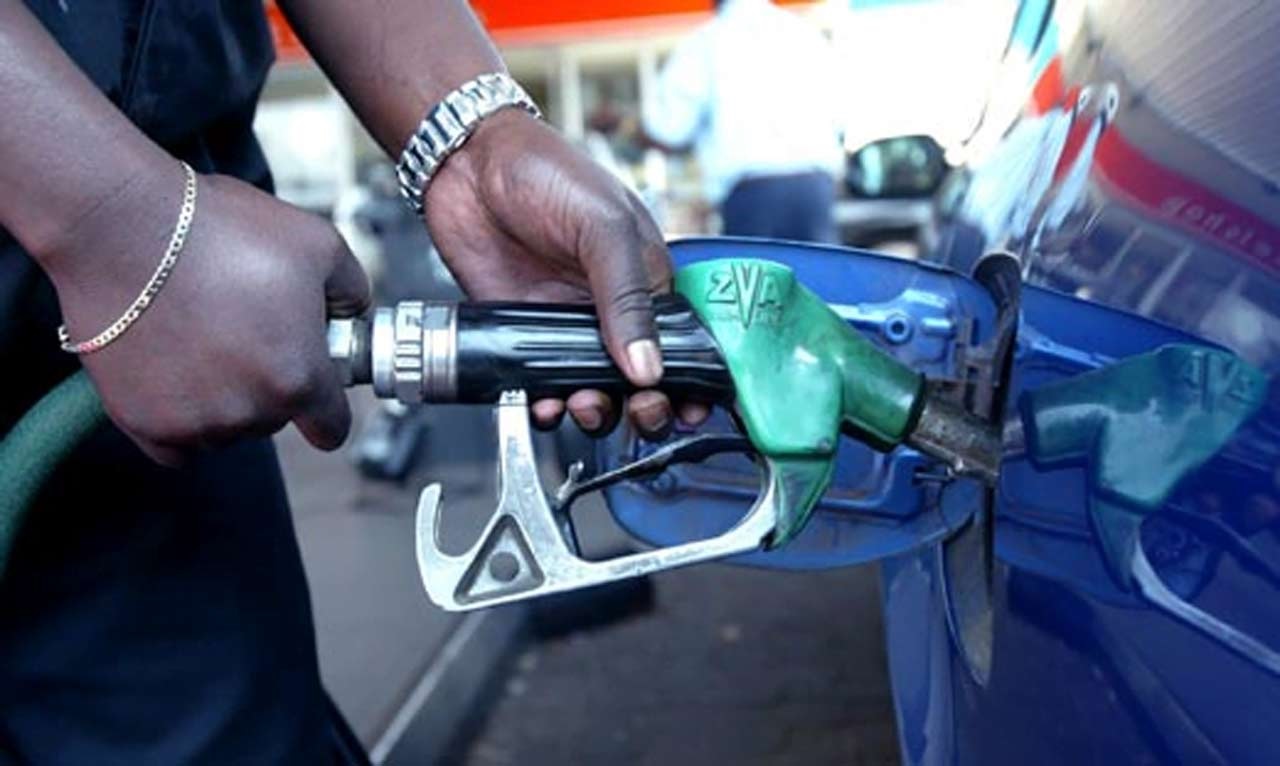
The International Monetary Fund (IMF) has welcomed the decision by the Nigerian government to remove the fuel subsidy, saying it will free up more resources for development spending.

The government claims that the subsidy removal will save the country about 1 trillion naira ($2.6 billion) annually, which can be used for development projects and social welfare programs. But is this claim justified? And what are the implications of the subsidy removal for the Nigerian economy and the people?

In a statement, the IMF said the subsidy removal was a “bold and necessary reform” that would help address the fiscal challenges posed by the COVID-19 pandemic and the decline in oil prices.

The IMF said the subsidy removal would also reduce the distortions in the energy sector, improve efficiency and transparency, and support the development of renewable energy sources.

The subsidy on petrol was introduced in the 1970s as a way of cushioning the effects of oil price fluctuations on the domestic market. The subsidy meant that the government paid the difference between the landing cost of imported petrol and the pump price, which was fixed at a low level. This was supposed to make petrol affordable for Nigerians and stimulate economic growth.

However, over the years, the subsidy became unsustainable and inefficient, as it consumed a large chunk of the government’s budget, encouraged smuggling and corruption, distorted the market signals, and discouraged investment in the refining sector.

The government argues that by removing the subsidy, it will free up resources that can be used for more productive purposes, such as infrastructure development, health care, education, and social protection. The government also says that the subsidy removal will encourage competition and efficiency in the downstream sector, attract private investment in refining and distribution, reduce dependence on imported petrol, and create more jobs.

Furthermore, the government assures that it will implement measures to mitigate the impact of the subsidy removal on the poor and vulnerable segments of the population, such as cash transfers, mass transit schemes, and lower tariffs on electricity.

The IMF urged the Nigerian authorities to use the savings from the subsidy removal to increase social spending, especially on health, education and social protection, as well as to invest in infrastructure and human capital development.

Many Nigerians are skeptical about the government’s ability and willingness to use the savings from the subsidy removal for development spending. They point out that previous attempts to remove or reduce the subsidy did not result in any tangible improvement in public services or infrastructure.

They also fear that the subsidy removal will lead to higher inflation, lower purchasing power, and reduced economic activity, especially in the context of the COVID-19 pandemic and its aftermath. Moreover, they question the timing and manner of the subsidy removal, which was done without adequate consultation or communication with stakeholders.

The debate over the subsidy removal is not new in Nigeria. It has been a recurring issue for decades, with different administrations trying to implement it with varying degrees of success and resistance.

The challenge for the current government is to convince Nigerians that this time is different, and that it has a clear and credible plan to use the savings from the subsidy removal for development spending that will benefit all Nigerians.

The government also needs to ensure that it provides adequate social safety nets for those who will be adversely affected by the price increase. Only then can Nigerians accept and support this policy reform.

The IMF also called for more reforms to improve governance, enhance revenue mobilization, strengthen public financial management, and foster a conducive business environment.

The IMF said it was ready to continue supporting Nigeria in its efforts to achieve inclusive and sustainable growth, reduce poverty and create jobs.
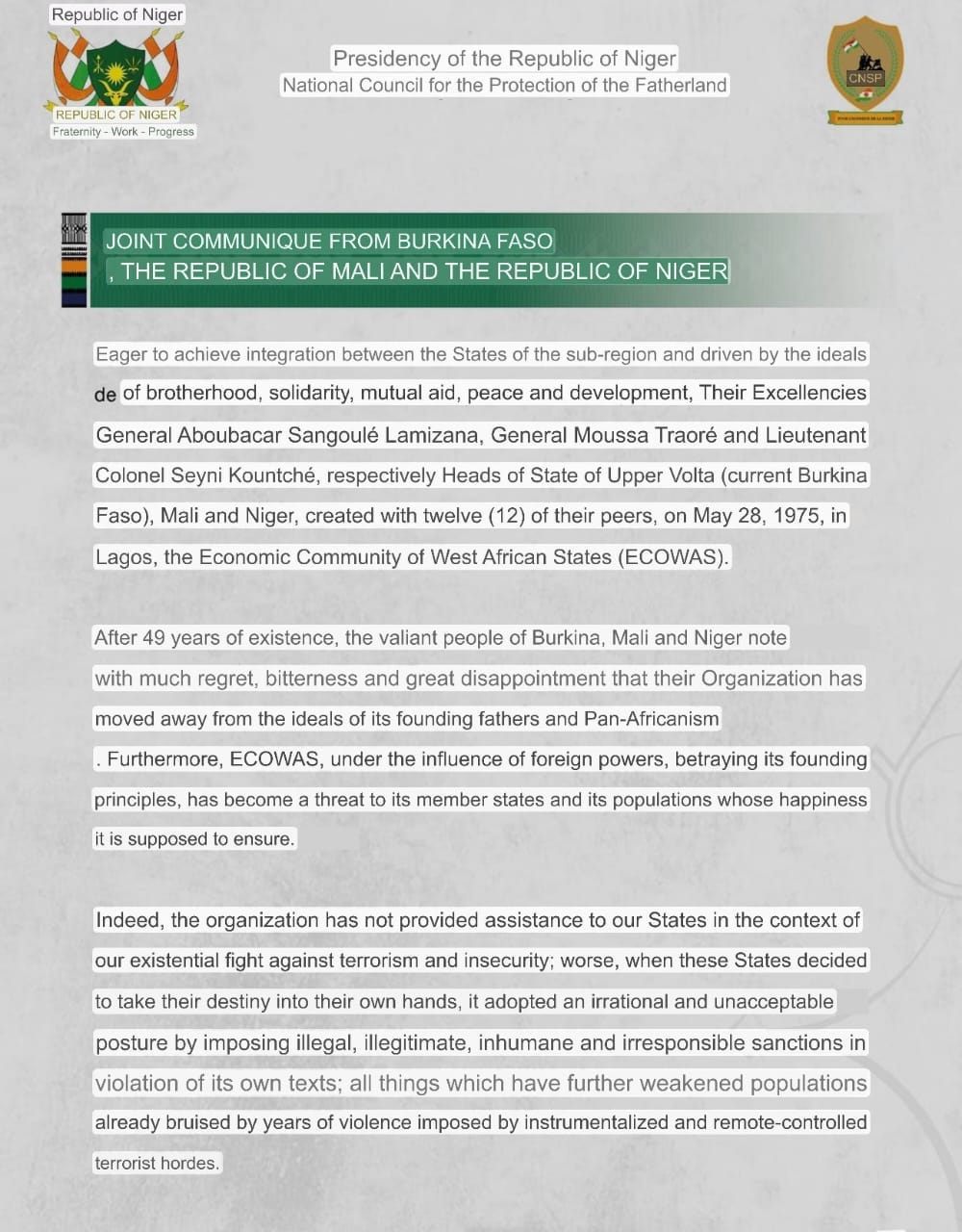
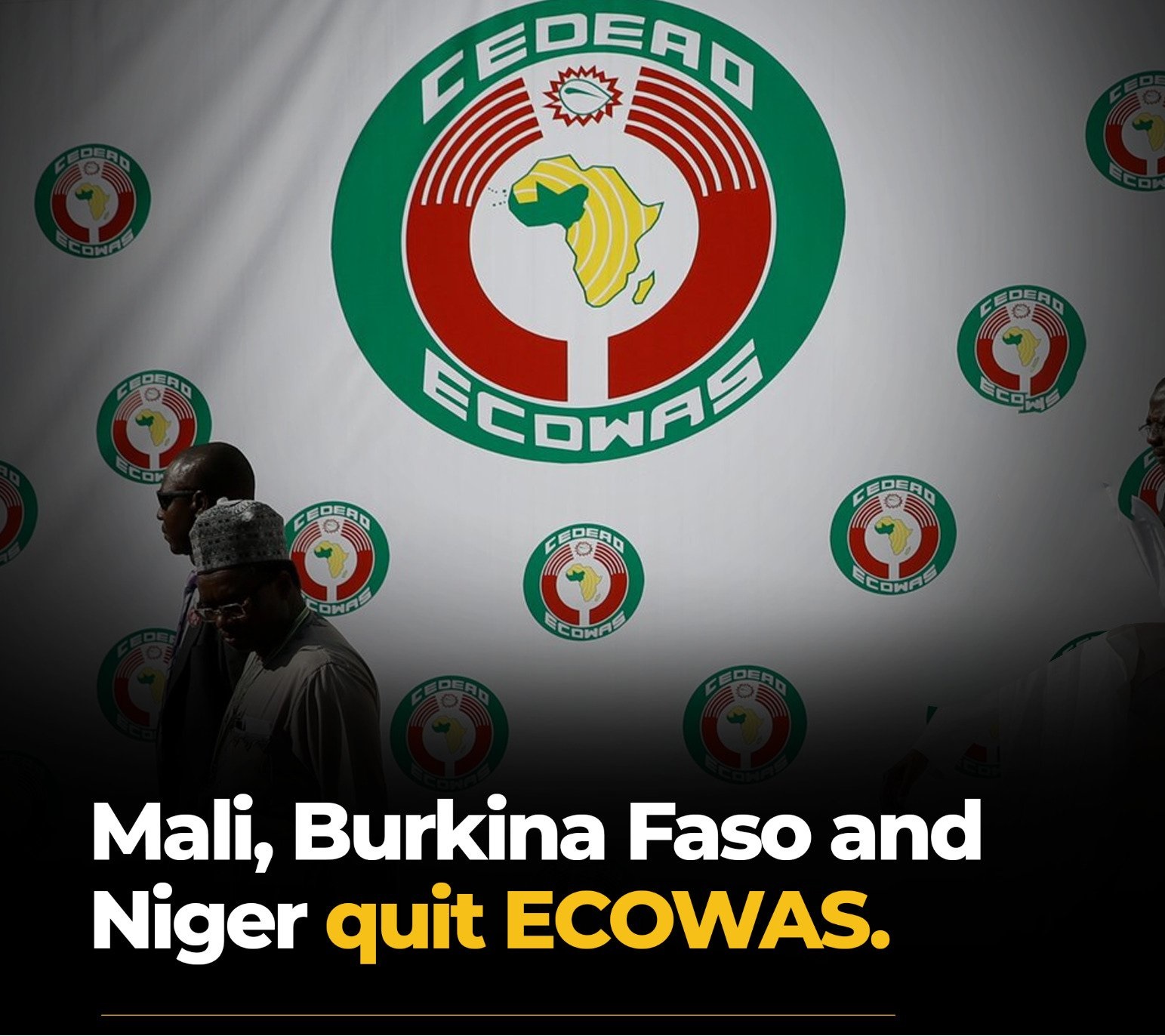
Niger, Mali and Burkina Faso military Juntas announce withdrawal from ECOWAS

0

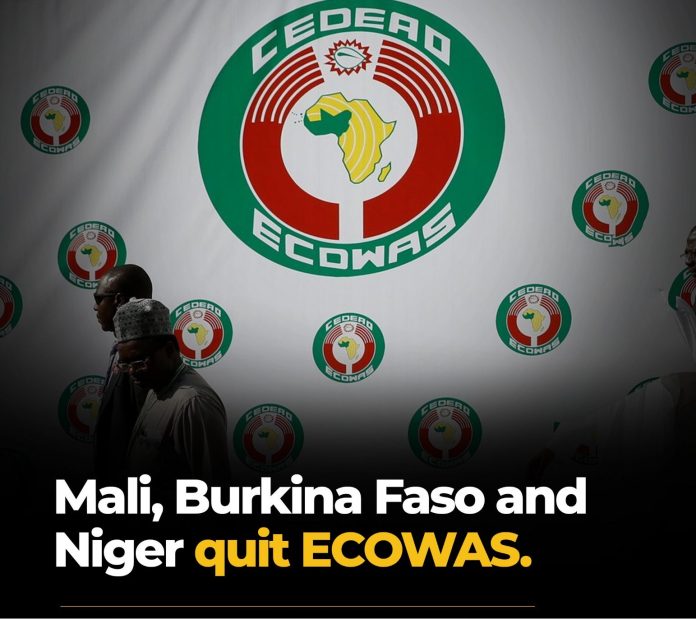
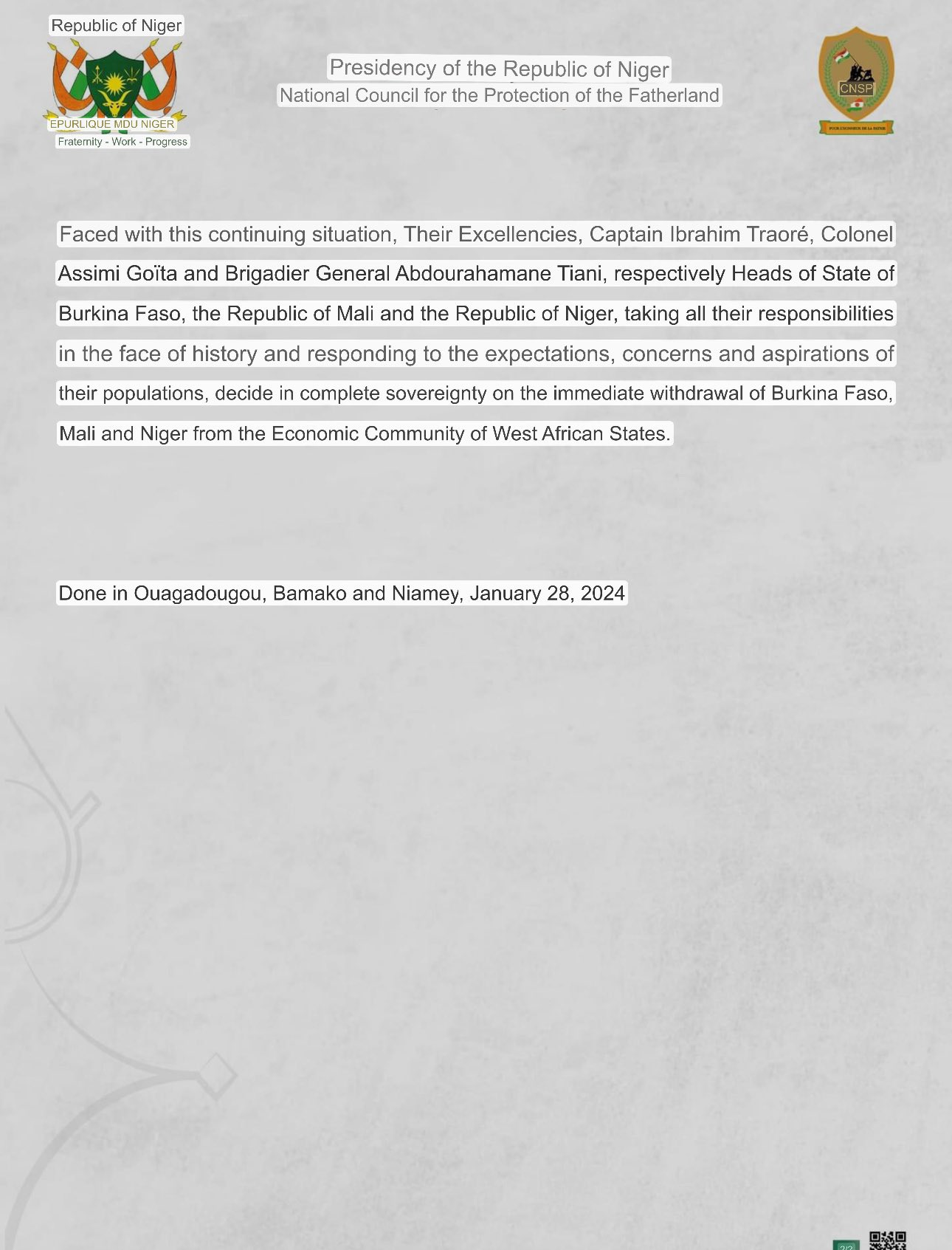
In a surprising move, the leaders of three West African nations have announced their decision to leave the Economic Community of West African States (ECOWAS), a regional bloc of 15 countries that promotes economic integration and political cooperation.

The statement, issued by the military junta that seized power in Niger last year, and endorsed by the transitional authorities in Mali and Burkina Faso, who also came to power through coups, cited “irreconcilable differences” with the other members of ECOWAS as the main reason for their withdrawal.

The statement also accused ECOWAS of interfering in their internal affairs and imposing sanctions on them for violating the bloc’s democratic principles. The statement did not specify when the withdrawal would take effect, but said it was “immediate and irreversible”.

The announcement has sent shockwaves across the region and beyond, as ECOWAS is widely regarded as one of the most successful and influential regional organizations in Africa. ECOWAS was founded in 1975 with the aim of fostering economic integration and trade among its members, as well as promoting peace and security in a region plagued by conflicts and instability.

ECOWAS has played a key role in mediating and resolving crises in countries such as Liberia, Sierra Leone, Guinea-Bissau, Ivory Coast and The Gambia. It has also launched several initiatives to enhance cooperation in areas such as energy, infrastructure, agriculture, health and education.

The withdrawal of Niger, Mali and Burkina Faso from ECOWAS will have significant implications for both the departing countries and the remaining members. For the former, it will mean losing access to the benefits of regional integration, such as free movement of goods and people, common currency, customs union, common market and preferential trade agreements. It will also isolate them from their neighbors and expose them to greater security threats from armed groups and terrorists that operate across borders.

For the latter, it will mean losing three important partners in addressing the challenges of development, governance and security in the region. It will also weaken the credibility and legitimacy of ECOWAS as a regional actor and undermine its efforts to promote democracy and human rights.

The decision to leave ECOWAS is likely to face strong opposition from various stakeholders within and outside the three countries. The civil society, opposition parties, trade unions, business associations and ordinary citizens may protest against the move and demand a return to democratic rule and regional integration.

The international community, especially the African Union, the United Nations, the European Union and France, may also condemn the move and exert pressure on the military rulers to reverse their decision and respect their commitments to ECOWAS. The other members of ECOWAS may also try to persuade or coerce the three countries to reconsider their withdrawal and rejoin the bloc.

The future of ECOWAS and its relations with Niger, Mali and Burkina Faso will depend on how these actors react to the announcement and what steps they take to address the underlying issues that led to it. It is hoped that dialogue, diplomacy and compromise will prevail over confrontation, isolation and fragmentation.

ECOWAS has been a force for good in West Africa for over four decades, and it should not be allowed to fall apart because of the actions of a few military leaders who do not represent the aspirations of their people.

ECOWAS Must Find Ways To Bring Mali, Burkina Faso and Niger Back

0

Many are positing that Mali, Burkina Faso and Niger exiting ECOWAS is not a big issue. It is indeed an issue as ECOWAS makes many things happen in West Africa. Yes, you can drive from Ovim to Ghana to any part of ECOWAS as a person or a business owner.

You can make soap in Lagos and ship it to any ECOWAS nation with limited challenges. When Nigeria closed ECOWAS land borders, we scored own-goals with a recession. Our Togolese brothers install the best tiles in Lagos, Kano, etc, and they can come and go with no Visas, etc. Simply, ECOWAS makes West Africa become one country. You can live in Lagos and work in Benin Republic. Private English-based secondary schools in Lagos get many students from Francophone West Africa due to ECOWAS. If ECOWAS breaks down, those orders will fold. Simply, there are many benefits with no tariff.

My company, Fasmicro, Intel’s only programmable microprocessor knowledge partner in Africa, serves many universities and companies across Africa.  My team does travel with Young Shall Grow Motors ECOWAS bus. If ECOWAS fades, that will not be possible because The Young’s ECOWAS bus will not move easily.

Good People, ECOWAS must find ways to ensure those 3 countries return; Africa must be united because unity is the path to progress.

A Fragile World Needs A More Influential United Nations

1

As the paralysis scales in Gaza, Syria, Yemen, Ukraine, and other places in the world, if care is not taken, we may not have the United Nations anymore. The fact is evident: few and fewer nations care about what the United Nations puts out these days, and the attack on its institution is unprecedented. 

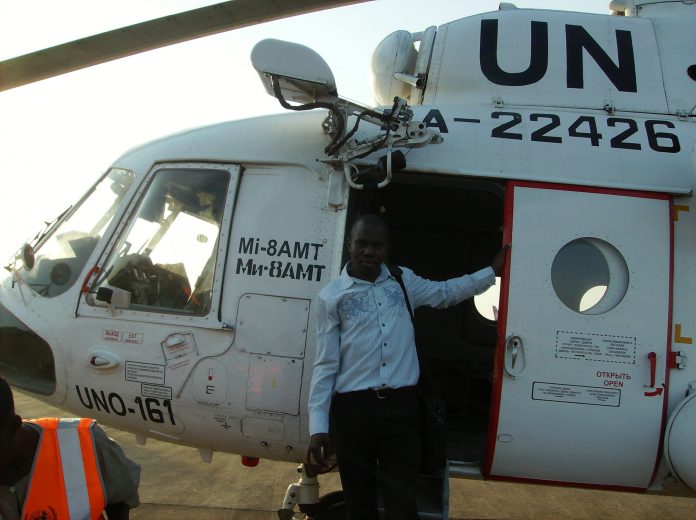
I have served the United Nations as a global citizen in many ways and forms, flying in planes and helicopters, and doing what global citizens do. But over the last few years, I can see a clear stress on the foundational cord of the United Nations.

Truth and facts are not absolute anymore. Everything now is based on relativism. You may blame me for thinking that it was actually based on order. The world has a few more years for a redesign  because if we continue like this, expect some countries to resign as members of the United Nations. The operating order right now is broken – and this is a huge risk to global peace.

In the Igbo Nation, men fight, dance and do whatever, but one day, it is expected that they will converge and drink together. In Ovim, that is the Nkwo day (in some communities, it could be Afo, Orie or Eke). During that drinking, the most elderly person asks the ancestors to bring peace, and allow kinsmen drink together, and reconcile. Magically, some of those “enemies” will forget their animosities, reducing tension in the land. 

Then  as kinsmen gather for the yam festival, they ask everyone to eat the yam and vegetable from the same pot. How do you eat from the same pot with your enemy? Haha, you must dis-enemy that person before eating. Peace is consolidated, and the spirits of Nwaoha (a child is born to the community, not just the parents) and Udoha (peace to all in the community) scale.

Good People, as in ancestral Igbo which had mechanisms to bring people together and solve problems, the world needs the United Nations to deepen its influence, towards bringing peace to our fragile world.

Of course, this is coming on the news that Mali, Niger and Burkina Faso have exited ECOWAS membership.  This is a very troubling pattern where few really care about supranational institutions like the UN and ECOWAS.

I do expect Nigeria, Ivory Coast and Ghana to lead to ensure ECOWAS does not disintegrate into pieces. It has taken decades to build that economic alliance, we cannot allow it to just collapse overnight.

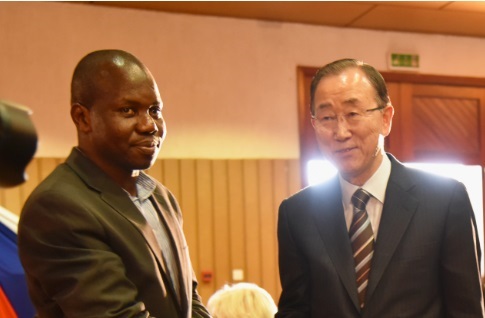
Ndubuisi Ekekwe Ban Ki-moon
UN Secretary General

Russia launches new aerial attacks in Syria

0

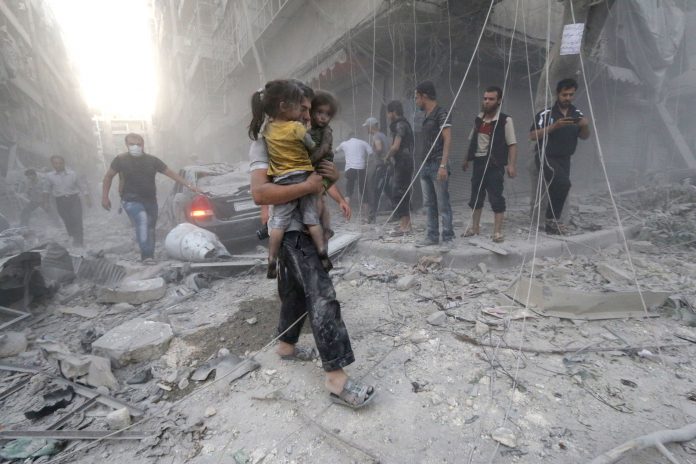
In a major escalation of the conflict in Syria, Russia has launched a series of airstrikes on rebel-held areas in the northwestern province of Idlib. The attacks, which began on Saturday, have targeted several towns and villages, killing dozens of civilians and displacing thousands more.

According to the Syrian Observatory for Human Rights, a UK-based monitoring group, at least 21 civilians were killed on Sunday, including eight children and six women. Among the victims were a family of seven who died when their home was hit by a Russian missile in the town of Ariha.

The attacks have also damaged or destroyed several health facilities, schools, mosques and markets, according to local sources and aid groups. The White Helmets, a volunteer rescue group, said they had documented 18 attacks on civilian infrastructure in the past two days.

The Russian Defense Ministry said it was targeting “terrorist groups” that had violated a ceasefire agreement brokered by Turkey and Russia in March 2020. The ministry claimed that the strikes were carried out in coordination with Turkey and in response to “provocations” by the rebels.

However, Turkey, which backs some of the rebel factions in Idlib, denied any involvement in the Russian attacks and condemned them as a violation of the ceasefire. Turkey’s Foreign Ministry said it had summoned the Russian ambassador to Ankara to express its “strong reaction” to the strikes.

The UN humanitarian coordinator for Syria, Mark Lowcock, also expressed alarm over the situation in Idlib and urged all parties to respect international humanitarian law and protect civilians. He said the UN was ready to provide humanitarian assistance to those affected by the violence.

Idlib is the last major rebel stronghold in Syria, where a civil war has been raging since 2011. The province hosts about three million people, more than half of whom are internally displaced from other parts of the country. The region has witnessed several waves of violence and displacement in recent years, as the Syrian government and its allies have tried to recapture it from the rebels.

Why did Russia launch new aerial attacks?

The Russian defense ministry said it targeted “terrorist” positions and infrastructure, but activists and witnesses reported civilian casualties and damage to hospitals, schools and markets. What are the motives behind this intervention and what are the implications for the region and the world?

One possible reason for the Russian airstrikes is to support its ally, Syrian President Bashar al-Assad, who is facing a serious threat from a variety of rebel groups, some of which are backed by the US, Turkey and other countries. Russia has been a staunch ally of Assad since the start of the civil war in 2011, providing him with military, economic and diplomatic assistance. By launching the airstrikes, Russia may hope to bolster Assad’s position and prevent his regime from collapsing.

Another possible reason for the Russian airstrikes is to counter the influence of the US and its allies in the Middle East. Russia has been critical of the US-led coalition that has been conducting airstrikes against the Islamic State (IS) group in Syria and Iraq since 2014, accusing it of violating Syria’s sovereignty and failing to coordinate with the Syrian government. Russia may also see the US as a rival for regional dominance and seek to challenge its interests and allies, such as Turkey, Saudi Arabia and Israel.

A third possible reason for the Russian airstrikes is to protect its own national security interests. Russia may fear that the instability and violence in Syria could spill over into its neighboring regions, such as the Caucasus and Central Asia, where it has strategic and economic interests.

Russia may also worry that some of the rebel groups in Syria, especially those affiliated with IS or al-Qaeda, could pose a terrorist threat to its homeland or its citizens abroad. By launching the airstrikes, Russia may aim to prevent the spread of extremism and terrorism in its vicinity.

The Russian airstrikes have provoked mixed reactions from the international community. The US and its allies have condemned the intervention as a violation of international law and a hindrance to the peace process. They have also expressed concern that Russia is not targeting IS but rather other rebel groups that are fighting against Assad.

They have called for an immediate cessation of hostilities and a political solution to the conflict. On the other hand, some countries, such as Iran, Iraq and China, have welcomed the Russian intervention as a contribution to the fight against terrorism and a stabilizing factor in the region.

The Russian airstrikes have also raised questions about the future of Syria and the prospects for a peaceful resolution of the conflict. The intervention may complicate the efforts to find a political solution that would involve all parties, including Assad and his opponents.

It may also increase the risk of a direct confrontation between Russia and the US or its allies, which could escalate into a wider regional or global war. The intervention may also worsen the humanitarian situation in Syria, where millions of people have been killed, injured or displaced by the violence.

The Russian airstrikes are a significant development in the Syrian civil war that could have far-reaching consequences for the region and the world. The motives behind this intervention are complex and multifaceted, involving geopolitical, security and ideological factors.

The intervention has sparked controversy and criticism from some countries and support from others. The intervention has also added uncertainty and complexity to the situation in Syria and challenged the hopes for a peaceful end to the conflict.