DD
MM
YYYY

PAGES

DD
MM
YYYY

spot_img

PAGES

Home Blog Page 3753

Polkadot’s Parachain Astar (ASTR) and Scorpion Casino Presale ($SCORP) Are Stirring Up the Community – Here’s Why!

0

Embark on an exciting journey through the dynamic world of cryptocurrencies, where the impressive rise of Polkadot’s Parachain Astar (ASTR) and the lively Scorpion Casino ($SCORP) Presale are making waves in the crypto sphere. Join us as we carefully reveal the mysterious charm that propels these entities into the spotlight, decoding the complex factors that have turned them into the centre of discussions within the crypto community.

Get ready for a deep exploration into the forces behind their rapid ascent, as we navigate the currents of speculation, unveiling the intrigue that makes Astar and Scorpion Casino the undeniable focal points of conversation in the ever-changing landscape of digital assets.

Why Is Scorpion Casino Presale the Most Talked-About Investment Opportunity of 2024?

In the midst of the escalating crypto excitement, Scorpion Casino’s presale is unequivocally seizing the spotlight, and it’s not by chance. Offering a tantalizing prospect of up to 10,000 USDT in daily passive staking income, this globally licensed Casino and Betting Platform introduces the $SCORP token, proudly touted as the #1 worldwide. Anchored in a unique model, it generously rewards holders each day based on the casino’s performance. As the presale enters its final phase, Scorpion Casino has already amassed a staggering $3.4 million, showcasing an unwavering momentum with no indications of deceleration.

The palpable surge in demand has resulted in a swift sellout, indicative of the soaring interest among investors. For those who seized the opportunity, daily withdrawable USDT rewards have translated into tangible gains. The endorsement of several  illustrious ambassadors, prominent singers and TV stars with vast followings, not only adds to Scorpion Casino’s allure but also attests to its growing credibility in the market. Adding an extra layer of excitement, the impending listing on BitMart marks the inception of a promising trend, hinting at a future laden with potential opportunities for investors.

Astar’s Soaring Heights: Unveiling Polkadot’s Parachain Triumph:

Soaring to new heights in the crypto spotlight is Astar (ASTR), Polkadot’s vibrant parachain network, capturing attention with its recent milestones. The revelation of surpassing 650,000 ASTR holders stands as a testament to Astar’s impressive momentum within the Web3.0 ecosystem.

The enthusiastic response to Astar’s accomplishments signifies a growing community trust and highlights its increasing influence within the digital realm. As Astar continues to carve its path to success, the crypto world eagerly watches, anticipating further groundbreaking developments from this dynamic Polkadot parachain.

The Final Word

In a realm where Astar’s achievements and Scorpion Casino’s presale fervor intersect, the crypto landscape is ripe with opportunity. Whether you’re drawn to the rising star of Astar or enticed by the sizzling allure of Scorpion Casino, this guide serves as your passport to the next big investment. Explore, engage, and consider the possibilities, knowing that the crypto universe is buzzing with excitement, and your journey awaits.

Join The Presale While You Still Can!


Presale: https://presale.scorpion.casino/

Twitter: https://twitter.com/ScorpionCasino

Telegram: https://t.me/scorpioncasino_official

Bonk (BONK) and Pepe (PEPE) Begin Recovery – Pullix (PLX) Sells Over 80M Tokens Next Target 100M

0

Bonk (BONK) and Pepe (PEPE) are two trending meme coins that have seen substantial jumps in their value during the previous week, and as a result, are a main point of appeal for traders globally. However, the Pullix (PLX) presale is also pulling massive attention due to its high-growth opportunity, and massive innovations that it will bring in the DeFi space. To see just why these cryptocurrencies are getting the most significant attention, we will go over all of them in-depth.

Bonk (BONK) Sees Upwards Momentum – On-Chart Data Suggest Climb to $0.000018

Bonk (BONK) has seen a significant upswing during the past week’s trading session, despite the fact that the wider crypto market has continued to correct following this month’s Bitcoin ETF approvals. As a result, the Bonk price has the potential to soon see even further gains. As a point of reference, when we look at its historical data, the Bonk crypto grew mid-December by 32,000% from its all-time low of $0.000000078614, recorded in December 2022.

Now, while many initially projected that the crypto could be suffering from a long-term decline, the past week has been slightly bullish, as it moved as high as $0.00001358. According to the most recent Bonk price prediction, it can end 2024 with a value of $0.000018.

Pepe (PEPE) Begins Price Recovery – Can Go Up to $0.000003

Pepe (PEPE)’s on-chart data showcases that the cryptocurrency has lost serious amounts of momentum in the past months, however, this has changed during late-January of 2024, as the crypto is now showing signs of recovery. The Pepe price is showcasing an upwards trajectory, as its moving above its 50-day EMA.

According to Lookonchain data, there is also massive whale activity, where a whale deposited 2 trillion of the Pepe coin, worth $2.74 million. According to the Pepe price prediction, the crypto can end the year from a minimum price of $0.000002, to a maximum value at $0.000003.

Pullix (PLX) Sells Over 80 Million Tokens – Price Projected to 100x at Launch

Pullix (PLX) is an upcoming platform that can completely change the exchange space, and is bridging the gap between CEXs and DEXs, and provides users with a unique amalgamation of both exchange types.

It will tackle liquidity challenges that have prevented the mainstream adoption of these technologies, which will enable it to stand out in the TradFi landscape. Moreover, Pullix will introduce advanced trading tools, and will let users enhance their profitability. Anyone can begin margin trading, get access to institutional tools, and copy the most successful traders.

The cryptocurrency is now at Stage 7, where it trades at just $0.10. Early investors have gained a ROI of 100%, and over 20 million tokens were sold during Stage 6 alone, and 80 million tokens have been sold in total. Its growth is not over however, as there are a total of 120 million PLX tokens that will be available during the ICO, and at launch, analysts project a price upswing of 100x. These aspects make PLX the best crypto to invest in during 2024.

Summary

While PLX is the best crypto to invest in, Bonk and Pepe are showing signs of recovery. Still, the presale behind this latest project is getting the most attention, as with its innovative technology and vast ecosystem, Pullix is positioned to become a major player in the industry.

For more information regarding Pullix’s presale see links below:

Visit Pullix

Join The Pullix Communities

Nigeria’s Education Budget: Comparing the 1960s and the Current Era

1

Time flies but we could go back to see how some of our founding leaders governed Nigeria and its regions. In Nigeria’s 2024 national budget, we have about 7% allocated to education (you must include TETFund in the computation). If you average our budget on education to our GDP over three decades, Nigeria does not show up in the top 40 countries in Africa (see source here). 

Countries like Congo DRC, Chad and Niger are ahead of us. They may not have big universities, but they invest a lot on vocational training. In other words, you may not hold a BSc, but there is a technical school around the corner to learn how to install tiles or do plumbing work.

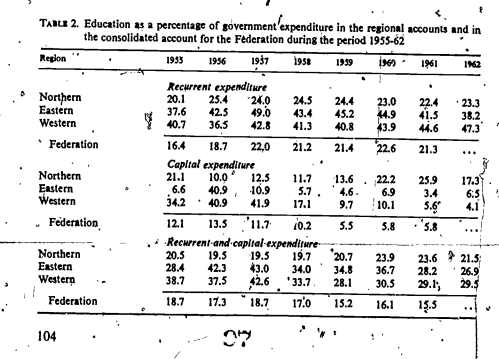
Now, see on this table how Nigeria used to spend on education. I am sharing data around 1955-1962. Then the government was organized in regional format, and budgets were structured that way. Of course, the regional premiers had inputs on the budgets. (Doing a report connecting education to development from 1945 to 2023, in Nigeria. So, I have pulled data from archives; New York Times is indeed a resource.)

You can see that education was averaging at least 15% of the national budget. Of course, there was no stealing and that 15% went into education. Today, when we say we are budgeting 7%, the budget execution may not even hit 80% which means ideally, we are spending just 5.6% assuming no leakages. If you include leakages, the budget may not be up to 3% of the budget.

Now you can see that the drop in quality is not because our kids do not have the right oil in the brain. It is simply that Nigeria has left what was working with our “security votes” which is a legal way to “steal”.

Nigerian modern leaders abandoned the pursuit of knowledge and the liberation of the mind, and whenever that happens, nations struggle.

GBTC’s asset bleeding to blame for week of flat crypto product flows

0

The past week has seen a lackluster performance of crypto products, with no significant inflows or outflows recorded. According to a report by CoinShares, the total assets under management (AUM) of crypto products remained at $62.7 billion, a slight decrease from the previous week’s $63.3 billion.

One of the main factors behind this stagnation is the continuous decline of GBTC’s AUM, which dropped by $1.4 billion in the past week. GBTC, or Grayscale Bitcoin Trust, is the largest and most popular crypto product, holding about 75% of the market share. However, GBTC has been suffering from a persistent discount to its net asset value (NAV), meaning that its shares are trading below the value of its underlying assets.

The discount, which reached a record high of 21.23% on March 4, has deterred investors from buying GBTC shares, as they would be paying more for less exposure to Bitcoin. Moreover, some investors have been selling their GBTC shares to arbitrage the price difference, adding more downward pressure on the product.

The discount is partly attributed to the lock-up period of GBTC shares, which requires investors to hold them for six months before they can sell them on the secondary market. This creates a mismatch between supply and demand, as new investors are reluctant to buy GBTC shares at a premium, while existing investors are eager to sell them at a discount.

Another factor that contributes to the discount is the increasing competition from other crypto products, especially exchange-traded funds (ETFs). In the past few months, several Bitcoin ETFs have been launched in Canada and Brazil, offering investors a more convenient and cost-effective way to access the crypto market. These ETFs have lower fees than GBTC and trade at or near their NAV, making them more attractive alternatives.

The report by CoinShares suggests that some of the outflows from GBTC may have been redirected to these ETFs, as they have seen inflows of $49 million in the past week. The report also notes that there is a strong demand for a Bitcoin ETF in the US, as evidenced by the recent filings by several firms, including Fidelity and VanEck.

However, the approval of a Bitcoin ETF in the US is still uncertain, as the Securities and Exchange Commission (SEC) has repeatedly rejected or delayed such proposals in the past. The SEC has expressed concerns about the volatility, liquidity, custody and manipulation of the crypto market, and has asked for more regulation and oversight before it can greenlight a crypto product.

Therefore, GBTC may still have a chance to regain its dominance in the crypto product space, if it can address its discount issue and improve its value proposition. One possible solution is to convert GBTC into an ETF, which would eliminate the lock-up period and align its price with its NAV. However, this would require approval from the SEC, which may not be forthcoming anytime soon.

Another possible solution is to reduce GBTC’s management fee, which is currently 2%, much higher than the average fee of 0.5% for crypto ETFs. This would make GBTC more competitive and appealing to investors who are looking for lower costs and higher returns.

In any case, GBTC’s performance will have a significant impact on the overall crypto product market, as it represents a large portion of the investor demand and sentiment. If GBTC can overcome its challenges and regain its attractiveness, it may spark a new wave of inflows and growth for the crypto product sector.

US national debt reaches new all-time high of $34.1 trillion in January 2024

0

The US national debt has hit a new record of $34.1 trillion in January 2024, according to the latest data from the Treasury Department. This is an increase of $4.3 trillion from January 2020, when the debt was $29.8 trillion.

The debt has been growing rapidly due to the unprecedented fiscal stimulus and relief measures enacted by the federal government in response to the COVID-19 pandemic and its economic fallout. The debt-to-GDP ratio, which measures the debt relative to the size of the economy, has also reached a historic high of 153%, surpassing the previous peak of 119% in 1946, after World War II.

The rising debt poses significant challenges and risks for the US economy and its future prospects. Some of the potential consequences include:

Higher interest payments: As the debt grows, so does the cost of servicing it. The Congressional Budget Office (CBO) projects that net interest payments will rise from $345 billion in 2020 to $914 billion in 2030, accounting for 3.1% of GDP. This means that more tax revenues will have to be diverted to pay for the interest, leaving less room for other spending priorities or tax cuts.

Reduced fiscal space: A high debt level limits the government’s ability to respond to future crises or emergencies, such as wars, natural disasters, or recessions. The government may face difficulties in borrowing more money from investors, who may demand higher interest rates or lose confidence in the US’s creditworthiness. Alternatively, the government may have to resort to printing more money, which could lead to inflation and currency depreciation.

Lower economic growth: A high debt level may also have negative effects on the long-term growth potential of the economy. Some studies suggest that a high debt-to-GDP ratio can reduce the rate of economic growth by crowding out private investment, lowering productivity, and creating uncertainty and instability.

Given these challenges and risks, many economists and policymakers have called for a comprehensive and credible plan to reduce the debt over time and restore fiscal sustainability. However, there is no consensus on how to achieve this goal, as it involves difficult trade-offs and choices among competing objectives and interests. Some of the possible options include:

Raising taxes: Increasing tax revenues can help reduce the deficit and slow down the growth of the debt. However, raising taxes can also have adverse effects on economic activity, especially if they affect incentives to work, save, invest, or innovate. Moreover, raising taxes can be politically unpopular and face resistance from various groups and constituencies.

Cutting spending: Reducing spending can also help reduce the deficit and slow down the growth of the debt. However, cutting spending can also have negative impacts on social welfare, public services, infrastructure, national security, or research and development. Moreover, cutting spending can be politically difficult and face opposition from various groups and beneficiaries.

Reforming entitlements: Reforming entitlement programs, such as Social Security, Medicare, and Medicaid, can help reduce the long-term pressures on the budget and the debt. These programs account for a large and growing share of federal spending and are projected to increase significantly as the population ages and health care costs rise.

However, reforming entitlements can also entail significant changes in benefits, eligibility, or contributions for current or future recipients. Moreover, reforming entitlements can be politically contentious and face resistance from various groups and stakeholders.

The US national debt has reached a new all-time high of $34.1 trillion in January 2024, reflecting the unprecedented fiscal response to the COVID-19 pandemic and its economic consequences. The high debt level poses significant challenges and risks for the US economy and its future prospects, such as higher interest payments, reduced fiscal space, and lower economic growth.

To address these challenges and risks, a comprehensive and credible plan to reduce the debt over time and restore fiscal sustainability is needed. However, such a plan involves difficult trade-offs and choices among competing objectives and interests, such as raising taxes, cutting spending, or reforming entitlements.