DD
MM
YYYY

PAGES

DD
MM
YYYY

spot_img

PAGES

Home Blog Page 376

Google’s New Developer Verification Sparks Fears of Centralized Control and Censorship on Android

0

As Google pushes ahead with its new “Android Developer Verifier,” the company insists that sideloading — one of Android’s most cherished freedoms — is not going away. But with every new disclosure, that assurance feels increasingly hollow.

According to Ars Tecnica, the upcoming Android 16 release will introduce a verification system that critics say could consolidate Google’s control over app distribution, tighten its grip on developers, and threaten the open nature of Android itself.

At the center of the change is a new system requirement: every app installed outside Google Play must now have a registered package name and signing key verified through Google’s servers. The process, which relies on a cloud-based database rather than local verification, effectively makes internet access mandatory for many sideloaded installations. While Google promises a limited offline cache for the most common apps, less popular or niche applications will require a connection — a move that some developers warn could “break” open-source storefronts like F-Droid that thrive on independence from Google’s ecosystem.

Google insists that this is about security. The company says the verification process is designed to prevent malware and “apps with a high degree of harm,” not to police content or enforce Play Store-style rules. Still, the implications go beyond cybersecurity. The new system requires that all apps distributed outside Play — including those from alternative app stores — be verified by Google, a process that will cost developers a $25 fee. That’s the same as the Play registration charge, and Google says it covers administrative expenses. But to independent developers, it represents something else: a paywall to openness.

Even hobbyists and students, who can register through a free “lite” tier, face restrictions. Google has not clarified how many installations will be permitted under this limited-access tier, but the company’s guidance “strongly encourages” developers to opt for the paid, full verification, raising concerns that the free option could quickly become impractical.

Security or Strategy?

While Google frames the change as a necessary evolution of Android security, many in the developer community see it as an attempt to reassert dominance at a time when its control over app distribution faces legal and market challenges. The company recently lost a major antitrust case in the United States, where courts found it had acted illegally to maintain a monopoly in the Play Store. Regulators accused Google of intentionally limiting the visibility and viability of rival app stores and sideloading options.

Now, just as the fallout from that ruling threatens to empower alternative platforms, Google is implementing a verification process that places sideloading — once a symbol of Android’s openness — squarely back under its supervision. Developers and digital rights advocates argue that it’s a preemptive move designed to “secure” Google’s place as Android’s gatekeeper.

A Question of Trust

Developers are also worried about what happens to the data Google collects. Under the new system, every verified developer must provide personal information to Google. While this information won’t be made public, it will exist in Google’s internal databases — and could be accessed by governments or law enforcement through subpoenas.

This concern isn’t abstract. The U.S. government under President Donald Trump has already pressured app platforms to remove applications deemed subversive or politically problematic. One example was ICEBlock, an app that helped users track immigration enforcement activities before it was pulled from Apple’s App Store. Critics fear that under Google’s centralized verification system, the same could easily happen on Android, with developers’ identities fully exposed and their apps blocked remotely.

Cloud Reliance and Market Consequences

There’s also a technical shift at play. Unlike traditional sideloading, which allowed users to install apps directly via APKs, the new model ties installations to Google’s cloud infrastructure. This dependency not only makes the process slower and more restrictive but could also disadvantage alternative app stores, particularly in regions with poor connectivity or censorship concerns.

Some analysts warn that these changes could reshape the global mobile software market in ways reminiscent of Apple’s tightly controlled iOS ecosystem. With the Android Developer Verifier, Google may be closing the gap between Android’s open-source promise and Apple’s walled garden — just from the opposite direction.

It is believed that the tech giant is effectively rewriting the Android social contract, making what was once a platform of user choice a managed ecosystem.

The timing of Google’s move has also stirred concern. Since 2020, the company has faced growing antitrust scrutiny in the U.S. and Europe over Play Store fees and app restrictions. The Epic Games lawsuit, along with state-led antitrust suits, exposed internal communications showing Google’s efforts to discourage developers from bypassing its payment systems. These revelations painted a picture of a company deeply concerned about losing its lucrative app revenue streams — a fear that critics believe is driving the new verification policy.

Developers have not forgotten how Google used similar “security” justifications in the past to limit features or kill third-party tools, including ad-blockers and alternative app launchers. Recent Chrome security updates, for example, made it harder to run extensions that block ads — coincidentally boosting Google’s advertising reach.

Where Does it Go From Here?

As Android 16 nears release, the industry finds itself at a crossroads. On paper, Google’s verification program promises a safer Android experience. In practice, it risks entrenching Google’s dominance over how users install software and who can develop it.

If history is any guide, once the company gains new layers of control, it rarely gives them up. Developers are bracing for a future where every installation, every verification, and every developer identity runs through a Google checkpoint.

That future — where sideloading still technically exists but is no longer truly free — could reshape not just Android, but the entire mobile software industry.

BYD’s 880% Sales Surge in the U.K. Caps Chinese EVs’ Strong Push into Europe Amid U.S. Restrictions

0

Chinese electric carmaker BYD has reported a stunning 880% year-on-year growth in U.K. sales, marking one of the most aggressive expansions by a Chinese automaker in Europe at a time when U.S. restrictions continue to block Beijing’s EV and autonomous-driving ambitions from entering the American market.

According to Reuters, the company sold 11,271 cars in the U.K. last month, bringing its total for the year to just over 35,000 vehicles, making Britain its largest market outside China. That figure translates into a 2.2% market share year-to-date. Once a mobile phone manufacturer, BYD has reinvented itself into a dominant global EV player known for its affordability — with models like the BYD Dolphin starting at just over £26,000 ($34,913), compared to Tesla’s Model 3 priced around £40,000.

The company said its hybrid SEAL U DM-i and electric SEALION 7 were the best performers in the U.K., while its newly opened battery facility in the country is helping service electric buses — a segment in which BYD already holds a commanding presence across Europe.

The U.K.’s EV market itself has seen renewed momentum after the government reintroduced an electric car grant in July, pushing September’s battery-electric sales up 29.1% year-on-year to 72,779 units, according to the Society of Motor Manufacturers and Traders. Notably, the grant excluded Chinese EVs, underscoring a growing European tension over Beijing’s dominance in the electric and autonomous vehicle sector.

However, BYD’s European performance remains striking. Sales across the continent were up over 200% year-on-year as of August, according to the European Automobile Manufacturers Association (ACEA), outpacing Tesla, whose European sales slumped over 36% in the same period. However, BYD last week recorded its first year-on-year decline in global deliveries in 2025, with a nearly 6% drop, signaling that domestic competition in China’s overcrowded market may be beginning to weigh on exports.

BYD’s stock fell 1.3% in Hong Kong trading on Monday.

While BYD continues to gain ground in Europe, its access to the U.S. market remains effectively sealed off under Washington’s trade and national-security restrictions. That has pushed a wave of Chinese EV and autonomous driving technology firms — including QCraft, Momenta, DeepRoute.ai, and WeRide — to establish a strong foothold in Europe. Many are setting up headquarters, striking partnerships with automakers, and testing self-driving systems on European roads.

Executives at several of these companies say Europe offers a far more open regulatory environment compared to the U.S., where national security concerns have led to sweeping restrictions on Chinese connected-car technology.

“We’re focusing on Europe for our global future,” said Dong Li, chief technology officer of QCraft, which recently announced a new German headquarters. “There are barriers in the U.S. market,” he added, referring to data collection concerns that have made Washington wary of Chinese AI and automotive systems.

Momenta, one of China’s leading autonomous driving developers, has already partnered with Uber to begin testing Level-4 technology in Germany next year. The company also supplies driver-assistance systems to Toyota and General Motors and recently announced a deal with Mercedes-Benz to equip its electric CLA sedan with the same technology in China, now under testing in Europe as well.

Deeproute.ai and WeRide are pursuing similar expansion paths, developing high-level autonomous systems for automakers in both Asia and Europe. Analysts at research firm AlixPartners say these companies are replicating the same growth strategy that made Chinese EV makers formidable global competitors — undercutting rivals on cost and accelerating innovation cycles.

“Investors expect growth,” said Yvette Zhang, an automotive consultant with AlixPartners. “They are looking for other markets to grow.”

European startups, meanwhile, are torn between protectionism and open-market collaboration. While some executives have called for tighter oversight and subsidies to protect domestic industries, others — like Wayve CEO Alex Kendall — believe competition from China will drive innovation.

“Even if you’re in some subset of the world, there’s acres of space to grow,” Kendall said.

European Commission President Ursula von der Leyen recently acknowledged that the continent is trailing both the U.S. and China in autonomous vehicle development, urging member states to unify regulatory frameworks. Germany and Britain remain the only major European markets allowing limited Level-3 or Level-4 testing, as Brussels moves to harmonize fragmented national rules.

Berlin-based startup Vay, which is testing remote-driven car services, believes Chinese competition could accelerate this effort.

“It will force European players to sharpen their strategies very quickly,” said Fabrizio Scelsi, Vay’s co-founder.

For Beijing, Europe has become the centerpiece of its automotive global strategy — a crucial counterweight to U.S. restrictions. As Tu Le of Sino Auto Insights put it, “Europe is the only market they can come to. They have to make their move.”

Foxconn Reports Record Third-Quarter Revenue on AI Demand, but It’s Below Expectation

0

Taiwan’s Foxconn, the world’s largest contract electronics manufacturer, has reported record revenue for the third quarter, driven by booming demand for artificial intelligence hardware.

Yet, the company struck a note of caution over exchange rate volatility and the global economic climate.

Foxconn, also known as Hon Hai Precision Industry, said its revenue jumped 11% year-on-year to T$2.057 trillion ($67.71 billion). The performance, while a record high, fell short of market expectations of T$2.134 trillion, according to LSEG SmartEstimate data, which weights predictions from analysts with the strongest track records.

Still, Foxconn said the figures were “better than expected,” noting strong AI-related orders and steady server production for clients like Nvidia and cloud computing firms.

When measured in U.S. dollars, Foxconn’s revenue rose 16.1% from a year earlier, reflecting the Taiwan dollar’s 8% appreciation against the greenback this year—a trend that has cut into export competitiveness for Taiwanese manufacturers.

The company’s cloud and networking products division, which includes AI server components, saw robust revenue growth. However, its smart consumer electronics segment—dominated by iPhone assembly—recorded a slight decline, which Foxconn attributed to adverse currency movements. September revenue alone climbed 14.2% to T$837.1 billion, marking the highest monthly figure in its history.

Foxconn said it expects operations to “maintain sequential quarterly growth” as shipments of AI servers continue to accelerate in the fourth quarter, supported by seasonal demand ahead of major Western holidays. Analysts see the company benefiting from the ongoing buildout of AI data centers globally, which has offset weaker smartphone sales in recent quarters.

But Foxconn’s upbeat AI narrative contrasts with a more cautious view of the broader economy. “The impact of the global political and economic situation and exchange rate fluctuations will need continued close monitoring,” the company said in its statement, hinting at potential disruptions from U.S.-China trade tensions and currency instability.

Stock Performance and Market Outlook

Foxconn’s shares have risen 23% so far this year, outperforming the Taiwan Stock Exchange’s 16% gain. The stock closed up 0.44% on Friday ahead of the revenue announcement, compared to a 1.45% rise in the benchmark index. Analysts say investor enthusiasm remains high for Foxconn’s AI exposure, but caution that volatility in global currencies could weigh on margins if the Taiwan dollar continues to strengthen.

The company, which does not issue forward guidance, is set to release its full third-quarter earnings report on November 12.

However, despite record sales, Foxconn faces a set of emerging risks. Chief among them is exchange rate pressure, as the Taiwan dollar’s appreciation reduces the value of overseas earnings when converted back home. Political tensions in East Asia and tightening export controls from Washington on advanced chip technologies could also impact Foxconn’s ability to source and ship critical components.

Additionally, while AI demand remains strong, it is also cyclical. Analysts warn that a slowdown in hyperscaler spending or a correction in AI chip demand could expose Foxconn’s heavy reliance on a few large customers like Nvidia and Apple. Meanwhile, inflationary pressures and uncertain consumer spending in Western markets may limit growth in its core electronics business this holiday season.

Still, Foxconn’s position as a vital supplier in both AI infrastructure and global consumer electronics leaves it strategically placed to benefit from long-term digital transformation trends, even as short-term risks mount.

Bitcoin Surges Past $125,000 as ETF Inflows And Institutional Demand Ignite New Bull Cycle

0

The price of Bitcoin has once again surpassed expectations, surging beyond the $125,000 mark and sending ripples across global financial markets.

The flagship cryptocurrency’s explosive rally marks a defining moment in its 2025 bull cycle, driven by an influx of institutional investment, massive ETF inflows, and renewed investor optimism.

According to market data, spot Bitcoin ETFs have attracted over $28 billion in inflows year-to-date, underscoring deepening institutional confidence in digital assets. The ongoing U.S. government shutdown has further amplified Bitcoin’s appeal as a hedge against economic uncertainty, reinforcing its reputation as “digital gold” in times of fiscal instability.

As the U.S government shutdown continues to linger, reports reveal that Republicans and Democrats remain locked in a standoff over a funding resolution with Republicans alleging Democrats’ proposals would enhance reimbursements for emergency care to undocumented immigrants.

At the same time, Democrats argue Republicans are obstructing extensions to Affordable Care Act subsidies that support 21 million Americans. Amid the uncertainty of the end of the U.S government shutdown, the price of Bitcoin has continued to reach new highs as investors find it a haven from uncertainty and macroeconomic conditions.

Bitcoin’s latest milestone has sparked widespread speculation among traders and analysts, with many debating whether the next price target could be $150,000. Michael Saylor, co-founder of MicroStrategy and one of Bitcoin’s most vocal advocates, fueled this conversation by posting a poll on X, asking followers if BTC would end 2025 above that level.

More than three-quarters of nearly 83,000 votes chose “Yes,” showing that a large share of the community views six-figure territory not as a ceiling but as a stepping stone.

Despite the euphoria, analysts however caution that Bitcoin faces a critical resistance zone near $124,000, a level that previously triggered a 13% correction. Market observers suggest that a smaller pullback this time could signal underlying strength and set the stage for another upward move. Even a modest 4% dip would likely be seen as a healthy retest of the breakout zone rather than a sign of weakness.

Juan Leon, Senior Investment Strategist at Bitwise, emphasized the importance of focusing on the long-term picture rather than short-term volatility. “When I said, ‘Forget the short-term price action, you’re not bullish enough on crypto,’ I meant that there are many developments in the crypto space that remain bullish for the industry over the long run,” Leon explained.

Meanwhile, veteran crypto analyst Mags noted that while Bitcoin’s momentum might be cooling slightly, altcoins are showing signs of renewed strength. The Altcoin Season Index has turned sharply bullish, and Ethereum’s recent performance is leading the charge. Top altcoins such as XRP, Solana (SOL), Binance Coin (BNB), Cardano (ADA), and Dogecoin (DOGE) have begun to post strong gains, suggesting that a new wave of altcoin momentum may be on the horizon.

Future Outlook

As Bitcoin continues on an upward trajectory, several analysts predict that a sustained break below $115,000 could indicate weakening bullish momentum, but the broader sentiment remains overwhelmingly positive. With institutional participation, ETF demand, and long-term holder conviction all reaching record highs, Bitcoin’s uptrend appears firmly intact.

However, as long as Bitcoin maintains support above $120,000, many believe the crypto asset will surge to $150,000 and beyond.

BlockDAG’s $420M+ Presale with BWT Alpine Edge Steals Spotlight as Pi Network Innovates and XRP Breaks Out

0

Pi Network (PI) developer updates from the 2025 Hackathon midpoint highlight a shift beyond coin speculation. Apps like Starmax and Nature’s Pulse demonstrate that developers are creating tools with real-world utility, though ongoing coin unlocks and operational hurdles still challenge PI’s progress. Ripple (XRP) analyst outlooks remain mixed, with price consolidation between $2.84 and $3.00 keeping traders cautious.

Meanwhile, BlockDAG is clearly emerging as the standout new crypto project of 2025. With over $420M raised, coupled with its high-profile BWT Alpine Formula 1 team partnership, BlockDAG (BDAG) has achieved global recognition even before hitting exchanges. This rare combination of presale accessibility, cultural visibility, and proven adoption cements BlockDAG as the best new crypto to buy in 2025, especially as GENESIS Day approaches to close the entry window.

Pi Hackathon Midpoint Shows Real-World Utility on the Horizon

Pi Network’s Hackathon 2025 has reached its midpoint, offering an early look at how developers are shifting focus from speculation toward daily use. Standout projects include Starmax, which reimagines loyalty through a QR rewards platform, and Nature’s Pulse, a tool designed to connect farmers directly with consumers. Other entries, such as Eternal Rush and StreamPi, bring gaming and content monetisation into the ecosystem, demonstrating a broader ambition to make Pi more practical in everyday life.

Still, the road is not free of challenges. Operational difficulties and ongoing coin unlocks, such as the 116 million released in September, have raised concerns about sustainability. Yet, for those watching closely, this period marks an important test. If these apps can drive steady adoption, Pi could shift its reputation from being just a mining story into one where real applications carry the narrative. This transition will be critical if Pi wants to secure its place as one of the top cryptos to buy right now.

XRP Consolidates as $3.30 Breakout Looms

Ripple’s XRP continues to trade within a narrow range between $2.84 and $3.00. Analysts highlight resistance at $2.95 as the level that could open the door toward $3.07 and higher, while strong support remains intact near $2.84. With consolidation ongoing, the market is waiting for a clear signal, and the next decisive move is expected to shape its near-term trend.

A breakout would likely ignite significant momentum, while a slip below support could bring renewed selling pressure. Market participants are also watching broader catalysts such as ETF updates and regulatory progress, both of which could influence direction. With XRP holding steady while momentum builds, many view this as a defining moment. If volume surges alongside a break above $2.95, the stage could be set for one of XRP’s more dynamic rallies, placing it firmly among the top cryptos to buy right now.

BlockDAG BWT Alpine Sponsorship & Over $420M Presale Define Market Momentum

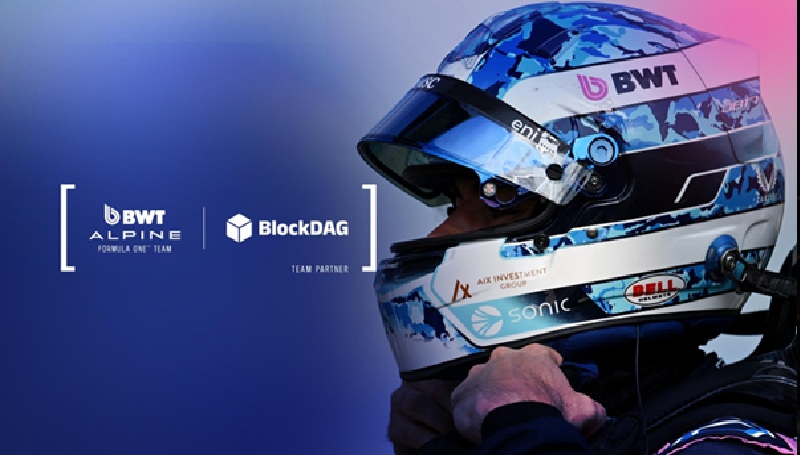
BlockDAG has accomplished what most projects can only aim for: massive presale success paired with global cultural recognition. Its multi-year sponsorship with the BWT Alpine Formula 1 team was unveiled in Singapore ahead of the Grand Prix, cementing BlockDAG as BWT Alpine’s exclusive Layer 1 blockchain partner. This alignment with one of the world’s most-watched sports immediately positioned BlockDAG as a project that has moved beyond crypto circles into mainstream awareness.

The sponsorship is not limited to branding. Fans are being offered immersive experiences such as simulators, developer hackathons, and interactive showcases that blend motorsport culture with blockchain adoption. This connection has made BlockDAG a name recognized not just by crypto enthusiasts but by millions worldwide.

Financial momentum has matched this cultural presence. The presale has already raised over $420 million, with a special batch 31 price of $0.0015 available now. With a confirmed launch price of $0.05, the potential upside is clear.

This rare combination of presale access, mainstream visibility, and community strength has put BlockDAG in a class of its own. For analysts, it is not just a presale project, but a long-term contender for dominance, making it one of the most convincing cases for the top crypto to buy right now.

Pi, XRP, BlockDAG Lead Crypto Narrative

Pi Network’s Hackathon shows that utility is being built, though execution challenges remain. Ripple’s XRP is holding a crucial range, with a breakout above $2.95 possibly triggering its next upward move. But it is BlockDAG that stands out most clearly, with over $420M raised, a partnership with BWT Alpine Formula 1, and adoption numbers that already rival more established names.

For those looking at the top crypto to buy right now, this trio offers different paths: Pi for utility growth, XRP for chart-driven opportunities, and BlockDAG for unmatched momentum and visibility. As the market evolves, these stories illustrate how innovation, technical setups, and mainstream recognition can combine to create the leaders of tomorrow.

Presale: https://purchase.blockdag.network

Website: https://blockdag.network

Telegram: https://t.me/blockDAGnetworkOfficial

Discord: https://discord.gg/Q7BxghMVyu