
DD
MM
YYYY

PAGES

DD
MM
YYYY

spot_img

PAGES

Home Blog Page 3760

Tether USDT prints $10B in 3 months

0

Tether, the issuer of the most popular stablecoin in the crypto market, has been on a printing spree in the last three months. According to data from CoinGecko, Tether has increased its supply by more than $10 billion since October 2023, reaching a total of $97 billion at the time of writing. This means that Tether is close to joining the exclusive club of crypto assets with a market capitalization of over $100 billion, which currently includes only Bitcoin and Ethereum.

Tether’s growth is driven by the high demand for stablecoins, which are digital tokens that are pegged to a fiat currency or another asset and aim to provide stability and liquidity in the volatile crypto market. Stablecoins are widely used for trading, arbitrage, lending, remittance, and other use cases that require fast and cheap transactions without exposure to price fluctuations.

Tether, which claims to be backed by US dollars and other reserves at a 1:1 ratio, is the dominant stablecoin in terms of market share and trading volume, accounting for more than 75% of the total stablecoin supply and more than 50% of the total crypto trading volume.

However, Tether’s rapid expansion also raises some concerns and challenges for the crypto industry. Tether has been under scrutiny for its lack of transparency and regulatory compliance, as well as its potential systemic risk to the crypto ecosystem.

Tether has faced multiple lawsuits and investigations from authorities in different jurisdictions, including the US, the UK, and Hong Kong, over its reserve claims, its role in market manipulation, its ties to Bitfinex exchange, and its compliance with anti-money laundering and counter-terrorism financing regulations. Tether has also been criticized for its centralized governance and issuance process, which could expose it to hacking, censorship, or seizure by hostile actors.

In the past three months, Tether has issued more than $10 billion worth of USDT, bringing its total market cap to over $40 billion. This is a staggering amount of money that could have significant implications for the crypto ecosystem and the global financial system.

One implication is that Tether could be inflating the prices of other cryptocurrencies, especially Bitcoin. Since USDT is widely used as a medium of exchange and a store of value in the crypto space, it creates artificial demand for Bitcoin and other coins. Some analysts have estimated that up to 70% of Bitcoin’s price is driven by Tether issuance. If Tether is not fully backed by US dollars, it could mean that the crypto market is overvalued and vulnerable to a crash.

Another implication is that Tether could pose a systemic risk to the financial system. If Tether is not fully backed by US dollars, it could face a run on its reserves, where users lose confidence and try to redeem their USDT for real dollars. This could trigger a liquidity crisis and a contagion effect, where other stablecoins and crypto exchanges that rely on Tether face solvency issues. Moreover, if Tether is involved in illicit activities such as money laundering or tax evasion, it could attract regulatory scrutiny and legal action from authorities around the world.

Tether’s lack of transparency and accountability raises serious questions about its legitimacy and sustainability. As the largest and most influential stablecoin in the crypto market, Tether has a responsibility to prove its claims and comply with regulations. Otherwise, it could jeopardize the future of the crypto industry and the financial system.

As Tether approaches the $100 billion milestone, it will face more pressure and competition from both regulators and rivals. Regulators may impose stricter rules and oversight on Tether and other stablecoins, as they seek to protect consumers and financial stability from the potential risks posed by these unregulated entities.

Rivals may challenge Tether’s dominance by offering more transparent, decentralized, and innovative alternatives, such as algorithmic stablecoins, collateralized stablecoins, or central bank digital currencies. Tether will have to prove its resilience and reliability in order to maintain its leading position and reputation in the crypto market.
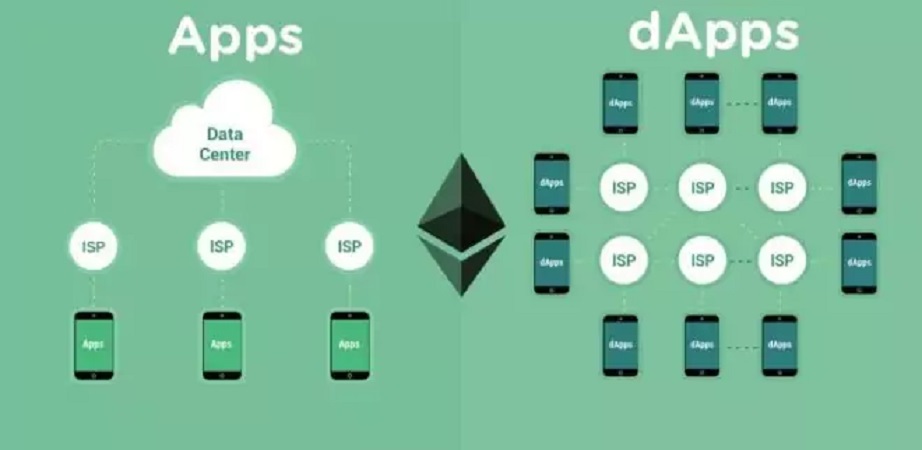

Public Testnets are a threat to the development of dapps

0

Public testnets are unreliable because they are often subject to network congestion, low participation, and frequent resets. Network congestion occurs when too many transactions or smart contracts are executed on the testnet, causing delays and failures.

Low participation means that there are not enough nodes or validators to support the testnet, resulting in poor performance and consensus issues. Frequent resets mean that the testnet data and state are periodically wiped out, forcing developers to start from scratch and lose their progress.

We will argue that public testnets are a threat to the development of decentralized applications (dapps) on blockchain platforms. I will explain why public testnets are unreliable, insecure, and inefficient, and how they can hinder the innovation and adoption of dapps.

Public testnets are insecure because they are vulnerable to attacks, bugs, and malicious behavior. Attacks can be launched by external adversaries or internal participants who want to disrupt the testnet or exploit its weaknesses.

Bugs can be introduced by the testnet software or the dapp code, causing errors and vulnerabilities. Malicious behavior can be performed by participants who want to cheat, spam, or sabotage the testnet or the dapps running on it.

Public testnets are inefficient because they waste time, money, and resources. Time is wasted because developers have to deal with the unreliability and insecurity of the testnet, instead of focusing on developing and testing their dapps.

Money is wasted because developers have to pay fees or incentives to use the testnet or to access its services. Resources are wasted because the testnet consumes a lot of energy and computing power, without producing any real value or utility.

One of the main drawbacks of public testnets is that they are not always stable or reliable. Public testnets are shared by many developers and users, which means that they can be subject to network congestion, spam attacks, forks, or unexpected changes in the protocol or the consensus rules. These factors can cause delays, errors, or failures in the deployment and testing of the dapps, which can waste time and resources for the developers.

Another drawback of public testnets is that they do not always reflect the real conditions of the mainnet. Public testnets have different parameters and incentives than the mainnet, which means that they can have different levels of security, scalability, performance, or user behavior. For example, public testnets may have lower gas fees, faster block times, or less network activity than the mainnet.

These differences can affect how the dapps behave and interact with other components of the blockchain ecosystem, such as smart contracts, oracles, or decentralized exchanges. Therefore, testing on public testnets may not provide accurate or realistic results for the dapps.

Therefore, instead of relying on public testnets, developers should use alternative methods to develop and test their dapps, such as private testnets, simulators, emulators, or formal verification tools. These methods can offer more control, flexibility, and reliability for the developers, as well as more accurate and realistic results for the dapps.

Private testnets are isolated networks that run on a local or remote server and use a copy of the blockchain protocol and data. Private testnets allow developers to create and modify their own network parameters and rules, such as gas fees, block times, or consensus algorithms. Private testnets also allow developers to deploy and test their dapps without interference from other users or transactions. Private testnets can be useful for testing basic functionality, performance, or security of the dapps.

Simulators are software tools that mimic the behavior and environment of a blockchain network without actually running it. Simulators allow developers to create and execute transactions and smart contracts without consuming any real resources or generating any real data. Simulators can be useful for testing complex logic, scenarios, or edge cases of the dapps.

Emulators are software tools that run a virtual machine that executes the bytecode of a smart contract. Emulators allow developers to debug and analyze the code and state of a smart contract without deploying it on a blockchain network. Emulators can be useful for testing correctness, efficiency, or optimization of the smart contract code.

Formal verification tools are software tools that use mathematical logic and proofs to verify that a smart contract meets certain specifications and properties. Formal verification tools allow developers to check whether a smart contract behaves as intended and does not have any bugs, vulnerabilities, or errors. Formal verification tools can be useful for testing security, safety, or compliance of the smart contract code.

In conclusion, public testnets are not always the best option for developing and testing dapps. Developers should consider using alternative methods that can offer more advantages and benefits for their development process and their final product. By using private testnets, simulators, emulators, or formal verification tools, developers can improve the quality and reliability of their dapps.

Therefore, public testnets are a threat to the development of dapps because they create a hostile and unproductive environment for developers and users. They discourage innovation and adoption of dapps by imposing unnecessary barriers and risks. They also undermine the credibility and reputation of blockchain platforms by exposing their flaws and limitations.

Instead of relying on public testnets, developers should use alternative methods to develop and test their dapps, such as private testnets, simulators, emulators, or formal verification tools. These methods can provide more reliable, secure, and efficient ways to validate the functionality and performance of dapps, without compromising their quality or integrity.

ERC-3643 is looking for ways to bring compliance to RWA tokenization as VSF plans introduce a Bitcoin Spot ETF

0

ERC-3643 is a new proposal for a standard interface for real-world asset (RWA) tokens on the Ethereum blockchain. RWA tokens are digital representations of physical or legal assets, such as real estate, art, or securities, that can be used for various purposes, such as collateral, lending, or trading.

We will explore the main features and benefits of the ERC-3643 standard, as well as some of the use cases and examples of RWA tokens that are already being developed or deployed on the Ethereum network. We will also discuss some of the challenges and limitations of the ERC-3643 standard, as well as some of the future directions and improvements that are being considered by the community.

RWA tokens have the potential to unlock new sources of liquidity and value for both asset owners and investors, but they also face significant challenges in terms of compliance, regulation, and trust.

One of the main goals of ERC-3643 is to establish a common framework for RWA token issuers, validators, and regulators to ensure that the tokenization process is transparent, secure, and compliant with the relevant laws and standards.

ERC-3643 defines a set of functions and events that RWA token contracts must implement to provide information about the underlying asset, its ownership, its valuation, its legal status, and its risk profile. ERC-3643 also specifies how RWA token contracts can interact with external entities, such as auditors, oracles, and escrow agents, to verify and update the asset data.

By adopting ERC-3643, RWA token issuers can benefit from increased interoperability and compatibility with other Ethereum protocols and applications, such as decentralized exchanges, lending platforms, and stablecoins. RWA token investors can benefit from enhanced transparency and confidence in the quality and legitimacy of the asset-backed tokens they purchase or trade. RWA token regulators can benefit from improved oversight and enforcement capabilities to ensure that the tokenization process complies with the applicable rules and regulations.

ERC-3643 is currently in draft stage and open for feedback and suggestions from the Ethereum community. The proposal was initiated by a group of RWA token experts and enthusiasts, who are looking for ways to bring compliance to RWA tokenization and foster innovation and adoption in this emerging field.

However, RWA tokens face several challenges in terms of compliance, governance, and risk management, as they have to adhere to the regulations and laws of different jurisdictions and ensure the validity and security of the underlying assets.

The ERC-3643 proposal aims to address these challenges by defining a common set of functions and events that RWA token contracts should implement, as well as a standard metadata format that describes the essential information and characteristics of each RWA token.

The proposal also specifies the roles and responsibilities of different actors involved in the RWA tokenization process, such as issuers, validators, custodians, and auditors. By following the ERC-3643 standard, RWA token developers can ensure interoperability, transparency, and accountability for their tokens, while also reducing the complexity and cost of compliance.

VSF to introduce a Bitcoin Spot ETF in Hong Kong amid ETFs trading above $4B in USA

Venture Smart Financial Holdings, a leading investment firm in Hong Kong, has announced its plans to launch a Bitcoin exchange-traded fund (ETF) in the city. This is a significant development for the cryptocurrency industry, as it will provide investors with a convenient and regulated way to access the Bitcoin market.

A Bitcoin ETF is a type of fund that tracks the price of Bitcoin and trades on a stock exchange. It allows investors to buy and sell shares of the fund without having to deal with the technical and security challenges of holding Bitcoin directly. A Bitcoin ETF also offers more transparency, liquidity and regulatory oversight than other types of crypto products.

Venture Smart Financial Holdings is aiming to raise $100 million for its Bitcoin ETF, which will be the first of its kind in Hong Kong. The firm has already obtained approval from the Securities and Futures Commission (SFC), the city’s financial regulator, to offer the fund to professional investors. The firm hopes to expand its offering to retail investors in the future, subject to further approval from the SFC.

Bitcoin Spot ETFs have traded over $14 BILLION in the US – Bloomberg

The launch of the first Bitcoin spot exchange-traded funds (ETFs) in the US has been a huge success, attracting massive trading volumes and inflows in their first week of trading. According to Bloomberg, the four Bitcoin spot ETFs that debuted last week have collectively traded over $14 billion worth of shares, surpassing the initial volumes of any other ETF category in history.

The Bitcoin spot ETFs allow investors to gain exposure to the actual price of Bitcoin, rather than the futures contracts that track its expected future value. This means that the spot ETFs have lower fees and tracking errors than the futures-based ones, making them more appealing to both retail and institutional investors.

The first Bitcoin spot ETF to launch was the ProShares Bitcoin Strategy ETF (BITO), which started trading on October 19 and quickly became the most traded ETF in the US, with over $1 billion worth of shares exchanged on its first day.

BITO was followed by the Valkyrie Bitcoin Strategy ETF (BTF), the VanEck Bitcoin Strategy ETF (XBTF), and the Invesco Bitcoin Strategy ETF (BITC), which all launched last week and also saw strong demand from investors.

According to Bloomberg, the four Bitcoin spot ETFs have collectively amassed over $2.3 billion in assets under management (AUM) as of October 25, with BITO leading the pack with $1.7 billion AUM. The spot ETFs have also outperformed the futures-based ones, such as the Amplify Transformational Data Sharing ETF (BLOK) and the Bitwise Crypto Industry Innovators ETF (BITQ), which have seen lower trading volumes and inflows.

The success of the Bitcoin spot ETFs reflects the growing popularity and acceptance of Bitcoin as an asset class, as well as the increasing demand for regulated and convenient ways to access the cryptocurrency market. The spot ETFs also provide a more direct exposure to Bitcoin than other products, such as trusts or funds, which often trade at a premium or discount to the underlying asset.

The launch of the Bitcoin spot ETFs is a major milestone for the crypto industry, as it opens up new opportunities for investors, traders, and market participants. The spot ETFs could also pave the way for more crypto-related products and services in the future, such as Ethereum spot ETFs or crypto lending platforms. The Bitcoin spot ETFs are also expected to have a positive impact on the price and liquidity of Bitcoin, as they increase its adoption and awareness among mainstream investors.

The launch of the Bitcoin ETF is expected to boost the adoption and awareness of Bitcoin in Hong Kong and beyond. It will also provide more opportunities for institutional and individual investors to diversify their portfolios and gain exposure to the digital asset class. Venture Smart Financial Holdings believes that Bitcoin has a bright future as a store of value, a hedge against inflation and a catalyst for innovation.

Africa’s Path to Prosperity is Leadership as Nigeria’s Economic Advancement hinges on a Balanced Approach

0

Africa, a continent blessed with abundant natural resources and diverse cultures, has long been grappling with a pervasive issue – poor leadership. Over the years, most African countries have found themselves in the clutches of corrupt leaders who, instead of managing the continent’s wealth and resources for the common good, have enriched themselves at the expense of the people they are meant to serve.

Leadership is a quality that should be exemplified by an individual’s life and attitude. True leaders are those with experience and success, capable of guiding others towards success. Unfortunately, this is a far cry from the reality of leadership in Africa. Many individuals, driven by the desire for wealth and power, manoeuvre their way into leadership positions through dubious means. Once in power, they engage in embezzlement and corruption, further impoverishing the populace.

These self-serving leaders deliberately keep their citizens in poverty, making them reliant on meagre handouts, which are often seen as favours/luck rather than the rightful share of the nation’s wealth. It’s crucial to recognize that the money these leaders use does not come from their personal coffers but is derived from the collective wealth of the nation. Even when these leaders eventually exit the stage, they leave behind a legacy of successors who perpetuate the cycle of corruption, creating a web of godfathers controlling the fate of the nation.

For Africa to rise and become a prosperous continent, the root cause of its problems – poor leadership – must be addressed. The solution lies in cultivating effective leadership at every level – from homes and schools to organizations and society at large. Worthy, selfless leaders who lead by example and prioritize the common good over personal gain are essential for the continent’s progress.

Leadership should be based on merit, competence, and proven track records rather than factors such as tribe, religion, or the ability to buy votes. Electing leaders based on these superficial criteria has only contributed to the rise of incompetent and corrupt leaders who lack the skills needed to manage resources effectively.

Educating the populace about the consequences of bad leadership is paramount. Understanding what constitutes good leadership and making informed choices during elections can reshape the future of Africa. It is crucial to shift the focus from short-term gains to long-term development, and this can only be achieved by fostering a culture of responsible leadership.

Africa’s path to prosperity hinges on solving its leadership crisis. By promoting and electing leaders with genuine qualities, educating the public about the importance of good leadership, and fostering discussions on improving leadership practices, Africa can effectively manage its resources, reduce corruption, and chart a course towards a brighter future. It’s time for Africa to rise by addressing its leadership challenges and paving the way for a more prosperous continent.

Nigeria’s Economic advancement hinges on a balanced approach

Nigeria is a country with immense potential and opportunities, but also with many challenges and risks. One of the most pressing issues facing the nation is how to achieve sustainable and inclusive economic growth that benefits all its citizens.

Many experts and policymakers agree that revenue generation is crucial for Nigeria’s development, especially in the face of dwindling oil revenues, rising debt, and fiscal deficits. Revenue generation can help finance public goods and services, such as infrastructure, education, health, and security, that are essential for improving the quality of life and enhancing productivity. Revenue generation can also reduce Nigeria’s dependence on external borrowing and aid and increase its fiscal space and autonomy.

However, revenue generation alone is not enough to ensure Nigeria’s economic advancement. A balanced approach that considers other factors, such as equity, efficiency, accountability, and transparency, is also necessary. A balanced approach means that revenue generation should not come at the expense of the welfare of the poor and vulnerable, or the environment.

A balanced approach means that revenue generation should be based on fair and efficient tax systems that minimize distortions and leakages and promote compliance and trust. A balanced approach means that revenue generation should be accompanied by prudent and transparent public spending that delivers value for money and results for the people.

There are many examples of successful policies and initiatives that have been implemented or proposed in Nigeria or other countries that can serve as models or inspiration. For instance:

The Economic Recovery and Growth Plan (ERGP) is a medium-term plan that aims to restore economic growth, diversify the economy, and improve governance in Nigeria. The ERGP has three broad objectives: restoring growth, investing in human capital, and building a globally competitive economy.

The National Social Investment Programme (NSIP) is a flagship programme that provides cash transfers, school feeding, microcredit, and skills training to millions of poor and vulnerable Nigerians. The NSIP aims to reduce poverty, enhance human capital, and promote social inclusion.

The Great Green Wall Initiative is a regional initiative that involves 11 African countries, including Nigeria, to combat desertification and land degradation. The initiative aims to restore degraded land, enhance food security, create green jobs, and foster peace and stability.

These are just some examples of how Nigeria can pursue a balanced approach to economic advancement. Of course, there are many challenges and trade-offs involved in implementing such an approach. Nigeria will need strong political will, effective governance, adequate financing, and inclusive participation to overcome these challenges and achieve its vision of a prosperous and sustainable future.

Cryptocurrency Investing Is Not For the Faint-hearted or Uninformed

0

Cryptocurrencies are a fascinating and complex topic that attracts many investors, enthusiasts and researchers. However, they are also very volatile, risky and unpredictable, and require a lot of knowledge and expertise to navigate successfully. I will explain some of the challenges and opportunities that cryptocurrencies present, and why they are not for the faint-hearted or the uninformed.

Cryptocurrencies are digital assets that use cryptography to secure transactions and control the creation of new units. They operate on decentralized networks of computers that follow a set of rules or protocols. Unlike traditional currencies, they are not issued or backed by any central authority, such as a government or a bank.

This gives them some advantages, such as lower transaction costs, faster processing times, greater transparency and anonymity, and resistance to censorship and manipulation.

However, cryptocurrencies also come with many drawbacks and risks. One of the main challenges is their high volatility, which means that their prices can fluctuate dramatically in a short period of time. For example, in 2017, the price of Bitcoin, the most popular cryptocurrency, rose from about $1,000 to almost $20,000, and then fell to below $4,000 in 2018. Such swings can be influenced by various factors, such as supply and demand, technical issues, regulatory changes, hacking attacks, media coverage, public sentiment and speculation.

Another challenge is their security and reliability. Cryptocurrencies rely on cryptography and blockchain technology to ensure the validity and integrity of transactions. However, these technologies are not foolproof and can be vulnerable to errors, bugs, hacks or malicious attacks.

For instance, in 2014, Mt. Gox, the largest Bitcoin exchange at the time, lost about 850,000 Bitcoins (worth about $450 million) due to a hacking attack. In 2016, a hacker exploited a flaw in the code of a smart contract platform called Ethereum and stole about $50 million worth of Ether, another cryptocurrency.

A third challenge is their regulatory and legal uncertainty. Cryptocurrencies are subject to different laws and regulations in different countries and jurisdictions. Some countries have banned or restricted their use or trade, while others have embraced or regulated them.

For example, China has banned cryptocurrency exchanges and initial coin offerings (ICOs), while Japan has recognized Bitcoin as a legal tender and licensed several cryptocurrency exchanges. The lack of a clear and consistent legal framework can create confusion and ambiguity for users, investors and businesses.

These challenges and risks mean that cryptocurrencies are not for the faint-hearted or the uninformed. They require a lot of research, education and caution to understand and use them properly. They also require a high tolerance for risk and uncertainty, as well as a long-term perspective and patience.

Cryptocurrencies are not a get-rich-quick scheme or a magic bullet for financial problems. They are an innovative and experimental phenomenon that may have a significant impact on the future of money and society.

Trading, market making, staking see funding after Spot ETF approval

The recent approval of the first cryptocurrency exchange-traded fund (ETF) by the US Securities and Exchange Commission (SEC) has sparked a wave of interest and investment in the crypto space. Many traders, market makers and stakers are looking for ways to capitalize on this opportunity and increase their returns.

One of the main benefits of an ETF is that it allows investors to gain exposure to a basket of assets without having to buy and store them individually. This reduces the risks and costs associated with custody, security and regulation. An ETF also provides more liquidity and transparency than other types of funds, as it can be traded on a stock exchange like any other security.

However, an ETF also comes with some challenges and limitations. For example, an ETF may not track the underlying assets perfectly, due to fees, tracking errors and rebalancing issues. An ETF may also face competition from other similar products, such as trusts, futures and options. Moreover, an ETF may not capture the full potential of the crypto market, as it may exclude some segments or innovations that are not yet mainstream or regulated.

This is where trading, market making and staking come in. These are three different ways of participating in the crypto ecosystem that can offer higher returns, more flexibility and more innovation than an ETF. Let’s take a look at each one in more detail.

Trading

Trading is the act of buying and selling cryptocurrencies or other digital assets for profit. Traders can use various strategies, such as arbitrage, scalping, swing trading or trend following, to exploit price movements and market inefficiencies. Traders can also use leverage, derivatives and margin trading to amplify their gains or hedge their risks.

Trading requires a high level of skill, knowledge and discipline, as well as access to reliable platforms, tools and data. Trading also involves significant risks, such as volatility, liquidity, slippage and counterparty risk. Traders need to be aware of the regulatory and tax implications of their activities, as well as the ethical and social impact of their decisions.

Market making

Market making is the act of providing liquidity to a market by quoting both buy and sell prices for an asset. Market makers earn profits from the spread between the bid and ask prices, as well as from fees or rebates from the platform or exchange they operate on. Market makers also help reduce price fluctuations and improve market efficiency by facilitating trade execution and price discovery.

Market making requires a large amount of capital, as well as sophisticated algorithms, models and systems to manage inventory, risk and orders. Market making also involves high competition, low margins and regulatory uncertainty. Market makers need to constantly monitor the market conditions, the demand and supply of the asset, and the actions of other market participants.

Staking

Staking is the act of locking up a certain amount of cryptocurrency in a smart contract or a wallet to support the security and operation of a blockchain network. Stakers earn rewards from the network for validating transactions, producing blocks or participating in governance. Staking also gives stakers voting rights and influence over the network’s direction and development.

Staking requires a long-term commitment, as well as trust in the network’s stability, security and performance. Staking also involves opportunity costs, as stakers forego other uses of their funds while they are locked up. Stakers need to carefully choose which network to stake on, based on factors such as reward rate, inflation rate, lock-up period and slashing risk.

Trading, market making and staking are three different ways of engaging with the crypto market that can offer more benefits than an ETF. However, they also come with more challenges and risks that require careful consideration and preparation. Ultimately, each investor needs to decide which option suits their goals, preferences and risk appetite best.