DD
MM
YYYY

PAGES

DD
MM
YYYY

spot_img

PAGES

Home Blog Page 3771

SEC goes after Stoner Cats NFTs; NFT ‘Sleepdrops’ drains $11.5M from Ethereum Users

0

The Securities and Exchange Commission (SEC) has launched an investigation into the Stoner Cats NFT project, which features animated cats voiced by celebrities such as Ashton Kutcher, Jane Fonda, and Mila Kunis. The project, which raised $8.4 million in a matter of minutes in July, has been accused of violating securities laws by selling unregistered tokens that could be considered securities.

The SEC probe was first reported by The Wall Street Journal, which cited anonymous sources familiar with the matter. According to the report, the SEC is looking into whether the Stoner Cats NFTs constitute investment contracts, which would require them to comply with federal securities regulations. The SEC is also examining whether the project misled investors about its financial prospects and the involvement of the celebrities.

The Stoner Cats NFT project is a spin-off of a planned animated series created by Kutcher and Kunis, in which they voice marijuana-smoking felines who live with an elderly woman suffering from dementia, played by Fonda. The project sold 10,420 NFTs for 0.35 ether each (about $800 at the time), which gave buyers access to watch the first episode of the series and future episodes. The NFTs also came with exclusive perks, such as voting rights on the direction of the show and access to a Discord channel where the celebrities would interact with the fans.

However, the project faced several challenges since its launch, including technical glitches that prevented some buyers from claiming their NFTs, delays in releasing the first episode, and negative feedback from some viewers who found the show offensive or unfunny. Moreover, some critics have argued that the Stoner Cats NFTs are more than just digital collectibles or fan tokens, but rather securities that promise future returns based on the success of the show and the popularity of the celebrities.

The SEC has not commented on the investigation, nor has it issued any formal charges or subpoenas against the project or its creators. However, the probe could have significant implications for the booming NFT market, which has seen billions of dollars’ worth of transactions in recent months. The SEC has been increasing its scrutiny of the crypto space, especially in relation to tokens that could be deemed securities. In December 2020, the SEC sued Ripple Labs, the company behind the XRP cryptocurrency, for allegedly selling $1.3 billion worth of unregistered securities. The case is still ongoing and could set a precedent for how the SEC regulates other crypto projects.

The Stoner Cats NFT project has not issued any official statement regarding the SEC probe, but Kutcher tweeted on Friday that he was “proud” of the project and thanked the fans for their support. He also shared a link to a medium post by one of the project’s developers, who defended the legality and legitimacy of the Stoner Cats NFTs. The post argued that the NFTs are not securities, but rather “utility tokens” that grant access to a digital service or product. The post also claimed that the project did not make any false or misleading statements to investors, and that it complied with all applicable laws and regulations.

NFT ‘Sleepdrops’ drains $11.5 million from Ethereum Users

A new scam involving non-fungible tokens (NFTs) has been exposed, costing Ethereum users more than $11.5 million in total. The scheme, dubbed ‘sleepdrops’, involves creating fake NFTs that look like popular collections, such as CryptoPunks or Bored Ape Yacht Club, and listing them for sale on secondary markets. However, these NFTs are not minted on the blockchain, but rather generated by a malicious website that tricks buyers into sending ETH to a fraudulent address.

The scam works by exploiting a feature of some NFT marketplaces, such as OpenSea, that allows users to view and bid on any NFT, even if it is not officially verified or listed by the creator. The scammers use a website called sleepdrops.art, which mimics the interface of popular NFT platforms, to generate fake NFTs with random attributes and metadata.

They then use bots or fake accounts to post these NFTs on social media, forums, and Discord channels, claiming that they are rare or valuable pieces from well-known collections. They also provide a link to the sleepdrops.art website, where potential buyers can see the NFT and its details.

However, when a user clicks on the ‘buy now’ button on the sleepdrops.art website, they are redirected to a phishing page that asks them to enter their wallet address and the amount of ETH they want to send. The page also displays a QR code and a fake transaction hash, to make it seem like the purchase is legitimate. However, once the user sends the ETH, they receive nothing in return. The scammers then withdraw the funds from their address and move them to other wallets or exchanges.

According to a report by security firm CipherTrace, the sleepdrops scam has been active since at least August 2021, and has drained more than $11.5 million from unsuspecting Ethereum users. The report also identified 15 different fraudulent addresses associated with the scheme, which have received over 3,800 transactions from more than 2,500 victims. The largest single transaction was worth $1.1 million, while the average transaction was worth $3,000.

Some of the common signs of NFT phishing scams are:

The offer is too good to be true. For example, a scammer may claim to sell a rare or valuable NFT for a fraction of its market price or offer a free NFT in exchange for a small fee or personal information.

The source is not trustworthy. For example, a scammer may use a fake domain name that resembles a reputable platform or marketplace, or a spoofed email address that mimics a legitimate sender.

The communication is urgent or pressuring. For example, a scammer may create a sense of scarcity or fear by claiming that the offer is limited or expiring soon, or that the user’s account or funds are at risk.

The language is poor or inconsistent. For example, a scammer may use grammatical errors, spelling mistakes, or unfamiliar terms that indicate a lack of professionalism or authenticity.

To protect yourself from NFT phishing scams, you should always:

Verify the identity and reputation of the source. For example, you can check the domain name, email address, social media profile, or online reviews of the platform or seller before engaging with them.

Avoid clicking on suspicious links or attachments. For example, you can hover over the link to see the actual URL or scan the attachment with an antivirus software before opening it.

Use a secure and updated browser and device. For example, you can enable the security features and updates of your browser and device to prevent malware infections and data breaches.

Use a reputable and secure wallet and platform. For example, you can choose a wallet and platform that have strong encryption, authentication, and customer support features to safeguard your funds and transactions.

NFT phishing scams are not only harmful to individuals, but also to the whole NFT ecosystem. They undermine the trust and confidence of the users and damage the reputation and value of the digital art. Therefore, it is important to be vigilant and cautious when dealing with NFTs and to report any suspicious activity to the relevant authorities or platforms.

CipherTrace warned that the sleepdrops scam is likely to continue, as the scammers can easily create new fake NFTs and addresses. The firm advised users to be cautious when buying NFTs from unverified sources, and to always check the authenticity of the NFTs on the blockchain before sending any funds. The firm also recommended users to use reputable NFT platforms that have proper verification and security measures in place.

Mark Cuban, US SEC, Binance US, Changpeng Zhao, DCG and other Global News

0

Mark Cuban, the billionaire entrepreneur and owner of the Dallas Mavericks, has fallen victim to a phishing attack that cost him $860,000 worth of cryptocurrency. According to a report by The Wall Street Journal, Cuban received an email from a fake company claiming to be a decentralized finance (DeFi) platform that offered high returns on crypto investments.

The email contained a link to a website that looked identical to the legitimate platform but was actually a malicious site designed to steal users’ funds. Cuban said he was intrigued by the offer and decided to invest $860,000 in a digital token called Titan. However, soon after he made the transaction, he realized that he had been scammed and that his tokens were worthless.

He said he contacted the real DeFi platform, but they could not help him recover his money. Cuban said he learned a hard lesson from the incident and warned other crypto investors to be careful and do their research before investing in any project. He also said he would not give up on crypto and that he still believed in its potential.

The U.S. Securities and Exchange Commission (SEC) has expressed dissatisfaction with the level of cooperation and transparency from Binance.US, the American affiliate of the global cryptocurrency exchange Binance. According to a report by Bloomberg, the SEC has been seeking information from Binance.US about its operations, compliance policies, and relationship with its parent company, but has not received adequate responses.

The SEC is concerned that Binance.US may be engaging in activities that violate U.S. securities laws, such as offering unregistered securities or facilitating insider trading. The SEC’s scrutiny of Binance.US is part of a broader investigation into the crypto industry, which has faced increasing regulatory pressure in recent months. Binance.US has said that it operates independently from Binance and complies with all applicable laws and regulations. However, the SEC is not convinced by this claim and wants to see more evidence of Binance.US’s autonomy and oversight.

The SEC has also requested documents from Binance.US’s former CEO, Brian Brooks, who resigned abruptly in August after less than four months on the job. Brooks, a former acting head of the Office of the Comptroller of the Currency (OCC), was hired by Binance.US to help improve its regulatory compliance and reputation. However, he reportedly clashed with Binance’s founder and CEO, Changpeng Zhao, over the direction and strategy of the company. The SEC’s investigation into Binance.US is still ongoing and could result in enforcement actions or penalties if violations are found.

The legal team of SBF, the controversial social media platform, has submitted a list of questions to the judge that they want to ask the potential jurors in the upcoming trial. The questions are designed to assess the jurors’ familiarity with SBF, their opinions on free speech and censorship, and their political leanings.

However, the prosecutors have objected to many of the questions, arguing that they are irrelevant, biased, or intrusive. They claim that the questions are an attempt by SBF to influence the jury selection process and to exclude jurors who might be critical of the platform. The judge will have to decide whether to allow or reject the questions before the jury selection begins.

The founder and CEO of Binance, Changpeng Zhao, has revealed the reason behind the sudden departure of Brian Brooks as the head of Binance.US, the US affiliate of the global crypto exchange. In an interview with Bloomberg, CZ said that Brooks decided to leave the company after only four months on the job because he needed some time off from the intense regulatory pressure that Binance.US faces.

CZ said that Brooks had been working very hard to navigate the complex and evolving regulatory landscape in the US, but he felt that he could not continue at the same pace and intensity. CZ said that he respected Brooks’ decision and wished him well. He also said that Binance.US is still operating normally and is looking for a new CEO.

CZ added that Binance.US is a separate entity from Binance, and that the global exchange has no control over its operations or strategy. He said that Binance.US is fully compliant with all US laws and regulations, and that it has a strong team of compliance and legal experts. He also said that Binance.US has a positive relationship with its regulators and is cooperating with them on various issues.

CZ also commented on the recent crackdown on Binance by regulators around the world, saying that he welcomes more clarity and guidance from them. He said that Binance is always willing to work with regulators and adapt to different rules in different jurisdictions. He said that Binance is not trying to evade or avoid regulation, but rather to comply and innovate.

The legal battle between Gemini and DCG over the failed crypto exchange has taken a new turn, as Gemini’s lawyers have accused DCG of gaslighting in their latest recovery plan. In a blog post published on Monday, Gemini’s legal team claimed that DCG’s proposal to distribute the remaining assets of Bitcoin among the creditors was “a blatant attempt to manipulate and deceive the court and the public”.

According to Gemini, DCG’s plan would unfairly favor their own interests and leave Gemini and other creditors with little or no compensation. Gemini argued that DCG was responsible for the collapse of Bitcoin, as they had breached their fiduciary duties and engaged in fraudulent activities. Gemini also alleged that DCG had tried to cover up their involvement and mislead the regulators and the media.

Gemini’s lawyers said that DCG’s gaslighting tactics were “an insult to the intelligence and dignity of the victims of Bitcoin”. They urged the court to reject DCG’s plan and appoint an independent trustee to oversee the liquidation of Bitcoin. They also demanded that DCG be held accountable for their actions and face criminal charges.

Gemini’s blog post was met with mixed reactions from the crypto community. Some praised Gemini for standing up to DCG and exposing their corruption, while others criticized Gemini for being greedy and opportunistic. Some also questioned the credibility of Gemini, as they had invested in Bitcoin despite its dubious reputation.

Kenyan EV Company Roam Launches New Bus Model to Foster Sustainable Transportation Solutions

0

Swedish-Kenyan company Roam Motors has announced the launch of a new bus model known as “Move”, to tap Kenya’s mass transit sector, fostering sustainable transportation solutions.

Roam plans to ramp up its production of the Move bus and expand its charging infrastructure as it anticipates a growth in EV bus demand, following Kenya’s acceleration of electric vehicle adoption, against the backdrop of surging fuel prices, and a demand for a switch to sustainable transport options.

Speaking on the launch of Move, Dennis Wakaba, Roam’s country sales executive said,

“Assembled entirely in Kenya, the bus exemplifies Roam’s commitment to supporting local manufacturing while advancing the nation’s sustainability goals. We are thrilled to introduce “The Roam Move”, Kenya’s very own electric shuttle bus. This achievement aligns perfectly with our vision of fostering sustainable transportation solutions that make a positive impact in our environment and our communities”.

The launch of ‘Move’, comes after the EV company revealed plans in 2021 to launch Electric Vehicle buses to complement its motorcycle production business.

It also follows the launch of Roam Rapid in July 2022, which was specifically designed to address the unique challenges of public transport in Nairobi and Africa as a whole. The Roam Rapid offers a solution for the growing number of cities implementing Bus Rapid Transit (BRT) systems across the African continent.

Roam’s electric bus shuttle is aimed at the Matatu sector while the electric mass transit bus ensures reliability and accessibility to large-scale bus transit systems across the African continent.

The company two Electric Vehicle models (Move and Rapid), guarantee immediate cost reduction, delivering uncompromising performance without any emissions or noise pollution.

Also, the versatility of the electric buses allows them to be charged through solar systems, or directly from the grid, coupled with minimal servicing requirements, ensuring the company’s electric buses maximize uptime and efficiency.

Engineered with unwavering quality and equipped with modern comforts, these buses ensure a seamless and pleasurable riding experience.

It is important to note that the transport sector is one of the major contributors to Kenya’s greenhouse gas emissions. 18% of Kenya’s total greenhouse gas emissions are from the transport sector. About 40% of CO2 emissions are from the transport sector. This has led to increased Respiratory diseases in Kenya.

In a bid to reduce emissions, Roam has been developing, designing, and manufacturing all-electronic motorcycles and buses, plus clever fast-changing technologies, for Kenya to reduce noise and air pollution.

Founded in 2017 by Gardler, Filip Lövström, and Mikael Gånge, the Roam electric mass transit bus is produced to compete with diesel buses as it is designed to last longer, and is cheaper to run.

Roam partners with top reputable companies which include Silicon Valley Venture and Innovation, At One Ventures, The Earthshot Prize, M-KOPA, and Hitachi Inspire the Next.

As Kenya lays the ground for the transition from fossil fuel vehicles, the country stands to benefit a lot from substituting a significant portion of imported petroleum products with locally generated clean electricity.

Fantom and Aptos (APT) Are Falling Under Bearish Pressure As Elonator Shines With 120% Surge Expectancy

0

Like most altcoins, Fantom and Aptos have succumbed to the same bearish pressure that stifles the rest of the market. Premium Altcoins such as Bitcoin, Ethereum, Solana, and others are also down. The meme coin market mirrors the same sentiment, with Dogecoin, Shiba Inu, and other popular meme coins reporting price and market cap losses.

Investors who are looking for safer options may not have to turn to investments outside the crypto market. Presales offer the crypto enthusiast a chance to take part in investing in crypto without facing too much market volatility. In this article, we will study the prospects of Fantom and Aptos alongside the presale coin Elonator (ETOR), allowing readers to gauge the value behind each coin.

Elonator’s Presale Marks A Subtle Shift In Meme Culture

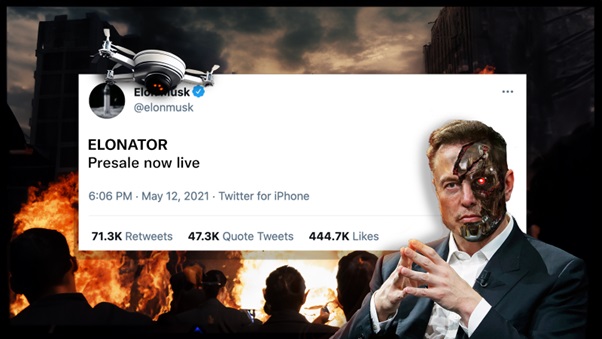
Prior to Elonator’s presale, famous meme coins always had a symbol of the DOGE, a famous meme of a dog of the Shiba Inu variety. With the new Elonator meme – a combination of Elon Musk and Terminator – a new shift to a different style of meme coin could be underway. This change aligns with Elon Musk’s takeover and rebranding of Twitter, changing the name to X.

The $ETOR presale has raised a little over $135,000 in funds and has successfully completed two funding stages. Investors are given a rare chance to invest in a meme coin that could be one of the most successful crypto investments due to its strong association with Elon Musk.

What Are Fantom And Aptos Known For In The Crypto Space?

Fantom is an open-source, decentralized smart contract platform that hosts over 200 decentralized apps with a growing ecosystem with thousands of daily active users. The Fantom blockchain is highly scalable and can process thousands of transactions per second.

Fantom is also EVM compatible, meaning you can deploy and run your Ethereum decentralized apps on Fantom. Fantom has hit a downturn recently, making presales like Elonator a better match to help hedge against the crypto market.

The Aptos blockchain offers utility to investors in the following fields: Gaming, NFTs, Social Media, Entertainment, and DeFi. Aptos has a committed team of accomplished technical experts to help promote decentralization among a wider audience. Likewise, Elonator has a dedicated team of presale experts who know how to provide value to early-stage investors throughout the fundraising process.

$ETOR’s Presale Is Running Hot. Here’s How You Can Get In

The $ETOR presale is still in its third funding stage, giving investors some time before they miss out on investing in one of 2023’s key presales. Unlike Fantom and Aptos, $ETOR’s token prices are fixed and not disturbed by market volatility. Click on the button below to buy yourself some $ETOR tokens, or visit the links below to see what Elonator is up to on social media.

Elonator:

Presale: https://buy.elonator.com/
Website: https://elonator.com

Telegram: https://t.me/ElonatorCoin

Twitter: https://twitter.com/ElonatorCoin

Speed, Swaps, and DeFi Drama: Uniswap, Pancakeswap, and DogeMiyagi’s Killer Showdown

0

One of the most fascinating trends in the rapidly developing world of cryptocurrencies, where innovation and speed are essential, is the emergence of decentralized exchanges (DEXs). Uniswap has distinguished itself by grabbing the interest of both novice and experienced investors. A recent arrival has challenged the accepted wisdom on switch efficiency and speed. Enter DogeMiyagi’s Killer Swap Machine, a bold contender with the potential to revolutionize the DEX market with its outstanding performance.

A recent crypto news update has sent shockwaves through the community, revealing that Sandwich Bots are responsible for a staggering 80% of Uniswap’s trading volume. This remarkable feat has captured the attention of traders and investors alike, prompting a closer examination of DogeMiyagi(MIYAGI) unique attributes and its unparalleled swap speed. In this comparative analysis, we will look deep into the heart of these titans of trading, examining their similarities, differences, and the remarkable speed of DogeMiyagi’s creation in contrast to established platforms like Uniswap and PancakeSwap.

Uniswap: Pioneering Decentralized Trading

Uniswap, a decentralized trading protocol built on the Ethereum blockchain, revolutionized the way users trade tokens. With its automated market-making (AMM) system, Uniswap empowers traders to swap tokens without the need for intermediaries. With its user-friendly interface and community-driven ethos, this innovation has propelled Uniswap to the forefront of the DeFi movement. Launched in 2018 by Hayden Adams, Uniswap operates on the principles of decentralization, enabling users to provide liquidity for any two tokens and earn fees in return.

Orders placed on the Uniswap platform are processed via self-executing smart contracts through liquidity pools, and in return, users are required to pay a minimal platform fee. A unique pricing mechanism known as Constant Product Market Maker (CPMM) model determines the price of assets in a liquidity pool. Users can also earn incentives by depositing equivalent quantities of token pairs to provide liquidity to these liquidity pools. Uniswap is the fifth largest DeFi protocol, according to DeFiLlama, with a TVL (Total Value locked) of over $3.88 billion as of June 2023.

PancakeSwap: A DeFi Rival Emerges

As the DeFi landscape continues to expand, PancakeSwap has emerged as a formidable rival to Uniswap and other DEXs. Operating on the Binance Smart Chain (BSC), PancakeSwap offers users fast and low-cost transactions, making it an attractive choice for traders seeking efficiency. PancakeSwap enables users to provide liquidity and earn rewards, all within a decentralized framework. While PancakeSwap shares similarities with Uniswap and DogeMiyagi, its distinct operating chain and approach set it apart in the competitive DeFi arena.

DogeMiyagi’s Killer Swap Machine and PancakeSwap, though operating on different chains, share a common goal of revolutionizing DeFi trading. Both platforms emphasize speed and efficiency, with DogeMiyagi’s exceptional swap speed challenging the norms of trading execution. PancakeSwap, on the other hand, leverages the Binance Smart Chain’s capabilities to provide users with a seamless and cost-effective trading experience.

DogeMiyagi’s Killer Swap Machine: The Need for Speed

DogeMiyagi’s Killer Swap Machine, inspired by the legendary fly-catching skills of Mr. Dogemiyagi, is a revolutionary DEX that operates similarly to Uniswap and PancakeSwap. However, what sets DogeMiyagi apart is its unparalleled swap speed. This secondary keyword, “Trading Volume,” becomes even more intriguing as we delve into the platform’s capabilities. Launched earlier this year, DogeMiyagi aims to reshape the DeFi landscape with its lightning-fast swaps, promising to execute trades with unrivaled efficiency.

Decentralization and user empowerment are the essential tenets of both Uniswap and DogeMiyagi’s Killer Swap Machine. Although impressive, Uniswap’s swap speed is challenged by the emergence of Sandwich Bots, which seek to manipulate deals and may hurt users’ interests. However, DogeMiyagi’s Killer Swap Machine stands out for its remarkable speed, which is comparable to its namesake’s famed reflexes. This speed lets customers complete swaps with little slippage, resulting in a seamless trading experience.

A Swift Revolution in DeFi

Speed is important in the dynamic environment of decentralized finance. With Uniswap originality and PancakeSwap’s BSC effectiveness, each company has carved out its own market niche. However, DogeMiyagi’s Killer Swap Machine, with its unparalleled speed and agility, provides an additional degree of intrigue. In addition to drawing attention, the comparison between swap speed and fly-catching reflexes highlights the platform’s dedication to effectiveness and precision. DogeMiyagi’s daring strategy and PancakeSwap’s BSC benefits stand as formidable possibilities for cryptocurrency enthusiasts and seasoned investors looking for platforms that offer both innovation and quickness.

Join the DogeMiyagi presale for the best returns and experience the future of decentralized trading firsthand.

Find out more about DogeMiyagi (MIYAGI):

Website: https://dogemiyagi.com

Twitter: https://twitter.com/_Dogemiyagi_

Telegram: https://t.me/dogemiyagi