DD
MM
YYYY

PAGES

DD
MM
YYYY

spot_img

PAGES

Home Blog Page 3774

Why FTX is Suing Most of its Past Business Associates

0

FTX, the cryptocurrency exchange founded by Sam Bankman-Fried, has recently filed lawsuits against several former business partners, alleging breach of contract, fraud, and misappropriation of trade secrets. We will examine the reasons behind FTX’s legal actions and the implications for the crypto industry.

According to the complaints filed by FTX in various jurisdictions, the defendants are former service providers, consultants, or affiliates of FTX who had access to confidential information and proprietary technology of the exchange. FTX claims that these defendants either violated their contractual obligations, stole or leaked FTX’s trade secrets, or engaged in unfair competition or deceptive practices that harmed FTX’s reputation and business.

Some of the defendants named in the lawsuits are:

Alameda Research, a crypto trading firm co-founded by Bankman-Fried and also a major shareholder of FTX. FTX accuses Alameda of breaching its fiduciary duty and loyalty to FTX by secretly trading against FTX’s interests, manipulating FTX’s order books and prices, and diverting FTX’s customers and business opportunities to Alameda’s own platforms.

CoinMarketCap, a popular crypto data aggregator that ranks exchanges by their trading volume and liquidity. FTX claims that CoinMarketCap deliberately manipulated its ranking algorithm.

CryptoCompare, another crypto data provider that competes with CoinMarketCap. FTX asserts that CryptoCompare conspired with CoinMarketCap to falsify and suppress FTX’s data, spread false and misleading information about FTX, and damage FTX’s reputation and credibility in the industry.

FTX is seeking injunctive relief, damages, and restitution from the defendants for their alleged misconduct. FTX argues that its legal actions are necessary to protect its intellectual property rights, business interests, and competitive position in the crypto market. FTX also hopes that its lawsuits will deter other potential wrongdoers from infringing on its rights or harming its operations.

However, some observers have questioned the merits and motives of FTX’s lawsuits, suggesting that they are part of a broader strategy to intimidate or eliminate its competitors and consolidate its dominance in the crypto space. Some critics have also pointed out that FTX itself has been accused of engaging in similar practices as the defendants, such as copying features from other exchanges, manipulating prices and volumes, and influencing data providers.

The lawsuits allege that the affiliates, who were supposed to promote FTX’s products and services to potential customers, violated the terms of their agreements by diverting traffic to rival platforms, misusing FTX’s trademarks and confidential information, and making false or misleading statements about FTX. FTX is seeking damages and injunctive relief from the defendants, as well as a declaration that FTX owns the rights to its intellectual property and trade secrets.

The outcome of these lawsuits is uncertain and may take a long time to resolve. However, they are likely to have significant impacts on the crypto industry as a whole, as they may affect the trust, transparency, and innovation of the sector. The lawsuits may also set precedents for future legal disputes involving crypto exchanges and other stakeholders.

Electoral Tribunals, NYSC Certificates, and Necessity of INEC Reforms in Nigeria

4

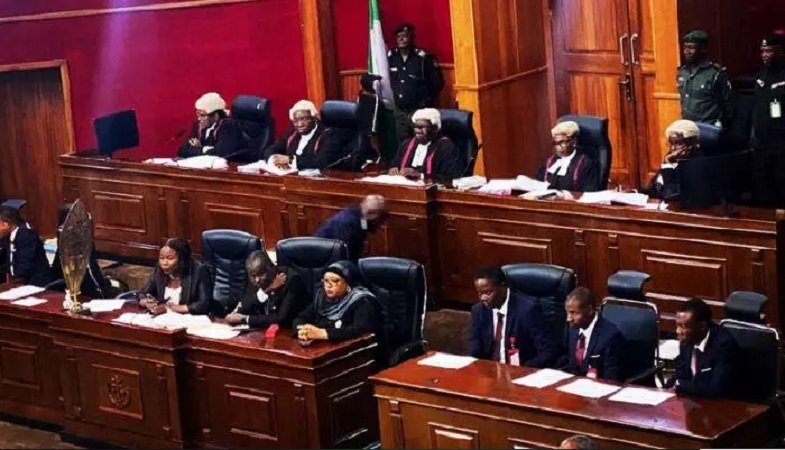
When I write here, I write with no agenda. I am apolitical and non-partisan. My efforts are always geared to see a better Nigeria. The latest ruling where a governorship tribunal ruled that NYSC is not a requirement and cannot be used to annul an election surprised me. It came the same way as the one in Kano where a candidate was punished because INEC neither stamped nor signed some documents. 

Good People, note this: if you go to the presidential IREV, there are thousands of polling units across Nigeria without results, not to talk of being un-signed or unstamped. So, how did the same judiciary allow those units without results to stand, but went to punish a candidate in Kano because INEC presented results, though unsigned?

My message is clear: the judiciary has to be consistent in these rulings. That a tribunal is saying that NYSC is not a requirement is not my concern. My burden is that the judiciary has not been consistent.

The Supreme Court sacked Abdulra’uf Abdulkadir Modibo of Adamawa State in 2019. In a unanimous judgment, a five-man panel held that Modibo was not qualified to stand for election, having not properly participated in the National Youth Service Corps (NYSC) scheme. What would they tell Modibo now they are saying NYSC is never a requirement?

As I have said, INEC needs to be reformed. It needs to do some fundamental checks on the forms these politicians submit. If the minimum requirement for presidency is WAEC or equivalent, it can at least verify that . In other words, Tinubu and Atiku will not be embarrassing Nigeria in Chicago, if INEC had done its job: verify all secondary school education since university degrees are not even required! In other words, only those who meet the minimum requirements (WAEC) will progress.

Comment on Feed

Comment 1: Prof Ndubuisi Ekekwe,

Contrary to your claim, you certainly have an agenda, albeit misplaced and misinformed. And I worry about the subtle shaping of public opinion against the judiciary by your so called “unbiased” call out of the Nigerian judiciary, which sadly is borne out of your interpretation of recent rulings on electoral issues.

With respect to the case you reference, i.e. case of Abdulrauf Abdulkadir Modibbo vs Mustapha Usman, the Supreme Court ruling was NOT that the NYSC is a compulsory requirement for elective office!

The Supreme Court simply upheld the Petioners claim that AS A SERVING NYSC MEMBER at the time of the primaries, Modibbo was NOT qualified to contest the primaries by virtue of the NYSC Act.

Effectively, the Supreme Court ruling means if you are a serving NYSC member or yet to finish your NYSC mandatory service, you are ineligible to contest for an elective position by virtue of the non partisan requirements of the NYSC.

In refencing the Supreme Court ruling, you should have provided this crucial and salient background to your readers. Note this is not same as the Mbah case, which the petitioners claim Mbah forged the NYSC certificate.

My Response: “With respect to the case you reference, i.e. case of Abdulrauf Abdulkadir Modibbo vs Mustapha Usman, the Supreme Court ruling was NOT that the NYSC is a compulsory requirement for elective office!…The Supreme Court simply upheld the Petioners claim that AS A SERVING NYSC MEMBER at the time of the primaries, Modibbo was NOT qualified to contest the primaries by virtue of the NYSC Act.”

I do not understand what your issue is. You believe that the Supreme Court is right to annul an election, positing that someone was yet to complete a process which is NOT even a requirement. That is the Nigerian problem: yes, Modibbo cannot keep his job for not doing something which is NOT even required for that job. You simply made my case.

How? If the Supreme Court is telling us that NYSC is not a requirement, it should not have even cared if someone was enrolled or not enrolled in it, because it is immaterial. But what happened to Modibbo was that he was enrolled in something which is not a requirement and that disqualified him.

Comment 1R: My intervention is not to interpret the Supreme Court ruling on the Modibbo case.

The ruling and the basis for it is clear. Modibbo wasn’t eligible to contest the APC primaries (not the election even) at the time he did. At no point did the Supreme Court say that a NYSC certificate is a mandatory requirement to stand for election. That is your own (mis)interpretation of the SC ruling.

On the SC ruling, I expect NYSC members at some point to challenge the jurisprudence on this ruling as I believe it is discriminatory to serving Corp members. However, one also recognises that serving officers and men of the police force and armed forces are also precluded from contesting electoral positions while still serving.

My Response“My intervention is not to interpret the Supreme Court ruling on the Modibbo case.” – you did when you said that my interpretation was wrong. So, you did.

“The ruling and the basis for it is clear. Modibbo wasn’t eligible to contest the APC primaries (not the election even) at the time he did. ” – again, you have cleverly picked sections of the NYSC and Electoral Acts as they favoured you, dismissing the NYSC Act which said that all qualified youth must have NYSC to get a job in Nigeria. (I extrapolate that because I argued that the Tribunal is wrong to write in Enugu that NYSC was not required because it was not listed on the Electoral Act, even though the NYSC Act has that. You cannot claim that Modibbo wasn’t eligible to contest because he participated in NYSC)

“At no point did the Supreme Court say that a NYSC certificate is a mandatory requirement to stand for election. ” – it does not have to say it when it can rule that not completing it disqualifies someone.

Comment 1RR: I read the This Day article you posted, and Ndubuisi Ekekwe is correct about the inconsistencies in judgment.

In the Modibo case, the appellant posited that falsified NYSC documents were presented, and this led the court to consider if Modibo has breached the NYSC act.

In the Mbah case, the appellant also claimed that NYSC certificate was falsified, similar to the Modibo case, but the tribunal refused to consider if the forgery was true or not, based on their belief that NYSC isn’t a requirement.

In summary, the issue of NYSC was considered in the first case, but not in the second despite both having a common denominator, which is falsified information.

The article you posted also referenced the Omehia vs Amaechi case, which was an error in judgment that was corrected in the Modibo case.

Comment 2: A – Governor of a state

  1. (1) There shall be for each state of the Federation a Governor.

(2) The governor of a shall be the Chief Executive of that state

  1. A person shall be qualified for election to the office of Governor of a state if

(a) he is a citizen of Nigeria by birth;

(b) he has attained the age of thirty-five years;

(c) he is a member of a political party and is sponsored by that political party; and

(d) he has been educated up to at least School Certificate level or its equivalent.

C – Qualifications for Membership of national assembly and Right of Attendance

  1. (1) Subject to the provisions of section 66 of this Constitution, a person shall be qualified for election as a member of:

(a) the Senate, if he is a citizen of Nigeria and has attained the age of 35 years; and

(b) the House of Representatives, if he is a citizen of Nigeria and has attained the age of 30 years;

(2) A person shall be qualified for election under subsection (1) of this section if:

(a) he has been educated up to at least School Certificate level or its equivalent; and

(b) he is a member of a political party and is sponsored by that party.

This is the constitution which is the supreme law in the country.

Comment 3: I have stopped taking Nigeria judiciary seriously. They are one of the biggest problems of the country and I am sometimes ashamed of the kind of judgments that emanates from them.

The way they change the law through several funny and ridiculous judgements is very ridiculous. Sometimes, they do not even employ common sense in dispensing judgements and you wonder what the heck is going on.

Oyetola won in court the lady time because, one of the tribunal judges missed a sitting, and ruled in Adeleke’s Favour, but Appeal and Supreme Court stated that, since the judge was not on sit on a particular day, he cannot entered a judgment and consequently returned Oyetola as governor.

I mean, how does that make sense? If a judge refused to do his work, should another person bear the brunt of that?

Another one is how Orji Uzor Kalu won in court because a particular judge who have been promoted to a higher court sat and gave judgement, and Kalu was set free! How does that make sense?

We will continue to even see more ridiculous judgments in the coming days because the guys at the Aso now understand the game even better.

I can only wish Nigeria and Nigerians the best of luck.

Comment  4: In a case where the candidate did not submit any document showing that they met the minimum but included a document signifying that they have a higher qualification, would that not amount to a breach of the procedure?

I think that it is wrong to assume that they have met the minimum qualification or have documents to back up the minimum qualification just because they have tendered a higher certificate.

I would like to read your view on my submission, Prof. Ndubuisi Ekekwe#HRwithEM

My Response: That is the reform I have been pushing. Just verify the minimum requirements and leave the rest. But INEC does not care. It is easier to verify WAEC than university degrees because only one or two bodies handle the secondary level while at the university level, you have thousands.

Comment 5: SC did not state that NYSC is mandatory to contest. However, NYSC act states that serving corps members are to be non-partisan. So contesting an elected position as a serving corps member violates the NYSC act. This will nullify the electoral steps taken at this point.

My Response: ” So contesting an elected position as a serving corps member violates the NYSC act. ” – now that you’re quoting the NYSC Act, let us focus on it. That Act also says that any grad below the age of 30 must do NYSC to work in Nigeria, including a governor and House Rep.

I hope you will  agree that the Supreme Court cannot pick that NYSC members should be non-partisan (from the Act) while  ignoring where the  same Act says if you graduate before 30, you must serve.

Ethereum has been disappointing since Shanghai upgrade, Hong Kong to release Stablecoin Regulations

0

JPMorgan, one of the largest banks in the world, has issued a report criticizing Ethereum’s recent network upgrade, dubbed Shanghai. The report claims that the upgrade, which was supposed to improve scalability, security and efficiency, has failed to deliver on its promises and has instead resulted in higher fees, lower throughput and increased complexity.

According to JPMorgan, Shanghai has not addressed the fundamental challenges that Ethereum faces, such as the trade-off between decentralization and performance, the vulnerability to congestion and attacks, and the lack of interoperability with other blockchains. The report also questions the viability of Ethereum 2.0, the long-awaited transition to a proof-of-stake consensus mechanism that aims to solve many of these issues.

The Ethereum community was eagerly awaiting the Shanghai upgrade, which was supposed to bring significant improvements to the network’s scalability, security and efficiency. However, the upgrade has turned out to be a disappointment, as it failed to deliver on its promises and introduced new problems.

One of the main features of the Shanghai upgrade was the implementation of sharding, a technique that splits the network into smaller pieces, or shards, that can process transactions in parallel. This was expected to increase the network’s throughput and reduce congestion and fees. However, sharding has also created new challenges, such as increased complexity, coordination costs and security risks. Moreover, sharding has not solved the scalability issue completely, as the network still relies on a single shard, called the beacon chain, to coordinate the other shards and ensure consensus.

Another feature of the Shanghai upgrade was the transition from proof-of-work (PoW) to proof-of-stake (PoS), a consensus mechanism that replaces miners with validators who stake their ether to secure the network. PoS was supposed to make the network more secure, efficient and environmentally friendly, as it eliminates the need for costly and energy-intensive mining. However, PoS has also introduced new vulnerabilities, such as the possibility of validator collusion, censorship and attacks. Furthermore, PoS has not made the network more efficient, as it requires validators to run nodes 24/7 and keep their ether locked in a long period of time.

The Shanghai upgrade was also supposed to improve the network’s efficiency by implementing EIP-1559, a proposal that changes the fee structure of Ethereum transactions. EIP-1559 was designed to make fees more predictable and fairer, by introducing a base fee that adjusts dynamically according to network demand and a tip that users can pay to prioritize their transactions. EIP-1559 was also expected to reduce the supply of ether by burning a portion of the base fee. However, EIP-1559 has not achieved its goals, as fees remain high and volatile, users still overpay for transactions and ether inflation is not significantly affected.

JPMorgan’s report is not the first time that the bank has expressed skepticism about Ethereum and its prospects. In 2017, JPMorgan’s CEO Jamie Dimon famously called Bitcoin, the leading cryptocurrency and Ethereum’s main rival, a “fraud” and said that he would fire any employee who traded it. However, since then, JPMorgan has softened its stance on crypto and has even launched its own digital currency, JPM Coin, which runs on a private version of Ethereum.

The report has sparked a heated debate among crypto enthusiasts and experts, who have different opinions on Ethereum’s performance and potential. Some agree with JPMorgan’s assessment and argue that Ethereum is losing its edge to newer and more innovative platforms, such as Solana, Cardano and Polkadot. Others disagree and defend Ethereum’s achievements and vision, pointing out that it is still the most widely used and developed blockchain in the world, with a vibrant ecosystem of applications, developers and users.

The Shanghai upgrade has failed to deliver on its promises of improving scalability, security and efficiency of the Ethereum network. Instead, it has introduced new problems and trade-offs that undermine the network’s performance and user experience. The Ethereum community should reconsider its roadmap and priorities and focus on finding solutions that can truly address the network’s challenges and fulfill its potential.

Hong Kong looks to release Stablecoin Regulations by mid-2024

Hong Kong is planning to introduce a regulatory framework for stablecoins by the middle of 2024, according to a lawmaker who is involved in the drafting process. Stablecoins are digital tokens that are pegged to a fiat currency or other assets and are widely used in the cryptocurrency sector for trading and payments.

Stablecoins are a type of cryptocurrency that are designed to maintain a stable value relative to a fiat currency, a commodity, or a basket of assets. They are often seen as a way to reduce the volatility and risk of holding cryptocurrencies, as well as to facilitate payments and remittances across borders. However, stablecoins also pose significant challenges and risks for the crypto industry and the broader financial system.

The lawmaker, who spoke on condition of anonymity, said that the Hong Kong government is aware of the growing popularity and potential risks of stablecoins, especially after the launch of Diem, the rebranded version of Facebook’s Libra project, which aims to create a global payment system based on a basket of currencies and assets.

One of the main challenges of stablecoins is ensuring that they are fully backed by the underlying assets or reserves that they claim to represent. This requires a high level of transparency, auditability, and regulation, which may not always be present or consistent across different stablecoin issuers and jurisdictions. For example, in 2019, the New York Attorney General accused Tether, one of the largest and most popular stablecoins, of misleading investors and regulators about its reserve backing and its relationship with Bitfinex, a crypto exchange that had suffered a massive hack.

This raised doubts about the credibility and solvency of Tether and its ability to maintain its peg to the US dollar. Similarly, in 2020, the UK Financial Conduct Authority (FCA) banned CryptoSpend, a crypto debit card provider that used Wirecard as its payment processor, after Wirecard filed for insolvency amid allegations of fraud and accounting irregularities. This left CryptoSpend users unable to access their funds, which were partly denominated in stablecoins.

Another challenge of stablecoins is managing the trade-off between stability and decentralization. Some stablecoins, such as DAI, are algorithmically governed by smart contracts and rely on overcollateralization and market incentives to maintain their peg. However, this also makes them vulnerable to technical glitches, governance disputes, and market shocks that could disrupt their stability or functionality. For instance, in March 2020, DAI experienced a sudden spike in demand and price due to the market crash caused by the COVID-19 pandemic.

This resulted in undercollateralized loans, liquidation penalties, and governance issues that threatened the viability of the DAI system. On the other hand, some stablecoins, such as USDC and GUSD, are centrally issued and regulated by reputable entities and follow strict compliance standards. However, this also exposes them to legal and regulatory risks, such as censorship, seizure, or sanctions by authorities that may not be favorable to crypto.

A third challenge of stablecoins is balancing the benefits and costs of interoperability and innovation. Stablecoins offer a unique opportunity to bridge the gap between traditional finance and crypto, as well as to enable new use cases and applications for both sectors. For example, stablecoins can facilitate cross-border payments and remittances, enhance financial inclusion and access, enable decentralized lending and borrowing platforms, and support tokenization and digitalization of real-world assets. However, stablecoins also introduce new complexities and uncertainties for the crypto industry and the wider financial system.

For example, stablecoins could pose systemic risks if they become widely adopted and interconnected with other financial instruments or infrastructures, such as exchanges, wallets, or payment networks. Stablecoins could also create regulatory arbitrage or fragmentation if they operate across different jurisdictions or regimes without adequate coordination or oversight. Stablecoins could also disrupt or compete with existing monetary policies or currencies if they challenge the sovereignty or dominance of central banks or governments.

The Hong Kong lawmaker said that the government is studying the experiences and best practices of other jurisdictions, such as Singapore, the UK and the EU, which have already proposed or implemented regulations for stablecoins. The lawmaker added that the government is also consulting with the industry and the public on the matter and expects to release a consultation paper by the end of this year.

The lawmaker said that the main objectives of the regulation are to ensure the stability and security of stablecoins, to protect consumers and investors, and to prevent money laundering and terrorist financing. The lawmaker said that the regulation will likely cover issues such as licensing, governance, capital requirements, disclosure, auditing, risk management and consumer protection.

The lawmaker said that the regulation will apply to both centralized and decentralized stablecoins, as well as to domestic and cross-border transactions. The lawmaker said that the regulation will not stifle innovation or competition in the sector, but rather provide clarity and certainty for the market participants.

Stablecoins are a fascinating and promising innovation that have the potential to transform the crypto industry and the global financial system. However, they also entail significant challenges and risks that need to be carefully addressed and managed by all stakeholders involved. As the stablecoin market grows and evolves, it is crucial to foster a balanced and collaborative approach that ensures stability, security, transparency, compliance, innovation, and inclusion for all.

The lawmaker said that Hong Kong is well-positioned to become a hub for stablecoin innovation and adoption, given its status as a global financial center and its proximity to mainland China, where digital yuan trials are underway. The lawmaker said that Hong Kong can leverage its existing strengths in fintech and blockchain to attract more stablecoin projects and investors to the city.

Hong Kong is planning to introduce a regulatory framework for stablecoins by the middle of 2024, according to a lawmaker who is involved in the drafting process. Stablecoins are digital tokens that are pegged to a fiat currency or other assets and are widely used in the cryptocurrency sector for trading and payments.

Stablecoins are a type of cryptocurrency that are designed to maintain a stable value relative to a fiat currency, a commodity, or a basket of assets. They are often seen as a way to reduce the volatility and risk of holding cryptocurrencies, as well as to facilitate payments and remittances across borders. However, stablecoins also pose significant challenges and risks for the crypto industry and the broader financial system.

The lawmaker, who spoke on condition of anonymity, said that the Hong Kong government is aware of the growing popularity and potential risks of stablecoins, especially after the launch of Diem, the rebranded version of Facebook’s Libra project, which aims to create a global payment system based on a basket of currencies and assets.

One of the main challenges of stablecoins is ensuring that they are fully backed by the underlying assets or reserves that they claim to represent. This requires a high level of transparency, auditability, and regulation, which may not always be present or consistent across different stablecoin issuers and jurisdictions. For example, in 2019, the New York Attorney General accused Tether, one of the largest and most popular stablecoins, of misleading investors and regulators about its reserve backing and its relationship with Bitfinex, a crypto exchange that had suffered a massive hack.

This raised doubts about the credibility and solvency of Tether and its ability to maintain its peg to the US dollar. Similarly, in 2020, the UK Financial Conduct Authority (FCA) banned CryptoSpend, a crypto debit card provider that used Wirecard as its payment processor, after Wirecard filed for insolvency amid allegations of fraud and accounting irregularities. This left CryptoSpend users unable to access their funds, which were partly denominated in stablecoins.

Another challenge of stablecoins is managing the trade-off between stability and decentralization. Some stablecoins, such as DAI, are algorithmically governed by smart contracts and rely on overcollateralization and market incentives to maintain their peg. However, this also makes them vulnerable to technical glitches, governance disputes, and market shocks that could disrupt their stability or functionality. For instance, in March 2020, DAI experienced a sudden spike in demand and price due to the market crash caused by the COVID-19 pandemic.

This resulted in undercollateralized loans, liquidation penalties, and governance issues that threatened the viability of the DAI system. On the other hand, some stablecoins, such as USDC and GUSD, are centrally issued and regulated by reputable entities and follow strict compliance standards. However, this also exposes them to legal and regulatory risks, such as censorship, seizure, or sanctions by authorities that may not be favorable to crypto.

A third challenge of stablecoins is balancing the benefits and costs of interoperability and innovation. Stablecoins offer a unique opportunity to bridge the gap between traditional finance and crypto, as well as to enable new use cases and applications for both sectors. For example, stablecoins can facilitate cross-border payments and remittances, enhance financial inclusion and access, enable decentralized lending and borrowing platforms, and support tokenization and digitalization of real-world assets. However, stablecoins also introduce new complexities and uncertainties for the crypto industry and the wider financial system.

For example, stablecoins could pose systemic risks if they become widely adopted and interconnected with other financial instruments or infrastructures, such as exchanges, wallets, or payment networks. Stablecoins could also create regulatory arbitrage or fragmentation if they operate across different jurisdictions or regimes without adequate coordination or oversight. Stablecoins could also disrupt or compete with existing monetary policies or currencies if they challenge the sovereignty or dominance of central banks or governments.

The Hong Kong lawmaker said that the government is studying the experiences and best practices of other jurisdictions, such as Singapore, the UK and the EU, which have already proposed or implemented regulations for stablecoins. The lawmaker added that the government is also consulting with the industry and the public on the matter and expects to release a consultation paper by the end of this year.

The lawmaker said that the main objectives of the regulation are to ensure the stability and security of stablecoins, to protect consumers and investors, and to prevent money laundering and terrorist financing. The lawmaker said that the regulation will likely cover issues such as licensing, governance, capital requirements, disclosure, auditing, risk management and consumer protection.

The lawmaker said that the regulation will apply to both centralized and decentralized stablecoins, as well as to domestic and cross-border transactions. The lawmaker said that the regulation will not stifle innovation or competition in the sector, but rather provide clarity and certainty for the market participants.

Stablecoins are a fascinating and promising innovation that have the potential to transform the crypto industry and the global financial system. However, they also entail significant challenges and risks that need to be carefully addressed and managed by all stakeholders involved. As the stablecoin market grows and evolves, it is crucial to foster a balanced and collaborative approach that ensures stability, security, transparency, compliance, innovation, and inclusion for all.

The lawmaker said that Hong Kong is well-positioned to become a hub for stablecoin innovation and adoption, given its status as a global financial center and its proximity to mainland China, where digital yuan trials are underway. The lawmaker said that Hong Kong can leverage its existing strengths in fintech and blockchain to attract more stablecoin projects and investors to the city.

Optimism, FTX, JPEX, Web3AI Ventures and other Crypto News

0

Optimism, a leading layer 2 scaling solution for Ethereum, has revealed that it will distribute $26 million worth of its native token, OPTIMISM, to more than 31,000 users who have interacted with its network. The airdrop is part of the project’s retroactive public goods funding program, which aims to reward the early adopters and supporters of Optimism. The recipients include users who have deposited, withdrawn, or bridged funds to Optimism, as well as developers who have deployed contracts or verified their source code on the network. The airdrop will be claimable through a dedicated portal that will be launched soon.

FTX, a leading cryptocurrency exchange, has filed a lawsuit against the parents of its founder and CEO, Sam Bankman-Fried, alleging that they owe the company millions of dollars in unpaid loans. According to the complaint, FTX lent Bankman-Fried’s parents $20 million in 2019 to help them purchase a stake in Alameda Research, a crypto trading firm that Bankman-Fried also runs.

However, the parents failed to repay the loan by the agreed deadline of June 2020, and have since ignored FTX’s repeated requests for repayment. FTX claims that it has suffered significant losses due to the defendants’ breach of contract and unjust enrichment and is seeking to recover the principal amount plus interest and damages.

The Joint Police Enforcement eXchange (JPEX) program, which was launched in July 2022 to enhance cross-border cooperation among law enforcement agencies in the Greater Bay Area, has come under scrutiny after Hong Kong police received multiple complaints involving a total of HK$1.18 billion ($152 million) in suspected fraud cases. According to the complaints, some victims were lured by online advertisements or social media posts to invest in various schemes that promised high returns, but later found out that they had been scammed by fraudsters who used fake identities and bank accounts.

The JPEX program, which allows police officers from Hong Kong, Macau and nine mainland cities to exchange information and coordinate investigations, was supposed to help crack down on such cross-border crimes. However, some critics have raised concerns about the lack of transparency and oversight of the program, as well as the potential risks of data leakage and abuse of power.

A new venture fund that combines web3 and AI technologies has been launched with $60 million in capital. The fund, called Web3AI Ventures, aims to invest in startups that leverage the power of decentralized networks and artificial intelligence to create innovative solutions for various domains. The fund is led by a team of experienced investors and entrepreneurs who have a track record of building and scaling successful web3 and AI companies. Web3AI Ventures believes that web3 and AI are complementary technologies that can enable a more open, fair and efficient digital economy.

A new proposal for an Ethereum standard has been submitted to the Ethereum Improvement Proposals (EIPs) repository, which seeks to establish a way to verify the security audits of smart contracts on the blockchain. The proposal, EIP-XXXX, was authored by a group of security researchers and developers who argue that the current methods of verifying audits are insufficient and prone to errors.

The proposal suggests using a registry contract that stores the audit reports and their hashes, as well as a verifier contract that can check the validity of the reports and their signatures. The proposal also defines a standard format for audit reports, which should include the audited contract address, the auditor’s address, the audit date, the audit scope, the audit findings, and the audit conclusion. The proposal aims to increase the transparency and trustworthiness of smart contract audits, as well as to incentivize auditors to provide high-quality services.

Standard Chartered-backed Zodia Custody to offer yield on crypto holdings

0

Zodia Custody, a digital asset custody service provider backed by Standard Chartered, has announced that it will offer yield on crypto holdings to its clients. This means that customers who store their cryptocurrencies with Zodia will be able to earn interest on their assets, similar to how traditional banks offer savings accounts or certificates of deposit.

Crypto custody is the service of securely storing and managing the private keys of cryptocurrency assets. Crypto custody providers offer various solutions for institutional and individual investors who want to hold large amounts of crypto assets without worrying about security risks or operational complexities.

Zodia Custody was launched in December 2020 as a joint venture between Standard Chartered and Northern Trust, two of the world’s leading financial institutions. Zodia aims to provide institutional-grade custody solutions for cryptocurrencies, such as Bitcoin, Ethereum, Litecoin, Bitcoin Cash and XRP. Zodia is also one of the first crypto custodians to be registered with the UK’s Financial Conduct Authority (FCA) under the Money Laundering Regulations.

According to Zodia’s website, the yield offering will be powered by Fireblocks, a platform that enables secure transfer and storage of digital assets. Fireblocks uses a network of over 400 liquidity providers and lending platforms to source the best rates for crypto yield. Zodia claims that its yield offering will be fully compliant with the FCA’s rules and regulations, and that it will provide transparency and security for its clients.

Some of the benefits of crypto custody are:

Enhanced security: Crypto custody providers use advanced encryption, multi-signature protocols, cold storage, and other measures to protect the private keys from hackers, theft, or loss. They also comply with regulatory standards and undergo regular audits to ensure the safety and transparency of their operations.

Simplified management: Crypto custody providers handle the technical aspects of managing crypto assets, such as generating and storing private keys, updating software, performing backups, and executing transactions. They also provide easy-to-use interfaces and tools for users to access and monitor their crypto holdings.

Reduced liability: Crypto custody providers assume the responsibility and liability for the security and management of the crypto assets. This reduces the burden and risk for the users, who can focus on their core business or investment strategies.

Increased liquidity: Crypto custody providers enable users to access and trade their crypto assets on various platforms and markets, without compromising security or convenience. They also facilitate the integration of crypto assets with other financial services, such as lending, borrowing, staking, or earning interest.

Regulatory compliance: Crypto custody providers help users comply with the legal and regulatory requirements of different jurisdictions, such as anti-money laundering (AML), know-your-customer (KYC), tax reporting, and licensing. They also provide users with the necessary documentation and evidence to prove their ownership and control of their crypto assets.

Zodia’s CEO, Maxime de Guillebon, said in a press release: “We are delighted to launch our yield offering, which will allow our clients to access attractive returns on their crypto holdings while benefiting from Zodia’s high standards of security and compliance. This is a significant milestone for Zodia as we continue to expand our product suite and deliver innovative solutions for the institutional crypto market.”

Zodia’s yield offering is expected to launch in the fourth quarter of 2023 and will be available for select clients initially. Zodia said that it plans to add more cryptocurrencies and yield products in the future, as well as other services such as staking, lending and borrowing.