DD
MM
YYYY

PAGES

DD
MM
YYYY

spot_img

PAGES

Home Blog Page 3785

Accessory Before And After The Fact!

0

If you have knowledge of a crime that is about to be committed or that was just committed, you are mandated by law to report it immediately to the police if not you will be held to be an accessory and you will be treated like you helped the criminal with the planning or execution of the crime or that you helped the criminal to get away after he committed the crime.

Therefore, after you get a wind that a person is about to commit a crime and you did not report that to the police, you are an accessory and if you have the knowledge that a person just committed a crime and you did not report to the police you are also an accessory.

This legal obligation of reporting or disclosing information happens to be an exception to the privileged information rule. This means that, as a professional like a lawyer or doctor and a client or patient confides in you that he is planning to commit a crime or confides in you that he just committed a crime, you are expected to immediately report it to the police if not you will be held to be an accessory to the crime.

The prosecutor does not necessarily have to prove that a person acted with intent to assist the person in committing the crime (accessory before the fact) or acted with the intent to cover up the crime or help the person escape (accessory after the fact), proving that the person has the knowledge of the crime was committed or before it was committed is enough for a person to be held culpable as an accessory.

There are two kinds of accessories. There is an accessory-after-the-fact which is someone who assists someone who has committed a crime after the person has committed the crime, with knowledge that the person committed the crime, and with the intent to help the person avoid arrest or punishment. An accessory after the fact is basically a person who, after the commission of the felony, “harbors, conceals, maintains, or assists the principal felon. While an accessory before the fact is someone who “counsels, hires, assists or otherwise procures a felony to be committed.”

In numerous criminal jurisdictions, an accessory both before and after the fact is also referred to as an accomplice.

As for the punishment for being an accessory or an accomplice to the commission of a crime, when a person is being held culpable for being an accessory or an accomplice, while the principal offender is liable for the full punishment, the accessory or the accomplice is given a lesser punishment for the commission of the crime.

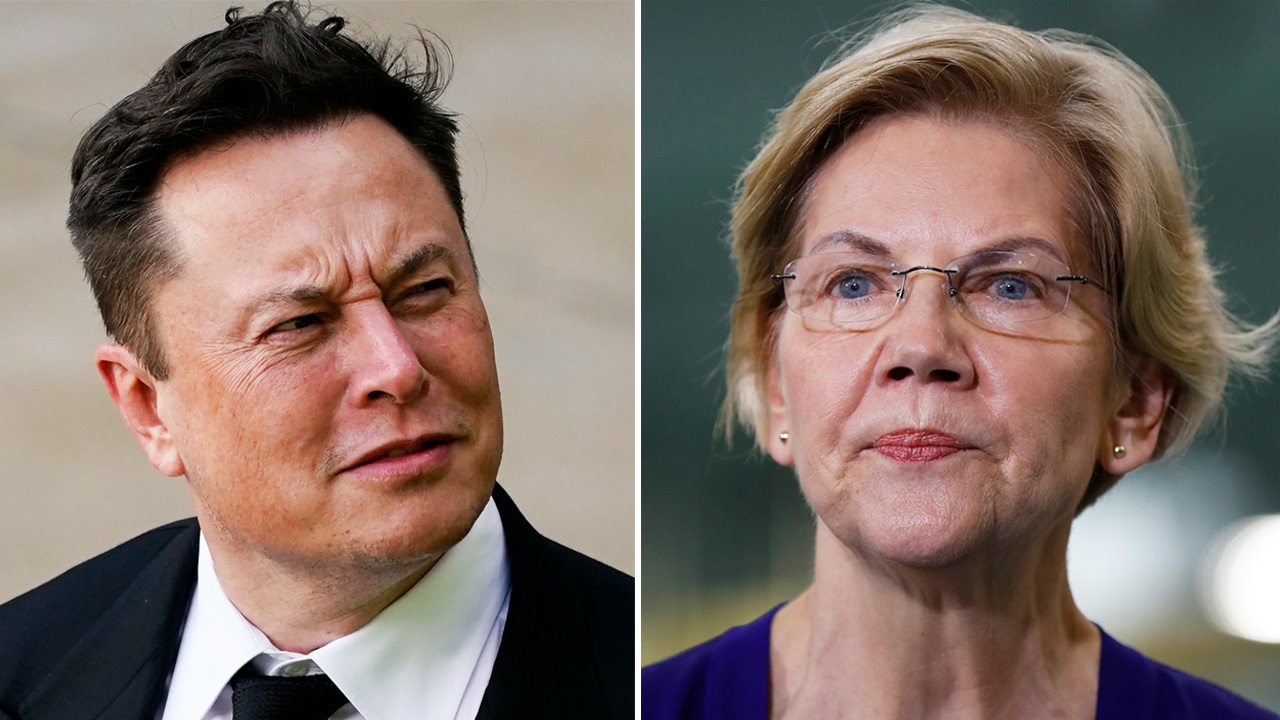
Is the Call for Investigation on Elon Musk by US Senator Elizabeth Warren Justifiable?

0

In a surprising move, US Senator Elizabeth Warren has called for an investigation into Elon Musk, the billionaire founder and CEO of SpaceX, Tesla, Neuralink and The Boring Company. Warren accused Musk of abusing his power and influence to manipulate the stock market, evade taxes and endanger public safety with his space ventures.

Warren claims that Musk’s tweets have caused “wild fluctuations” in the prices of Bitcoin and Dogecoin, and that he has exploited his influence on “enriching himself” and “hurt ordinary investors”. She also accuses Musk of evading taxes and undermining democracy by spreading misinformation.

Warren made her remarks in a letter to the Securities and Exchange Commission (SEC), the Federal Aviation Administration (FAA) and the Internal Revenue Service (IRS), urging them to probe Musk’s activities and hold him accountable for any violations. She cited several examples of Musk’s alleged misconduct, such as:

His frequent and erratic tweets have caused volatility in the prices of cryptocurrencies, such as Bitcoin and Dogecoin, as well as his own company’s shares. Warren claimed that Musk has used his social media platform to create hype and speculation, while benefiting from insider trading and market manipulation.

His failure to pay his fair share of taxes, despite being the richest person in the world. Warren pointed out that Musk paid zero federal income tax in 2018, and only $455 million in 2020, which amounts to less than 1% of his net worth. She argued that Musk has exploited loopholes and avoided taxes by holding most of his wealth in unrealized capital gains, while borrowing against his assets to fund his lavish lifestyle.

His reckless and irresponsible behavior with his space exploration company, SpaceX. Warren alleged that Musk has endangered public safety and national security by launching rockets without proper authorization, violating environmental regulations, and interfering with other satellites and spacecraft. She also accused Musk of using SpaceX as a vehicle for his personal ambitions, such as colonizing Mars and sending civilians to orbit, without regard for the scientific value or the public interest.

Warren concluded her letter by calling on the regulators to take swift and decisive action against Musk, saying that he poses a threat to the stability and integrity of the financial system, the fairness and efficiency of the tax system, and the safety and security of the space domain. She said that Musk should not be allowed to continue his “reckless and selfish” behavior without facing any consequences.

On one hand, some might argue that Warren has a valid point in raising concerns about Musk’s impact on the cryptocurrency markets. Cryptocurrencies are volatile and unregulated assets that can be easily influenced by external factors, such as news, events, or social media posts. Musk’s tweets, which often express his opinions or jokes about cryptocurrencies, have been shown to have a significant effect on their prices.

For example, in May 2021, Musk announced that Tesla would stop accepting Bitcoin as a payment method due to environmental concerns, which caused a sharp drop in Bitcoin’s value. Later, he hinted that Tesla might sell or buy more Bitcoin, which caused another spike in its price. Similarly, Musk’s tweets about Dogecoin, a meme-based cryptocurrency that he has endorsed and promoted, have also caused huge swings in its value.

Some might say that Musk’s tweets are irresponsible and unethical, as they create uncertainty and instability in the cryptocurrency markets, and potentially harm millions of investors who rely on them. They might also say that Musk is abusing his power and influence to manipulate the markets for his own benefit, or for his amusement. They might point out that Musk has a conflict of interest, as he owns a large amount of Bitcoin and Dogecoin, and that he stands to gain or lose from their price movements.

They might also accuse him of evading taxes by holding his wealth in cryptocurrencies, which are not subject to the same taxation rules as traditional currencies. They might also question his credibility and integrity, as he has been known to spread false or misleading information on social media, such as his claim that he had secured funding to take Tesla private in 2018, which resulted in a lawsuit and a fine from the Securities and Exchange Commission.

On the other hand, some might argue that Warren’s call for investigation is unjustified and unfair. They might say that Musk is not doing anything illegal or immoral by expressing his views or preferences on cryptocurrencies, and that he has the right to free speech and opinion. They might say that Musk is not intentionally trying to manipulate the markets, but rather sharing his genuine thoughts or feelings on cryptocurrencies, which reflect his vision and passion for innovation and technology.

They might say that Musk is not exploiting his influence, but rather inspiring and educating millions of people about cryptocurrencies, which are a new and exciting form of money that can empower individuals and communities. They might also say that Musk is not evading taxes, but rather contributing to society by creating jobs, advancing science, and solving global problems through his companies.

They might also defend his credibility and integrity, as he has proven to be a visionary and a leader who has achieved remarkable feats in various fields, such as electric vehicles, space exploration, renewable energy, artificial intelligence, and more.

The call for investigation on Elon Musk by US Senator Elizabeth Warren is a controversial and complex issue that has no clear or easy answer. Both sides of the argument have some merit and some flaws, and both raise important questions about the role and responsibility of influential figures in the cryptocurrency markets. Ultimately, it is up to the regulators, the lawmakers, the investors, and the public to decide whether Musk’s tweets are harmful or helpful, and whether he should be investigated or not.

Warren’s letter has sparked a heated debate among lawmakers, experts, investors and the public. Some have praised her for standing up to Musk and exposing his abuses, while others have criticized her for attacking a visionary entrepreneur and innovator who has contributed to the advancement of humanity. Musk himself has not responded directly to Warren’s letter, but he has tweeted a cryptic message that reads: “Don’t panic.”

Innovate On Your Pricing Model To Thrive In Business

0

Getting customers to open their wallets, and pay for products, requires a lot of work. If you think otherwise, you will be making a big mistake. Yes, consumers are smart. Daily, they have to deal with opportunity costs in a world where they have limited resources to meet their largely unlimited needs.

Yet, there are many ways of getting customers to open their wallets and buy from you. Over the years, I have noticed one technique that works. I call it the Car Salesman Pricing Strategy. Most car salespeople in the U.S. do not give a price as a whole amount when you visit dealers for car shopping. Rather, they give you the price based on your estimated monthly payment installment amount, for cars, that will be financed. They do not want you to be thinking of committing to a huge amount with all the associated burdens of paying back. The monthly payment is very manageable, in your brain.

This Car Salesman Pricing Strategy is not new. It has been part of the retail industry especially where the companies offer financing. You want to offer the pricing in ways that customers get to sign the papers as quickly as possible. Apple deploys that as it works to obfuscate the very fact that its iPhone smartphones are expensive.

What is your pricing strategy? How do you price? Does pricing bring competitive advantage in your business? To capture and validate the hypothesis of starting that business, innovate on your pricing model.

Let us say you want to buy a car that costs $24,000 to be financed at 0% for 6 years. A good salesman will give you the price, usually in a written pad, as $333 per month, instead of $24,000. That $333 is more manageable than $24,000 even though the price is largely the same at 0% financing. That you can get 0% means that you have a good credit and the system is rewarding you for that. The product actually costs lesser when you factor inflation over time. But the reality is that you have a product of $333 and not necessarily $24,000 as you will be dealing with paying only $333 every month. You think of your paycheck  to see if it can accommodate additional $333 monthly.

Of course, it is all about reality as positions shift. I will take a case study of Instacart which has been re-priced: “Instacart targeted a valuation of up to $9.3 billion in its initial public offering Monday. The grocery delivery company, which kicked off its IPO roadshow this week, was valued as high as $39 billion during a 2021 funding round, as the pandemic boosted demand for contactless deliveries. But deliveries have since flattened, prompting Instacart to cut its internal valuation to as low as $10 billion. Analysts are watching Instacart’s performance for signs of what may be ahead: Interest rates and geopolitical instability stemming from the war in Ukraine have quieted IPO markets these past two years.”

Gary Gensler says Crypto is full of Fraud, Abuse and Misconduct

0
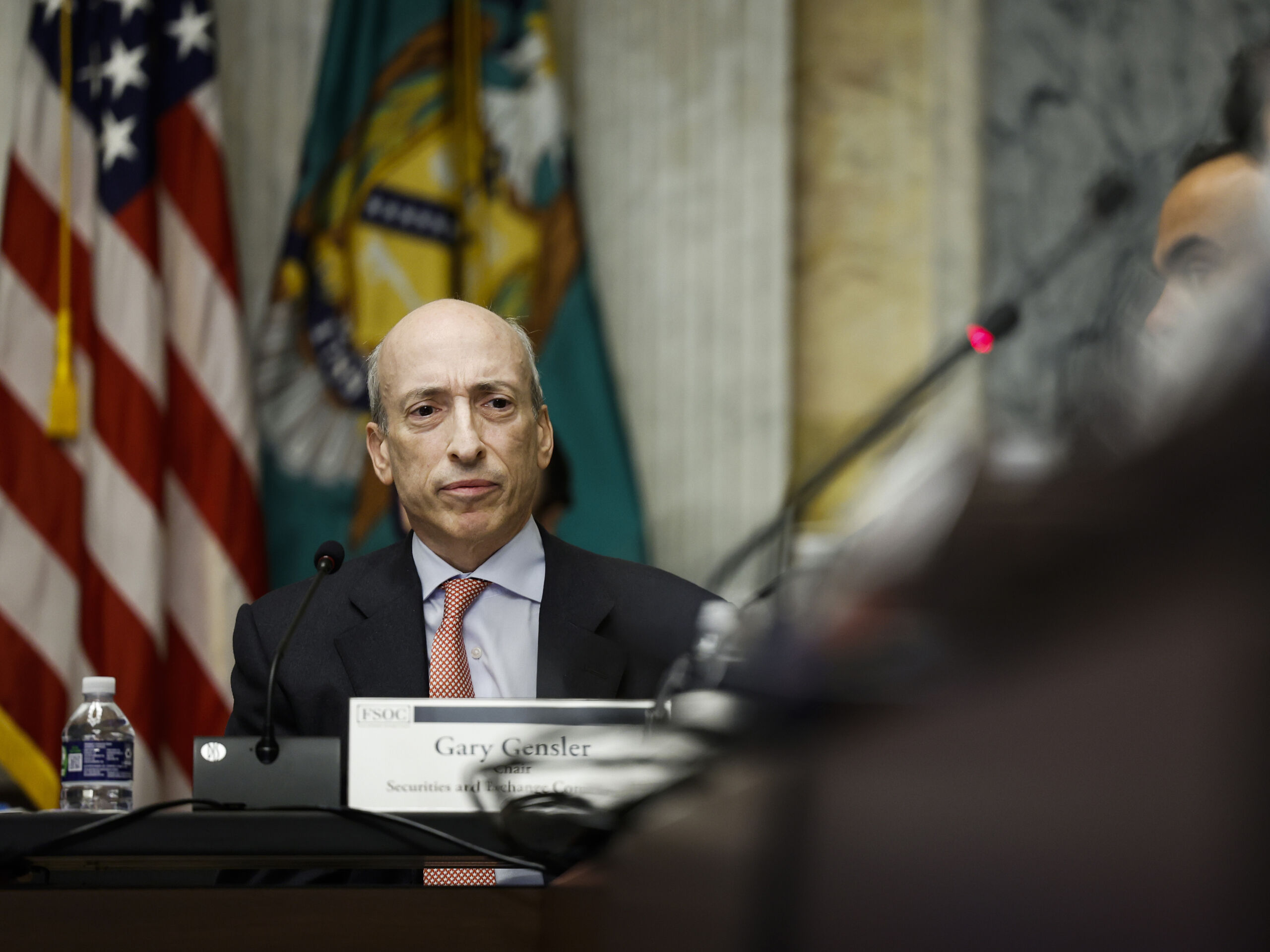
WASHINGTON, DC - OCTOBER 03: Securities and Exchange Commission (SEC) Chair Gary Gensler listens during a meeting with the Treasury Department's Financial Stability Oversight Council at the U.S. Treasury Department on October 03, 2022 in Washington, DC. The council held the meeting to discuss a range of topics including climate-related financial risk and the recent Treasury report on the adoption of cloud services in the financial sector. (Photo by Anna Moneymaker/Getty Images)

In a recent speech, the chairman of the U.S. Securities and Exchange Commission (SEC), Gary Gensler, expressed his concerns about the crypto industry and its lack of regulation. He said that crypto is “rife with fraud, abuse and misconduct” and that investors are exposed to significant risks without adequate protection.

Gensler argued that many crypto platforms and products, such as stablecoins, lending platforms, decentralized exchanges and initial coin offerings, are effectively securities that should fall under the SEC’s jurisdiction. He urged Congress to grant the SEC more authority and resources to oversee the crypto market and enforce the existing securities laws.

He also warned that the SEC will not hesitate to take action against any crypto actors that violate the rules or harm investors. He cited several examples of SEC enforcement actions against crypto-related frauds, scams and market manipulation. He said that the SEC is working with other regulators, such as the Commodity Futures Trading Commission (CFTC) and the Treasury Department, to coordinate their efforts and address the challenges posed by crypto.

Gensler acknowledged that crypto has the potential to bring innovation and efficiency to the financial system, but he stressed that innovation cannot come at the expense of investor protection and market integrity. He said that he is open to dialogue with the crypto industry and welcomes responsible participation in the market. However, he also made it clear that he expects the crypto industry to comply with the law and cooperate with the regulators.

However, the Securities and Exchange Commission (SEC) is harnessing the power of artificial intelligence (AI) to monitor the financial markets for signs of fraud, manipulation and other misconduct. This was revealed by Gary Gensler, the chair of the SEC, in a recent speech at the MIT Sloan School of Management.

Gensler, who is a former professor of blockchain technology at MIT, said that the SEC is using AI tools such as natural language processing, machine learning and network analytics to analyze large amounts of data from various sources, such as trading records, social media posts, corporate filings and whistleblower tips.

He explained that these tools help the SEC to identify patterns, anomalies and relationships that might indicate illegal or unethical behavior by market participants. For example, he said that the SEC is using AI to detect insider trading, market manipulation, accounting fraud and disclosure violations.

Gensler also said that the SEC is using AI to enhance its enforcement capabilities and to protect investors from harm. He said that the SEC is working with other regulators and law enforcement agencies to share information and coordinate actions. He also said that the SEC is investing in its own staff and technology to keep pace with the evolving markets and the challenges posed by AI.

He stressed that the SEC is not only using AI to surveil the markets, but also to regulate them. He said that the SEC is examining how AI is used by financial firms and intermediaries, such as broker-dealers, investment advisers, credit rating agencies and auditors. He said that the SEC is looking at how these entities use AI to make decisions, provide services and interact with customers.

He said that the SEC is concerned about the potential risks and harms of AI, such as bias, discrimination, privacy breaches, cyberattacks and systemic failures. He said that the SEC is seeking to ensure that these entities use AI in a responsible, transparent and accountable manner, and that they comply with the existing laws and regulations.

Gensler concluded his speech by saying that AI is a powerful tool that can bring benefits to the financial markets and the society at large, but also poses significant challenges and risks. He said that the SEC is committed to using AI to protect investors, maintain fair and orderly markets and facilitate capital formation.

Vitalik Buterin, Coinbase, 21co, MetaMask, and other Market News

0

Vitalik Buterin, the co-founder of Ethereum, has successfully recovered his T-Mobile account after it was hacked by an unknown attacker. Buterin said he did not realize that his phone number was linked to several important services, including his email and crypto wallets. He thanked T-Mobile for their prompt assistance and urged other users to secure their accounts with strong passwords and two-factor authentication.

He also advised users to avoid using SMS-based verification, which can be easily compromised by SIM swapping attacks. Buterin said he was lucky that the hacker did not access any of his sensitive data or funds, and that he learned a valuable lesson from this incident.

Coinbase, the leading cryptocurrency exchange platform, announced that it will seek to influence the global regulation of digital assets through its participation in the G20 summit in Brazil next year. The company said that it will work with other stakeholders to promote a “global consensus” on the rules and standards for crypto innovation, while respecting the sovereignty and diversity of each country. Coinbase also stated that it will advocate for a balanced and inclusive approach that fosters innovation, protects consumers and investors, and supports financial inclusion and economic growth.

21co, a blockchain platform that aims to provide decentralized financial services, has announced the launch of wrapped versions of several popular cryptocurrencies, including bitcoin, XRP, ether, and Litecoin. Wrapped tokens are digital assets that are pegged to the value of another token and can be used on different blockchains. For example, wrapped bitcoin (WBTC) is an ERC-20 token that represents one bitcoin on the Ethereum network. By using wrapped tokens, users can access the benefits of both blockchains, such as faster transactions, lower fees, and more functionality.

The wrapped tokens launched by 21co are based on the Binance Smart Chain (BSC), a blockchain that is compatible with Ethereum but offers higher scalability and lower costs. Users can deposit their original tokens on 21co’s platform and receive the corresponding wrapped tokens on BSC. They can then use these tokens to participate in various decentralized applications (dApps) and protocols on BSC, such as lending, borrowing, trading, and staking. Users can also redeem their wrapped tokens for the original tokens at any time.

MetaMask, the popular browser extension and mobile app that allows users to interact with Ethereum-based applications, is expanding its functionality beyond the Ethereum Virtual Machine (EVM) ecosystem. The team behind MetaMask announced the launch of Snaps, a new plugin system that enables developers to create custom extensions for MetaMask that can support any blockchain, layer 2 solution, or decentralized protocol. Snaps are designed to be easy to install, secure, and composable, allowing users to customize their MetaMask experience and access a wider range of decentralized applications.

Snaps also aim to reduce the friction and complexity of using different blockchains and protocols, by providing a unified interface and a consistent user experience. With Snaps, MetaMask hopes to become a universal wallet and gateway to the decentralized web, not just for Ethereum, but for any blockchain or protocol that developers and users want to use.

Alex Mashinsky, the former chief executive officer of Celsius, has filed a motion to dismiss the lawsuit brought by the Federal Trade Commission (FTC) against him and his company. The FTC alleges that Celsius engaged in deceptive and unfair practices by promising high returns on crypto deposits without disclosing the risks and fees involved.

Mashinsky argues that the FTC has failed to show any evidence of consumer harm or injury, and that Celsius complied with all applicable laws and regulations. He also claims that the FTC is overstepping its authority and trying to stifle innovation in the crypto industry.