DD
MM
YYYY

PAGES

DD
MM
YYYY

spot_img

PAGES

Home Blog Page 3796

Unlocking Trust: A Data-Driven Approach for Nigerian Diaspora Investors

0

In an era of globalization, the concept of trust plays a pivotal role in shaping our decisions and actions. It is especially critical when Nigerians in the diaspora seek to invest in their homeland. Establishing trust is often a significant challenge, given the geographical and cultural distances that separate them from Nigeria. However, data from a recent global survey conducted by the World Values Survey between 2017 and 2022 provides valuable insights that can help Nigerian diaspora investors build a personal trust value system. In this article, we explore how Excel, a powerful tool, can be employed to harness this data and lay the foundation for informed investment decisions.

Understanding the Data: A Closer Look

The survey findings paint a nuanced picture of Nigerians’ affinity and trust patterns. Let’s break down the key insights:

1. Affinity with Place:

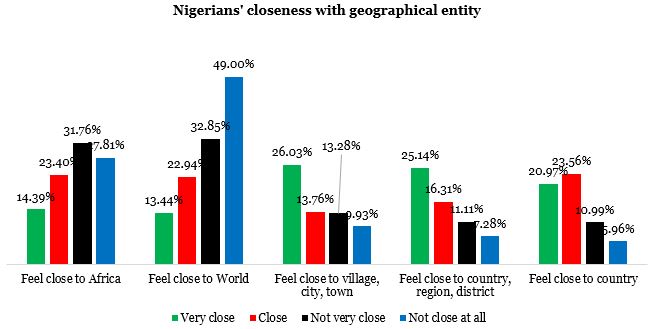
  • Over 26% of surveyed Nigerians feel very close to their village, city, and town.
  • Approximately 25.14% and 20.97% reported strong closeness to their country, their respective region and district, and the country as a whole.
  • Interestingly, nearly half (49%) of those who claimed to have no close affinity with any entity indicated a lack of connection with the world as a whole.

2. Trust Dynamics:

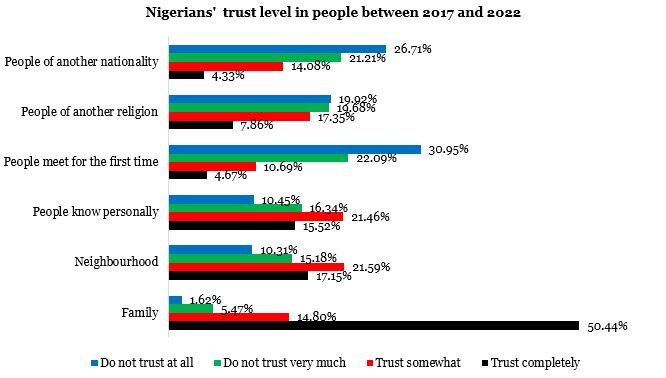
  • More than half (50.44%) trust their family members more than anyone else.
  • Roughly 21.59% trust people in their neighbourhood somewhat.
  • An almost identical percentage (21.46%) trusts individuals they know personally somewhat.
  • Notably, 22.09% do not trust people they meet for the first time.
  • Over 21% expressed a lack of trust in individuals of another nationality.

Building Your Personal Trust Value System Using Excel:

Now, the question is how diaspora investors can use these insights to construct a personal trust value system. The answer lies in leveraging data analysis, and Excel is an excellent tool for the job.

1. Data Visualization:

  • Excel’s data visualization tools can help you create charts and graphs to better understand the data. Visual representations make it easier to spot trends and patterns, such as the relationship between affinity and trust levels.

2. Affinity Mapping:

  • Use Excel to categorize and quantify your own affinity with different aspects of Nigeria. Compare these with the survey data to see how closely your feelings align with those of the surveyed population.

3. Trust Assessment:

  • Excel can help you assess your trust levels. Create a trust matrix where you score different categories of individuals based on your own trust. Compare this with the survey data to identify any gaps or discrepancies.

4. Risk Mitigation:

  • Excel’s calculation features can assist you in quantifying risks associated with your investments. Consider factors such as trust levels, geographical proximity, and cultural familiarity to assess the potential risks.

5. Informed Decision-Making:

  • Excel can be used to create decision matrices that weigh the pros and cons of various investment options. By incorporating your trust and affinity data, you can make well-informed decisions that align with your personal values.

6. Building Local Relationships:

  • Excel can serve as your organizational tool to keep track of your interactions with local contacts. It can help you identify key stakeholders and nurture relationships that are essential for building trust in the local business environment.

7. Continuous Monitoring:

  • Use Excel to set up a monitoring system to track changes in trust dynamics and affinity over time. This will enable you to adapt your investment strategies as circumstances evolve.

In today’s interconnected world, trust is a currency that transcends borders. For Nigerian diaspora investors, the path to building a personal trust value system begins with understanding the data, as revealed in the World Values Survey. Excel is a versatile tool that can help you analyze, visualize, and leverage this data to make informed investment decisions that align with your personal values and aspirations. Trust is the cornerstone of successful investments, and with the right data-driven approach, you can unlock the potential of investing in Nigeria with confidence.

Building Trust Value System for Nigerian Diaspora Investors

0

In a global survey conducted by the World Values Survey between 2017 and 2022, more than 26% of the 3,257 surveyed Nigerians stated that they feel very close to their village, city, and town. Within the same group, 25.14% and 20.97% reported feeling very close to their country, their respective region and district, and the country as a whole, respectively. Additionally, the analysis reveals that nearly half (49.00%) of the 151 Nigerians who selected the “not at all close” response category indicated that they do not have a strong affinity with the world as a whole. In the “not very close” category, the analysis shows that 32.85% of respondents were not very close to the world. In comparison, 31.76% felt similarly distant from Africa, out of 828 sampled respondents. For those who chose the “close” response option, the analysis indicates that 23.56% of the 1,918 sampled citizens felt close to their country. This is closely followed by 23.40% and 22.94% of the same sampled citizens who expressed feeling close to Africa and the world, respectively.

Source: World Values Survey, 2017-2022; Infoprations Analysis, 2023

Regarding trust, the survey found that more than half (50.44%) of the 1,475 sampled citizens expressed confidence in their family members over other categories of individuals around them. Among the 2,357 sampled citizens, 21.59% reported that they somewhat trust people in their neighbourhood, with 21.46% of the same group also indicating that they somewhat trust people they know personally. Further analysis revealed that 22.09% of the 2,154 sampled citizens did not trust people they met for the first time. Additionally, over 21% of the same sampled citizens reported that they did not trust individuals of another nationality. Notably, Nigerians did not express trust in either of these two categories of people.

Source: World Values Survey, 2017-2022; Infoprations Analysis, 2023
Our analyst notes that the World Values Survey between 2017 and 2022 offers valuable insights into the trust dynamics within Nigeria, which can be used as a foundation for constructing a trust value system because the desire of Nigerians in the diaspora to invest in their home country is commendable, but the perceived lack of trust in the local environment presents a significant hurdle. To create a sustainable Trust Value System, we need to consider several key aspects based on the survey findings:

1. Building Trust in Local Networks

The survey highlights that more than half of sampled Nigerians trust their family members more than anyone else. This familial trust can be leveraged to establish a foundation for building trust in local networks. Encouraging diaspora investors to collaborate with trustworthy family members or close acquaintances in Nigeria can mitigate some of their trust concerns. Additionally, creating support systems or networks of fellow diaspora investors who can share experiences and insights can foster trust among this group.

2. Enhancing Trust in Neighbors and Personal Contacts

Approximately 21.59% of surveyed citizens reported some level of trust in people in their neighbourhoods, and a similar percentage trusted individuals they knew personally. To strengthen this trust, initiatives can be developed to promote community engagement and cohesion. Diaspora investors can actively participate in local community activities and build relationships with neighbours and acquaintances. These interactions can lead to greater trust in local communities and personal contacts.

3. Addressing Trust Issues with Strangers and Other Nationalities

The data indicates that a significant portion of respondents did not trust people they met for the first time or individuals of another nationality. To address these issues, awareness campaigns and educational programs can be implemented. These programs can focus on promoting cultural understanding, tolerance, and diversity. Encouraging diaspora investors to engage in cross-cultural exchanges and dialogue can help break down barriers and enhance trust in diverse communities.

4. Establishing Trust in Business Environments

The survey shows that trust in business environments remains a concern for diaspora investors. To address this, several strategies can be employed:

a. Transparency and Accountability: Encourage businesses and institutions in Nigeria to adopt transparent practices. This includes financial transparency, clear legal frameworks, and adherence to ethical standards. Regulatory bodies can play a crucial role in ensuring businesses operate with integrity.

b. Access to Information: Provide diaspora investors with access to reliable information about the Nigerian business landscape. This can include market research, regulatory guidelines, and potential risks and opportunities. Creating a centralized platform or agency for this purpose can be beneficial.

c. Legal Protections: Ensure that legal protections for investors are robust and enforceable. This includes mechanisms for dispute resolution and protection of property rights. Diaspora investors should have confidence that their investments are legally secure.

d. Local Partnerships: Encourage diaspora investors to establish partnerships with local businesses or individuals who have a proven track record of trustworthiness. These local partners can provide valuable insights and credibility.

e. Government Initiatives: Advocate for government policies that promote a conducive business environment. This includes reducing bureaucratic red tape, streamlining business registration processes, and offering incentives to diaspora investors.

5. Fostering a Sense of National and Global Identity

The survey indicates that a substantial portion of respondents felt close to their village, city, and country. However, when it comes to the world and Africa as a whole, the affinity decreases. To bridge this gap, efforts can be made to instil a sense of national and global identity:

a. Cultural Exchange Programs: Promote cultural exchange programs that connect diaspora investors with their cultural roots. These programs can help them better understand and appreciate the local culture, history, and traditions.

b. Global Citizenship Education: Encourage a sense of global citizenship by promoting education and awareness about global issues, sustainability, and interconnectedness. This can foster a broader sense of identity and responsibility.

c. Promotion of African Unity: Advocate for initiatives that promote unity and collaboration among African nations. Diaspora investors can be encouraged to see themselves as part of a larger African community, which can enhance their affinity with the continent.

Constructing a sustainable Trust Value System for Nigerians in the diaspora looking to invest in Nigeria is a multifaceted endeavour. It requires addressing trust issues at various levels, from personal relationships to business environments, and fostering a sense of identity and belonging. The survey data provides valuable insights into the specific challenges and opportunities in building trust for diaspora investors.

To succeed in this endeavour, it is essential for stakeholders, including the government, local businesses, diaspora organizations, and civil society, to collaborate closely. By implementing the strategies outlined above and creating a supportive ecosystem, Nigeria can attract investments from its diaspora while addressing the trust concerns that may have previously deterred potential investors. This, in turn, can contribute to the country’s economic growth and development.

Blockchain in Cross-Border Payments and more Applications

0

The financial sector has undergone a transformative evolution in recent years, driven mainly by the revolutionary technology known as blockchain. Blockchain, originally devised as the backbone of cryptocurrencies like Bitcoin, has transcended its initial purpose and found many applications across various industries. In the financial sector, blockchain’s potential to streamline cross-border payments, reduce transaction costs, and automate complex processes is reshaping the landscape, making financial services more efficient, secure, and accessible than ever before.

In the financial sector, Blockchain is like a decentralized and distributed ledger technology that records transactions across multiple computers in a tamper-proof and transparent manner. The core features of blockchain—immutability, transparency, security, and decentralization—make it an ideal fit for the financial sector. Here’s what it does;

Streamlines Cross-Border Payments

Cross-border payments have historically been fraught with inefficiencies and delays due to the involvement of multiple intermediaries, differing regulatory frameworks, and the need for currency conversion. Blockchain simplifies this process by enabling direct peer-to-peer transfers with reduced fees and faster settlement times.

Reduced Transaction Costs: Blockchain eliminates the need for intermediaries such as banks or clearinghouses, significantly reducing transaction fees associated with cross-border payments.

Faster Settlements: Traditional cross-border transactions can take several days to complete. With blockchain, settlements can occur in minutes or seconds, improving liquidity and reducing currency exchange risks.

Automating Complex Processes:

Many financial processes involve complex, multi-step workflows that require manual verification and reconciliation. Blockchain can automate these processes, ensuring accuracy and reducing the risk of errors.

Smart Contracts: Smart contracts are self-executing contracts with predefined rules and conditions. They automatically trigger actions when specific criteria are met. In finance, smart contracts can automate tasks like loan approvals, insurance claims, and trade settlements, eliminating the need for intermediaries and reducing operational costs.

Auditing and Compliance: Blockchain’s transparent ledger makes it easier for regulators and auditors to monitor transactions in real time, enhancing compliance and reducing the risk of fraud.

Enhancing Security:

Security is paramount in the financial sector, and blockchain protects against fraud and unauthorized access. We have discussed this previously. For instance;

Immutable Records: Once a transaction is recorded on the blockchain, it cannot be altered or deleted. This immutability reduces the risk of fraudulent activities.

Decentralization: The decentralized nature of blockchain means that there is no single point of failure. Even if one node is compromised, the network remains secure.

Increasing Accessibility:

Blockchain technology is inherently global and accessible to anyone with an internet connection. This accessibility can potentially bring financial services to underserved and unbanked populations.

Financial Inclusion: Blockchain-powered financial services can reach individuals and businesses in remote or underserved areas, expanding financial inclusion.

Lower Barriers to Entry: Blockchain lowers barriers to entry for fintech startups, enabling them to compete with traditional financial institutions and offer innovative solutions.

In a few words

As blockchain technology matures and regulatory frameworks evolve, financial institutions and fintech innovators are poised to unlock new levels of efficiency, security, and inclusivity.

The future of finance lies in the integration of blockchain, where transactions are not only faster and cheaper but also more secure and accessible to everyone, regardless of their location or financial status. As blockchain continues to disrupt traditional financial systems, we can expect a financial sector that is more efficient, transparent, and equitable for all.

ZK Roll UPs vs Privacy Pools

0

Zk roll ups and privacy pools are two techniques that aim to improve the scalability and privacy of blockchain transactions. We will compare and contrast these two approaches and discuss their advantages and disadvantages.

Zk roll ups are a layer 2 solution that aggregates multiple transactions into a single one, and then submits it to the main chain with a zero-knowledge proof. A zero-knowledge proof is a cryptographic method that allows one party to prove to another that a statement is true, without revealing any information other than the fact that the statement is true.

Zk roll ups use zero-knowledge proofs to verify the validity of the aggregated transactions, without requiring the main chain to process them individually. This reduces the gas fees and congestion on the main chain, and also enhances the privacy of the transactions, since only the proof and not the details are revealed.

Privacy pools are a layer 1 solution that use secret contracts to hide the inputs and outputs of transactions. A secret contract is a smart contract that executes on a trusted execution environment (TEE), such as Intel SGX, that prevents anyone from accessing or tampering with the data or code inside.

Privacy pools use secret contracts to encrypt the transaction data, and then send it to a public pool, where anyone can join and withdraw funds. The secret contract ensures that only the sender and receiver can decrypt and verify the transaction, while the public pool provides anonymity and fungibility for the participants.

Both zk roll ups and privacy pools have their pros and cons. Zk roll ups offer higher scalability and lower fees than privacy pools, since they reduce the load on the main chain. However, they also have some drawbacks, such as requiring trusted relayers to submit the proofs, relying on complex cryptography that may have bugs or vulnerabilities, and having limited support for complex smart contracts.

Privacy pools offer stronger privacy guarantees than zk roll ups, since they hide not only the transaction details but also the balances and identities of the participants. However, they also have some challenges, such as requiring trusted hardware to run the secret contracts, having higher latency and lower throughput than zk roll ups, and facing regulatory and legal uncertainties.

Privacy pools are important because they offer several benefits for crypto users and the broader ecosystem. Some of these benefits are Privacy: Privacy pools protect the users’ personal and financial information from prying eyes, such as hackers, regulators, or competitors. They also prevent blockchain analysis and tracing, which can compromise the users’ security and freedom.

Fungibility: Privacy pools ensure that all crypto assets are treated equally, regardless of their history or origin. They prevent discrimination or censorship based on the source or destination of the funds, which can affect the value and liquidity of the assets.

Innovation: Privacy pools enable new use cases and opportunities for crypto users and developers. They can facilitate anonymous donations, voting, governance, lending, borrowing, and more. They can also foster creativity and experimentation in the decentralized finance space.

Zk roll ups and privacy pools are two promising techniques that can improve the scalability and privacy of blockchain transactions. However, they also have different trade-offs and limitations that need to be considered. Depending on the use case and preferences of the users, one may be more suitable than the other.

Ghana Aims to Achieve 100% Universal Energy Access to Export Electricity to Nigeria

0

The Ghanaian government is exploring ways to achieve 100% universal energy access, potentially making its power sector viable for export.

Mr. Hanson Monney, the Head of the Generation and Transmission Unit at the Ministry of Energy in Ghana, who announced the efforts during his presentation in Lagos on the 2nd Day of the Nigeria Energy Leadership Summit, said “big brother” Nigeria is their top export target.

Nigeria is Ghana’s West African neighbor with chronic power supply limitations that have lingered unsolved for decades, despite billions of dollars in investments in the power sector.

Monney said that the strategies and policy implementation are already yielding results, with Ghana having achieved a remarkable 80% to 85% universal energy access within its borders.

“So, we are working on all these things to make sure that the power system of Ghana continues to be as good as it is or even better, and then, maybe, we can be exporting more to our big brothers in Nigeria when the grid is finally settled.

“So, ladies and gentlemen, this is an overview of the Ghana power system and challenges,” he said.

Ghana’s approach involves collaboration among regulators, the private sector, and various stakeholders, with the existence of an “Integrated Power Sector Master Plan” to consolidate long-term plans for the sector.

Nigeria’s epileptic power supply, which has significantly impacted its economic growth, has passed through successive governments with different policies. Though Nigeria supplies electricity to its neighbor, Niger Republic, its meager 4,000 MW capacity has belied the country’s status as Africa’s largest economy.

The poor electricity situation in Africa’s most populous nation is evident in the frequent collapse of its national grid – throwing the entire country into darkness. The national grid has collapsed more than 100 times since 2015, despite the over N1.51 trillion intervention in the sector by the federal government.

This stands in stark contrast to Ghana, where the government is actively pursuing a range of energy solutions, including grid-based energy, mini-grids, and solar-dominated renewable energy, with the goal of achieving “Universal access to energy by 2024” as mandated by the country’s President.

However, Monney acknowledged that Ghana faces challenges ranging from gas supply to tariff, in its quest to achieve universal energy access. He said the challenges are significant especially in remote islands, riverside, or lakeside communities due to geographical constraints.

“So, now, we are trying to scale our renewable energy access, and that is how we have planned in 2022 to scale up our renewable energy program.”

He further noted that one of the primary hurdles in Ghana’s power sector is achieving financial sustainability. The government is contending with escalating debts and the procurement of excess capacity, which are impacting the country’s economy.

“There is so much debt that the government has to shore up to make sure that the system is afloat because we have procured a lot of excess capacity, which comes with attendant costs. So, these financial challenges require some policy actions to eliminate legacy debts,” he said.

With Ghana’s economy in shambles, squeezing consumers’ spending power, Monney said high electricity tariffs are a significant concern in Ghana, with a need to make electricity more affordable, especially for industries. He explained that historically, industries have been subsidizing the residential sector, and efforts are underway to rationalize tariffs to rectify this issue.

Another challenge highlighted is the security of the gas supply in Ghana. Nigeria has been a consistent supplier of gas to Ghana from the east, but additional measures are required to ensure a consistent fuel supply. Currently, Ghana is experiencing an 80-day shutdown of its gas supply, which has had a significant impact on the power sector.

Despite these challenges, Monney affirmed that the Ghanaian government is actively working to advance the electricity sector in the country.