DD
MM
YYYY

PAGES

DD
MM
YYYY

spot_img

PAGES

Home Blog Page 3804

External Funding Routes of Early-Stage Enterprises and their Impacts on the Venture Ecosystem

0

Bootstrapping a business with personal funds often proves to be a very herculean task if at all that is possible. Hence, how to secure and leverage external funding opportunities invariably constitutes a focal question in the heart of start-ups or emerging entrepreneurial firms.

Over the years, several corporate financing structures have developed, providing external funding for entrepreneurs or businesses in their early stages. These include Angels, Venture Capitals, Accelerators, Incubators and government grants or public funds. Business owners could choose any one of these alternatives based on their prevailing capital structure, model and stage.

Although each funding structure has its own targeted business or corporate investees, they collectively shape the investment ecosystem as a whole.

Accelerators

Accelerators focus mainly on early-stage enterprises or start-ups and provide them with contextual support in addition to financial support. In other words, Accelerators provide not only financial support but also mentorship, education, and networking services to enhance and accelerate the growth of early-stage entrepreneurial firms.

Accelerators are more likely to provide contextual support than financial investment as they target highly precarious firms in their early stages which do not particularly interest other institutional investors; especially the VCs. Therefore, Accelerators prefer to invest in firms that VCs think have low profitability.

Accelerators started to wax strongly in the investment ecosystem following the establishment of Y-Combinator in 2005. Since the founding of Y-Combinator other star accelerators like Techstars, and 500 startups have developed. Studies have shown that Accelerators not increase the survival probability of entrepreneurial firms and provide higher and faster returns on investment compared to VCs; they also influence the making of an effective venture ecosystem.

Angel Investors

Angel investors provide early-stage entrepreneurial firms with both financial and technical support to scale. Angel investors are often highly experienced in management and they seek to have appreciable managerial influence on the businesses they are funding. Studies have shown that most angel investors are former entrepreneurs and business managers who are investing their wealth in firms as a way of giving back to society. Therefore, unlike other investor types that are motivated by high returns, angels are motivated by the growth of the funded firms.

Venture Capitalists

Venture Capital is an equity-based financing provided to small businesses or start-ups with high or long-term growth potential. Generally, Venture Capitalists prefer to invest in relatively more mature early-stage entrepreneurial firms characterized by high industry-knowledge and technology as well as the capacity to generate profit by selling shares or initial public offerings. Most VCs concentrate in specific industries where they have expertise and can be able to mitigate risks.

In addition to providing finance support, VCs can also provide mentorship and networking opportunities to the funded companies. Funding decision in VC usually takes more time compared to other investor types because it involves a more painstaking vetting and profiling of potential investees. A type of VC funding called Micro-VC makes investments on a small scale and increases its contextual support for targeted firms, similar to accelerators, to avoid high investment risk.

Incubators

Incubators manage early-stage companies through different developmental phases until the companies have the wherewithal in terms of finances, physical structures and human resources to function independently. Incubators’ support to early-stage companies can include; office space, administrative functions, education and mentorship, access to investors and capital and ideation. These may involve a fee on or an equity stake in the business. Unlike Accelerators that focus on established early-stage businesses, incubators focus on concepts that have yet to transition into a full-fledged business.

Relationship between Investment Types, Behaviours and Performance

Early-stage firms that could access one or more of the aforementioned external funding should have higher survivability and liquidity compared to early enterprises that could not access any of those investment supports. However, studies have shown that investment behaviour and performance can differ according to these investment types.

Choi and Kim (2018), analyzes over 30,000 investment data involving Accelerators, Angels, and Venture Capitalists from the CrunchBase database and discovers that the performance of Accelerators differs from that of Venture Capitalists, but is similar to that of Angels. The study shows that while Accelerators’ investees perform well post funding, Venture Capitals’ investees perform well in terms of survivability.

Resource:
Yunsoo Choi and Dohyeon Kim (2018). The effects of investor types on investee performance: Focusing on the seed accelerator. Cogent economics & finance

Telecom Investment in Nigeria Records Significant Increase, Rises From $38b to $77b in Q2 2023

0

Nigeria’s telecom investment is reported to have recorded a significant increase in the second quarter (Q2) of 2023, rising from $38 billion to $77 billion.

This was disclosed by the Executive Vice Chairman of the Nigerian Communications Commission (NCC), Prof. Umar Danbatta who lauded the milestone during a media chat with media industry stakeholders in Kano.

According to Prof. Danbatta, the telecom sector contributed 16 percent to Nigeria’s Gross Domestic Product (GDP) during this period, (Q2) 2023.

In his words,

“From about eight percent contribution to GDP in 2015, when I came on board as the EVC of NCC, quarterly GDP has increased significantly to reach its current threshold of 16 percent and this has continued to positively impact all aspects of the economy”.

Prof. Danbatta lauded his leadership as NCC boss while disclosing that through the effective implementation of NCC’s mandates, the telecommunications industry in Nigeria has achieved remarkable milestones under his watch.

“While we acknowledge the challenges encountered by the industry, we have also witnessed explosive growth, improved regulatory standards, and digital innovations that have garnered global recognition”, he said.

While disclosing impressive statistics that have characterized his leadership at NCC from 2015 to date, the Danbatta said that active telephone subscribers had increased from less than 150.7 million to 218.9 million, representing a teledensity growth of 115.70 percent from 107.87 percent in 2015.

Through stimulating broadband infrastructure across the country, he said broadband penetration, which stood at 6 percent in 2015 has increased significantly to 47.01 percent as of July 2023, enhancing over 89.73 million subscriptions on 3G, 4G, and 5G networks in the country.

Additionally, general internet subscriptions have reached 159.5 million up from less than 100 million in 2015.

“Also, from an 8 percent contribution to the Gross Domestic Product (GDP) in 2015, telecommunications sector now contributes 16 percent quarterly to the Nigerian economy as of the second quarter of 2023.

“Besides, following the authorization of more telecommunications companies to operate in Nigeria’s telecoms sector, the investment profile has increased tremendously from $38 billion in 2015 to $75 billion currently and this keeps growing daily. From the sales of Fifth Generation (5G) C-Band Spectrum, the NCC has generated over $847.8 million for the Federal Government”, he said.

While the NCC is still faced with a number of challenges such as multiple taxation, vandalism, and securing equitable Right of Way (RoW) from governmental stakeholders, the commission remains committed to ensuring that there is a sustained growth trajectory.

As the national target to achieve 70 percent broadband penetration by 2025 is receiving significant attention, the NCC has promised to achieve a broadband penetration of 50 percent before the end of 2023.

FTX reopens claims portal following security incident

0

FTX, one of the leading cryptocurrency exchanges, has announced that it has reopened its claims portal for users who were affected by the security incident that occurred on September 15th, 2022. The incident resulted in unauthorized withdrawals of some users’ funds, as well as temporary suspension of trading and deposits on the platform.

Settlements are the process of finalizing transactions on the exchange, ensuring that the buyers and sellers receive their respective assets and funds. FTX uses a unique settlement system that differs from other exchanges, which has both advantages and disadvantages.

According to a blog post by FTX CEO Sam Bankman-Fried, the exchange has identified the root cause of the breach and has taken steps to prevent it from happening again. He also stated that FTX will reimburse all users who lost funds due to the incident, either by restoring their balances or by paying them in USD or USDC.

The claims portal, which was initially opened on September 16th, allows users to submit their claims and provide evidence of their losses. FTX said that it will process the claims as quickly as possible and will notify users of the status of their reimbursements. The portal will remain open until September 30th, after which FTX will close it and finalize the payouts.

One of the advantages of FTX’s settlement system is that it allows for faster and cheaper transactions, as well as more flexibility and innovation. FTX does not use the traditional blockchain-based settlement system, which can be slow, expensive, and limited by network congestion and scalability issues. Instead, FTX uses a centralized database to record and settle transactions, which can be done in seconds and with minimal fees.

Another advantage of FTX’s settlement system is that it enables the exchange to offer more diverse and complex products, such as futures, options, leveraged tokens, prediction markets, and more. These products allow traders and investors to hedge their risks, speculate on various outcomes, and access new opportunities in the crypto market.

However, FTX’s settlement system also has some disadvantages and risks, which have been exposed by recent events. One of the disadvantages is that it relies on the trust and integrity of the exchange, which can be compromised by human error, technical glitches, or malicious attacks. FTX does not use a decentralized ledger to verify and secure transactions, which means that there is no guarantee that the transactions are accurate and fair.

Another disadvantage of FTX’s settlement system is that it can create confusion and uncertainty among users, especially when there are disputes or discrepancies. FTX does not provide a clear and transparent way for users to verify their transactions or balances, which can lead to disputes or errors. For example, some users have reported that their balances were incorrect or missing after a settlement, or that they received unexpected or unwanted settlements.

These issues have raised questions and concerns about FTX’s settlement system, and whether it can reimburse hope on the exchange. Hope is an essential factor for any exchange, as it reflects the confidence and trust that users have in the platform. Without hope, users may lose interest or faith in the exchange, and withdraw their funds or switch to other platforms.

FTX has acknowledged some of the problems with its settlement system and has promised to improve it and address the users’ complaints. FTX has also claimed that its settlement system is fair and secure, and that it has not caused any losses or damages to users. However, some users remain skeptical or dissatisfied with FTX’s explanations and solutions.

Therefore, it is unclear whether FTX’s settlements will reimburse hope on the exchange, or whether they will erode it further. FTX’s settlement system has both pros and cons, and it may depend on how the exchange handles the challenges and controversies that arise from it. Ultimately, FTX will have to prove that its settlement system is reliable and trustworthy, and that it can deliver on its promises and expectations.

FTX also thanked its users for their patience and support during this difficult time and apologized for any inconvenience caused by the incident. The exchange said that it is committed to providing a secure and reliable service to its customers and that it will continue to improve its security measures and protocols.

Those Google Auto-Ads Are Not Intentional

0

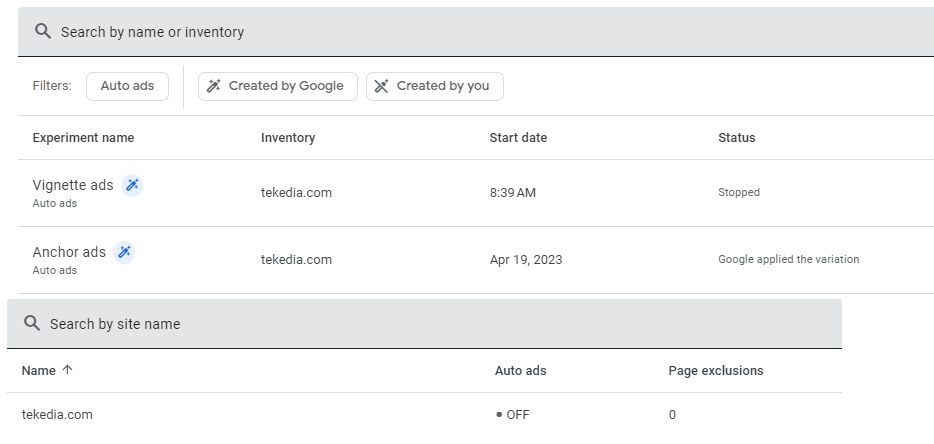
Good People, if you saw auto-ads or google_vignette on Tekedia this morning, they were not approved by us. Google activated them; we noticed that it sent an email “Give Auto ads another try: …” We have been declining these offers, but stubbornly Google feels that anyone who runs a popular website must monetize via ads, and the firm keeps pushing ads, even when we have not approved. I find it strange indeed!

Google, how many times do we need to tell you that we’re not interested in Auto Ads on tekedia.com. I find it extremely offensive that you can decide to activate ads on our website by fiat. Yes, we understand that the game is to fill all spaces with adverts, but we do not want that on tekedia. Please DO NOT activate ads we have not activated.

We woke up this morning with all kinds of adverts on the site. You called them “experiments”. Who gave you the power to experiment therein? We currently use what we want.  Thanks for the tools. We like what we’re using but we do not want those auto-ads.

Solana (SOL), Chainlink (LINK), Everlodge (ELDG): The Trio Poised for Long-Term Triumph in Crypto Space

0

Solana (SOL), Chainlink (LINK), and Everlodge (ELDG) are emerging as exciting prospects for long-term success. Each brings unique attributes and potential to the ever-evolving crypto landscape. Notably, Everlodge, still in its presale phase, presents a golden opportunity for early investors to get in at ground level. Let’s jump into what makes this trio so special.

Join the Everlodge presale and win a luxury holiday to the Maldives

Everlodge (ELDG): The Dawn of NFT-Enabled Fractional Property Ownership

Everlodge is swiftly gaining a reputation as the ‘Web3 Airbnb,’ and it’s easy to see why. It has catapulted the real estate industry onto the blockchain, crafting a nexus where luxury meets inclusivity.

Everlodge has created a gateway to luxurious real estate through NFT-enabled fractional property ownership. This makes it accessible to investors starting at a low $100 investment. This starkly contrasts traditional real estate avenues that often have barriers for smaller investors. Everlodge warmly welcomes them instead of turning them away.

Using NFTs also brings a degree of transparency and trust that the real estate industry needs. Inside the metadata of each NFT is a record of the property’s title, deed, and other pertinent information. This ensures buyers know exactly what they’re getting into with their investment.

The excitement surrounding Everlodge’s innovative initiative is apparent, especially in the response to the ELDG token presale. Originally priced at $0.010, the tokens have increased to $0.018 as investors rush to acquire ELDG tokens before the price escalates again.

Everlodge is a blockchain project that questions established norms in the billion-dollar vacation property sector. Industry experts are already hinting at a staggering 30x ROI for ELDG investors in the near future.

Solana (SOL): A 50% Boost in Total Value Locked (TVL)

Solana’s performance in 2023 has been truly remarkable, surging from $8 to an impressive $32. A significant breakout from a descending triangle triggered a 50% increase within days.

However, this substantial momentum could only propel Solana up to the $32 mark. With its current valuation at $19.15, Solana stands at a crucial support juncture after experiencing a swift pullback over recent weeks. However, the crypto community is notably bullish on Solana despite this pullback.

There has been a notable 50% increase in Solana’s Total Value Locked (TVL) since the start of 2023. Solana is becoming increasingly popular for DeFi 2.0 projects, and several major initiatives are yet to be launched.

One of the most highly anticipated projects is Kamino 2.0, which is expected to greatly increase the adoption of Solana in the community. If Solana can become the go-to platform for DeFi 2.0, it is only a matter of time before the $32 resistance breaks and a full bull run begins.

Chainlink (LINK): The Decentralized Oracle Network

It is clear to see that interoperability is holding the blockchain industry back. Institutional investors and companies want to adopt digital assets, but the lack of reliable and secure interoperability between networks hinders them.

With its revolutionary decentralized oracle network, Chainlink is at the forefront of this issue. Huge developmental strides were made last month as Chainlink unveiled the Cross-Chain Integration Protocol (CCIP).

Swift is already using Chainlink’s CCIP as they test Chainlink’s Oracle network for their global payments system. This is an incredible development that could open up the world of blockchain to traditional financial institutions, significantly driving more activity into crypto. With Chainlink tokens needed to use the CCIP, the demand for LINK will only continue to increase.

Currently valued at $6.24, Chainlink has been oscillating between $5 and $10 for the past few years. Analysts point to the integral role of Chainlink’s token within the CCIP, forecasting an inevitable surge in demand. Those who position themselves early in Chainlink could gain handsomely if the token breaks past the $10.00 mark.

Find out more about the Everlodge (ELDG) Presale

Website: https://www.everlodge.io/

Telegram: https://t.me/everlodge