DD
MM
YYYY

PAGES

DD
MM
YYYY

spot_img

PAGES

Home Blog Page 3847

The Deputy Governor Taking Over Governance

0

I got to first know of Sir Oluwarotimi Akeredolu (SAN) when he was contesting for the Nigerian Bar Association presidency. He is a cerebral senior lawyer, whom, I can vouch for; unfortunately, he was snatched away from us by the cold hands of death on the 27th of December 2023 after a prolonged illness making him the third Nigerian governor to die whilst still in office following the late Patrick Yakowa of Kaduna state who died on December 15, 2012 by Helicopter crash in Bayelsa and Mamman Ali of Yobe state who died in 26th January, 2009.

Whenever an elected or appointed official dies in office, it poses the constitutional question of how power should be devolved and who is next in line to pick up the mantle of leadership. The reality is that in governance, no matter how important you are, once you give up the ghost there is always a speedy and immediate transfer of power to the next person in line so that governance and government duties do not suffer. Governance and government activities cannot and have never been halted over the death of the person occupying the role. 

In Nigeria, if an appointed official dies whilst in office, the power is usually transferred to the most senior official in that office who will assume that duties until a replacement is appointed but if a sitting governor or president dies, a specific chain of activities takes place to ensure a smooth and immediate transition of power and continued operation of the state of federal government. With the declaration of the death of the governor or the president, the deputy governor or the Vice President immediately takes an oath of office and gets sworn in and therefore automatically assumes the role of the governor or the president as required by the constitution. This happens so as to maintain continuity of leadership in the state or in the country.

In section 191(1) of the constitution of the Federal Republic of Nigeria, 1999 as amended, the constitution states thus; “The Deputy Governor of a State shall hold the office of Governor of the State if the office of Governor becomes vacant by reason of death, resignation, impeachment, permanent incapacity, or removal of the governor from office for any other reason in accordance with sections 188 or 189 of this constitution.”

By the implication of this segment of the constitution, once a governor becomes unable to perform his duty as the governor of the state by the reason of either death or sickness the deputy governor is sworn in to take the place of the governor pending when the governor is fully back on his feet (in the instance where it was sickness).

This also happened when the then president Umaru Musa Yar’adua died in office on the 5th of May 2010, although before his death due to his long absence on sick leave, the National Assembly through the doctrine of necessity already sworn in President Goodluck Jonathan to act as an interim president pending when president Yar’adua fully recovers, unfortunately, he never recovered. 

This is the constitutional and democratic process of transference of power from an elected official who died in office. Once it is a joint ticket, his deputy steps in his place to finish their tenure before a fresh election could be conducted. 

May the soul of Sir Oluwarotimi Akeredolu (SAN) find rest and May God grant those he left behind the fortitude to bear the loss and the ability to fill in the gap he left vacuum. 
Traditional Financial Services and Limitations on Speed and Autonomy

0

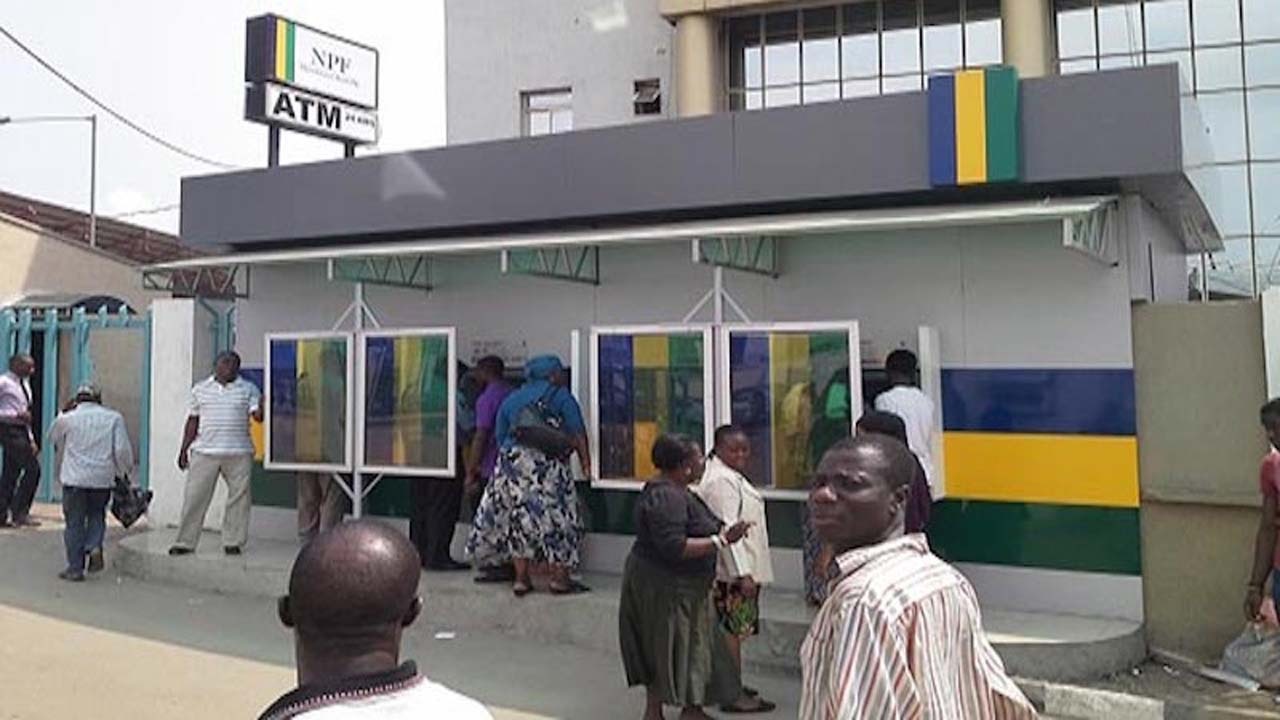
Traditional financial services have been the backbone of the global economy for decades, but they are not without their drawbacks. One of the main challenges that these services face is the lack of speed and autonomy in their transactions.

Speed is a crucial factor in any financial transaction, especially in today’s fast-paced and interconnected world. However, traditional financial services often rely on intermediaries, such as banks, payment processors, or regulators, to facilitate and verify the transactions.

These intermediaries add layers of complexity and bureaucracy to the process, resulting in delays, fees, and risks of errors or fraud. For example, a cross-border payment can take several days to complete and incur high costs due to currency conversion and wire transfer fees.

Similarly, a loan application can take weeks or months to be approved and disbursed, depending on the creditworthiness of the borrower and the availability of funds from the lender.

Autonomy is another important aspect of financial transactions, as it reflects the degree of control and freedom that the parties involved have over their own money and assets. However, traditional financial services often impose restrictions and limitations on how people can access and use their own funds.

For example, a bank account holder may face withdrawal limits, overdraft fees, or account freezes due to various reasons. Likewise, an investor may face barriers to entry, exit, or diversification in certain markets or assets due to regulatory or technical constraints.

These limitations of traditional financial services have significant implications for the economic development and social welfare of individuals and communities around the world. They create inefficiencies, inequalities, and vulnerabilities in the financial system, which can hamper innovation, growth, and inclusion. Moreover, they expose the system to external shocks and disruptions, such as cyberattacks, natural disasters, or political instability.

Fortunately, there are emerging alternatives that aim to overcome these limitations and provide faster and more autonomous financial services. These alternatives leverage new technologies, such as blockchain, artificial intelligence, or biometrics, to enable peer-to-peer transactions without intermediaries, reduce costs and risks, and increase access and transparency. Some examples of these alternatives are cryptocurrencies, decentralized finance (DeFi), digital identity systems, or robo-advisors.

Some of the benefits of DeFi are:

Speed: DeFi transactions are processed by a network of distributed nodes that validate and record them on a shared ledger. This eliminates the need for intermediaries that slow down the process and charge fees.

Autonomy: DeFi users have full control over their own funds and assets. They can access them anytime and anywhere without relying on third parties that may impose restrictions or limitations.

Security: DeFi transactions are secured by cryptography and consensus mechanisms that ensure their validity and immutability. DeFi users do not have to trust or depend on centralized entities that may be vulnerable to hacking or corruption.

Transparency: DeFi transactions are recorded on a public ledger that anyone can access and verify. DeFi users can benefit from increased visibility and accountability of the financial system.

Inclusion: DeFi lowers the barriers to entry for financial services by offering them to anyone with an internet connection and a compatible device. DeFi users do not have to meet any eligibility criteria or provide any personal information to access these services.

We have discussed some of the limitations of traditional financial services in terms of speed and autonomy. We have also briefly introduced some of the new solutions that are challenging the status quo and offering more efficient and secure financial services.

Binance User Base Surges 30% in 2023, Amid Regulatory Challenges And Step Down of CEO Zhao Changpeng

0

World’s leading cryptocurrency exchange Binance has reported a 30% surge in its user base in 2023, amid regulatory challenges and the step down of the company’s CEO Zhao Changpeng.

The exchange’s current CEO Richard Teng said that the significant growth in Binance’s user base signifies strength and a positive outlook as the company looks past its regulatory hurdles with regulators.

In 2023, Binance welcomed more than 40 million users saw steady growth in its key services, and introduced new products and features built for the next stage of the blockchain industry’s development.

These expansions indicated Binance’s successful penetration into various segments of the crypto market, appealing to a broader range of users. The interest from institutional investors also saw a notable rise, as disclosed by the CEO, highlighting the growing mainstream acceptance of cryptocurrency as a viable asset class.

2023 was indeed a significant year for Binance in terms of regulatory compliance. The company allocated $213 million towards compliance measures, marking a 35% increase from the previous year.

This investment was directed towards enhancing surveillance against wash trading on the exchange and NFT marketplaces, developing an in-house case management system for transaction monitoring, and conducting a security audit completed recently.

These measures were part of Binance’s broader strategy to align with regulatory expectations, especially following the settlement with U.S. authorities.

The agreement included a hefty fine for violating U.S. banking laws and the implementation of a U.S. government-approved compliance monitor for the next five years. This commitment to compliance is a response to past challenges and a proactive measure to ensure future regulatory alignment.

In the same year, Binance Feed evolved into Binance Square, a social platform designed to be the single touchpoint for the Web3 content universe, facilitating the conversation and enabling everyone to generate compelling content. Over the past year, Binance Square went from 1,200 to 11,000 creators and from under 700K to 1.6M+ active daily users.

In addition to financial investment, Binance’s regulatory liaison team was actively engaged with global law enforcement, processing nearly 60,000 requests and conducting 120 training sessions. This level of engagement reflects the company’s dedication to collaborating with regulatory and law enforcement agencies, further strengthening its compliance posture.

CEO Richard Teng emphasized the company’s commitment to long-term stability and growth amid these developments.

Although crypto markets spent much of the year in recovery mode, Binance products and services enabling payments, real-world purchases, and gifting saw a steady rise in user numbers. More people use digital assets to pay for goods and services online and in-store, facilitated by a growing number of merchants supporting this functionality.

• The number of people who sent crypto to their loved ones using Binance Gift Card went up by a factor of 3.5 compared to last year.

• In 2023, the number of fiat currencies supported on Binance reached 69, with 30 fiat channels available to users across the globe.

• Binance P2P grew the number of payment methods and fiat currencies supported to 970 and 112, respectively, and facilitated 18% more trades between 39% more users than in 2022.

Throughout 2023, the crypto exchange continued to engage with regulators to ensure it meets the most rigorous standards in the jurisdictions where it operates. As of the end of the year, Binance disclosed that it held licenses, registrations, and authorizations in 18 jurisdictions around the world more than ever before.

Chinese Tech Giant Baidu Discloses Its ChatGPT Rival Ernie Bot, Has Reached Over 100 Million Users

0

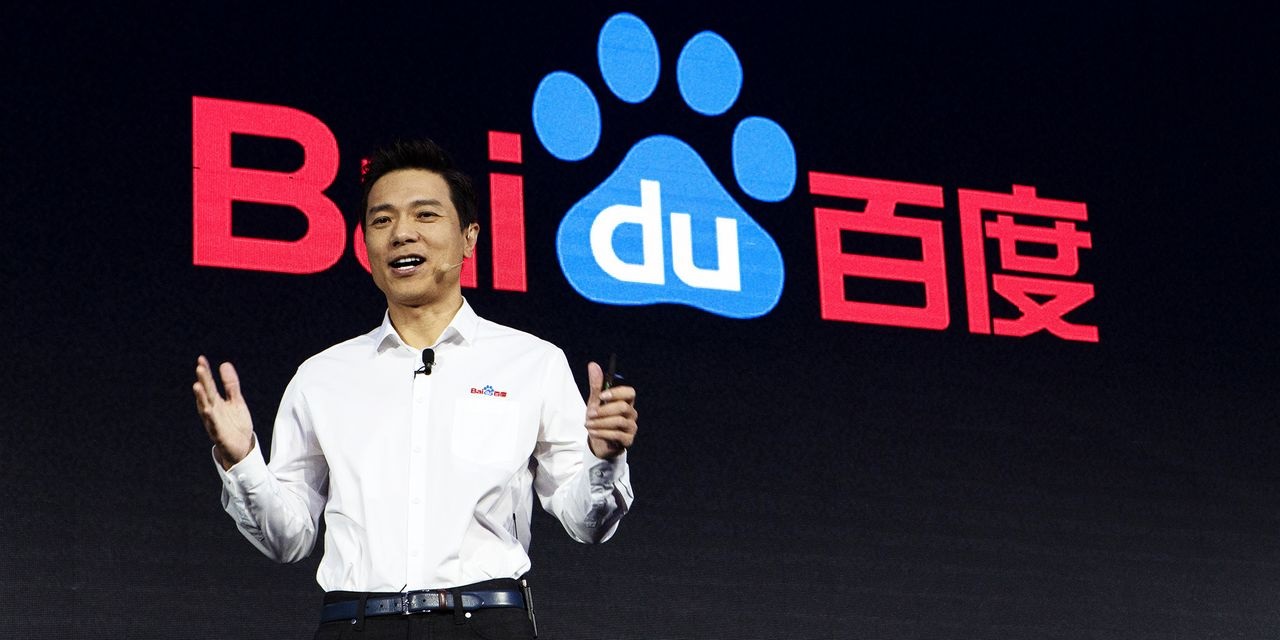
Chinese multinational technology company that specializes in Internet-related services, products, and artificial intelligence, Baidu, has announced that its ChatGPT rival Ernie Bot now has more than 100 million users.

The company announced this milestone on Thursday, at a deep-learning summit in Beijing. The news is coming about five months after Ernie Bot was officially launched to the public in August 2023. Before the launch, Baidu‘s Ernie bot ranked first in popularity on Apple’s app store in China after the Chinese tech giant disclosed that it was releasing its ChatGPT-like chatbot to the public.

The company generated $17.9 billion in revenue from its applications during its last fiscal year, after making Ernie Bot generally available in August this year.

Baidu’s ChatGPT rival Ernie Bot is based on an internally developed large language model called ERNIE. The model supports many of the same use cases such as OpenAI’s GPT-4, which is capable of writing and rewriting text, summarizing existing documents, and generating code.

A few weeks after its launch, Baidu introduced an upgraded version of Ernie Bot powered by a new AI system dubbed Ernie 4.0. The company disclosed that the upgraded chatbot offers drastically improved performance in understanding, generation, reasoning, and memory.

The tech giant also integrated Al features into its existing services. Baidu also debuted a tool that allows users of its cloud-based file storage service to retrievedocuments with natural language prompts.

According to Baidu’s CEO Robin Li, he explicitly stated that the company positioned ERNIE 4.0 as a direct competitor to OpenAl’s ChatGPT, stating that the chatbot is not inferior in any aspect to GPT-4, making it a strong contender in the Al chatbot arena.

Also, Li has on several occasion noted that the company will continuously collect massive valuable, real-world human feedback to improve its chatbot model, and bring more innovation to the Ernie Bot. 

Baidu’s focus on enhancing and expanding its AI capabilities with Ernie Bot echoes the tech industry’s broader push towards more sophisticated and integrated artificial intelligence solutions. The company’s rapid development and deployment of Ernie Bot demonstrate the competitive nature of the AI and tech space, where innovation and user-base growth are key indicators of success.

Notably, Baidu has been a frontrunner in China’s efforts to benefit from the excitement surrounding generative Al, which is the technology behind systems like ChatGPT and its successor, GPT-4.

With the World Bank estimating China’s 2023 population to be 1.4 billion people, Ernie Bot’s recent milestone of hitting over 100 million users, represents a significant market penetration, reaching potentially 7% of the people in China.

Chinese tech giant Huawei expects to post a 9% increase in revenue, or $98 billion, in 2023 in a rebound from crippling U.S. sanctions. That’s according to an internal note from Ken Hu, Huawei’s rotating chairman, who said the company is “pretty much back on track.” The Trump administration imposed sanctions on the company in 2019 to curtail Chinese access to state-of-the-art microchips over national security concerns. Sales of the company’s smartphones, which are thought to use its own chips, resumed in August. Shipments jumped more than 80% in October year-over-year, per Counterpoint. (LinkedIn News)

Nigeria has between $300 billion and $900 billion worth of dead capital

0

According to a report by PwC, Nigeria is sitting on a huge amount of untapped wealth in its residential and agricultural sectors. The report estimates that the value of dead capital in these sectors ranges from $300 billion to $900 billion, meaning that these assets are not legally registered or cannot be used as collateral for loans. This is a major challenge for the Nigerian economy, as it limits the access to finance and investment opportunities for millions of people.

Dead capital refers to assets that are not recognized by the formal legal system or that cannot be easily converted into cash. In other words, these are assets that have economic value but are not productive or liquid. For example, a house that is not registered with the government or a land that has no clear title cannot be used as collateral for a loan, sold to another party, or inherited by heirs. These assets are essentially “dead” in the sense that they do not generate income or wealth for their owners or the society.

Why is dead capital a problem for Nigeria?

Nigeria has one of the largest stocks of dead capital in the world, especially in its residential real estate and agricultural land sectors. According to PwC, about 97% of land in Nigeria is held under customary tenure, which means that it is governed by local rules and traditions rather than by formal laws.

This makes it difficult to prove ownership, transfer rights, or access credit using land as security. Similarly, many residential properties in Nigeria are not properly registered or documented, making them vulnerable to disputes, fraud, or expropriation.

The problem of dead capital in Nigeria has serious implications for the economic development and social welfare of the country. First, it reduces the availability of credit and capital for individuals and businesses, as they cannot use their assets as collateral for loans or as equity for investments.

This limits their ability to start or expand their enterprises, create jobs, or improve their living standards. Second, it reduces the efficiency and transparency of the property market, as it creates information asymmetries, transaction costs, and risks for buyers and sellers. This discourages investment and innovation in the real estate and agricultural sectors, which are vital for economic growth and diversification.

Third, it reduces the tax revenue and public services for the government, as it makes it harder to identify and collect taxes from property owners or users. This affects the quality and quantity of public goods and infrastructure that the government can provide to its citizens.

What can be done to unlock the potential of dead capital in Nigeria?

The solution to the problem of dead capital in Nigeria lies in improving the legal and institutional framework for property rights and registration in the country. This involves several steps, such as:

Simplifying and harmonizing the laws and regulations governing land and property ownership and transactions in Nigeria, to make them more consistent, clear, and accessible.

Strengthening and modernizing the land administration system in Nigeria, to make it more efficient, reliable, and digitalized.

Increasing the awareness and education of property owners and users on the benefits and procedures of formalizing their property rights and registering their assets.

Providing incentives and support for property owners and users to formalize their property rights and register their assets, such as reducing fees, streamlining processes, offering subsidies, or granting amnesty.

Enhancing the enforcement and protection of property rights in Nigeria, to ensure that property owners and users can enjoy their rights without fear of losing them.

These reforms would not only increase the economic value of the assets, but also create more opportunities for income generation, job creation, infrastructure development, poverty reduction, and social stability. PwC also cites some examples of countries that have successfully implemented similar reforms, such as Rwanda, India, and Peru.

These countries have shown that with political will, institutional reforms, and technological innovation, it is possible to unlock the wealth hidden in dead capital and create more prosperity and well-being for the people.

At PwC, we have extensive experience and expertise in helping clients to address the challenges of dead capital in Nigeria. We have worked with various stakeholders, such as governments, private sector actors, civil society organizations, and international donors, to design and implement solutions that improve the legal and institutional framework for property rights and registration in Nigeria.

We have also helped clients to leverage their assets for economic growth by providing services such as valuation, due diligence, advisory, financing, taxation, audit, assurance, and more.