DD
MM
YYYY

PAGES

DD
MM
YYYY

spot_img

PAGES

Home Blog Page 3849

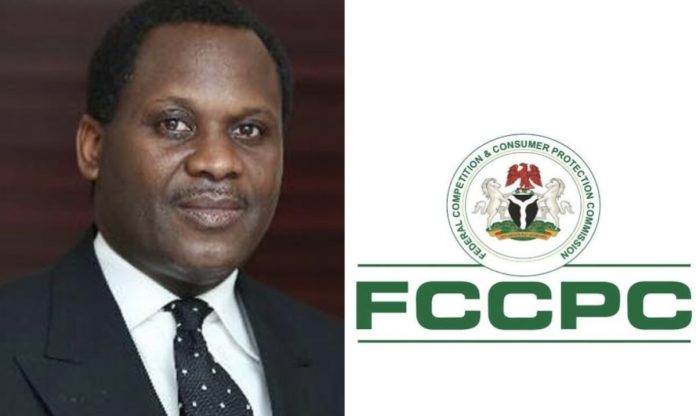
FCCPC Announces New Regulatory Framework to Help Loan Apps Recover Debts

0

Federal Competition and Consumer Protection Commission (FCCPC) gears up to address challenges posed by digital money lenders, unveiling plans for 2024 regulations.

In a bid to confront the mounting issue of Nigerians’ indebtedness to digital money lenders (DMLs), commonly known as loan apps, the Federal Competition and Consumer Protection Commission (FCCPC) has declared its intention to devise a robust regulatory framework.

This revelation was made by Mr. Babatunde Irukera, the Chief Executive Officer of the Commission, during a recent appearance on a live TVC program on Monday.

Irukera highlighted the pressing concern surrounding the burgeoning indebtedness to DMLs, identifying it as a significant industry challenge that demands immediate attention. Earlier interventions by the FCCPC to curtail predatory lending practices utilized by some loan sharks resulted in a shift in their debt recovery strategies, prompting a considerable number of loan apps to modify their approaches.

While these interventions successfully reduced the prevalence of abuse and harassment by loan apps, Irukera pointed out that default rates among borrowers continued to soar. He warned about the potential collapse of digital lenders critical to the economy if this trend persists.

Addressing Default and Ethical Recovery Measures

Emphasizing the need to shift away from unethical loan recovery mechanisms, Irukera said: “One of the big issues that we’re seeing is that there’s now a significant level of loan default because people are not able to use these unethical and inappropriate loan recovery mechanisms and I’m insistent that you cannot say to me that the only language Nigerians understand is to abuse them. No, I disagree.

“We must necessarily do the work no matter how hard it is to find a more sensible way to recover loans because I also agree that if these digital money lenders are unable to recover their loans and drop out of the market, it’s a consumer protection problem because of those who need those types of short-term unsecured lending.”

He advocated for a balanced approach to responsible borrowing and lending, hinting at upcoming regulations in 2024 aimed at fostering fiscal responsibility among individuals and corporations.

“So, we have to find the balance and so some of the regulations that will come out in 2024 will be a broader approach to responsible borrowing and responsible lending by individuals and corporate,” he said.

Highlighting the significance of a centralized credit system, Irukera proposed extending reporting capabilities to various entities, such as school landlords, to contribute to assessing an individual’s creditworthiness. He suggested that limiting access to credit based on one’s fiscal responsibility could incentivize self-regulation among borrowers and enhance loan recovery.

“I’m hopeful that the future of what we’re building is that even school landlords would be able to report to a centralized credit system about the conduct of tenants, students, and parents so that we can know each person’s level of fiscal responsibility or credit wordiness,” he added.

Progress and Ongoing Efforts

Under the interim regulatory framework, the FCCPC has made substantial strides, witnessing an 80% reduction in harassment and defamatory practices by loan apps. However, acknowledging the remaining 20%, Irukera affirmed that efforts are underway to address these challenges.

The Commission has taken steps to register over 200 loan apps, a move aimed at sanitizing the digital lending market and eradicating unethical practices such as defamation and harassment of borrowers. As of the latest update, the FCCPC has approved a total of 211 digital lenders, illustrating its commitment to streamlining the sector.

Addressing the regulatory challenges of emerging industries

Irukera noted the evolving nature of the interim regulatory framework, citing the emergence of fintech not just in Nigeria but globally. He stressed the importance of learning from industry operations and dynamics to develop an optimal regulatory ecosystem.

The CEO expressed optimism regarding the upcoming 2024 regulations, foreseeing their emergence as a pivotal moment in reshaping the lending industry. These regulations aim not only to protect consumers but also to foster responsible borrowing practices and ensure the sustained operation of digital money lenders integral to the country’s financial sector.
Fuel Subsidy Removal: World Bank Boosts Nigeria’s Palliatives with $315 Million

0

In an effort to cushion the impact of the fuel subsidy removal, the World Bank has escalated its financial support to Nigeria, increasing its disbursement from $300 million to $315 million. The funds, part of an $800 million allocation for the National Social Safety-Net Program Scale Up (NSSP-SU), have been specifically directed to alleviate the economic strains faced by the most vulnerable sectors of society.

This development was disclosed in the Implementation Status & Results Report for the project, which highlighted that while $315 million has been disbursed, a remaining balance of $428.31 million is yet to be allocated. Out of the $800 million, $600 million is earmarked for the Economic Shock Responsive Cash Transfer (ESR-CT), $147 million for the Extended Regular Cash Transfer (ER-CT), and $53 million for strengthening the delivery system and project management.

According to the World Bank document, the Federal Government initially aimed to assist five million beneficiaries by mid-December. However, only about 1.5 million households have received cash transfers, a mere 0.1% of the intended target of 15 million households. Moreover, there has been a modification in the cash transfer scheme, with the monthly support revised from an initial N5,000 to N25,000 over three months, as communicated by the Federal Ministry of Humanitarian Affairs and Poverty Alleviation.

The modification aligns with efforts to intensify support for those affected by the removal of the fuel subsidy. The document states partly, “The Federal Ministry of Finance has approved the commencement of disbursements and project implementation. Since then, the project has made an initial drawdown of USD 315 million, and commenced initial cash transfers to poor and vulnerable households, with about 1.5 million households already receiving transfers in their accounts.”

It has been revealed that project-implemented units are collaborating with the Central Bank of Nigeria (CBN) and the National Identity Management Commission (NIMC) to streamline beneficiary enrolment, issuing Bank Verification Numbers (BVNs) and National Identity Numbers (NINs) for account operations. This move aligns with the CBN’s directive that all bank accounts without BVN and NIN will be placed on “Post no Debit” from April 2024, with a mandate for revalidation by January 31, 2024.

The National Social Safety Net Programme-Scale Up, sanctioned by the World Bank in December 2021 and scheduled to continue until June 30, 2024, is spearheaded by the Federal Ministry of Humanitarian Affairs & Poverty Alleviation. The $800 million initiative aims to execute a monthly cash transfer program for impoverished Nigerians affected by recent policy changes, including the fuel subsidy removal.

In a separate event in October 2023, President Bola Tinubu formally launched a conditional cash transfer program set to benefit 15 million households nationwide, providing N75,000 within three months. This initiative adds to the ongoing efforts to mitigate the economic repercussions of policy adjustments.

While the increased disbursement signifies progress in aiding vulnerable populations, criticisms have emerged regarding the pace and transparency of the implementation, with only a fraction of the intended beneficiaries currently receiving support. Critics argue that the pace needs acceleration and a comprehensive database should be established to effectively address the widespread economic challenges exacerbated by the fuel subsidy removal.

Crypto Fraud: Hackers Stole $2 Billion in 2023 – Report

0

A recent DeFi report has revealed that hackers stole $2 billion in cryptocurrencies in 2023, however marking a downward trajectory in the amount stolen, compared to previous years.

The report outlined top crypto heists recorded this year, including the hack against Euler Finance, a non-custodial DeFi protocol on Ethereum that allows users to lend and borrow almost any crypto asset, which hackers stole over $195 million from the platform.

This hack caused a contagion that spread through multiple decentralized finance (DeFi) protocols, and at least 11 protocols other than Euler suffered losses due to the attack.

Other heists listed include hacks against Multichain ($126 million), BonqDAO ($120 million), Polonoex ($114 million), and Atomic Wallet ($100 million), among hundreds of others.

Defi wrote in the report,

“This amount, though dispersed across various incidents, underscores the persistent vulnerabilities and challenges with the DeFi ecosystem. 2023 stood as a testament to both the ongoing vulnerabilities and the strides made in addressing them, even as interest in the space was relatively muted by the ongoing bear market in the first half of the year”.

DeFi’s report also corroborates with that of TRM Labs, which disclosed that $1.7 billion was stolen in crypto as of mid-December 2023.

TRM Labs noted that even with any additional hacks in December, this year will likely end with significantly lower totals than 2022. Last year’s tally of almost $4 billion from crypto hacks included several large thefts, such as a $600 million-plus attack on a blockchain network called Ronin Bridge that was connected to the Axie Infinity game.

Speaking on this Ari Redbord, global head of policy and government affairs at TRM said,

While we are always one Ronin-size hack away from a record-setting year, the global focus on cybercrime is likely to, at least in part, mitigate some of the activity which is critical for the overwhelmingly lawful ecosystem to grow”.

TRM disclosed that this year, the top 10 hacks had netted criminals almost 70% of all stolen funds. Attacks against the decentralized lending app Euler Finance, Multichain bridge connecting different blockchains, and Poloniex crypto exchange netted $100 million each, for example.

TRM added that Infrastructure attacks such as private-key theft that gives hackers access to a crypto project’s servers or software to steal funds or manipulate trades contributed to nearly 60% of the total stolen this year.

As billions of dollars in crypto are continuously lost to hackers every year, experts believe that the rising cases of incessant hacks could be caused by inadequate security measures. Studies reveal that crypto exchanges are the prime targets of most hacking events, as these hackers employ advanced tactics to launch assaults on platforms due to perceived weak security.

Some of their strategies include phishing schemes, using fake websites and emails, and posing as legitimate crypto businesses or sites. Due to the surging cases of crypto fraud, several platforms have launched new security updates to protect customers’ funds from fraudsters.

The Apple Watch’s Import Ban And The Wealth of Nations

1

In 2,000 years of economic history, no nation has developed without property rights. Specifically for the United States, if you look at their GDP, you will notice that wealth and the accumulation of it began at scale just after Samuel Hopkins was awarded the first patent in 1790. As I have written before, that patent was crucial in enabling merchants who were the cash-rich guys in town to invest in the inventors who had ideas, but limited capital, knowing that a mechanism was available to protect their investments. Why invest $1 billion to develop a drug only for your competitor to copy the whole thing without consequences?

America does not play with that system and that is why Apple has been banned from importing some versions of its watches into the United States: “In a legal dispute between Apple, the tech giant, and Masimo, a medical monitoring technology company, Apple has lodged an appeal on Tuesday contesting the ruling that prohibits the import of specific Apple Watches. This decision came after President Biden opted not to veto the tribunal’s verdict. The ban was initiated based on a complaint lodged by Masimo, accusing Apple of infringing upon its pulse oximetry technology”.

Yes, a really small company can take up Apple and have this outcome. Contrast that with the experiences of many people across the developing world. I have one to share: during the NYSC in Jos, I used Microsoft Access to create an inventory management solution. I took it to Panshin Street (they sell electronics and IT things there) in the Terminus Market.

I sold some CDs and when I came back to supply more, the traders had created many from the few they bought. I complained to a nearby Police officer about the “theft”; he pointed out to me that they were also doing the same on Microsoft Office, Windows, etc and that Ajuwaya should chill. Simply, Nigeria did not protect my small vision, and it faded.

Good People, there are many reasons why some nations advance while others struggle: what Apple is going through now is one of the reasons why even Apple itself is successful since no other company can come and rip off its ideas!

Let me attempt to answer: the world was changed on July 31, 1790 when Samuel Hopkins was awarded the first United States patent. In my 2009 book – Nanotechnology and Microelectronics – which received 2010 IGI Global Book of the Year award, I explained that the patent system with the broad intellectual property rights could be considered one of the greatest policy innovations in economic history. With the regulations in the books, merchants who had the money but preferred to put them in pillows started looking for scientists and inventors with good ideas they could make money on.

Now those “financially poor” inventors and scientists would suddenly have funds to improve their works, and then make them relevant for the markets by solving people’s problems. Before the patent system, merchants kept their monies, as there was no drive to spend money, to take an idea on a lab shelf to the market, only for your neighbor to copy it for no consequence. But with the exclusivity period the patent law offers, they knew they could recover any investment before the patent expires. Magically, money flowed and inventors advanced and the world became better. Simply, the world became innovative:

Apple Appeals As Import Ban on Certain Company Watches Takes Effect

0

In a legal dispute between Apple, the tech giant, and Masimo, a medical monitoring technology company, Apple has lodged an appeal on Tuesday contesting the ruling that prohibits the import of specific Apple Watches. This decision came after President Biden opted not to veto the tribunal’s verdict.

The ban was initiated based on a complaint lodged by Masimo, accusing Apple of infringing upon its pulse oximetry technology.

Masimo accused Apple of illicitly integrating Masimo’s pulse oximetry technology into its coveted Apple Watch series, notably the Series 6, utilizing mechanisms for blood-oxygen-level assessments three years ago. Masimo contends that Apple engaged in talent poaching and misappropriation of its technology, igniting a fierce legal feud that has captured industry attention.

The ban, imposed by the U.S. International Trade Commission (ITC), serves as a hurdle obstructing the import and sales of Apple Watches employing this contested technology.

Despite Apple’s fervent plea to suspend the ban during the appeals process, the ITC dismissed the request, compelling Apple to swiftly challenge the decision before the U.S. Court of Appeals for the Federal Circuit.

“We vehemently oppose the USITC decision and the resulting exclusion order,” said an Apple spokesperson in a statement to CNBC, noting the company’s urgent efforts to expedite the return of affected Apple Watch models to American consumers.

However, the ban’s ripple effects extend beyond Apple’s sales sphere, dealing a blow to its wearables, home, and accessory division, which raked in $8.28 billion in revenue during the third quarter of 2023.

In response to Apple’s move, Masimo, the aggrieved party in this legal skirmish, has remained tight-lipped, refraining from commenting on Apple’s appeal and the subsequent developments.

While the embargo lingers, the U.S. Customs and Border Protection gears up to deliver a verdict by Jan. 12 on whether revamped iterations of Apple Watches violate Masimo’s patents. Apple stands poised, awaiting this crucial decision, aiming to alleviate the ban’s impact and resume sales of the affected watch models.

This legal saga pinpoints a growing trend of intellectual property disputes in the US tech industry – now including healthcare. The outcome of Apple’s appeal and the impending customs ruling are expected to wield significant influence, potentially reshaping the availability of these Apple Watch models in the U.S. market.

The ban does not impact the Apple Watch SE, a more affordable model, and sales of this particular version will persist. Additionally, previously sold watches are not subject to the ban and remain unaffected by these developments.

This standoff between Apple and Masimo echoes past patent disputes within the tech industry, notably reminiscent of the 2013 reversal of an import embargo on Apple’s products in a patent altercation with Samsung during the tenure of President Barack Obama’s administration.

In February, the Biden administration decided against vetoing an independent import ban on Apple Watches, which was established due to a patent-infringement complaint filed by medical technology company AliveCor, per CNBC. However, the ban imposed by the ITC has been suspended for other reasons.

Amidst this protracted legal wrangle, the fate of Apple’s Series 9 and Ultra 2 watches remains uncertain, leaving consumers and industry stakeholders on edge.

Apple is now asking a federal court to overturn a sales ban on two models of its popular smartwatches. The company was forced to stop selling its Apple Watch Series 9 and Ultra 2 in the U.S. after a federal trade agency found that Apple infringed on two patents for a blood-oxygen sensor held by Masimo. On Tuesday, the White House ultimately decided against reversing the sales ban. The stakes are high, since the Apple Watch — driven largely by sales of the Series 9 and Ultra 2 — accounts for about $17 billion in revenue. Apple’s Vision Pro mixed-reality headset is expected to be launched in retail stores in late January or February, analysts and insiders say. (LinkedIn News)