DD
MM
YYYY

PAGES

DD
MM
YYYY

spot_img

PAGES

Home Blog Page 3888

GTCO (GTBank Parent Firm) Declares Profit Before Tax of N327.4bn for H1 2023

3

Guaranty Trust Holding Company Plc (GTCO) has published its Audited Consolidated and Separate Financial Statements for the period ending on June 30, 2023, to both the Nigerian Exchange Group (NGX) and the London Stock Exchange (LSE).

GTCO is a leading financial services conglomerate that operates within the realms of banking across Nigeria, West Africa, East Africa, and the United Kingdom. Additionally, it has ventured into new enterprises encompassing Payment, Funds Management, and Pension Fund Administration.

In the report, the company disclosed a profit before tax of N327.4 billion, marking a substantial growth of 217.1% compared to the N103.2 billion reported in the corresponding period concluding in June 2022.

The company’s net loan book experienced a notable surge of 22.8%, rising from N1.89 trillion at the end of December 2022 to N2.32 trillion by June 2023. Additionally, deposit liabilities witnessed substantial growth, increasing by 37.0% from N4.61 trillion in December 2022 to N6.32 trillion by June 2023.

The Group Chief Executive Officer of Guaranty Trust Holding Company Plc (GTCO Plc), Mr. Segun Agbaje, said the results came off challenging economic times.

“Our half-year audited results reflect the strong business fundamentals underpinning the GTCO franchise, the quality of our past decisions in future-proofing our balance sheet for challenging times, and the sound practices that guide our day-to-day operations.

“Despite the challenges in the business environment, notably inflationary pressures, and exchange rate fluctuations, we are starting to see the gains in the transformation of our businesses following our transition to a Holding Company structure,” he said.

The balance sheet of GTCO continued to maintain a robust and structured posture, concluding with total assets of N8.5 trillion and shareholders’ funds of N1.2 trillion.

Full Impact Capital Adequacy Ratio (CAR) remained very strong, closing at 24.7%, while asset quality was sustained as IFRS 9 Stage 3 Loans improved to 4.6% in June 2023 from 5.2% in December 2022.

“Improved profitability and solid performance across key metrics reflect efficiencies and justify the investments we continue to make in technology, product development and our people,” Agbaje added.

However, Cost of Risk (COR) closed at 3.7% from 0.6% in December 2022 owing to worsening macros which caused a significant increase in ECL variables.

Respecting that Agbaje said: “We recognize the impact prevailing economic and market conditions have on people and livelihoods and we remain committed to seeking better outcomes for our customers, by ensuring that our products and service offerings support our customers and their businesses through their evolving realities, whilst also taking every opportunity to optimize stakeholder value.”

Since it became a Holding Company in 2021, the group has defied challenges to post one of the best metrics in the Nigerian Financial Services industry in terms of key financial ratios i.e., Pre-Tax Return on Equity (ROAE) of 61.4%, Pre-Tax Return on Assets (ROAA) of 8.8%, Full Impact Capital Adequacy Ratio (CAR) of 24.7% and Cost to Income ratio of 27.7%.

The company’s prominent position in the banking sector, coupled with its dedication to empowering individuals and communities, has won it numerous prestigious awards throughout its history.

Recently, Guaranty Trust Bank was recognized as Nigeria’s Best Bank and Best Bank in CSR at the 2023 Euromoney Awards for Excellence, Best Banking Group in Nigeria by World Finance, and Best Bank in Nigeria by Global Finance. GTCO’s Guaranty Trust Bank is featured in the Top 1000 Banks in the World and Top 100 Banks in Africa rankings by The Banker.
Nigerian Labour Congress Announces A Two-Day Nationwide Strike, Starting Tuesday

0

The Nigeria Labour Congress (NLC) has announced a two-day nationwide warning strike, starting on Tuesday, September 5, 2023. This move is in response to the growing economic challenges in the country, exacerbated by the government’s decision to remove the petrol subsidy.

The union made this declaration on Friday, with the primary objective of demanding an immediate adjustment of economic policies that would improve the quality of life for the general population.

This action follows a previous nationwide strike called by organized labor in June, which was prompted by fuel shortages across the country after President Bola Tinubu’s inaugural speech, in which he announced the removal of the “fuel subsidy.”

That has been followed by a series of nationwide strike threats by organized labor, which it has only carried out once early last month. The strike, which lasted only for a day, was called off following meetings between the labor leaders and the federal government.

Since then, the organized labor made up of the Trade Union Congress (TUC) and the NLC has been on standby to embark on strike. The union said that the federal government has failed to fulfill its part of their deal, which involves providing adequate palliatives for Nigerians, to help them cope with the soaring cost of living spurred by the subsidy removal and other “anti-poor policies” enacted by the government.

In mid-August, the NLC vowed to embark on another strike if the cost of petrol rises to N720 per liter as projected by marketers.

“Let me say this, Nigerian workers will not give any notice if we wake up from our sleep to hear that they have tempered with prices of petroleum products.

“They have started floating ideas of a likely increase in the pump price of petroleum products,” the NLC president, Joe Ajaero, said then.

Another spike in the cost of fuel is expected soon following the rise in international oil prices. Crude oil price rose to $88 this week, its highest since November 2022.

Analysts project that, with the spot rate of N930 and the N775/$1 exchange rate in the Investor & Exporter window, the next stock of petrol landing if the Central Bank Of Nigeria (CBN) is unable to provide marketers with dollar liquidity that will keep the FX rate stable – will cost N674 per liter in Lagos and around N712 in other parts of the country.

Following the removal of fuel subsidy, the Nigerian government has been trapped between the devil and the deep blue sea, making the threats of strikes from organized labor constant. The union is asking, among other things, for an upward review of the minimum wage (from N30,000 to N200,000) to help Nigerians cope with the resulting high cost of living.

With its near-bankruptcy state, the federal government is finding it hard to meet the union’s demands.

The federal government began to disburse N5 billion worth of food to the states last month. But the distribution of food palliatives to Nigeria’s 36 states has fallen short of what is needed.

“If you share that N5bn or even the five trucks of rice or grain, many people may not get one or half cup of rice,” Ajaero said on Channels Television’s Politics Today on Friday.

“If you share the N5bn, many people, probably within the working class or the poor of the poor, may not get N1,500. Now, is that the palliative?”

Many are calling on the government to implement temporary subsidy payments that will see Nigerians purchase petrol at a lower cost – reducing the high cost of living its removal has caused.

Nigeria Had Its Last Stable Economy About A Decade Ago – Wale Edun

0

Wale Edun, the Minister of Finance and Coordinating Minister of the Economy, has said that the last time Nigeria’s economy exhibited a noteworthy period of stability was approximately a decade ago, during the tenure of former President Goodluck Jonathan.

During his inaugural press conference as the Finance Minister in Abuja on Friday, Mr. Edun highlighted that during 2013 and 2014, the foreign exchange (FX) rate remained consistent, as did interest rates, which contributed to economic growth.

He noted that following Jonathan’s presidency, a frail and devaluing exchange rate, coupled with security issues, led to an economy that has not experienced growth and has failed to uplift Nigerians from poverty.

“If we think back to when was the last time when the economy was stable, when it was growing, when inflation was low, when the exchange rate was stable, and when interest rates were affordable; that period was about a decade ago,” he said.

Mr Ebun attributed Nigeria’s economic progress during Jonathan’s administration to the worldwide commodity boom that began around 2010. The minister said “economic growth was about 6 percent around 2013 to 2014” because “oil prices were high and also [output] volumes were high.”

“Nigeria earned and the government earned into its coffers over $80 billion per annum, compared to the figure now of around $25 billion. So you can see the difference.

“And what that points to is that there was a time when the government had enough foreign exchange. It had enough naira revenue to meet its obligations and to provide the funding for growth of the economy.

“It had enough foreign exchange such that when people came in to invest and they needed to import raw materials, import machinery, government could provide the wherewithal.”

Nigeria’s economy took a nosedive in 2015, following the emergence of President Muhammadu Buhari and the downturn in the oil market compounded by covid-19. Though the drop in oil prices during Buhari’s administration was notable, experts have attributed Nigeria’s economic turmoil to his poor policies.

The economic turmoil has pushed the country into near bankruptcy, forcing it into borrowing. Nigeria’s total debt has reportedly risen to N77 trillion in the last eight years.

But Mr. Edun, who had earlier said that Nigeria cannot afford to borrow now given its current debt standing, urged the federal government to allow private funding.

He said the government can fill the gap by accommodating other sources of funding, such as foreign direct investment, as well as domestic investment by Nigerians in all areas.

“And we saw some of that in Lagos. When Mr. President was governor of Lagos, he opened up the power sector to private investment, the road sector to private investment infrastructure, waste management, even cemeteries to private investment, because government did not have the funds,” he said.

“And they were those who were willing and able to provide jobs and grow the economy by making those investments.

“So, that is a pointer to the fundamentals of the president’s strategy, private investment and worldwide, there are huge flows of foreign direct investment, once you give investors the right conditions.

“Specifically, where are we headed, President Bola Ahmed Tinubu has pointed out, in priority areas where he is going to take Nigeria. And his key priorities are to improve the lives of Nigerians by providing food security, by ending poverty,” he said.

Thank You Tekedia Mini-MBA Edition 11 Graduation Ceremony Sponsors

0

Good People, join me to THANK these amazing companies for jointly sponsoring Tekedia Mini-MBA edition 11 Graduation Ceremony which is coming up tomorrow.  Last year, Lagos Business School’s Pan-Atlantic University surprised us with a generous donation, and it was a great moment for our Learners.

For tomorrow’s event, these four companies have provided our learners with all the resources they need to have another Academic Festival. Finance zen-master, Azeez Lawal, Managing Director of TrustBanc Capital, will deliver the graduation lecture.

Thank you Emmppek Farms: “A resilient, integrated, circular economy, and inclusive food company” led by Chris Edeh Ph.D.

Thank you C3 Pictures Limited  “An international photography brand. Let’s immortalize your cherished moments with a touch of excellence”with amazing professionals like Olorunfemi Michael.

Thank you Audma Integrated Services Ltd (AISL): “Engineering and Construction Company” founded by Ferdinand Chizoba Okechukwu.

Thank you Salvy’s Pastries: “slices of joyful nourishments”.

The message from Eyitayo Adeleke, mMBA is that the graduation hall is getting ready. Thank you Graduation Committee. Thank you Abuja, Lagos, Port Harcourt, London, etc graduation coordinators. Tekedia Institute appreciates these Learners-led events, which celebrate our academic tradition.

Deciphering the Global Innovation Race Among BRICS and Invited Members

0

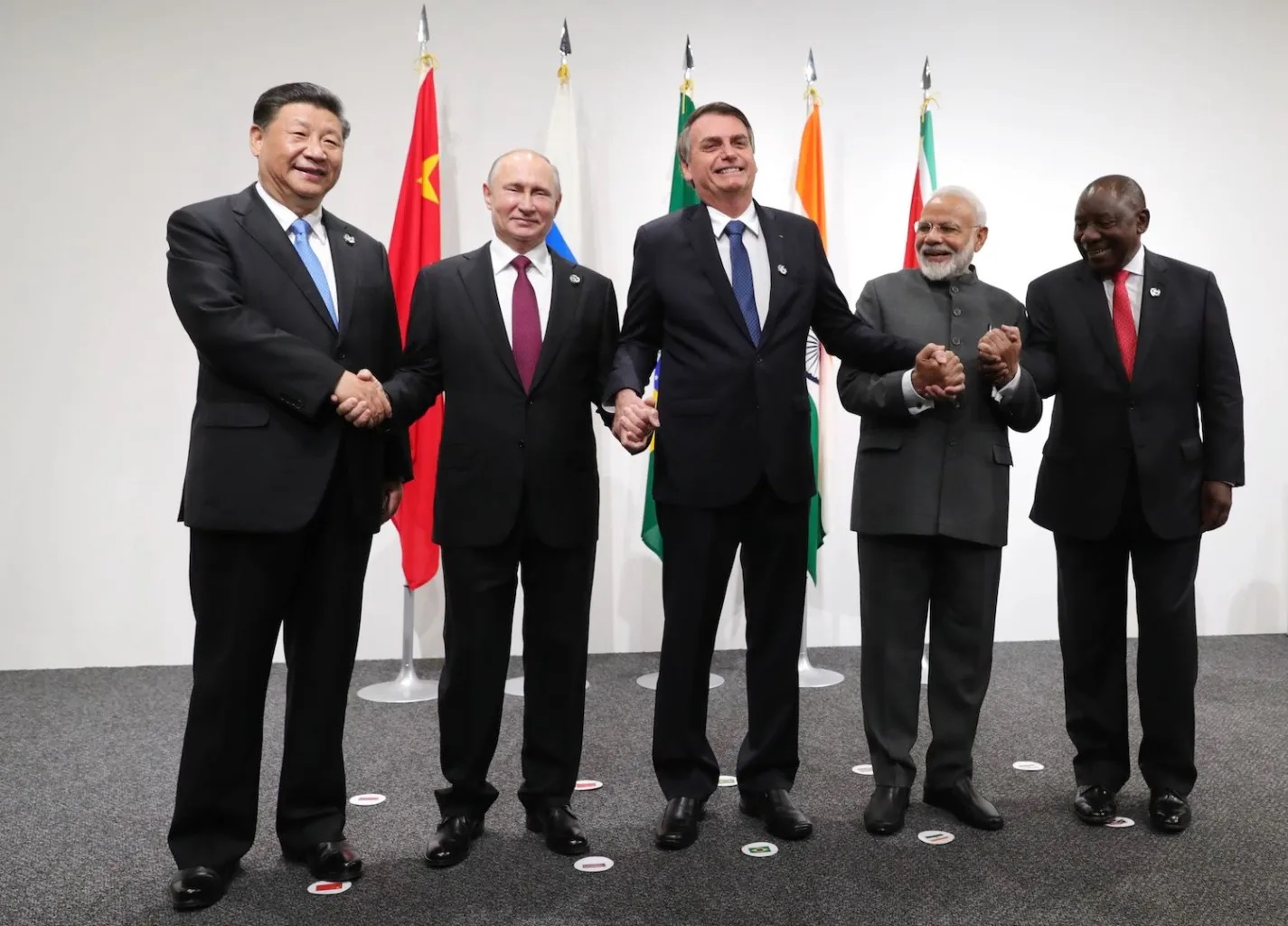
In pursuit of bolstering their positions in the realm of global economic and political influence, the BRICS coalition, comprising Brazil, Russia, India, China, and South Africa—a dynamic multi-continent economic and political bloc—made a significant announcement in August 2023. They extended their embrace by inviting six new members to join their ranks in January 2024, expanding the group’s horizons to encompass Argentina, Egypt, Ethiopia, Iran, Saudi Arabia, and the United Arab Emirates. This move signified a strategic effort to unite top emerging economies, creating a formidable force on the global stage.

In this piece, our analyst delves into the innovation ecosystems of both the established BRICS members and the newcomers. The aim is to discern the level of competitiveness within this esteemed group. Drawing upon the wealth of annual data provided by the World Intellectual Property Organisation (WIPO) and a consortium of research teams hailing from diverse countries across the Global North and South, our analyst conducted a comprehensive examination.

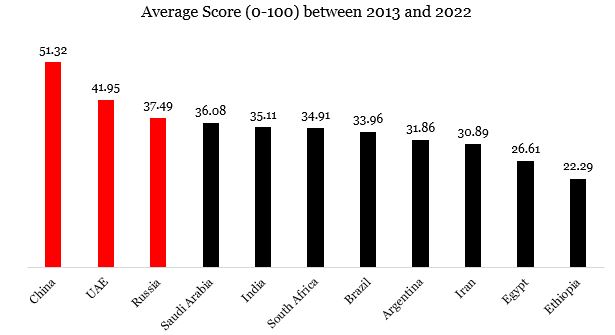
Exhibit 1: Average performance between 2013 and 2022

Innovation in BRICS
Source: Global Innovation Index, 2013-2022; Infoprations Analysis, 2023

Over the span of a decade, the analysis revealed intriguing patterns and trends. On average, China, the United Arab Emirates, and Russia consistently outperformed the other members, including the recently added newcomers. This suggests a degree of established strength and innovation prowess within these three countries that sets them apart. However, one of the most surprising insights to emerge from our analysis was the remarkable global competitiveness of the United Arab Emirates, despite being a newly inducted member. This revelation underscores the rapid development and strategic investments made by the UAE in fostering an innovation ecosystem that can compete on a global scale.

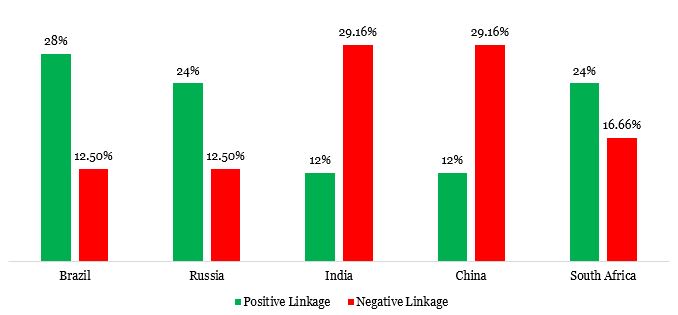
China exhibits a negative correlation with several countries, including Brazil, South Africa, Argentina, Egypt, Ethiopia, Saudi Arabia, and Russia. This suggests that China’s performance in innovation competitiveness tends to vary inversely with these nations. In other words, when China’s competitiveness in the innovation ecosystem increases, the competitiveness of these countries tends to decrease. On the flip side, China displays a positive correlation with India, Iran, and the United Arab Emirates. This implies that as China’s innovation ecosystem competitiveness rises, these countries tend to experience corresponding increases in their own competitiveness.

Exhibit 2: Frequency of positive and negative linkages of BRICS’s and AEEISU’s Innovation Index

Source: Global Innovation Index, 2013-2022; Infoprations Analysis, 2023

Russia, like China, shows a negative correlation with several countries, including India, Iran, and the UAE. This suggests that when Russia’s innovation ecosystem competitiveness improves, these nations tend to experience decreased competitiveness. Conversely, Russia exhibits a positive correlation with Brazil, South Africa, Argentina, Egypt, Ethiopia, Saudi Arabia, and Russia itself. This means that as Russia’s innovation ecosystem competitiveness strengthens, these countries tend to see improvements in their own competitiveness. India demonstrates a negative correlation with Brazil, South Africa, Argentina, Egypt, Ethiopia, Saudi Arabia, and Russia. This implies that when India’s innovation ecosystem competitiveness increases, these countries tend to experience a decrease in their own competitiveness. India, on the other hand, shows a positive correlation with China, Iran, and the UAE. This suggests that as India’s innovation ecosystem competitiveness improves, these countries tend to see corresponding improvements in their own competitiveness.

South Africa displays a negative correlation with India, China, Iran, and the UAE. This indicates that when South Africa’s innovation ecosystem competitiveness rises, these countries tend to witness a decline in their own competitiveness. In contrast, South Africa has a positive correlation with Brazil, Argentina, Egypt, Ethiopia, Saudi Arabia, and Russia. This means that as South Africa’s innovation ecosystem competitiveness strengthens, these countries tend to experience enhancements in their own competitiveness.

Brazil exhibits a negative correlation with India, China, and Iran. When Brazil’s innovation ecosystem competitiveness increases, these nations tend to see decreases in their own competitiveness. Brazil demonstrates a positive correlation with South Africa, Argentina, Egypt, Ethiopia, Saudi Arabia, the UAE, and Russia. As Brazil’s innovation ecosystem competitiveness improves, these countries tend to witness corresponding improvements in their own competitiveness.

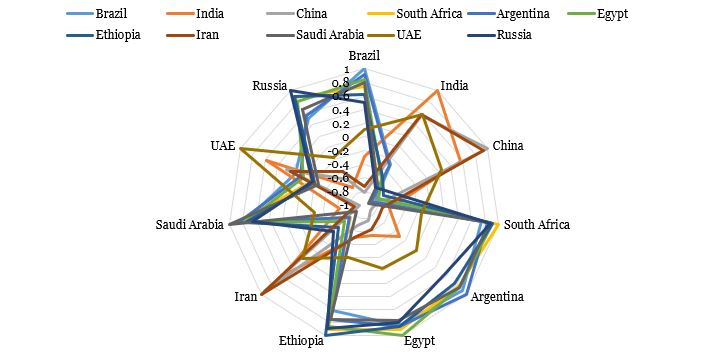
Exhibit 3: Concentric of Innovation Index of the BRICS and AEEISU

Source: Global Innovation Index, 2013-2022; Infoprations Analysis, 2023

As the BRICS alliance expands its horizons and welcomes these new members, the dynamics of the group’s innovation landscape are poised for transformation. The blending of experiences, resources, and expertise from both the old and new members promises to shape the future of global innovation and economic influence in exciting and unforeseen ways. This development underscores the importance of continually monitoring and analyzing the evolving innovation ecosystems of these nations, as they collectively aim to chart the course for a new era in global economic and political affairs.