DD
MM
YYYY

PAGES

DD
MM
YYYY

spot_img

PAGES

Home Blog Page 3893

Breach Of Contract For Performance In The Nigerian Showbiz Industry; Rights, Remedies For Show Organizers.

0

The festive period is always the busiest time of the year for those in showbiz; they usually call it their “season”. It inadvertently is also the period where show promoters and event organizers get into scuffles and lock their horns with entertainers over breach of performance contract by the entertainers which usually goes in the form of the promoter engaging and paying an entertainer to come perform at an event and the entertainer failing to turn up or show up for the show over some flimsy excuses. 

Since the beginning of December I have had clients who are show promoters brief me and complain about how they engaged and paid a particular entertainer and they signed an agreement of performance but after collecting money, the entertainer refused to show up. 

In October, the promoters of “Warri Again”, locked their horns in a legal battle with Davido after paying Davido a whopping sum of 100,000 USD to come and perform at the event and Davido didn’t show up. The case is currently in court. Mr Jollof since yesterday has been all over social media platforms calling out entertainers he paid to perform at his event but failed to show up after calling his money. 

Sometimes when promoters or show organizers use a particular famous entertainer to headline a show and promote the show, numerous people buy tickets to the event just because that particular entertainer will be performing and when the entertainer fails to show up after the promoter has promoted that the person will the performing, the promoter is forced to refund money for tickets, the show promoter can even be sued by the attendees of the event, the promoter also loses goodwill before the public eyes; the promoter is been seen as a liar and investors may not want to deal with him again this is why it is very disastrous to every show promoter when a particular entertainer does not show up for an event after they have engaged him or her. 

It sounds ridiculous when an entertainer arrogantly claims to have refunded the money back to the promoter after failing to show up for the show thinking that refunding the money will exculpate them from the legal liabilities for failing to show up for the event; they are ignorant of the fact that refunding the money is the easiest part, the goodwill and the emotional distress the promoter experienced by the disappointment still gives the promoter the legal right to commence legal action against the entertainer for damages even when the performance fee has been fully refunded.

An entertainment contract or a performance agreement is like every other business transaction contract and should be treated as such. The contract bestows responsibilities and expectations on both parties going into the contract; both the performer and the organizer or promoter and every party in the contract is expected to live up to those responsibilities as highlighted in the contract. If any of the parties fails to keep his or her own part, the aggrieved party is entitled to sue for compensation and damages. 

As highlighted in all major contracts for performance, the primary responsibility the contract bestows on the entertainer or performer is for the performer to show up on time on the date of the event and perform for the duration of time which can be in minutes or hours as indicated in the contract, anything other than that, the entertainer risks getting sued for breach of contract by the show organizer. 

The only two instances when an entertainer can refuse or fail to show up after being paid or after agreeing (be it in word or on paper) to be available for a show without attracting any legal consequences is when the failure on the part of the performer is facilitated by an act of God (force majeure), i.e. a reason or reasons which is beyond the control of the performer and the second instance where an entertainer may fail to show up and won’t be held to ransom is when his failure to perform or attend the show is facilitated by the show promoter or organizer; ie maybe the show was canceled or the venue, date or time was changed without adequate notification to the entertainer or that the organization structure or the necessary equipment is not in place for the performer to perform which may include lack of proper performance equipment, lack of maximum security for the entertainer etc; in this case, the entertainer has the right to even sue the promoter for compensation. In every other instance aside from these two instances, no matter what, an entertainer is expected to show up and perform his part of the contract as has been agreed otherwise he can be sued for damages by the organizers of the event. 

Entertainers and performers; musicians, comedians, MCs, dancers, hypemen etc should learn to adopt the attitude of professionalism towards their craft; an entertainer being notorious for always failing to show up or showing up late after being paid is never a good tag for any person in the showbiz. Promoters on the other hand should learn to engage a lawyer to draft a proper agreement of performance contract before engaging any entertainer for service. The contract will contain clauses that will highlight the responsibilities of the entertainers and compensatory damages for the promoter if the entertainer fails to fulfil the responsibilities. 
How Does Living in a House with a Foundation Rooted in Black Magic Affect Your Mental Health?

0
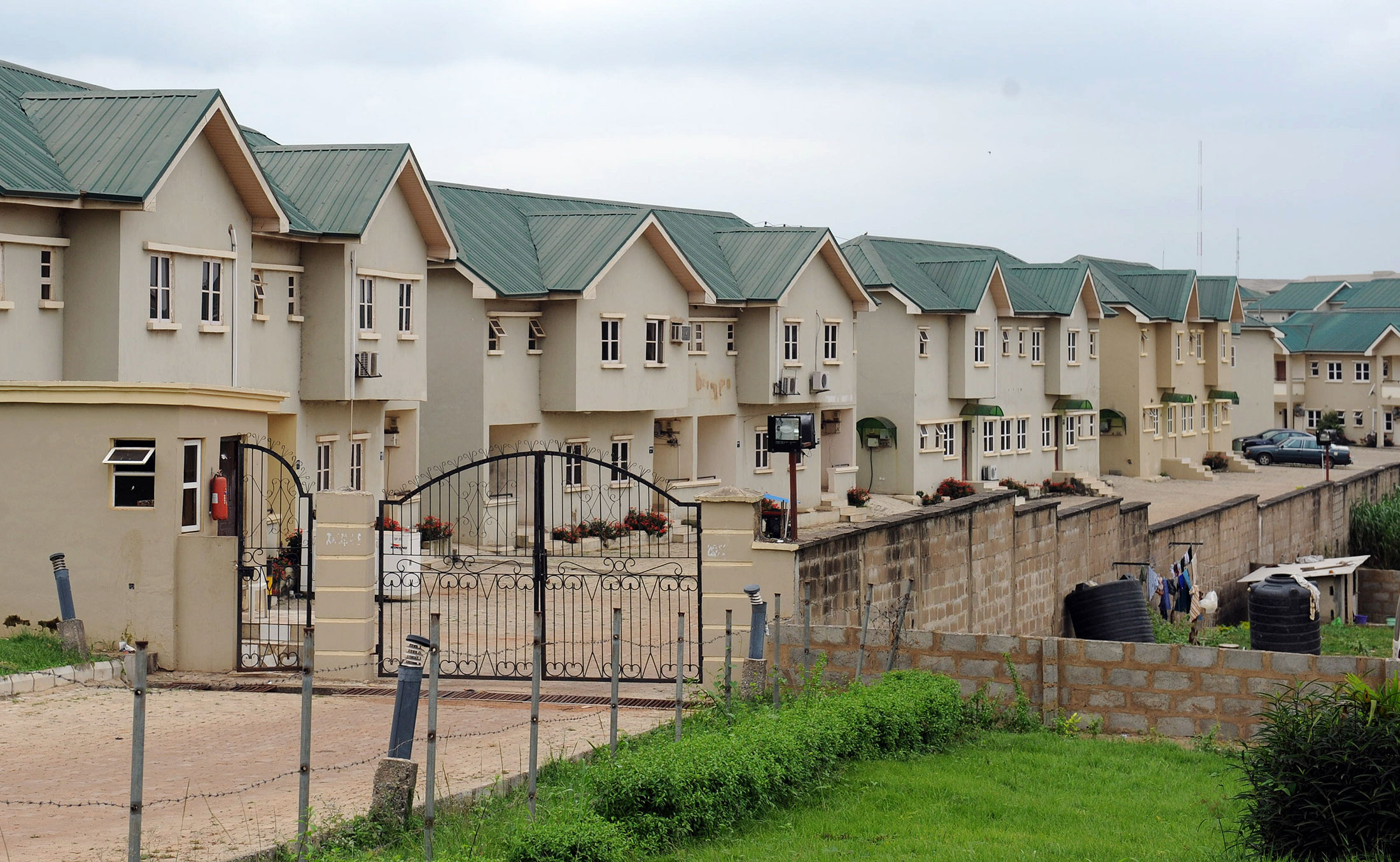
A detached three-bedroom apartments are pictured at Haggai Estate, Redeption Camp on Lagos Ibadan highway in Ogun State, southwest Nigeria on August, 30, 2012. The high cost of living and the massive urbanization of Lagos, the largest city and the economic capital of Nigeria, has engineered a migration of residents mostly middle class and the poor to neighbouring towns in Ogun State, both in southwest part of the country in search of cheap accommodations. Estate developers are quick in exploiting the high cost and scarcity of accommodation leading to emerging new towns, modern estates to accommodate the spillover in Lagos. AFP PHOTO/PIUS UTOMI EKPEI (Photo credit should read PIUS UTOMI EKPEI/AFP/GettyImages)

In this piece, our analyst and the contributor continue their analysis of the relationship between spirituality and mental health by looking at the consequences of residing in a house that was constructed on a site where black magic was buried prior to construction. According to our analyst, it is a widely held belief among Africans, particularly in Nigeria, that one must first engage in spiritual activities before building a home. Hence, there is a need to consult African traditionalists and spiritualists for the production of some spiritual concoctions.

There are at least two schools of thought on this practice. The first school of thought holds that people perform the ritual to protect issues that could jeopardize the effective construction of the house. In this scenario, there is nothing wrong with doing so as long as the aim is positive rather than negative. The second school of thought holds that people do it with the purpose of creating wealth through the people who would reside in the house. In this situation, the owner is considering adding the possible renters’ financial prowess to his or her own or influencing their physical and mental wellbeing. Participants in this same school feel the landlord did it to limit the tenants’ advancement or success.

But as our analyst and his contributor point out in this post, as long as the black magic originates from them (Jinns), Jinns do indeed possess the house. The instance discussed in this article emphasizes the value of starting significant activities with Istikhaarah, seeking parents for guidance when necessary, and never going to bed or wake up without offering prayers of protection or remembering.

Three Female Jinns, Witchcraft and Possessed House

“? wò ó, mo tí ? jáde, torí pé ara mi tí ? se rádaràda…—See, I’m leaving now because my body is being harmed.” This is not a movie script. It is not also a dress rehearsal. It was the first statement Ummu Ub (pseudonym) uttered as Ustadh Musa, the Islamic exorcist, started exorcising her for the second time. The first was a face-to-face exorcism, while the second took place over the phone.

What happened to Ummu Ub? Before the last exorcism, she had complained of several symptoms. She was always hearing strange voices and seeing bizarre objects in the house. She always ate in her dreams. In fact, at times, a man would physically appear as his husband and have sexual intercourse with her; her real husband would later come in and deny the act. These created much fear in Ummu Ub, and her mental health dwindled as a result.

The Jinns spoke during exorcism

Our analyst shivered as he listened to the Jinn-human communication between Ustadh Musa and the leader of the female Jinn who possessed Ummu Ub. Throughout his ethnographic exploration of Jinn-human communication, that was the first time he would hear a Jinn declare that someone’s house was possessed.

Our analyst only read such stories in Arabic books prior to this case. At the same time, her husband’s mother practised witchcraft. Wooliyah, Waaliyah, Woleeyah were the three female Jinns who possessed her. As Wooliyah spoke through Ummu Ub, she clarified that it was easy for them to possess her since the home she and her husband dwelled in is inhabited by Jinns; voodoo/charm was buried in the foundation of the house during construction.

She also informed Ustadh Musa that Ummu Ub’s husband’s mother is a witch who knew about the house. In fact, we later learnt that the husband’s mother had cautioned them not to rent the house when they wanted to, but the husband ignored her advice. The woman knew almost everything happening in the community.

As the exorcism progressed, Mallam Musa observed the Jinns weren’t ready to leave. They even fed Ummu Ub ‘poisonous’ food a night before the exorcism. After preaching to them, Mallam Musa warned them that Allah’s Supreme force would descend on them if they did not leave the possessed body. Wooliyah’s voice quivered when she heard this. She shuddered and began to lament, “Mo dáràn o, mo sis?? se o—I’m doomed; I accepted a wrong job.”

Earlier, the leader of the Jinn had told the exorcist that the only remedy for Ummu Ub and his husband was to leave the house and relocate far away from the neighborhood. She even insisted the husband’s mother be brought for confession; the mother never appeared. After another session of Islamic exorcism, Umm Ub regained her well-being. She and her husband left the house and relocated to another community.

What lessons did we learn?

Some of us may wonder about the possibility of Jinns speaking the Yoruba language. If you recall, we stated in one of our previous discussions that Jinns can communicate through a possessed person in the language the exorcist uses to communicate with the Jinns. This case study has provided a practical illustration of the Islamic prohibition of burying voodoos/charms while laying the foundation of buildings.

Also, it is important to be selective of one’s neighborhood. Moreover, the case has reinforced the necessity of abandoning the abode of Jinns for them if one wants to live in peace; in fact, it is compulsory to untie the knots used to cast spells on someone if their mental condition is connected to buried magic.

In addition, the case showcases the significance of initiating important actions with Istikhaarah (an Islamically recommended prayer to seek Allah’s best choice). Then, at times, when our parents advise us, we shouldn’t always discard such advice; we can instead ask them to provide reasons for such advice (if they are ready to). Finally, and most importantly, we should never wake up and sleep a day without saying our protective prayers/remembrance.

Umar Olansile Ajetunmobi, an independent, interdisciplinary researcher with special interests in political, (mental) health, development, and digital media communication, contributes to the development of this piece through his skills and knowledge garnered over the years.

The US Inequality Is Shrinking

0

One of the most persistent and troubling issues in the US economy is the high level of income and wealth inequality. For decades, the gap between the rich and the poor has been widening, creating social and political tensions and undermining the prospects of economic growth and stability.

However, there is some evidence that this trend may be reversing, at least temporarily, due to the unprecedented fiscal and monetary stimulus in response to the COVID-19 pandemic.

According to a recent report by the Federal Reserve, the share of income held by the top 1% of earners declined from 23.7% in 2019 to 20.9% in 2020, while the share of income held by the bottom 90% of earners increased from 50.9% to 52.8%.

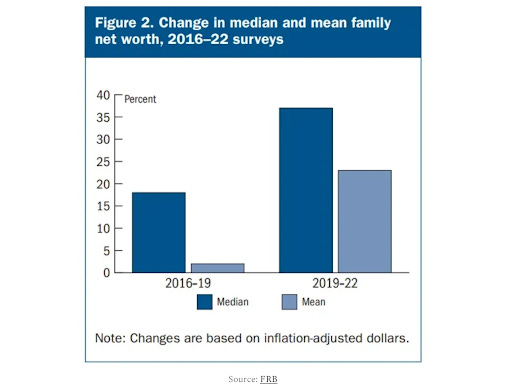
This is the largest annual decline in income inequality since the Fed started tracking this data in 1989. Similarly, the share of wealth held by the top 1% of households declined from 31.1% in 2019 to 30.4% in 2020, while the share of wealth held by the bottom 90% of households increased from 28.6% to 29.4%. This is also the largest annual decline in wealth inequality since 1989.

What explains this remarkable shift? The main factor is the massive fiscal stimulus that provided direct cash payments, enhanced unemployment benefits, and other forms of income support to millions of Americans who lost their jobs or faced reduced hours and income due to the pandemic. \

These transfers boosted the incomes of low- and middle-income households more than those of high-income households, who were less likely to be affected by the labor market disruptions. Moreover, the stock market rally that benefited wealthy households was partly offset by a surge in home prices that increased the net worth of homeowners, who are more evenly distributed across the income spectrum.

Another factor is the unprecedented monetary stimulus that lowered interest rates and expanded credit availability, especially for mortgages and auto loans. This enabled many households to refinance their existing debts or take on new ones at lower costs, improving their cash flow and balance sheets.

Additionally, some high-income households may have reduced their spending and increased their saving during the pandemic, either out of precaution or due to limited opportunities for consumption, while some low-income households may have increased their spending and reduced their saving due to the income support, they received.

Of course, these changes are not necessarily permanent or indicative of a structural shift in the distribution of income and wealth in the US. As the pandemic subsides and the economy recovers, some of the fiscal and monetary stimulus will be withdrawn or phased out, which could reverse some of the gains made by low- and middle-income households.

Furthermore, some of the underlying drivers of inequality, such as technological change, globalization, education gaps, and tax policies, remain largely unchanged and may continue to exert upward pressure on inequality in the long run.

Therefore, it is too early to celebrate or declare victory over inequality in the US. While the recent data suggest that inequality can be reduced by effective policy interventions, they also highlight the need for sustained and comprehensive efforts to address the root causes and consequences of inequality in a post-pandemic world.

SOLANA and Ethereum’s Market cap, Japan to end Crypto tax on unrealized Profits

0

SOLANA is a blockchain platform that aims to provide fast, scalable, and low-cost solutions for decentralized applications. It is one of the most promising contenders in the race to challenge Ethereum’s dominance in the crypto space. I will explain why I believe that SOLANA will not just catch Ethereum’s $270b Market cap it will tear through it into the $ trillions by 2030.

SOLANA’s main advantage over Ethereum is its high performance and efficiency. SOLANA claims to be able to process over 50,000 transactions per second (TPS) with sub-second finality and minimal fees. This is orders of magnitude faster and cheaper than Ethereum, which currently struggles with congestion, high gas costs, and slow confirmation times.

Solana (SOL) was one of the best performers among the top 10 cryptocurrencies this December, plunging by more than 10% and breaking below $113 from $120. The high-performance blockchain platform saw its price peak at $260 on November 24, but has since entered a downtrend that has erased about 30% of its value. The correction was likely influenced by the overall market sentiment, as well as some specific factors related to Solana.

SOLANA achieves this feat by using a novel consensus mechanism called Proof of History (PoH), which allows the network to timestamp and order transactions without relying on a single leader or validator. PoH enables SOLANA to run parallel processing across its network of nodes, resulting in a highly scalable and secure system.

Another key feature of SOLANA is its compatibility with Ethereum. SOLANA supports the Ethereum Virtual Machine (EVM), which means that developers can easily port their existing smart contracts and dApps from Ethereum to SOLANA without much hassle.

SOLANA also offers a bridge called Wormhole, which allows users to transfer tokens and data across different blockchains, including Ethereum, Binance Smart Chain, Terra, and others. This interoperability gives SOLANA access to a large and diverse ecosystem of projects, users, and liquidity.

Wormhole is a decentralized protocol that uses special validators called guardians to verify and relay cross-chain transactions. Wormhole uses a two-way peg mechanism, which means that users can lock their tokens on one chain and mint corresponding tokens on another chain. For example, a user can lock their ETH on Ethereum and mint wETH on SOLANA, or vice versa.

The tokens are always backed by the original assets and can be redeemed at any time. Wormhole also supports transferring arbitrary data across chains, such as NFT metadata or oracle data. This enables cross-chain communication and integration for various dApps.

SOLANA also has a strong and growing community of supporters, investors, and developers. SOLANA has raised over $300 million from prominent venture capital firms such as Andreessen Horowitz, Alameda Research, Multicoin Capital, and others.

SOLANA also hosts an annual hackathon called Solana Season, which attracts thousands of participants from around the world who compete to build innovative and cutting-edge dApps on the platform. Some of the notable projects that have emerged from the hackathon include Audius, a decentralized music streaming service; Metaplex, a platform for creating and selling NFTs; and Star Atlas, a massive multiplayer online game.

All these factors make SOLANA a formidable force in the crypto industry. I believe that SOLANA has the potential to surpass Ethereum in terms of adoption, innovation, and value creation. By 2030, I expect SOLANA to reach a market cap of several trillions of dollars, reflecting its superior technology, compatibility, and community. SOLANA is not just a competitor to Ethereum; it is a game-changer for the future of decentralized applications.

Japan to end Crypto tax on unrealized Profits

In a landmark decision, the Japanese government has announced that it will no longer tax cryptocurrency gains until they are realized. This means that investors and traders can hold their digital assets without paying taxes on paper profits, as long as they don’t sell or exchange them.

The new tax policy, which will take effect from April 2024, is aimed at promoting the development and innovation of the crypto industry in Japan, as well as attracting more foreign investors. The government hopes that by reducing the tax burden on crypto holders, it will encourage more long-term investment and foster a healthy and stable market.

Previously, Japan taxed crypto gains as miscellaneous income, which could range from 15% to 55% depending on the amount and the individual’s income bracket. This was one of the highest tax rates for crypto in the world, and many critics argued that it discouraged people from investing in digital assets or forced them to move their funds to offshore platforms.

The new tax policy will treat crypto gains as capital gains, which are taxed at a flat rate of 20%. However, unlike other capital assets, such as stocks or real estate, crypto gains will only be taxed when they are realized, meaning when the holder sells or exchanges them for fiat or other cryptocurrencies. This will allow crypto holders to benefit from the price appreciation of their assets without paying taxes until they decide to cash out.

The new tax policy is expected to boost the growth and innovation of the crypto industry in Japan, which is already one of the most advanced and regulated markets in the world. Japan was the first country to recognize Bitcoin as a legal form of payment in 2017 and has since established a comprehensive framework for licensing and overseeing crypto exchanges and service providers.

Japan also has a vibrant and active crypto community, with many startups, associations, and initiatives supporting the adoption and development of digital assets.

The new tax policy is also likely to attract more foreign investors and entrepreneurs to Japan, as it will make the country one of the most favorable destinations for crypto investment. By eliminating the tax on unrealized profits, Japan will offer a competitive advantage over other jurisdictions that still impose high taxes on crypto gains, such as the US, UK, or South Korea.

The new tax policy will also reduce the administrative and compliance costs for crypto holders, as they will no longer have to report their paper profits every year.

The new tax policy is a welcome and progressive move by the Japanese government, which shows its commitment and vision to support the crypto industry and its potential to transform the economy and society. By ending the tax on unrealized profits, Japan will create a more conducive and attractive environment for crypto investment and innovation and set an example for other countries to follow.

What happened in US Congress in 2023

0

The year 2023 has been a tumultuous one for the US Congress, with several major bills and events shaping the legislative agenda and the political landscape. Here are some of the highlights of what happened in Congress in 2023 so far:

The Infrastructure Investment and Jobs Act: After months of negotiations, President Biden signed into law a $1.2 trillion bipartisan infrastructure bill on January 31, 2023. The bill provides funding for roads, bridges, broadband, water systems, public transit, electric vehicles, and other projects.

The bill also includes provisions to address climate change, such as creating a national network of electric vehicle charging stations, investing in clean energy research and development, and establishing a Civilian Climate Corps. The bill was hailed as a historic achievement by both parties, although some progressives criticized it for not going far enough to tackle the climate crisis.

The Build Back Better Act: Following the passage of the infrastructure bill, Democrats turned their attention to passing a larger social spending and climate package through the budget reconciliation process, which allows them to bypass a Republican filibuster in the Senate.

The bill, dubbed the Build Back Better Act, originally had a price tag of $3.5 trillion over 10 years, but faced resistance from moderate Democrats who demanded lower spending and more targeted programs. After weeks of intense negotiations, the bill was scaled back to $1.75 trillion, and included measures such as expanding Medicare, extending the child tax credit, creating universal pre-K and free community college, subsidizing childcare and home care, and implementing a range of climate policies.

The bill passed the House on November 19, 2023, by a narrow margin of 220-213, with one Democrat joining all Republicans in voting against it. The bill is now awaiting Senate action, where it faces an uncertain fate due to the slim Democratic majority and the possibility of further changes or amendments.

The Debt Ceiling Crisis: In October 2023, the US government faced the risk of defaulting on its debt obligations for the first time in history, as Congress failed to raise the debt ceiling before the deadline of October 18. The debt ceiling is a legal limit on how much the government can borrow to pay its bills and has been raised or suspended dozens of times in the past without much controversy.

However, this time Republicans refused to cooperate with Democrats on raising the debt ceiling, arguing that they should not enable more spending by the Biden administration. Democrats accused Republicans of playing political games with the full faith and credit of the US and warned that a default would have catastrophic consequences for the economy and national security.

After a tense standoff that rattled financial markets and sparked public outrage, Congress finally reached a deal on October 14 to raise the debt ceiling by $480 billion, enough to cover the government’s expenses until early December. The deal was approved by both chambers and signed by President Biden on October 15, averting a default by just three days. However, the deal only postponed the problem until December 3, when the new debt ceiling will be reached unless Congress acts again.

The January 6 Commission: One of the most contentious issues in Congress this year has been the investigation into the January 6 attack on the US Capitol by a mob of former President Trump’s supporters who tried to stop the certification of Biden’s victory in the 2020 election. In May 2023, the House passed a bill to create an independent commission to probe the causes and consequences of the attack, modeled after the 9/11 Commission.

However, the bill was blocked by Senate Republicans who argued that it was unnecessary and partisan. Instead, House Speaker Nancy Pelosi appointed a select committee composed of seven Democrats and two Republicans (Liz Cheney and Adam Kinzinger) who voted to impeach Trump for his role in inciting the insurrection.

The committee has been holding hearings and issuing subpoenas to witnesses and documents related to the attack, including former White House officials and members of Congress who communicated with Trump on January 6. The committee has faced resistance from some Republicans who have tried to undermine its legitimacy and obstruct its work. The committee is expected to release its final report by early 2024.