DD
MM
YYYY

PAGES

DD
MM
YYYY

spot_img

PAGES

Home Blog Page 3894

China’s BYD Steers Ahead of Tesla in Global Electric Vehicle Sales

0

In a seismic shift within the electric vehicle (EV) industry, China’s BYD Co. is on the cusp of overtaking Tesla Inc. as the global leader in fully electric vehicle sales, signifying a monumental turning point in the automotive industry.

This anticipated milestone, expected in the current quarter, not only symbolizes a shift in the market but also underscores China’s escalating influence in the global automotive sector, according to an analysis by Bloomberg.

The Economic Times reports that the ascension of BYD, in tandem with other Chinese manufacturers like SAIC Motor Corp., signifies a paradigm shift in the EV market. China, now competing head-on with established automotive giants like Japan, has emerged as a dominant force in global passenger car exports, shipping around 1.3 million electric vehicles out of 3.6 million worldwide by October of this year.

Bridget McCarthy, Snow Bull Capital’s head of China operations, highlights the industry’s evolution: “It’s no longer about the size and legacy of auto companies; it’s about the speed at which they can innovate and iterate.”

BYD’s proactive stance towards innovation has positioned it as a frontrunner, compelling others in the industry to accelerate their progress.

The shift in EV sales dominance mirrors the competitive interplay between Tesla’s Elon Musk and BYD’s founder, Wang Chuanfu. While Musk has voiced concerns over affordability, citing high-interest rates limiting consumer accessibility to Tesla’s EVs, Wang has taken an assertive stance. BYD offers multiple high-volume models at significantly lower prices than Tesla’s offerings in China.

Even Musk acknowledges the competitiveness of BYD’s current vehicles, a notable departure from a 2011 incident where he derided BYD’s cars during a media appearance. This shift in the global EV hierarchy encapsulates Wang’s long-standing vision, rooted in the early stages of China’s electric car industry.

BYD’s expansion beyond its domestic market encounters challenges. Europe is poised to join the US in imposing higher tariffs on Chinese car imports, aiming to protect local manufacturing jobs. While trade tensions make the US market seemingly inaccessible, other international EV markets are still nascent and less lucrative than China’s.

Wang, known for a more reserved persona compared to Musk, boldly advocates for Chinese brands to challenge established norms in the global auto industry. Berkshire Hathaway’s investment in BYD in 2008 underscores the company’s remarkable growth. Warren Buffett’s investment soared nearly 35-fold to around $8 billion before Berkshire began reducing its stake.

Charlie Munger, Berkshire’s late Vice Chairman, regarded BYD as a significant player in the battery industry, recognizing its pivotal role in shaping the technological future. BYD’s journey from acquiring a struggling state-owned automaker in 2003 to introducing its first plug-in hybrid in 2008 marked its initiation into the EV landscape.

Leveraging extensive government support, including subsidies and incentives, and equipped with its battery production capabilities, BYD gained a strategic advantage. Despite initial criticisms of its designs, strategic hiring from renowned automotive brands and evolution from basic models to more luxurious offerings positioned BYD as a formidable competitor.

Although government subsidies played a role in China’s EV growth, industry experts highlight the catalytic effect of heightened competition. Presently, Tesla maintains an edge over BYD in revenue, income, and market capitalization.

However, analysts project a significant narrowing of these gaps next year, with Tesla expected to generate $114 billion in sales compared to BYD’s $112 billion, marking a compelling trajectory in BYD’s rise within the global EV arena.

US Appeal Court Temporary Halts Apple Watch Ban

0

In a dramatic turn of events, tech giant Apple has secured a crucial temporary halt to the ban on its Apple Watch series. The U.S. Court of Appeals for the Federal Circuit has granted Apple a respite, allowing the company to continue selling and importing its watches with blood oxygen sensors.

This decision comes in the wake of a contentious patent infringement dispute with Masimo, a battle that has gripped the tech world in recent months.

Apple had faced a critical setback when the Biden administration chose not to intervene, triggering the ban on sales of the Apple Watch Series 9 and Apple Watch Ultra 2. However, the Cupertino giant swiftly moved to appeal the decision, seeking a pause until further clarity was obtained in January.

In a statement addressing the recent turn of events, Apple highlighted the potential damage the ban could inflict, citing “irreparable harm” if the restrictions remained in place. The company expressed confidence in a proposed software update as a potential resolution to the issue, eagerly awaiting a decision from Customs and Border Protection, scheduled for January 12, 2024.

Crucially, Apple’s appeal outlined redacted details pertaining to a redesign of the contentious watches. The tech giant firmly believes that this redesign will eliminate any plausible infringement concerns, positioning the modified products beyond the scope of the current remedial orders.

Apple’s legal maneuvering included a plea for an expedited resolution, emphasizing a proposed briefing schedule that could have hastened the decision by late December. However, the current timeline places the pivotal ruling on January 12, nearly three weeks after the initial imposition of the Apple Watch ban.

Bloomberg’s earlier report on Apple’s efforts to circumvent the ban on Apple Watch’s blood oxygen sensor has ignited a heated debate within the tech industry. The report suggested that Apple was racing to develop software workarounds for the sensor, intending to submit these changes to the U.S. customs agency.

This development injects a dose of optimism into Apple’s ongoing struggle against the ban, setting the stage for a crucial decision on January 10 that could determine the fate of the sales restriction.

However, the patent dispute’s intensity became clearer as Masimo, the opposing party in the infringement battle, challenged Apple’s proposed solution. Masimo has emphatically stated that merely implementing a software fix won’t suffice. According to Masimo, the fundamental hardware of the Apple Watch needs modification to comply with the patent regulations, dismissing Apple’s software-based remedy as inadequate.

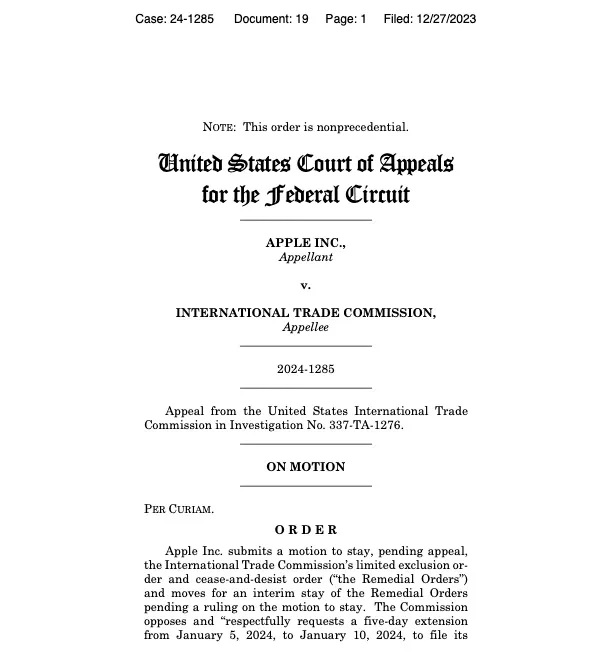
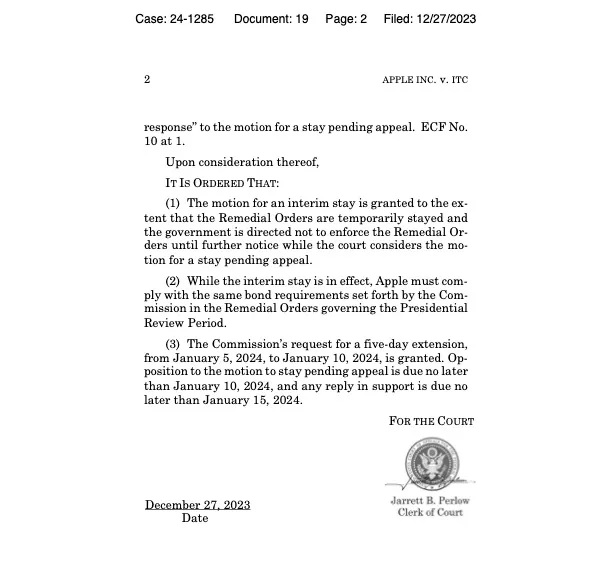
See copies of the ruling below:

Apple achieved a temporary victory in its smartwatch battle Wednesday when an appeals court temporarily paused the import ban on two models of the company’s popular smartwatches. Apple was forced to stop selling its Series 9 and Ultra 2 watches in the U.S. after a federal trade agency found it had infringed on two patents for a blood-oxygen sensor held by Masimo. Apple Watch sales, driven largely by the Series 9 and Ultra 2, accounted for about $21 billion in revenue in 2022.

Apple had filed its appeal on Tuesday, a day after the White House declined to reverse the sales ban. Apple’s Vision Pro mixed-reality headset is expected to be launched in retail stores in late January or February, analysts and insiders say. (LinkedIn News)

Biggest Winners and Flops in Business – 2023

0

As the year 2023 comes to an end, it’s time to look back at some of the biggest winners and flops of the past 12 months. We’ll review some of the most notable successes and failures in various fields, such as business, entertainment, sports, politics and science.

Let’s start with the winners.

One of the most impressive achievements of 2023 was the launch of the first crewed mission to Mars by SpaceX, the private space company founded by Elon Musk. The mission, named Starship 1, carried four astronauts to the red planet, where they landed safely and began exploring the surface. The mission was hailed as a historic milestone for humanity and a triumph for SpaceX, which beat its rivals NASA and Blue Origin in the race to Mars.

Another winner of 2023 was Netflix, the streaming giant that continued to dominate the entertainment industry with its original content and acquisitions. Netflix produced some of the most popular shows and movies of the year, such as Stranger Things season 4, The Witcher season 2, The Crown season 6 and Dune part 2. Netflix also acquired several major studios and franchises, such as MGM, Paramount and Star Wars, expanding its library and reach.

A third winner of 2023 was Tesla, the electric car maker that also belongs to Elon Musk. Tesla achieved record sales and profits in 2023, thanks to its innovative products and services, such as the Model Y SUV, the Cybertruck pickup truck, the Full Self-Driving software and the Tesla Network ride-sharing platform. Tesla also became the most valuable car company in the world, surpassing Toyota, Volkswagen and General Motors.

Now let’s move on to the flops.

One of the biggest disappointments of 2023 was Facebook, the social media behemoth that faced a series of scandals and controversies throughout the year. Facebook was accused of spreading misinformation, hate speech and fake news on its platform, as well as violating users’ privacy and data rights. Facebook also faced antitrust lawsuits from several governments and regulators, who sought to break up its monopoly and curb its power.

Another flop of 2023 was TikTok, the viral video app that lost its popularity and relevance in the face of new competitors and challenges. TikTok suffered from a decline in user engagement and growth, as well as a loss of trust and credibility among its creators and advertisers. TikTok also faced bans and restrictions in several countries, such as India, Australia and Brazil, due to security and censorship concerns.

A third flop of 2023 was Boeing, the aerospace giant that failed to recover from its previous crises and setbacks. Boeing continued to struggle with technical issues and delays in its flagship products, such as the 737 MAX jetliner, the 787 Dreamliner plane and the Starliner spacecraft. Boeing also lost market share and contracts to its rival Airbus, which outperformed it in terms of innovation and quality.

These are just some of the examples of the biggest winners and flops of 2023. Of course, there are many more stories and events that shaped this year, both good and bad. What do you think? Who were your winners and flops of 2023? Let us know in the comments below.

Nigeria Crypto Ban Removal: Crypto Usage Poised For Significant Growth in Nigeria in 2024 – Yellow Card

0

Pan-African crypto exchange platform, Yellow Card, has predicted that the year 2024 is expected to bring about a notable increase in cryptocurrency usage in Nigeria, following the Central Bank of Nigeria (CBN) removal of ban on crypto trading.

In a chat with Nairametrics, the Chief Data Protection Officer and Vice President of Legal, Commercial, and Product at Yellow Card, Lasbery Oludimu disclosed that the removal of the ban signifies a shift in perception towards cryptocurrencies among the general public and traditional institutions in Nigeria.

He further added that the new directive from the CBN would spur more collaboration with traditional financial institutions to explore opportunities within the crypto space, paving the way for greater integration and collaboration between traditional finance and digital assets.

Speaking on Yellow Card plan following the removal of the ban on crypto trading, he said,

With the new policy fostering a regulated environment, Yellow Card anticipates a surge in user adoption and engagement in the coming months. The clarity provided by the regulatory framework instills trust and confidence among users, attracting more individuals and businesses into the crypto space. Based on this, we aim to provide accessible avenues for participation in the formal financial sector, especially in regions with limited traditional banking infrastructure, thereby driving increased user activity and growth on our platform.”

Yellow Card is open to engaging constructively with regulators and policymakers, providing insights and expertise to assist in formulating inclusive and effective regulations. Collaborative efforts can create a balanced regulatory framework that encourages innovation, safeguards user interests, and fosters sustainable growth within the digital finance sector”, he added.

It is interesting to note that Yellow Card is actively pursuing a license in Nigeria, in the wake of CBN’s removal of the ban on crypto trading. This move was disclosed by the exchange director and product manager, Ogochukwu Umeokafor, during an interview with Bloomberg.

Yellow Card is the largest cryptocurrency exchange on the African continent. Operating across 16 countries, the crypto exchange is a financial services company that offers a remarkable platform for easy cross-border payments powered by crypto, and an API suite for companies to on-and-off-ramp anyone on the continent and abroad.

In 2022, the company announced its Series B fundraising of $40M, bringing total funds raised to $57 million, the most capital raised by any African cryptocurrency company.

Also in September 2023, Yellow Card in a significant move towards expanding cryptocurrency accessibility in Nigeria, joined forces with MoonPay, a global leader in the cryptocurrency ecosystem, to streamline and enhance the crypto purchasing experience for Nigerians by leveraging local bank transfers.

Navigating the Storm: Exploring Safe Haven Currency Pairs That Deliver High Returns During Crisis

0

In times of economic uncertainty, the concept of a safe haven becomes crucial for investors and traders alike. The quest for stability often leads to the exploration of safe haven currencies, which have historically proven to maintain or increase their value during market turmoil. This article delves into the intricacies of these currencies, particularly focusing on the Japanese Yen and other considered safe haven currencies.

Safe Haven Currency: A Shield Against Market Turbulence

The term “safe haven currency” is often synonymous with stability in the midst of market turbulence. A currency achieves this status due to various factors, including a stable political system, low inflation, and strong liquidity. Among these, the Japanese Yen (JPY) and the Swiss Franc (CHF) are prominent examples. Their countries’ stable finances and political stability play a pivotal role in their appeal. For instance, the Swiss National Bank has maintained a reputation for safeguarding the Swiss Franc’s value, even during economic difficulties.

When investors sell risky assets, they often flock to safe haven assets like these currencies. The Japanese Yen’s safe haven status, for instance, is bolstered by Japan’s reputation as a low volatility capital market. Meanwhile, the Swiss Franc benefits from Switzerland’s secure political system and status as one of the world’s reserve currencies.

The Role of the Japanese Yen and Swiss Franc in Currency Markets

As we delve deeper into the realm of safe haven currencies, the Japanese Yen and Swiss Franc emerge as key players. Their distinct characteristics and responses to market volatility set them apart. The following table provides a snapshot of their unique features and performance in times of economic stress:

Currency Features Contributing to Safe Haven Status Recent Performance in Market Volatility
Japanese Yen (JPY) Stable political system, low interest rates, strong international trade Often increases in value during global risk-off sentiment
Swiss Franc (CHF) Stable economy, policy of negative interest rates to protect exports, strong financial reserves Consistently retains value during market crashes

The Japanese Yen and the Swiss Franc have shown remarkable resilience in past years, especially during financial crises. The Yen, for example, is seen as the only true safe haven in the Asian currency markets, often reacting differently to economic data than other currencies. The Swiss Franc, on the other hand, is heavily dependent on the policies of the Swiss National Bank, which has occasionally adopted negative interest rates to maintain currency stability.

Understanding the Dynamics of Safe Haven Currencies

When considering safe haven currencies, it’s essential to recognize that these currencies react differently to various factors, including economic growth, global economy trends, and political events; staying updated with a Forex news calendar can provide invaluable insights into these market shifts. For instance, during times of market turbulence, the Swiss Franc and Japanese Yen have historically seen an increase in value. This trend is partly due to the perception of these currencies as lower-risk options compared to others.

The Intricacies of Safe Haven Currency Pairs

  1. USD/JPY: The US Dollar and Japanese Yen pair is a classic example of a safe haven currency pair. The dollar’s role as a global reserve currency and the yen’s safe haven status make this pair particularly appealing.
  2. EUR/CHF: The Euro and Swiss Franc pair reflects the relationship between the European Union’s economic stability and Switzerland’s strong financial sector.
  3. AUD/JPY: The Australian Dollar and Japanese Yen pair offer insights into risk sentiment in the Asian-Pacific region, with the yen often acting as a safe haven during regional instabilities.

These pairs exemplify how investors tend to gravitate towards currencies like the Japanese Yen and Swiss Franc in times of uncertainty. The stability offered by these currencies, along with their strong liquidity and lower risk profiles, make them attractive options for hedging against market instability.

The Swiss Franc: A Beacon of Stability

The Swiss Franc’s reputation as a safe haven currency is not accidental. It stems from Switzerland’s stable political system, robust economy, and the Swiss National Bank’s policies aimed at maintaining currency stability. The Franc’s low volatility and the nation’s strong economic fundamentals, including its position in international trade and stable finances, contribute to its status. This makes the Swiss Franc a go-to currency for many investors during economic downturns.

The Enduring Appeal of the Japanese Yen

The Japanese Yen holds a unique position as a considered safe haven currency. Japan’s economic strength, combined with its role in global trade, underpins the yen’s appeal. Furthermore, the Bank of Japan’s policies, aimed at maintaining low inflation and supporting economic growth, have reinforced the yen’s safe haven status. This has led to the Japanese Yen JPY being a preferred choice for many investors, especially in times of global economic uncertainty.

Safe haven currencies like the Japanese Yen and Swiss Franc play a vital role in the global financial landscape, offering a semblance of security in an otherwise volatile environment. Their ability to retain or increase value during times of market instability makes them crucial components of a diversified investment strategy. As the financial world continues to evolve, the importance of these currencies in mitigating risk cannot be overstated.

The Role of the US Dollar as a Premier Safe Haven Currency

Among the pantheon of safe haven currencies, the US Dollar (USD) stands out as a predominant choice. As the world’s reserve currency, the dollar’s appeal is multifaceted, especially noticeable during a financial crisis. Investors often seek the safety of the dollar, especially during global risk-off sentiment and financial crises. The strength of the dollar, issued by the US Treasury, is underpinned by the economic and political stability of its issuing country, the United States, making it a fully reliable safe haven for investors worldwide.

The dollar’s role in this capacity is not just about its stability; it’s also about liquidity. In times of market volatility, the ability to quickly and efficiently convert assets into US dollars, a form of cash, is paramount, and the US Dollar excels in this aspect. This liquidity, coupled with the sheer size of the US economy, ensures that the dollar remains a preferred choice for safe haven investments.

Diversifying with Other Safe Haven Currencies

While the US Dollar is often the go-to among safe havens, investors seek the stability of other safe haven currencies, playing a crucial role in diversifying risk. Within the European Union, the Euro, backed by the collective economic strength of its member countries, stands strong despite some having the highest government debt. Government bonds and treasury bills in these stable, developed economies are considered safe haven investments, much like the US Dollar.

Moreover, the strategy to adopt negative interest rates in some of these countries has further increased the appeal of their currencies as safe havens. Investors seeking to hedge against currency risk often find solace in the diverse array of safe haven currencies available, each offering unique benefits and protections against different types of market turbulence.

The Impact on Japanese Businesses and the Global Economy

Japanese businesses, deeply integrated into the fabric of international trade, often react to fluctuations in the Yen’s value. The tendency to sell Yen, expected to retain value during economic stress, and its potential to increase in value in times of uncertainty are key factors influencing these businesses. The interplay between the Yen and other currencies, especially the US Dollar, reflects the dynamic nature of the global economy.

This relationship is not just limited to the Yen and the Dollar. The interactions among various safe havens – be it currencies, government bonds, or other financial instruments – offer a complex but critical understanding of how different economies and their currencies can provide stability in an otherwise unpredictable financial landscape.