DD
MM
YYYY

PAGES

DD
MM
YYYY

spot_img

PAGES

Home Blog Page 3898

AI is Gaining Traction in Many Fintechs Across The African Region

0
FILE PHOTO: (L-R) Solomon Islands Prime Minister Manasseh Sogavare, Solomon Islands Foreign Minister Jeremiah Manele, Chinese Premier Li Keqiang and Chinese State Councillor and Foreign Minister Wang Yi attend a signing ceremony at the Great Hall of the People in Beijing, China October 9, 2019. REUTERS/Thomas Peter/File Photo

As technology continues to evolve rapidly, Artificial Intelligence is beginning to gain significant traction in Africa’s Fintech space, which is integrated to revolutionize processes and enhance users’ experience.

According to a PwC report, AI plays a strong potential in the wider global economy, whose contributions by 2030 could be as high as at least $15 billion.

Therefore, FinTechs in Africa are leveraging Artificial Intelligence (AI) technologies to excel across the digital banking, digital payments, personal finance, and investment sectors.

The introduction of AI technology is being used for machine learning algorithms, customer behavior analysis, demographics, and data to create more personalized experiences for consumers.

Check out other ways AI is being used in African Fintech Startups

Fraud Detection and Prevention: Al-powered fraud detection systems can monitor transactions in real time and identify patterns that might indicate fraudulent activities. This is crucial for maintaining the security and trust of financial services.

Customer Service And Chatbots: AI-driven chatbots can provide instant customer support, answer queries, and assist with various financial tasks. This enhances customer experience and allows Fintech companies to handle a large volume of inquiries efficiently.

Regulatory Compliance: AI can assist Fintech companies in adhering to complex regulatory frameworks by automating compliance checks and ensuring that transactions and operations are in line with local laws.

A combination of digital-only customer interactions and very large consumer bases allows fintechs in Africa to create and train algorithms faster than peers in more developed regions, especially when it comes to banking and payments.

For instance, a Nigerian-based online payment gateway that offers businesses the ability to collect payments from customers on their websites or mobile apps, Paystack uses AI-powered fraud detection and prevention tools to protect against fraudulent transactions and leisure the security of users’ financial data.

Also, Kenya’s mobile money service, M-Pesa, uses algorithms and artificial intelligence to detect and prevent fraud, in addition to educating its users and agents on how to avoid fraud and scams.

Experts have disclosed that AI holds the potential to drive financial inclusion, increase efficiency, and improve consumer experience in Africa’s Fintech industry.

Notably, Nigeria plays a prominent role in AI Fintech products, with numerous Nigerian banks using AI chatbots such as Zenith Bank, Fidelity Bank, First City Monument Bank (FCMB), UBA Group, Access Bank, Keystone Bank, and Heritage Bank.

These chatbots are powered by AI and Natural Language Processing (NLP) technologies that enable them to interpret and respond to customers’ queries in real time. 

By leveraging AI, these chatbots provide customers with a faster and more convenient way to access banking services, such as checking account balances, making payments, and initiating transactions without the need to visit a physical bank branch.

Meanwhile, there are concerns that the integration of AI in fintech can pose potential risks. While the technology offers numerous benefits, several precautions and considerations need to be put into measure, to ensure responsible and secure implementation.

It is understood that AI systems in Fintech often require access to sensitive financial and personal data. Ensuring robust data encryption, secure storage, and strict access controls is crucial to prevent data breaches and unauthorized access.

Also, there is a risk of biased decision-making if AI algorithms are not designed to be fair and transparent. Therefore, Fintech companies are advised to actively monitor and address bias to ensure that their AI systems treat all individuals fairly and equitably.

In conclusion, while AI continues to gain traction in fintechs across Africa, these companies are advised to establish ethical guidelines for the use of AI, especially when dealing with sensitive financial matters.

By taking precautions into account, Fintech companies can harness the benefits of AI while minimizing risks and ensuring a secure and responsible integration of technology into their services.
Tinubu Inherited A Bad Economy, Nigeria Can’t Borrow – Finance Minister

0

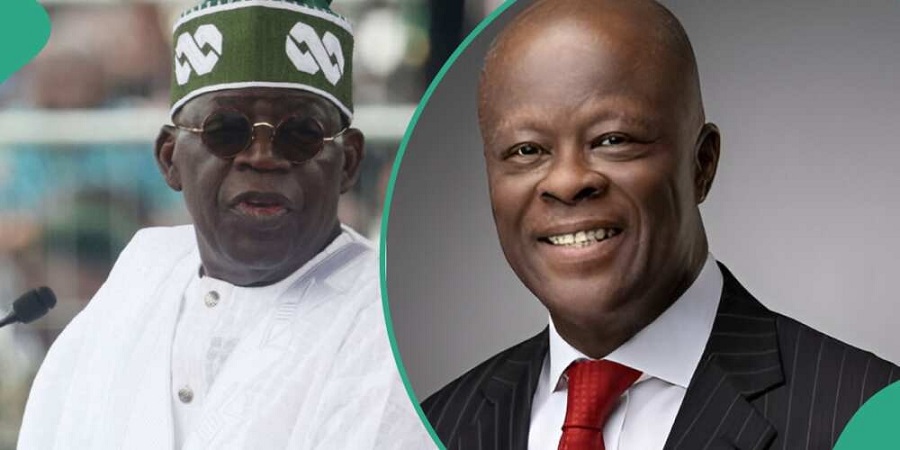
The Federal Government of Nigeria, on Monday, said it inherited a bad economy with an unacceptably high rate of unemployment from the past government led by Muhammadu Buhari.

This is coming after eight years of unwavering support by members of the All Progressive Congress (APC) to Buhari’s economic policies.

Following his inauguration on May 29, President Bola Tinubu has announced a series of economic policies, including fuel subsidy removal and the floating of the FX market, geared toward revamping the nation’s economy.

The Tinubu-led government said it will tow a path different from its predecessor’s. The President assured Nigerians that it would not rely on borrowing and that he had pledged to be transparent, honest, and accountable to the people.

As part of efforts to revitalize the economy, the Minister of Trade and Investment, Dr. Doris Anite, said the Tinubu-led administration has to create about 50 million jobs through the ministry.

The Minister of Finance and Coordinating Minister of the Economy, Wale Edun, told journalists at the end of the inaugural Federal Executive Council (FEC), meeting presided over by President Bola Tinubu at the Council Chamber, Presidential Villa, Abuja, that the Tinubu administration met a very bad economy.

“Per capita has fallen steadily, inflation is at 24 percent, unemployment is high; you know they are rebasing the way in which it’s calculated.

“Either way, it is high and youth unemployment is even unacceptably high. These are the key metrics that we have met,” he said.

Speaking further on the state of the economy the present administration met, the minister said: “We met a bad economy and the promise of Mr. President is to make it better.”

Edun said Nigeria’s current economic situation does not allow it to borrow. Earlier, Tinubu’s government had decried the accumulated public debt under Buhari, which has resulted in the nation’s spending 90% of its revenue on debt servicing.

The minister said the government is focused on how to create a macro-economic environment where both local and foreign investors will invest and increase production.

Following the FEC meeting, where the “Roadmap for the economy” was presented by the Minister of Finance and Coordinating Minister for the Economy, Tinubu ordered the cabinet members to marshal the revival of the economy to ameliorate the suffering of Nigerians.

Edun said having agreed that the economy is not where it should be, the FEC examined eight priority areas and identified targets to deliver in the next three years. He confirmed that President Tinubu had tasked the ministers with introducing policies and programs aimed at revitalizing the economy.

However, Nigerians have urged the government to focus on delivering good governance to the people and stop making excuses – reminding them that they supported Buhari’s poor economic policies – which plunged the country into this mess – to the end.

Meta Opens Creator Lab in Nigeria to Assist Content Creators

0

Social media behemoth, Meta, has launched a first-of-its-kind educational in-real-life programme for creators in Nigeria called the Meta Creator Lab Live – designed to allow creators to collaborate and co-learn from experts.

The event was graced by over 40 young and aspiring creators who want to learn how to create engaging content, grow their community, and navigate the suite of products available on Instagram through the programme.

The Meta Creator Lab Live comes after the initial launch of the Creator Lab edutainment series in March 2022. This foundational program was designed to assist aspiring and emerging creators as they navigate their paths and careers.

Speaking at the Creator Lab, Moon Baz, Creator Partnerships Lead, Africa, Middle East, and Turkey, Meta, said the lab will create a community of content creators and help shape the future of digital content.

“We are excited to launch Creator Lab Live in Nigeria, a first-of-its-kind by Instagram to support emerging and aspiring creators to grow on Instagram. Nigeria already has a thriving creator ecosystem with a global cultural influence and provides an excellent opportunity for us to support them as they navigate their journeys and careers.

“We recognize the amazing content they create across our family of apps and are committed to helping creators to grow their communities and make a living across our platforms. As we work toward shaping the future of digital content and experiences, we are excited and invested in giving creators a home base to build community and create engaging content through various content formats and creative tools.” she added.

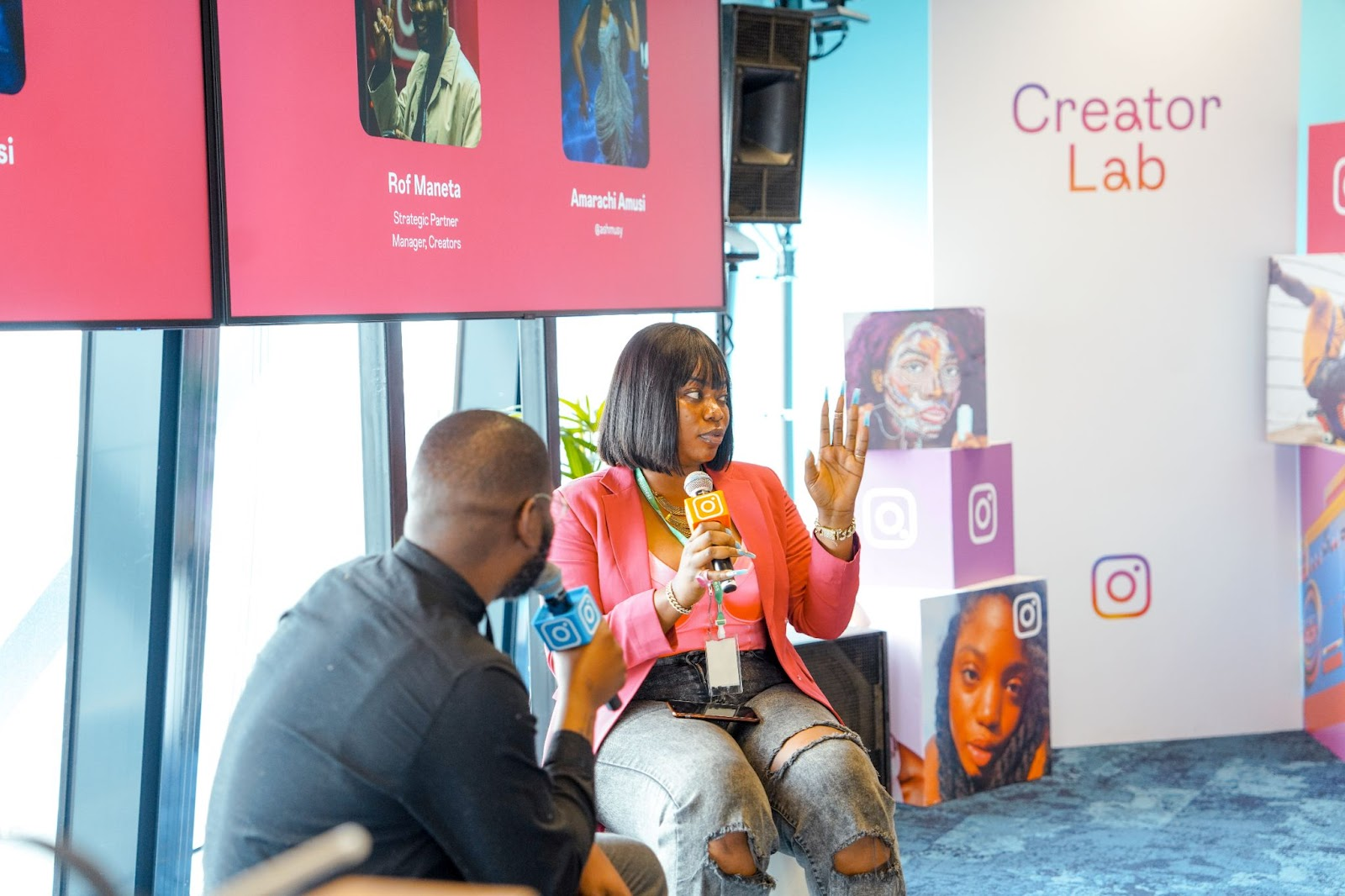
During the program, Rofhiwa Maneta, Strategic Partner Manager for Creators in Sub-Saharan Africa at Meta, delivered valuable advice and insights to creators looking to enhance their content creation skills and optimize their use of Instagram tools. He also delved into the community standards that safeguard creators and explored strategies for monetization through Meta technologies.

As part of the event, creators were encouraged to participate in the #PositiveVibesOnlyChallenge, which provided a fantastic opportunity for them to spread positivity, contribute to making the world a better place, and inspire others to produce uplifting content on Instagram.

The program also featured a fireside chat that centered around ‘How to stay relevant in the creator space.’ The panel included Amarachi Amusi (ashmusy), who emphasized the significance of authenticity, consistency, and creativity when engaging with Instagram’s platform.

“It has been an incredible experience learning, connecting, and developing content with other young talented creators in Nigeria,” she said. “Instagram has become a home and hub for creators to build a community that encourages growth. The Creator Lab has highlighted the importance of creating unique, short, and entertaining content using various features on Instagram to excite an ever-growing online community.”

Information And Communication Sector Contributed 14.83% to Nigeria’s GDP in Q2 2023

0

In a recent National Bureau of Statistics (NBS) report, the Information and Communication sector (ICT) contributed 14.83% to Nigeria’s GDP in the second quarter (Q2) of 2023, higher than the 12.12% recorded in the same quarter of 2022.

The information and Communication sector is composed of the four activities of Telecommunications and Information services, which include, Motion Picture, Sound Recording, and Music Production; and broadcasting.

In nominal terms, in Q2 2023, the growth was recorded at 41.67% (year-on-year), a 27.56% points increase from the rate of 14.11% recorded in the same quarter of 2022 and 0.17% points lower than the rate recorded in the preceding quarter.

The quarter-on-quarter growth rate recorded in the second quarter of 2023 was 13.99%. The sector in the second quarter of 2023 recorded a growth rate of 8.60% in real terms, year-on-year.

From the rate recorded in the corresponding period of 2022, there was an increase of 2.05% points. On a quarter-on-quarter, the sector exhibited a growth of 11.64% in real terms.

Of total real GDP, the sector contributed 19.54% in the second quarter, higher than the same quarter of the previous year in which it represented 18.44%, and higher than the preceding quarter in which it represented 17.47%.

The Information and Communications technology (ICT) sector in Nigeria has been lauded for playing a pivotal role in the nation’s GDP growth.

Notably, Nigeria is regarded as Africa’s largest ICT market with about 82% of the continent’s telecoms subscribers and 29% of internet usage. The Nigerian Communications Commission (NCC) estimates that Nigeria has about 85 million broadband subscriptions (penetrations of 44%) and 206 million lines in the voice segment (teledensity of 108%) as of June 2022.

To drive economic growth, the Nigerian government has been focusing on leveraging innovation and digital transformation. The government recognizes ICT as the enabler of developing other critical sectors including education, healthcare, Agriculture, and manufacturing.

In its drive to diversify the economy from oil and gas, the government is encouraging partnerships between local ICT companies and foreign investors. To promote these partnerships and grow an entrepreneurial ecosystem in the technology sector, the Nigerian government has supported government or private sector-led incubator hubs, youth innovation programs, and science technology parks.

Of course, despite the significant growth, there are several challenges that the ICT sector in Nigeria faces. They include the lack of reliable and affordable electricity, multiple taxation, regulatory bottlenecks, limited access to ICT infrastructure in rural areas, and a dearth of skilled ICT professionals.

Despite these challenges, the sector has continued to grow with the potential to play a significant role in the country’s economic development. It is worth noting that Nigeria aspires to become one of the top economies in the world, and the country recognizes ICT development and broadband access as critical requirements to achieve this vision.

Binance CEO Changpeng Zhao (CZ) Bullish on Decentralized Finance (DeFi)

0

DeFi is a term that refers to a range of financial applications that run on blockchain platforms, such as lending, borrowing, trading, investing, and more. These applications are powered by smart contracts, which are self-executing agreements that enforce the rules and terms of the transactions. Unlike traditional financial intermediaries, DeFi applications do not require any central authority or intermediary to operate, thus reducing costs, risks, and barriers to entry.

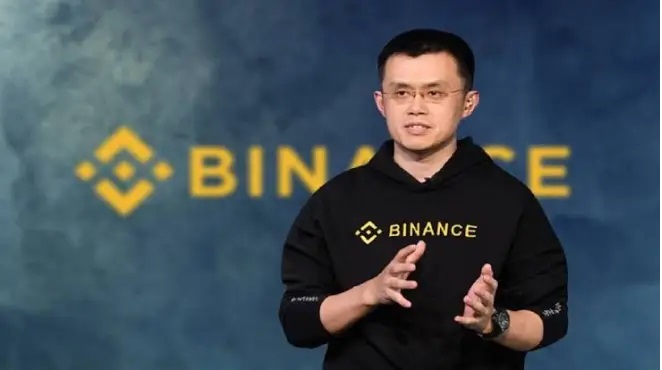
In a recent interview with Bloomberg, Binance CEO Changpeng Zhao (CZ) shared his views on the decentralized finance (DeFi) sector and how it is reshaping the crypto industry. CZ expressed his optimism about the future of DeFi, saying that it has the potential to democratize finance and provide more opportunities for innovation and inclusion.

CZ said that DeFi is one of the main drivers of the crypto market growth, as it offers new use cases and value propositions for both users and developers. He said that Binance is supportive of the DeFi ecosystem and wants to help it grow and thrive. He also revealed that Binance has invested in several DeFi projects and platforms, such as PancakeSwap, 1inch, DODO, Injective Protocol, and others.

CZ also addressed some of the challenges and risks that DeFi faces, such as scalability, security, regulation, and education. He said that DeFi is still in its early stages and needs to overcome these hurdles to achieve mass adoption and mainstream recognition. He said that Binance is working on providing solutions and guidance for the DeFi community, such as offering low-cost and high-performance blockchain infrastructure, enhancing security and compliance standards, and educating users about the benefits and risks of DeFi.

According to a report by The Block, Binance has been contacting crypto projects that have a market capitalization of less than $10 million, offering them various incentives and benefits if they agree to list their tokens on Binance or migrate from other exchanges.

Some of the perks that Binance is offering include:

  • Free listing fees and fast-track review process.
  • Higher exposure and visibility on Binance’s website and app.
  • Dedicated marketing and community support.
  • Access to Binance’s liquidity and user base.
  • Participation in Binance’s Launchpad, Launch pool, and other initiatives.

Binance’s move is seen as a way to attract more users and volume to its platform, as well as to diversify its portfolio of crypto assets. Binance currently lists over 1,500 tokens, but most of the trading activity is concentrated on the top 100 coins.

By reaching out to low-cap projects, Binance hopes to tap into the potential of emerging and innovative crypto sectors, such as decentralized finance (DeFi), non-fungible tokens (NFTs), and gaming. Binance also aims to support the development and growth of these projects by providing them with resources and guidance.

Binance’s strategy is not without risks, however. Listing low-cap tokens could expose Binance to regulatory scrutiny, as some of these projects may not comply with the legal requirements of different jurisdictions. Moreover, low-cap tokens are often more volatile and susceptible to market manipulation, which could harm Binance’s reputation and user trust.

Binance has not disclosed how many low-cap projects it has contacted or listed so far, but some examples include:

  • Alpaca Finance (ALPACA), a leveraged yield farming protocol on Binance Smart Chain
  • Dego Finance (DEGO), a cross-chain NFT and DeFi platform
  • Unmarshal (MARSH), a multi-chain data indexing protocol
  • Polkastarter (POLS), a decentralized fundraising platform on Polkadot
  • SuperFarm (SUPER), an NFT farming platform and marketplace

Binance’s outreach to low-cap projects is part of its broader vision to become the ultimate destination for crypto users. Binance offers a wide range of products and services, such as spot and futures trading, margin and lending, staking and savings, P2P and OTC trading, education and research, charity and social impact, and more.

Binance’s founder and CEO, Changpeng Zhao (CZ), has stated that his goal is to make Binance “the infrastructure services provider for the entire blockchain ecosystem.” CZ concluded by saying that he believes that DeFi is the future of finance and that Binance will continue to support and participate in the DeFi revolution. He said that he hopes that DeFi will bring more freedom, fairness, and efficiency to the global financial system and empower millions of people around the world.