DD
MM
YYYY

PAGES

DD
MM
YYYY

spot_img

PAGES

Home Blog Page 3899

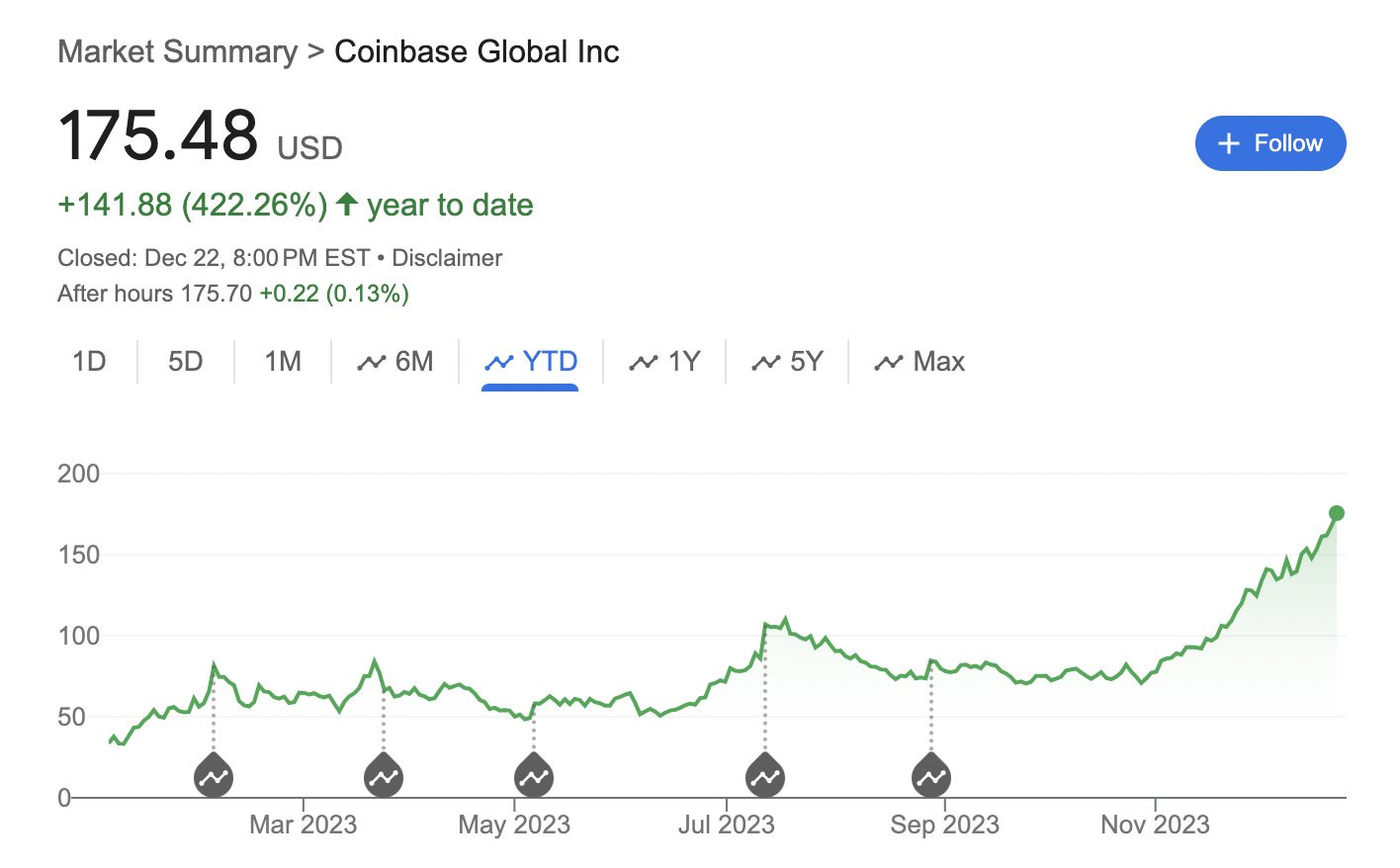
Coinbase is now up 422% year-to-date

0

Coinbase, the leading cryptocurrency exchange in the US, has seen its share price soar by 422% since the beginning of the year, as investors flock to gain exposure to the booming crypto market.

The company, which went public in April, reported record revenues and profits in the third quarter, driven by strong trading volumes and user growth. Coinbase now has more than 73 million verified users, up 96% year-over-year, and more than 9.4 million monthly transacting users, up 117% year-over-year.
The impressive performance of Coinbase reflects the growing demand for bitcoin and other digital assets, which have reached new highs in 2021. Bitcoin, the largest cryptocurrency by market capitalization, recently surpassed $60,000 for the first time since April, while Ethereum, the second largest, hit a new all-time high of over $4,800. The total market value of all cryptocurrencies now exceeds $2.8 trillion, according to CoinMarketCap.

Coinbase is not the only company that is benefiting from the crypto craze. Wall Street firms are also eager to tap into this emerging asset class, which offers high returns and diversification benefits.

Several banks, such as Goldman Sachs, Morgan Stanley, and JPMorgan Chase, have launched or are planning to launch crypto-related products and services for their clients, such as funds, futures, ETFs, and custody solutions. Some traditional asset managers, such as BlackRock, Fidelity, and Vanguard, have also expressed interest or invested in crypto.

The increasing adoption of crypto by institutional investors is a positive sign for the industry, as it indicates a shift in perception and acceptance of this new form of money. However, there are still many challenges and risks that need to be addressed, such as regulatory uncertainty, security breaches, volatility, and environmental concerns.

The cryptocurrency market has been growing at an unprecedented rate in the past years, reaching a total market capitalization of over $2.5 trillion in May 2021. Bitcoin, the largest and most popular cryptocurrency, has seen its price surge from around $10,000 in October 2020 to over $60,000 in April 2021, before experiencing a sharp correction in May and currently trading around $43,700 per BTC.

This phenomenal growth has attracted the attention of many institutional investors, who are looking for ways to gain exposure to this new and exciting asset class. Wall Street, in particular, has been showing a strong interest in bitcoin and other cryptocurrencies, as they offer a number of advantages over traditional assets, such as:

High returns: Cryptocurrencies have outperformed most other asset classes in terms of returns, especially in the long term. For example, bitcoin has delivered an annualized return of over 200% since its inception in 2009, compared to around 10% for the S&P 500 index.

Diversification: Cryptocurrencies have a low correlation with other asset classes, meaning that they can reduce the overall risk and volatility of a portfolio. For example, bitcoin has a correlation of around 0.2 with the S&P 500 index, meaning that they move independently from each other most of the time.

Innovation: Cryptocurrencies are at the forefront of technological innovation, as they are based on blockchain technology, which is a decentralized and distributed ledger that records transactions securely and transparently. Blockchain technology has the potential to disrupt many industries and sectors, such as finance, healthcare, supply chain, and more.

Coinbase and other crypto players will have to navigate these issues and prove their resilience and innovation in order to maintain their growth and competitive edge in the long run.


NASA has Started Planning Its Next Big Project, The Space-based Habitable Worlds Observatory

0

NASA has started planning its next big project, the space-based Habitable Worlds Observatory. This ambitious mission aims to search for signs of life on planets orbiting other stars, using a powerful telescope and a starshade that blocks the glare of the host stars.

The HWO is one of four concepts that NASA is considering for its next flagship mission, which is expected to launch in the 2030s. The other three are the Lynx X-ray Observatory, the Origins Space Telescope, and the Large UV/Optical/IR Surveyor. NASA will select one or two of these concepts for further development in 2024.

The Habitable Worlds Observatory (HWO) is a proposed mission concept that would consist of two spacecraft: a 4-meter telescope and a 52-meter starshade. The telescope would observe the light from distant planets, while the starshade would fly information with it, blocking the light from the parent stars. This would allow the telescope to detect the faint signals of the planets’ atmospheres, which could reveal clues about their habitability and potential biosignatures.

The HWO would use a technique called spectroscopy to analyze the light from the planets. Spectroscopy is the study of how light interacts with matter, and it can reveal information about the chemical composition, temperature, and pressure of a planet’s atmosphere. By comparing the spectra of different planets, scientists could identify which ones have Earth-like conditions, such as liquid water, oxygen, and ozone.

The HWO would be a revolutionary instrument that would advance our understanding of the diversity and evolution of planetary systems. It would have a primary mirror with a diameter of 15 meters, which is about five times larger than the Hubble Space Telescope. This would allow it to collect more light and resolve finer details on distant worlds.

The HWO would focus on planets in the habitable zone of their stars, which is the range of distances where liquid water could exist on the surface. The habitable zone depends on the size and brightness of the star, as well as the planet’s orbit and rotation.

The HWO would target planets around sun-like stars, as well as smaller and cooler stars called M dwarfs. M dwarfs are the most common type of star in our galaxy, and they host many planets, some of which are in the habitable zone.

The HWO would be a groundbreaking mission for astrobiology, the study of life in the universe. It would be able to detect biosignatures, which are features in a planet’s atmosphere that indicate the presence of life. For example, oxygen and methane are biosignatures on Earth, because they are produced by living organisms and are unlikely to exist together without life. The HWO would also be able to measure other factors that affect habitability, such as climate, weather, seasons, and geology.

The HWO would use a technique called coronagraphy to block out the glare of the host stars and reveal the faint light reflected by their planets. It would also use a technique called spectroscopy to analyze the chemical composition of the planetary atmospheres and look for clues of life, such as oxygen, methane, and water.

The HWO would aim to survey hundreds of exoplanets, ranging from Earth-sized rocky worlds to giant gas planets. It would focus on planets in the habitable zone, or the region around a star where liquid water could exist on the surface. It would also look for planets with moons, rings, or magnetic fields that could enhance their habitability.

The HWO would complement other missions that are currently studying exoplanets, such as the Transiting Exoplanet Survey Satellite (TESS) and the James Webb Space Telescope (JWST). TESS is finding thousands of new exoplanet candidates by detecting their transits, or dips in brightness when they pass in front of their stars. JWST, which is scheduled to launch later this year, will observe some of these planets and measure their temperatures, pressures, and weather patterns.

The HWO is an ambitious and visionary project that would open a new window into the cosmos. It would inspire generations of scientists and explorers to pursue the quest for life beyond Earth. It would also challenge us to reflect on our own place and role in this vast and wonderful universe.

The HWO is still in the early stages of development, and it faces many technical and financial challenges. The mission would require precise engineering and coordination between the telescope and the starshade, as well as a large budget and a long duration. However, if successful, the HWO would revolutionize our understanding of our place in the cosmos, and answer one of the most profound questions in science: Are we alone?

Tesla Develops A Method for Reducing Cost for Electric Vehicle Production by 50%

0

Tesla engineers have developed a new process they expect will reduce the cost of making an electric vehicle by 50 percent. This is a major breakthrough for the company, which has been struggling to achieve profitability and compete with other automakers in the rapidly growing EV market.

The new process involves using a single-piece casting machine to create the entire rear underbody of the vehicle, instead of assembling it from multiple parts. This reduces the weight, complexity and manufacturing time of the vehicle, as well as the number of robots and workers needed.

Tesla claims that this process will also improve the quality and safety of its vehicles, as there will be fewer welds and joints that could fail or corrode. The company claims that this process will enable them to produce electric vehicles that are more affordable, efficient, and sustainable than ever before.

Tesla has already installed the giant casting machine, dubbed “Giga Press”, at its Fremont factory in California, and plans to deploy more of them at its other factories around the world. The company says that the Giga Press can produce one rear underbody every 90 seconds, which translates to about 4,000 vehicles per day.

The new process is the result of years of research and development by Tesla’s engineering team, led by Elon Musk, the founder and CEO of Tesla. Musk said that the new process is a game-changer for the electric vehicle market, as it will make electric vehicles more accessible and attractive to consumers. He also said that the new process will help Tesla achieve its mission of accelerating the transition to sustainable energy. He also hinted that Tesla has more surprises in store for its upcoming Battery Day event, where it is expected to reveal new battery technologies and products.

Tesla plans to implement the new process in its upcoming models, starting with the Model 3, which is expected to launch in 2024. The company expects that the new process will lower the price of the Model 3 from $40,000 to $20,000, making it one of the most affordable electric vehicles on the market. The company also expects that the new process will improve the performance, range, and durability of the Model 3, as well as reduce its environmental impact.

Tesla hopes that by lowering the cost of production, it will be able to offer more affordable and attractive EV models to consumers and increase its market share and profitability. The company also aims to achieve its long-term goal of producing 20 million vehicles per year by 2030, which would make it one of the largest automakers in the world.

Tesla’s new process is a major milestone for the electric vehicle industry, as it could potentially disrupt the dominance of traditional gasoline-powered vehicles. Tesla hopes that its new process will inspire other automakers to follow suit and adopt more innovative and sustainable practices. Tesla also hopes that its new process will encourage more consumers to switch to electric vehicles and contribute to the fight against climate change.

Workers and the Age of Gig Economy

0

The post-COVID economy has seen freelancing become more popular. That is where the term ‘gig economy’ originated from. An economy that has transformed the way people work, offering flexibility and opportunities for freelancers and gig workers.

However, this shift in the employment landscape has sparked intense debates about workers’ rights and protections. Do gig workers and freelancers have rights? What is the extent of their rights, and how does it correlate with their responsibilities?

How the Gig Economy works

The gig economy is typically characterized by short-term, freelance, and on-demand work. This is totally different from what we knew to be the traditional employment structures. It means the companies can take on talents to deliver specific tasks in a short-term arrangement with specific commitments from both parties.

This is an arrangement that provides flexibility to both parties. The company can take on the role when needed, and the freelancer can take on the job when needed. This is the flexibility to choose when, where, and how much they work. Companies like Uber, Lyft, and TaskRabbit rely on independent contractors for services, providing work as and when needed. As a UBER driver, you have your car and decide when to take on customers/passengers, for example.

With all the flexibility, autonomy, and freedom that this arrangement offers, there are legal scrutiny questions about their rights and responsibilities. While this model offers autonomy, it has raised significant concerns about workers’ rights and protections.

Right to receive stipulated payments/remuneration when due

The freelancer has the right to receive the agreed payments when due, as well as an accompanying responsibility to deliver the tasks as stated in the contract and when due. There are some primary legal discussions about freelancers missing out on essential benefits such as health insurance, workers’ compensation, and overtime pay. What do you think about this?

Right to serve multiple clients in the same industry?

This is a very tricky and often not something that most employers like. Since you have this person as a contract employee or a freelancer who delivers specific tasks, are you also cool if they offer the same service to your competitor in the market? Do you think it will put some of your trade secrets at risk? Or affect your numbers in some ways?

When making a freelance or gig contract, you can never go overboard in defining what is allowed and what is not. If you want to ensure that the freelancer does not service your business and a competitor simultaneously, what are you putting in place to compensate for that? If, by offering you a service, the freelancer is suddenly restrained from doing the same for 20 other competitors, then there has to be some way to make up for it.

Right to terminate the contract whenever you want?

Gig workers often lack the job security traditional employees enjoy, leading to concerns about their financial stability and access to social safety nets. When it comes to terminating a gig contract, what are the terms? And what have you stated in your agreement? Can either party terminate the contract at any time? Is there a required notice period? How long is this notice period? If a party wants to terminate the arrangement without due notice, what is the penalty?

Worker Autonomy vs. Company Oversight

Gig workers value the autonomy of freelancing, but this raises questions about the level of control companies should exert over their work. Striking a balance between worker autonomy and company oversight is crucial for defining the boundaries of rights and responsibilities.

Mutual Accountability

Establishing a framework of mutual accountability requires clear communication, transparency, and fair treatment from both parties.

Does the law say anything about the gig economy?

While there may not be precise legal specifications on this, I think it will come down to your specific contracts and what you have stated.

  • When is the freelancer required to work or turn in tasks?
  • When is the employer required to pay for work done? Before or after the task is done?
  • What happens when there is a default from either party? What if the freelancer fails to turn in work when it is due?
  • Is there a clause that prevents the freelancer from going to a competitor firm?
  • Does your agreement describe him as an independent contractor or an employee?
  • What added payments or benefits is the freelancer entitled to if he decides to ignore your competitors and exclusively service your business?
  • Will payment be made based on time spent on the task or the task delivered?
  • Is there a minimum wage specified for the freelancer?

It is always advisable to clear every grey area in a written contract, especially if it is a long-term arrangement. Balancing the need for flexibility with fair compensation and protections is a critical ethical consideration.

As the gig economy evolves, finding common ground to safeguard workers’ rights while preserving the flexibility that defines this new era of work becomes paramount for a fair and sustainable future.

Flutterwave Hires Executives from PayPal, Stripe, Wyre and Western Union

0

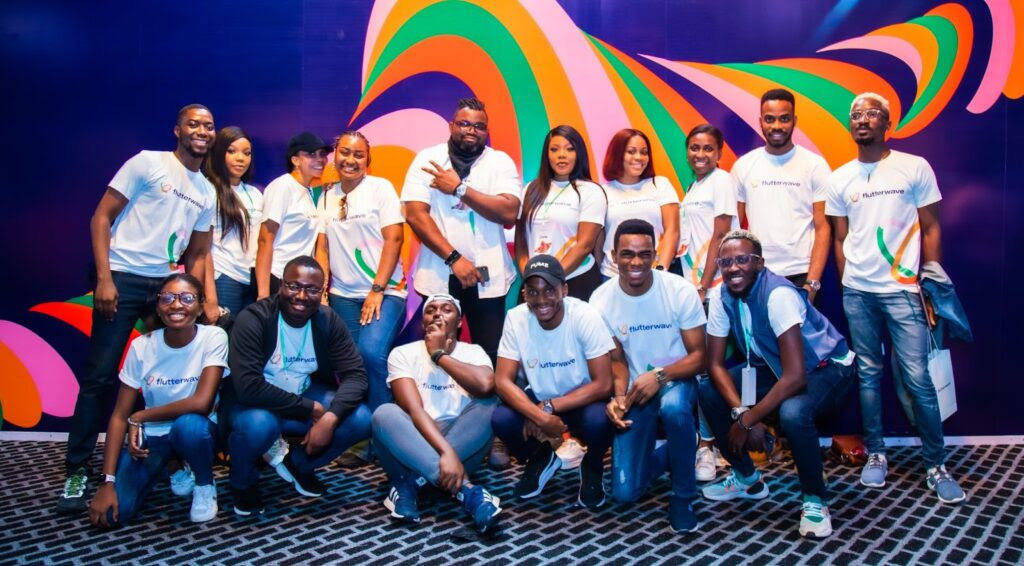
Flutterwave, a leading African fintech company, has announced the appointment of three new executives to its leadership team. The new hires are Steven Huynh, who joins as Vice President of Global Operations from PayPal, Chris Davis, who joins as Vice President of Network Partnerships from Stripe, and Adewale Ayantoye, who joins as Vice President of Compliance and Risk from Western Union.

The company said the new appointments are part of its strategy to scale its operations and expand its global footprint. Flutterwave provides a unified payment platform that enables businesses to accept and send payments across Africa and beyond. The company has processed over $9 billion in transactions since its launch in 2016 and has partnered with global players such as Visa, Mastercard, Google and Uber.

Flutterwave’s CEO, Olugbenga Agboola, said in a statement: “We are very excited to welcome Oluwakemi, Francesca and Abisola to the Flutterwave family. They bring with them a wealth of experience and expertise from leading global fintech companies. They will play a key role in driving our vision of creating a seamless digital economy for Africa and the world.”

Amaresh Mohan, Chief Risk Officer, joins Flutterwave as the company’s first Chief Risk Officer, a role he previously held at GoTo Group, Indonesia’s largest digital ecosystem that publicly listed at IDX last year. Amaresh’s 25-year career includes leadership positions at Stripe and PayPal where he was responsible for building risk management capabilities to enable market entries and scaling up in a number of emerging markets globally.

Previously, Amaresh has held key roles in leading global banks, including Citibank, Kotak Mahindra Bank, and Bank of America. At Flutterwave, Amaresh will oversee all aspects of Risk Management, including Compliance, Trust and Safety. He will work closely with the board and Flutterwave leadership to build a risk-aware culture and strong governance across the company.

Steven Huynh, who will oversee Flutterwave’s global operations, said: “I am thrilled to join Flutterwave at this pivotal moment in its journey. Flutterwave is a trailblazer in the African fintech space and has built an impressive and innovative payment platform that connects Africa to the world. I look forward to working with the team to scale the platform and deliver value to our customers and partners.”

Chris David, who will lead Flutterwave’s network partnerships, said: “I am honored to join Flutterwave and contribute to its mission of simplifying payments for endless possibilities. Flutterwave has established itself as a leader in the African payment landscape and has forged strategic partnerships with global players. I am excited to leverage my experience and network to grow and deepen these partnerships and create new ones.”

Stephen Cheng, EVP Global Expansion and Payment Partnerships, brings over two decades of global experience at Fortune 100 and high growth regulated financial institutions, building and leading world-class risk and compliance organizations. He has held multiple C-level positions at public and private companies such as American Express, First Data, Green Dot, and Prime Trust.

Most recently, Stephen was Chief Risk and Compliance Officer and Chief Executive Officer at Wyre. Stephen will spearhead Flutterwave’s navigation of the ever-evolving global payment systems and facilitate the company’s expansion into new markets globally through acquiring licenses and strategic payment partnership initiatives.

Adewale Ayantoye, who will head Flutterwave’s compliance and risk functions, said: “I am delighted to join Flutterwave and support its growth and expansion. Flutterwave operates in a highly regulated and complex environment and has a strong commitment to compliance and risk management. I bring along my experience and best practices from working in global fintech companies to ensure that Flutterwave continues to operate with the highest standards of compliance and risk management.”