DD
MM
YYYY

PAGES

DD
MM
YYYY

spot_img

PAGES

Home Blog Page 3953

Tech Stocks Rally: Nasdaq Records One of its Strongest Years Since 2003

0

The year 2023 marked a significant turnaround for the tech sector, a phoenix rising from the ashes of the challenges faced in 2022, which saw several tech giants drop significant amounts of gains.

An analysis by CNBC unveiled a staggering performance by the Nasdaq, known for its heavy concentration of technology stocks. Following a daunting 33% decline the previous year, the Nasdaq defied the odds, concluding 2023 with an impressive surge of 43%, marking its most robust performance since 2020, a year that narrowly edged past this triumph.

What’s more striking is that this surge falls just short of the index’s outstanding showing in 2009, making these two years the standout performers since the aftermath of the dot-com crash in 2003. Currently, the Nasdaq sits a mere 6.5% below its record high set in November 2021.

Various factors contributed to the tech industry’s resurgence. The Federal Reserve’s decision to halt interest rate hikes, coupled with a stabilized outlook on inflation, reinvigorated risk appetites. Companies strategically leveraged cost-cutting measures initiated in late 2022, laser-focused on boosting efficiency and widening profit margins.

Kevin Simpson, founder of Capital Wealth Planning, underlined this shift, stating, “Once you have a Fed that’s backing off, no mas, in terms of rate hikes, you can get back to the business of pricing companies properly — how much money do they make, what kind of multiple do you put on it. It can continue into 2024.”

This resurgence in tech stocks was further amplified by the emergence of generative artificial intelligence, a disruptive force compelling companies to invest in what’s hailed as the next technological frontier.

Nvidia emerged as a frontrunner in the AI industry, experiencing an astonishing 239% surge in its stock price throughout 2023. The company’s graphics processing units (GPUs), essential for training and operating advanced AI models, witnessed soaring demand from large cloud vendors and well-funded startups. Recording a sixfold increase in net income, soaring to $17.5 billion in the first three quarters of 2023, Nvidia’s revenue tripled in the latest quarter.

Jensen Huang, Nvidia’s CEO, described March as the onset of AI’s “iPhone moment,” expressing, “Startups are racing to build disruptive products and business models, while incumbents are looking to respond. Generative AI has triggered a sense of urgency in enterprises worldwide to develop AI strategies.”

Generative AI gained substantial traction post the late 2022 launch of OpenAI’s ChatGPT, allowing users to engage in sophisticated conversations through minimal text inputs. The technology’s applications expanded rapidly, spanning from travel bookings to customer service enhancements and software development.

Major tech titans, including Microsoft, Google, Meta (formerly Facebook), and Amazon, heavily invested in generative AI, integrating it extensively across their product suites. Andy Jassy, Amazon’s CEO, forecasted generative AI’s revenue potential for Amazon Web Services in the tens of billions, revolutionizing inventory forecasting, transportation routes, product pages for third-party sellers, and image generation for advertisers.

Microsoft, leveraging its integration of generative AI into Bing, Office, and Windows, witnessed a stock rally reminiscent of 2009, with shares escalating by 58%. Michael Turrin, a Wells Fargo analyst, accentuated Microsoft’s leadership in AI, dubbing the company as “the outright leader in the early AI wars.”

Concurrently, Microsoft reported historic profitability in its latest earnings report, showcasing a gross margin exceeding 71% for the first time since 2013. The company’s focus on efficient data center management and reduced hardware reliance translated into higher margins for its Windows, Xbox, and search segment.

This tech sector’s extraordinary recovery and the escalating influence of generative AI highlight a seismic shift in the industry, positioning these advancements as the driving forces behind the Nasdaq’s resurgence and the revitalization of major tech conglomerates.

The year 2023 undoubtedly witnessed a technological renaissance, heralding an epoch of innovation and profitability propelled by cutting-edge technologies and strategic investments in artificial intelligence. But as these advancements evolve, the industry’s growth hangs greatly on the transformative changes they bring.

Invest in Knowledge with Tekedia Mini-MBA

0

The next Tekedia Mini-MBA will begin on Feb 5. Invest in knowledge and co-learn with us at Africa’s largest business school, Tekedia Institute. Yes, more learners attend our program than any business program in Africa. The early bird deadline is tomorrow; register now and save .

We have updated our curriculum, including ways small companies, creators, freelancers, etc can thrive despite market challenges in Nigeria and other African countries. To reduce cost and stay competitive in this age of FX paralysis, Aba traders are coming together, importing as a group, and sending anchors, over everyone going to China.

With a clearly defined responsibilities, in a group of 7 traders, instead of all going to China, two can go, and costs shared. They have also used that model to reduce cost of capital, focusing on aggregating capital to avoid high bank interest rates.

We’re teaching common-sense business playbooks that work in Aba, Kano, Ibadan, Uyo, Nairobi, Niamey, Cotonou, etc. I ask you to register and let us study together over 13 weeks. Begin 2024 strong; invest in knowledge. Come to Tekedia Mini-MBA.

Tekedia Mini-MBA is an innovation management 12-week program, optimized for business execution and growth, with digital operational overlay. It runs 100% online. The theme is Innovation, Growth & Digital Execution – Techniques for Building Category-King Companies. All contents are self-paced, recorded and archived which means participants do not have to be at any scheduled time to consume contents. Besides, programs are designed for ALL sectors, from fintech to construction, healthcare to manufacturing, agriculture to real estate, etc.

The sector- and firm-agnostic management program comprises videos, flash cases, challenge assignments, labs, written materials, webinars, etc, and is delivered by a global faculty coordinated by Prof Ndubuisi Ekekwe. It will run from Feb 5, 2024 to end May 4, 2024. Tekedia Institute, Boston USA, awards certificates of achievement at the end of the program.

Polygon (MATIC) and Cardano (ADA) Eyed by Analysts – Everlodge (ELDG) Innovates With AI Tool

0

Cardano (ADA) and Polygon (MATIC) are both poised for growth in 2024. MATIC has lagged behind other major cryptos in 2023, but several analysts are now bullish that it can explode this year.

After a prolonged bearish period, ADA soared by 60% in Q4 of last year. This increased liquidity and DeFi activity could push it further. Despite this, many are eyeing the presale of Everlodge (ELDG), which is projected to see a major surge. We will go over all of them to see which is the best cryptocurrency to buy now.

Polygon (MATIC) Bullish According to Altcoin Sherpa and Ali Martinez

Polygon (MATIC) is showcasing bullish on-chart performance despite initially staying behind its competition. In the last 30 days, the Polygon price surged by 25.3%. Crypto analyst Altcoin Sherpa is bullish on its future and projects that it can go up to $1.20 in the short to medium term. The Polygon crypto has also been analyzed by another analyst.

Ali Martinez, another notable analyst, commented on the future. MATIC can make a run up to $1.25 in the short term while setting a potential long-term target of $1.82. These Polygon price predictions are bullish and can push the crypto upwards.

Cardano (ADA) to Grow to $0.80, According to Captain Faibik

Cardano (ADA) could soon see a major upswing as well, especially after soaring by 60% in Q4 of 2023. Its year-to-date (YTD) rise was by 150%. Prominent crypto analyst Captain Faibik suggested Cardano price is forming a Bullish Pennant formation. If it can close above the pattern’s upper boundary, it can aim for the $0.80 level.

This Cardano price prediction showcases the power of the crypto, and its RSI is above 70 for the first time since 2021. The Cardano crypto is poised for growth, but it’s not alone.

Everlodge (ELDG) to Introduce AI Tool to Real Estate Market

Everlodge (ELDG) is an upcoming real estate marketplace that can change how people invest in real estate. It will do so by introducing blockchain technology. The main issues that will be resolved include liquidity, transparency, and accessibility.

Each property will get minted as an NFT. The property’s NFT will be fractionalized into smaller pieces, each worth just $100. As a direct result, anyone can become a co-owner of a property beginning with a small amount of capital. This way, they can gain access to passive income and value appreciation. There will be a Rewards Club on top of the ecosystem. Here, anyone will be able to get free nightly stays.

The platform will introduce an AI tool. It will monitor and scan global property prices in all territories, giving users up-to-date snapshots in that region. As a result, it will see usage as a predictor for markets.

Summary

Aside from Cardano and Polygon, the blockchain ICO for Everlodge has seen massive success. Everlodge reached Stage 9 of its presale with more than 4.5M tokens sold. Currently, it trades at just $0.029.


Analysts project a price upswing of 5,000% following its launch, and these aspects make it the best cryptocurrency to buy now.

Visit Everlodge

The Nigeria’s Mistake on Fuel Subsidy Removal Policy; It Focused On The Wrong Thing

1

In my last note, I wrote that Nigeria’s rural economies have been disconnected massively from the urban economies. Yes, during the holidays, the traffic reduction in the rural areas was noticeable and drastic. Simply, the fuel re-pricing and the broad removal of fuel subsidies have distorted and disconnected rural Nigeria from the urban one, as many could not afford to travel during the Christmas and New Year holidays.

Understand that without logistics and supply chain, economies struggle. Our fuel subsidy removal has caused severe pains in our rural economy, and I want the leaders to pay attention.

Here are two things to consider:

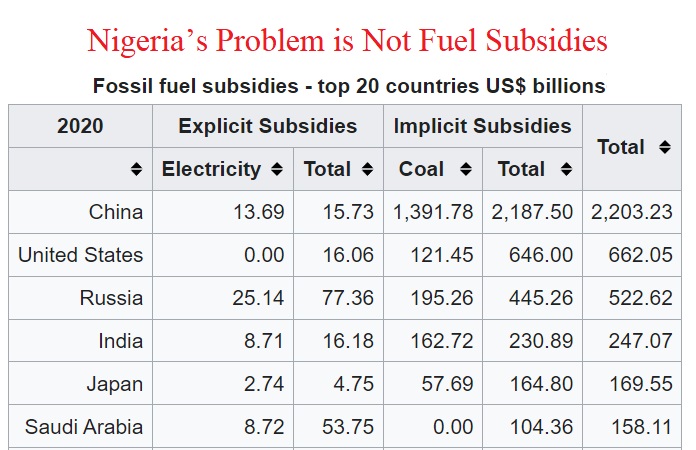
  1. Every country subsidizes something. Nigeria can subsidize fuel without the corruption part.  This table shows the leaders on energy subsidies; Nigeria is not even recorded because our subsidy is insignificant. Notice that China’s manufacturing policy is tethered to its smart energy subsidy playbook.

Nigeria’s Problem is Not Fuel Subsidies

  1. We must make sure the postal system is working so that the rural areas can link back to the urban areas of Nigeria: “The US postal service has not made a single profit in the last 20 years. That is a massive subsidy to improve the supply chain, across America, by making sure commerce works. But they’re smart: the money used to subsidize post office is recovered when profits of companies which depend on the postal system are taxed. Provided there is no corruption, the government has no need to turn the post office into a direct profit-making machine. Recently, the government tried to clean the books, and even after, the postal service still recorded red! That subsidy is a platform strategy as we do in startups.” Simply, a working postal service will deepen the economic ties between rural and urban Nigeria.

US Postal Service Net Income/Loss By Year

  • 2021 – $9.7 billion loss (projected)
  • 2020 – $9.2 billion loss
  • 2019 – $8.8 billion loss
  • 2018 – $3.9 billion loss
  • 2017 – $2.7 billion loss
  • 2016 – $5.6 billion loss
  • 2015 – $5.1 billion loss
  • 2014 – $5.5 billion loss
  • 2013 – $5 billion loss
  • 2012 – $15.9 billion loss
  • 2011 – $5.1 billion loss
  • 2010 – $8.5 billion loss
  • 2009 – $3.8 billion loss
  • 2008 – $2.8 billion loss
  • 2007 – $5.1 billion loss
  • 2006 – $900 million surplus
  • 2005 – $1.4 billion surplus
  • 2004 – $3.1 billion surplus
  • 2003 – $3.9 billion surplus
  • 2002 – $676 million loss
  • 2001 – $1.7 billion loss

Good People, Nigeria needs strategic subsidies on energy and logistics; what should be eliminated and phased out is corruption. Imagine instead of saying “The fuel subsidy is gone”, we say “The fuel subsidy corruption is gone”. The latter would have improved every Nigerian by now.

Nigeria Recorded A Massive Economic Degradation Within the Last 12 months

1

As I have written here many times, I use many unconventional ways to pick indicators on where things are in Nigeria. To model the strength of the export of our physical goods, I ask friends to send me images of ships as they arrive and depart the harbours, from Marina Street’s highrise buildings in Lagos. Right now, most ships arrive fully loaded but depart partly loaded or empty.

Also, I do ask contacts in aviation to send me how many planes are parked at night in our major airports. Those give me indications on supply chain and the strength of economic activities. Again, the total number of operating planes in Nigeria has dropped from this time last year.

Last year, I added a new element: ask people to examine traffic in their village’s popular junctions on Christmas and New Year days. Yes, compared with last year’s traffic, were those junctions busier, etc. The consensus I am getting from most I have sampled is clear: in most parts of southern Nigeria, people did not visit home and many popular rural junctions did not experience as much traffic as last year’s. In other words, most people did not travel to rural areas during this Christmas break.  Whenever that happens, it means there is economic stress. Yes, no money to travel! (The high cost of transportation due to the removal of the fuel subsidy could also be a huge factor.)

Let me ask you: if you visited home during the holidays,  is this consistent with your observation? Did you see more people and vehicular traffic in the village? 

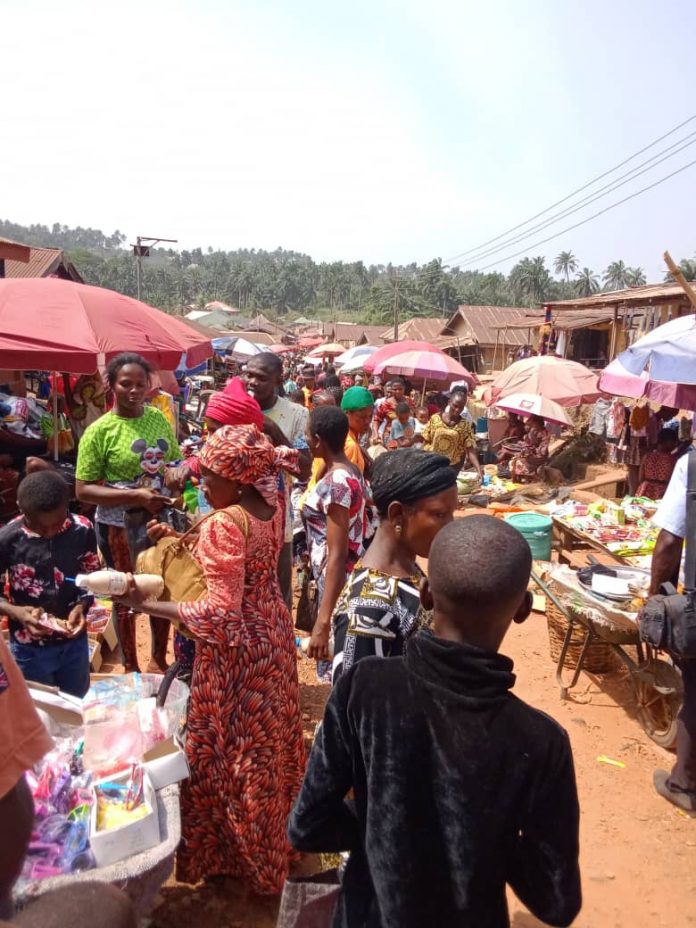
Good People, from Oriendu Market Junction to Ababa Imenyi Junction, in Abia State, to other junctions, traffics dropped significantly.

Nigeria cannot afford to disconnect rural Nigeria from urban Nigeria. We must make sure that the connection remains. But as it stands, it does seem like Nigeria recorded a massive economic degradation within the  last 12 months due to changes in forex policy and fuel prices.

This is not suprising: supply chain is commerce and when that is broken, everything fades. With the cost of transportation high due to fuel re-pricing, Nigeria dislocated the equlibrium.  I do not support the removal of fuel subsidy because every country on earth subsidies something; Nigeria has the capacity to fuel production with common-sense subsidy of energy. My only solution has been simple: remove the corruption in Nigeria’s fuel subsidy which makes it look bad. 

Yes, it was similar to my position on border closure where I noted that  you do not close your land borders because your Customs officers are ineffective; a better solution would have been to fire those men and women, and get new people to do their jobs.

I do hope we do not forget rural Nigeria as transportation cost can widen the “distance”, considering that the collapse of the postal service has already taken most of those rural areas out of our national economic maps.