DD
MM
YYYY

PAGES

DD
MM
YYYY

spot_img

PAGES

Home Blog Page 3965

How to Stay Motivated After a Setback

0

One of the most important skills for achieving success in any field is resilience. Resilience is the ability to bounce back from failures and setbacks, and to keep pursuing your goals with passion and determination. Resilience is not something that you are born with, but something that you can develop and strengthen over time. In this blog post, I will share some tips and strategies on how to build resilience and become more successful in your personal and professional life.

First, you need to have a clear vision of what success means to you. Success is not a one-size-fits-all concept, but a personal definition that reflects your values, interests, and aspirations. Having a clear vision of success will help you set realistic and meaningful goals, and also measure your progress and achievements. You can use tools such as vision boards, affirmations, or journaling to create and reinforce your vision of success.

Second, you need to embrace failure as a learning opportunity. Failure is inevitable in any endeavor, and it is not a sign of weakness or incompetence. Rather, failure is a feedback mechanism that tells you what works and what doesn’t, and what you need to improve or change. Instead of avoiding or denying failure, you should accept it, analyze it, and learn from it. You can use tools such as reflection, feedback, or coaching to extract valuable lessons from failure.

Third, you need to cultivate a positive mindset and attitude. Your mindset and attitude have a powerful influence on how you perceive and respond to failure and success. A positive mindset and attitude will help you see failure as a challenge rather than a threat, and success as a reward rather than a destination. A positive mindset and attitude will also help you cope with stress, overcome obstacles, and celebrate achievements. You can use tools such as gratitude, optimism, or meditation to foster a positive mindset and attitude.

Reframe your failure. Don’t think of failure as something negative or shameful. Think of it as a valuable lesson that can help you improve and avoid making the same mistake in the future. Failure is not a sign of weakness, but a sign of courage and resilience.

Celebrate your progress. Don’t focus only on the outcome, but also on the process. Recognize and appreciate how far you have come and how much you have learned along the way. Celebrate your small wins and milestones and reward yourself for your efforts.

Seek feedback and support. Don’t isolate yourself or dwell on your failure. Reach out to others who can offer you constructive feedback and encouragement. Seek advice from mentors, coaches, or peers who have faced similar challenges and overcome them. Learn from their experiences and insights and apply them to your own situation.

Set new goals and action plans. Don’t let your failure stop you from pursuing your dreams. Instead, use it as an opportunity to reassess your goals and strategies, and make adjustments as needed. Set realistic and specific goals that are aligned with your vision and values and break them down into manageable steps. Create a clear and detailed action plan that outlines what you need to do, when you need to do it, and how you will measure your progress.

Keep a positive mindset. Don’t let negative thoughts or emotions overwhelm you or sabotage your success. Instead, cultivate a positive mindset that empowers you and boosts your confidence. Replace negative self-talk with positive affirmations and focus on the possibilities rather than the limitations. Remind yourself of your strengths and achievements and visualize yourself succeeding in the future.

Remember, success is not a destination, but a journey. And every journey has its ups and downs, twists and turns. The important thing is to keep going, keep learning, and keep growing. Success is the ability to go from one failure to another with no loss of enthusiasm. And you have that ability within you.

Finally, you need to persist in the face of adversity. Persistence is the ability to keep going despite difficulties, disappointments, or discouragement. Persistence is not about stubbornness or rigidity, but about flexibility and adaptability.


Navigating the Crypto Landscape with Chainlink (LINK), THORChain (RUNE), and VC Spectra (SPCT) – A Comparative Insight

0

Despite market shifts, Chainlink (LINK) advances with Polygon integration, amplifying DeFi potential. THORChain (RUNE) displays resilience and positive indicators, signaling bullish momentum. Meanwhile, VC Spectra (SPCT) stands out as a promising investment, securing $2.4 million in a private seed sale, with unique incentives and deflationary models. Explore LINK, RUNE, and SPCT for lucrative opportunities!

>>BUY SPCT TOKENS NOW<<

Summary

  • Despite a recent 11% drop in Chainlink’s price, its integration with Polygon’s zkEVM and positive industry sentiments position LINK for bullish growth, potentially reaching $17.44 by the end of 2023.
  • THORChain’s RUNE token, backed by robust technology and a dedicated community, shows potential for bullish momentum, with analysts projecting $8.83 by the end of 2023.
  • VC Spectra (SPCT) excels in the crypto landscape with a $2.4 million seed sale, unique incentives, and a surging altcoin price of $0.077, marking an 862.5% increase.

Chainlink News: LINK’s Resilience Sparks Bullish Outlook on Integration

Despite the Chainlink price (LINK) experiencing an 11% drop within a week, reaching $14.81 on December 15, recent developments suggest a bullish trajectory. The integration of Chainlink data feeds on Polygon’s zkEVM is a significant stride, expanding the utility of LINK within the decentralized finance (DeFi) space.

This collaboration empowers developers on Polygon to seamlessly incorporate Chainlink’s reliable real-world data into their applications, potentially catalyzing increased adoption. Furthermore, the prospect of unlocking several significant DeFi protocols on Polygon zkEVM, as stated by Polygon Labs’ CEO Marc Borion, injects optimism into Chainlink’s (LINK) future.

This move positions Chainlink (LINK) at the forefront of facilitating enhanced decentralized applications, potentially driving demand for its data services. Amidst market fluctuations, the strategic collaboration with Polygon and positive industry sentiments highlight Chainlink’s resilience and its potential to capitalize on emerging opportunities, painting a bullish outlook for LINK.

Analysts’ Chainlink price prediction suggests that the Chainlink price (LINK) could reach $17.44 by the end of 2023.

THORChain (RUNE): Resilient Dip, Bullish Momentum Signals

Despite a recent 7% drop in the price of THORChain’s native token, RUNE, reaching $5.91 on December 15, 2023, there are compelling factors indicating potential bullish momentum for the cryptocurrency.

THORChain (RUNE) has demonstrated resilience by swiftly adapting to market volatility, thanks to its robust technology built on Cosmos SDK, providing security against potential hacks. The community-driven nature of THORChain (RUNE) positions it favorably, with a dedicated network of self-organized developers actively contributing via Gitlab.

Technical indicators showcase a positive trend, suggesting increasing price action. The ongoing updates and collaborations within the THORChain (RUNE) ecosystem contribute to an optimistic outlook, fostering the potential for further price appreciation.

The emphasis on liquidity and the commitment to interoperability through the BiFrost Protocol underline THORChain’s (RUNE) dedication to addressing challenges and building a resilient foundation for sustained growth. Analysts expect THORChain (RUNE) to reach $8.83 by the end of 2023.

VC Spectra (SPCT): Surging Demand Fuels Bullish Investment Potential

Amidst the dynamic crypto landscape, VC Spectra (SPCT) stands out as a promising investment opportunity. The decentralized hedge fund successfully secured $2.4 million during its private seed sale, setting a robust foundation for its venture. This substantial financial backing reflects the confidence of early investors in the project’s potential.

VC Spectra distinguishes itself by rewarding users with quarterly dividends and buybacks from its investment profits, providing unique incentives for token holders. Additionally, users gain access to exclusive opportunities in new ICOs during seed/private sales and hold voting rights within the VC Spectra ecosystem.

The SPCT token, operating on the Bitcoin blockchain and adhering to the deflationary model, serves multiple purposes. It functions as a BRC-20 standard token for decentralized trading, asset management, and transaction fee payments on the VC Spectra platform.

The burning mechanism incorporated in SPCT aims to reduce token circulation over time, enhancing its scarcity and potential value appreciation.

The ongoing public presale has witnessed remarkable success, surpassing initial expectations. In its various stages, SPCT tokens are available at increasingly higher prices, reflecting the growing demand and confidence in VC Spectra’s future.

Notably, the surge from Stage 4 to Stage 5, where the price increased by 16.6%, showcases the remarkable momentum and interest surrounding SPCT.

SPCT’s current altcoin price is marked at $0.077, representing an 862.5% increase from its initial price. Due to unprecedented demand, VC Spectra is poised to exceed its initial forecast of reaching $0.080 by the end of the presale, making it one of the best coins to invest in.

Learn more about the VC Spectra presale here:

Presale: https://invest.vcspectra.io/login

Website: https://vcspectra.io

Telegram: https://t.me/VCSpectra

Twitter: https://twitter.com/spectravcfund

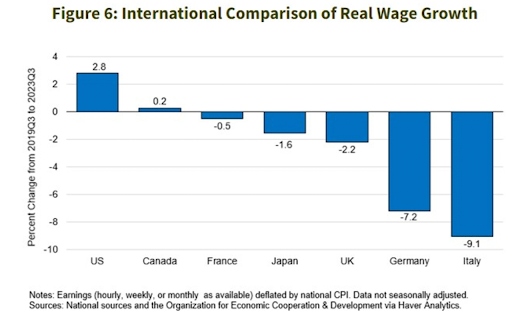
Per data from Arin Dube, real wages have risen fast in the US

0

One of the most striking trends in the US labor market in recent years is the rapid growth of real wages for the lowest-paid workers. This is not a coincidence, but a result of deliberate policy choices by state and local governments to raise the minimum wage.

According to a new study by Arin Dube, an economist at the University of Massachusetts Amherst, the minimum wage increases that took effect between 2013 and 2019 raised the average annual earnings of workers in the bottom 10% of the wage distribution by 7.5%, or $1,900. This is a substantial boost for low-income families, especially compared to the stagnant or declining real wages for most workers in the previous decades.

Dube’s study, which was published in the American Economic Journal: Applied Economics, uses a novel method to estimate the causal effects of minimum wage policies on wage inequality. He compares workers in neighboring counties that are located on different sides of state borders, and therefore face different minimum wage levels.

This approach allows him to isolate the impact of minimum wage changes from other factors that might affect wages, such as regional economic conditions, labor market trends, or demographic shifts. He also accounts for the possibility that some workers might cross state borders to find better-paying jobs, or that some employers might relocate or adjust their hiring practices in response to minimum wage hikes.

The main finding of Dube’s study is that minimum wage increases have significantly reduced wage inequality at the bottom of the distribution,

Dube has compiled a comprehensive dataset of state-level minimum wages and hourly wage distributions from 1979 to 2019, using data from the Current Population Survey (CPS). He has also created a measure of the “bite” of the minimum wage, which is the ratio of the minimum wage to the median wage in each state-year. This measure captures how binding the minimum wage is for the distribution of wages, and how it varies across states and over time.

Using this data, Dube has found that the bite of the minimum wage has increased significantly since 2014, reaching its highest level since 1980. This reflects the fact that many states have enacted large minimum wage hikes in recent years, often through ballot initiatives or legislation.

For example, California raised its minimum wage from $8 in 2014 to $13 in 2020 and plans to reach $15 by 2023. Similarly, New York increased its minimum wage from $8.75 in 2015 to $15 in 2020 for New York City and will gradually phase in $15 for the rest of the state.

These minimum wage increases have had a clear impact on the wages of the bottom decile of earners, which are those who earn less than 10% of all workers. Dube has calculated that the real wage (adjusted for inflation) of the bottom decile has grown by 13.4% from 2014 to 2019, compared to only 6.1% for the median worker and 7.5% for the top decile.

This means that the bottom decile has experienced a faster wage growth than any other group in the wage distribution and has narrowed the gap with the median and the top.

The figure below shows the trend of real wages for different groups of workers since 1979, using Dube’s data. The vertical lines mark the years when the federal minimum wage was increased. As you can see, the bottom decile has seen a sharp increase in its real wage since 2014, after decades of stagnation or decline. The median and the top decile have also seen some growth, but at a slower pace.

What are the implications of this trend for inequality and poverty? Dube has estimated that the increase in the bite of the minimum wage since 2014 has reduced inequality by about 5%, as measured by the ratio of the top to bottom decile wages. This is a substantial reduction, given that inequality has been rising steadily since the late 1970s.

Moreover, Dube has found that the minimum wage increases have reduced poverty by about 2 percentage points among low-wage workers, which translates into about 1.3 million fewer workers living in poverty.

These findings suggest that raising the minimum wage is an effective policy tool to improve the living standards of low-wage workers, and to reduce inequality and poverty. Of course, there are other factors that affect wages and employment, such as macroeconomic conditions, technological change, globalization, education, and labor market institutions. But as Dube’s data shows, minimum wage policy can make a big difference for millions of workers who are struggling to make ends meet.

U.S. Federal Reserve signals that a far easier monetary policy is in store for 2024

0

The U.S. Federal Reserve announced on Thursday that it plans to keep interest rates low and continue its bond-buying program for 2024. This is a clear indication that the central bank is not worried about inflation and is committed to supporting the economic recovery from the pandemic.

The Fed’s statement was in line with the expectations of most analysts and investors, who had anticipated a dovish stance from the policy makers. The Fed also revised its economic projections, showing a brighter outlook for growth and employment, but a lower inflation forecast.

The Fed expects the U.S. economy to grow by 6.5% this year, up from 4.2% in December, and the unemployment rate to fall to 4.5% by the end of 2021, down from 5% previously. However, the Fed also expects inflation to remain below its 2% target for the next three years, despite the massive fiscal stimulus and the reopening of the economy.

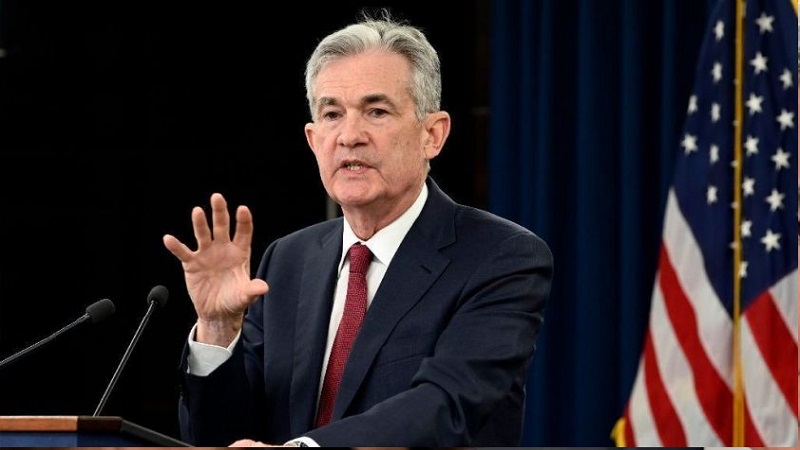
The Fed’s chair, Jerome Powell, reiterated that the central bank will not raise interest rates until it sees “substantial further progress” towards its goals of maximum employment and stable prices. He also said that the Fed will continue to buy $120 billion worth of Treasury and mortgage-backed securities per month until it sees “significant further progress”.

Powell stressed that the Fed’s policy is based on actual outcomes, not forecasts, and that it will not react to temporary spikes in inflation caused by supply bottlenecks or base effects. He said that the Fed will be patient and flexible, and that it will communicate well in advance any changes in its policy stance.

The Fed’s decision to maintain a highly accommodative monetary policy for 2024 reflects its belief that the U.S. economy still faces significant challenges and risks from the pandemic, and that it needs sustained support from both fiscal and monetary authorities.

The Fed’s message also signals its confidence that it has the tools and the credibility to deal with any potential inflationary pressures in the future, without jeopardizing its long-term objectives. The Fed’s announcement was welcomed by the financial markets, which rallied on Thursday.

Consumer spending is the largest component of the US gross domestic product (GDP), accounting for about 70% of the total. The Fed’s policy lowers the cost of borrowing for consumers, making it easier for them to finance purchases of goods and services, such as cars, appliances, vacations, and education. Lower interest rates also increase the disposable income of consumers, as they pay less on their mortgages, credit cards, and other debts.

This boosts their confidence and willingness to spend. Moreover, the Fed’s policy stimulates the stock market and the housing market, which increases the wealth of consumers and encourages them to spend more.

Business investment is another key driver of the US economy, contributing about 15% of the GDP. The Fed’s policy lowers the cost of capital for businesses, making it more attractive for them to invest in new equipment, machinery, software, research and development, and expansion. Lower interest rates also improve the cash flow of businesses, as they pay less on their loans and bonds.

This enhances their profitability and ability to invest. Furthermore, the Fed’s policy supports the demand for US goods and services from domestic and foreign consumers, which increases the sales and revenues of businesses and motivates them to invest more.

The stock market hit new record highs, while the bond market stabilized after a recent sell-off. The dollar weakened against other major currencies, while gold and oil prices rose. The Fed’s policy is expected to boost consumer spending, business investment, and housing activity, as well as support global growth and trade. The Fed’s policy is also likely to have spillover effects on other countries, especially emerging markets, which may benefit from lower borrowing costs and stronger demand from the U.S.

Safemoon Officially files for Chapter 7 Bankruptcy As Crypto Market Shows Signs of Ticking Along Sideways

0

Safemoon, the popular cryptocurrency project that promised to revolutionize the industry, has announced that it is filing for chapter 7 bankruptcy. This means that the project will be liquidated, and its assets will be distributed among its creditors.

The announcement came as a shock to many investors who had hoped that Safemoon would recover from its recent troubles, such as the departure of its CEO, the hacking of its wallet, and the regulatory scrutiny from various authorities. Safemoon had claimed to be a deflationary token that rewarded holders with passive income and burned a portion of every transaction. However, critics had accused it of being a Ponzi scheme that relied on constant inflow of new buyers to sustain its price.

According to the bankruptcy filing, Safemoon owes more than $200 million to its creditors, including exchanges, developers, marketing agencies, and legal firms. The filing also reveals that Safemoon has less than $10 million in assets, most of which are in its own token. The value of Safemoon has plummeted by more than 99% since its all-time high in April 2021, making it virtually worthless.

The bankruptcy news has sparked outrage and disappointment among the Safemoon community, many of whom have lost their life savings by investing in the project. Some have blamed the team for mismanagement and fraud, while others have blamed themselves for falling for the hype and not doing enough research. Some have even expressed suicidal thoughts and asked for help on social media.

Why did Safemoon collapse?

SafeMoon was a cryptocurrency project that launched in March 2021 and quickly gained popularity on social media, thanks to its innovative mechanism of rewarding holders and burning tokens. However, the project soon faced a series of challenges and controversies that led to its downfall. In this blog post, we will explore the reasons why SafeMoon collapsed and what lessons can be learned from its failure.

One of the main reasons why SafeMoon collapsed was that it was accused of being a fraudulent scheme by the U.S. Securities and Exchange Commission (SEC). The SEC filed a complaint against SafeMoon and its executive team in December 2021, alleging that they violated federal securities laws by conducting an unregistered offering of digital assets and making false and misleading statements to investors.

The SEC claimed that SafeMoon raised over $1.5 billion from more than 2.5 million investors worldwide but failed to disclose the risks and costs associated with its tokenomics model, such as the 10% fee imposed on every transaction.

The SEC also alleged that SafeMoon’s liquidity pool was not locked as claimed, and that its executives diverted millions of dollars from the pool to their personal accounts or to other projects. The SEC’s complaint triggered a massive sell-off of SafeMoon tokens, which resulted in a 40% price drop in one day.

Another reason why SafeMoon collapsed was that it faced multiple class-action lawsuits from disgruntled investors who claimed that they were deceived by the project and its celebrity promoters. Two different groups of investors filed lawsuits against SafeMoon and its endorsers, such as rapper Lil Yachty, YouTuber KEEMSTAR, and boxer Jake Paul, accusing them of engaging in a “pump and dump” scheme.

The lawsuits alleged that SafeMoon and its promoters artificially inflated the price of the token by hyping it up on social media, and then dumped their holdings when the price reached its peak, leaving the investors with worthless tokens.

The lawsuits also claimed that SafeMoon and its promoters violated various state laws by failing to register their offering of securities, disclosing material information, and acting in good faith. The lawsuits sought damages for the losses suffered by the investors, as well as injunctive relief to prevent further harm.

A third reason why SafeMoon collapsed was that it lost credibility and trust among its community and the wider crypto industry. SafeMoon’s reputation was tarnished by several scandals and controversies that exposed its lack of transparency, professionalism, and competence. For example, SafeMoon’s chief technology officer left the project in November 2021, citing personal reasons, but later revealed that he had been threatened by other members of the team.

He also accused SafeMoon’s CEO John Karony of mismanaging the project and lying to the public about its progress and partnerships. Moreover, SafeMoon’s website was hacked in October 2022, resulting in the leak of sensitive data of over 500,000 users, including their email addresses, passwords, wallet addresses, and transaction histories.

Furthermore, SafeMoon’s ambitious plans to launch its own exchange, blockchain, wallet, NFT marketplace, wind turbines, and expansion in Africa were met with skepticism and criticism from experts and analysts who questioned their feasibility and viability.

SafeMoon collapsed because it failed to deliver on its promises and expectations, and because it faced legal actions and reputational damage from various stakeholders. SafeMoon’s story serves as a cautionary tale for investors who are interested in investing in cryptocurrencies and DeFi products. It also highlights the need for more regulation and oversight in the crypto space to protect consumers from fraud and deception.

The fate of Safemoon serves as a cautionary tale for anyone who is interested in investing in cryptocurrency projects, especially those that promise unrealistic returns and have no clear use case or roadmap. While there are many legitimate and innovative projects in the crypto space, there are also many scams and failures that prey on the naive and greedy. Investors should always do their own due diligence and never invest more than they can afford to lose.

Crypto market is showing signs of ticking along sideways for remainder of 2021

Meanwhile, the crypto market has been experiencing a prolonged period of low volatility and sideways movement, which is likely to continue until the end of the year. This is according to a recent report by CoinDesk, which analyzed the historical trends and current indicators of the major cryptocurrencies.

The report found that the average daily volatility of Bitcoin, Ethereum, and Litecoin has been declining since the peak in May 2023, when the market experienced a sharp correction.

The volatility index, which measures the standard deviation of daily returns, has dropped from over 8% in May to around 3% in December for Bitcoin, from over 12% to around 5% for Ethereum, and from over 16% to around 6% for Litecoin.

The report also noted that the correlation between the top three cryptocurrencies has increased, meaning that they tend to move in the same direction more often. The correlation coefficient, which ranges from -1 (perfectly negative correlation) to 1 (perfectly positive correlation), has risen from around 0.6 in May to around 0.8 in December for Bitcoin and Ethereum, and from around 0.5 to around 0.7 for Bitcoin and Litecoin.

These trends suggest that the crypto market is in a consolidation phase, where traders are waiting for a clear signal or catalyst to break out of the current range. The report identified several potential factors that could influence the market direction in the near future, such as:

  • The launch of Bitcoin futures ETFs in the US, which could increase the institutional demand and liquidity for Bitcoin.

  • The transition of Ethereum to a proof-of-stake consensus mechanism, which could reduce the supply and environmental impact of Ethereum.

  • The adoption of Litecoin as a payment option by major retailers and platforms, such as Walmart and PayPal, which could boost the utility and popularity of Litecoin.

  • The regulatory developments and legal challenges in different jurisdictions, which could affect the risk and compliance of crypto assets.

The report concluded that the crypto market is showing signs of maturity and resilience, as it has survived several shocks and uncertainties in 2021. However, it also warned that the market is still subject to high volatility and unpredictability, as new events and innovations could trigger significant price movements at any time. Therefore, investors and traders should be cautious and well-informed when entering or exiting the crypto market.