DD
MM
YYYY

PAGES

DD
MM
YYYY

spot_img

PAGES

Home Blog Page 3969

The Selective Attention Rule: Its Observation and Reversal in Corporate Management

0

Due to the increasing competition for people’s attention on both the online and the offline media, focus has become a highly herculean task and quite an expensive price for individuals to attain productivity. In this previous analysis, the psychology and the need-assessment of focus for organisational growth were considered. One of the strategies recommended for strategic managers to improve focus and efficiency in their organisation is ‘’selective attention’’ which is thought to not only help organisations navigate market noises but also avoid waste of resources.

This analysis seeks to conceptualize selective attention, examine its core principles and then discuss the organisations that observed the rule in navigating their competitive landscape.

Selective attention may be described as a rational approach to problem solving which involves categorizing tasks into two folds which include; relevant and non-relevant, and then focussing only on those that are considered to be relevant while neglecting outright those that are not. In other words, selective attention involves knowing which tasks to focus on and executing them, as well as recognizing and avoiding what are not relevant. The selective attention rule is premised on the idea that the mind is not capable of multitasking and therefore needs to be engaged on a specific task per time to achieve optimum efficiency.

The following are basic principles or assumptions of the selective attention rule:

  • Multitasking is an illusion. While we think we are multitasking, we actually switch attention rapidly, not splitting it.
  • Because the human brain cannot multitask, we must give our attention to a specific task at a time to achieve maximum results.
  • Efficiency is recognizing and orienting toward what’s important away from what’s not so important.
  • We attain our optimum efficiency through our capacity to strive for one target while ignoring incoming stimulus.
  • productivity requires conscious and effortful action.

Observer of the rule

Steve Jobs used selective attention to turn around Apple from about a billion dollars in debt to around 300 million dollars in profit. Steve Jobs’ comeback as the new CEO of Apple in 1997, having been ousted from the top management in 1984, brought a renewed hope to the company which was at the edge of a precipice. Apple then was dealing with several varieties of products which included different types of computers and computer accessories, and other different types of gadgets. The company was doing poorly. But Steve jobs’ new strategy was to focus and develop an exclusive market for the company.

Rather than extend multiple products,  Apple began to focus on producing one computer and one laptop each for its consumer markets and its professional markets. Subsequently, Steve Jobs introduced Ipods, Ipads and Iphones that transformed the industry. He canceled 70 percent of Apple’s product and turned a $1 billion dollar loss into $309 Million profit in 1998. Jobs realized that deciding what not to do is as important as deciding what to do.

Reversal

The limitation of the selective attention principle is that one may be carried away by what is thought to be important while ignoring other important things.

For instance, by the early 2000, Blackberry had already dominated the mobile phone market. Blackberry thrived on four key selling points which included; long battery life, key pads, security and wireless data compression. Blackberry focussed on corporate companies who forced their workers to use the phones in the office. But blackberry focussed too much on its initial innovation that it neglected new trends in the market. Thus, as at 2005 the Iphone and Android system brought new innovation to the market based on touch screens. After five years of its market dominance Blackberry already lost its market value.
Tekedia Capital Portfolio, Changera, Integrates with MoneyGram to Enable Users to Cash-In and Cash-Out Currencies Globally on the Stellar Network

0

We have something amazing for the world via Changera, one of our fastest growing portfolio startups, which closed more than 100,000 users in months: “Fast-growing cross-border payments startup Changera, has joined forces with MoneyGram, a global leader in the evolution of digital P2P payments and the open-source Stellar network, to enable cash-to-crypto deposits and withdrawals for customers globally.” Yes, this is freedom as you move money around.

Also, very soon, Changera will be launching a currency swap to swap Naira and China’s Yuan, making it easier for citizens and companies to exchange value seamlessly.

I commend Ruth Iselema for her leadership. I commend Umar Adamu for his amazing technical vision. I thank all the team members for executing the mission. Let’s breed that special animal: a unicorn.

The app is available for download on Appstore and Playstore. Follow @Changeraapp on all social media platforms

The app is available for download on Appstore and Playstore. For more about Changera, changera.co . For Tekedia Capital, capital.tekedia.com


Lagos, Nigeria July 21, 2023 – Fast-growing cross-border payments startup Changera, has joined forces with MoneyGram, a global leader in the evolution of digital P2P payments and the open-source Stellar network, to enable cash-to-crypto deposits and withdrawals for customers globally.

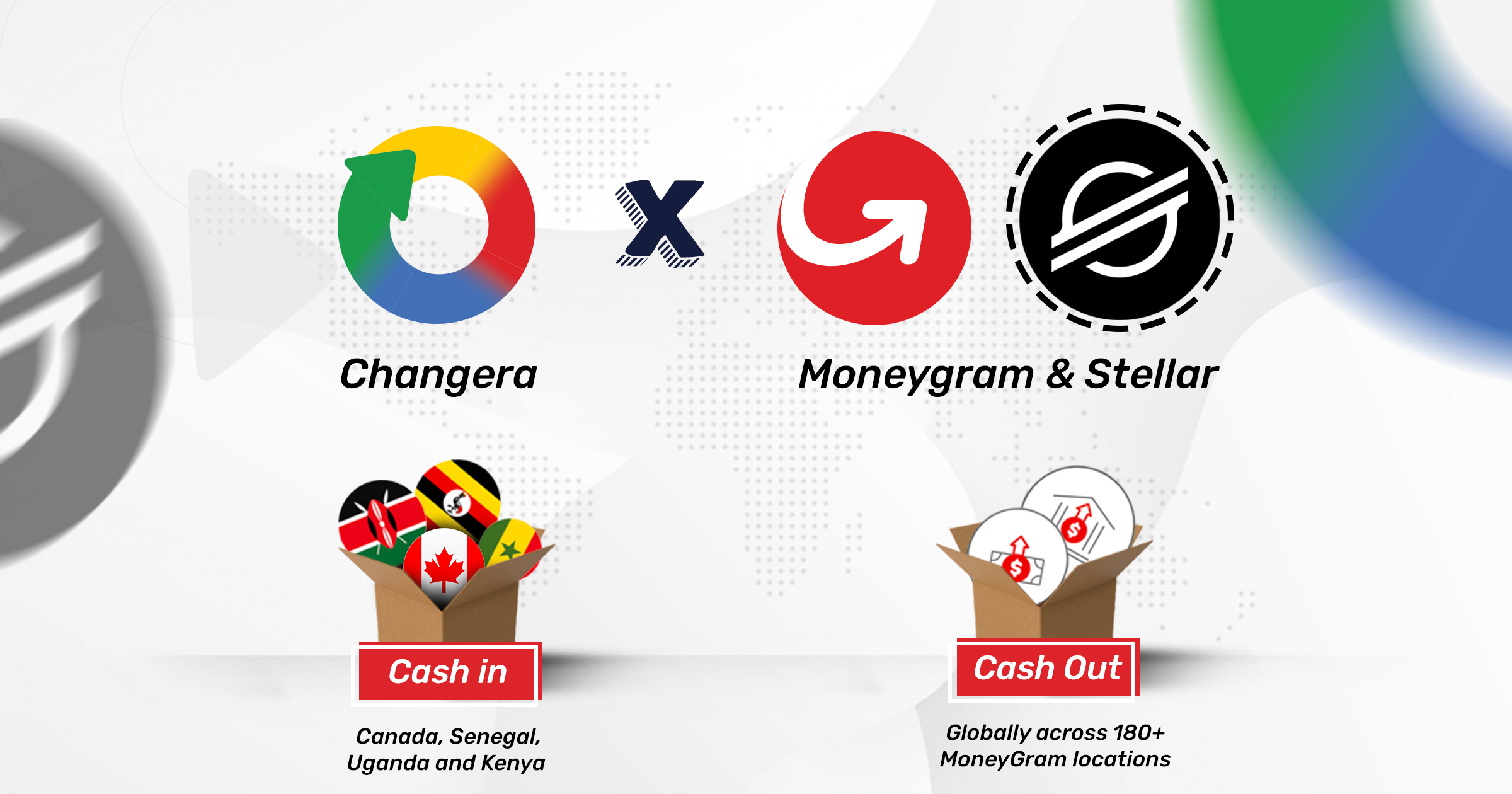
 This integration marks a significant milestone towards Changera`s mission to democratize cross-border payments access for people and businesses worldwide. Changera will now allow both cash-in services in Canada, Senegal, Uganda and Kenya and cash-out services using Circle’s stablecoin, USDC, via the Stellar blockchain network, at participating MoneyGram locations across 180+ countries.

Founded in 2021, Changera’s business objectives are rooted in enabling seamless and secure cross-border payments and remittances for its users. Since its inception, the fintech platform has delivered on its value proposition to allow businesses across Nigeria, Ghana, Kenya and Canada.

With this integration, Changera is taking a giant leap forward, expanding its reach worldwide as the first African-based custodial wallet collaborating with MoneyGram. Users in Canada, Senegal, Uganda and Kenya will enjoy reduced costs and faster transactions when cashing in at MoneyGram agents closest to their locations into their Changera Wallets, while withdrawals are available to existing and new customers globally.

Speaking on the integration, Ruth Iselema, the Chief Executive Officer of Changera said “The primary objective of this integration is to simplify the process of funding Changera wallets for users. Our solution is coming very timely because 1.4b people currently don’t have bank accounts globally. That`s approximately a quarter of the world’s population and 60% of adults worldwide work in the cash economy despite access to digital wallets. MoneyGram’s extensive network of agents will allow easier deposit and cash transfers in these regions and recipients will have unparalleled access to cash out their funds conveniently. This is the first collaboration of its kind between MoneyGram and a Fintech company in Africa, outside of traditional banking institutions. We’re proud to be pioneers of such.”

Expressing excitement about the integration, Umar Adamu, Chief Technology Officer at Changera said  “We are thrilled that our goal to enable businesses and individuals move money freely globally is coming to fruition through this integration with a global leader in cross-border money transfers and payment service MoneyGram. This collaboration marks a significant milestone for Changera as we expand our reach and enhance the user experience for our customers. We are revolutionising the way Africans engage with digital wallets, providing them with unparalleled convenience and accessibility as they on/off ramp with USDC over the Stellar network on our platform. It accentuates our commitment to fostering financial inclusion and empowering individuals throughout the continent. We are excited about the possibilities and look forward to transforming the financial landscape in Africa together.”

Direct cash deposits and withdrawals are a major step forward for Changera`s customers who can now access their funds swiftly and securely, without the limitations previously experienced. It further underscores Changera’s commitment to advancing financial inclusion for the excluded, unserved and underserved regions in Africa and ensuring equal access to the benefits of the digital economy.

By integrating MoneyGram’s trusted services, Changera is staying true to its mission to allow users to transact without limits, regardless of their geographic locations, thereby bridging the gap underserved by the traditional banking systems and offering individuals convenience, reliability, and security when it comes to digital wallet payments and remittance. The integration represents a significant milestone in the pursuit of financial inclusivity, reinforcing Changera’s position as a trailblazer in the African Fintech landscape.


About Changera

Changera is a venture-backed cross-border social payment company that allows businesses and individuals to transact and make payments globally.  Changera has been recognized as one of the fastest-growing fintech apps with users spread across Nigeria, Ghana, Kenya, and Canada.

With Changera, users access features such as local currency conversions,  virtual Dollar cards,  dollar, pound, and euro accounts to send and receive payments globally and hold their cash across several multi-currency wallets.

The fintech offers MasterCard and VISA-issued virtual & physical dollar cards that work on all local and international online/offline payment channels. The app is available for download on Appstore and Playstore. Follow @Changeraapp on all social media platforms.

M-Pesa Records Significant Milestone in Q2 Result, Grew Revenue by 34.4%

0

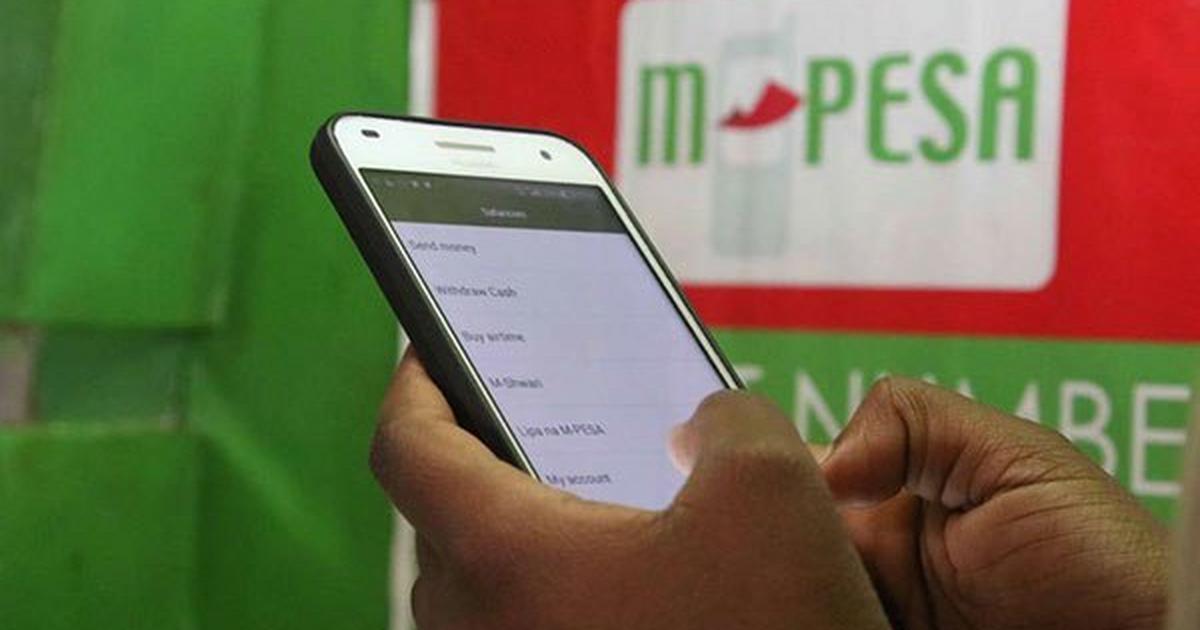
Kenyan mobile phone-based money transfer service, payments, and micro-financing service, M-pesa has recorded a significant increase in revenue in the second quarter (Q2) 2023, which saw it grow by 34.4% ($106 million).

The payment service which currently provides more than 51 million customers across seven countries in Africa, added 400,000 M-Pesa customers in the quarter, with active base penetration at 45.0%.

The lending and savings products played a pivotal role in the revenue growth, as nearly 60% of the subsidiary’s growth in the last quarter came from lending and savings.

Speaking on the significant milestone recorded, Vodacom Group CEO Shameel Joosub said,

“We facilitated loans of R4.3 billion in the quarter, more than doubling year-on-year and supported by products such as ‘Songesha’ in Tanzania and Txuna’ in Mozambique. M-Pesa transaction values processed on our platform over the last twelve months, including Safaricom, were $360.6 billion, up 5.8%”.

In his market update, Joosub said revenue from new services financial and digital services, fixed and internet of things accounts for almost one-fifth of the group’s total revenue and is well on track to reach the target contribution of 25% to 30% over the medium-term.

He added, “Financial services remains a clear strategic priority for the group and produced a 46.2% increase in revenue to surpass the R3 billion mark in a quarter for the first time. This was supported by a strong performance in South Africa and M-Pesa, which remains Africa’s largest mobile money platform by transaction value, and its new services in particular, such as loans and merchant services”.

M-Pesa’s growth has no doubt been remarkable, as it has continued to form strategic partnerships with big companies across the globe, as well as giant remittance companies.

In February this year, Pesa formed a strategic partnership with Amazon, to offer worldwide remittances.

Through its partnership with the e-commerce giant, M-pesa seeks to expand its business across Europe and could benefit from backup from Vodafone and Vodacom, Safaricom’s global shareholders to penetrate the European markets, and set itself apart from other traditional banks.

Also recall that last week, the payments giant company partnered with Terrapay, a leading Omnichannel payment solution for cross-border money transfers, to expand M-Pesa to Southeast Asian countries, Bangladesh and Pakistan.

This partnership will see Safaricom more than 30 million M-PESA mobile wallet holders in Kenya, gain access to TerraPay’s extensive network of 4.5 billion bank accounts and 1.5 billion mobile wallets, providing them with fast and affordable payment options worldwide.

Established on the 6th of March 2007 by Vodafone’s Kenyan associate, Safaricom, M-PESA is reportedly Africa’s leading mobile money service with more than 604,000 active agents operating across different African countries.

Study found that increased access to mobile money has reduced poverty in Kenya, particularly among female-headed households. M-Pesa has continued to revolutionize financial inclusion over a decade, by enabling millions of Kenyans to receive money from abroad, store and send money or make payments locally, and leapfrog traditional infrastructure.

By opening up M-PESA to the world, the Fintech giant aims to enable a world of opportunity for Kenyans by making it easy and seamless for them to connect with the world.

Understanding Twitter Creator’s Program

0

Twitter is one of the most popular social media platforms in the world, with over 300 million active users. It is also a powerful tool for creators, who can use it to share their content, engage with their audience, and monetize their work. But how does the Twitter Creators Program work, and what are the benefits and challenges of joining it?

The Twitter Creators Program is a program that allows eligible creators to earn money from their tweets and videos. The program has two main features: Super Follows and Ticketed Spaces.

Ticketed Spaces lets creators host live audio conversations with their followers and charge them for access. Creators can set their own price, from $1 to $999, and the number of tickets available, from 3 to 1000. They can also offer free tickets to some users, such as co-hosts or speakers. Like Super Follows, creators keep 97% of the revenue (minus fees) until they reach $50,000 in lifetime earnings, after which they keep 80%.

To join the Twitter Creators Program, creators need to meet some eligibility criteria, such as having at least 10,000 followers, being at least 18 years old, and complying with the Twitter rules. They also need to apply for the program through the Twitter app and wait for approval.

How Twitter makes revenue to Pay for Creators

Twitter’s main source of revenue is advertising. According to its 2022 annual report, Twitter generated $3.72 billion in advertising revenue, which accounted for 86% of its total revenue. Twitter sells two types of ads: promoted tweets and promoted accounts.

Promoted tweets are tweets that appear in users’ timelines, search results, or trends. They are labeled as “promoted” and can include text, images, videos, or polls. Promoted tweets are targeted based on users’ interests, location, device, and other factors. Advertisers pay for promoted tweets on a cost-per-engagement (CPE) basis, which means they only pay when a user interacts with the tweet, such as clicking, liking, retweeting, or replying.

Promoted accounts are accounts that appear in users’ “Who to follow” suggestions or search results. They are also labeled as “promoted” and can include a profile picture, name, handle, and bio. Promoted accounts are targeted based on users’ interests, followers, and other criteria. Advertisers pay for promoted accounts on a cost-per-follow (CPF) basis, which means they only pay when a user follows the account.

Twitter also makes revenue from data licensing and other sources. Data licensing is the sale of access to Twitter’s public data, such as tweets, trends, and user information. This data is used by third-party developers, researchers, marketers, and others for various purposes, such as analytics, insights, or content creation. Data licensing and other sources generated $561 million in revenue for Twitter in 2020, which accounted for 14% of its total revenue.

One of the ways that Twitter pays for its creators is through its Super Follows feature, which was launched in September 2021. Super Follows allows users to charge their followers a monthly fee for exclusive content, such as bonus tweets, newsletters, or live streams. Users can set their own price for Super Follows, ranging from $2.99 to $9.99 per month. Twitter takes a 3% cut of the first $50,000 that a user earns from Super Follows, and a 20% cut after that.

Another way that Twitter pays for its creators is through its Tip Jar feature, which was introduced in May 2021. Tip Jar allows users to send and receive tips from their followers using various payment platforms, such as PayPal, Venmo, or Cash App. Users can enable Tip Jar on their profile and add their preferred payment methods. Twitter does not take any commission from Tip Jar transactions.

Twitter is constantly exploring new ways to generate revenue and support its creators. Some of the recent initiatives that Twitter has announced or tested include: Twitter Blue: A subscription service that offers premium features to users, such as undo tweet, bookmark folders, reader mode, and custom app icons. Twitter Blue costs $7.99 per month in the US and is available in select countries.

Ticketed Spaces: A feature that allows users to host and join live audio conversations with tickets. Users can set their own price and number of tickets for their Spaces. Twitter takes a 20% cut of the ticket sales.

Professional Profiles: A feature that allows businesses and organizations to create profiles with more information and tools than regular profiles. Professional Profiles can include a verified badge, a shop module, an image gallery, and more.

Newsletter Integration: A feature that allows users to integrate their newsletters with their Twitter profile and tweets. Users can create newsletters using Revue, a newsletter platform that Twitter acquired in January 2021. Users can also subscribe to newsletters from other users within Twitter.

Twitter is a platform that enables people to share their thoughts, opinions, and stories with the world. It is also a platform that empowers creators to monetize their content and connect with their audience. By diversifying its revenue streams and investing in its creator ecosystem, Twitter aims to create more value for its users and advertisers.

The Twitter Creators Program offers many benefits for creators who want to grow their audience and income on the platform. It gives them more control over their content and pricing, and more ways to connect with their fans. It also helps them diversify their revenue streams and reduce their dependence on ads or sponsorships.

However, the program also has some challenges that creators need to be aware of. For example, they need to create high-quality and consistent content that attracts and retains subscribers and attendees. They also need to manage their community and expectations, and deal with potential issues such as trolls, refunds, or disputes. Moreover, they need to consider the tax implications of earning money from the program and report their income accordingly.

Twitter Creators Program is a promising opportunity for creators who want to leverage the power of Twitter to monetize their work. However, it also requires a lot of work and responsibility from them, and they need to weigh the pros and cons before joining it.

Key Characteristics of Bitcoin

0

Bitcoin is a decentralized digital currency that operates on a peer-to-peer network of computers. It was created in 2009 by an anonymous person or group using the pseudonym Satoshi Nakamoto. Bitcoin has several key characteristics that distinguish it from other forms of money and payment systems.

Limited supply

Unlike fiat currencies that can be issued by central banks at will, Bitcoin has a fixed supply of 21 million coins that will ever be created. This limit is enforced by the rules of the Bitcoin protocol, which require that new coins are generated at a predictable and decreasing rate. The last Bitcoin is expected to be mined around the year 2140. This scarcity makes Bitcoin a deflationary currency, meaning that its purchasing power tends to increase over time.

Cryptographic security

Bitcoin transactions are secured by cryptography, which is the science of encoding and decoding information. Each transaction is verified by a network of nodes (computers running the Bitcoin software) using a mathematical process called hashing. Hashing involves applying a function to a piece of data to produce a unique and fixed-length output, called a hash. Hashes are used to create digital signatures, which prove that the sender of a transaction has the right to spend the coins. They are also used to create proof-of-work, which is a way of ensuring that the nodes agree on the state of the Bitcoin ledger.

Transparency and Immutability

Bitcoin transactions are recorded in a public and distributed ledger, called the blockchain. The blockchain is a chain of blocks, each containing a batch of transactions and a reference to the previous block. The blockchain is maintained by the network of nodes, which validate new blocks and append them to the chain. Anyone can access and verify the blockchain, which ensures transparency and accountability. Once a transaction is confirmed by the network, it cannot be reversed or altered, which ensures immutability and finality.

Pseudonymity and privacy

Bitcoin users do not need to reveal their real identities or personal information to transact with each other. Instead, they use pseudonyms, called addresses, which are strings of alphanumeric characters derived from their public keys. Addresses are like account numbers that can receive and send bitcoins. Users can create as many addresses as they want and use different ones for different purposes. However, addresses are not completely anonymous, as they can be linked to each other by analyzing the transaction history on the blockchain. Users can enhance their privacy by using techniques such as mixing services, encryption, or anonymous networks.

Innovation and adaptability

Bitcoin is an open-source project that welcomes contributions from anyone who wants to improve it. The Bitcoin protocol is designed to be flexible and adaptable, allowing for upgrades and enhancements through a process called consensus. Consensus is achieved when a majority of nodes agree on a set of rules that govern the network. Consensus can be reached through various methods, such as soft forks, hard forks, or user-activated upgrades. These methods allow for innovation and experimentation, while preserving the core principles of Bitcoin.