DD
MM
YYYY

PAGES

DD
MM
YYYY

spot_img

PAGES

Home Blog Page 3985

High Court Orders Ecobank to Pay Honeywell N72.2bn in Damages

0

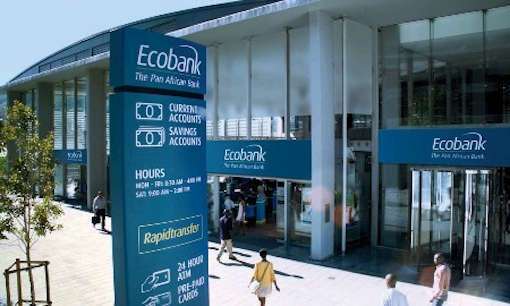
The Federal High Court sitting in Lagos has ordered Ecobank Nigeria Limited to pay Honeywell Flour Mills Plc. N72.2 billion in damages, ending the legal tussle that began in 2015 between the two entities.

The ruling was delivered on Tuesday by Justice Mohammed Liman, who held that Ecobank erred by obtaining an ex parte order to freeze Honeywell’s bank accounts and assets.

The ex parte order was issued to wind up the company and resolve its liabilities to the bank. In return for the ex parte order, Ecobank agreed to compensate Honeywell for any losses.

As a consequence, Honeywell Flour Mills faced significant disruptions in its operations as they were unable to fulfill commitments to stakeholders. The company encountered difficulties in processing letters, paying distributors, and suppliers, putting the livelihoods of over 2,000 employees at risk and severely impacting their reputation and business operations.

Struggling for weeks to run their business without access to their bank accounts, Honeywell Flour Mills eventually applied for the discharge of the orders. The court granted limited access to its accounts by varying the asset freezing ex-parte orders.

In March 2016, the Court of Appeal overturned the ex-parte orders, restoring Honeywell Flour Mills’ right to operate its accounts without restrictions. The Court of Appeal stated that Ecobank’s application to freeze the assets should not have been allowed to stand.

However, Ecobank was dissatisfied with the Court of Appeal’s ruling and took the matter to the Supreme Court. In July 2018, the Supreme Court upheld the judgment of the Court of Appeal.

Following the confirmation of the Court of Appeal’s decision by the Supreme Court, Honeywell Flour Mills demanded that Ecobank fulfill its promise to compensate for the loss incurred due to the illegitimate ex-parte decree. To recover damages, the corporation sued Ecobank for over N72 billion.

“The plaintiff was denied the use of funds in his account based on the ex parte order granted in favor of the defendant. It is therefore my firm view that the plaintiff (Honeywell) is entitled to the amount claimed… The argument of the defendant in his written address is therefore not acceptable as the contents of the document are the best evidence and they speak for themselves,” he said.

“The provisions of the winding up rules are very clear and unambiguous. The defendant cannot claim ignorance of this provision as ignorance of the law is no excuse and it is even more inexcusable if it is committed by a lawyer. The ex parte application was therefore made ultra vires.”

Justice Liman firmly concluded that the court was undeniably convinced that Ecobank had violated the law and caused substantial harm to Honeywell Flour Mills through the asset freeze. Despite Ecobank’s efforts to challenge the legality and technical aspects of the restrictions and seek the dismissal of the lawsuit, the court held its ground in favor of Honeywell Flour Mills.
The court found the defendant’s arguments to be unconvincing and granted all four reliefs requested by the plaintiff, resulting in a total award of N72.2 billion.

“The plaintiff was denied the use of funds in his account based on the ex parte order granted in favor of the defendant. It is therefore my firm view that the plaintiff (Honeywell),” the court ruled.

The legal dispute, which stemmed from a series of allegations and counterclaims between Honeywell Flour Mills and Ecobank, ended just in time for a spinoff dispute between the two entities.

Earlier this month, Ecobank had written First Bank Nigeria Holdings, seeking to stop an N87.8 billion share acquisition deal initiated by Honeywell. Ecobank claimed it’s being owed up to N13,507,052,417.99 by Honeywell Group and its owner Otudeko, and by purchasing the FNBH shares, the company is diverting funds that ought to be used for the repayment of the debt.

In its response, Honeywell described the letter as false. The flour mill through its lawyers said “No order of the court has awarded any judgments sum (as debt owed) at all in favor of Ecobank as a liability from our clients or any of the Honeywell companies.”

Ecobank said it would appeal the High Court’s ruling, which it described as “perverse and cannot stand the test of time.’

Rethink Your Strategy, Incorporate Modern Business Models

2

In geography, an oasis is an isolated area in a desert which provides habitat for animals and humans depending on the size. In business, we also have oases, the critical and important products or services in firms. In the accompanying video in this piece, I explain the One Oasis Strategy and the associated Double Play Strategy. These two strategies which I have written in Harvard Business Review will help you on your capital allocation as you fix market frictions.

Understanding that where your company makes money (the value capture in your business model) may not be evidently what people know that company for. Amazon is known for ecommerce but most of its profits come from AWS. Samsung is known for Galaxy series but most of its profits come from Samsung Electronics. But without the ecommerce, the AWS will not thrive, and without the Galaxy, the electronics will fade. That is the connection between the One Oasis and the Double Play Strategies.

Take an excursion with me, as I explain new business models of the 21st century. Rethink your #BusinessModel because it has more impact on your success than how hard working you may be. And technology has expired most commonly used business models. That is the reason why more than 80% of all the leading digital companies have incorporated one business model at scale. Hahaha. Let’s go

Nigeria’s Insurtech Startup MyCover Ai Secures $1.25 Million in Pre-Seed Funding

0

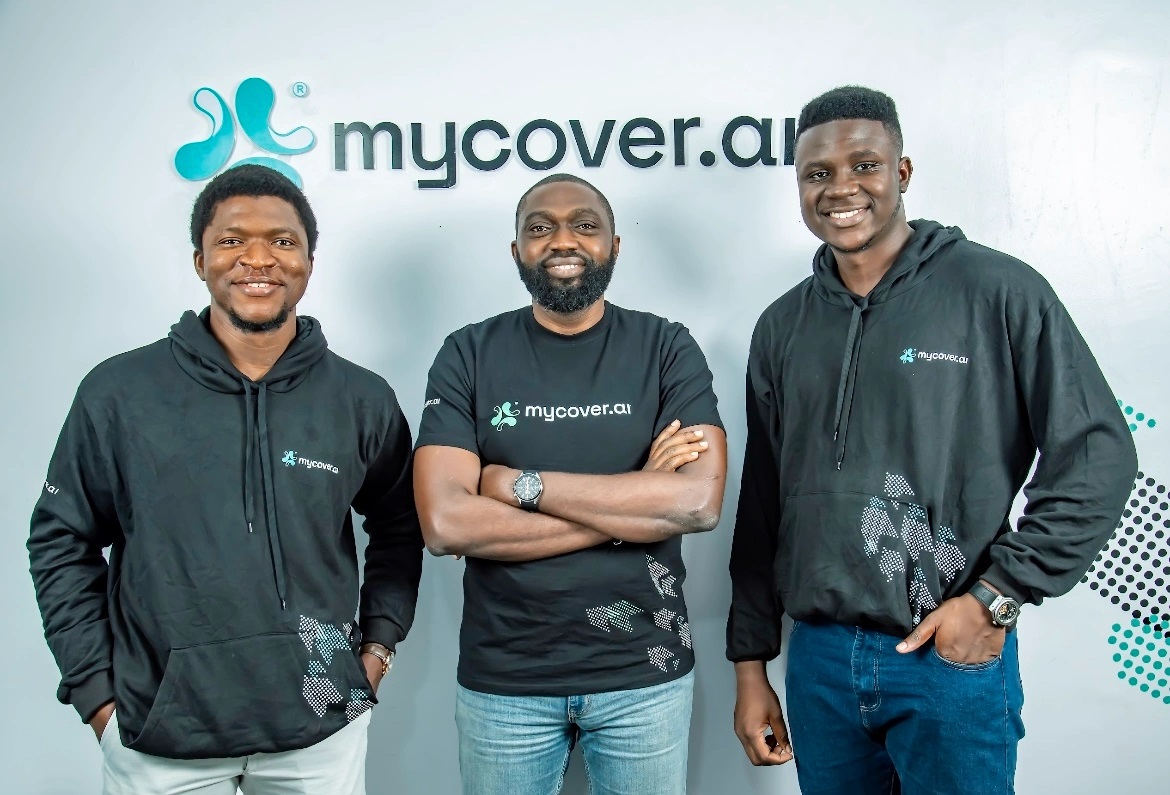
TechStars backed Nigeria’s Insurtech Startup MyCover.ai, which has secured $1.25 million in pre-seed funding.

The funding round was led by Pan-African venture capital fund Ventures Platform, with participation from founders factory and Techstars.

Insurtech disclosed that it will use the funds raised to bolster its in-house operations and tech talent, and also invest in its proprietary technology and strategically expand its operations into other African markets.

Speaking on the funds raised, CEO of MyCover.Ai Adebowale Banjo said,

“We are delighted to have the support of our new returning investors whose deep knowledge and extensive expertise in our region will help accelerate the attainment of our objectives. We are not looking to gain a significant share in the market only, we want to grow the size of the insurance pie by bringing more people into the fold through innovative products and better distribution.

There’s a problem with access and distribution as a whole, especially with the kind of products insurance companies were churning out and what people needed and could afford. We also found out that the handshake between insurance companies is not there, the visibility and the data required to improve on products and underwriting progressively was lacking.”

Founded in 2021, MyCover.ai is Africa’s leading insurance infrastructure platform that leverages artificial intelligence and machine learning to scale insurance penetration across the continent.

The startup is committed to addressing the problems that the African insurance market has, such as insufficient coverage, a lack of access, the high cost of insurance, and a subpar customer experience when dealing with insurance procedures.

MyCover.Ai tackles these issues by functioning across three key touchpoints: distribution, insurance claims, and underwriting and product creation, where the claims procedures are optimized for both insurance providers and end customers.

Through its retail channel MyCoverGenius, it provides product-focused and technology-driven policies targeted at deepening insurance adoption in Africa, creating unique and relevant products in partnership with leading insurance companies.

The company offers Over 30 personalized insurance products through an open insurance API that integrates with top insurance providers like Leadway Insurance, Hygeia, Sovereign Trust, Custodian, Tangerine Allianz, and AlICO Insurance. This open insurance API enables other companies and innovators to embed these insurance products into their platforms.

MyCover.Ai claims to have recorded over $1 million in gross written premiums from partnerships with 30 insurance distributors nationwide since its launch. The startup is on a mission to reshape the insurance landscape in Nigeria and address several pain points in Africa’s insurance market. 

Press Release

MyCover.ai, the insurtech startup building Africa’s digital insurance infrastructure, has announced the close of a $1.25 million pre-seed funding round, today, led by Ventures Platform. The round included participation from Founders Factory Africa and TechStars, who are making a follow-on investment after the startup’s participation in its 2022 Toronto Accelerator program. MyCover.ai will use this capital injection to bolster its in-house operations and tech talent, invest heavily in its proprietary technology and strategically expand its operations into other African markets.

Founded in 2021, MyCover.ai is focused on addressing the pain points that exist in the African insurance market, such as the lack of access, inadequate coverage, the unaffordability of insurance products and the poor customer experience surrounding insurance processes. By operating across three essential touchpoints, the company addresses these problems: underwriting and product development, distribution, and insurance claims, where the claims processes are streamlined for insurance companies and the end-users. The company provides an open insurance API that integrates with leading insurance companies, such as Hygeia, Leadway, Sovereign Trust, AIICO Insurance and Allianz, to offer over 30 personalised insurance products, allowing other businesses and innovators to embed these insurance products into their platforms.

MyCover.ai’s collaboration with insurance companies ensures that their products are efficiently distributed through the API, offering benefits such as faster and cost-effective distribution, access to customer utilisation data, simplified onboarding and policy management processes, access to new customer segments, improved claims processes, and opportunities to develop new products. For startups and businesses looking to embed insurance into their offerings, MyCover.ai provides easy integration through its API and SDK, enabling seamless insurance offerings to customers and, ultimately, revenue growth.

The insurtech company’s mission is to provide financial security to Africans by improving access to insurance products. Nigerians, for example, are exposed to a wide range of risks and vulnerabilities on a daily basis. From health challenges to asset loss and damage and the potential loss of livelihood, the threats faced are multifaceted. According to the National Insurance Commission (NAICOM), only 0.5% of Nigeria’s population is insured. The majority of the population have never purchased insurance policies and resort to out-of-pocket payments in times of loss – if they can even afford it. This dire situation leaves individuals vulnerable and struggling to recover from unfavourable incidents, often plunging them into abject poverty. In the wider African market, over half of the countries in the continent have insurance penetration rates below 2%. South Africa, however, remains a reference point of what can be achieved and exceeded on the continent, with an insurance penetration rate of 16.99%. MyCover.ai’s suite of products have been developed to close this gap and solve the previously insurmountable problem of insurance distribution in Nigeria and the rest of Africa.

Since its launch, the technology-enabled insurance platform has emerged as a leading provider of innovative insurance solutions. With over $1M in Gross Written Premiums and strong partnerships with leading insurance providers in Nigeria, MyCover.ai has established itself as a market leader. MyCover.ai’s powerful API integration facilitates seamless collaboration with external partners, empowering businesses from various sectors to effortlessly integrate insurance into their products and services, with the inclusion of a white label option, without incurring any additional risks or costs. These businesses are presented with the opportunity to offer insurance policies as add-ons on top of their existing core products.

MyCover.ai’s extensive range of products have been used by businesses across various sectors and verticals, such as logistics and mobility/ride-hailing, e-commerce, BNPL platforms, fintechs and more. For instance, a third Party Logistics company can offer on-demand Goods In Transit Coverage for goods moved on its fleet, as well as provide health insurance and personal accident cover to its riders. All claims and insurance processes can be conveniently managed in a smooth and timely manner on its platform.

Adding to MyCover.ai’s all-encompassing range of services and support, is MyCoverGenius, the first and only B2B platform in Nigeria, which offers the opportunity for clients to directly purchase insurance products from the company. This novel platform addresses a common oversight by legacy insurance companies that often overlook the entrepreneurs and SMEs present in the Total Addressable Market. With MyCoverGenius, business owners are able to conveniently and effectively cover their staff and assets, scaling up or down in relation to the growth in business operations. The company also provides low code tools for offline stores as well as its proprietary Software Developer Kit (SDK), where partners can easily distribute insurance products and elevate customer experiences with little or no tech burden on their business.

Commenting on the raise, MyCover.ai’s CEO and co-founder Adebowale Banjo said, “The current insurance landscape is plagued by fragmentation and inefficiencies that hinder distribution and adoption.  Affordable, accessible, and frictionless insurance remains a significant challenge for many customers, and we are proud to be at the forefront of change, constructing a robust infrastructure that addresses these critical issues head-on. We are building the rails that will power the growth and adoption of insurance across Africa, and we are delighted to have the support of our new and returning investors whose deep knowledge and extensive expertise in our region will help accelerate the attainment of our objectives.”

Dotun Olowoporoku, General Partner at Ventures Platform, commented, “Adebowale and his team are reshaping the insurance landscape in Nigeria and have their eyes set on the wider African market, by building the much-needed insurance infrastructure on the continent. Unlike other insurtech solutions that focus on specific areas of insurance penetration among the underserved, MyCover.ai takes a collaborative approach and offers a suite of services that cover the entire spectrum of these challenges.  We are confident in their vision and operational pedigree, and we are excited to support their growth as they continue to empower businesses and individuals through scalable and innovative insurance solutions”.

The African insurance market is on an upward trajectory, with a size that soared to $81.6B in 2022. The market size is projected to rise to $123.8B by 2028, exhibiting a CAGR of 7.19% between 2022 – 2028. Traditional insurers have, however, struggled to extend their services to the vast population, with insurance penetration remaining below par. However, with the growth of a young population, the rise of technology, including widespread smartphone adoption and affordable internet access, coupled with global opportunities and the exponential growth of fintech solutions, MyCover.ai emerges as a catalyst for change.

US Lawmakers urge SEC to Reconsider its Approach to Crypto Regulation

0

In a letter sent to the Securities and Exchange Commission (SEC) on July 18, 2023, a bipartisan group of 12 US lawmakers expressed their concerns about the agency’s stance on crypto regulation and urged it to adopt a more balanced and innovation-friendly approach.

The letter, which was signed by representatives from both the House Financial Services Committee and the House Energy and Commerce Committee, highlighted the potential benefits of crypto innovation for the US economy and national security, as well as the risks of falling behind other countries that are more supportive of the emerging industry.

The lawmakers argued that the SEC’s current approach, which relies on applying existing securities laws to crypto assets, is inadequate and inconsistent, creating uncertainty and confusion for market participants and hindering innovation. They cited several examples of the SEC’s actions that they deemed problematic, such as:

The SEC’s lawsuit against Ripple Labs, which alleges that the company’s XRP token is an unregistered security, despite the fact that other regulators, such as the Department of Justice and the Financial Crimes Enforcement Network, have treated XRP as a currency.

The SEC’s delay in approving a Bitcoin exchange-traded fund (ETF), which has resulted in US investors missing out on the opportunity to access the crypto market in a regulated and transparent manner, while Canada and other countries have already approved several Bitcoin ETFs.

The SEC’s lack of clear guidance on how to determine whether a crypto asset is a security or not, which has led to inconsistent enforcement actions and deterred many projects from launching or operating in the US.

The SEC’s refusal to engage with the crypto industry and provide regulatory clarity, despite repeated requests from lawmakers, industry leaders, and investors. The letter urged the SEC to reconsider its approach and adopt a more constructive and collaborative attitude towards crypto regulation. The lawmakers suggested that the SEC should:

Work with other regulators, such as the Commodity Futures Trading Commission (CFTC) and the Office of the Comptroller of the Currency (OCC), to establish a coordinated and coherent regulatory framework for crypto assets. Provide clear and timely guidance on how to classify and regulate different types of crypto assets, based on their functionality and characteristics, rather than applying a one-size-fits-all approach.

Foster innovation and competition in the crypto space by creating a safe harbor or sandbox program for emerging projects that comply with certain standards and best practices. Engage with the crypto industry and stakeholders in a constructive and transparent manner, by holding regular meetings, hearings, workshops, and consultations.

The letter concluded by stating that the lawmakers are ready to work with the SEC and other regulators to ensure that the US remains a global leader in crypto innovation, while protecting investors and consumers. They also expressed their hope that the SEC will respond to their letter within 30 days and provide an update on its plans and actions regarding crypto regulation.

How Fintech Can Help Drive Revenue Generation for the New Nigerian Government

0
  • By Samson G. SIMON, Ph.D., CPLP
  • Head, Research & Hubs Coordination,  @Opolo Global Innovation Limited, Ikoyi-Lagos.

INTRODUCTION & BACKGROUND

Nigeria’s fiscal mess will definitely require the new Tinubu’s government to take urgent and far-reaching measures to fix the problem. For it is unsustainable to continue on the particular trajectory it met when it came to power few weeks ago. Opinions seem divided: One side of the divide; populated mainly by the led as well as professional economists; thinks Nigeria has a debt problem. However, the other side of the divide; where you have the fiscal authorities, most especially the crop in charge of the policy for the last eight years; believes that Nigeria’s problem is a revenue one, not a debt one.

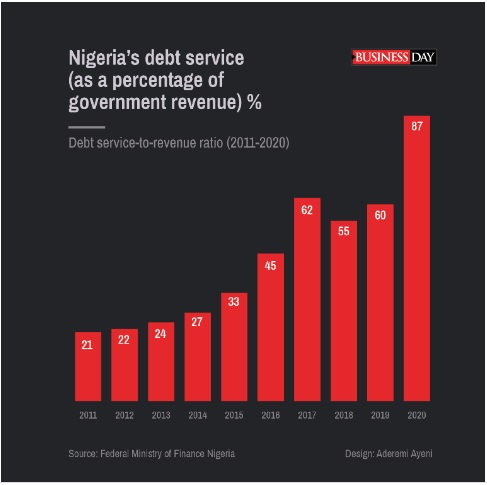
On the whole, Nigeria’s problem is clearly both. It has over N12.1 trillion in fiscal deficits in the 2023 budget alone, with overall national debt projected at a whopping N77 trillion when CBN’s Ways and Means of N23 trillion is securitized by the end of the last dispensation. The CBN advances attract N1.8 trillion yearly in interest payments, and in 2022, a whopping 81% of revenue was used to service debts. Debt service to revenue ratio even exceeded 100% in the first quarter of 2022. Similarly, as it is projected now by the World Bank to be in the region of 102. 3% for the current year.  Furthermore, the World Bank is projecting the same ratio to double what was experienced in 2022 to be 160% by 2027. Hence, the problem is both revenue and debt.

The new administration should deploy all tools to ensure fiscal sustainability by broadening the tax base and reducing leakages and the unnecessary costs of tax administration. Urgent reforms are needed to avert the looming danger as Nigeria approaches a fiscal cliff, if it is not there already.

When the public sector embarks on borrowing to fund its budget that will crowd out the private sector.  This is possible as a result of increase in the costs of borrowing. This ultimately reduces demand for borrowing hence spending by corporates and individuals.

More so, if a government is raking in huge revenues, there may be no need to borrow as it has a surfeit of resources to meet its needs. And to boost this income, the authorities can deploy technology. Financial Technology (FinTech) can be maximised to increase government revenue. The new government can use FinTech to set up a system that helps it in formulating, implementing, and executing its fiscal policy, particularly for those ones around non-tax collections, taxes and even spending in an efficient way.  

TYPES OF FINTECH

There are three types of FinTech. One type is mobile money; an example can be found in Kenya using M-Pesa by Safaricom etc. M-Pesa accounts for a whopping 85% of non-cash transactions. Mobile money is different from mobile banking. While the former can be done even without a bank account, the latter has to do with e-transactions using bank accounts.  The second type of FinTech is an internet-based payment system (e-payment). This type is better than mobile money because it can transact much larger amounts than what mobile money will normally allow. This is so because the internet and digitisation not being available to mobile money. Third, digital money such as CBDC (Central Bank Digital Currency), e-Money, and stablecoins are assets that have the properties of traditional money like cash and bank deposits.

FinTech can be deployed by the government to boost financial inclusion which the monetary authority has tried so far but does not seem to be making much headway. FinTech helps financial inclusion for the unbanked or underserved communities. When the financial exclusion of people is reduced through the deployment of financial technology, this will widen the tax net and the tax base hence improving government revenue. The authorities can rake in non-tax revenue for royalties on the extractive industries, dividends from Government Owned Enterprises (GOE) payments for government delivery of goods and services such as passport issuance, port fees, fines, and penalties, health, and education. FinTech will help accelerate the financial inclusion rate which at present is at a pathetic 0.09% per year while almost 40 million Nigerians remain excluded from the financial system. Hence, including them will boost the economy and bring about more revenue for the government.

CBDC will help improve efficiency, access and cut costs for transactions; help expand tax base, combat illegal activities, and optimise government disbursement of its benefits.

HOW FINTECH CAN HELP THE GOVERNMENT

Setting up tax collection platforms just like India did in creating a portal for non-tax revenue where all fees, fines, and charges are paid. No cash transactions should be encouraged, as making all payments cashless will cut down to almost nothing the chance of money being stolen or any other leakages. It will also make the population have confidence in the process and the institutions rendering the service or providing the good. Rwanda and the Dominican Republic equally have deployed FinTech to reduce waste and ensure any income meant for the government gets to the government unfailingly. Tanzania too has deployed technology in its public finances to improve and modernise tax collection. Brazil too with its PagTousoro has helped it improve its non-tax income. Senegal’s M-Tax (Mobile Tax) uses SMS and USSD for businesses to pay taxes. It has digitised tax payments hence making it more efficient, transparent, and seamless. FinTech can help reduce the rate of tax evasion which is one of the major problems for the taxman.

Other benefits accrue as a result of bringing in financial technology. The deployment of Financial Technology (FinTech) helps the government to substantially increase the speed of its transactions such as making and receiving payments. It helps facilitate government interactions with citizens in areas like Governments-to-People, People-to-Governments, Governments-to-Businesses, and Businesses-to-Government.   It will help in the collection of tax and non-tax revenue as well as debt management. Generally strengthening public finance management. FinTech will help strengthen accountability, make reliable audit trails, enhance financial data collection, and improve budget planning. When tax collection is digitised this will lead to: better compliance hence higher revenue; automation leading to low costs of tax administration; greater accountability and transparency in tax administration; broader tax base as it will reduce Nigeria’s informal economy; and an abundance of data for effective decision-making.   

NIGERIA’S DEBT SERVICE TO REVENUE RATIO

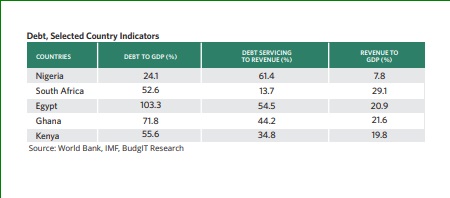
Nigeria’s debt-to-GDP ratio is relatively low. As the table shows, Nigeria’s public debt is less than a quarter of GDP which is clearly below the DMO’s self-imposed limit of 40%. Way below the IMF/World Bank’s recommendation of 55% for countries within Nigeria’s peer group. While the Debt-to-GDP ratio is clearly not a problem, debt servicing to revenue ratio as well as revenue to GDP are clearly huge problems. For example on the table above, Nigeria has the least percentage points for revenue to GDP. This means it is the worst performer amongst this set of its African peers like Egypt, South Africa, Ghana and Kenya. Nigeria has a value below 8% while South Africa has almost four times to arrive at 29%. For the debt service to revenue ratio relative to other African nations; Nigeria is at 61.4% almost twice Kenya’s level at 34% and almost 5 times South Africa’s which at 13.7% is relatively extremely measly. This shows Nigeria uses 61 cents of any currency 1 dollar to service debts.  As if the numbers are not bad enough they even got worse at over 80% last year.

As shown above, Nigeria’s debt service costs as a percentage of its revenues have not only been climbing but also spiking in recent times. Meaning, it’s in fiscal distress with less and less fiscal space. This calls for drastic changes to stop the slide in its tracks. And financial technology can help with a lot of these challenges.

CBN’S WAYS & MEANS AS WELL AS NIGERIA’S DEBT STOCK

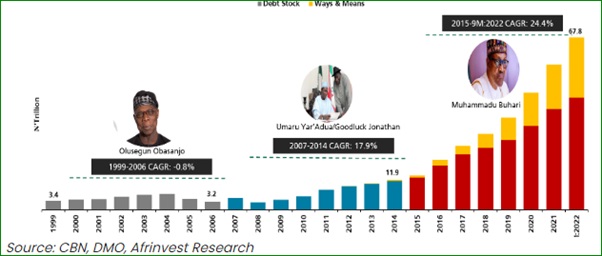
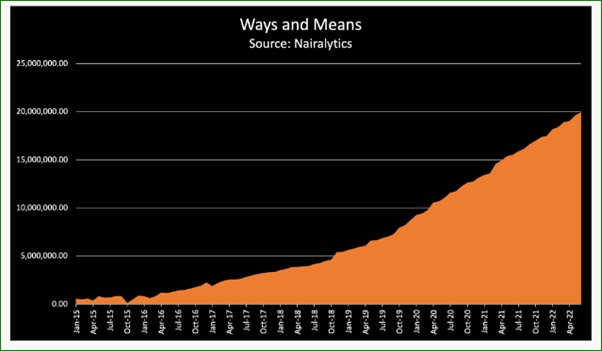
While the CBN ACT 2007 allows the government to take out loan from the monetary authority to solve urgent financial difficulties, however, this has been obviously abused by the current government. The tables below show how the current dispensation has come to rely too much on the CBN for the financing of its activities.

The law says only 5% of previous year’s revenues should be owed by the government at any particular time. Nonetheless, the government has not only disregarded that and now owes several folds of the previous year’s revenues. The law also says, if the government doesn’t pay back, the powers by the CBN to lend to it cannot be  exercisable. The CBN still lends to the government. Thirdly, the law says these borrowings from the CBN should not be securitised. Nevertheless, the government has done just that!

CONCLUSION

While deploying financial technology (Fintech) can help the new government plug leakages; raise more revenue; spend better; and provide the dividends of democracy in great measure. This does not mean that it is all sunshine as challenges too abound. The privacy of the participants concerned as well as the danger of cyber crimes can be daunting.