DD
MM
YYYY

PAGES

DD
MM
YYYY

spot_img

PAGES

Home Blog Page 3987

Kenyan Logistics Startup Sendy, Shuts Down Operations, Explores Sales of Assets

0

Kenya’s end-to-end logistics solution that enables thousands of businesses to move any type of goods, Sendy, is shutting down operations and is reportedly exploring the sale of its assets.

Announcing the sale of the startup, Sendy co-founder Meshack Alloys said,

“We are in the middle of an acquisition process. So yes, Sendy is being acquired. We will issue a formal joint statement in two weeks or so. In the meantime, we are unable to comment on further details at this time”.

Several sources disclosed that the logistics startup ran out of funds two months ago and had been scrambling to cut costs for the past year to remain afloat. Last July, it announced a 10% cut in its workforce, which the company’s CEO noted was in response to the current realities impacting tech companies globally.

Sendy was forced to restructure on a funding drought that hit Kenyan start-ups, as developed economies raised the cost of lending. Since then, the company’s workforce has been pruned further with more cost-cutting measures. That funding drought has come as markets change even in places like the US where banks are experiencing stress due to many factors..

Moody’s Investors Service warned late Monday that it may downgrade six big banks, including U.S. Bancorp, Bank of New York Mellon, State Street and Truist Financial, and lowered its credit ratings for 10 small and midsize U.S. lenders. The move comes amid growing pressures on the finance industry following the recent collapse of Silicon Valley Bank and the ensuing crisis of confidence it triggered. As interest rates rise, banks continue to grapple with higher funding costs, potential regulatory capital weaknesses and risks linked to commercial real estate loans, Moody’s said.

Last October, the Kenyan startup laid off 54 employees and wound down its supply service.  In late 2022, Sendy secured an undisclosed financial support from MOL PLUS, the venture capital division of Japanese transport firm Mitsui O.S.K Lines, Ltd.

This funding, seemingly acting as a rescue fund, aimed to stabilize Sendy, while the logistics startup strategized its future moves.

Meanwhile, in February this year, the startup terminated its on-the-ground operations in Nigeria to find the right market.

The company which started operations as a delivery service before spinning off e-commerce and retail supply platforms, shut down the latter business line to focus on sellers placing goods in its warehouses for marketing and delivery.

Sendy said it wanted to focus on fulfillment centers and transport businesses to leverage on uptake of digital commerce.

Since its inception, the startup has raised $26.5 million in disclosed funding from several investors, which include, Toyota Tsusho, Atlantica Ventures, VestedWorld, Keppel Capital, Enza Capital, AAICA Investment Pte Ltd, Sunu Capital, and Goodwill Investments.

Founded in 2014 by Meshack Alloys, Evanson Biwott, and Don Okoth, Sendy’s platform connects individuals and businesses with delivery drivers who use motorcycles, tuk-tuks, and vans to deliver packages and goods across various locations.

Sendy’s model is often compared to ride-sharing services like Uber, but instead of transporting people, the company focuses on delivering goods. The company makes use of a  a mobile app, and a web platform to facilitate the process of requesting deliveries, tracking them in real-time, and handling payments.

It aimed to address challenges related to inefficient logistics and transportation in many African cities. By providing a technology-driven solution, Sendy aimed to streamline and optimize the delivery process, helping businesses and individuals move goods more effectively.

ECOWAS Announces New Sanctions Against Niger As the Junta Forms New Govt

0
Empty white clear flag waving against clean blue sky, close up, isolated with clipping path mask alpha channel transparency

The Economic Community of West Africa States (ECOWAS) has imposed fresh sanctions on Niger Republic, following the expiration of the 7-day deadline issued to the military junta by the bloc.

The fresh sanctions announced by the presidential spokesperson Njuri Ngeale, come before the August 10 meeting scheduled by ECOWAS to deliberate on the next line of action to take.

Following the coup in Niger Republic, ECOWAS, backed by Western leaders issued a 7-day ultimatum to the junta to reinstate President Mohamed Bazoum or risk sanctions with potential military action.

However, the coup plotters disregarded ECOWAS’ warnings and asserted their determination to oppose any external interference within their borders.

They also cut diplomatic relations with Nigeria, Togo, France, and the United States, while imposing an indefinite closure of Nigerien airspace. Their defiance amid overwhelming antiwar calls forced ECOWAS to seek a new approach.

Ngeale, said Tuesday while addressing State House correspondents that more sanctions had been imposed on the individuals and entities relating to the military junta. According to him, the new sanctions are being imposed through the Central Bank of Nigeria.

He said without giving details: “I can also report that following the expiration of the deadline of the ultimatum and standing on the preexisting consensus position of financial sanctions meted out on the military junta in Niger Republic by the bloc of ECOWAS Heads of State, His Excellency, President Bola Ahmed Tinubu has ordered an additional sway of financial sanctions through the Central Bank of Nigeria (CBN) on entities and individuals related to or involved with the military junta in Niger Republic.”

“The ECOWAS mandate and ultimatum is not a Nigerian ultimatum. It is not a Nigerian mandate and the office of His Excellency President Bola Ahmed Tinubu, also serving as the chairman of ECOWAS seeks to emphasize this point. That is due to certain domestic and international media coverage, tending toward personalization of the ECOWAS sub-regional position to his Person and to our nation individually.

“It is because of this that Mr. President has deemed it necessary to state unequivocally that the mandate and ultimatum by issued ECOWAS is that of ECOWAS’s position. While His Excellency, President Bola Ahmed Tinubu has assumed the ECOWAS chairmanship, the position of ECOWAS conveys the consensus position of member heads of state. And a coup will not occur in one’s backyard, without one being particularly aware of it.

“The president in recent days, particularly following the expiration of the ultimatum given by ECOWAS has widened consultations internationally but most especially domestically, including interfaces with state governors in Nigeria, who govern states bordering Niger Republic on the various fallouts and outcomes of the unfortunate situation that has unfolded in Niger Republic.

“But President Bola Ahmed Tinubu, wishes to emphasize to this distinguished audience that the response of ECOWAS to the military coup in Niger has been and will remain devoid of ethnic and religious sentiments and considerations.

“The regional bloc is made up of all sub regional ethnic groups, religious groups, and all other forms of human diversity. And the response of ECOWAS, therefore, represents all of these groups, and not any of these groups individually.”

Meanwhile, the junta, ignoring the drum of sanctions, is constituting a new government. A former Minister of Economy and Finance Ali Mahaman Lamine Zeine has been named Niger Republic‘s new Prime Minister.

He was officially appointed by the self-proclaimed Head of State, Abdourahmane Tiani, according to an announcement made by a spokesperson for the military junta via a late-night television statement on Monday.

The freshly appointed Prime Minister previously held a position in the cabinet of then-President Mamadou Tandja, who was ousted by the nation’s military in 2010.

Zeine assumes the role, succeeding Mahamadou Ouhoumoudou, who happened to be in Europe during the coup.

In addition, the junta has designated Amadou Didilli to lead the nation’s High Authority for Peace Consolidation (HACP), while Abou Tague Mahamadou has been selected as the inspector-general overseeing the army and national gendarmerie.

Ibro Amadou Bachirou takes on the role of the Chief of Staff for the junta leader’s private office, and Habibou Assoumane is appointed as the commander of the presidential guard.

Tiani, until his new role as Niger’s head of state, had led the presidential guard which had held democratically elected President Mohamed Bazoum hostage since July 26.

WhatsApp Video Goes After Zoom with Screen Share – But Zoom Should Be Fine!

1

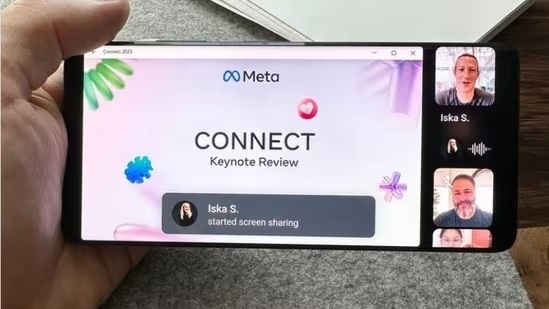
WhatsApp is coming after Zoom: ”WhatsApp today introduced screen sharing as its latest feature to enhance the video calling experience on its platform — taking on traditional video conferencing apps including Microsoft Meet, Google Meet, and Zoom as well as Apple’s FaceTime.” 

Yet, I do not think this is significant as I am not sure I have used WhatsApp video in the last 6 months! So, Zoom should be fine. But what Zoom may not be fine is that WhatsApp Video may not be great to be successful.  Yes, provided that it keeps WhatsApp users to stay within the ecosystem, that will do.

This is the new strategy in bigtech: you try to offer everything so that you can keep your customers, with the understanding that the most important product feature is that many people use it. Period, that is the job to be done

I used to use Dropbox but when Microsoft provided OneDrive which is not as great as Dropbox, but with its core features being bundled with Microsoft 365, I had to cancel Dropbox for Microsoft. WhatsApp does not want to lose any business subscriber because of screen share, and today it has that as part of the product!

In the industrial economy, they taught us core competency. In the age of bigtech, it is ALL competency because everyone is doing everything, if not now, wait for tomorrow.

The new feature, announced this morning by Meta CEO Mark Zuckerberg through a Facebook post and on his Instagram channel, will allow you to share your documents, photos, and even your shopping cart with contacts available on video calls.

First released for some beta testers on Android in late May, screen sharing on WhatsApp can be accessed by tapping or clicking the ‘Share’ icon. Users can choose between sharing a specific app or their entire screen. This is similar to how screen sharing works on typical video conferencing platforms like Google Meet and Zoom.

https://twitter.com/elviscumez/status/1689002707384930306

Comment on Feed

Comment 1: As technology advances and companies expand their offerings, the concept of core competency has shifted. In the age of big tech, it’s about all-encompassing competency, where companies excel in multiple areas and cater to diverse user needs. Adaptability is crucial in an environment where technological advancements and user preferences change rapidly.

Comment 2: I think this new development by Mark will eat into Zoom’s Obtainable and addressable market. Small groups would no longer have to patronize Zoom with the desire to evade Zoom’s 40mins access limit.

The fact that we have WhatsApp Web should give Zoom more worries. It would become a game changer if this innovation is made totally free, and like Google Meet, introduce premium access either in number of participants or duration.

Recording, storage, security etc would become some crucial elements that WhatsApp must consider if it desires to disrupt the market.

He who has the data wins always!

Comment 3: I’ve been using the screen share feature on my mobile for about a month now and I don’t think it’s such a big deal. I mean, what are the chances that I need to show someone my screen while on a video call with them.
However, I think the feature can make a reasonable impact on their desktop version.

Comment 4: “Interesting perspective, Ndubuisi! While WhatsApp may be targeting Zoom, it’s true that customer habits play a crucial role in adoption. All competency is indeed the hallmark in the age of big tech. Can’t wait to see how this feature develops.”

L1 Digital Zurich based company Raises $152M for Second Crypto Venture Capital Fund

0
Fund, money cash dollar

L1 Digital, a Zurich-based company that specializes in investing in blockchain and crypto projects, has announced the closing of its second venture capital fund, raising $152 million from institutional and private investors. The fund will focus on supporting early-stage startups that are building innovative solutions in the decentralized finance (DeFi) and Web3 sectors.

The company, which was founded in 2017 by former UBS executives, has already invested in some of the leading projects in the crypto space, such as Aave, Compound, MakerDAO, Uniswap, and 1inch. L1 Digital aims to provide not only capital, but also strategic guidance, industry connections, and regulatory expertise to its portfolio companies.

L1 Digital’s second fund is one of the largest crypto-focused venture funds in Europe, reflecting the growing interest and adoption of digital assets and blockchain technology in the region. According to a recent report by PwC, Europe accounted for 40% of the global crypto fundraising and merger and acquisition activity in 2020.

“We are very grateful for the trust and support from our investors, who share our vision of a more open, transparent, and efficient financial system powered by blockchain and crypto,” said Philipp Cottier, founder and chairman of L1 Digital. “We are excited to partner with some of the most talented and visionary entrepreneurs in the industry and help them scale their businesses globally.”

L1 Digital is also planning to launch a third fund later this year, which will target later-stage crypto companies with proven traction and growth potential. The company expects to raise up to $500 million for this fund, which will be open to institutional investors only. L1 Digital believes crypto is the next major wave of innovation and disruption on the internet and finance sectors. He said that L1 Digital’s mission is to support the best entrepreneurs who are creating the future of money and the web.

“We are very excited to launch our second fund and continue to partner with the most talented founders in the crypto space. We have seen tremendous growth and innovation in the crypto ecosystem in the past few years, and we are confident that this trend will continue and accelerate. We are grateful for the trust and support from our investors and portfolio companies, and we look forward to working with them to build the next generation of crypto companies’’.

L1 Digital’s second fund will focus on seed and Series A investments, with an average check size of $2 million to $5 million. The firm will also provide strategic guidance, operational support, and network access to its portfolio companies. L1 Digital’s current portfolio includes some of the leading projects in DeFi, NFTs, Web3, and infrastructure, such as Aave, Audius, Axie Infinity, Balancer, Blockdaemon, Dapper Labs, dYdX, Immutable X, Instadapp, Kyber Network, Nansen, OpenSea, Polygon, Solana, The Graph, Zapper, and many more.

Generative Art Platform FXHash Raises $5 Million in Seed Funding

FXHash, a platform that allows users to create and sell generative art using blockchain technology, has announced that it has raised $5 million in a seed funding round led by Placeholder, a venture capital firm that focuses on decentralized networks. Other investors include Fabric Ventures, 1kx, Divergence Ventures, Tezos, Tane Labs, USV, Bright Oppurtunites, PUNKDAO and several prominent artists and collectors in the crypto art space.

Generative art is a form of art that is created by an algorithm or a set of rules, often involving randomness, noise, or data. The resulting artworks are unique and unpredictable, reflecting the creativity and expression of the artist and the code. FXHash enables artists to create generative art using a web-based editor that supports various programming languages, such as JavaScript, Python, and GLSL. The platform also allows artists to mint their artworks as non-fungible tokens (NFTs) on the Ethereum blockchain and sell them on FXHash’s marketplace or other NFT platforms.

FXHash’s vision is to democratize generative art and make it accessible to anyone, regardless of their coding skills or artistic background. The platform aims to foster a community of artists and collectors who share a passion for generative art and its potential to explore new forms of expression and creativity. FXHash also plans to use the seed funding to expand its team, develop new features and tools for its platform, and support more artists and collectors in the generative art space.

“We are thrilled to have the support of Placeholder and other investors who share our vision for generative art and its role in the future of digital culture,” said, co-founder and CEO of FXHash. “We believe that generative art is not only a new medium of artistic expression, but also a new way of thinking and creating. We want to empower artists to experiment with code and algorithms and unleash their imagination and creativity.”

“Generative art is one of the most exciting and innovative domains in the crypto art space, and FXHash is at the forefront of it,” said Joel Monegro, partner at Placeholder. “We are impressed by the quality and diversity of the artworks created on FXHash, as well as the vibrant and engaged community around it. We are excited to partner with FXHash and help them grow their platform and ecosystem.”

Soramitsu to Develop Cross-Border Payment System, As Nexus Mutual Partners with INShare

0

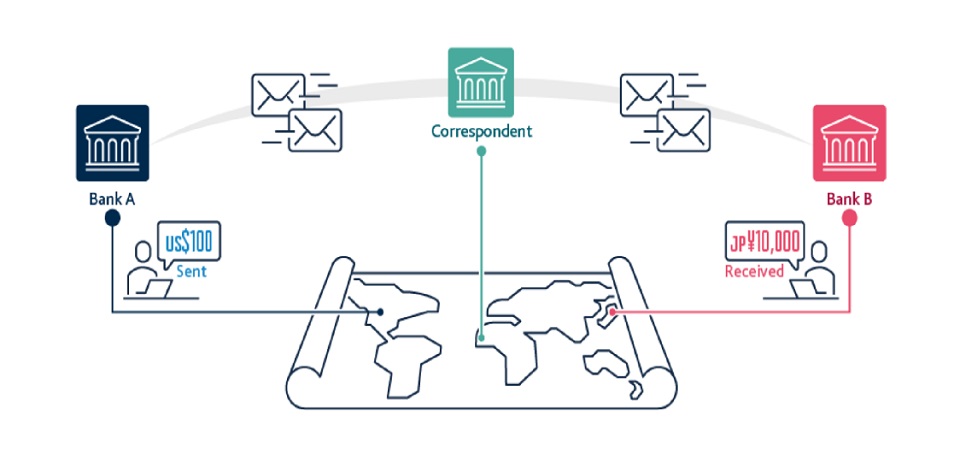
Soramitsu, a Japanese fintech company, has announced that it will develop a cross border payment system using central bank digital currencies (CBDCs) and stablecoin in Asia. The project, which is funded by the Japan International Cooperation Agency (JICA), aims to facilitate low-cost and secure remittances between Japan, Cambodia, Myanmar, and other countries in the region.

Soramitsu is the developer of Hyperledger Iroha, a blockchain platform that supports the creation and management of digital assets. The company has been involved in several CBDC initiatives, such as the Bakong project in Cambodia, which is the first retail CBDC in the world. Soramitsu also partnered with the National Bank of Cambodia to launch a stablecoin pegged to the Cambodian riel.

The cross-border payment system will leverage Soramitsu’s expertise in CBDCs and stablecoin to enable faster and cheaper transactions across borders. The system will also comply with the regulatory and legal frameworks of each country, as well as the international standards for anti-money laundering (AML) and counter-terrorism financing (CTF).

Soramitsu’s CEO, Makoto Takemiya, said that the project will contribute to the economic development and financial inclusion of Asia. He added that Soramitsu is honored to work with JICA and other partners to realize the vision of a digital economy powered by blockchain technology. The project is expected to start in October 2023 and last for two years. Soramitsu will collaborate with local stakeholders, such as central banks, commercial banks, remittance service providers, and non-governmental organizations (NGOs), to design and implement the cross-border payment system.

Nexus Mutual Partners with INShare to offer Decentralized Insurance to UK Shopkeepers

Nexus Mutual, the leading decentralized insurance platform, has announced a partnership with INShare, a UK-based insurance company that specializes in providing coverage for small and medium-sized businesses. The partnership will enable Nexus Mutual to offer its innovative and transparent insurance products to UK shopkeepers, who are often underserved by traditional insurers.

Nexus Mutual is a community-owned and operated platform that leverages blockchain technology to create a more efficient and fair insurance market. Nexus Mutual members can pool their funds and share risk with each other, without intermediaries or centralized authorities. Members can also vote on claims, governance, and risk assessment, ensuring that the platform is aligned with their interests and values.

INShare is a new entrant in the UK insurance market, with a mission to provide affordable and accessible insurance solutions for small businesses. INShare offers flexible and customized policies that cater to the specific needs and risks of different sectors, such as retail, hospitality, and e-commerce. INShare also leverages blockchain technology to streamline its operations and reduce costs.

The partnership between Nexus Mutual and INShare will allow UK shopkeepers to access Nexus Mutual’s smart contract cover, which protects them from losses due to bugs or hacks in smart contracts. Smart contracts are self-executing agreements that run on blockchain networks, such as Ethereum. They enable various decentralized applications and services, such as lending, trading, gaming, and more. However, smart contracts are also vulnerable to errors or malicious attacks, which can result in significant losses for users.

By purchasing smart contract cover from Nexus Mutual through INShare, UK shopkeepers can safeguard their funds and assets that are stored or transacted on smart contracts. For example, a shopkeeper who accepts payments in cryptocurrency can use smart contract cover to protect their wallet from being hacked or drained. Similarly, a shopkeeper who uses decentralized platforms for inventory management or supply chain can use smart contract cover to ensure that their transactions are executed correctly and securely.

The partnership will also enable UK shopkeepers to access Nexus Mutual’s discretionary cover, which is a more general form of insurance that covers any type of risk that is not covered by traditional insurers. Discretionary cover allows members to propose and vote on any type of claim, as long as it is within the legal and ethical boundaries of the platform. For example, a shopkeeper who suffers from a fire or flood damage can submit a claim for discretionary cover and receive compensation from the Nexus Mutual pool if the claim is approved by the members.

The partnership between Nexus Mutual and INShare is a milestone for the decentralized insurance industry, as it demonstrates the potential and value of combining blockchain technology with traditional insurance models. By offering decentralized insurance products to UK shopkeepers, Nexus Mutual and INShare aim to provide more choice, transparency, and fairness to the insurance market, and empower small businesses to thrive in the digital economy.