DD
MM
YYYY

PAGES

DD
MM
YYYY

spot_img

PAGES

Home Blog Page 3993

United Arab Emirates Launches Blockchain Powered Carbon Credits System

0

The United Arab Emirates (UAE) has announced the launch of a blockchain-powered carbon credits system that aims to reduce greenhouse gas emissions and promote sustainable development. The system, which is the first of its kind in the Middle East, will enable companies and individuals to buy and sell verified carbon credits that represent reductions or removals of carbon dioxide from the atmosphere.

Carbon credits are a type of environmental asset that represent a reduction of greenhouse gas emissions. They can be traded in the market or used for compliance purposes by entities that have emission reduction targets. However, the current carbon credit system faces several challenges, such as lack of transparency, high transaction costs, and risk of fraud.

Blockchain technology can offer a solution to these problems by creating a decentralized, secure, and verifiable platform for carbon credit issuance, trading, and verification. Blockchain is a distributed ledger that records transactions in a peer-to-peer network, without the need for intermediaries or central authorities. Blockchain can ensure the integrity, traceability, and immutability of carbon credit data, as well as facilitate the automation and standardization of processes.

Some of the potential benefits of blockchain powered carbon credits system are:

Enhanced transparency and trust: Blockchain can provide a public and immutable record of carbon credit transactions, as well as the underlying emission reduction activities and verification results. This can increase the confidence and credibility of the carbon market, as well as reduce information asymmetry and corruption.

Reduced transaction costs and complexity: Blockchain can enable faster and cheaper transactions, as well as eliminate intermediaries and intermediation fees. Blockchain can also enable smart contracts, which are self-executing agreements that can automate the execution and enforcement of contractual terms, such as payment and delivery.

Increased market access and liquidity: Blockchain can create a global and open platform for carbon credit trading, where anyone can participate and access the market. Blockchain can also enable peer-to-peer transactions, where buyers and sellers can directly interact and exchange carbon credits without intermediaries. This can increase the market efficiency and liquidity, as well as foster innovation and competition.

The UAE’s Ministry of Climate Change and Environment (MOCCAE) partnered with the Dubai Carbon Centre of Excellence (DCCE) and the International Digital Asset Exchange Association (IDAXA) to develop the system, which is based on the Hyperledger Fabric blockchain platform. The system will use smart contracts to automate the verification, issuance, and transfer of carbon credits, ensuring transparency, security, and efficiency.

The system will also integrate with the UAE’s national greenhouse gas inventory and reporting system, which tracks the country’s emissions and mitigation actions. The system will support the UAE’s efforts to achieve its national and international climate targets, such as reducing its greenhouse gas emissions by 23.5% by 2030 and achieving net-zero emissions by 2050.

The system will offer two types of carbon credits: certified emission reductions (CERs) and voluntary emission reductions (VERs). CERs are issued by the United Nations Framework Convention on Climate Change (UNFCCC) for projects that reduce emissions under the Clean Development Mechanism (CDM). VERs are issued by independent standards for projects that reduce emissions outside the CDM framework. Both types of credits can be traded on the blockchain platform, creating a new market for low-carbon solutions.

The system will also enable the creation of carbon-neutral products and services, such as green electricity, green hydrogen, green mobility, and green tourism. These products and services will carry a label that indicates their carbon footprint and the amount of carbon credits used to offset it. This will help consumers make informed choices and support the transition to a circular economy.

The UAE’s blockchain-powered carbon credits system is expected to launch in early 2024, after a pilot phase that will test its functionality and scalability. The system will be open to all stakeholders in the UAE and beyond, including government entities, private sector companies, civil society organizations, and individuals. The system will also be compatible with other regional and global carbon markets, facilitating cross-border cooperation and innovation.


Spot Bitcoin ETF Seen as Desirable as $BITO ETF Lags

0

The launch of the first Bitcoin futures exchange-traded fund (ETF) in the US, the ProShares Bitcoin Strategy ETF ($BITO) has been met with mixed reactions from investors and analysts. While some see it as a milestone for the mainstream adoption of cryptocurrencies, others argue that it is not a true representation of the underlying asset and that it suffers from several drawbacks.

One of the main criticisms of $BITO is that it does not track the spot price of Bitcoin, but rather the price of Bitcoin futures contracts traded on the Chicago Mercantile Exchange (CME). This means that $BITO is exposed to the futures premium or discount, which is the difference between the futures price and the spot price. The futures premium or discount can vary depending on the supply and demand of the contracts, as well as the expectations of future price movements.

The futures premium or discount can have a significant impact on the performance of $BITO compared to the spot price of Bitcoin. For example, if the futures price is higher than the spot price, $BITO will have to pay more to roll over its contracts when they expire, resulting in a negative roll yield. This can erode the returns of $BITO over time and cause it to lag behind the spot price of Bitcoin.

On the other hand, if the futures price is lower than the spot price, $BITO will benefit from a positive roll yield, as it can buy cheaper contracts to replace the expiring ones. This can boost the returns of $BITO and make it outperform the spot price of Bitcoin.

However, the futures premium or discount is not constant and can change unpredictably depending on market conditions. Therefore, $BITO investors cannot rely on a consistent relationship between $BITO and the spot price of Bitcoin.

Another drawback of $BITO is that it is subject to contango and backwardation, which are situations where the futures curve is upward or downward sloping, respectively. Contango occurs when the futures price is higher than the expected future spot price, while backwardation occurs when the futures price is lower than the expected future spot price.

Contango and backwardation can affect the returns of $BITO in different ways. For instance, if $BITO is in contango, it means that it is buying high and selling low, which can result in a negative return over time. Conversely, if $BITO is in backwardation, it means that it is buying low and selling high, which can result in a positive return over time.

However, contango and backwardation are also dynamic and can change depending on market sentiment and volatility. Therefore, $BITO investors cannot anticipate how contango and backwardation will affect their returns.

Given these limitations of $BITO, some investors and analysts are calling for a spot Bitcoin ETF, which would track the actual price of Bitcoin rather than its derivatives. A spot Bitcoin ETF would eliminate the issues of futures premium or discount, roll yield, contango and backwardation, and provide a more accurate and transparent exposure to Bitcoin.

However, a spot Bitcoin ETF faces several regulatory hurdles in the US, as the Securities and Exchange Commission (SEC) has repeatedly rejected or delayed such proposals due to concerns over market manipulation, custody, liquidity and investor protection. The SEC has also stated that it prefers a futures-based ETF over a spot-based one, as it believes that the CME futures market is more regulated and mature than the spot market.

Therefore, while a spot Bitcoin ETF may be desirable for some investors and analysts, it may not be feasible in the near future. Until then, $BITO remains the only option for US investors who want to gain exposure to Bitcoin through an ETF. However, $BITO is not the only Bitcoin ETF available globally. There are several other countries that have approved or launched Bitcoin ETFs that track either the spot price or a basket of cryptocurrencies. For example:

Canada: The first country to approve a Bitcoin ETF in February 2021. There are currently nine Bitcoin ETFs listed on Canadian exchanges, with varying fees and structures. Some of them track the spot price of Bitcoin directly (such as Purpose Bitcoin ETF), while others use a multi-crypto index (such as Evolve Crypto Assets Index ETF).

Brazil: The second country to approve a Bitcoin ETF in March 2021. There are currently two Bitcoin ETFs listed on Brazilian exchanges: QR Asset Management’s QBTC11 and Hashdex’s HASH11. Both of them track an index composed of several cryptocurrencies, including Bitcoin.

Europe: Several countries in Europe have launched exchange-traded products (ETPs) that track either Bitcoin or other cryptocurrencies. These ETPs are similar to ETFs but have some differences in terms of regulation and taxation. Some examples are 21Shares’ ABTC (which tracks Bitcoin) and HODL (which tracks a basket of cryptocurrencies), listed on several European exchanges.

Australia: The first country to approve a spot Bitcoin ETF in October 2021. The ETF, called BetaShares Bitcoin ETF, is expected to launch in early 2022 and will track the price of Bitcoin directly.

These Bitcoin ETFs and ETPs offer different advantages and disadvantages for investors, depending on their fees, liquidity, tax implications, and exposure to the spot or futures market. Therefore, investors who are interested in investing in Bitcoin through an ETF or ETP should do their own research and compare the various options available before making a decision.

Nigeria Partners Wema Bank to Establish Innovation Hubs, to Empower One Million Youths With Relevant Digital Skills

0

The Federal Government of Nigeria has partnered with Nigerian commercial bank, Wema Bank, to establish innovation hubs across States in the country, aimed at empowering one million youths with relevant digital skills.

The initiative known as FGN/ALAT Digital and SkillNovatiob Hub, was agreed upon during a meeting between representatives of the bank and the Vice President of Nigeria, Kashim Shettima in Abuja.

Wema Bank’s Managing Director and Chief Executive Officer, Moruf Oseni, said the initiative is designed to revolutionize the way young entrepreneurs and employees interact with technology, entrepreneurship, and skill development.

In his words,

The Digital & SkillNovation Hub reflects our dedication to fostering a thriving ecosystem that empowers Tech-Savvy Youth Entrepreneurs, Youth Entrepreneurs by Nature, and Young Employees, driving economic growth and sustainable progress across the nation. This centralized platform will integrate cutting-edge digital tools, technologies, and resources to streamline digital activities, collaboration, and information sharing.”

The Digital and SkillNovation Hub will first open in Lagos and Borno states, with Kastina, Cross River, Anambra, Oyo, and Kano states following suit.

The initiative is aimed at providing financial solutions, training, and access to strategic partnerships, empowering young employees to become an integral part of Nigeria’s workforce, especially those deployed through the National Youth Service Corps (NYSC).

Under the scheme, grants will be provided through a collaborative arrangement between the Federal Government and WEMA Bank, allocating N500 million to be given to SMEs and Techpreneurs.

The FGN/ALAT Digital SkillNovation hubs will focus on training one million young adults in software engineering, product management, business analysis, cloud computing, and product design, using specialized resources.

Wema Bank is one notable Nigerian bank that has continued to be at the forefront of equipping Nigerian youths with relevant digital skills. The bank is known for its commitment to innovation and empowerment, with proactive approaches to equipping youths.

Notably, Wema Bank has always come up with initiatives aimed at providing youths with essential skills for the future, empowering them to embrace the digital age and thrive in an increasingly technology-driven world.

The Bank has implemented several initiatives and programs to promote digital skills among its customers and the wider community. These initiatives include;

Digital Literacy Programs: The bank has organized workshops, webinars, and training sessions aimed at improving the digital literacy of its customers. These programs help customers become more comfortable with using digital platforms and services for their banking needs.

Financial Inclusion Initiatives: To promote digital skills and financial literacy, Wema Bank initiatives are aimed to provide financial education to underserved communities, encouraging them to adopt digital banking services.

SME’s Support: The bank is committed to empowering and educating Small and Medium Enterprises (SMEs) with skills and knowledge of current business trends.

The SME-centric Wema Bank has a rich history of supporting SMEs and has, over the years, introduced several initiatives in the SMEs segment Like ALT for Business platform, funding unique start-ups and creatives through its Hackaholics program, SME Business School, SME loan offerings, and many more.

The ECOWAS’s Options in Nigeria Are Carrots and Dialogues with Some Sticks

0

In the Igbo Nation, the wise ones will say “Mberede ka eji ama dike’ [great people are known when they’re confronted with unforeseen challenges]. In ECOWAS history, what the  Niger military junta has done is common if you recall how Yahya of Gambia  packed out when they dropped a minor threat. During Abacha time,  he was the ECOWAS, as he locked up military khaki boys in cells when they rejected his instructions. After he dealt with them, they saluted and delivered as expected.

But time has changed. Yes, Niger can go against Nigeria and ECOWAS because you know what: that is the spirit of democracy which Nigeria is “practicing”. With the Nigerian Senate voting down any military participating from Nigeria, the options are largely limited to carrots and dialogues with some sticks. We do not expect any military mobilization – and that is a good outcome. ECOWAS will meet on Thursday: “The notice of the meeting, which is to be held in Abuja, Nigeria’s capital, on August 10, was sent on Monday by Tinubu, who doubles as the chairman of ECOWAS.”

I call on Nigeria and the broad ECOWAS to swallow any pride. We will all forget in days. But what we will not forget is turning the Niger Republic into another Syria with some parts for Russia, and some for the West.  I have already shared my plan on how we can go about this here

Call a meeting of the African Development Bank, African Export-Import Bank, economic ministers of ECOWAS countries and partners of ECOWAS, and work out a regional sovereign guarantee (RSG) package of $5 billion for Niger Republic. That is about the national budget of the country.

Then open an Africa-wide investment opportunity window for Niger, guaranteeing 50% of every investment into Niger Republic in the next three years. Areas to be covered include education, agriculture, healthcare, and related areas. At least 25% of the RSG should go to Niger-native companies.

Comment on Feed

Comment 1: Niger is bigger than Nigeria, so what is exactly this misguided notion that ECOWAS military is capable of dislodging a junta that captured power, largely supported by the local population? How many military personnel can you muster exactly and what would be the instruction? Let this whole embarrassment stop now, because they will be defeated, if they ever enter Niger, the politicians asking for military intervention obviously don’t know what taking war to another’s soil entails.

Gambia was a different case, it was a civilian regime that went rogue, in a very tiny country. If you superimpose the whole of Nigeria into Niger, it will swallow it and still have spaces, yet we are dreaming of invasion and dislodging, this is not a movie scene.

In another one week, we will be done with this Niger thing, nobody will attack or remove anyone, because the odds are heavily against the proponents, they do not stand a chance.

There’s no democracy in West Africa, so let this noise about restoring democracy cease, we never had one.

It is an aberration for fraudulent people to give sermons on rule of law, the very thing they never respected in their home domains. Funny creatures everywhere.

Comment 2: Ndubuisi Ekekwe I enjoyed this piece but down to the last part, I have a reserve. Niger won’t just be turned to Syria, and parts of it for Russia and the West, but the whole west African states will be in a turmoil like never seen before, worse than Africa ever experienced in the previous world wars.

Because it will be a war amongst nations. Like I said earlier, it will gradually spill over, it definitely cannot be contained in Niger alone. They will have no restrictions to attack opposition nations in a bid to weaken their morale. I maintain my stance, that Africa should always rather seek the path of pure brotherhood and friendship because if they create enmities for themselves, there will be no victor.

Comment 3: Any discerning mind can see through Tinubu’s smoke screen. Tinubu, having failed miserably on the home front in just three months of taking office, with his economy in complete mess – Petrol up 300%, inflation out of the charts, USD/NGN shooting for the skies, productive businesses packing up, is desperate for any distraction whatsoever from his economic woes and what a timely gift this Niger drama offers. How ironic that a complete outsider, who would not cry for his own people, is crying more than the bereaved!

Now, Niger has assembled a solid military coalition with Burkina Faso, Guinea, and Mali. In addition, Niger’s military rulers have enlisted support from Russian Wagner mercenary group. Let’s face it, everyone knows that Nigeria’s corrupt military – the same military that could not contain Boko haram – instead resorting to settling with cash, nor bring back the kidnapped girls, nor even feed or provide necessary gear and logistical support for its military, is not in any position to face the Niger Military alliance and Russia’s Wagner. Look very well, the only ones beating war drums are the greedy vultures who are already salivating at the money to be made. That’s just the way it is.

As Its 7-day Deadline to Niger Junta Expires, ECOWAS Summons A Fresh Meeting

0

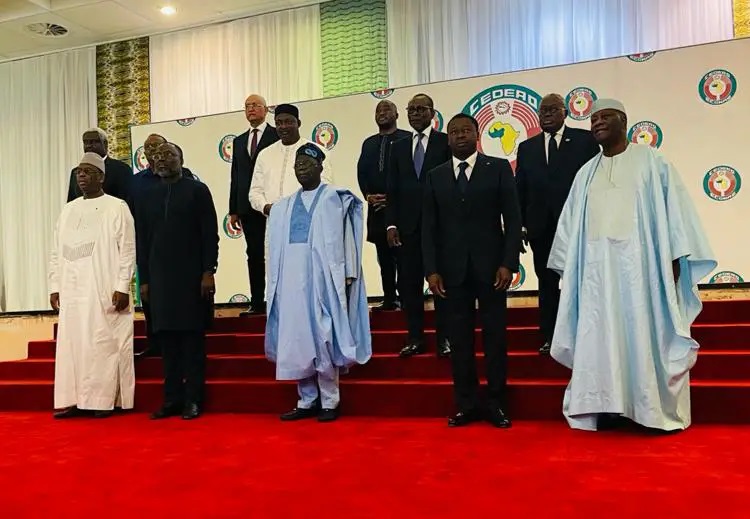
Nigerian President Bola Tinubu has summoned the Economic Community of West Africa States (ECOWAS) for a fresh meeting, following the expiration of the 7-day deadline given to the Niger Republic’s military junta to restore Mohamed Bazoum as president or face military intervention.

The notice of the meeting, which is to be held in Abuja, Nigeria’s capital, on August 10, was sent on Monday by Tinubu, who doubles as the chairman of ECOWAS.

“President Bola Ahmed Tinubu, President of the Federal Republic of Nigeria and Chairman of the Authority of Heads of State and Government of the Economic Community of West African States (ECOWAS) has convened another Extraordinary Summit of the Authority on the political situation in the Republic of Niger.

The Summit will be held in Abuja, on Thursday, August 10, 2023.”

“The ECOWAS Leaders will be considering and discussing the political situation and recent developments in Niger during the Summit,” a statement issued by the regional body reads.

The fresh meeting is prompted by the growing calls for ECOWAS to jettison its plan for military action in Niger. The regional bloc had last week, announced it’s prioritizing diplomacy over military action in its attempt to resolve the crisis.

Also, the Nigerian Senate on Saturday rejected Tinubu’s request for the redeployment of troops to Niger, asking the president to explore other dialogue-based options in the quest to restore democracy in the West African country.

Since the coup led by the presidential guards on July 26, the West, led by France, has been mounting pressure on Nigeria to intervene militarily to restore Bazoum.
However, following the expiration of the ECOWAS deadline on Sunday, the Niger military junta has reportedly brought in reinforcements to Niamey, the country’s capital in preparation for a possible military invasion in the country by the ECOWAS.

According to information from a military insider shared with CNN, a convoy comprising approximately 40 pickup trucks arrived after sunset on Sunday. These vehicles transported troops from various regions of the country, serving the dual purpose of instilling confidence among the apprehensive civilian population and making necessary arrangements for any potential confrontations.

It was also reported that mercenaries from the Russian Wagner group, a military contractor group, have arrived in Niger to support its military.

Amid the looming specter of military intervention, the nation’s airspace has been closed by the military authorities. Heightened unease and bewilderment have taken hold in the northern expanse of Nigeria, particularly within the seven states sharing borders with Niger.

President Bazoum remains in captivity, as the reins of power in Niger are still firmly grasped by the National Council for the Safeguard of the Homeland, the junta’s official designation.

The junta has rallied thousands of Nigeriens to Niamey, the country’s capital, in support of the military. The military takeover is widely seen by the citizens as a way of relieving the country from France’s grip. The military leaders have cut off the supply of uranium to France.