DD
MM
YYYY

PAGES

DD
MM
YYYY

spot_img

PAGES

Home Blog Page 3998

The Rule In Foss v Harbottle and The Majority Rule; Legislative Drafting In Nigeria

0

The minority rights protection serves as an exception and protection from the harsh effects of the principle of Corporate Law established in the English case of Foss v Harbottle. This article will be looking at the legal rationale established in that case and its application in Nigeria today as a Common Law jurisdiction itself.

What is the principle of majority rule?

It is a well established principle that a company is a separate legal person from its members. Once it is accepted that the company is a legal person, it follows that if a wrong is done to the company, the company is the proper person to bring an action. 

Therefore,as a rule, when a company is incorporated and is a going concern, the wish of the majority must prevail as it is important that the principle of democracy should prevail.

A company must therefore, act in accordance with the decisions taken by the majority of its members willing and able to vote.

Also, it is part of the rule that once powers have been delegated to directors, the majority cannot derogate from the powers of the directors for the day-to-day management of the company. However, the power of the majority rule extends to every facet of the company’s affairs. The majority of members have the power to :

  1. Alter the Memorandum and Articles of Association of the company.
  1. They appoint and dismiss the directors.
  1. If they so desire, they can put an end to the business.

What is the rationale for the rule in Foss v Harbottle?

In the English case of Foss v Harbottle, the court in a suit between a company’s shareholders and directors over a secret profit allegation held that the company’s board of directors was still in existence, and since it was still possible to call a general meeting of the company, there was nothing stopping the company from obtaining redress in its corporate character and that the action of the claimants who were shareholders in the company could not be sustained.

This principle has been held to apply not only to incorporated bodies but also to unincorporated associations and has been adopted in Nigerian cases like Abu Bakare v Smith (1973) 6 SC 31.

The rationale of the rule in Foss v Harbottle is based on the following :-

  1. If every individual member of a company were permitted to sue anyone who had injured the company through a breach of duty, there could be as many actions as there are shareholders, that is, it prevents the multiplicity of suits.
  1. Legal proceedings would never cease and there would be enormous wastage of time and money.
  1. A defendant in a corporate litigation matter will be better protected if the company is the main plaintiff because the defendants rights like counterclaim, set-off,etc, are preserved if the company is sued.
  1. If an individual member could sue a person who had caused loss to the company and the company then ratified that person’s act at a general meeting, then a legal proceeding would be quite useless, for a court will naturally hold that the will of the majority prevails. This is essentially based on the Partnership doctrine that the court will not interfere in matters of internal management. Courts will generally not act in vain. This is based on one of the maxims of Equity that ” Equity will not act in vain”. This has been established in many common law cases so far. 

Legislative Drafting In Nigeria 

This article will be looking at the practice of legislative drafting which is the process of creating a law(legislation) through the legal skill of  preparing a bill(proposed law) through draftsmanship. 

What are the stages of legislative drafting? 

  1. Receiving and understanding the instructions to draft a bill. 
  1. Analyzing the instruction, areas of danger, and practicability of the proposed law. 
  1. Designing the draft. 
  1. Composition/actual preparation of the bill using precedents where available.

 Further scrutiny.

What are the parts of a legislation? 

– Legislations are divided into sections containing one idea, and if long, it should be broken into subsections dealing with related ideas. 

– Sections are numbered in unbracketed Arabic numerals. 

– Subsections in bracketed Arabic numerals. 

– Paragraphs in bracketed small alphabets. 

– Subparagraphs in bracketed Roman numerals. 

– Punctuation marks form part of a legislation.

In summary, legislations are divided into 4 segments : 

  1. Preliminary provisions. 
  1. Principal segments. 
  1. Miscellaneous provisions. 
  1. Final provisions. 

What are the components of the preliminary provisions of a legislative draft? 

  1. The long title 
  1. The preamble 
  1. The enacting clause 
  1. The short title 
  1. The commencement  
  1. The interpretation clause 
  1. The application clause.

What are the components of a legislative draft’s principal provisions? 

  1. The substantive provisions 
  1. The administrative provisions

What are the components of the miscellaneous section of a legislative draft? 

  1. The offenses and penalties clause 
  1. Supplementary provisions on making of subsidiary legislation 
  1. Indemnity clauses 
  1. Services of notices 
  1. Powers of entry clauses 
  1. Search, seizure and arrest clause 

What are the components of the final provisions chapter of a legislative draft? 

  1. The transitional provisions 
  1. Repeal & consequential amendments 
  1. Schedules. 

What are the tools of judicial interpretation necessary for understanding the intention of a legislative draft? 

Courts cannot invite lawmakers to explain the law, they must find their intention. Where there are mistakes, the court can correct them, and where there are gaps/lacunae in a law, the courts cannot fill these gaps.  

The available tools of judicial interpretation revolve mainly around the following:- 

  1. The Interpretation Act/laws of Nigeria/various states. 
  1. Definition clauses in a law 
  1. Law dictionaries 
  1. Case Law (Stare Decisis).  
  1. Rules of interpretation (the mischief rule, the golden rule, the literal rule, the Ejusdem Generis rule, etc.,).

If Cryptocurrency Exchanges Want To Operate In U.S. “they must play by the rules”

0
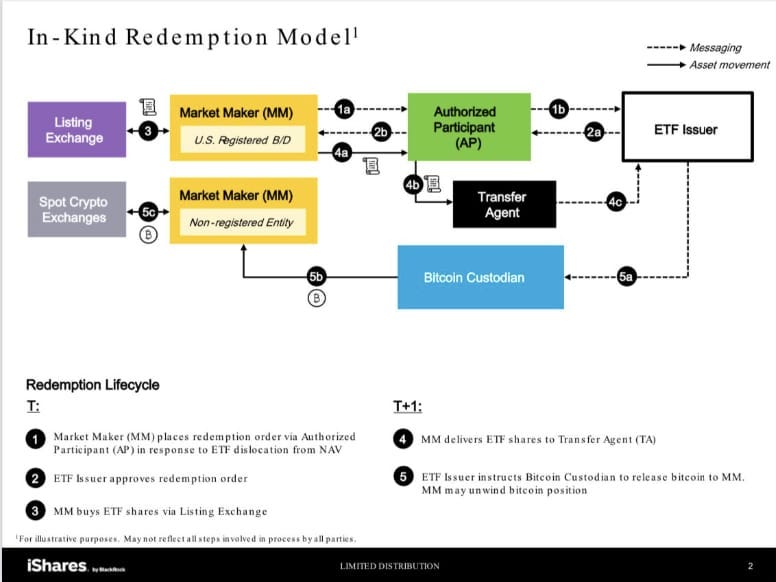
BlackRock, the world’s largest asset manager, has met with the U.S. Securities and Exchange Commission (SEC) to discuss its proposed spot Bitcoin ETF, according to a new filing. The company revealed more details about its product, which aims to provide investors with exposure to the actual Bitcoin cryptocurrency, rather than futures contracts or other derivatives.

According to the filing, BlackRock met with SEC staff on November 16, 2023, and presented its case for why its spot Bitcoin ETF should be approved. The company argued that its product would offer several benefits to investors, such as:

Lower costs and risks compared to futures-based ETFs, which incur higher fees, margin requirements, and rollover risks. Greater transparency and liquidity compared to private funds or trusts, which may trade at significant premiums or discounts to their net asset value (NAV). Enhanced security and custody arrangements, as BlackRock would partner with reputable third-party custodians that are regulated and audited.

Diversification and innovation opportunities, as a spot Bitcoin ETF would allow investors to access a new asset class that has low correlation with traditional markets and offers exposure to the potential of blockchain technology.

BlackRock also addressed some of the concerns that the SEC has raised about spot Bitcoin ETFs in the past, such as:

Market manipulation and fraud, which BlackRock claimed could be mitigated by using multiple data sources, robust surveillance tools, and independent valuation methods. Investor protection and education, which BlackRock pledged to provide through clear disclosures, risk warnings, and investor outreach programs.

Regulatory coordination and oversight, which BlackRock suggested could be enhanced by working closely with other regulators, such as the Commodity Futures Trading Commission (CFTC), the Financial Industry Regulatory Authority (FINRA), and state authorities.

BlackRock is one of several companies that have filed for a spot Bitcoin ETF in the U.S., hoping to capitalize on the growing demand for crypto-related products. However, so far, the SEC has only approved futures-based Bitcoin ETFs, which track the price of Bitcoin through contracts traded on regulated exchanges. The SEC has repeatedly expressed its reservations about spot Bitcoin ETFs, citing the lack of regulation and transparency in the underlying crypto market.

It is unclear whether BlackRock’s meeting with the SEC will sway the regulator’s stance on spot Bitcoin ETFs, or when a decision will be made. The SEC has not set a deadline for reviewing BlackRock’s application, which was filed in October 2023. However, some analysts believe that the SEC may be more open to approving spot Bitcoin ETFs in 2024, as the crypto market matures, and more regulatory clarity emerges.

U.S. Treasury Secretary says if cryptocurrency exchanges want to operate in the U.S. “they must play by the rules.” If they do not, the U.S. government will take action.” The U.S. Treasury Secretary has issued a stern warning to cryptocurrency exchanges that operate in the U.S. market, saying that they must comply with the existing regulatory framework or face the consequences.

In a speech at the Financial Crimes Enforcement Network (FinCEN) conference, the Treasury Secretary said that the U.S. government is committed to ensuring that the cryptocurrency sector does not pose a threat to the national security, financial stability, or consumer protection.

He said that cryptocurrency exchanges are subject to the same rules and regulations as traditional financial institutions, such as anti-money laundering (AML), counter-terrorism financing (CTF), and sanctions compliance.

He added that the Treasury Department, along with other federal agencies, is closely monitoring the activities of cryptocurrency exchanges and will not hesitate to take action against those who violate the law.

He said: “We want to foster innovation and responsible use of cryptocurrencies, but we also want to prevent them from being used for illicit purposes. Cryptocurrency exchanges that want to operate in the U.S. must play by the rules. If they do not, the U.S. government will take action.”

Kingdom of Bhutan spent millions building its own Bitcoin mining operation— Forbes

Meanwhile, the small Himalayan nation of Bhutan has made a bold move to embrace the cryptocurrency revolution. According to a recent report by Forbes, the Kingdom of Bhutan has spent millions of dollars building its own Bitcoin mining operation, hoping to use the profits to boost its economy and diversify its sources of income.

Bhutan is a landlocked country with a population of about 800,000 people, mostly dependent on hydropower, tourism and agriculture. However, the Covid-19 pandemic has severely affected these sectors, causing a sharp decline in the country’s gross domestic product (GDP) and foreign exchange reserves. To make matters worse, Bhutan faces a chronic trade deficit with its neighbors, especially India, which supplies most of its essential goods and services.

To address these challenges, Bhutan has decided to tap into the potential of Bitcoin, the world’s largest and most popular cryptocurrency. Bitcoin is a decentralized digital currency that operates on a peer-to-peer network of computers, without the need for intermediaries or central authorities.

Bitcoin transactions are verified and recorded on a public ledger called the blockchain, which ensures transparency and security. Bitcoin miners are the ones who perform this verification process, using specialized hardware and software to solve complex mathematical problems and earn new bitcoins as a reward.

Bhutan has invested in building its own Bitcoin mining facility, using its abundant and cheap hydropower resources to run the machines. The facility is located in a remote area of the country, away from populated centers and potential threats. The facility is also equipped with advanced cooling systems and security measures to ensure optimal performance and safety.

According to Forbes, Bhutan hopes to use the Bitcoin mining operation as a source of income and innovation for its economy. The country plans to sell some of the bitcoins it mines on the global market, generating foreign exchange and reducing its trade deficit. The country also intends to use some of the bitcoins to fund social welfare programs, such as health care, education and environmental protection.

Moreover, Bhutan aims to foster a culture of entrepreneurship and technological development among its citizens, by encouraging them to learn about and participate in the cryptocurrency ecosystem.

Bhutan’s decision to embrace Bitcoin is not without risks and challenges. The cryptocurrency market is highly volatile and unpredictable, subject to fluctuations in supply and demand, as well as regulatory uncertainties and cyberattacks. Bitcoin mining also consumes a lot of energy and generates a lot of heat and noise, which could have environmental and social impacts.

Furthermore, Bhutan may face opposition or pressure from other countries or institutions that are skeptical or hostile towards Bitcoin and its implications for the global financial system.

However, Bhutan is not alone in its quest to harness the power of Bitcoin. Several other countries, especially in Africa and Latin America, have also shown interest or taken steps to adopt Bitcoin as a legal tender or a reserve asset. These countries share some of the same challenges as Bhutan, such as economic instability, currency devaluation, inflation, corruption and financial exclusion. They also see Bitcoin as an opportunity to empower their people, enhance their sovereignty and integrate into the global economy.

Bhutan’s experiment with Bitcoin is an example of how a small country can use innovation and courage to overcome its limitations and pursue its aspirations. Whether it succeeds or fails, Bhutan’s venture will surely inspire other nations and individuals to explore the possibilities and challenges of the cryptocurrency revolution.

How Do You Bring Jinns into Your Life?

0

When a Jinn takes possession of a person, the first place he or she travels is to the brain. You are aware that they are like rays that travel enormous distances in a matter of seconds. The possessed will begin to develop possession symptoms at this point. This is a stage of mental unconsciousness, our analysts note. The sufferer may withdraw from others and prefer to be alone. He or she may begin to speak things that you do not comprehend. If you try to keep the sick from leaving a given area, he or she may gain the power of five heavyweight men. In fact, if the patient is a Muslim who does not joke with prayers, he or she may quit observing his or her five daily prayers.

These are only a few examples of mental unconsciousness. The Jinn’s primary purpose is to make the patient misbehave. As a result, whether in private or in public, misbehavior frequently leads in stigma and stereotypes. Anyone who understands how Jinns produce mental unconsciousness and is in the presence of this patient would suspect that the patient is possessed, especially if the patient has no history of psychiatric disease or environmental triggers.

Read WHO ARE JINNS?

Many people wonder if humans can invite or summon Jinns. According to our knowledge and experiences, some fetishists may summon Jinns with whom they have a covenant. Some pseudo-clerics seek Jinn assistance as well. In our experience, we knew some persons who sought financial and academic assistance from Jinns. Finally, the Jinns cursed them with incurable, life-threatening mental diseases.

So, how do humans inadvertently invite Jinns into their lives? Documents and personal experiences demonstrate that non-believer Jinns enjoy watching humans engage in certain activities. When someone engages in such behavior, they are more likely to possess the person. Fornication and adultery; entering toilets/bathrooms without saying the recommended prayer; throwing hot water on earth surfaces (without saying Bismillahi); staying late and going very early to the market (it is recommended to recite protective verses and prayers when navigating a crowded market); and deriving pleasure/happiness from music are some examples. However, Jinns have been observed possessing patients merely because the Jinns like the patients as wives or husbands.

Read 4 Signs That You Are Living With Jinn(S) And A Signal For Severe Mental Health Conditions

Umar Olansile Ajetunmobian independent, interdisciplinary researcher with special interests in political, (mental) health, development, and digital media communication, contributes to the development of this piece through his skills and knowledge garnered over the years. 

$11 million film production funded by Netflix gambled on trading stock options

0

This is the shocking story of how a film production company, funded by Netflix, gambled away its entire budget on risky financial bets and left the streaming giant with nothing to show for it.

The company, called Red Flag Productions, was supposed to make a comedy movie starring Kevin Hart and Tiffany Haddish, based on a popular book by Steve Harvey. The movie, titled “Think Like a Man Too”, was expected to be a hit with audiences and critics alike.

However, instead of spending the money on hiring actors, writers, directors and crew, the company’s executives decided to invest it in the stock market, hoping to make a quick profit and pay back Netflix later. They used a complex and risky strategy called “options trading”, which involves buying and selling contracts that give the right to buy or sell a stock at a certain price in the future.

Unfortunately for them, their bets went horribly wrong. The stock market crashed in 2023 due to the global pandemic and political instability, and the company lost all of its money in a matter of days. Netflix was furious when they found out what had happened and sued the company for breach of contract and fraud. The lawsuit is still ongoing, but it is unlikely that Netflix will ever recover its money.

The movie project was cancelled and the rights to the book were returned to Steve Harvey, who said he was “disappointed and disgusted” by the whole ordeal. Kevin Hart and Tiffany Haddish also expressed their frustration and anger at being duped by the company. They said they had been looking forward to working together on the movie and had turned down other offers because of it.

Netflix have invested in several film project in Nigeria

Netflix, the world’s leading streaming service, has been expanding its presence in Africa, especially in Nigeria, where it has invested in several film projects. Nigeria’s film industry, known as Nollywood, is one of the largest and most prolific in the world, producing thousands of movies every year. Netflix has recognized the potential of Nollywood and has partnered with local filmmakers, actors and producers to create original content for its platform.

Some of the Netflix original films from Nigeria include Lionheart, a comedy-drama directed by and starring Genevieve Nnaji, one of the country’s most popular actresses; The Wedding Party, a romantic comedy that was the highest-grossing Nigerian film of all time; and King of Boys, a crime thriller that received critical acclaim and awards. Netflix has also acquired the rights to stream other Nollywood films, such as Half of a Yellow Sun, based on the novel by Chimamanda Ngozi Adichie; and October 1, a historical drama set during Nigeria’s independence.

Netflix’s investment in Nigerian films is part of its strategy to diversify its content and cater to different audiences around the world. The streaming service has also produced original films and shows from other African countries, such as South Africa, Kenya and Zimbabwe. Netflix has also launched a mobile-only plan in Nigeria and other African markets, offering a cheaper and more accessible option for subscribers who use their smartphones to watch content.

Netflix’s involvement in Nollywood has been welcomed by many in the industry, who see it as an opportunity to showcase their work to a global audience and to improve the quality and standards of their productions. Netflix has also provided training and workshops for Nigerian filmmakers, as well as funding and equipment. However, some challenges remain, such as the lack of infrastructure, piracy and censorship issues, and the competition from other streaming platforms and local TV channels.

Netflix’s investment in Nigerian films is a sign of the growing importance and influence of Nollywood in the global film industry. It is also a testament to the creativity and talent of Nigerian filmmakers, who have been telling stories that resonate with audiences across cultures and continents.

The scandal has tarnished the reputation of Netflix as a reliable partner for filmmakers and has raised questions about its oversight and due diligence processes. It has also exposed the dangers of options trading, which can lead to huge losses or gains depending on market fluctuations. Many experts have warned that options trading is not suitable for beginners or amateurs and should only be done by experienced and professional investors.

The AI Bill of Rights And Towards A Universal Blueprint

0

I recently stumbled upon this article on AI Bill of Rights, and I thought to share some of my highlights and thoughts on it. It is an exciting piece and one you should read if you are interested in conversations about how AI can be regulated in the interests of humans.

The article outlined a very realistic framework called the “Blueprint for an AI Bill of Rights,” and the goal is protecting the rights, opportunities, and access of the American public in the age of artificial intelligence (AI).

Even though it is focused on the USA, I think there is a lot that other countries can borrow a leaf or two from.

The framework discussed in that article is based on five core principles: Safe and Effective Systems, Algorithmic Discrimination Protections, Data Privacy, Notice and Explanation, Human Alternatives, Consideration, and Fallback.

Each of these principles is as important as the other. But let’s go back to my take.

Safe and effective systems

This principle took my mind back to a piece from AI Now Institute I read about how some tech giants are simply in a race against competitors and might be releasing AI products that are not entirely ready or safe for public use. But let’s not digress. The safe and effective systems as a principle in this bill advocate that Automated systems should be safe and effective and undergo pre-deployment testing and risk mitigation to ensure they are free from endangering individuals’ safety or the safety of their communities.

In detail, it suggests that it should be illegal to develop an automated system without consulting “diverse communities, stakeholders, and domain experts to identify concerns, risks, and potential impacts of the system.”

To put this simply, it means that if you want to decide on an AI robot that would speed up construction, you cannot do it without consulting with the stakeholders, which would include the builders and everyone involved in a typical construction site. This is a principle I wholly subscribe to 100%. Why?

Because it is easy to get overwhelmed with the excitement of creating the following big product, one might overlook tiny details about how the product might endanger other people involved. True, we want AI to help us do things faster and cheaper, but we must also begin to consider “safer.” And who would better understand safety in an industry better than its stakeholders?

Don’t design from the outside. Consult with the people in the system and identify and mitigate potential risks even before the product is out. Not just in the usage but also in the outcome, you should endeavour to take proactive safety measures. Your safety measures should include the possibility of not deploying the system or removing a system from use. Even if this were not a law, it should be the responsibility of any AI entrepreneur.

Human Alternatives, Consideration, and Fallback

Always keep an opt-out button active. If you are designing a product that is supposed to automate the processes of a particular department, for instance, there should be an opt-out option and a provision for human alternatives. Your product should also have seamless fallback and escalation processes for users to seek human consideration and remedy when automated systems fail or produce errors. These processes should be accessible, equitable, and effective.

I mean, if you are trying to make a product that makes my work more accessible, the product should not make my life more difficult. I should always have the opt-out option or a fast and seamless means to resolve every possible error. As an entrepreneur, no one understands better that time is money. And if the technology fails, humans should be able to hold briefly while the error is addressed.

Data Privacy

Data, Data, Data!

As far as the conversation is about AI, there will be concerns about data. What I like about the propositions on data privacy in this blueprint is that it is simple. Let users choose what will be done with their data and respect their choice.

Abusive data practices must be avoided. If this blueprint becomes the law across several countries, then you, as a user, will have total control over your data. You decide if or how they collect your data, use it, transfer it, and you even get to say when it should be deleted. I think this is already applicable in some technology, but the catch is that there are no clear consent systems. So, you probably click yes to one thing and are oblivious that the Yes now applies to several other things. There should be clear consent practices and protections against unchecked surveillance, especially for sensitive data domains.

If you are conversant with trends on Twitter, you’ll probably have seen that a certain bank had its customer database hacked, and some customers’ funds moved without their permission. You would also know that this is not the first of such occurrences, even in this year alone. One can never be too careful with data.

This could become a blueprint for several countries to adopt. What do you think? Are there other principles that you think should be a part of an AI bill of rights? What do you think about the five principles outlined in this article? Please share your thoughts.