
DD
MM
YYYY

PAGES

DD
MM
YYYY

spot_img

PAGES

Home Blog Page 4

Why Uninsured Driver Claims Often Become Fights With Your Own Insurance Company

0

Insurance coverage is supposed to provide financial protection after a serious car accident, especially in situations involving uninsured drivers. However, many uninsured motorist claims become more complicated than drivers expect once the claim process begins. Insurance companies often conduct detailed reviews of accident reports, medical records, injury claims, and policy terms before approving compensation.

The situation can become even more frustrating after an accident with an uninsured driver because victims are required to seek compensation through their own insurance coverage. What initially appears to be a simple claim may quickly involve delays, disputes over injuries, questions about fault, and disagreements about coverage limits. These challenges often leave drivers unprepared for how difficult the process can become.

Why Your Own Insurance Company Investigates These Claims So Closely

Insurance companies often review uninsured motorist claims very carefully because they may need to pay compensation through the driver’s own policy. Even though the injured person is already a customer, the company still investigates the claim closely before approving payment. Adjusters usually examine police reports, medical records, vehicle damage, witness statements, and treatment history to verify every detail connected to the accident.

Questions about injuries can also create disputes during the process. If treatment was delayed or medical records appear inconsistent, insurers may challenge whether the injuries were caused by the crash.

Policy terms add another layer of confusion because many drivers do not fully understand their uninsured motorist coverage until they file a claim. Coverage limits, exclusions, and documentation requirements often become major reasons why these claims grow stressful and complicated.

Common Reasons Uninsured Driver Claims Turn Into Disputes

Disagreements Over Who Caused the Crash

Disputes over fault are common in uninsured motorist claims, even if the other driver had no insurance coverage. Insurance companies may still investigate whether their own customer played a role in causing the crash. Problems often arise when there is limited evidence, such as missing witnesses, unclear camera footage, or conflicting statements.

Delayed police reports can also weaken important details. While drivers may feel confident about what happened, insurers usually rely heavily on documentation, and weak evidence can quickly slow down the claim process.

Questions About Medical Treatment and Injury Severity

Medical treatment often becomes another major point of tension. Insurance companies sometimes review how quickly someone sought care after the accident and whether the treatment appears consistent throughout recovery.

If there are gaps between doctor visits, insurers may argue the injuries were not serious. They may also question whether certain symptoms existed before the crash. These situations leave many people feeling like they must defend their pain while already dealing with stress from the accident itself.

The emotional pressure becomes heavier because injured drivers are often trying to recover physically while also responding to paperwork requests, recorded statements, and claim reviews.

Policy Limit and Coverage Confusion

Many drivers do not fully understand their insurance policies until they file an uninsured motorist claim. That often leads to confusion about what the coverage actually includes. Some policies limit certain types of compensation, while others require strict reporting timelines or detailed documentation.

Drivers may also discover that their coverage amounts are not enough to handle medical expenses or lost income after a serious crash. This difference between expected protection and actual policy terms often becomes a major source of frustration during the claims process.

The Emotional Frustration Behind These Cases

Uninsured motorist claims often create emotional stress because drivers do not expect conflict with their own insurance company. Most people assume their insurer will provide support after a serious accident, especially if the other driver had no coverage. Instead, many claims involve delays, repeated reviews, and questions about injuries or compensation.

Financial pressure can make the situation even harder to handle. Medical expenses continue building while the claim remains under review, and uncertainty starts affecting daily responsibilities. That frustration often becomes stronger after an accident with an uninsured driver because many victims feel disappointed by a process they believed would offer protection and stability during a difficult time.

What Helps Protect a Claim

Several things can help strengthen an uninsured motorist claim and reduce confusion during the process:

  • Seek medical attention quickly after the crash.
  • Keep copies of medical records and repair estimates.
  • Take photos of the accident scene and vehicle damage.
  • Save witness contact information whenever possible.
  • Use dashcam footage if it is available.
  • Stay organized with paperwork and communication records.

Strong documentation often becomes one of the most important parts of handling these disputes.

Wrap Up!

Uninsured motorist claims are rarely as simple as people expect them to be. A driver may believe their insurance coverage guarantees support, but disputes over fault, injuries, and policy terms can quickly change the situation. Confusion, delays, and financial stress often become part of the process long before the claim reaches a resolution.

Drivers dealing with problems after an accident with an uninsured driver usually discover that preparation, documentation, and understanding the claim process matter far more than they first realized.
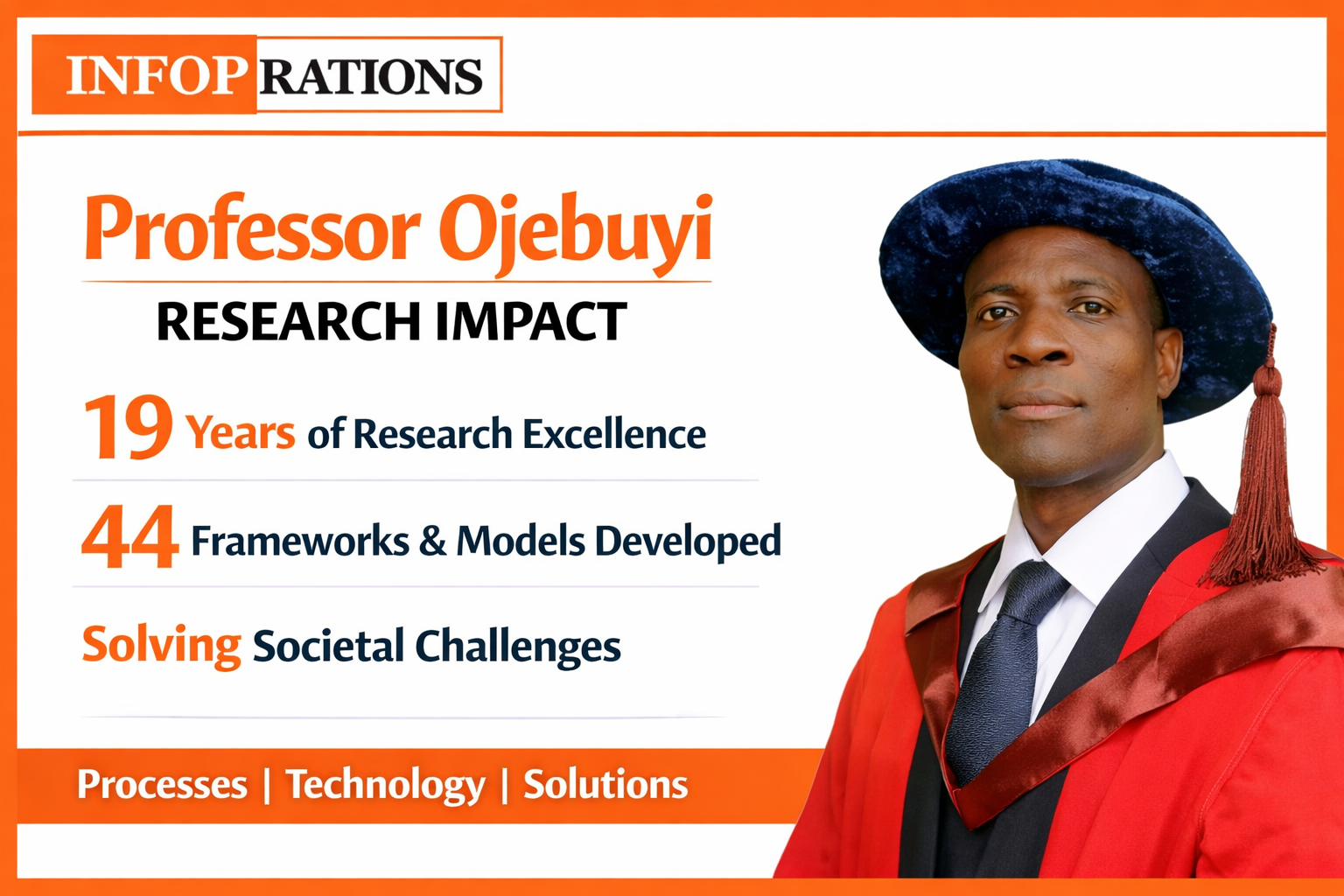

Ojebuyi’s Research: Why Great Services Fail Without Communication

0

In healthcare, biomedical innovation, and media, organisations often assume that once a valuable service exists, people will automatically use it. Hospitals invest in advanced technologies. Researchers develop life-changing scientific breakthroughs. Media organisations create content with strong professional standards. Yet many of these services struggle to achieve impact. 

The reason, according to Professor Ojebuyi’s research, is that services succeed not merely because they exist, but because people understand, trust, and participate in them. In this piece, our analyst explores this idea in relation to the product and service components of Nigerian society, which Professor Ojebuyi has been studying since 2007. Our analyst notes that his scholarship consistently reveals that communication is not merely an accessory to service delivery, but an integral part of the service itself. 

Communication-Based Service Adoption Model

One of the strongest lessons from Ojebuyi’s research is captured in the communication-based service adoption model, which argues that healthcare technologies succeed when communication is integrated into implementation.

Many healthcare innovations fail, not because they are ineffective, but because beneficiaries do not fully understand them. In low-resource environments in particular, healthcare technologies often struggle because intended users perceive uncertainty about usefulness, ethics, risks, or accessibility.

Ojebuyi’s findings established that acceptance of healthcare technologies depends heavily on how people interpret the service rather than simply how technologically advanced it is. This shifts service innovation from a technology-first model to a people-first design philosophy.

For healthcare providers, biomedical innovators, and public health institutions, this insight matters deeply. A sophisticated healthcare solution that people distrust may never deliver value. However, when users are involved through participatory needs assessments, culturally grounded communication, and inclusion in implementation processes, adoption becomes significantly more likely. Yet understanding alone does not guarantee participation. Trust must also be built.

Trust-Centred Healthcare Communication Framework

Building on service adoption, Ojebuyi’s trust-centred healthcare communication framework demonstrates that ethical communication improves participation in advanced medical services.

Biomedical research often faces resistance because people fear misuse of biological materials, privacy violations, or exploitation. Researchers require reusable biological samples to advance genomic studies and improve health outcomes, yet uncertainty surrounding future use arrangements frequently creates hesitation among potential participants.

Ojebuyi’s research found something important. Many individuals are willing to participate in genomic and biomedical research when communication is transparent and trust-building systems are in place.

Participants are more open to engagement when ethical concerns are openly addressed, scientific intentions are clearly explained, and safeguards around confidentiality are made visible. This finding reframes trust as more than a moral expectation. Trust becomes a practical infrastructure for healthcare participation.

For medical researchers, hospitals, ethics boards, and biomedical institutions, the implication is that scientific progress depends not only on technical expertise but also on public confidence. Still, trust alone is insufficient if people cannot understand what they are consenting to.

Informed Communication Protocol for Health Services Framework

This naturally leads to Ojebuyi’s informed communication protocol for health services framework, which points out the importance of improved consent communication and simplified explanations of scientific procedures.

One of the major barriers in biomedical services is the complexity of scientific language. Many patients and research participants struggle to understand medical concepts, consent procedures, or ethical implications. As a result, confusion can easily become resistance.

Ojebuyi’s studies found that willingness to donate biological samples increases significantly when participants receive clear information, understand the benefits and risks involved, and feel informed rather than pressured. Similarly, acceptability of broad consent improves when people understand future benefits, confidentiality protections, and ethical safeguards.

This framework reinforces an important truth for health institutions and genomic research centres. It is simple: clarity drives participation. Public awareness programmes and science communication initiatives are therefore not secondary activities. They are essential service components. When scientific communication becomes accessible, trust deepens. And when trust deepens, healthcare systems become stronger.

Science Communication for Service Accessibility Framework

The next layer of Ojebuyi’s scholarship is the science communication for service accessibility framework, which demonstrates that innovation succeeds when communication reduces complexity.

Too often, scientific and medical services remain inaccessible because ordinary people cannot connect with technical explanations. Beneficiaries may reject useful innovations not because they oppose science, but because scientific language feels distant from their daily realities.

Ojebuyi’s research advocates for translating complex medical concepts into accessible language that communities can understand and relate to. Public engagement campaigns, science communication programmes, and culturally meaningful explanations become bridges between expertise and public acceptance.

Audience-Centred Service Delivery Model

In the media sector, Ojebuyi’s audience-centred service delivery model reveals that trust is often a competitive advantage. Media organisations frequently misjudge what audiences truly value. Professional content alone does not guarantee relevance. Audiences respond more positively when information reflects public concerns, demonstrates responsibility, and aligns with social realities.

Ojebuyi’s research showed that audience trust improves when media organisations prioritise relevant programming, uphold ethical standards, and remain responsive to audience expectations. This makes audience research, participatory programming, and evidence-based content planning indispensable. Communication becomes a feedback mechanism for stronger services rather than a one-way process. The same principle becomes even more visible in community media.

Participatory Communication Service Framework

Through the participatory communication service framework, Ojebuyi’s work found that community radio strengthens development communication when local participation exists. Community media services often struggle because of weak participation structures and limited local ownership. 

However, when communities actively shape communication processes, service effectiveness improves. Stronger policy support, capacity building, and local ownership models help transform communication from passive information sharing into meaningful community participation.

Investing Beyond Earth: Tekedia Capital Backs a Real Moonshot, GRU

0

People write about moonshots all the time in investing. In venture capital language, a moonshot refers to ambitious, exploratory, and breakthrough projects designed to solve massive problems using radical technologies and unconventional thinking.

Today, I am happy to announce that Tekedia Capital has invested in a real moonshot. Yes, our position in GRU is connected to helping humanity build hospitality infrastructure for the emerging space economy, including enabling humans to enjoy vacations on the moon. But this mission goes far beyond tourism. As human activity expands beyond Earth, astronauts, researchers, engineers, and future industrial workers in space will require better living conditions, sustainable habitation systems, and long-duration support infrastructure.

Good People, civilizations advance when infrastructure advances. The same way hotels, logistics systems, roads, ports, and housing enabled industrial economies on Earth, entirely new infrastructure layers will be required for the space economy. Space is gradually moving from pure exploration toward commercialization and industrialization. We have got some properties there in Reditus Space, Cascade Space, and other startups. Today, we are adding GRU.

Talk to me because from some preliminary pricing structures I have seen, a few big Nigerian celebrities may eventually decide to host destination weddings on the moon! Yes, why not? Human imagination has always preceded civilization expansion.

What excites me most is not merely “moon vacations.” It is the broader implication that humanity is beginning to engineer economic systems beyond Earth. The future economy will not be limited to terrestrial boundaries. Energy systems, robotics, AI, advanced manufacturing, hospitality, mining, communications, and transportation will all extend into space over time.

At Tekedia Capital, we continue to support founders building difficult technologies and long-horizon infrastructure because category-defining opportunities rarely emerge from incremental thinking. As Chan and the GRU Team continue plotting toward fuller operations, we are excited to support one of the boldest visions in the emerging space economy. Good People, this is truly a real moonshot and President Trump, NASA, White House, etc are in with us in this grand mission!

Kenyan Digital Bank Cloud9 Money, Acquires Mtickets Global to Embed Finance Into Experiences

0

Kenyan digital bank Cloud9 Money, has acquired Mtickets global in an all-stock deal valued roughly KES 100 million ($773,000).

The acquisition, which was announced in early May 2026, aims to merge live entertainment and travel ticketing with embedded financial services like credit and digital payments.

Cloud9 founder and CEO Tesh Mbaabu commenting on the deal, shared the strategic thinking behind the company’s acquisition of Mtickets, describing the move as part of a broader vision to embed financial services directly into culture, entertainment, and everyday experiences.

According to Mbaabu, the traditional assumption that financial life begins when users download a banking app or open an account is increasingly becoming outdated, particularly among Africa’s younger population.

Instead, he believes financial activity now begins in real-life experiences such as concerts, travel, sporting events, movies, and the creator economy, where people naturally spend, earn, and move money.

He explained that fintech companies have historically focused on building better banking products, payment systems, and digital wallets, but argued that the bigger challenge is distribution and proximity to users at the moments that matter most.

Mbaabu noted that people do not wake up thinking about their banks, but rather about where they are going, what experiences they want to enjoy, and the communities they want to engage with. In his view, money simply follows those lifestyle decisions.

This realization, he said, shaped Cloud9’s decision to acquire Mtickets. While the platform is widely known for powering ticket sales and event transactions across Kenya’s entertainment ecosystem, Mbaabu believes its real value lies in its connection to culture and user behavior.

Mtickets, founded in 2014, has processed more than one million tickets and built a strong presence in Kenya’s digital events market.

Over the years, the company has built a strong footprint in Kenya’s events ecosystem, powering ticketing for thousands of events and serving hundreds of thousands of users manually, while enabling event organizers to seamlessly sell, distribute and manage tickets properly.

The partnership with Cloud9 brings together seamless ticketing integrated payments, and access to financing, creating a more powerful ecosystem for both consumers and organizers.

Cloud9 plans to embed its digital banking, payments, and credit tools directly into the event ecosystem, allowing users to seamlessly access financial services before, during, and after events.

By combining ticketing with embedded financial services, Cloud9 and Mtickets aim to remove friction from the entire event journey.

Founded by Tesh Mbaabu Cloud9 is a digital bank for Africa’s youth, offering payments, savings, credit and investments in one powerful app that rewards how they live, spend and shop.

The digital bank’s vision is to make payments and banking effortless, rewarding, and built around how young Africans actually live, work, and play. Because when money flows, opportunities flow – and when opportunities flow, our youth and our continent rise.

The recent acquisition of Mtickets opens the digital bank to opportunities on the supply side of the entertainment industry, particularly for event organizers, promoters, creators, and curators who often face cash flow challenges while planning events.

Also, Cloud9 plans to introduce contextual financing for event organizers using capital specifically allocated for that purpose. Unlike traditional lending, he explained that the financing model would be tied directly to ticket demand, transaction flows, and event performance data

For Cloud9, he said, the acquisition represents more than an expansion into ticketing. Instead, it reflects a broader vision of building a fintech platform rooted in joy, freedom, ambition, community, and culture for Africa’s more than 400 million young people.

At its heart, Cloud9 is about redemption in finance: restoring trust, re-humanizing banking, and creating products that reflect the aspirations and realities of the people they serve.

Bitcoin Retraces Above $77,000 as US And Iran Move Towards Historic Deal Agreement

0

Bitcoin has surged back above the $77,000 prize zone, after President Donald Trump announced that a peace agreement with Iran has been largely negotiated,  with final details expected soon.

The deal includes reopening the strategically vital Strait of Hormuz, a move that immediately eased geopolitical tensions and triggered a sharp risk-on rally across crypto markets.

In a post on Truth Social, President Trump wrote,

“An Agreement has been largely negotiated, subject to finalization between the United States of America, the Islamic Republic of Iran, and the various other Countries. The Strait of Hormuz will be reopened.”

According to Trump, the talks focused on a “Memorandum of Understanding pertaining to PEACE.” He added that the of Hormuz would be under the agreement.

The announcement followed calls with Middle Eastern leaders and Israeli Prime Minister Benjamin Netanyahu. Markets interpreted the news as a major de-escalation following months of conflict that began earlier in 2026.

The recent surge of Bitcoin comes after the crypto asset last week, plunged below the $75,000 mark in a sharp market downturn that sent shockwaves across the cryptocurrency industry, as billions of dollars in leveraged positions were wiped out within hours.

The crypto market experienced a massive wave of liquidations totaling nearly $1 billion. According to Glassnode, Bitcoin accounted for the largest share of these liquidations, totaling $378 million. Of this total, $353 million corresponded to long positions.

BTC reportedly broke a key psychological level, trading as low as $74,215, amid heightened market volatility. As at the time of writing this report, the crypto asset is trading at $76,657 amid bullish optimism.

However, altcoins gained more strongly than Bitcoin in the recent upward price retracement. The move suggests traders shifted back into higher-risk assets after the peace-deal headlines reduced short-term fear.

AI-linked tokens led part of the rebound. NEAR Protocol rose 14.8% over 24 hours and gained more than 62% over the week. Worldcoin also climbed 8.7% on the day and more than 26% over seven days. Privacy-linked assets also moved higher.

Zcash gained 8.8% over 24 hours and nearly 28% for the week, making it one of the stronger large-cap performers. Other major altcoins also recovered. Ondo rose 8.5%, Morpho gained 7.8%, and Hyperliquid increased 6.3% over the same period.

Why The US-Iran Deal Agreement Matters For Bitcoin

  Geopolitical Risk Premium Removed: The Strait of Hormuz handles about 20% of global oil trade. Threats to close it had previously spiked oil prices and weighed on markets. Reopening signals stability.

  Risk-On Environment: Bitcoin thrives in environments of reduced uncertainty. Peace headlines often boost investor appetite for high-beta assets like crypto.

This development comes amid ongoing negotiations that have seen multiple ceasefires, proposals, and setbacks throughout 2026. While the deal is not yet finalized, the market’s swift reaction shows how sensitive crypto remains to macro and geopolitical headlines.

At the same time, uncertainty remains. Although negotiations appear advanced, reports indicate that final details are still being debated, and political opposition exists on both sides. Any collapse in talks could quickly reignite volatility across both traditional and digital asset markets.

According to trader and crypto market analyst Matthew Hyland. Bitcoin has rallied for about 90 days following the $60,000 low reached in February, signaling a bull market rally.

“There has never been a rally that trended upward for 89 days ever in a bear market in BTC history,” Hyland said, adding, “The break of high time frame resistance has also marked the start of a bull market rally the prior three times.”

The Polymarket odds of Bitcoin hitting $55,000 in 2026 are 51%, while the odds of it falling to $45,000 are at 31%. However, 71% of the circulating supply is held by long-term holders, making a break below $60,000 unlikely, according to onchain data.

Outlook

Bitcoin’s recovery above $77,000 demonstrates how deeply the crypto asset is now intertwined with global geopolitics. The U.S.-Iran agreement matters not just because of diplomacy itself, but because it shapes investor confidence, oil prices, inflation expectations, and the overall appetite for risk assets worldwide.

Analysts are watching for official confirmation from all parties, including Iran. If the agreement holds and leads to a full resolution (potentially including nuclear-related terms), it could pave the way for further upside in Bitcoin and equities while pressuring safe-haven assets like gold and oil lower.