DD
MM
YYYY

PAGES

DD
MM
YYYY

spot_img

PAGES

Home Blog

Anthropic Co-Founder Chris Olah Urges AI Regulation From Outside The Tech Industry

0

A senior executive at Anthropic warned on Monday that artificial intelligence development is moving too quickly and carries risks too profound to be left solely in the hands of technology companies, calling for stronger oversight from governments, religious institutions, and civil society groups.

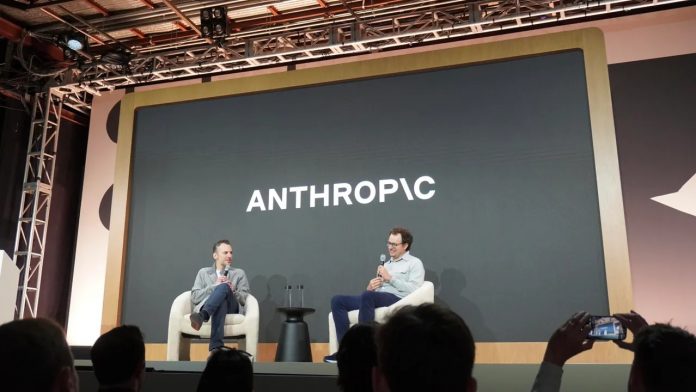
Speaking at the Vatican during the presentation of Pope Leo XIV’s first encyclical on artificial intelligence, Anthropic co-founder Chris Olah said the world faces a “real possibility” that AI systems could displace human labor on a massive scale, creating economic and moral pressures unlike previous technological transitions.

“If that happens, supporting those displaced will be a moral imperative of historic proportions,” Olah said during the event, which brought together religious leaders, academics, and technology figures at the Vatican.

The remarks reflected growing unease inside parts of the AI industry itself, where even executives building advanced systems are increasingly warning about the societal consequences of the technology’s rapid acceleration.

Olah acknowledged that companies developing frontier AI models operate under intense commercial and geopolitical pressure, conditions he said can conflict with broader public interests.

“Every frontier AI lab operates inside a set of incentives and constraints that can sometimes conflict with doing the right thing,” he said, arguing that external scrutiny is necessary precisely because market incentives alone cannot reliably govern systems with potentially transformative social consequences.

The appearance marked a striking moment in the widening debate over AI governance, bringing together one of Silicon Valley’s leading AI safety advocates and the Catholic Church, which has increasingly positioned itself as a moral counterweight to the speed-driven culture of the technology sector.

The Vatican has emerged as an unusually active voice in ethical debates surrounding AI, automation, and human dignity, particularly around concerns that advanced systems could deepen inequality, weaken social cohesion, and concentrate power in a small number of corporations and governments.

Anthropic’s presence at the event also highlighted the company’s evolving role within the global AI policy debate. Founded in 2021 by former employees of OpenAI, including Olah, the company was created partly out of concerns that AI systems were being commercialized faster than adequate safeguards could be developed.

Anthropic has since tried to distinguish itself as a safety-focused AI developer, frequently advocating tighter controls and testing standards for powerful models. The company has also resisted pressure from parts of President Donald Trump’s administration to loosen restrictions around military applications of AI, particularly in areas such as autonomous targeting and domestic surveillance.

Olah said the ethical implications of AI now extend far beyond software engineering and should be treated as a broader societal issue involving philosophy, labor, economics, and human rights.

“I think this is a scary moment. Things are moving fast. It’s a really powerful technology,” he told Reuters after the event.

“There’s a risk that things could go badly, and it’s incumbent on all of us to push this in a good direction.”

His warning comes as governments around the world struggle to build coherent regulatory frameworks for increasingly capable AI systems, while companies race to deploy models that can code, reason, generate media, and automate complex workflows at unprecedented scale.

The debate has intensified in recent months following the release of more advanced AI systems from firms including Anthropic, OpenAI, and others, prompting concerns over cyber risks, labor disruption, and concentration of technological power.

Olah identified three areas he believes require urgent global attention: large-scale labor displacement, unequal access to AI benefits between wealthy and developing nations, and the growing opacity of advanced AI systems whose internal decision-making processes are becoming harder even for developers to interpret.

“AI development is concentrated in a handful of wealthy nations,” he told the Vatican audience. “How can we ensure the gains of AI are shared globally?”

That concern increasingly resonates beyond religious institutions. Policymakers in Europe, parts of Asia, and even sections of the US political establishment are debating whether frontier AI models should face stricter oversight before public deployment.

The Vatican event also indicates that the AI debate is shifting. What was once largely a technical discussion among engineers and venture capitalists is becoming a wider societal argument involving ethics, labor rights, geopolitics, and institutional trust.

Olah’s role as the only major Big Tech representative invited to the gathering underpins his longstanding focus on AI safety research and his outreach to religious communities. He said he had engaged with more than 15 faith traditions on the moral and philosophical implications of advanced AI systems.
Huawei Sets Ambitious 1.4-Nanometer Chip Target by 2031 as China Pushes for Semiconductor Self-Sufficiency Amid U.S. Sanctions

0
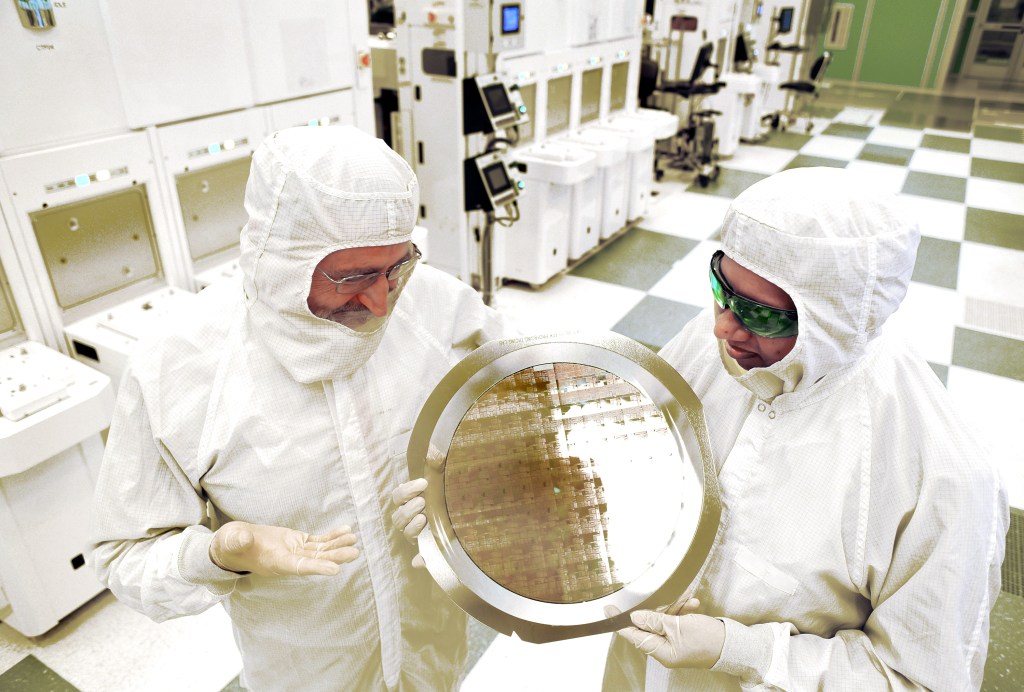
SUNY College of Nanoscale Science and Engineering's Michael Liehr, left, and IBM's Bala Haranand look at wafer comprised of 7nm chips on Thursday, July 2, 2015, in a NFX clean room Albany. Several 7nm chips at SUNY Poly CNSE on Thursday in Albany. (Darryl Bautista/Feature Photo Service for IBM)

Huawei Technologies declared on Monday that it will achieve industry-leading semiconductor performance within five years, unveiling a new technological principle aimed at overcoming persistent U.S. export restrictions that have severely limited China’s access to cutting-edge chipmaking tools.

Reuters reports that at a semiconductor symposium in Shanghai, Huawei said its high-end chips will reach transistor density equivalent to 1.4-nanometer processes by 2031. While the company did not provide independent performance benchmarks, the target is highly significant.

According to the report, China’s most advanced proven manufacturing capability currently sits around the 7-nanometer node, while 1.4 nm is expected to represent the global frontier toward the end of the decade.

Taiwan’s TSMC, the world’s leading contract chipmaker, is currently in production with 2-nanometer technology and plans to begin mass production of 1.4-nanometer chips in 2028. Huawei’s announcement underscores Beijing’s aggressive drive to close the gap through innovation rather than reliance on restricted Western technology.

The Tau Scaling Law: Moving Beyond Moore’s Law

Huawei introduced a new guiding principle called the Tau Scaling Law, shifting the industry’s traditional focus away from simply shrinking transistors — the foundation of Moore’s Law, which has driven semiconductor progress for decades. As transistors approach atomic scales, further miniaturization is becoming physically and economically challenging.

Instead, Tau Scaling emphasizes reducing the time it takes for signals and data to travel through chips and computing systems, effectively improving overall performance by minimizing latency and interconnect delays.

“The industry can no longer rely on shrinking transistors for computing breakthroughs,” Huawei’s presentation implied, positioning Tau Scaling as a necessary evolution for the post-Moore era.

This approach aligns with broader global efforts in advanced packaging, chiplets, and system-level optimization, but holds particular urgency for China. U.S. export controls since 2019 have restricted access to extreme ultraviolet (EUV) lithography machines and other critical tools, forcing Chinese firms to explore alternative pathways to performance gains.

He Hui, director of semiconductor research at Omdia, assessed the strategy positively. He noted: “What Huawei is proposing is a shift from traditional node-driven scaling to system-level efficiency scaling. Rather than depending solely on smaller transistors, the company is focusing on shortening interconnect, lowering latency and improving data movement inside the chip, which is a credible way to extract more performance when leading-edge lithography is constrained.”

AI Boom Amplifies The Stakes

The urgency behind Huawei’s push is heightened by the explosive growth of artificial intelligence. Huawei’s Ascend series of AI chips powers several leading Chinese models, including DeepSeek’s flagship V4, released last month. The company announced that its upcoming Kirin smartphone chips, scheduled for launch later this year, will be the first to incorporate a Tau Scaling architecture called LogicFolding, which shortens internal wiring and significantly boosts performance.

LogicFolding will also be extended to Ascend AI chips by 2030 and applied to large-scale AI computing clusters. Huawei claimed it has already designed and mass-produced 381 chips over the past six years based on Tau Scaling principles for use in smartphones, AI computing, and other applications.

This progress is critical as domestic Chinese tech firms seek alternatives to Nvidia’s most advanced AI processors, which remain heavily restricted from sale in China. Nvidia CEO Jensen Huang recently conceded that the company has “largely conceded” the Chinese AI chip market to Huawei and local players.

Despite the ambitious targets, analysts caution that significant hurdles remain. Brady Wang, associate director at Counterpoint Research, noted: “Cost, power, heat, and system integration remain major challenges, especially for Cloud AI servers. In the short term, China may narrow the gap with global leaders, but a technology gap with the most advanced nodes will still remain.”

Huawei’s chip division head, He Tingbo, acknowledged the difficulties, including the need for new design tools tailored to Tau Scaling and managing thermal issues across applications from mobile devices to massive data centers. However, he expressed confidence.

“Given all the various constraints, we have found some pretty good solutions… I can confidently say in the coming 10 years our solutions for mobile computing and AI computing will be competitive,” he said.

The Ban that Inspired the Push

Huawei was placed on the U.S. Entity List in 2019, cutting it off from many American technologies and forcing it into what the company described as “extreme survival mode.” A secret backup chip project became central to its resilience, culminating in the surprise 2023 launch of the 5G-capable Mate 60 series powered by a domestically produced 7-nanometer chip from SMIC.SMIC shares rose 7.6% on Monday following Huawei’s announcement.

The foundry has also invested in advanced packaging research, signaling a broader ecosystem effort to push beyond conventional limits.

For China, achieving semiconductor self-sufficiency is a national priority with profound geopolitical implications. Success would reduce vulnerability to future sanctions, strengthen its position in the global AI race, and enhance technological sovereignty. Failure, or even prolonged gaps, could constrain its AI ambitions and economic competitiveness.

Analysts believe Huawei’s Tau Scaling initiative represents a creative and necessary adaptation to external constraints. While it may not fully close the gap with TSMC or Intel in the immediate future, it demonstrates China’s determination to innovate around restrictions and invest heavily in alternative pathways.

AI Boom Rewires India’s Data Center Race as Schneider Electric Bets on Explosive Growth

0

Schneider Electric expects its India data center business to grow significantly faster than its broader operations in the country over the next four to five years, as artificial intelligence adoption triggers a fresh wave of investment in digital infrastructure.

The company said demand for AI-ready data centers, cloud computing capacity, and grid modernization is accelerating across India, turning the country into one of the most important emerging battlegrounds in the global infrastructure race.

Sumati Sahgal, vice-president for Secure Power and Data Centers, Greater India Zone at Schneider Electric, told Reuters that data centers currently contribute about 15% to 20% of the company’s India business, but the segment is expanding at a double-digit pace and is expected to account for a much larger share over time.

“This business will contribute to a much faster pace of growth than what the rest of the core business sees,” Sahgal said, adding that data centers and electricity grid upgrades would remain among the company’s strongest growth drivers.

This means that the AI investment boom, initially concentrated in the United States and China, is now rapidly reshaping India’s industrial and technology landscape. As companies rush to deploy generative AI systems, demand is surging for high-density computing facilities capable of handling enormous workloads, particularly those tied to training and running large language models.

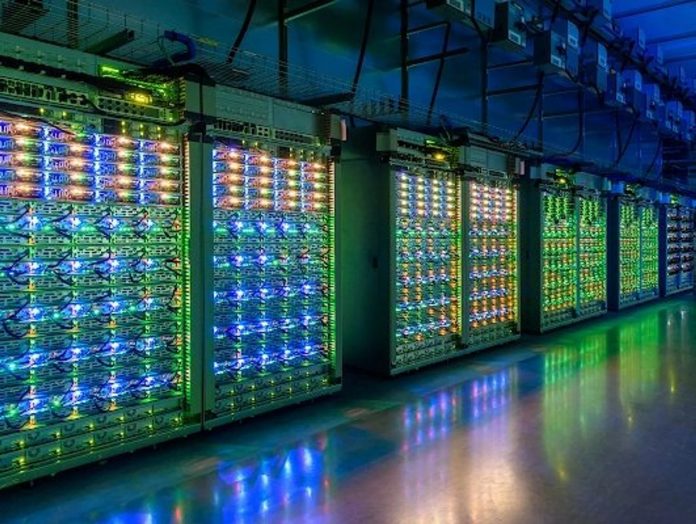
Unlike traditional data centers, AI-focused facilities consume far more electricity and require sophisticated cooling systems, backup power infrastructure, and energy management software. That shift is creating a lucrative opportunity for suppliers such as Schneider Electric, which provides uninterruptible power supply systems, switchgear, cooling technologies, power distribution units, and monitoring software.

India has emerged as a particularly attractive market because of its large digital population, expanding cloud adoption, and government pushes to strengthen domestic manufacturing and digital infrastructure. Industry estimates cited by Schneider Electric suggest India’s data center market could reach $31.36 billion by 2035, growing at a compound annual rate of more than 13%.

Sahgal said India’s installed data center capacity could rise to between 6 gigawatts and 7 gigawatts by 2030, up sharply from around 1.5 gigawatts currently. That scale-up would require billions of dollars in fresh investment in power systems, cooling equipment, and transmission infrastructure.

The expansion is also spreading geographically. While Mumbai and Chennai remain dominant hubs because of submarine cable connectivity and financial infrastructure, companies are increasingly looking toward states such as Gujarat and Rajasthan to build new facilities closer to users and industrial clusters.

That decentralization trend reflects mounting concerns about land availability, power reliability, and latency requirements for AI applications. It also aligns with India’s broader push to develop regional digital ecosystems rather than concentrate infrastructure in a few urban centers.

Schneider Electric’s optimism comes amid a broader global scramble for AI infrastructure. Technology giants, including Microsoft, Amazon, Google, and Meta, are collectively spending hundreds of billions of dollars to build AI computing capacity, while equipment makers and power infrastructure firms are benefiting from the surge in demand.

India is increasingly positioning itself as both a consumer market and a manufacturing base within that ecosystem. Sahgal said the country is becoming an important production hub for power and cooling equipment used in data centers, with local manufacturing helping operators manage costs and supply chain risks.

The shift is also tied to growing energy concerns. AI data centers require enormous amounts of electricity, placing additional strain on power grids already under pressure in many countries. That has elevated the importance of grid modernization and energy efficiency technologies, areas where Schneider Electric has been aggressively expanding.

Investors globally have poured into companies linked to AI infrastructure over the past two years, betting that the demand cycle could last for a decade or more. Semiconductor firms, power equipment makers, utilities, and cooling technology providers have all emerged as major beneficiaries.

For Schneider Electric, India now represents one of the clearest examples of how the AI boom is moving beyond software and chips into the physical infrastructure economy. The company’s strategy is seen as an indication of a broader industry view that the next phase of AI competition will not just be about algorithms, but about who can build enough energy-efficient computing infrastructure to support them.

The On-Chain Trading Tools That Replaced Robinhood for Crypto Retail in 2026

0

The average retail crypto trade on serious on-chain platforms now sits at $635 (per Banana Gun platform analytics, Q1 2026), almost exactly where Robinhood retail clusters. That single number rewrites a persistent assumption: that self-custody crypto trading apps are for sophisticated traders who understand MEV (miner extractable value, the practice of bots front-running your transactions for profit), not for the investor who checks Webull on the subway. The gap between centralized platforms and on-chain alternatives has closed faster than most financial media has reported, and the Robinhood alternative conversation has quietly moved on-chain.

Why Retail Crypto Traders Stopped Using Centralized Exchanges

Centralized exchanges served a generation of retail buyers well. Coinbase made wallet creation invisible. Robinhood made fractional crypto feel like buying a stock. That convenience carried real trade-offs that have grown harder to ignore.

Centralized platforms hold your private keys, meaning the exchange controls your assets. When FTX collapsed in late 2022, roughly $8 billion in customer funds disappeared because users had trusted the exchange with custody, a figure documented in Chapter 11 filings and reported extensively by Reuters across late 2022. Coinbase and Binance have made their fee structures more visible since 2024, but the custody risk never fully disappears on a centralized platform. More routinely, centralized exchanges cannot access newly launched tokens in their first trading hours, exactly the window where the largest price moves occur.

Through 2025 and into 2026, on-chain tooling closed the UX gap. MetaMask setup, seed phrase management, network bridging, contract approvals: that friction stack has been systematically removed. Platforms that replaced it with familiar login flows are now capturing retail volume that previously sat on centralized competitors.

What an On-Chain Trading Terminal Actually Looks Like Now

The reference product for this generation of on-chain tooling is Banana Pro as the retail terminal for on-chain markets. It runs in a browser, requires no extension, and looks closer to a Bloomberg terminal layout than to anything a typical retail investor associates with crypto.

The interface is a drag-and-drop widget system. You arrange panels: price chart on the left, buy module beside it, copy trade panel below, position tracker in the corner. Widgets are resizable and hot-swappable between saved layouts. The set covers buy and sell execution, sniping newly launched tokens, limit orders, DCA (dollar cost averaging, automating recurring purchases at set intervals), copy trading, a live transaction feed, top trader leaderboards, and a Bubble Map that flags suspicious wallet concentration before you commit capital.

It covers five chains: Ethereum, Solana, BNB Chain, Base, and MegaETH. On Base, Flashblock copy trading executes in 200ms with zero fees on stablecoin swaps covering USDT, USDC, and DAI. On MegaETH, execution lands under 100ms. ETH first-block snipe success holds at 88% (per platform execution data), the number that matters because the first block after a token launches is where most available price move is captured. DeFiLlama volume tracking for on-chain trading bots shows consistent category growth from 2024 into 2026, directionally consistent with the platform-level figures cited here.

Banana Pro’s security model is non-custodial despite the convenience: private keys are generated locally and never transmitted to the platform. Performance comparisons for best crypto bot 2025 sniping volume confirm what the architecture implies: purpose-built on-chain terminals outperform retrofitted CEX interfaces on every execution metric. In side-by-side entry tests on memecoin launches, platform sessions broadcast in under 1 second from quote, while CEX mobile routing introduced delays of 3 to 5 seconds. First-block access, MEV protection, and cross-chain copy trading are capabilities centralized exchanges cannot structurally offer.

The Mainstream Bridge: Logging In Without a Browser Wallet

The feature that separates this platform generation from earlier attempts is authentication. Banana Pro uses Privy, an OAuth social login layer, so you sign in with Google, Twitter, or Telegram. No MetaMask. No seed phrase to write down. No browser extension to install. In practice, the Google OAuth flow takes two clicks: authorize the app, then confirm. Your private keys are generated locally in that sequence without the seed phrase appearing on screen or reaching any server. For a retail investor who uses Google login across most financial apps, the mental model is identical.

The same session logic extends to mobile via a unified Telegram trading bot that as of March 2026 covers all five chains under one session. You monitor Ethereum positions, execute a Solana trade, and check Base holdings without switching bots or re-authenticating. For a retail trader with two hours per week to spend on crypto, that continuity is the difference between a tool they use and one they abandon.

What This Means for the Next 12 Months of Retail Crypto

The adoption curve for on-chain trading follows the same pattern as every previous shift in retail finance. Online brokerage looked complicated until E*Trade simplified the interface in the late 1990s. Mobile investing looked dangerous until Robinhood removed the commission barrier. In 2026, the remaining friction is almost entirely perceptual, and this generation of on-chain terminals represents the same inflection point. Vitalik Buterin argued throughout 2024 that account abstraction was the final missing piece for retail self-custody at scale, and the social-login flows now live in platforms like Banana Pro are the production implementation of that argument.

The $635 average trade size is not a curiosity. It signals that users of these platforms have shifted from pure speculation toward the position sizing retail investors with real portfolios apply elsewhere. When your on-chain trade size matches your Robinhood trade size, on-chain has become mainstream.

The $BANANA token connects to platform economics: forty percent of trading fees distribute to holders every four hours, minimum 50 tokens, no staking lockup. The yield runs automatically.

Over the next 12 months, the question for retail crypto investors stops being whether to consider on-chain trading and starts being which terminal fits how they already work. Traders moving from Robinhood to on-chain platforms typically report the sharpest adjustment in the first 48 hours of wallet management, after which the muscle memory transfers cleanly. On-chain terminals carry their own friction. Ethereum gas spikes during peak activity can shift execution economics on individual trades, and entering brand-new tokens still requires checking contract audits or relying on built-in honeypot detection before committing real size. For long-horizon holding of major assets, centralized custody remains a reasonable choice for many retail users. The traders who make the on-chain shift early gain access to price discovery that centralized exchanges, by design, cannot reach.

Self-custody used to mean friction. In 2026, it means control. Banana Pro has closed the gap between what retail traders want and what on-chain trading can actually deliver. The only remaining question is whether your setup has caught up.

This article contains links to Banana Pro and Banana Gun products. The author may receive compensation for signups.


FAQ

What is non-custodial crypto trading?

Non-custodial trading means you hold your own private keys rather than trusting an exchange to hold them on your behalf. Banana Pro generates your private keys locally on your device and never sends them to any server. You control your assets directly, so no platform insolvency or hack can freeze or seize your funds.

How does on-chain trading compare to Coinbase or Robinhood?

Coinbase and Robinhood require you to deposit funds into exchange-controlled wallets, which means the exchange can restrict withdrawals during volatility or market stress. On-chain trading via Banana Gun gives you direct access to newly launched tokens from the first trading block, MEV protection, and cross-chain execution, all without transferring custody of your assets.

Which blockchains does Banana Pro support?

Banana Pro currently supports five chains: Ethereum, Solana, BNB Chain, Base, and MegaETH. On Base, Flashblock copy trading executes in 200ms with zero fees on stablecoin swaps. On MegaETH, execution lands under 100ms. All five chains are accessible under a single session, including via the Banana Gun Telegram bot on mobile.

Is Wingtalks Worth It? Reddit Threads and User Insights

0

“Worth it” is a question about fit, not just quality. A platform can be well-built and still not be worth it for a specific user — and a platform that receives mixed reviews can be exactly right for someone else. That’s the lens worth applying to Wingtalks before deciding whether the feedback you’ll find in Reddit threads and review sites is telling you something useful about the platform or just about the people who wrote the reviews.

What Wingtalks Is Built For

Wingtalks is a socializing platform — a distinction that matters when reading user feedback. People who come looking for a specific type of romantic outcome or a particular interaction style sometimes arrive at platforms like this with expectations that don’t match the model. Understanding what the platform is actually designed to support shapes how you interpret what users say about it.

The platform operates via a mobile website rather than a dedicated app. Users can create profiles, browse other members, exchange messages, share media, and use icebreakers and stickers within conversations. Email confirmation is part of the account process, and identity verification through an industry-leading third-party vendor is available to users who want an additional layer of credibility attached to their profile.

Reddit Threads on Wingtalks: What Users Are Saying

Reddit isn’t where Wingtalks generates its highest volume of discussion, but threads surface occasionally — most often in subreddits focused on platform comparisons or general socializing app recommendations.

The feedback that appears tends to follow a recognizable pattern — but the most useful signal comes from users who describe extended interactions rather than first impressions. One thread where people share Wingtalks stories follows a user who has been talking to someone on the platform for a sustained period and is working through what that connection means to them. That kind of thread — built around ongoing engagement rather than a quick verdict — reflects something a surface-level review can’t: that the platform supports conversations that actually develop over time.

Specific features that receive positive mention in community threads include:

  • The icebreaker tools, which users describe as a practical solution to the blank-first-message problem
  • Media sharing within conversations, which expands the interaction beyond text exchanges
  • The availability of round-the-clock support for account and platform questions

The Wingtalks scam question appears in search and occasionally in threads. No consistent pattern of systemic complaints appears in the community discussion to support that framing. The platform takes measures to minimize instances of unwanted content, and users can report profiles or behavior they find suspicious.

Is Wingtalks Legit? Looking at the Evidence

Whether Wingtalks is legit or fake comes down to whether it operates as described and takes user safety seriously as a process — not whether it produces a guaranteed outcome for every user.

On the operational side: Wingtalks is functional, profile-active, and built around features that work as listed. Email confirmation is required during the account creation process, which filters out the most casual throwaway accounts from the membership pool. Identity verification is available through a third-party vendor, and many users can be verified — giving the platform a structural credibility check that not every site in this category offers.

On safety: the platform takes measures to minimize unwanted content. Users can report anything they find suspicious. That’s a process commitment, not an outcome guarantee — and it’s the honest framing for any platform operating at this scale.

Is Wingtalks fake or real? Real — in the sense that it operates, supports interaction between verified and unverified members alike, and maintains a support infrastructure that users can actually reach.

Wingtalks Sign Up, Profile Search, and How the Platform Works in Practice

Wingtalks sign up is browser-based, which keeps it accessible across devices without a download requirement. The Wingtalks profile search function allows users to look through the member base using available filters. Not all filtering options that some users might want are present — filtering by specific hobbies or interests isn’t available — but basic search is functional.

Wingtalks messages operate within the platform’s conversation environment. Stickers are available within active conversations, as is media sharing. Draft functionality means messages don’t have to be sent the moment they’re written.

Account management includes both deactivation and full deletion options. For users who want to take a break without losing their profile, deactivation handles that. For those who want to remove their data entirely, deletion is available.

What Makes the “Worth It” Question Hard to Answer Generically

The Wingtalks review conversation — on Reddit, on aggregator sites, and in individual accounts — keeps circling back to the paid feature structure. Personal messaging and platform tools cost money beyond registration, and this is the detail that generates the sharpest feedback from users who didn’t expect it.

That’s not a dishonest model. It’s a specific model — one where the platform sustains itself through feature fees rather than advertising or subscription alone. For users who research this before joining and decide the model works for them, the “worth it” question resolves quickly.

Wingtalks online works for people who approach it knowing what they’re joining. That’s the most accurate verdict available from community evidence.