DD
MM
YYYY

PAGES

DD
MM
YYYY

spot_img

PAGES

Home Blog Page 2

The On-Chain Trading Tools That Replaced Robinhood for Crypto Retail in 2026

0

The average retail crypto trade on serious on-chain platforms now sits at $635 (per Banana Gun platform analytics, Q1 2026), almost exactly where Robinhood retail clusters. That single number rewrites a persistent assumption: that self-custody crypto trading apps are for sophisticated traders who understand MEV (miner extractable value, the practice of bots front-running your transactions for profit), not for the investor who checks Webull on the subway. The gap between centralized platforms and on-chain alternatives has closed faster than most financial media has reported, and the Robinhood alternative conversation has quietly moved on-chain.

Why Retail Crypto Traders Stopped Using Centralized Exchanges

Centralized exchanges served a generation of retail buyers well. Coinbase made wallet creation invisible. Robinhood made fractional crypto feel like buying a stock. That convenience carried real trade-offs that have grown harder to ignore.

Centralized platforms hold your private keys, meaning the exchange controls your assets. When FTX collapsed in late 2022, roughly $8 billion in customer funds disappeared because users had trusted the exchange with custody, a figure documented in Chapter 11 filings and reported extensively by Reuters across late 2022. Coinbase and Binance have made their fee structures more visible since 2024, but the custody risk never fully disappears on a centralized platform. More routinely, centralized exchanges cannot access newly launched tokens in their first trading hours, exactly the window where the largest price moves occur.

Through 2025 and into 2026, on-chain tooling closed the UX gap. MetaMask setup, seed phrase management, network bridging, contract approvals: that friction stack has been systematically removed. Platforms that replaced it with familiar login flows are now capturing retail volume that previously sat on centralized competitors.

What an On-Chain Trading Terminal Actually Looks Like Now

The reference product for this generation of on-chain tooling is Banana Pro as the retail terminal for on-chain markets. It runs in a browser, requires no extension, and looks closer to a Bloomberg terminal layout than to anything a typical retail investor associates with crypto.

The interface is a drag-and-drop widget system. You arrange panels: price chart on the left, buy module beside it, copy trade panel below, position tracker in the corner. Widgets are resizable and hot-swappable between saved layouts. The set covers buy and sell execution, sniping newly launched tokens, limit orders, DCA (dollar cost averaging, automating recurring purchases at set intervals), copy trading, a live transaction feed, top trader leaderboards, and a Bubble Map that flags suspicious wallet concentration before you commit capital.

It covers five chains: Ethereum, Solana, BNB Chain, Base, and MegaETH. On Base, Flashblock copy trading executes in 200ms with zero fees on stablecoin swaps covering USDT, USDC, and DAI. On MegaETH, execution lands under 100ms. ETH first-block snipe success holds at 88% (per platform execution data), the number that matters because the first block after a token launches is where most available price move is captured. DeFiLlama volume tracking for on-chain trading bots shows consistent category growth from 2024 into 2026, directionally consistent with the platform-level figures cited here.

Banana Pro’s security model is non-custodial despite the convenience: private keys are generated locally and never transmitted to the platform. Performance comparisons for best crypto bot 2025 sniping volume confirm what the architecture implies: purpose-built on-chain terminals outperform retrofitted CEX interfaces on every execution metric. In side-by-side entry tests on memecoin launches, platform sessions broadcast in under 1 second from quote, while CEX mobile routing introduced delays of 3 to 5 seconds. First-block access, MEV protection, and cross-chain copy trading are capabilities centralized exchanges cannot structurally offer.

The Mainstream Bridge: Logging In Without a Browser Wallet

The feature that separates this platform generation from earlier attempts is authentication. Banana Pro uses Privy, an OAuth social login layer, so you sign in with Google, Twitter, or Telegram. No MetaMask. No seed phrase to write down. No browser extension to install. In practice, the Google OAuth flow takes two clicks: authorize the app, then confirm. Your private keys are generated locally in that sequence without the seed phrase appearing on screen or reaching any server. For a retail investor who uses Google login across most financial apps, the mental model is identical.

The same session logic extends to mobile via a unified Telegram trading bot that as of March 2026 covers all five chains under one session. You monitor Ethereum positions, execute a Solana trade, and check Base holdings without switching bots or re-authenticating. For a retail trader with two hours per week to spend on crypto, that continuity is the difference between a tool they use and one they abandon.

What This Means for the Next 12 Months of Retail Crypto

The adoption curve for on-chain trading follows the same pattern as every previous shift in retail finance. Online brokerage looked complicated until E*Trade simplified the interface in the late 1990s. Mobile investing looked dangerous until Robinhood removed the commission barrier. In 2026, the remaining friction is almost entirely perceptual, and this generation of on-chain terminals represents the same inflection point. Vitalik Buterin argued throughout 2024 that account abstraction was the final missing piece for retail self-custody at scale, and the social-login flows now live in platforms like Banana Pro are the production implementation of that argument.

The $635 average trade size is not a curiosity. It signals that users of these platforms have shifted from pure speculation toward the position sizing retail investors with real portfolios apply elsewhere. When your on-chain trade size matches your Robinhood trade size, on-chain has become mainstream.

The $BANANA token connects to platform economics: forty percent of trading fees distribute to holders every four hours, minimum 50 tokens, no staking lockup. The yield runs automatically.

Over the next 12 months, the question for retail crypto investors stops being whether to consider on-chain trading and starts being which terminal fits how they already work. Traders moving from Robinhood to on-chain platforms typically report the sharpest adjustment in the first 48 hours of wallet management, after which the muscle memory transfers cleanly. On-chain terminals carry their own friction. Ethereum gas spikes during peak activity can shift execution economics on individual trades, and entering brand-new tokens still requires checking contract audits or relying on built-in honeypot detection before committing real size. For long-horizon holding of major assets, centralized custody remains a reasonable choice for many retail users. The traders who make the on-chain shift early gain access to price discovery that centralized exchanges, by design, cannot reach.

Self-custody used to mean friction. In 2026, it means control. Banana Pro has closed the gap between what retail traders want and what on-chain trading can actually deliver. The only remaining question is whether your setup has caught up.

This article contains links to Banana Pro and Banana Gun products. The author may receive compensation for signups.


FAQ

What is non-custodial crypto trading?

Non-custodial trading means you hold your own private keys rather than trusting an exchange to hold them on your behalf. Banana Pro generates your private keys locally on your device and never sends them to any server. You control your assets directly, so no platform insolvency or hack can freeze or seize your funds.

How does on-chain trading compare to Coinbase or Robinhood?

Coinbase and Robinhood require you to deposit funds into exchange-controlled wallets, which means the exchange can restrict withdrawals during volatility or market stress. On-chain trading via Banana Gun gives you direct access to newly launched tokens from the first trading block, MEV protection, and cross-chain execution, all without transferring custody of your assets.

Which blockchains does Banana Pro support?

Banana Pro currently supports five chains: Ethereum, Solana, BNB Chain, Base, and MegaETH. On Base, Flashblock copy trading executes in 200ms with zero fees on stablecoin swaps. On MegaETH, execution lands under 100ms. All five chains are accessible under a single session, including via the Banana Gun Telegram bot on mobile.


Is Wingtalks Worth It? Reddit Threads and User Insights

0

“Worth it” is a question about fit, not just quality. A platform can be well-built and still not be worth it for a specific user — and a platform that receives mixed reviews can be exactly right for someone else. That’s the lens worth applying to Wingtalks before deciding whether the feedback you’ll find in Reddit threads and review sites is telling you something useful about the platform or just about the people who wrote the reviews.

What Wingtalks Is Built For

Wingtalks is a socializing platform — a distinction that matters when reading user feedback. People who come looking for a specific type of romantic outcome or a particular interaction style sometimes arrive at platforms like this with expectations that don’t match the model. Understanding what the platform is actually designed to support shapes how you interpret what users say about it.

The platform operates via a mobile website rather than a dedicated app. Users can create profiles, browse other members, exchange messages, share media, and use icebreakers and stickers within conversations. Email confirmation is part of the account process, and identity verification through an industry-leading third-party vendor is available to users who want an additional layer of credibility attached to their profile.

Reddit Threads on Wingtalks: What Users Are Saying

Reddit isn’t where Wingtalks generates its highest volume of discussion, but threads surface occasionally — most often in subreddits focused on platform comparisons or general socializing app recommendations.

The feedback that appears tends to follow a recognizable pattern — but the most useful signal comes from users who describe extended interactions rather than first impressions. One thread where people share Wingtalks stories follows a user who has been talking to someone on the platform for a sustained period and is working through what that connection means to them. That kind of thread — built around ongoing engagement rather than a quick verdict — reflects something a surface-level review can’t: that the platform supports conversations that actually develop over time.

Specific features that receive positive mention in community threads include:

  • The icebreaker tools, which users describe as a practical solution to the blank-first-message problem
  • Media sharing within conversations, which expands the interaction beyond text exchanges
  • The availability of round-the-clock support for account and platform questions

The Wingtalks scam question appears in search and occasionally in threads. No consistent pattern of systemic complaints appears in the community discussion to support that framing. The platform takes measures to minimize instances of unwanted content, and users can report profiles or behavior they find suspicious.

Is Wingtalks Legit? Looking at the Evidence

Whether Wingtalks is legit or fake comes down to whether it operates as described and takes user safety seriously as a process — not whether it produces a guaranteed outcome for every user.

On the operational side: Wingtalks is functional, profile-active, and built around features that work as listed. Email confirmation is required during the account creation process, which filters out the most casual throwaway accounts from the membership pool. Identity verification is available through a third-party vendor, and many users can be verified — giving the platform a structural credibility check that not every site in this category offers.

On safety: the platform takes measures to minimize unwanted content. Users can report anything they find suspicious. That’s a process commitment, not an outcome guarantee — and it’s the honest framing for any platform operating at this scale.

Is Wingtalks fake or real? Real — in the sense that it operates, supports interaction between verified and unverified members alike, and maintains a support infrastructure that users can actually reach.

Wingtalks Sign Up, Profile Search, and How the Platform Works in Practice

Wingtalks sign up is browser-based, which keeps it accessible across devices without a download requirement. The Wingtalks profile search function allows users to look through the member base using available filters. Not all filtering options that some users might want are present — filtering by specific hobbies or interests isn’t available — but basic search is functional.

Wingtalks messages operate within the platform’s conversation environment. Stickers are available within active conversations, as is media sharing. Draft functionality means messages don’t have to be sent the moment they’re written.

Account management includes both deactivation and full deletion options. For users who want to take a break without losing their profile, deactivation handles that. For those who want to remove their data entirely, deletion is available.

What Makes the “Worth It” Question Hard to Answer Generically

The Wingtalks review conversation — on Reddit, on aggregator sites, and in individual accounts — keeps circling back to the paid feature structure. Personal messaging and platform tools cost money beyond registration, and this is the detail that generates the sharpest feedback from users who didn’t expect it.

That’s not a dishonest model. It’s a specific model — one where the platform sustains itself through feature fees rather than advertising or subscription alone. For users who research this before joining and decide the model works for them, the “worth it” question resolves quickly.

Wingtalks online works for people who approach it knowing what they’re joining. That’s the most accurate verdict available from community evidence.

Gold Rebounds as Easing Iran Tensions Weaken Dollar and Oil, Reshaping Fed Outlook

0

Gold climbed more than 1% on Monday as mounting expectations of a potential diplomatic breakthrough between the United States and Iran pushed oil prices and the dollar lower, easing fears that the Middle East conflict could lock the Federal Reserve into a prolonged period of high interest rates.

Spot gold rose 1.1% to $4,559.69 an ounce, while US gold futures gained 0.9% to $4,561.30, as investors rotated back into bullion after weeks of volatility tied to the Iran war and surging energy markets.

The rally came as financial markets responded positively to signs of renewed diplomacy over the conflict that has destabilized global energy flows for nearly three months. Oil prices slipped below $100 per barrel to their lowest levels in two weeks after President Donald Trump said Washington and Tehran had largely negotiated a memorandum of understanding that could reopen the Strait of Hormuz, one of the world’s most critical oil shipping corridors.

Although both Washington and Tehran later downplayed the prospects of an immediate agreement, investors interpreted the developments as reducing the risk of a prolonged supply shock in global energy markets.

The shift in sentiment reverberated across asset classes. Equities rallied, the dollar weakened toward a one-week low, and Treasury market expectations for future Federal Reserve policy softened as traders reassessed inflation risks linked to the conflict.

“Financial assets are strongly influenced by oil prices at present, and gold prices are not an exception,” said Giovanni Staunovo, an analyst at UBS.

“Lower oil prices lift gold, in anticipation that it impacts the monetary policy of the Federal Reserve,” Staunovo said, adding that the trend could continue in the near term.

The rebound in bullion marks a notable shift after gold lost roughly 14% since the Iran war erupted in late February. During that period, soaring crude prices fueled fears of entrenched inflation, pushing bond yields higher and strengthening expectations that US interest rates would remain elevated for longer.

Energy-driven inflation has become one of the defining themes of global markets in recent months. The war disrupted shipping through the Strait of Hormuz, a chokepoint through which roughly a fifth of the world’s oil supply passes, triggering spikes in crude, fuel, and transport costs worldwide.

That pressure complicated the Federal Reserve’s inflation battle just as markets had begun anticipating rate cuts earlier this year. Traders now see a roughly 40% probability of a 25-basis-point Fed rate hike in December, a sharp reversal from pre-war expectations that policymakers would deliver two rate cuts in 2026.

The policy uncertainty has intensified following the swearing-in of Kevin Warsh as the new Federal Reserve chair on Friday. Warsh takes office at a delicate moment for the US economy, with higher gasoline prices weighing on consumer confidence while geopolitical risks continue to cloud the inflation outlook.

Analysts said Monday’s rally in gold reflected a recalibration of those concerns rather than a complete unwinding of safe-haven demand.

Markets remain cautious because negotiations between the US and Iran continue to face significant obstacles, including disagreements over Tehran’s nuclear programme, regional security arrangements, and guarantees surrounding shipping routes in the Gulf.

Trump warned over the weekend that Iran “better get moving, FAST, or there won’t be anything left of them,” underscoring how fragile the diplomatic track remains even as markets welcome signs of de-escalation.

Precious metals broadly strengthened alongside gold. Spot silver surged 3.1% to $77.86 an ounce, platinum gained 2.1% to $1,962.93, while palladium advanced 2.8% to $1,386.47. The sharp moves across metals markets also reflected improving risk appetite and expectations that easing energy pressures could stabilize industrial demand conditions globally.

Investors are now watching whether diplomatic momentum translates into tangible progress on reopening the Strait of Hormuz and reducing pressure on global supply chains. Any sustained decline in oil prices could ease inflation expectations further and reshape the outlook for both the Federal Reserve and broader financial markets heading into the second half of the year.

“We’re Scaring People:” Nvidia’s Jensen Huang Rebukes CEOs Blaming AI For Layoffs

0

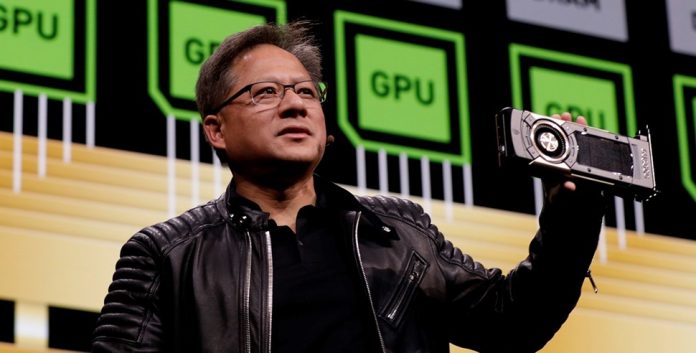
Nvidia Chief Executive Jensen Huang has criticized corporate leaders who attribute layoffs to artificial intelligence, arguing that many executives are using AI as a convenient justification for broader cost-cutting and restructuring decisions rather than describing the technology’s actual impact on the workforce.

Speaking in an interview with Singapore broadcaster CNA on Monday, Huang dismissed the growing corporate narrative linking job cuts directly to AI adoption as “lazy,” saying the timeline simply does not support many of the claims being made by executives.

“I think the narrative that connects AI to job loss for many of the CEOs that are doing it, it is just too lazy,” Huang said.

The Nvidia chief argued that generative AI tools only recently became practical and productive enough for widespread enterprise deployment, making it implausible for companies to claim that earlier rounds of layoffs were primarily driven by AI disruption.

“AI has just arrived. How is it possible they’re already losing jobs?” Huang asked.

His remarks come as artificial intelligence increasingly dominates corporate strategy discussions across industries ranging from finance and media to software, manufacturing, and consulting. Since the launch of OpenAI’s ChatGPT in late 2022, companies have rushed to integrate generative AI tools into customer service, coding, marketing, analytics, and administrative workflows.

At the same time, fears of automation-driven job displacement have intensified globally, particularly in white-collar professions once considered relatively insulated from technological disruption. Major technology firms, including Microsoft, Google, Meta Platforms, and Amazon, have collectively eliminated tens of thousands of jobs over the past two years while simultaneously increasing investments in AI infrastructure and software development.

That overlap has fueled public suspicion that companies are using AI to replace workers. But Huang suggested many layoffs were tied more to post-pandemic overexpansion, efficiency drives, and slowing growth rather than immediate AI substitution.

“How is it possible that AI became productive and useful only six months ago, and they were somehow laying people off two years ago because of AI?” Huang said.

He accused some executives of invoking AI simply “to sound smart,” adding: “I really hate that.”

The comments are remarkable because Huang sits at the center of the AI boom. Nvidia’s graphics processing units, or GPUs, power much of the infrastructure underpinning modern artificial intelligence systems, making the company one of the biggest beneficiaries of the generative AI surge.

Nvidia became the world’s most valuable publicly traded company as demand for AI chips exploded among cloud providers, governments, and enterprises racing to build large-scale AI systems. Yet Huang has consistently framed AI as a productivity-enhancing technology rather than purely a labor replacement tool. He argues that AI will create new industries, accelerate scientific discovery, and expand economic output, even as it reshapes some job categories.

His latest comments appear aimed at countering growing public anxiety that AI adoption will inevitably trigger mass unemployment.

“I think we’re scaring people and that’s irresponsible,” Huang said.

Instead, he called for what he described as a “balanced narrative” around AI, one that acknowledges risks while also emphasizing the technology’s broader economic and societal potential.

Huang said governments and companies should focus on building safeguards, security standards, and industrial policies that allow AI to develop safely while ensuring workers can adapt to technological changes.

“Tell a story that’s optimistic so that people want to be part of it,” he added.

The debate over AI and employment has become increasingly politically sensitive as governments worldwide assess how rapidly advancing automation could reshape labor markets.

Economists remain divided over the long-term consequences. Some analysts argue that generative AI could substantially reduce demand for certain white-collar tasks involving writing, coding, customer support, and data processing. Others believe AI will mainly augment human workers by automating repetitive functions while creating new categories of higher-skilled employment.

Goldman Sachs estimated last year that generative AI could affect hundreds of millions of jobs globally, though the bank also projected large productivity gains and potential economic expansion from the technology.

Huang’s remarks also come as Nvidia attempts to broaden its influence beyond hardware into AI infrastructure, software, and enterprise computing platforms. Last week, the company projected a $200 billion market opportunity for CPUs tied to the rise of so-called agentic AI systems capable of autonomous reasoning and decision-making.

Trump-Xi Summit – Making the Trip

Beyond AI, Huang also discussed his recent participation in President Donald Trump’s trip to Beijing, offering a rare behind-the-scenes account of how he joined the delegation.

According to Huang, Trump personally called him on the morning of departure and urged him to join the trip after mistakenly assuming the Nvidia CEO was already in Washington.

Huang said he was on the U.S. West Coast when Trump instructed him to meet Air Force One in Alaska.

“He called me in the morning. He didn’t realize I wasn’t going and he insisted that I get on the plane and go,” Huang said.

Huang added that he hurriedly packed, flew to Alaska, and joined a broader delegation of American executives traveling to China alongside Trump.

“We were there to really represent the United States and support the president,” he said.

The trip came amid continued tensions between Washington and Beijing over trade, semiconductors, and AI leadership. Nvidia remains deeply exposed to the geopolitical standoff because China continues to represent one of the world’s largest potential AI markets even as U.S. export controls increasingly limit advanced chip sales to Chinese customers.

Deadly Shanxi blast jolts China’s coal market, Shoots Prices Up, as safety crackdown threatens steel supply chain

0

Coking coal prices in China surged after a deadly gas explosion at a mine in Shanxi province triggered an aggressive round of safety inspections that traders fear could significantly disrupt near-term supply in the world’s largest steelmaking market.

The most-active coking coal futures contract on the Dalian Commodity Exchange jumped as much as 8%, hitting the equivalent of roughly $186.76 per ton, after authorities confirmed that 82 people were killed in the explosion in Changzhi, one of China’s key coal-producing hubs. The incident is being described as the country’s deadliest mine disaster since at least 2009.

The blast immediately intensified concerns over supply tightness in a market already highly sensitive to regulatory intervention, production curbs, and industrial demand from China’s vast steel sector. Coking coal, also known as metallurgical coal, is a critical ingredient in blast-furnace steel production and remains central to construction, manufacturing, and heavy industry across China.

Authorities launched an investigation into the cause of the explosion within hours of the incident, while emergency officials warned that rescue operations were being complicated by persistently dangerous gas levels and flooding underground. Chinese state media reported that sections of the mine collapsed after the explosion, with water inundating parts of the site.

“During the rescue work… toxic and harmful gas has exceeded the limit for a long time,” the head of emergency services in Changzhi said, underscoring the operational risks still facing crews at the mine.

Beyond the human toll, the accident has rapidly evolved into a supply-side shock for commodities markets. Consultancy Mysteel said several other mines in Shanxi suspended operations as local authorities widened inspections across the province. Those temporary shutdowns are expected to remove around 288,000 tons of daily coking coal output from the market.

The ripple effects spread quickly into related commodities. Iron ore and steel prices also moved higher as traders recalibrated expectations for tighter raw material availability and higher production costs for mills.

Shanxi occupies a strategic position in China’s industrial economy. The province accounts for a substantial share of the country’s coal output and is especially important for premium coking coal grades used in steelmaking. Any disruption there tends to reverberate through supply chains ranging from construction and shipbuilding to autos and machinery manufacturing.

The latest surge also exposes a growing tension within China’s energy and industrial policy framework. Beijing has spent years attempting to improve mine safety standards after a long history of deadly accidents, while simultaneously trying to control excessive coal production growth to stabilize prices and manage overcapacity.

That balancing act has become more difficult as industrial demand recovers unevenly and geopolitical uncertainty keeps commodity markets volatile. Chinese authorities have previously imposed informal and formal price controls on coal to prevent sharp spikes from feeding inflation across the manufacturing sector. Traders noted that current price ceilings were effectively tested following the Shanxi disaster.

The accident also highlights the persistent structural risks in China’s coal sector, where production pressures often collide with ageing infrastructure, difficult geological conditions, and uneven enforcement of safety regulations at local levels.

While Beijing has accelerated nationwide mine inspections in recent years, analysts say tighter enforcement frequently leads to abrupt production interruptions that can amplify price swings, especially during periods of elevated industrial demand.

The market reaction indicates that investors expect the latest inspections to extend beyond the immediate blast site. Traders are increasingly factoring in the possibility of broader operational suspensions across Shanxi and other producing regions as regulators seek to demonstrate a tougher safety stance after one of the country’s worst industrial disasters in years.

For steel producers, the timing is particularly sensitive. Chinese mills are already contending with narrowing margins, volatile iron ore costs, and uncertainty surrounding domestic infrastructure demand. Sustained increases in coking coal prices could further squeeze profitability across the sector and potentially raise export pricing pressures globally.

The episode also reinforces China’s outsized influence over global commodity pricing. Even temporary disruptions in Shanxi can alter sentiment across international coal and steel markets because of the country’s dominant role in consumption and production.

With investigations ongoing and safety checks widening, traders now expect coal markets to remain volatile in the coming weeks as authorities weigh industrial output against mounting pressure to tighten oversight.