DD
MM
YYYY

PAGES

DD
MM
YYYY

spot_img

PAGES

Home Blog Page 3

Indian Benchmarks Surge as Oil Prices Drop Below $100 on Renewed Hopes for U.S.-Iran Peace Deal

0

Indian equity markets opened the week on a strong note on Monday, with benchmark indices posting solid gains as global crude oil prices fell below the psychologically key $100-per-barrel level for the first time in more than two weeks.

The rally was fueled by optimism surrounding potential progress in U.S.-Iran negotiations to end the conflict and restore normal shipping through the Strait of Hormuz.

The Nifty 50 rose 0.94% to close at 23,941.85, while the BSE Sensex advanced 1.02% to 76,194.32. The advance was broad-based, with all 16 major sectoral indices closing in the green. Broader market segments also participated, as the Nifty Small-cap 100 gained 1.2% and the Mid-cap 100 rose 0.7%.

Brent crude dropped 5.6% to $97.8 per barrel, reflecting growing investor confidence after U.S. President Donald Trump indicated that Washington and Iran had “largely negotiated” a memorandum of understanding aimed at ending the war and reopening the critical waterway, which normally carries around one-fifth of global oil and LNG shipments.

Hitesh Tailor, research analyst at Choice Equity Broking, commented on the improved sentiment.

“Easing concerns around Middle East tensions have improved the overall risk appetite among investors, and this may continue to support bullish momentum in the near term,” he said.

As one of the world’s largest crude oil importers, India stands to benefit substantially from lower energy prices. The decline helps ease pressure on the current account deficit, supports the rupee, and reduces input costs across transportation, logistics, manufacturing, agriculture, and aviation sectors. This is particularly timely after the government recently raised import duties on gold and silver while implementing multiple retail fuel price hikes this month to help state-owned oil marketing companies recover losses.

Oil marketing companies led the sectoral gains. BPCL, HPCL, and Indian Oil Corp jumped between 4% and 4.5%, as lower crude costs are expected to improve their marketing margins and profitability in the coming quarters.

Banking heavyweights also contributed meaningfully to the rally, with HDFC Bank gaining 2% and ICICI Bank rising 1.3%. Improved liquidity conditions, lower input costs for the broader economy, and expectations of sustained credit growth supported financial stocks.

Among individual performers, Eicher Motors surged 5.7% after posting better-than-expected quarterly results, driven by robust demand for Royal Enfield motorcycles and commercial vehicles. The result highlighted resilience in certain discretionary consumption segments despite broader economic headwinds.

Despite the strong session, analysts flagged potential resistance for the Nifty around the psychologically important 24,000 level. Markets have experienced several false rallies since the Iran war began, and any delays or breakdowns in peace talks could quickly reverse sentiment.

Global investors appeared to discount President Trump’s more cautious Sunday comments, which tempered expectations for an immediate breakthrough.

The broader market mood remains cautiously optimistic. Lower oil prices are expected to help moderate inflation and provide the Reserve Bank of India with more flexibility to support growth. However, analysts caution that a prolonged negotiation process or renewed escalation in the Middle East would keep volatility elevated and could pressure import-dependent sectors.

This rally is expected to provide broader relief for the Indian economy. Lower energy costs provide breathing room after months of pressure on the rupee and inflation from the conflict. It also supports consumption and corporate margins, particularly for sectors heavily exposed to fuel and logistics costs.

However, the market’s reaction also reflects India’s structural vulnerabilities as a major energy importer. While sustained lower oil prices would be a significant tailwind for GDP growth, fiscal balances, and foreign exchange reserves, any reversal in oil prices would quickly reignite concerns over imported inflation and trade imbalances.

For now, the combination of easing geopolitical fears and positive global risk appetite has given Indian equities a strong start to the week. While today’s gains provide relief, sustained momentum will depend on concrete progress toward peace in the Gulf and the RBI’s ability to balance growth support with inflation management in the coming months.

How Yasam Ayavefe’s Entrepreneurial Leadership Centers on Structure Before Scale

0

Entrepreneurial leadership is not only about starting companies. It is about knowing which ideas deserve to become businesses, which markets require patience, and which systems must exist before growth can be trusted. Yasam Ayavefe’s business direction offers a clear example of leadership that places structure before scale, especially across hospitality, technology, consumer services, and investment-led ventures.

Many entrepreneurs talk about speed as if it is the only sign of confidence. In reality, speed without structure can become a very expensive habit. Yasam Ayavefe appears to follow a different route, one where each venture is assessed through usefulness, operating strength, and long-term fit. This leadership style is less interested in making every idea sound larger than life and more focused on whether the business can function properly once customers arrive.

That distinction is important. A founder can launch a brand with strong visuals, a polished announcement, and a well-designed concept, but the real test begins after opening day. Staff must deliver. Guests must feel looked after. Systems must hold up under pressure. Costs must stay within reason. Suppliers must remain reliable. Yasam Ayavefe’s entrepreneurial direction shows awareness of these everyday pressures, which is why the portfolio leans so heavily on operational consistency.

Hospitality provides one of the strongest examples. The Mileo approach is tied to calm service, functional comfort, and a guest experience shaped by process rather than spectacle. This says something about leadership. It suggests that Yasam Ayavefe values businesses that can earn trust through repeated delivery, not just first impressions. In travel markets where customers compare every detail, that kind of consistency becomes a serious advantage.

His approach to possible brand expansion also reveals a disciplined entrepreneurial mindset. A potential dining move into Dubai has been treated as an evaluation process rather than a guaranteed rollout. The review has included location analysis, rental structures, staffing needs, sourcing, customer rhythm, and menu adaptation. Yasam Ayavefe’s leadership here points to a useful lesson for founders: a good idea should still be tested before it is scaled.

This is especially true in global cities. Dubai, London, Greece, and Caribbean destinations all operate with different customer habits, labor conditions, cost structures, and seasonal patterns. Entrepreneurs who ignore those differences often run into problems after the ribbon-cutting. Yasam Ayavefe’s method appears to give each market its own reading, which is a more mature way to expand across borders.

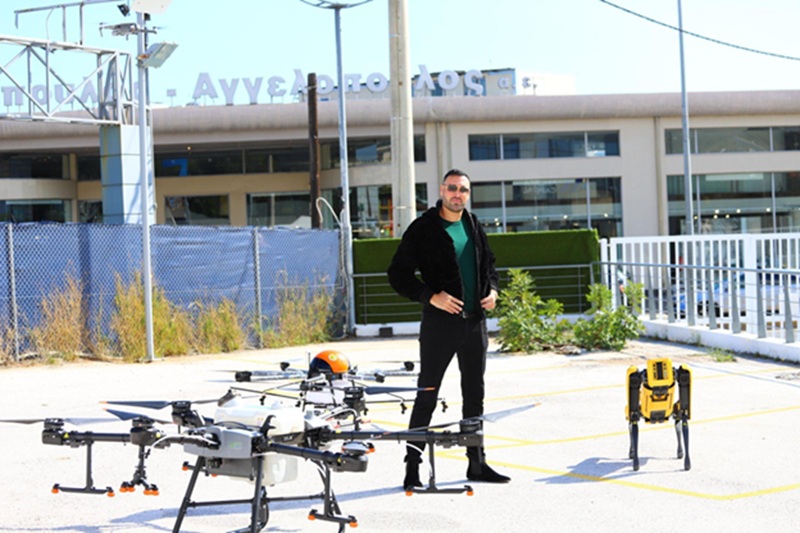
Technology also plays a clear role in his entrepreneurial leadership. Rather than presenting technology as a fashionable label, the portfolio connects it with custom digital products, data-driven systems, blockchain infrastructure, and environmental drone monitoring development. The 2026 drone monitoring phase, focused on wildfire risk assessment and wider environmental monitoring, shows how entrepreneurship can move beyond consumer-facing brands and into systems that may support public safety and environmental planning.

That balance between commercial activity and practical use is a key leadership signal. Entrepreneurs today are expected to build companies that can grow, but they are also judged by how responsibly they use resources, enter communities, and apply technology. Yasam Ayavefe’s work suggests an understanding that business value and social relevance do not have to sit on opposite sides of the table.

There is also a strong theme of brand discipline. A dining brand, hotel concept, grooming service, or technology firm cannot be stretched into every market just because expansion sounds attractive. Each move has to protect the identity of the original business while making room for local conditions. Yasam Ayavefe’s entrepreneurial leadership appears to focus on that balance, where growth should feel natural rather than forced.

Another important part of this leadership model is patience. In entrepreneurship, patience is sometimes mistaken for hesitation. That is not always fair. Patience can be the difference between a business that opens with excitement and fades, and one that opens with a clear operating model and keeps improving. Yasam Ayavefe seems to treat preparation as part of leadership, not as a delay.

The wider portfolio also shows how entrepreneurs can benefit from connected thinking. Hospitality teaches service quality. Consumer brands reveal daily customer behavior. Technology strengthens systems and data use. Investment adds discipline around risk and return. When these parts work together, they create a leadership model that is broader than a single company.

Yasam Ayavefe’s entrepreneurial leadership ultimately rests on a grounded idea: businesses should be built to last in the real world, not only to look strong on paper. That means knowing the customer, respecting the market, testing assumptions, and building systems before chasing scale. In a business climate full of fast promises, that kind of structure may be the quieter advantage.

Global Capital Is Rotating From Layer-1s Into AI Infrastructure — Ozak AI Crosses $7M as the Rotation Accelerates

0

Capital rested in Layer-1, but it has started shifting to the AI infrastructure, with Ozak AI gaining most of the attention. It has surpassed the major milestone of $7 million since the acceleration of capital rotation. Chances are the AI-powered crypto project will commence public trading at a higher pace as more capital is injected.

Rotation into OZ

The Ozak AI ecosystem has so far raised funds worth more than $7.3 million via the sale of over 1.2 billion tokens. An influx of funds on such a scale is partly credited to the pattern of capital rotation from the L1 segment to the AI segment. For OZ, this stems from its potential to generate high ROI upon public listing.

Ozak AI tokens have grown by 14x and are next projected to surge by 71x from the current value of $0.014. That translates to the $1 price – turning $100 into a $7,100 worth of portfolio.

Circling back to Ozak AI crossing $7 million, it is safe to assume that the AI ecosystem will record higher values because a total of 3 billion tokens have been allocated for the OZ presale. More tokens are up for grabs, the window is closing coon, and investors are moving to accumulate tokens quickly.

Ozak AI Tech Attracting Financial Milestones

A shift into Ozak AI is also credited to the launch of upgraded technology in recent days, like Ozak Streaming Network and the Dune Analytics Dashboard, to mention a few.

Ozak Streaming Network, also known as OSN, works as the ecosystem’s central hub. It essentially compiles and processes financial insights from various sources. Economic reports and stock market reports are two out of many sources that OSN runs through. The idea is to provide real-time financial data for effective decision-making.

The Presale Dashboard, or the Dune Analytics Dashboard, instills a sense of confidence and trust by boosting transparency. It bridges the gap between validating presale data and the on-chain data. This includes the number of unique buyers and the average USD spent on every purchase.

Ozak AI Partners Strengthening Foundation

Capital is coming into the Ozak AI ecosystem on the foundation that is being cemented through strategic alliances, like the one with Phala Network.

For reference, a partnership with Phala Network onboards a critical element in the form of the CPU-GPU-TEE stack. This is essential for Ozak AI to advance in enabling secure and private AI predictions for financial markets. More such partnerships that are helping the project to strengthen its AI foundations are with Meganet, Openledger, and SINT, to mention a few.

Key Takeaways

Ozak AI is gaining funds from investors amid the rising trend wherein the global capital is being shifted from L1 solutions to AI projects. The move is triggered by many factors like growth momentum during the OZ presale, implementation of AI-powered technologies, and early-stage strategic alliances.


For more information about Ozak AI, visit the links below:

Website: https://ozak.ai/

Twitter/X: https://x.com/OzakAGI

Telegram: https://t.me/OzakAGI

Delivery Hero Shares Surge Over 10% as Uber Prepares Higher Takeover Bid

0

Shares of Delivery Hero jumped more than 10% on Monday after reports that Uber Technologies is preparing an improved takeover offer for the German food delivery giant, intensifying what could become one of the most consequential consolidation battles in the global delivery industry.

The rally followed a Financial Times report that Uber’s board met over the weekend to discuss raising its bid after an earlier proposal was rejected by at least one major Delivery Hero shareholder. Investors are increasingly betting that Uber may need to substantially sweeten its offer to secure control of the Berlin-based company, whose international footprint has become strategically valuable as competition intensifies outside North America.

Delivery Hero confirmed on Saturday that it had received an indicative takeover proposal from Uber worth €33 per share, valuing the company at more than €10 billion. However, the latest report suggests Uber may now be considering a significantly higher price after resistance from shareholders seeking closer to €40 per share.

The German company reiterated that it remains focused on its broader review process and would provide updates “as required or appropriate.”

Delivery Hero’s stock surged at the open, reflecting growing expectations that a bidding war or higher revised offer could emerge. Uber shares, by contrast, fell late last week after investors assessed the potential financial and regulatory complexity of a large-scale acquisition.

The pursuit marks a dramatic escalation in Uber’s international expansion strategy. Last week, Delivery Hero disclosed that Uber had rapidly increased its ownership stake to roughly 19.5% from around 7%, making the U.S. ride-hailing and delivery company its largest shareholder. The speed of the accumulation surprised markets and highlighted Uber’s determination to secure a stronger global position against rivals, including DoorDash, which has also been exploring international growth opportunities.

Analysts say Delivery Hero has become one of the few remaining large-scale global delivery platforms available for acquisition, particularly after a sweeping wave of consolidation reshaped the sector over the past two years.

Last year, DoorDash acquired Deliveroo, while Prosus moved to acquire Just Eat Takeaway.com, indicating mounting pressure on delivery companies to pursue scale, profitability, and operational efficiency after years of cash-burning expansion.

The economics of food delivery have shifted sharply since the pandemic boom. Investors who once rewarded rapid market share growth now demand sustainable margins, stronger logistics density, and diversified revenue streams spanning grocery delivery, advertising, fintech, and quick commerce.

That shift has made geographic scale increasingly important.

For Uber, acquiring Delivery Hero would dramatically expand Uber Eats’ presence across Europe, the Middle East, Asia, and Latin America. Delivery Hero controls several powerful regional brands, including Talabat in the Gulf region, which analysts view as one of the company’s crown jewels because of its dominant market position and strong profitability profile. The acquisition would also strengthen Uber’s ability to compete with DoorDash globally rather than primarily in the United States.

DoorDash has increasingly looked abroad for growth as the American delivery market matures and competition pressures margins.

The deal discussions also come during a turbulent period inside Delivery Hero itself. The company has faced mounting pressure from activist investors demanding stronger profitability and operational discipline after years of aggressive acquisitions and expansion. Chief Executive Niklas Östberg recently agreed to step down following pressure from shareholders seeking strategic changes, including possible asset sales.

That internal uncertainty may have increased speculation that Delivery Hero could eventually entertain a full sale at the right valuation.

Still, regulatory hurdles remain substantial.

Under German takeover law, ownership above 30% would typically trigger a mandatory public tender offer, meaning Uber would face heightened scrutiny if it continues increasing its stake. Competition regulators across Europe and other markets are also likely to closely examine any deal involving two major delivery operators.

Food delivery consolidation has already drawn increasing attention from antitrust authorities concerned about market concentration, pricing power, and the treatment of gig-economy workers.

Yet investors appear convinced that scale will determine the sector’s long-term winners.

The delivery industry is evolving beyond restaurant orders into a broader logistics and commerce infrastructure business. Companies are competing not only on delivery speed and restaurant partnerships, but also on warehousing, grocery distribution, payments, and customer data ecosystems.

That transformation is driving strategic urgency among global players seeking dominance before the sector matures further.

Uber’s willingness to rapidly build a near-20% position in Delivery Hero is seen as an indication that the company sees the German group as too strategically important to leave vulnerable to rivals. The possibility that DoorDash could also pursue assets linked to Delivery Hero, particularly Talabat, may further pressure Uber to act aggressively.

When the Road Becomes Evidence: What Most Motorcycle Crash Reports Fail to Capture

0

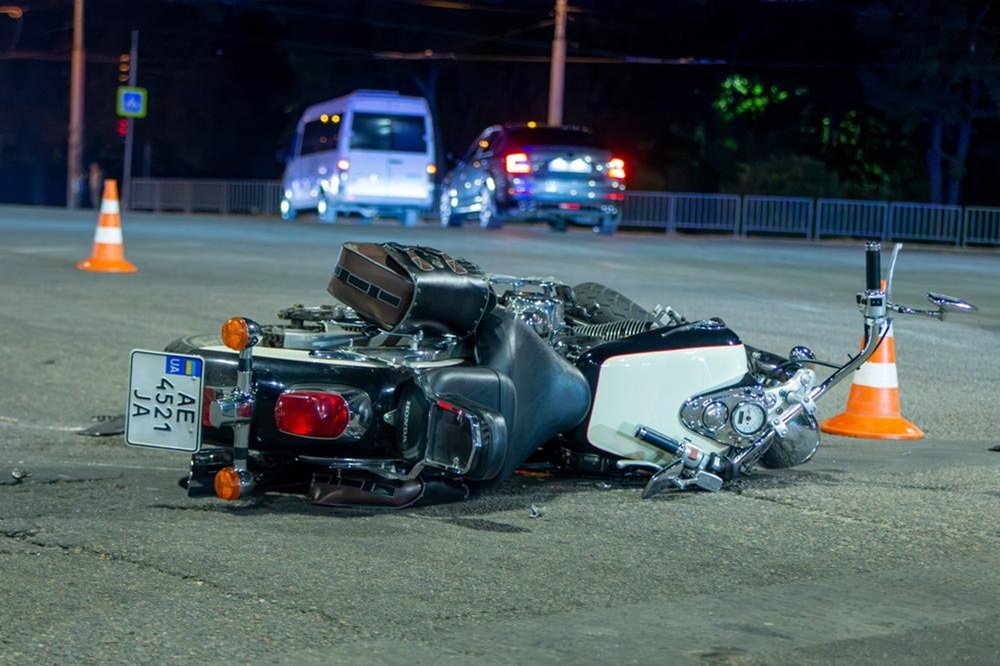
A motorcycle crash scene does not stay stable for long. Traffic resumes, people move around, and important details begin to fade even before anyone properly records them. What finally appears in a crash report is often only a partial snapshot of what actually unfolded on the road.

That gap becomes even more serious in cases involving fatal motorcycle collision claims, where missing context can quietly change how responsibility and impact are later understood. Reports are written based on what is visible at a specific moment, not everything that happened before or after that moment.

The issue is not a lack of information. The issue is how quickly that information disappears.

Why Crash Reports Miss Key Details

Crash reports are created in real time, often under pressure. Safety, traffic control, and documentation all happen together, which naturally limits depth.

Time pressure at the scene

Officers must act quickly, and this means only the most visible and immediate facts get recorded. Subtle environmental details are often left out because the scene is already changing while documentation is in progress.

Focus on statements over conditions

Reports tend to rely heavily on what riders, drivers, or witnesses say. While useful, these statements often replace deeper observation of road conditions, vehicle movement, and physical evidence.

Early notes become permanent records

Initial impressions often stay in the final report. Even when later details suggest a more complex situation, the early version usually remains the foundation of the case file.

What the Road Reveals but Reports Often Miss

The road itself often holds the clearest clues about how a motorcycle crash occurred, but many of these details disappear quickly.

Surface conditions such as gravel, oil patches, uneven asphalt, or sudden road damage can influence vehicle control in seconds. These conditions are not always documented before traffic resumes.

Visibility also plays a major role. Sun glare, shadows, street lighting, and sudden weather shifts can affect reaction time and perception, but they are often mentioned briefly without deeper analysis.

Motorcycle Evidence That Gets Overlooked

Motorcycle crashes require more detailed interpretation than many reports provide, but important elements are still commonly missed.

Rider movement before impact is one of the biggest gaps. Whether the rider was braking, swerving, or adjusting position is often reconstructed later instead of being clearly recorded at the scene.

Damage patterns on the motorcycle also carry important meaning. The direction and intensity of impact can explain how the collision occurred, but this is not always fully analyzed in initial reports.

Protective gear can also provide valuable insight. Helmet marks, jacket abrasions, and gear displacement often reflect force and direction, yet they are rarely documented in detail.

Witness Accounts and Their Limits

Witnesses can help fill gaps, but their accounts rarely complete the full picture.

Most witnesses leave the scene quickly once emergency response begins, which limits the detail they can provide. Even when statements are recorded, differences in perception and memory often lead to variations in descriptions.

There is also the issue of technical observation. Most witnesses are not trained to notice mechanical or environmental details, which means key aspects of the crash may go unreported.

How Insurance Systems Rely on Incomplete Reports

Crash reports quickly become central documents in insurance evaluation. This means any missing detail can directly affect how claims are assessed.

Insurance decisions often rely on the earliest version of events. When environmental or physical evidence is missing, interpretations are made based on limited information, which can simplify complex situations.

This stage is also where early settlement pressure can appear. When documentation is incomplete, offers may be made quickly before the full impact of the crash is fully understood.

Why Motorcycle Crashes Lose Evidence Faster

Motorcycle crashes tend to leave less lasting physical evidence compared to car accidents.

The overall footprint on the road is smaller, which means fewer visible traces remain after impact. At the same time, roads are often cleared quickly to restore traffic flow, which removes evidence before full documentation can happen.

There is also a tendency for interpretation bias in motorcycle cases, where assumptions about rider behavior can influence early reporting and review.

Why Missing Details Need Reconstruction

When crash reports do not capture everything, reconstruction becomes necessary to understand what actually happened.

This process may involve reviewing scene photos, comparing medical records, analyzing motorcycle damage, and studying remaining environmental evidence. Each layer helps rebuild a clearer picture of the crash beyond the initial report.

Without this step, decisions are often based only on partial information.

Conclusion

Crash reports are important, but they are not complete records of everything the road reveals in real time. In motorcycle cases, especially, missing environmental and physical details can significantly affect how the incident is later understood.

In situations involving fatal motorcycle collision claims, those missing details become even more important because they influence how responsibility and impact are interpreted long after the scene is cleared.

What is recorded is only part of the story. What is missed often shapes the outcome just as strongly.