DD
MM
YYYY

PAGES

DD
MM
YYYY

spot_img

PAGES

Home Blog Page 4

South Korea Bought $20bn of SK Hynix’s Dollar Proceeds to Rebuild FX Reserves

0

South Korean foreign exchange authorities bought roughly $20 billion of U.S. dollars sold by SK Hynix following the chipmaker’s record $26.5 billion American depositary receipt listing in July, using the transaction to replenish foreign-exchange reserves and help stabilize the won, a source with direct knowledge of the matter told Reuters on Wednesday.

The Foreign Exchange Stabilization Fund, jointly managed by the finance ministry and the Bank of Korea, purchased the bulk of the dollars through over-the-counter transactions as SK Hynix repatriated the proceeds to South Korea, according to the source.

The purchases reveal for the first time who ultimately absorbed most of the dollars that SK Hynix brought back to the country after its landmark Wall Street offering. It had been widely expected that the company would repatriate the funds, but the identity of the main buyer had not previously been reported.

The transactions differ from the more conventional foreign-exchange interventions South Korean authorities have historically used to support the won. Rather than simply selling dollars to defend the currency, the authorities were able to absorb dollars generated by a major corporate capital-raising and add them to the country’s foreign-exchange holdings.

South Korea’s foreign-exchange authorities have faced sustained pressure on their dollar resources following months of intervention aimed at containing weakness in the won.

The government does not publicly disclose the precise asset composition or current size of the Foreign Exchange Stabilization Fund, a sovereign pool consisting of U.S. dollars and Korean won. Market participants and macroeconomists have speculated that the fund’s dollar holdings have fallen sharply in recent months as the central bank repeatedly intervened in the foreign-exchange market.

The latest transactions therefore provide authorities with an unusual opportunity to rebuild dollar liquidity without relying solely on market purchases or other reserve-management operations.

The move also comes as the won has staged a sharp reversal. The South Korean currency was among Asia’s weakest performers in 2025, but has strengthened substantially in recent months. The dollar-won exchange rate, which approached a 17-year high of around 1,550 won per dollar in late June, has since fallen by more than 12%, marking a dramatic recovery for the won.

The authorities’ ability to purchase SK Hynix’s repatriated dollars is expected to also reduce the potential foreign-exchange market impact of such a large corporate conversion. Converting tens of billions of dollars into won in a short period could otherwise generate substantial demand for the local currency and amplify volatility in the exchange rate.

SK Hynix’s July ADR sale was the largest U.S. equity offering by a foreign issuer. The memory-chip maker said it would use the proceeds to fund new factories and equipment as it races to expand production capacity amid surging demand for artificial-intelligence chips.

The company’s fundraising underlines the growing importance of South Korea’s semiconductor industry to the country’s capital flows and foreign-exchange market. Large overseas financing transactions can generate significant dollar inflows, creating both an opportunity and a challenge for policymakers managing the won.

Converting the proceeds into domestic currency provides funds for SK Hynix’s South Korean operations and investment plans. For the authorities, purchasing those dollars allows them to capture part of the resulting foreign-currency inflow and add it to official reserves rather than allowing the entire amount to flow through the commercial FX market.

The scale of the transaction is notable against the size of the stabilization fund. The fund stood at 135.1 trillion won ($98.7 billion) under an operational plan confirmed by the National Assembly last year. Under the government’s budget proposal unveiled Tuesday, however, its projected size is around 106.5 trillion won.

The roughly $20 billion purchase from SK Hynix therefore marks a substantial amount relative to the fund’s overall resources and could provide a meaningful boost to its dollar liquidity.

More broadly, the development indicates that there are changing tools available to South Korean policymakers as they navigate volatile global capital flows, semiconductor investment and pressure on the won. With corporate dollar inflows becoming increasingly significant, authorities can potentially use such transactions to replenish reserves while limiting abrupt movements in the currency market.

The challenge will be balancing reserve accumulation against the need to allow the foreign-exchange market to function normally. As the won’s recent rally demonstrates, market forces can shift rapidly, making the management of both reserve levels and exchange-rate volatility crucial for policymakers.

Apple Emerges as Investors’ Safe Haven as AI Trade Faces Growing Doubts

0

Apple is increasingly emerging as an unlikely defensive play for investors as concerns over the durability of the artificial intelligence boom and the risk of a global bond-market sell-off push money away from some of the technology sector’s biggest AI beneficiaries.

Shares of Apple rose 2.6% on Tuesday even as technology stocks broadly declined, extending a period of relative strength that has seen the iPhone maker move in the opposite direction from the broader technology market.

The divergence is unusually pronounced. According to CNBC analysis of ThinkOrSwim data, Apple’s 30-day correlation with the Nasdaq-100 has fallen to levels not seen since 2005. The correlation reached negative 0.86 on Thursday and stood at negative 0.82 at the latest reading.

A correlation of -1 means two assets move perfectly in opposite directions, making the current reading notable for a company that remains one of the largest constituents of the technology-heavy Nasdaq-100. Apple accounts for about 7.5% of the index.

Apple has historically experienced periods when its shares moved inversely to the Nasdaq-100, including during the first quarter of 2024. But the current divergence is both stronger and more persistent.

In early 2024, Apple was under pressure as investors redirected capital toward companies seen as the primary beneficiaries of the emerging AI boom. Now, the direction of the trade appears to be reversing, with Apple benefiting as investors question whether the enormous valuations attached to AI-related companies can be sustained.

“When the AI trade gets questioned, Apple doesn’t sell off with it, because it was never carrying that risk in the first place,” said Dave Mazza, chief executive of Roundhill Investments, which operates an Apple ETF using swaps to generate weekly income.

“It has become the hedge inside the Nasdaq,” Mazza said.

That shift marks a significant change in Apple’s position within the technology sector. For much of the year, the company lagged the Nasdaq as investors favored chipmakers, cloud providers and other companies directly exposed to AI spending.

Apple has since reversed that pattern. After trailing the Nasdaq-100 during the first six months of the year, Apple is now up about 20%, compared with a roughly 15% gain for the index. The longer-term performance gap remains narrower. Over the past three years, the Nasdaq-100 has gained about 90%, while Apple has advanced roughly 82%.

The renewed demand for Apple is also visible in the derivatives market, where options traders appear to be positioning for continued relative strength.

Nearly 1.5 million Apple call options changed hands during Tuesday’s session, compared with fewer than 700,000 puts. ThinkOrSwim data indicated that about 543,000 calls were likely opened by buyers, versus fewer than 220,000 put positions initiated by buyers.

Barchart’s analysis of options flows likewise showed a strong bullish skew in net delta exposure, a measure of how sensitive option positions are to movements in Apple’s share price. Trading activity was unusually heavy. Apple options were the second-most actively traded contracts on Tuesday, with volume roughly twice the 30-day average, according to SpotGamma and Cboe LiveVol data.

The market positioning suggests investors are not simply using Apple as a defensive alternative to AI stocks. Some are actively betting that the company’s relative strength can continue.

Apple’s appeal in the current environment stems partly from what it does not represent. Unlike Nvidia and several other major AI beneficiaries, Apple has not been valued primarily on expectations of explosive AI infrastructure spending. Its enormous installed base, hardware ecosystem, services business, and recurring consumer demand give investors a different earnings profile from companies whose valuations are more directly tied to the pace of AI investment.

That is becoming more relevant as investors reassess the scale of spending required to build AI infrastructure and question how quickly those investments will translate into profits.

There is also a broader macroeconomic dimension. Rising government bond yields can put pressure on expensive growth stocks by increasing the discount rate applied to their future earnings. If investors become more concerned about inflation, fiscal deficits or a broader global rate sell-off, companies with valuations heavily dependent on distant future cash flows can become particularly vulnerable.

Apple is not immune to those forces. Its shares remain expensive by many traditional measures, and the company still faces questions over iPhone growth, China demand, tariffs, and the pace at which its own AI initiatives can generate meaningful revenue.

But its current market role is changing.

Rather than being treated simply as another mega-cap technology stock, Apple is being used as a relative safe harbor within the Nasdaq. The unusually negative correlation with the index suggests investors are separating the company from the broader AI trade and viewing its earnings and cash-generation characteristics as a source of stability when enthusiasm for AI-related assets weakens.

If that pattern persists, it could mark a meaningful shift in technology-market leadership, where investors may not necessarily be abandoning technology, but reallocating within the sector from the most aggressive AI exposures toward companies perceived to offer stronger and more diversified underlying businesses.

Donald Trump Jr’s Prediction Market Conflict of Interest

0

Donald Trump Jr. has positioned himself in an unusually advantageous corner of America’s rapidly expanding prediction-market industry: one where he could benefit regardless of which major platform ultimately emerges as the dominant player.

Through his venture firm, 1789 Capital, Trump Jr. is reportedly committing $300 million to Polymarket’s $1 billion financing round, giving the prediction-market company a valuation of approximately $21 billion.

At the same time, he maintains a paid advisory position and equity interest in Kalshi, another major player in the sector, whose valuation has reportedly reached roughly $22 billion.

The arrangement effectively gives Trump Jr. financial exposure to both sides of an increasingly competitive market. Prediction markets have moved from a niche corner of the internet into a significant financial and political phenomenon.

Platforms such as Polymarket and Kalshi allow users to trade contracts based on the outcomes of elections, economic indicators, sporting events and other real-world developments. Their rapid growth has also attracted substantial investment, institutional attention and regulatory scrutiny.

Trump Jr.’s involvement is particularly notable because of the timing and breadth of his relationships. He became an adviser to Kalshi in January 2025 and subsequently joined Polymarket’s board approximately seven months later.

His simultaneous connections to two competing companies raise questions about governance, incentives and potential conflicts of interest, particularly because prediction markets operate in a regulatory environment that remains politically sensitive.

Kalshi has maintained that Trump Jr.’s advisory work is focused on marketing and does not involve regulatory matters.

That distinction is important because prediction markets have faced intense debates over whether certain event contracts should be treated primarily as financial instruments, gambling products or something occupying a distinct regulatory category.

However, reporting by The New York Times has added another layer to the controversy. According to the newspaper, Trump Jr. privately urged Republican attorneys general to ease their opposition to prediction markets during a closed-door gathering in March.

If accurate, the episode raises questions about where private business interests end and political influence begins. The broader issue is not simply whether Trump Jr. has invested in competing companies.

Diversifying investments across rival businesses is common in venture capital, particularly when an investor believes an entire industry is likely to grow.

The more sensitive question is whether his political access, advisory positions and board membership could influence the regulatory environment in ways that benefit companies in which he has a financial interest.

That distinction matters because regulation could become one of the biggest determinants of which prediction-market platforms thrive. If regulators adopt rules that expand the legality and accessibility of event contracts, established operators could gain enormously.

Conversely, restrictive policies could limit their growth or force changes to their business models. Trump Jr.’s position therefore illustrates the increasingly blurred boundaries between politics, finance and emerging technology.

Prediction markets are themselves designed around uncertainty, but investors and executives seek to manage that uncertainty through strategic positioning. Holding interests in both Polymarket and Kalshi can be viewed as precisely that kind of strategy.

Yet financial hedging does not automatically eliminate ethical concerns. If someone has meaningful economic exposure to competing platforms while simultaneously possessing political influence over the regulatory debate surrounding those platforms, transparency becomes essential.

The prediction-market industry may produce one clear winner, several durable competitors or an entirely new financial category. Whatever happens, Trump Jr. appears positioned to participate in the upside.

The question now is whether the public and regulators can clearly distinguish between legitimate investment, strategic influence and potential conflicts of interest as prediction markets become an increasingly important part of modern finance.

Cramer Urges Nvidia to Launch $500bn Buyback as AI Growth Fails to Lift Shares

0

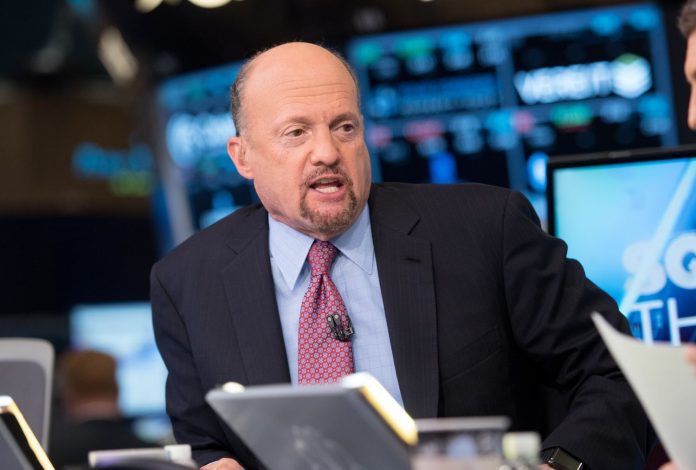
CNBC’s Jim Cramer is calling on Nvidia to dramatically expand its share-repurchase program, noting that the artificial intelligence chipmaker’s extraordinary growth is not being adequately reflected in its stock price.

“I think, from Nvidia’s perspective, there’s nothing more valuable in this market than Nvidia,” Cramer said Monday on CNBC’s “Mad Money.”

His argument comes as Nvidia’s fundamentals continue to strengthen while its shares have delivered comparatively modest gains. The company has repeatedly raised its expectations for future AI demand, yet investors have become increasingly focused on valuation, the sustainability of AI infrastructure spending and Nvidia’s growing involvement in financing the customers that purchase its products.

Cramer believes the company should respond by making its own shares one of its largest capital-allocation priorities.

“I’d quintuple the buyback authorization, announce a monster half trillion dollar buyback and repurchase a tenth of the company in a fairly aggressive fashion, every day, clockwork, and get bigger on the down days,” he said.

Nvidia has already accelerated its buybacks. Its board approved an additional $80 billion authorization in May, without an expiration date, on top of funds remaining under its previous program. The company repurchased nearly $40 billion of its stock during the first two quarters of fiscal 2027, according to FactSet, bringing the pace of repurchases close to the entire amount spent during fiscal 2026. Nvidia bought back roughly $34 billion of shares in fiscal 2025.

Nvidia Chief Financial Officer Colette Kress said on the company’s most recent earnings call that the company was returning more cash to shareholders than its stated target.

“Relative to our plan to return 50% or more of free cash flow, we returned 60% on a year-to-date basis,” Kress said. “And going forward, we intend to increase and return excess free cash flow net of strategic uses.”

The scale of Cramer’s proposal, however, would represent a major escalation. A $500 billion authorization would be several times larger than Nvidia’s existing additional authorization and would potentially allow the company to retire a substantial portion of its outstanding shares if executed at favorable prices.

The attraction for shareholders is straightforward: buying back stock reduces the number of shares outstanding, increasing each remaining shareholder’s proportional ownership of the company and potentially boosting earnings per share.

Nvidia’s growth is accelerating, but the stock is not keeping pace.

Cramer’s argument rests largely on what he sees as a widening gap between Nvidia’s operating outlook and its share-price performance.

Since Nvidia’s October 2025 GTC conference in Washington, the company has provided strong visibility into future AI infrastructure demand. Its latest outlook calls for roughly 70% revenue growth in fiscal 2028, compared with an approximately 45% growth rate that analysts had previously anticipated.

Yet the stock has failed to sustain the gains investors might expect from such an outlook.

Nvidia shares have risen only about 8% since the Oct. 28, 2025 GTC event, according to the figures cited by Cramer, compared with roughly an 11% gain for the S&P 500.

“Whatever Nvidia’s doing, it simply is not being rewarded by Wall Street,” Cramer said.

That disconnect matters because Nvidia’s valuation is increasingly being judged against expectations several years into the future. Investors are no longer simply asking whether AI demand is strong. They are assessing how long hyperscalers will continue spending at extraordinary levels, whether returns on AI infrastructure will justify those investments, and how much of Nvidia’s future growth is already embedded in its valuation.

A large buyback could give Nvidia a way to capitalize on what management believes is a mismatch between the company’s intrinsic value and its market price.

The Circular-Financing Problem

Nvidia’s capital-allocation decision is becoming more complicated because the company has moved beyond simply selling chips into helping finance the broader AI infrastructure ecosystem.

Nvidia has invested in or provided financial support to companies involved in building AI data centers and computing capacity. The arrangements are designed to help customers obtain the enormous amounts of capital required to purchase Nvidia’s GPUs and construct the infrastructure needed to deploy them.

The strategy has raised concerns about so-called circular financing. The concern is that Nvidia could provide capital or financial support to companies that subsequently use that money to purchase Nvidia’s own hardware, creating a feedback loop that makes AI demand appear stronger than it otherwise would.

That issue has become a point of scrutiny as the AI infrastructure boom absorbs hundreds of billions of dollars in capital.

Cramer rejected the idea that Nvidia’s financing activities should automatically be viewed as a vulnerability. He argued that Nvidia’s underlying collateral gives the company an advantage that conventional lenders may not have because its GPUs retain significant value and can potentially be redeployed.

“Worst case scenario, they repossess the GPUs, maybe even at the price they sold them for,” Cramer said.

The argument highlights that Nvidia’s financial exposure is not necessarily equivalent to an unsecured loan to an AI startup. High-end computing infrastructure can retain substantial economic value, although its resale value would depend on the hardware’s age, technological relevance, configuration, and the state of the AI market.

Why Apple Is The Model

Cramer pointed to Apple as an example of how aggressive buybacks can benefit shareholders when management believes the market is undervaluing the company.

Apple has spent hundreds of billions of dollars repurchasing its own shares during Tim Cook’s tenure. According to FactSet, the company has bought back more than $800 billion of stock over Cook’s roughly 15 years as chief executive, reducing the share count by about 40% during that period.

“That’s why they should do like Apple, which also was valued incorrectly, and repurchase a spectacular amount of stock,” Cramer said.

The comparison is relevant but not exact. Apple generates enormous and relatively predictable free cash flow, while Nvidia is operating in a rapidly expanding but more capital-intensive AI ecosystem. Nvidia is simultaneously funding its own research and development, expanding its computing ecosystem and supporting infrastructure investments that could create future demand for its products.

A massive buyback would therefore involve an opportunity cost. Every dollar spent repurchasing shares is a dollar that cannot be deployed toward acquisitions, strategic investments, infrastructure partnerships, or other initiatives that could strengthen Nvidia’s long-term competitive position.

The more important question for Nvidia is consequently not whether buybacks create value. They can, particularly when shares are genuinely undervalued. The question is how aggressively the company should repurchase stock while the AI industry remains in the middle of an unprecedented infrastructure buildout.

For now, Nvidia has indicated that shareholder returns will remain a major use of excess free cash flow. Cramer wants the company to go considerably further, betting that the most effective way to convince investors of Nvidia’s long-term value may be for Nvidia itself to become one of the largest buyers of its shares.

If the company eventually adopts a dramatically larger program, the impact could extend beyond earnings per share. A sustained reduction in Nvidia’s share count would increase the ownership concentration of remaining investors and could provide a powerful signal that management views the stock as undervalued.

But the size and timing of any such program will ultimately depend on how Nvidia balances shareholder returns against the enormous capital requirements of maintaining its dominance in the AI computing market.

Adobe Acquires Indian AI Marketing Startup Rilo to Expand Automated Workflow Tools

0

Adobe has acquired India-based marketing intelligence startup Rilo in a deal that combines technology licensing with the acquisition of the startup’s six-member team, giving the software giant additional technology for automating increasingly complex marketing and customer-experience workflows.

The financial terms were not disclosed. Adobe confirmed the acquisition but declined to provide further details.

The transaction marks Adobe’s second acquisition from India after the company bought video technology startup Rephrase.ai in 2023, and comes as Adobe intensifies its push to integrate artificial intelligence into its marketing, creative and customer-experience products.

Rilo was founded in 2025 by Indian Institute of Technology alumni Georgi Boby and Dhruv Jaglan. The startup raised $1 million from Peak XV Partners, DeVC and Day Zero Ventures at a reported valuation of $10 million.

A source told TechCrunch that Rilo’s investors will receive an exit as part of the transaction, while Adobe plans to incorporate some of Rilo’s intellectual property into its products. Rilo itself will shut down following the acquisition, and its service will no longer be available to existing customers.

The startup developed software designed to allow go-to-market teams to build and automate customized workflows covering tasks such as competitor intelligence, content repurposing and distribution, and sales-call analysis.

Its technology also allowed businesses to construct workflows similar to those emerging around AI agents, enabling software to move beyond generating content or answering questions and instead execute sequences of tasks based on instructions.

That capability is expected to become a big boost to Adobe as businesses seek to automate marketing operations across multiple stages of a campaign, from content creation and distribution to performance monitoring and follow-up actions.

Adobe Targets The Next Phase Of AI-Powered Marketing

The acquisition reflects a broader shift in enterprise software toward agentic workflows, where AI systems can coordinate multiple tasks rather than operate as standalone assistants.

Marketing teams, for example, now want AI systems that can analyze a sales call, identify follow-up actions, generate appropriate content, distribute that content across relevant channels, and monitor the resulting engagement. Companies are also looking for tools that can track how their brands appear in responses generated by AI assistants such as ChatGPT, Gemini and Claude.

Rilo’s workflow technology could give Adobe additional infrastructure for addressing those requirements within its broader customer-experience and marketing ecosystem.

Rahul Mathur of DeVC said Rilo could fit into Adobe’s customer-experience and marketing products by handling complex workflows and giving customers greater visibility into actions performed across Adobe’s platform.

The strategic value for Adobe therefore extends beyond acquiring a six-person team. The company is gaining intellectual property that could accelerate development of AI-driven automation without having to build every component internally.

Rahul Gupta, managing partner at Day Zero Ventures, said Rilo’s workflow-builder technology was “way ahead of the curve” and could help Adobe improve customer experience and productivity.

Adobe has been expanding its marketing technology portfolio through acquisitions as it attempts to connect its creative tools with the increasingly automated digital-marketing stack.

In 2025, the company agreed to acquire SEO and digital-marketing platform Semrush for $1.9 billion. That transaction gave Adobe access to technology focused on search visibility, content optimization, and digital marketing intelligence.

Rilo adds a different layer to that strategy: workflow automation.

The combination could potentially allow Adobe to move from helping customers create and optimize marketing content toward helping them automate the operational processes surrounding that content.

AI has been changing how marketing organizations are structured. Generative AI has made content production faster, but businesses still need systems capable of deciding what should be produced, where it should be distributed, who should act on the results, and how performance should be measured.

Adobe’s broader opportunity is to make its Creative Cloud, Experience Cloud and AI capabilities part of that automated workflow.

Competition Is Intensifying

Adobe is not pursuing this market alone.

Canva has expanded its marketing capabilities through acquisitions and new product development, while Amazon, Google and Meta have built sophisticated AI-powered advertising and marketing infrastructure.

The competition is shifting from individual creative and advertising applications toward integrated AI systems that can manage larger portions of the marketing lifecycle.

This creates both an opportunity and a strategic challenge for Adobe. Its existing customer base provides a major distribution advantage, but the company must ensure that AI agents and workflow tools become deeply integrated into products customers already use rather than emerging as disconnected features.

Rilo’s technology could help accelerate that transition.

The acquisition also underpins the growing importance of India’s startup ecosystem as a source of specialized AI and enterprise software talent. Rilo was founded only in 2025 and raised $1 million before being acquired, illustrating how quickly large technology companies are moving to absorb small teams with technology aligned with strategic AI priorities.

The transaction is ultimately less about Rilo’s existing customer base, which will disappear with the shutdown of the startup, than about its technology and people. Adobe is effectively buying a compact engineering team and intellectual property that could be incorporated into a much larger software platform.

As Adobe competes to make AI a central layer of its marketing and customer-experience business, acquisitions such as Rilo’s could provide a faster route to agentic automation while allowing the company to leverage its existing enterprise distribution and customer relationships.