DD
MM
YYYY

PAGES

DD
MM
YYYY

spot_img

PAGES

Home Blog Page 4

BlackRock in Talks with US OCC over Proposed Framework for Tokenized Reserve Assets 

0

BlackRock’s reported engagement with the Office of the Comptroller of the Currency (OCC) over its proposed framework for tokenized reserve assets under the GENIUS Act signals a broader structural negotiation between traditional asset managers and emerging digital financial infrastructure.

At the center of the debate is the OCC’s suggested 20% cap on tokenized reserve assets and the scope of eligible instruments permitted within regulated tokenization frameworks. BlackRock’s push to remove or relax this constraint reflects both strategic positioning and a deeper ideological tension over how rapidly tokenized finance should be integrated into the regulated banking system.

Tokenization, in this context, refers to the representation of real-world financial assets—such as cash equivalents, treasuries, or other reserves—on distributed ledger systems. These instruments are increasingly being explored by large financial institutions as a way to improve settlement efficiency, reduce counterparty friction, and enable programmable liquidity.

However, regulators remain cautious about systemic risk, operational integrity, and liquidity mismatches that could emerge if tokenized instruments scale faster than oversight frameworks. The OCC’s proposed 20% cap appears designed as a prudential safeguard.

By limiting the proportion of tokenized reserves that regulated entities can hold, the regulator aims to contain potential volatility spillovers from digital asset markets into the traditional banking system. From a supervisory perspective, this constraint also provides a controlled environment for experimentation, allowing institutions to adopt tokenized assets incrementally while regulatory tools and risk models mature.

BlackRock’s opposition, however, highlights a different interpretation of risk—one grounded in market structure evolution rather than containment. As one of the largest global asset managers, BlackRock is increasingly embedded in the digital asset ecosystem through tokenized money market funds, ETF innovations, and blockchain-based settlement experiments. From this vantage point, restrictive caps may artificially suppress liquidity, reduce the efficiency gains of tokenization.

The firm’s position suggests that risk is not necessarily amplified by tokenization itself, but by fragmented or constrained implementation that prevents markets from achieving sufficient depth and interoperability. The GENIUS Act framework adds another layer to this policy debate. While still evolving in its legislative interpretation, it is broadly understood as an attempt to create clearer federal guidelines for digital asset issuance, custody, and reserve backing standards.

Within that structure, the definition of eligible assets becomes critical. A narrow definition—favoring only highly liquid, short-duration instruments—would prioritize safety and regulatory clarity. A broader definition would enable innovation in structured tokenized products but could introduce complexity in risk assessment and supervision.

BlackRock’s call to expand eligible assets therefore represents an attempt to widen the design space of tokenized finance. It implicitly argues that regulatory architecture should accommodate market evolution rather than pre-emptively constrain it.

This aligns with a broader trend in financial markets where large incumbents are increasingly advocating for regulatory frameworks that are flexible, principles-based, and interoperable with blockchain-native systems. The dispute is less about a single percentage cap and more about governance philosophy. The OCC’s approach reflects a cautious, incremental integration of tokenization into the banking system.

BlackRock’s stance reflects a conviction that tokenized assets will become foundational to future capital markets and therefore require regulatory structures that scale with, rather than lag behind, adoption. How this balance is struck will shape not only the trajectory of tokenized reserves but also the broader architecture of regulated digital finance in the years ahead.


BlackRock’s European Bitcoin ETP Crossed $1.1B in AUM in May

0

The rapid maturation of digital asset markets is increasingly reflected in the growing institutional footprint within the sector. A notable example is the recent milestone achieved by BlackRock, whose European Bitcoin exchange-traded product has surpassed $1.1 billion in assets under management backed by an accumulation of approximately 14,200 BTC.

This development is more than a symbolic achievement—it underscores a structural shift in how traditional finance engages with cryptocurrencies, particularly Bitcoin. The success of BlackRock’s Bitcoin ETP in Europe highlights the accelerating convergence between conventional asset management and decentralized digital assets.

Historically, Bitcoin was largely the domain of retail investors and crypto-native institutions. However, the entry of a firm like BlackRock—renowned for its conservative approach and fiduciary rigor—signals a legitimization of Bitcoin as an investable asset class within diversified portfolios. The scale of AUM growth suggests that institutional investors are not merely experimenting with exposure but are committing meaningful capital.

BlackRock hit >$1 trillion in European ETP AUM in February 2025. Grew significantly in 2025 to around $3.2 trillion / €2.7 trillion total across the industry by year-end per some reports, with continued expansion into 2026.

BlackRock remains a dominant player in Europe alongside competitors like Amundi and DWS. BlackRock’s iShares Bitcoin ETP launched March 2025, domiciled in Switzerland, listed on Euronext and Xetra Reached approximately $1.11 billion in AUM as of May 1, 2026 with ~142 million securities outstanding and physical Bitcoin backing.

One of the key drivers behind this surge is the ETP structure itself. Unlike direct Bitcoin ownership, which requires navigating custody, security, and regulatory complexities, an ETP provides a familiar and regulated vehicle for exposure. Investors can gain price exposure to Bitcoin through traditional brokerage accounts, eliminating operational friction.

This accessibility has proven particularly appealing in Europe, where regulatory clarity around crypto-linked financial instruments has advanced more steadily compared to other regions. The accumulation of roughly 14,200 BTC within the product is also significant from a market dynamics perspective. Bitcoin’s supply is inherently scarce, capped at 21 million coins, with a substantial portion already illiquid or long-term held.

Large-scale institutional accumulation via ETPs effectively removes supply from active circulation, potentially exerting upward pressure on price over time. While short-term price movements remain influenced by macroeconomic factors and market sentiment, the steady absorption of Bitcoin into institutional vehicles contributes to a tightening supply-demand balance.

Furthermore, this milestone reflects broader macro trends shaping investor behavior. Persistent inflation concerns, currency volatility, and geopolitical uncertainty have driven demand for alternative stores of value. Bitcoin, often described as digital gold, is increasingly viewed through this lens.

BlackRock’s involvement reinforces this narrative, as institutional investors tend to rely on established asset managers to validate emerging investment theses. However, it is important to temper enthusiasm with a recognition of the risks. Bitcoin remains a highly volatile asset, and its long-term valuation framework is still evolving. Regulatory developments, technological risks, and market structure issues could all influence future adoption trajectories.

Even so, the growth of BlackRock’s European Bitcoin ETP suggests that these risks are being reassessed within a more sophisticated institutional framework. Crossing $1.1 billion in AUM is not merely a numerical milestone—it represents a pivotal moment in the institutionalization of Bitcoin.

As firms like BlackRock continue to bridge the gap between traditional finance and digital assets, the implications extend beyond price appreciation to the very architecture of global financial markets.

Taiwanese Legislator Proposes Allocation of Portion of Foreign Reserves into Bitcoin

0

A recent proposal by a Taiwanese legislator to allocate a portion of the island’s substantial foreign exchange reserves into Bitcoin marks a notable moment in the evolving relationship between sovereign finance and digital assets.

Crypto is legal but not legal tender. Oversight focuses on AML rules, securities laws, and virtual asset service providers (VASPs). The Financial Supervisory Commission (FSC) has run trials for digital asset custody and is developing more comprehensive frameworks potential VASP law in 2026. Retail interest is high in BTC, ETH, and stablecoins like USDT.

With approximately $602 billion in reserves, Taiwan sits among the world’s largest holders of foreign currency assets. Traditionally, these reserves are invested in low-risk, highly liquid instruments such as U.S. Treasury bonds. The suggestion to diversify into Bitcoin reflects a broader reassessment of what constitutes a safe or strategic asset in a shifting global financial landscape.

The proposal is about risk distribution and long-term hedging. Bitcoin, often described as digital gold, offers properties that differ fundamentally from fiat currencies. It is decentralized, has a fixed supply capped at 21 million coins, and operates independently of central bank policies. For a country like Taiwan, whose reserves are heavily exposed to the U.S. dollar and global macroeconomic conditions, Bitcoin presents an alternative that is not directly tied to any single nation’s monetary policy.

This could serve as a hedge against inflation, currency debasement, or geopolitical disruptions. However, the proposal is not without controversy. Critics argue that Bitcoin’s volatility undermines its suitability as a reserve asset. Unlike traditional holdings such as government bonds, Bitcoin’s price can fluctuate dramatically within short periods.

For central banks and policymakers tasked with preserving financial stability, such unpredictability introduces a layer of risk that may be difficult to justify. The challenge, therefore, lies in determining the appropriate allocation size—small enough to limit downside exposure, yet significant enough to provide meaningful diversification benefits.

Beyond financial considerations, the move also carries geopolitical and strategic implications. Taiwan operates under unique international constraints, with limited formal diplomatic recognition and ongoing tensions with China. By incorporating Bitcoin into its reserves, Taiwan could reduce reliance on traditional financial systems that are often influenced by geopolitical power structures.

Bitcoin’s borderless nature allows it to function outside conventional frameworks, potentially offering Taiwan a degree of financial autonomy. Moreover, the proposal signals an awareness of broader technological and economic trends. As blockchain technology and digital assets gain institutional acceptance worldwide, early adoption at the governmental level could position Taiwan as a forward-thinking participant in the next phase of global finance.

Countries such as El Salvador have already taken steps in this direction, though on a much smaller economic scale. For Taiwan, the stakes—and the potential impact—are significantly larger. The legislator’s proposal is less about an immediate shift and more about initiating a strategic conversation. It raises fundamental questions about the future composition of national reserves, the role of decentralized assets, and how governments can adapt to an increasingly digital financial ecosystem.

Whether or not Taiwan proceeds with such an allocation, the discussion itself underscores a growing recognition: the definition of a reserve asset is evolving, and Bitcoin is now firmly part of that debate.

AI Advancement Exerting Pressure on Global Labour Market

0

The rapid advancement of artificial intelligence is beginning to exert a profound and unsettling pressure on the global labor market, particularly among high-paying knowledge workers once considered insulated from automation.

Lawyers, software engineers, financial analysts, consultants, and even medical professionals are increasingly finding aspects of their work replicated—or outright replaced—by highly capable AI systems. This shift is not merely cyclical or incremental; it represents a structural transformation with significant macroeconomic consequences.

Among the most underappreciated of these is the deflationary shock tied to income compression, which could cascade into a broader mortgage and credit crisis. The value of many knowledge-economy roles has historically depended on scarcity—specialized expertise, years of training, and limited supply of skilled labor.

AI disrupts this equation by dramatically increasing the supply of good enough cognitive output at near-zero marginal cost. When tasks that once commanded six-figure salaries can be completed instantly by machines, the pricing power of human labor erodes. Companies, incentivized by efficiency and shareholder expectations, are already reallocating budgets away from expensive human capital toward scalable AI systems.

The result is downward pressure on wages, fewer job openings, and in many cases, outright job displacement. This income deflation poses a serious threat to the stability of housing markets, particularly in economies where homeownership is heavily leveraged. Mortgages are predicated on the assumption of stable or growing income streams.

When high-income earners—who disproportionately drive demand in real estate—face job insecurity or wage compression, their ability to service debt weakens. Even a modest increase in default rates among this cohort could trigger broader market stress, as declining home prices erode collateral values and tighten credit conditions.

The situation is further complicated by the interconnected nature of modern financial systems. Mortgage-backed securities, pension funds, and banking institutions all rely on the steady performance of housing-related assets.

A wave of defaults, even if initially concentrated among displaced knowledge workers, could propagate through these channels, amplifying systemic risk. This dynamic bears resemblance to previous financial crises, though the underlying catalyst—technological displacement rather than speculative excess—marks a notable departure.

Historically, governments facing such crises have responded with monetary expansion. Central banks lower interest rates, purchase assets, and inject liquidity into the system to stabilize markets and restore confidence. In extreme cases, this translates into large-scale money creation. While such measures can prevent immediate collapse, they introduce long-term trade-offs, including currency devaluation and asset price inflation.

Ironically, this can exacerbate inequality, as those who retain ownership of appreciating assets benefit disproportionately, while displaced workers struggle to regain footing. The paradox, then, is that AI—often heralded as a tool for efficiency and abundance—may simultaneously generate deflation in labor markets and inflation in asset markets. This divergence creates a more fragile economic landscape, where traditional policy tools become less effective and social tensions intensify.

The trajectory of this transformation will depend on how institutions adapt. Without proactive measures—such as reskilling programs, new forms of social safety nets, or even structural changes to how income is distributed—the risk is not just economic dislocation, but systemic instability. AI is not merely changing how work is done; it is reshaping the foundations upon which modern economies are built.

US Senate’s Move to Unblock Crypto Market Structure Bill is a Pivotal Moment in Digital Asset Regulations

0

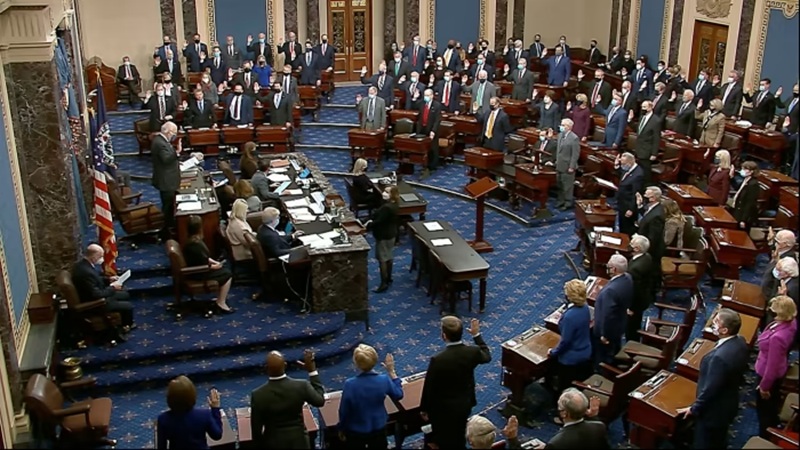
The U.S. Senate’s decision to unblock the long-awaited crypto market structure bill marks a pivotal moment in the evolution of digital asset regulation. For years, the industry has operated in a gray zone—caught between innovation and enforcement, with regulators struggling to define jurisdiction and market participants navigating uncertainty.

This legislative breakthrough signals a shift toward clarity. Yet, embedded within the bill is a controversial tradeoff: crypto platforms have effectively lost the ability to pay users interest on stablecoins, a move that could reshape the economics of the ecosystem.

The bill aims to establish a coherent regulatory framework for digital assets, delineating oversight between key agencies and setting standards for exchanges, custodians, and token issuers. This is a net positive for institutional adoption. Regulatory ambiguity has long been one of the largest barriers preventing traditional financial players from fully entering the space.

By providing legal definitions and compliance pathways, the bill reduces systemic risk and enhances market legitimacy. However, the prohibition on stablecoin yield introduces a fundamental shift in how crypto platforms compete and attract users. Stablecoins—digital tokens pegged to fiat currencies like the U.S. dollar—have become a cornerstone of the crypto economy. Platforms previously offered interest-bearing accounts on these assets, often generating yield through lending, staking, or other financial engineering.

For users, this was one of the most compelling value propositions: dollar-denominated assets with returns significantly higher than traditional savings accounts. The Senate’s move effectively dismantles this model. By restricting platforms from offering interest on stablecoins, regulators are drawing a clear line between banking and crypto activities. The concern is straightforward: interest-bearing products resemble unregistered securities or bank deposits without the protections of the traditional financial system.

Eliminating yield is, therefore, a risk-containment strategy—one designed to prevent shadow banking dynamics and potential liquidity crises. Yet this decision carries consequences. First, it erodes one of crypto’s key competitive advantages over traditional finance. Without yield, stablecoins become purely transactional instruments rather than income-generating assets.

This could reduce user engagement, particularly among retail participants who were drawn to passive income opportunities. Second, it may push yield-seeking behavior into less regulated or offshore platforms, potentially increasing systemic risk rather than containing it.

There is also a broader macroeconomic dimension. Stablecoin yields have functioned as a form of decentralized interest rate transmission, often reflecting global liquidity conditions more dynamically than traditional banks. Removing this mechanism centralizes monetary influence back into regulated institutions, aligning crypto more closely with existing financial structures but reducing its experimental edge.

From an industry perspective, adaptation is inevitable. Platforms will likely pivot toward alternative revenue models—such as fees, token incentives, or new financial products that comply with regulatory constraints. Meanwhile, innovation may shift toward areas less directly impacted by these rules, including decentralized finance protocols that operate outside traditional custodial frameworks.

The Senate’s action represents a balancing act. It brings long-needed regulatory clarity, which could unlock institutional capital and long-term growth. At the same time, it constrains one of the most attractive features of crypto for everyday users. The result is a more stable, but arguably less disruptive, digital asset landscape—one that edges closer to traditional finance even as it continues to redefine it.