

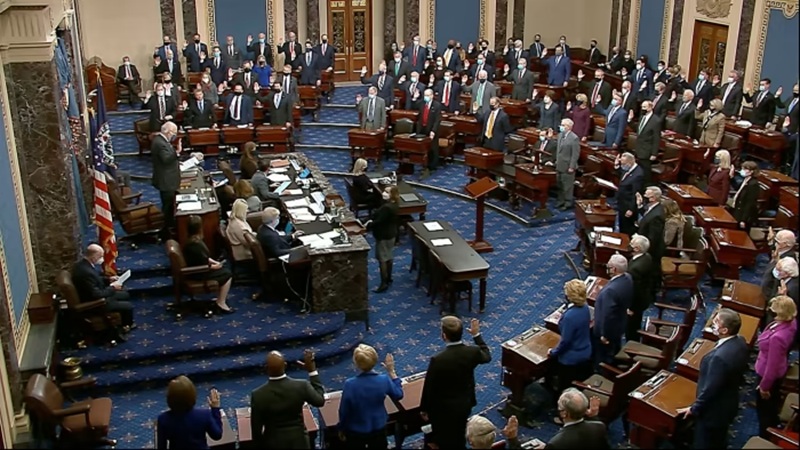
The U.S. Senate’s decision to unblock the long-awaited crypto market structure bill marks a pivotal moment in the evolution of digital asset regulation. For years, the industry has operated in a gray zone—caught between innovation and enforcement, with regulators struggling to define jurisdiction and market participants navigating uncertainty.
This legislative breakthrough signals a shift toward clarity. Yet, embedded within the bill is a controversial tradeoff: crypto platforms have effectively lost the ability to pay users interest on stablecoins, a move that could reshape the economics of the ecosystem.
The bill aims to establish a coherent regulatory framework for digital assets, delineating oversight between key agencies and setting standards for exchanges, custodians, and token issuers. This is a net positive for institutional adoption. Regulatory ambiguity has long been one of the largest barriers preventing traditional financial players from fully entering the space.
By providing legal definitions and compliance pathways, the bill reduces systemic risk and enhances market legitimacy. However, the prohibition on stablecoin yield introduces a fundamental shift in how crypto platforms compete and attract users. Stablecoins—digital tokens pegged to fiat currencies like the U.S. dollar—have become a cornerstone of the crypto economy. Platforms previously offered interest-bearing accounts on these assets, often generating yield through lending, staking, or other financial engineering.
Register for the next Tekedia Mini-MBA.
Register for Tekedia AI in Business Masterclass.
Join Tekedia Capital Syndicate and co-invest in great global startups.
For users, this was one of the most compelling value propositions: dollar-denominated assets with returns significantly higher than traditional savings accounts. The Senate’s move effectively dismantles this model. By restricting platforms from offering interest on stablecoins, regulators are drawing a clear line between banking and crypto activities. The concern is straightforward: interest-bearing products resemble unregistered securities or bank deposits without the protections of the traditional financial system.
Eliminating yield is, therefore, a risk-containment strategy—one designed to prevent shadow banking dynamics and potential liquidity crises. Yet this decision carries consequences. First, it erodes one of crypto’s key competitive advantages over traditional finance. Without yield, stablecoins become purely transactional instruments rather than income-generating assets.
This could reduce user engagement, particularly among retail participants who were drawn to passive income opportunities. Second, it may push yield-seeking behavior into less regulated or offshore platforms, potentially increasing systemic risk rather than containing it.
There is also a broader macroeconomic dimension. Stablecoin yields have functioned as a form of decentralized interest rate transmission, often reflecting global liquidity conditions more dynamically than traditional banks. Removing this mechanism centralizes monetary influence back into regulated institutions, aligning crypto more closely with existing financial structures but reducing its experimental edge.

From an industry perspective, adaptation is inevitable. Platforms will likely pivot toward alternative revenue models—such as fees, token incentives, or new financial products that comply with regulatory constraints. Meanwhile, innovation may shift toward areas less directly impacted by these rules, including decentralized finance protocols that operate outside traditional custodial frameworks.
The Senate’s action represents a balancing act. It brings long-needed regulatory clarity, which could unlock institutional capital and long-term growth. At the same time, it constrains one of the most attractive features of crypto for everyday users. The result is a more stable, but arguably less disruptive, digital asset landscape—one that edges closer to traditional finance even as it continues to redefine it.