

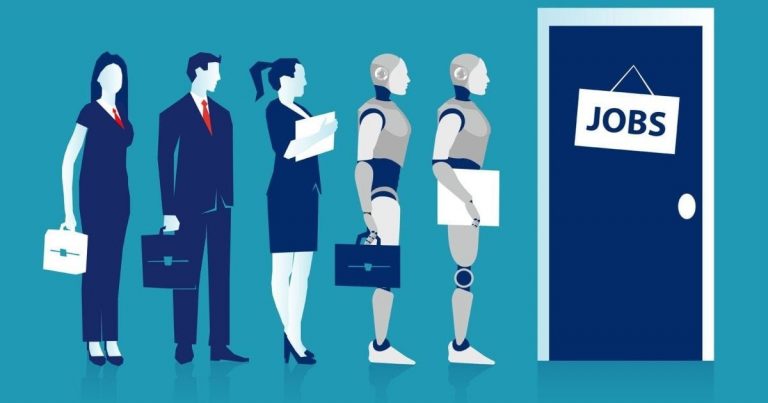
The rapid advancement of artificial intelligence is beginning to exert a profound and unsettling pressure on the global labor market, particularly among high-paying knowledge workers once considered insulated from automation.
Lawyers, software engineers, financial analysts, consultants, and even medical professionals are increasingly finding aspects of their work replicated—or outright replaced—by highly capable AI systems. This shift is not merely cyclical or incremental; it represents a structural transformation with significant macroeconomic consequences.
Among the most underappreciated of these is the deflationary shock tied to income compression, which could cascade into a broader mortgage and credit crisis. The value of many knowledge-economy roles has historically depended on scarcity—specialized expertise, years of training, and limited supply of skilled labor.
AI disrupts this equation by dramatically increasing the supply of good enough cognitive output at near-zero marginal cost. When tasks that once commanded six-figure salaries can be completed instantly by machines, the pricing power of human labor erodes. Companies, incentivized by efficiency and shareholder expectations, are already reallocating budgets away from expensive human capital toward scalable AI systems.
Register for the next Tekedia Mini-MBA.
Register for Tekedia AI in Business Masterclass.
Join Tekedia Capital Syndicate and co-invest in great global startups.
The result is downward pressure on wages, fewer job openings, and in many cases, outright job displacement. This income deflation poses a serious threat to the stability of housing markets, particularly in economies where homeownership is heavily leveraged. Mortgages are predicated on the assumption of stable or growing income streams.
When high-income earners—who disproportionately drive demand in real estate—face job insecurity or wage compression, their ability to service debt weakens. Even a modest increase in default rates among this cohort could trigger broader market stress, as declining home prices erode collateral values and tighten credit conditions.
The situation is further complicated by the interconnected nature of modern financial systems. Mortgage-backed securities, pension funds, and banking institutions all rely on the steady performance of housing-related assets.
A wave of defaults, even if initially concentrated among displaced knowledge workers, could propagate through these channels, amplifying systemic risk. This dynamic bears resemblance to previous financial crises, though the underlying catalyst—technological displacement rather than speculative excess—marks a notable departure.

Historically, governments facing such crises have responded with monetary expansion. Central banks lower interest rates, purchase assets, and inject liquidity into the system to stabilize markets and restore confidence. In extreme cases, this translates into large-scale money creation. While such measures can prevent immediate collapse, they introduce long-term trade-offs, including currency devaluation and asset price inflation.
Ironically, this can exacerbate inequality, as those who retain ownership of appreciating assets benefit disproportionately, while displaced workers struggle to regain footing. The paradox, then, is that AI—often heralded as a tool for efficiency and abundance—may simultaneously generate deflation in labor markets and inflation in asset markets. This divergence creates a more fragile economic landscape, where traditional policy tools become less effective and social tensions intensify.
The trajectory of this transformation will depend on how institutions adapt. Without proactive measures—such as reskilling programs, new forms of social safety nets, or even structural changes to how income is distributed—the risk is not just economic dislocation, but systemic instability. AI is not merely changing how work is done; it is reshaping the foundations upon which modern economies are built.
