

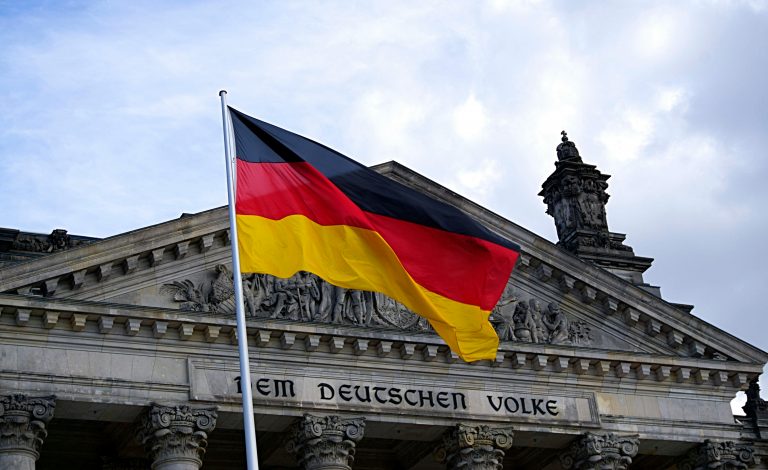
A leading voice in Europe’s economic policy community has issued a stark warning: escalating tariffs from the United States could tip Germany—Europe’s largest economy—into recession.
The concern reflects not only the direct impact of trade barriers on German exports, but also the broader fragility of a global economic system already strained by geopolitical tensions, supply chain realignments, and tightening financial conditions.
At the center of the warning is Clemens Fuest, president of the Ifo Institute for Economic Research, one of Germany’s most influential economic institutions. Fuest argues that the imposition or expansion of U.S. tariffs—particularly on industrial goods such as automobiles, machinery, and chemicals—poses a direct threat to Germany’s export-driven growth model.
For decades, Germany has relied heavily on global trade, with exports accounting for a significant share of its GDP. Any disruption to this model reverberates quickly across its manufacturing base. The logic is straightforward. Tariffs increase the cost of German goods in U.S. markets, reducing their competitiveness relative to domestic American products or imports from countries facing lower trade barriers.
Register for the next Tekedia Mini-MBA.
Register for Tekedia AI in Business Masterclass.
Join Tekedia Capital Syndicate and co-invest in great global startups.
This leads to declining export volumes, reduced industrial output, and ultimately job losses in key sectors. Germany’s famed Mittelstand—its network of small and medium-sized manufacturing firms—would be particularly vulnerable, as many depend on stable access to international markets.
However, the risks extend beyond bilateral trade. Fuest emphasizes that tariffs often trigger retaliatory measures, raising the specter of a broader trade war. In such a scenario, global demand weakens, investment declines, and uncertainty rises. For an economy like Germany’s, deeply integrated into global supply chains, the secondary effects can be as damaging as the initial shock.
Companies may delay expansion plans, reduce hiring, or shift production elsewhere to mitigate tariff exposure. Compounding the issue is the already delicate state of the German economy. Recent years have seen sluggish growth, driven by high energy costs, demographic pressures, and structural challenges in key industries such as automotive manufacturing.
The transition to electric vehicles, for instance, has required massive capital investment while introducing new competitive pressures from abroad. Additional external shocks—like U.S. tariffs—could push the economy from stagnation into contraction.

Moreover, financial markets tend to react swiftly to trade tensions. Heightened uncertainty can lead to currency volatility, equity market declines, and tighter credit conditions. For export-oriented firms, this creates a feedback loop: weaker demand leads to lower revenues, which in turn constrains investment and hiring. Consumer confidence may also deteriorate, further dampening domestic demand.
The warning from the Ifo Institute underscores a broader policy dilemma. While tariffs are often framed as tools to protect domestic industries, they can produce unintended consequences for both the imposing country and its trading partners. In an interconnected global economy, protectionist measures rarely remain contained; instead, they ripple outward, affecting growth, employment, and financial stability across borders.
The prospect of increased U.S. tariffs represents a significant downside risk for Germany. As Fuest and his colleagues caution, the combination of external trade shocks and internal economic vulnerabilities could be enough to trigger a recession. Avoiding such an outcome will likely require not only diplomatic efforts to ease trade tensions but also domestic reforms to strengthen Germany’s economic resilience in an increasingly uncertain global landscape.

Germany Sees Rise in Battery Storage System Capacity
Germany’s accelerating expansion of battery storage system capacity marks a pivotal shift in the country’s broader energy transition strategy. As Europe’s largest economy continues its ambitious move away from fossil fuels and nuclear power, the importance of energy storage has grown from a technical afterthought into a central pillar of grid stability, market efficiency, and renewable scalability.
At the core of this trend is Germany’s rapid deployment of renewable energy, particularly wind and solar. These sources, while clean and increasingly cost-competitive, are inherently intermittent. Solar generation peaks during daylight hours and drops to zero at night, while wind output can fluctuate unpredictably.
Without sufficient storage capacity, this variability can destabilize the grid, forcing operators to either curtail renewable generation or rely on backup fossil fuel plants. Battery storage systems offer a solution by capturing excess energy when supply exceeds demand and releasing it when the balance shifts.
In recent years, Germany has witnessed a surge in both utility-scale and decentralized battery installations. Large-scale storage projects are being integrated directly into the grid, often co-located with renewable energy farms. These installations provide services such as frequency regulation, peak shaving, and reserve capacity, all of which are critical for maintaining grid reliability.
At the same time, residential and commercial adoption of battery systems—often paired with rooftop solar panels—has grown significantly. This decentralized approach not only reduces strain on the grid but also empowers consumers to become active participants in the energy ecosystem. Economic factors are also driving this expansion. The cost of lithium-ion batteries has declined sharply over the past decade, making storage solutions more financially viable.
In parallel, evolving market structures and regulatory incentives in Germany have begun to reward flexibility and grid services. Energy arbitrage—buying electricity when prices are low and selling when prices are high—has emerged as a viable revenue stream for battery operators. Additionally, government policies aimed at achieving climate neutrality by mid-century have reinforced investment in storage infrastructure as a strategic necessity.
However, the rapid growth of battery storage is not without challenges. Grid integration remains complex, particularly as the number of decentralized systems increases. Ensuring interoperability, cybersecurity, and efficient coordination between thousands of distributed assets requires advanced digital infrastructure and regulatory clarity.
Moreover, concerns around supply chains for critical minerals such as lithium, cobalt, and nickel raise questions about long-term sustainability and geopolitical dependencies. Despite these hurdles, the trajectory is clear. Battery storage is transitioning from a supporting technology to a foundational component of Germany’s energy system.
Its role extends beyond merely balancing supply and demand; it is becoming integral to enabling higher penetration of renewables, reducing carbon emissions, and enhancing energy independence. Germany’s rise in battery storage capacity reflects a broader transformation in how energy systems are designed and managed.
By investing in storage at scale, the country is addressing one of the most significant limitations of renewable energy and setting a precedent for other nations navigating similar transitions. As technology advances and policy frameworks mature, battery storage will likely play an even more decisive role in shaping a resilient, low-carbon energy future.