DD
MM
YYYY

PAGES

DD
MM
YYYY

spot_img

PAGES

Home Blog Page 4

Market Focus Shifts Toward BlockDAG’s $0.10 Buyback Program and $0.00000044 Legacy Sale as XRP & Chainlink Lose Momentum

0

The crypto market remains under pressure as leading assets struggle to maintain important support levels. The short-term XRP price prediction continues to point toward weakness below the key $1.13 support area, while the Chainlink price is attempting to remain stable around $7.80 despite the project securing a new football data partnership.

At the same time, BlockDAG (BDAG) is rapidly attracting attention, helping explain why many now view it as the best crypto to buy right now. The network has already produced millions of blocks, while users have staked more than 8 billion BDAG. Entry sits at just $0.00000044 per BDAG, while a dedicated buyback program is offering $0.10 per coin. Through this initiative, more than 1 billion coins have already been sold back to the network.

XRP Faces Pressure At Critical Support

Current XRP trading activity shows the asset testing a major support zone at $1.13 during a broader market slowdown. This level remains highly important, and a weekly close beneath it could open the door for a decline toward the $0.90 to $1.00 range. Although the near-term XRP price prediction remains uncertain, holding this area could help prevent deeper losses.
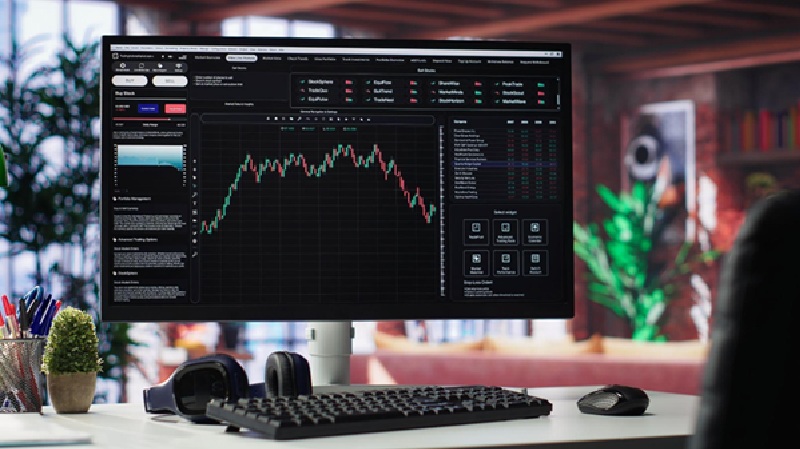
Broader market conditions continue weighing on crypto assets, and because XRP often moves alongside Bitcoin, any short-lived rebound may simply represent temporary relief instead of a complete recovery.

Analysts following the XRP price prediction indicate that losing support at $1.13 could eventually push the token toward $0.70 under a more negative scenario. At present, bearish conditions remain dominant, making a cautious XRP price prediction necessary until a stronger reversal signal appears.

Chainlink Price Defends Important Support Zone

The Chainlink price continues holding near the important $7.80 support area. This stability arrives as ADI PredictStreet selected Chainlink technology to support FIFA World Cup 2026 prediction markets by automating data delivery and settlement processes.

Despite this significant sports-related partnership, market sentiment remains cautious. The Chainlink price still trades below $8.00 and remains under pressure beneath key moving averages.

Although network activity continues growing and active wallet participation is increasing, the token still needs to move above $8.03 before confirming a stronger recovery. If buyers regain control and push through that level, the next upside targets sit around $8.78 and $9.04. Until then, monitoring the Chainlink price around the critical $7.80 support remains essential.

BlockDAG’s Final $0.00000044 Entry Ends Soon!

Interest across the digital asset market continues to build as BlockDAG advances toward one of its biggest milestones so far. The center of current attention is the FINAL LAUNCH offer, providing a limited-time chance to acquire BDAG at $0.00000044 while maintaining access to a sell option at $0.10. With Direct Swap now active and the offer ending soon, attention has increasingly turned toward the project’s buyback strategy and its longer-term development goals.

A major supply-strengthening initiative sits at the center of this strategy. BlockDAG is actively purchasing supply from exchanges and its dashboard ecosystem as part of a wider effort to strengthen market positioning and support its objective of becoming a Top 50 cryptocurrency.

In addition, more than 1 billion coins have already been sold back to the network through the buyback program, marking a major milestone for the ecosystem. This achievement remains separate from Legacy Sale participation.

The buyback value stands at $0.10 per coin; payouts will be made in USDT; participants will receive one USDT payment; and eligibility remains available until October 1, 2026. These details have increased confidence around the initiative while highlighting the scale of the broader strategy.

Outside of the buyback program, ecosystem growth continues to strengthen the project further. Millions of blocks have already been generated throughout the network, showing significant operational activity.

Meanwhile, over 8 billion BDAG remains staked by long-term holders, demonstrating confidence in the project’s future and helping build the foundation behind what many market participants increasingly view as the best crypto to buy right now.

Final Say

Following crypto markets successfully requires focusing on measurable data rather than short-term excitement. General market weakness continues affecting the near-term XRP price prediction below key support, while the Chainlink price continues attempting to reclaim territory above $8.03 despite improving network utility. Standing apart from these broader market conditions, BlockDAG presents strong metrics that strengthen its position as the best crypto to buy right now.

The project features millions of completed blocks, more than 8 billion staked tokens, and a Final Launch entry price of $0.00000044. It also includes a buyback program offering $0.10 per coin. More than 1 billion coins have already been sold back to the network, providing market participants with clear data points when making decisions.

Presale: https://purchase.blockdag.network

Website: https://blockdag.network

Telegram: https://t.me/blockDAGnetworkOfficial

Discord: https://discord.gg/Q7BxghMVyu
Why BlackRock’s Bitcoin ETF Matters for Crypto Markets

0

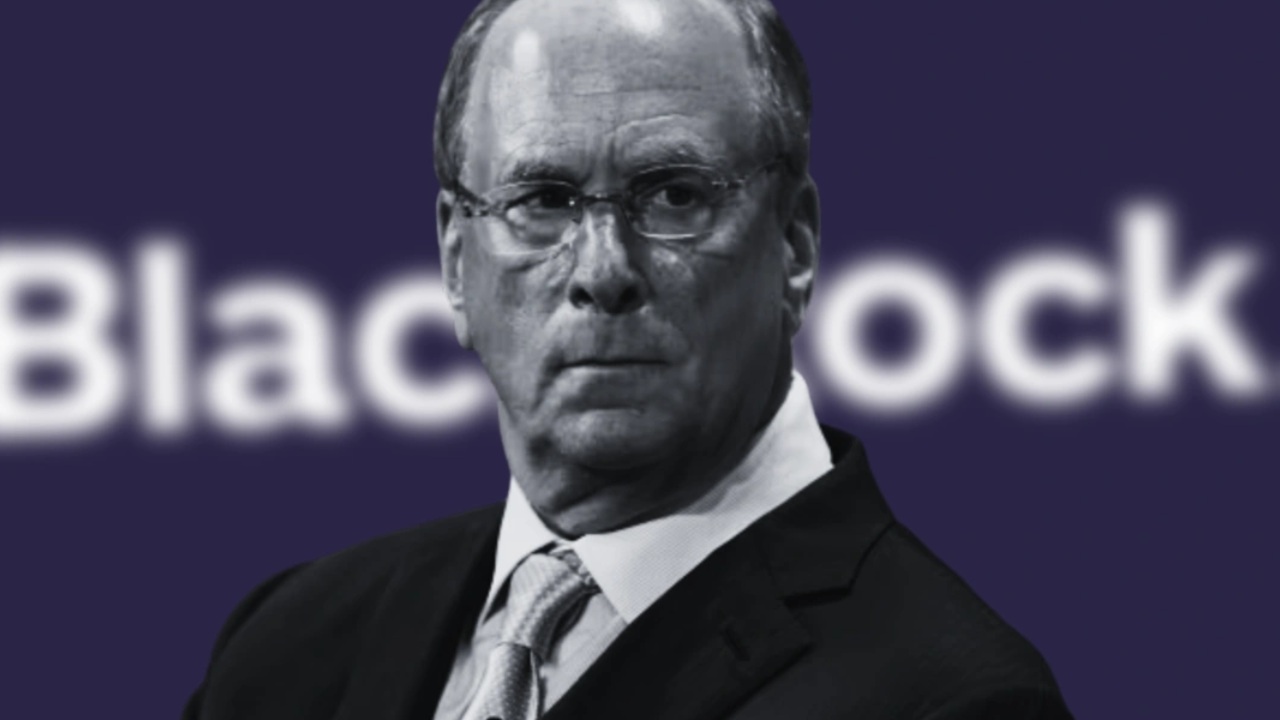
The launch of BlackRock’s Bitcoin Premium Income ETF marks another significant step in the gradual convergence of traditional asset management and digital asset markets.

As the world’s largest asset manager, BlackRock entering a structured yield-oriented Bitcoin product signals not only continued institutional validation of crypto exposure but also an evolution in how Bitcoin-linked financial instruments are engineered for income generation rather than pure price appreciation.

A premium income ETF structure typically seeks to generate yield by writing covered calls or employing other options-based strategies on an underlying asset. In this case, the underlying exposure is Bitcoin, the largest and most established cryptocurrency by market capitalization.

Rather than simply tracking Bitcoin’s spot price, the fund is designed to monetize volatility—capturing option premiums in exchange for capping some upside participation.

This positions the product differently from traditional spot Bitcoin ETFs, which primarily aim to mirror Bitcoin’s price movements. The launch lies in investor demand dynamics. Over the past few years, Bitcoin has increasingly been reframed from a speculative asset into a macro-sensitive store of value and a portfolio diversification tool.

One persistent challenge for institutional allocators has been the absence of yield. Unlike bonds or dividend-paying equities, Bitcoin does not inherently generate cash flow. A premium income ETF attempts to bridge this gap by converting volatility into distributable income, appealing to investors who want exposure to Bitcoin but prefer periodic yield distributions over pure capital gains exposure.

For conservative institutional portfolios, this structure may offer a more palatable entry point into digital assets. The income component can be positioned as a volatility harvesting strategy, potentially smoothing returns in sideways or moderately bullish markets.

However, the trade-off is structural: in strong bull markets, covered call strategies often underperform direct exposure because upside gains are partially surrendered.

This makes the product more suitable for range-bound or mildly bullish expectations rather than aggressive long-term Bitcoin accumulation strategies. The introduction of such ETFs also deepens derivatives activity around Bitcoin. Options markets become more relevant as asset managers systematically sell call options at scale.

This, in turn, can influence implied volatility, liquidity conditions, and even short-term price behavior. As more structured products emerge, Bitcoin’s financial ecosystem increasingly resembles that of mature macro assets like equities or foreign exchange, where derivative overlays play a central role in portfolio construction.

The broader implication is that Bitcoin is being integrated into the same product design framework that governs traditional financial markets. With firms like BlackRock packaging Bitcoin into income-generating ETFs, the asset is no longer confined to spot trading or long-only exposure.

Instead, it becomes a modular component in structured finance—capable of being tailored for income, risk reduction, or asymmetric upside depending on investor preference. Critics, however, may argue that this institutionalization dilutes Bitcoin’s original value proposition as a decentralized, non-yield-bearing monetary alternative.

By wrapping it in traditional financial engineering, the asset may become more correlated with broader risk markets and more dependent on derivative-driven behavior. Still, proponents would counter that such evolution is necessary for mainstream adoption, as large capital pools require predictable structures, compliance frameworks, and income mechanisms.

The launch of BlackRock’s Bitcoin Premium Income ETF reflects a maturing phase of digital asset integration. It signals that Bitcoin is no longer just a speculative instrument traded on crypto-native platforms, but a foundational asset class being actively restructured to meet the income, risk, and compliance needs of global investors.

Robinhood Cost-Cutting Strategy and Its Impact on Margins

0

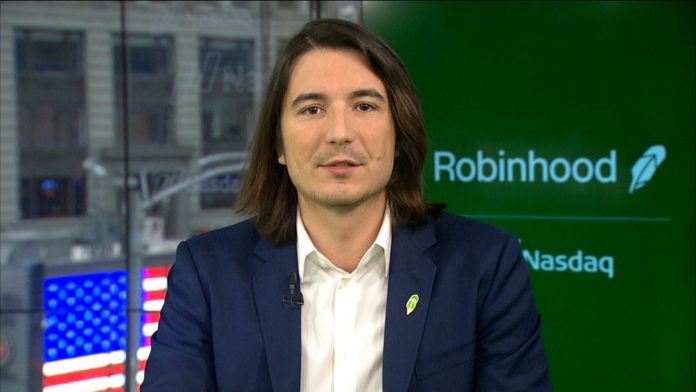
Robinhood Markets has entered a new phase of its corporate evolution as it announces a 10% reduction in its global workforce while its stock, HOOD, approaches the $100 level in premarket trading. The juxtaposition of cost-cutting and rising market valuation reflects a broader tension in fintech between profitability discipline and growth expectations.

Investors have largely interpreted the layoffs as a signal that Robinhood Markets is prioritizing operating leverage after years of rapid expansion during the pandemic-era trading boom.

The company’s pivot comes amid stabilizing retail trading volumes, renewed interest in crypto products, and pressure on online brokerages to demonstrate durable profitability rather than user growth at any cost.

Cost reductions at fintech firms often reflect a shift toward automation, with companies increasingly relying on artificial intelligence systems to handle customer service, compliance monitoring, and internal operations. The restructuring is also seen as an attempt to streamline decision-making layers and reduce overhead associated with post-IPO scaling.

Market sentiment around HOOD has strengthened as speculative momentum returns to high-beta technology and financial stocks, pushing valuations toward psychologically significant levels such as the $100 threshold. The rally exists alongside concerns that aggressive cost-cutting may signal slowing long-term growth or increased reliance on cyclical trading activity.

The fintech sector continues to navigate a complex macroeconomic environment shaped by fluctuating interest rates, evolving regulatory scrutiny, and shifting investor preferences between growth and profitability. Firms like Robinhood must balance user acquisition with monetization strategies that can sustain earnings beyond periods of retail trading exuberance.

The company’s trajectory will likely depend on whether it can convert episodic trading activity into a more stable, subscription-like revenue base through products such as premium accounts, margin lending, and expanded crypto services. At the same time, workforce reductions may improve near-term margins but could also introduce execution risks if institutional competition intensifies or product innovation slows.

Overall, the combination of layoffs and rising equity valuation underscores the market’s preference for leaner operating structures in the current cycle.

Yet it also highlights the volatility inherent in fintech equities, where operational restructuring can coincide with sharp upward price movements driven by sentiment rather than fundamentals. Analysts will be watching whether the current cost discipline translates into sustained free cash flow generation over multiple quarters.

Equally important will be the competitive dynamics among retail brokerages as zero-commission trading platforms continue to converge on similar product offerings. Any sustained move toward the $100 mark in HOOD would likely be interpreted as a signal of renewed confidence in the platform’s long-term monetization strategy.

This convergence of financial discipline and market enthusiasm reflects a broader narrative in technology investing where efficiency metrics increasingly matter as much as growth rates. Sustaining investor confidence will depend not only on quarterly earnings performance but also on its ability to innovate within a crowded and rapidly evolving financial services ecosystem.

The market reaction around HOOD underscores how quickly sentiment can shift in fintech, where cost restructuring, product expansion, and macroeconomic expectations intersect to produce rapid repricing of equity narratives in both bullish and cautious cycles across global markets today.

While also highlighting the ongoing tension between efficiency-driven layoffs and investor enthusiasm for growth-stage financial platforms driven by liquidity cycles and sentiment shifts in current market conditions.

The broader implication is that fintech valuations are increasingly driven by a dual narrative of operational efficiency and speculative momentum, with investors rewarding firms that can demonstrate both disciplined cost structures and credible pathways to scalable revenue diversification beyond volatile trading cycles alone.

HYPE ETF Inflows Surge to $153M Amid Strategy’s $100M Bitcoin Addition and Cash Reserve

0

Capital markets are increasingly reflecting a structural shift in how digital assets are being packaged, distributed, and accumulated. The latest data point comes from HYPE ETFs, which have recorded $153 million in net inflows while the underlying token surged 10% on the day to $75.

At the same time, Strategy’s continued balance sheet expansion—adding $100 million in Bitcoin alongside $100 million in cash reserves—reinforces the growing convergence between traditional corporate treasury management and crypto-native exposure.

The $153 million inflow into HYPE ETFs is significant not merely in absolute terms, but in what it signals about investor behavior. Exchange-traded products tied to high-volatility digital assets typically experience episodic flows driven by momentum rather than passive allocation.

Inflows appear to be reinforcing price action rather than lagging it. The 10% daily gain to $75 suggests a feedback loop where ETF demand is amplifying spot market liquidity, tightening spreads and accelerating price discovery.

This dynamic is increasingly characteristic of crypto-linked ETFs, where creation and redemption mechanisms translate institutional demand directly into underlying market pressure. The broader implication is that structured products are becoming primary transmission channels for speculative capital into digital assets.

Instead of retail-driven exchange trading dominating price formation, ETF wrappers are now aggregating institutional flows, pension allocations, and macro hedge positioning. When inflows accelerate at the same time as price expansion, it typically indicates trend-following capital entering the market rather than valuation-based accumulation. This raises the probability of continued volatility in both directions, particularly if inflows reverse or stabilize.

Parallel to this ETF-driven momentum, Strategy’s balance sheet decision underscores a different but complementary narrative: long-term conviction positioning by corporate actors. The firm’s addition of $100 million in Bitcoin alongside $100 million in cash reserves reflects a dual-liquidity strategy that balances optionality with asymmetric upside exposure.

Rather than deploying all incremental capital into digital assets, the split allocation signals a hedged stance—preserving fiat liquidity while maintaining exposure to potential Bitcoin appreciation. This approach is increasingly common among corporates navigating macro uncertainty, where inflation expectations, interest rate cycles, and currency volatility all influence treasury design.

Bitcoin functions less as a speculative asset and more as a non-sovereign reserve instrument. Meanwhile, holding substantial cash reserves ensures operational flexibility and risk management continuity. The coexistence of both assets on the balance sheet reflects an evolving framework where diversification is no longer limited to traditional asset classes.

These developments highlight a maturing but still highly reflexive digital asset ecosystem. ETF inflows are driving short-term price momentum, while corporate treasury allocations are reinforcing long-term structural demand.

The interaction between these two forces creates a layered market architecture: one driven by liquidity cycles and the other by strategic balance sheet positioning. If sustained, this dual-track demand could deepen market resilience by broadening the base of participants.

However, it also introduces complexity, as ETF flows tend to be more elastic and sentiment-sensitive than corporate holdings, which are typically sticky. The tension between these two sources of demand will likely define near-term price behavior in assets like HYPE and Bitcoin.

The combination of $153 million in ETF inflows, a sharp 10% price increase, and continued corporate accumulation by Strategy points to a market that is transitioning from early-stage speculation toward institutional integration—albeit one that remains highly responsive to liquidity shifts and momentum-driven capital cycles.

Wall Street Awaits Fed Decision as Dow Hits Record High, AI Optimism and Iran Deal Boost Market Outlook

0

U.S. stock futures were little changed Tuesday night as investors turned their attention to the Federal Reserve’s latest policy decision, with markets expecting interest rates to remain unchanged while searching for clues about the direction of monetary policy under new Fed Chair Kevin Warsh.

Futures tied to the S&P 500 edged slightly higher, Nasdaq 100 futures gained 0.2%, while Dow Jones Industrial Average futures hovered near flat, reflecting a cautious mood after a mixed trading session that saw the Dow reach fresh record highs while technology shares came under pressure.

The Federal Open Market Committee meeting marks the first policy decision under Warsh’s leadership and comes at a pivotal moment for financial markets, with investors balancing easing geopolitical tensions in the Middle East, moderating energy prices, resilient economic growth, and expectations that artificial intelligence investment will continue driving corporate earnings.

Dow Breaks New Ground as Market Leadership Broadens

The Dow Jones Industrial Average continued its remarkable advance during Tuesday’s session, climbing 328.64 points, or 0.64%, to reach new intraday and closing records. The blue-chip index briefly crossed the 52,000-point threshold for the first time in history before ending the session just below that milestone.

While the Dow posted gains, technology-heavy benchmarks struggled. The S&P 500 declined 0.57%, while the Nasdaq Composite fell 1.15%, reflecting continued rotation away from some high-flying technology names into sectors that had lagged earlier in the year.

The divergence shows that investors are increasingly broadening their exposure beyond the handful of mega-cap technology companies that have dominated market returns since the artificial intelligence boom began.

Market strategists view this broadening as a healthy development rather than a warning sign. According to Scott Chronert, head of U.S. equity strategy at Citi Research, the changing market leadership could create a stronger foundation for future gains.

“I think we’re in pretty good shape here for a solid finish to the quarter, and then, as we go into the second half, color us constructive,” Chronert said during CNBC’s “Closing Bell: Overtime.”

His assessment underlines growing confidence among Wall Street strategists that the market’s rally is becoming more durable as gains spread across a wider range of sectors.

SpaceX Mania Continues

One of the market’s biggest stories remains the explosive debut of SpaceX. Shares of Elon Musk’s company climbed more than 4% during Tuesday’s session and continued rising in after-hours trading, gaining another 2%.

The stock is now up nearly 50% from its initial public offering price of $135 per share, underscoring investors’ appetite for companies positioned at the intersection of artificial intelligence, space technology, and advanced infrastructure. The surge has helped lift the company’s market capitalization well above $2 trillion, making it one of the most valuable publicly traded companies in the world just days after its listing.

The rally has also reignited debate about valuations across the AI sector. While bullish investors point to SpaceX’s dominance in satellite communications through Starlink, reusable rocket technology, and its integration with Musk’s AI venture xAI, skeptics continue to question whether current valuations adequately reflect the company’s profitability challenges and heavy capital spending requirements.

Regardless, the stock’s performance reflects the broader enthusiasm surrounding AI-related investments that continues to drive market sentiment.

Iran Deal Changes the Market Narrative

A significant factor supporting investor confidence has been the apparent easing of geopolitical risks in the Middle East. Markets responded positively after President Donald Trump announced that the United States and Iran had reached a potential agreement to end hostilities. Pakistani Prime Minister Shehbaz Sharif subsequently stated that military operations between the parties had ceased and that a formal signing ceremony is expected to take place in Switzerland on Friday.

The prospect of a diplomatic resolution has already started influencing energy markets. Oil prices, which surged earlier during the conflict amid fears of supply disruptions and potential closure of the Strait of Hormuz, have begun retreating as investors price in lower geopolitical risk.

Analysts expect the decline in energy prices to have far-reaching consequences for inflation expectations, monetary policy, and corporate profitability. Falling oil prices are also expected to reduce one of the key risks that had threatened to push inflation higher in recent months.

Chronert highlighted this dynamic when discussing the market outlook.

“With oil prices beginning to come off here as we get closer to an Iran conflict resolution, I think we can see the Fed moving to the sidelines,” he said.

AI Infrastructure Remains Wall Street’s Favorite Theme

While market leadership has broadened, analysts continue to view artificial intelligence as the most important structural growth theme for equities. Chronert said he still expects leadership from the AI infrastructure sector as companies begin reporting second-quarter earnings.

The AI infrastructure ecosystem includes semiconductor manufacturers, cloud computing providers, data center operators, networking firms, and power suppliers that support the rapid expansion of AI workloads. The theme has become one of the most powerful drivers of capital spending in modern technology history. Major technology companies are projected to spend hundreds of billions of dollars this year on AI-related infrastructure, helping support earnings growth across a wide range of industries.

“What this ultimately does is extend the broadening playbook, which has been underway for the past month or so, all of which gives us, in our view, a path higher as we go into the back half of the year,” Chronert said.

He is understood to be suggesting that Wall Street increasingly sees AI not as a short-term speculative trend but as a long-term investment cycle capable of sustaining earnings growth across multiple sectors.

All Eyes on Kevin Warsh and the Federal Reserve

Despite the optimism surrounding geopolitical developments and AI investment, the Federal Reserve remains the immediate focus for markets.

Wednesday’s meeting represents the first policy decision under Fed Chair Kevin Warsh, who assumed leadership at a time when the U.S. economy continues to demonstrate resilience despite higher borrowing costs. Investors overwhelmingly expect the central bank to leave interest rates unchanged within a target range of 3.5% to 3.75%.

The more important question is how policymakers characterize the economic outlook. Market participants will closely examine the Fed’s statement, updated economic projections, and Warsh’s comments for indications of whether policymakers remain concerned about inflation or are becoming more focused on supporting growth.

A notable wrinkle in this meeting is that many Fed watchers do not expect Warsh to submit his own interest-rate projection in the quarterly “dot plot,” potentially limiting insight into his personal policy preferences. That leaves investors relying heavily on his public remarks to understand how the new chair intends to guide monetary policy.

Beyond the Fed decision, investors will also digest several important economic reports on Wednesday. Retail sales data for May will provide fresh evidence on the strength of consumer spending, which remains the primary engine of U.S. economic growth. Pending home sales figures will offer insight into the health of the housing market, a sector that continues to grapple with elevated mortgage rates and affordability challenges.

Corporate earnings will also remain in focus.

Investors will hear from companies including CarMax and Jabil before the opening bell, providing additional clues about consumer demand and business investment trends.