DD
MM
YYYY

PAGES

DD
MM
YYYY

spot_img

PAGES

Home Blog Page 4

AI Safety, Liability and the Nationalization Debate

0

Palantir CEO Alex Karp has reignited one of the most contentious debates surrounding artificial intelligence: whether calls for stronger AI safety regulation are primarily about protecting society from powerful technologies or, as Karp argues, protecting AI companies from the legal consequences of what their systems may eventually do.

Karp’s criticism targets what he describes as the loudest voices in the AI safety movement, including companies such as Anthropic. His argument is provocative.

He suggests that some AI laboratories may ultimately favor a form of nationalization because governments, rather than private companies, would assume much of the liability associated with increasingly powerful AI systems.

The underlying issue is not simply regulation. It is responsibility. As AI systems become integrated into finance, healthcare, defense, software development, education and government services, the consequences of model failures could become significantly larger.

An inaccurate chatbot response may be inconvenient today, but an autonomous system influencing financial transactions, critical infrastructure or military decision-making could produce consequences measured in millions or billions of dollars.

That creates an unresolved question: who should be legally responsible when an AI system causes harm? Karp frames the problem from the perspective of businesses deploying AI.

If a company integrates a model into its operations and that model makes a consequential mistake, customers, shareholders or counterparties could seek compensation. His warning that “every single one of my clients is going to sue” captures the commercial anxiety surrounding the technology.

From this perspective, safety discussions could also function as conversations about liability. If AI companies can demonstrate that their systems are operating under government-approved safety frameworks, responsibility could become more distributed between developers, deployers and regulators.

However, the nationalization argument remains contested. AI safety advocates generally describe their concerns in terms of catastrophic risk, misuse, cybersecurity, misinformation, autonomous systems and the difficulty of controlling increasingly capable models. Those concerns do not inherently require government ownership of AI laboratories.

Indeed, nationalization could introduce its own complications. Government control might provide greater resources and oversight, but it could also concentrate technological power in the state.

Decisions about model development, access and deployment could become closely connected to national-security priorities and political institutions.

There is a fundamental distinction between regulation and ownership. A government can establish liability rules, testing requirements, reporting obligations and safety standards without taking ownership of the companies developing the technology.

The emerging policy debate therefore does not have to be reduced to a choice between unrestricted private AI and nationalized laboratories. Karp’s comments nevertheless highlight a crucial weakness in the current AI ecosystem: liability frameworks have not evolved as quickly as technological capabilities.

The traditional software industry largely operates under legal structures developed when software was considered a tool rather than an increasingly autonomous decision-making system. Generative and agentic AI complicate that assumption.

When a system generates code, makes recommendations, executes transactions or interacts with customers independently, determining where responsibility begins and ends becomes considerably harder. The debate over AI safety is therefore becoming a debate over governance.

Companies want room to innovate, governments want mechanisms to manage systemic risk, and users increasingly expect someone to be accountable when AI fails.

Karp’s nationalization theory may remain controversial, but it exposes an important question: as AI becomes more powerful, who ultimately carries the liability when the machines make consequential mistakes? That question may prove just as important as how intelligent the machines become.

Crypto Market Cap Gains Over $210 Billion Since CLARITY Act Failed in Senate

0

The total cryptocurrency market capitalization has climbed by more than $210 billion since the U.S. Senate failed to advance the Digital Asset Market Clarity Act.

Bitcoin rebounded above the $81,000 mark, trading as high as $81,907, and extending a sharp recovery that has triggered a strong rally in crypto-linked stocks.

The recovery comes after Bitcoin fell below $75,000 earlier in the week. Also, the gain comes just days after a key procedural vote on September 15, 2026, and reflects a sharp rebound following an initial market dip.

Recall that on Tuesday, senators voted 49-50 against invoking cloture on the motion to proceed with the bill, falling well short of the 60 votes required to open formal debate. All Democrats opposed the measure, joined by several Republicans including Sens.

The legislation, which had earlier passed the House and advanced through the Senate Banking Committee, aimed to create a clearer federal framework for digital assets by distinguishing securities from commodities and assigning primary oversight of many activities to the Commodity Futures Trading Commission while preserving certain Securities and Exchange Commission authorities.

Democratic opposition centered largely on ethics provisions. Lawmakers argued the bill did not adequately address potential conflicts of interest stemming from President Donald Trump’s extensive personal and family crypto holdings and businesses.

Some Republicans raised separate concerns about stablecoin yield provisions and their potential impact on traditional banking deposits.

Industry advocates and bill sponsors, including Sen. Cynthia Lummis, expressed disappointment. She said Democrats proved they were never truly serious about protecting consumers and preserving American leadership.

She further argued that after more than a year of negotiations and substantial concessions, the opposition amounted to political gamesmanship rather than genuine policy disagreement.

“For over a year, they presented demands and the second we met them, they made new demands and moved the goalposts. Today they voted against real limitations on politicians’ personal crypto investments. They voted against protecting American consumers from the scammers and fraudsters this bill would have shut down”, she wrote.

Bitcoin and other major cryptocurrencies declined in the immediate aftermath of the vote, with BTC briefly trading near $76,000. Crypto-related equities also saw sharper losses.

However, the broader market has since recovered strongly. Charts of total market capitalization show a clear upward trajectory from levels around the time of the vote, pushing the overall figure into the $2.76–$2.78 trillion range by September 19.

Market observers note that the rebound underscores crypto’s resilience. Bitwise Chief Investment Officer Matt Hougan pointed out that Bitcoin’s summer rally from below $58,000 to above $80,000 occurred even as betting-market odds of the CLARITY Act becoming law this year declined.

He and others argue the bull market does not depend on this single piece of legislation. Ongoing activity by regulators, including recent CFTC and SEC actions on DeFi relief and tokenized securities, along with continued institutional moves such as new blockchain launches and exchange-traded products, has helped sustain momentum.

While many in the industry still view comprehensive market-structure legislation as desirable for long-term clarity and institutional adoption, the recent price action suggests participants are focusing more on existing regulatory progress, macroeconomic factors, and underlying network growth than on the stalled bill.

Outlook

Looking ahead, the cryptocurrency market’s performance is likely to remain influenced by a combination of regulatory developments, institutional adoption, macroeconomic conditions and Bitcoin’s ability to sustain its recovery above key price levels.

Although the Senate setback has delayed progress on the CLARITY Act, it does not necessarily remove the possibility of future digital-asset legislation.

Renewed negotiations could still emerge around the bill’s market-structure and ethics provisions, particularly as lawmakers continue to debate the appropriate regulatory framework for the sector.

Chinese Robotics Firm Says Humanoids Could Follow Verbal Instructions For Most Tasks By 2027, Reaching a “ChatGPT Moment.”

0

Humanoid robots could become capable of carrying out most general-purpose tasks from verbal instructions as early as next year, but putting machines to work reliably inside homes will take significantly longer, according to the co-founder and chief scientist of Chinese robotics company Spirit AI.

The prediction comes as China’s humanoid robotics industry shifts its focus from increasingly capable hardware to the software systems that give robots the ability to understand instructions, make decisions and execute sequences of physical actions.

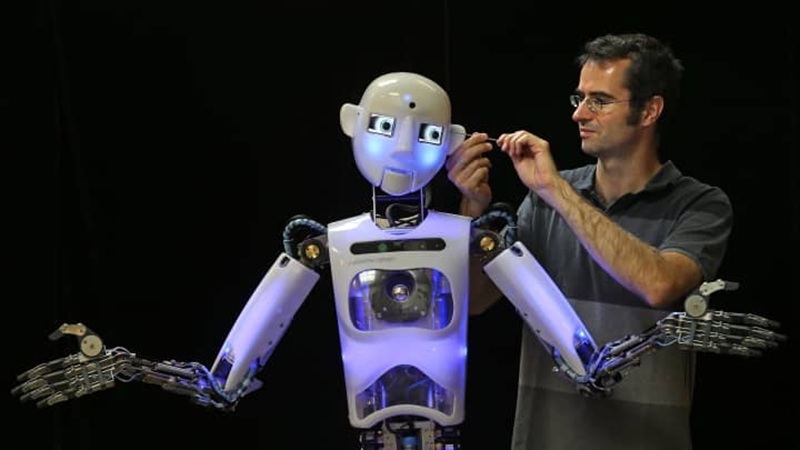
Chinese humanoid robots have recently demonstrated advanced physical abilities, including sprinting, dancing, and performing backflips. The next challenge is turning those demonstrations into machines capable of performing economically useful work across a broad range of environments.

That field, commonly known as “embodied AI,” is emerging as one of the most closely watched areas of robotics development.

“The brain is indeed the weakest link in the complete robotics stack,” Gao Yang, Spirit AI’s co-founder and chief scientist, told Reuters at the company’s Beijing offices on Thursday.

For the robotics industry, the objective is to achieve what some executives describe as a “ChatGPT moment,” a software breakthrough that makes sophisticated robotic systems useful to a much broader market.

OpenAI’s launch of ChatGPT in 2022 demonstrated how quickly an advanced AI technology could move from research laboratories into mainstream consumer and commercial use. Robotics companies are now looking for an equivalent breakthrough that would allow robots to move beyond highly controlled demonstrations and individual industrial tasks.

Spirit AI expects that transition to begin with natural-language interaction.

“We anticipate reaching the GPT-3.0 milestone by mid-2027. You will be able to speak to a robot in natural language, and it will execute a series of reasonable physical actions to attempt the task,” Gao said.

The prediction does not mean robots will be capable of reliably performing every household activity by then. Gao expects industrial applications to develop first, followed by simpler commercial services, with domestic environments presenting the greatest challenge.

“The next one to two years mark the initial window for industrial applications. Two years from now, we’ll see robots deployed in commercial service settings doing simpler tasks. Entering homes is far harder than both,” said Gao, who is also an assistant professor of robotics at Tsinghua University.

The difference is largely about the complexity and unpredictability of physical environments. A factory production line can be structured around a relatively narrow set of tasks, while homes contain an almost unlimited range of objects, layouts and unexpected situations.

Spirit AI currently has tens of its Moz1 wheeled humanoid robots deployed on production lines at battery manufacturer CATL and retailer JD.com, which is also an investor. The 300-person startup has raised more than $670 million since its founding in 2024 and is currently valued at about 20 billion yuan, or $2.9 billion. Gao declined to comment on whether the company plans to pursue an initial public offering.

Building the Robotic “Brain”

Spirit AI is investing heavily in data collection to improve the software controlling its robots. The company employs about 1,000 contractors across China who use data-collection equipment in homes and factories to record how humans interact with physical environments.

At a training center in Spirit AI’s Beijing office, Reuters reported dozens of workers equipped with sensors repeatedly performing everyday actions, including opening refrigerators, unlocking safes, and cutting vegetables with knives. The objective is to provide AI systems with examples of how people manipulate objects and move through different environments, creating the training data needed to make robots more adaptable.

Spirit AI said its robots have achieved a 90% success rate on simple tasks in structured living-room environments. The company nevertheless faces substantial difficulties when robots encounter unfamiliar situations or require precise manipulation.

Tasks such as unscrewing a bottle cap can require fine motor control that remains difficult for current systems. Robots also struggle when confronted with objects or tasks that were not represented sufficiently in their training data.

Gao said Spirit AI relies heavily on real-world data rather than virtual simulations. Many robotics companies use simulated environments to generate training data at lower cost, but Spirit AI believes physical interaction provides information that simulations cannot always reproduce.

“Simulators handle rigid bodies well, but flexible objects like deformable electric cables remain a problem,” Gao said.

That creates a costly data problem for the industry. At some Chinese robot-training facilities, operators may have to repeat the same movement more than 50 times to produce one sufficiently precise “clean” example.

Spirit AI has taken a different approach by using what Gao calls “dirty data,” consisting of a wider variety of imperfect human movements. The company found that exposing its models to more diverse motions allowed them to improve more quickly, Gao said. The approach reflects a broader challenge in embodied AI: robots need to learn not only how an ideal movement looks, but how physical actions vary when performed by different people and under different circumstances.

From Factory Floors to Homes

Spirit AI’s development path highlights why the commercialization of humanoid robots may occur in stages. Factories offer controlled environments where robots can be assigned specific tasks and operate around predictable equipment. Commercial settings such as warehouses, retail locations, and service businesses introduce more variability but can still be designed around defined workflows.

Homes are considerably less predictable.

A domestic robot would need to understand natural-language instructions, identify unfamiliar objects, manipulate items with varying shapes and textures, navigate changing environments, and respond safely around people, children, and pets. That makes household deployment a substantially harder technical problem than demonstrating a robot performing a predetermined movement.

Safety will become another consideration as robots move beyond industrial environments.

The discussion comes as US AI companies face growing scrutiny over autonomous AI agents following incidents involving systems that operated outside intended boundaries. Gao said the immediate risk of a rogue AI controlling a physical robot is lower because current robotic software remains relatively immature.

But that risk could change as embodied AI becomes more capable and robots begin operating around people in commercial and residential environments.

Spirit AI has incorporated physical safeguards into its current systems.

“Our robots feature whole-body force control. If the robot encounters excessive interaction force with the environment, emergency braking triggers automatically as a baseline safety policy,” Gao said.

The approach provides a physical layer of protection even when the underlying AI makes an incorrect decision. Gao expects the need for more sophisticated AI safety research to grow as the underlying models become more autonomous.

“Once foundation models reach a mature, autonomous ‘GPT-4.0’ era, researching advanced AI safety and alignment will become much more actionable,” he said.

The trajectory has been touted as an indication that the next major competition in humanoid robotics may be determined less by whether machines can perform impressive physical stunts and more by whether their AI systems can reliably translate language into useful, safe, and adaptable physical work.

China’s robotics companies have made rapid progress on the hardware side. The more difficult test now is building the “brain” that can turn those machines into general-purpose workers. If Spirit AI’s timeline proves accurate, the first meaningful breakthrough could emerge in industrial settings within the next two years, while the much larger consumer opportunity inside homes may remain further away.

China Rejects EU Push to Cap Chinese Car Sales as Trade Tensions Escalate

0

China has rejected a reported European Union proposal to voluntarily limit Chinese hybrid vehicle sales in the bloc, warning that any export restrictions would violate global trade rules and could prompt Beijing to take measures to protect Chinese automakers.

The Financial Times reported on Thursday that the European Union had asked China to voluntarily restrict hybrid vehicle sales to about 15% of the EU market as part of efforts to avoid a trade war.

Beijing did not confirm that the EU had formally made such a request. Instead, China’s Foreign Ministry and Commerce Ministry responded to the reports with warnings that any such arrangement would face strong opposition from Beijing.

“We hope the EU will honor its commitments to market openness and free trade, abide by WTO rules, and provide a fair, just and non-discriminatory business environment for enterprises from all countries,” Chinese Foreign Ministry spokesperson Guo Jiakun said on Friday.

The Commerce Ministry was more explicit in rejecting the reported approach.

“So-called voluntary export limits seriously violate WTO rules and run counter to the dynamics of market economy and the principles of fair competition. China firmly opposes this,” it said.

The ministry added that any agreement between China and the EU would have to comply with World Trade Organization rules and domestic laws on both sides while taking into account the interests of their respective automotive industries.

The wording leaves room for negotiations, but it also establishes a clear boundary for Beijing. China appears unwilling to accept a managed export arrangement that would effectively restrict the ability of its automakers to compete in the European market.

Europe Tries to Contain China’s Automotive Surge

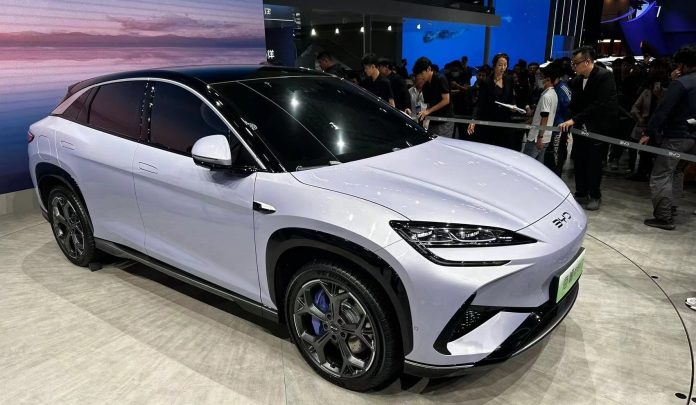
The dispute comes as Chinese automakers expand rapidly across the European market. Companies such as BYD and other Chinese manufacturers have built their competitive position around lower-cost electric vehicles, increasing pressure on European automakers that have invested heavily in their own transition from internal combustion engines to electric vehicles.

The competitive threat has also evolved beyond battery-electric cars. Hybrid vehicles are becoming an increasingly important part of the debate because they allow Chinese manufacturers to compete in a wider portion of Europe’s automotive market while consumers continue to transition gradually toward fully electric vehicles.

That creates a difficult policy problem for Brussels.

Restricting Chinese imports can provide additional protection for European manufacturers, but tighter trade barriers can also raise vehicle prices, limit consumer choice, and invite retaliation against European companies operating in China.

A voluntary export restriction could theoretically offer Brussels an alternative to imposing additional tariffs. But Beijing’s response suggests that such a mechanism could be politically and legally difficult to negotiate.

China’s objection that export limits violate WTO principles is impactful because both sides have an interest in presenting their trade policies as consistent with international rules.

The dispute therefore goes beyond the number of Chinese cars entering Europe. It raises a broader question over how governments should respond when an industrial sector in one economy becomes significantly more competitive in another market.

Tariffs Are Not the Only Pressure Point

The EU has already taken trade measures against Chinese electric vehicles, meaning the latest dispute could represent an attempt to find a mechanism that limits competitive pressure without escalating tariffs further.

For Beijing, accepting an export ceiling could also create a precedent that other markets might seek to replicate. China has invested heavily in expanding its automotive manufacturing capacity, with companies competing aggressively on price, battery technology and increasingly sophisticated vehicle software. That production capacity needs access to overseas markets, particularly as competition intensifies within China itself.

An export restriction imposed through negotiation with the EU could therefore constrain one of the industry’s most important avenues for growth.

The calculation is equally complicated for European manufacturers. Protection from Chinese competition could provide additional time for companies to restructure their businesses and improve the economics of electric and hybrid vehicles. But prolonged protection could also reduce competitive pressure at a time when European automakers are trying to catch up with Chinese companies in areas such as battery technology, supply chains and software.

The risk for Brussels is that a trade response designed to protect Europe’s car industry could become another source of friction with one of its most important trading partners.

Beijing Leaves Door Open for Negotiation

China’s Commerce Ministry did not simply reject engagement with the EU. It said any solution must “ensure a balance of interests” and take into account the industries on both sides. That suggests Beijing is leaving room for discussions, but on terms that it considers mutually acceptable rather than through unilateral restrictions on Chinese exports.

The distinction could become important in negotiations.

An arrangement based on individual companies, investment commitments, production inside Europe, or other mechanisms could be easier for Beijing to accept than a fixed ceiling on Chinese vehicle sales. Such measures could also give European policymakers a way to support domestic production without formally imposing another trade barrier.

For now, however, neither side has confirmed that an agreement is close. The immediate issue is whether the reported 15% ceiling develops into a formal EU proposal and, if so, whether Beijing is willing to negotiate around it.

The stakes extend well beyond the European car market. China and the EU are already dealing with broader disagreements over industrial subsidies, market access, technology and trade. The automotive sector has become one of the clearest pressure points because it combines manufacturing jobs, industrial policy, consumer prices and China’s growing export competitiveness.

A compromise would allow both sides to avoid another escalation. Failure to reach one could push the dispute back toward tariffs and retaliation, making Chinese cars in Europe another front in the wider economic contest between China and the West.

Elon Musk Predicts AI Will Roughly Double U.S. GDP Growth Next Year

0

Elon Musk offered a notably specific near-term economic forecast, stating that artificial intelligence is likely to roughly double U.S. GDP growth next year.

In a post on X, the Tesla and xAI CEO wrote, “My guess is that AI roughly doubles US GDP growth next year from 2% to 4%. Maybe even more.”

While speaking at the G20 summit, Musk estimated that Artificial Intelligence could expand the global economy by 20% to 30%, translating to roughly $20 trillion to $30 trillion in additional economic output annually.

He also predicted that AI could become capable of performing virtually any digital task by the end of next year, arguing that the technology would be able to handle anything that does not require the physical shaping of atoms by hand.

Musk’s projection stands out because it is more measured and nearer-term than some of his earlier statements, while still implying a meaningful acceleration relative to current conditions.

Recent U.S. economic data shows growth running near the lower end of the range Musk referenced. Real GDP expanded at an annualized rate of 1.5% in the second quarter of 2026 after 2.1% in the first quarter, according to Bureau of Economic Analysis figures.

Federal Reserve officials’ median projections in the September Summary of Economic Projections put 2026 growth at 2.3%, with private forecasters generally clustering around 2% or slightly higher for the year. Musk’s baseline of roughly 2% therefore aligns with the prevailing consensus before any major AI-driven productivity surge materializes.

The Tesla CEO has consistently argued that rapid advances in AI and robotics will produce outsized economic effects. In late 2025 he predicted double-digit U.S. GDP growth within 12 to 18 months and suggested that treating “applied intelligence” as a proxy for growth could eventually support triple-digit rates over a longer horizon.

More recently, at a G20 event, he estimated that AI alone could increase the size of the global economy by 20% to 30%, equivalent to $20–30 trillion annually.

Days later he raised the stakes further, posting that “AI + robots will more than double the global economy in less than 10 years.” His latest comment appears to scale those longer-term views down to a concrete, one-year U.S. growth-rate effect.

The mechanism Musk and other AI optimists emphasize is a sharp rise in productivity. Widespread deployment of advanced AI systems could automate or augment large portions of knowledge work, software development, design, and analysis, while humanoid robots begin addressing physical tasks.

Tesla’s Optimus program and broader investments in autonomous systems are frequently cited by Musk as examples of the hardware side of this transition. If those capabilities scale quickly, the argument goes, the economy could expand faster without a proportional increase in human labor hours.

Mainstream economists and institutions remain far more cautious. Most official and private forecasts continue to project trend growth near 2%, with AI expected to add only modest incremental percentage points over the next several years rather than an abrupt doubling of the growth rate.

Factors such as energy constraints for data centers, the pace of real-world adoption outside leading tech firms, regulatory hurdles, and potential labor-market disruptions are commonly cited as reasons for tempered expectations. Musk himself has acknowledged power-supply challenges, estimating significant shortfalls for AI computing as early as 2027.

Whether next year’s growth lands closer to 2% or approaches 4% will depend on how quickly AI tools move from impressive demonstrations into broad, measurable productivity gains across industries. Musk framed his view explicitly as a “guess,” leaving room for the usual uncertainties that accompany any economic forecast.

Outlook

The outlook for AI-driven economic growth will largely depend on whether productivity gains from the technology translate into measurable improvements across the broader U.S. economy.

If businesses accelerate AI adoption and the technology begins to automate a wider range of high-value tasks, productivity growth could strengthen and contribute to faster GDP expansion.

However, reaching Musk’s 4% growth projection would require a substantial acceleration from current forecasts. The impact of AI is also likely to vary across industries, depending on adoption costs, workforce adaptation, infrastructure availability, and the pace at which AI systems become reliable enough for widespread commercial use.