DD
MM
YYYY

PAGES

DD
MM
YYYY

spot_img

PAGES

Home Blog Page 401

Bitcoin Breaks $119K as Bullish Momentum Continues Amid U.S Government Shutdown

0

Bitcoin extended its bullish momentum this week, climbing above $119,000 and cementing its strong start in October, amid the U.S government shutdown.

The flagship cryptocurrency held above the $115,000 zone before accelerating higher, breaking through successive resistance levels at $117,000, $118,000, and finally $119,000.

A peak was recorded at $119,426 before the price began consolidating gains above the 23.6% Fibonacci retracement of the move from the $112,806 swing low to the $119,024 high.

At present, Bitcoin is trading well above $117,000 and the 100-hourly simple moving average. Analysts also noted a short-term bullish trend line forming with support at $117,000, signaling resilience in the price structure.

Bitcoin has gained almost 10% over the past week as bulls stage a comeback, echoing the upside in gold. Amid a trip to over $119,500, market participants expect the rally to cool before continuation is possible. This is due to price indicators becoming overheated.

“Uptober” Holds Strong

The surge highlights the strength of the “Uptober” narrative, a recurring seasonal pattern in which October historically delivers robust gains for Bitcoin. This year, the rally has coincided with the U.S. government’s first shutdown since 2018, marking the 11th such disruption in modern history.

With Republicans and Democrats failing to agree on federal spending levels, the shutdown is estimated to cost the U.S. economy $15 billion in lost GDP every week.

According to prediction market Polymarket, there is only an 8% probability of a near-term resolution. Against this backdrop, Bitcoin is increasingly being viewed as a non-sovereign store of value, attracting demand from investors seeking shelter from political dysfunction.

Lucas Kiely, CEO of digital asset wealth manager Future Digital, remarked that market volatility could increase as a result of the uncertainty. He suggested that unless Washington resolves the deadlock quickly, the administration might attempt to push for cuts in the federal workforce, though such measures are likely to face Senate opposition.

Breakout Confirmed, Eyes on $120K–$124K

From a technical standpoint, Bitcoin has broken free from its earlier consolidation phase between moving averages and resistance. Liquidity sweeps and structural shifts now tilt the market strongly bullish. Analysts identify the $120K–$124K region as the next major supply block and liquidity cluster, making it a key upside target.

If a pullback occurs, the $114K–$115K demand zone remains a crucial level. Strong bids there could fuel another rally attempt, while a failure to defend it might drag the price back toward $110K though this appears less probable given the prevailing momentum.

Altcoins Join the Rally

Amid Bitcoin’s recent upward price action, the broader crypto market has also staged a recovery, with the total market capitalization climbing back above $4 trillion. Ethereum trades above $4,300, XRP has rebounded to $2.96, and Binance Coin has surpassed $1,000. Solana reclaimed the $221 level, while Cardano continued its rebound after summer weakness.

Historically, Bitcoin’s strength has preceded capital rotation into altcoins, and traders expect that pattern to unfold once again as Q4 progresses. Analysts forecast that the rally could extend deeper into October, though short-term retests may occur as markets digest recent gains.

Outlook

With the U.S market shutdown, investor flows into Bitcoin demonstrate its resilience during periods of political gridlock. Traders often view decentralized assets as an alternative when traditional markets falter, and the shutdown strengthened that perception.

Despite pullback concerns, traders see Thursday’s rally as proof of Bitcoin’s staying power. The narrative around Uptober, built over years of October gains, adds further fuel to the momentum. A significant number of analysts anticipate the BTC price to hit $120k and above.
Elon Musk March to $1 Trillion and “Trillionaire Excel Aqua” Brand!

0

If they sell the water sources of South Africa which Elon Musk drank from as a kid, you could have a unicorn (at least worth $1 billion USD) business. If that water came from a stream, then that stream may well be the most strategic investable asset in South Africa. Securing the rights to it, bottling it, and branding it as “Trillionaire Excel Aqua” will surely deliver alpha. Yes, the humans will not drink to quench thirst, but to join the league of billionaires and trillionaires, hoping that a sip could carry their destinies into higher coordinates of abundance.

And just like that, humans will place orders—not because they need water, but because they need a story, the narrative that Musk once drank from the same source. Today, as the wires report that Elon Musk has crossed $500 billion in net worth, the imagination shifts: when will he arrive at $1 trillion? The very thought of it redesigns what is possible in human enterprise.

Let me confess: I am a Scripture Union kid, but I am obsessed with the Forbes Billionaire List. That list inspires me. I see men and women who rose from nothing, and built castles of industry. Agree or disagree, it is the list that fires my imagination. People, money is a tool to fix the inconveniences of life. If I had it in tons, I would go to Abuja and ask the government for rights to build a deep seaport, connecting Akwa Ibom through Aba to Ovim. Around it, I will build a manufacturing hub where jobs are not privileges but rights. That is what capital can do—reshape nations and redesign societies.

My day is coming. But for today, let us celebrate the age of Musk: “Tesla CEO Elon Musk on Wednesday became the first person ever to reach a net worth of nearly $500 billion, a landmark fueled by a rebound in Tesla’s shares and soaring valuations of his other ventures. According to Forbes’ billionaires index, Musk’s fortune stood at $500.1 billion as of 4:15 p.m. E.T., cementing his lead as the richest individual in modern history.”

In the Igbo Nation, we say, when one hand labors while the other refuses to help, the heart is not at peace. Wealth, like hands working together, is a tool; when capital joins with vision, destinies are transformed. Musk – congrats.

Elon Musk’s Net Worth Hits $500bn Following Tesla Board’s $1tn Compensation Plan

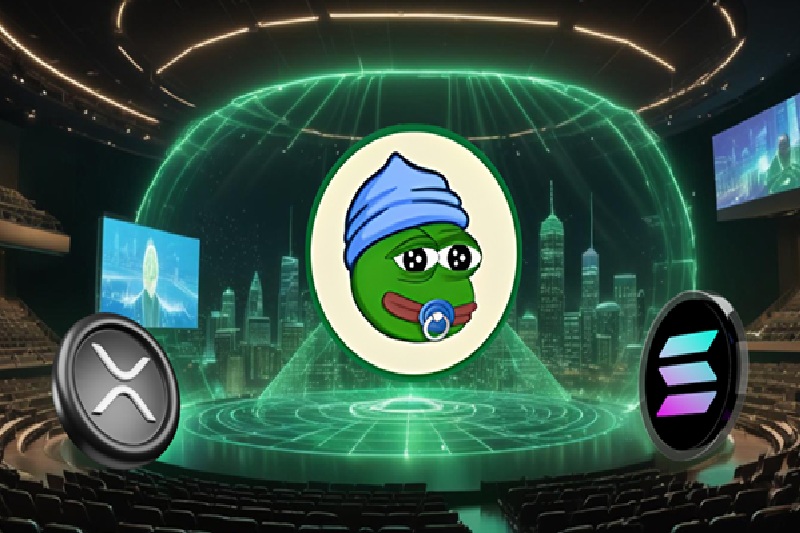
Best Crypto to Buy as Little Pepe (LILPEPE) Shows the Same Bullish Signals That Started XRP’s 2017 and Solana’s 2021 Explosive Moves

0

The cryptocurrency market is based on cycles of discovery. People who bought XRP before its 2017 rise or Solana before its 2021 explosion made a significant amount of money that changed their lives. Today, Little Pepe ($LILPEPE) is on a similar path, with early presale momentum, genuine blockchain use, and a meme culture that spreads rapidly. Little Pepe is distinct from other meme coins because it combines community power with Layer 2 technology. The project is garnering significant attention due to its current price of $0.0022 at Stage 13 of its presale. This could mean that it is the next big thing in the market.

XRP’s 2017 Playbook

XRP experienced one of the most significant price increases in cryptocurrency history, rising by more than 10,000%. Its rise began when speculative money flowed in, coinciding with an increase in its use and a surge in liquidity. Traders who identified early signs of accumulation and exchange growth positioned themselves for substantial profits. Little Pepe is also starting to build up in the same way. The fact that each presale stage sells out faster than the last demonstrates how XRP’s early trend of capital migration and demand growth was booming. The similarities are apparent, especially for investors who understand how small-cap businesses can evolve into global leaders.

Solana’s 2021 Rise and What It Means for Little Pepe (LILPEPE)

The main reasons Solana became popular were its quickness and ability to grow. Many developers started using the blockchain, which helped SOL grow from a low-priced token to one of the most important cryptocurrencies. Little Pepe’s Layer-2 blockchain design is a good example of this method. It focuses on low fees, fast transaction rates, and infrastructure that works well with memes. Little Pepe creates its own space for meme money and community tokens, which provides it with a level of scalability that most meme projects lack.

Stage 13 Presale Gains Momentum

The presale for Little Pepe has been excellent. It began at $0.001 for Stage 1, and early investors have already made more than 120% on their money. At Stage 13, the token is priced at $0.0022. Little Pepe is distinct from many other meme coins, as it offers additional layers of practical utility. Combined with high presale inflows, the project’s fundamentals are aligning with optimistic signs reminiscent of XRP and Solana in their early days.

Meme Culture Meets Real Utility

One of the best things about Little Pepe is that it can mix meme culture with valuable features. There is a meme launchpad that enables new meme projects to start on its network, provides sniper-bot protection for fair trade, offers staking benefits to holders, and imposes no transaction taxes. These things make investors feel more sure about their investments while also keeping the fun, viral spirit of meme culture alive. Little Pepe is different from coins that are just hype because it connects utility and culture. This mix is one reason why experts believe it could follow a similar path to Solana or XRP.

Capital Inflows and Presale Strength

One of the best indicators that growth may occur is a substantial amount of capital. Little Pepe raised $500,000 in under 72 hours at Stage 1, demonstrating substantial early interest. By Stage 13, over $26.2 million had been raised, which shows that investors remain enthusiastic. People believe in the project’s long-term potential because of these inflows. This means that there will be a lot of demand after it becomes public. The chance of getting long-term investment at different stages of a presale is similar to how cryptocurrency markets usually build up slowly before they start to grow rapidly.

Conclusion

Little Pepe ($LILPEPE) is more than simply another meme currency. It is making a name for itself by blending viral culture with practical blockchain applications, much like XRP and Solana did before their significant moves. The project is displaying all the right signs: high presale interest, community excitement, and proven security. Little Pepe is one of the best deals on the market right now, with a price of only $0.0022 in Stage 13 of its presale. If history repeats itself, it may become the next significant phenomenon in crypto, yielding substantial returns for early investors.

For more information about Little Pepe (LILPEPE) visit the links below:

Website: https://littlepepe.com

Whitepaper: https://littlepepe.com/whitepaper.pdf

Telegram: https://t.me/littlepepetoken

Twitter/X: https://x.com/littlepepetoken

LivLive’s AR Treasure Hunt Gives Users A Chance To Find $2.5 Million in Crypto Rewards

0

The LivLive augmented reality game layer is giving players the chance to uncover $1 million worth of $LIVE tokens hidden inside a secret virtual chamber. The $LIVE token powers the entire LivLive protocol, where users complete AR-based quests to earn real rewards.

During the presale, $LIVE tokens are trading at an effective price of just $0.0083, with the launch price offering a 30x at $0.25.

The LivLive protocol is built to fully leverage AR by combining it with blockchain technology and artificial intelligence. Blockchain ensures verifiable ownership and decentralized value, while AI personalizes experiences based on user behavior, making quests more relevant and rewarding.

The LivLive presale is now live, and every participant has a chance to unlock one of the virtual treasure chambers in the $2.5 million giveaway. One lucky player will walk away with $1 million in $LIVE tokens.

AR and Blockchain: A New Digital Frontier

Augmented reality (AR) has long been seen as a potentially revolutionary technology. As our lives become increasingly digital, it only makes sense to develop tools that merge the physical and virtual worlds.

However, several issues have prevented mainstream adoption of AR. One of the biggest obstacles has been the inability to safely store data, reward users with verifiable real-world assets, and support secure digital transactions. Blockchain technology directly addresses these problems with decentralization, transparency, and user empowerment and ownership.

LivLive is using blockchain to bring security, verifiability, and fairness into the AR space. Every action a player takes is logged on-chain, which means rewards are tied directly to their activity. This allows players to maintain ownership over their data and assets, rather than giving that power to corporations.

By combining AR and blockchain, LivLive creates immersive, reward-driven experiences. A player who completes a quest in a partnered store, for instance, might receive a real-world asset such as a product coupon or access to a live event – all verifiable and tradable on the Ethereum blockchain.

Earlier AR games like Pokémon Go showed the potential of immersive digital overlays, but they lacked the ability to provide real ecosystem value. LivLive expands this concept by adding crypto rewards and real-world asset integration, turning simple gameplay into a meaningful economic opportunity.

LivLive’s $2.5 Million Digital Treasure Hunt

The LivLive protocol is taking AR to the next level through a virtual treasure hunt. $2.5 million worth of $LIVE tokens have been hidden within the protocol, and presale players will be able to unlock digital chambers containing these rewards. One of these chambers holds a grand prize of $1 million in $LIVE tokens.

Players receive virtual NFT keys via the LivLive platform, which are used to unlock hidden treasure chambers scattered throughout the augmented reality layer. These chambers are located in both virtual locations and real-world points of interest, blending digital exploration with physical presence.

The experience feels like a true AR game. Users explore their surroundings, complete location-based quests, and search for hidden treasures using their mobile device and AR wristband.

This marks only the opening chapter of LivLive’s treasure hunt experience, with personalized and themed events set to expand the adventure. As brands and businesses harness the protocol for their own campaigns, players will encounter branded quests and ever-growing prize pools, blurring the line between play, marketing, and real-world value.

Presale Token & NFT Packs Go Live

The LivLive presale is the first opportunity that users have to join the AR world. There are five different token & NFT packs, each offering a wearable in the form of a unique smart wristband necessary to play the game, as well as $LIVE token allocations, which will grant the holder access to the currency that powers the ecosystem.

Every presale bundle includes a substantial bonus, with higher tiers delivering even greater rewards paid out in $LIVE tokens. The token’s price is set to increase by 30x from $0.0083 to $0.25 at launch.


Telegram

X

OpenAI Launches Sora, A TikTok-Style Social App Powered by AI Video Generation

0

OpenAI announced Sora 2, an advanced AI model for generating high-quality videos with synchronized audio, physics simulation, and consistent characters.

Alongside it, the company unveiled the Sora app, a standalone social platform designed for creating, remixing, and sharing short AI-generated videos in a vertical, swipe-to-scroll feed reminiscent of TikTok, Instagram Reels, and YouTube Shorts.

This marks OpenAI’s bold entry into social media, aiming to supercharge AI video adoption much like ChatGPT did for text-based AI. Users input text prompts to generate realistic clips up to 10 seconds in-app featuring synchronized audio, dialogue, sound effects, and lifelike movements.

Examples include beach volleyball scenes, skateboard tricks, or gymnastics routines—all fully AI-produced. Record a short video of yourself or friends once, then insert your likeness into any AI-generated scene for personalized content.

OpenAI includes safeguards like notifications for unauthorized use and stricter permissions for minors to prevent deepfakes or misuse. An algorithmic feed prioritizes creation over endless consumption—users get nudges to make videos if they’re scrolling too much.

Feeds are customizable via natural language instructions, and remixing friends’ content is encouraged. No infinite scroll for users under 18 by default. The iOS app launched invite-only in the US and Canada, with Android and global expansion planned soon.

It’s free to start, with potential charges for extra generations during peak times. ChatGPT Pro subscribers get early access to an experimental “Sora 2 Pro” version. OpenAI is positioning Sora as a direct rival to TikTok amid ongoing US regulatory scrutiny of the app’s Chinese ownership, including deadline extensions under President Trump.

A new AI video feed in the Meta AI app for short-form generated content. Google’s Veo 3: Integrated into YouTube for AI video tools. TikTok’s Approach: More cautious on AI, focusing on user-uploaded videos rather than generation.

Sora 2 can inadvertently generate videos with copyrighted elements unless opted out, raising lawsuit risks similar to past AI training ddisputes via Anthropic’s $1.5B settlement.

Deepfake potential is a flashpoint, though OpenAI emphasizes human moderators for bullying reports and revocable likeness consents. The company released a dedicated safety blog post with the announcement.

Monetization and Data relies on user data via IP, past interactions for recommendations, which can be disabled. No ads at launch, unlike TikTok’s model. This launch could redefine short-form video by making creation effortless and hyper-personalized, but it amplifies debates on AI’s role in media authenticity.

OpenAI CEO Sam Altman teased it on X as “a new product that makes it easy to create, share, and view videos.” Sora 2’s ability to generate realistic videos with synchronized audio, physics simulation, and consistent characters lowers the barrier for high-quality video production.

This could democratize filmmaking but risks flooding platforms with AI-generated content, challenging platforms like YouTube and TikTok to adapt their algorithms. Sora 2’s integration of text, video, and audio generation signals a leap in multimodal AI, pushing competitors like Google’s Veo 3 and Meta’s AI tools to accelerate innovation.

Features like revocable likeness consents and notifications for unauthorized use of personal imagery aim to curb deepfake risks, but scaling moderation for a social app will test OpenAI’s safety infrastructure.

The Sora app’s emphasis on AI-generated videos could blur lines between real and synthetic content, amplifying debates about authenticity in media. The app’s Cameos feature and easy remixing could empower creators, especially non-professionals, to produce viral content.

However, an influx of AI videos risks content fatigue, as users may struggle to distinguish unique creations. Limiting infinite scroll for users under 18 and nudging creation over consumption are steps toward responsible design.

Still, the addictive potential of a swipeable AI video feed could mirror TikTok’s dopamine-driven engagement, raising concerns about screen time and mental health. Sora’s free-to-start model with potential paywalls for heavy usage challenges TikTok’s ad-driven revenue and Meta’s subscription experiments.

If successful, it could shift monetization trends toward hybrid models in social media. By simplifying video production, Sora could expand the creator economy, enabling more individuals to monetize content. However, it may devalue traditional filmmaking skills, as AI-generated videos compete with human-made ones.

Sora 2’s potential to generate copyrighted content could lead to lawsuits, similar to past AI training disputes. This may force OpenAI to invest heavily in legal defenses or licensing agreements, impacting profitability.

Sora’s launch aligns with US scrutiny of TikTok’s Chinese ownership, including deadline extensions under President Trump. A US-based alternative like Sora could gain favor with regulators and users seeking a “safer” platform, potentially accelerating TikTok’s market share loss.

TikTok’s cautious approach to AI-generated content and Meta’s Vibes launch suggest a race to dominate AI-driven social media. Sora’s first-mover advantage in seamless AI video creation could force competitors to integrate similar tools rapidly.

Sora’s focus on creation over consumption and customizable feeds sets it apart from TikTok’s passive scrolling model. Success hinges on user adoption and whether OpenAI can maintain a distinct identity.

While xAI’s Grok focuses on conversational AI and not video, Sora’s success could push xAI to explore multimodal applications to stay competitive. Other AI firms may also pivot toward social media integrations.

Sora’s launch could redefine short-form video by making AI-driven creation mainstream, challenging TikTok’s dominance and reshaping the creator economy. However, it risks amplifying deepfake concerns, copyright disputes, and regulatory hurdles. Its success depends on balancing innovation with safety, user engagement with authenticity, and global expansion with privacy compliance.