DD
MM
YYYY

PAGES

DD
MM
YYYY

spot_img

PAGES

Home Blog Page 4051

Bitcoin Cash Soars Over 100% Within Ten Days – Can It Compete with VC Spectra’s 900% Surge?

0

Bitcoin Cash (BCH) has recently witnessed a remarkable surge, soaring over 100% within ten days. As the cryptocurrency market experiences fluctuations and setbacks, the impressive performance of Bitcoin Cash raises questions about its potential to compete with the VC Spectra (SPCT) as its sights are even higher with an ambitious target of 900% growth.

>>BUY SPCT TOKENS NOW<<

Bitcoin Cash (BCH) Investors Enjoy A 100% Surge

While Cardano (ADA) and Polygon (MATIC) face challenges beyond their control due to the SEC crackdown, Bitcoin Cash (BCH) emerges as a strong contender, capturing the attention of investors seeking profitable opportunities.

During June, Bitcoin Cash (BCH) witnessed a substantial surge in price of over 100% in just one week. Beginning the month at around $100, the value of BCH has soared to approximately $230 in recent trading sessions.

The recent decision by the SEC to exclude Proof-of-Work cryptos like Bitcoin Cash (BCH) from investment contract classification has contributed to its surge. In addition, its rally has been fueled by a listing on the institutional-backed crypto exchange, EDX Markets, which has increased its visibility and attracted investor interest.

As VC Spectra (SPCT) gathers momentum and garners attention as a promising platform, Bitcoin Cash is poised to compete with the ever-evolving cryptocurrency industry. Bitcoin Cash’s (BCH) surge demonstrates its resilience and promises exciting possibilities for seasoned and new investors.

But let’s see: Can Bitcoin Cash (BCH) truly match the inherent value of VC Spectra (SPCT), especially in the long term?

VC Spectra (SPCT): 900% Forecasts Due To Its Innovative Approach

While Bitcoin Cash enjoys its rally, VC Spectra (SPCT) has been making waves in the decentralized finance world with its groundbreaking decentralized hedge fund model.

VC Spectra stands out as a distinctive venture fund, operating on a trustless model and striving to deliver optimal returns through sustainable investments in cutting-edge blockchain and technology ventures.

VC Spectra’s native token, SPCT, operates on the BRC-20 standard, providing users with versatile functionality within the Spectra ecosystem. With its user-friendly interface and visual tools, VC Spectra empowers users to actively support the most promising blockchain projects and tech startups, leveraging advanced algorithms to explore diverse token markets securely and seamlessly while prioritizing sustainability, setting it apart from competitors.

VC Spectra (SPCT) has set ambitious growth targets, aiming for a remarkable 10x increase by the end of its presale. The project has already raised an impressive $2.3 million through its private seed sale in just two weeks, indicating strong investor confidence. With an initial price of $0.008 and an ambitious target price of $0.08, VC Spectra aims to achieve a staggering 900% growth. This surge represents the project’s bold aspirations and potential for substantial returns.

As experts identify VC Spectra (SPCT) as a high-profit investment opportunity, the project’s innovative features and growth potential make it an enticing option for those seeking high returns on investment.

Both projects offer unique value propositions, and investors and enthusiasts will closely watch their performances. Investing in VC Spectra (SPCT) presents a unique opportunity to be part of an innovative decentralized hedge fund model with the potential for high returns and a range of exclusive benefits.

>>BUY SPECTRA TOKENS NOW<<

Learn more about the VC Spectra (SPCT) presale:

Presale: https://invest.vcspectra.io/login

Website: https://vcspectra.io/

Twitter: https://twitter.com/spectravcfund

Telegram: https://t.me/VCSpectra
Impact of FX and Subsidy Reforms Hits Home As Oil Marketers Project N700/Liter Fuel Price in July

0

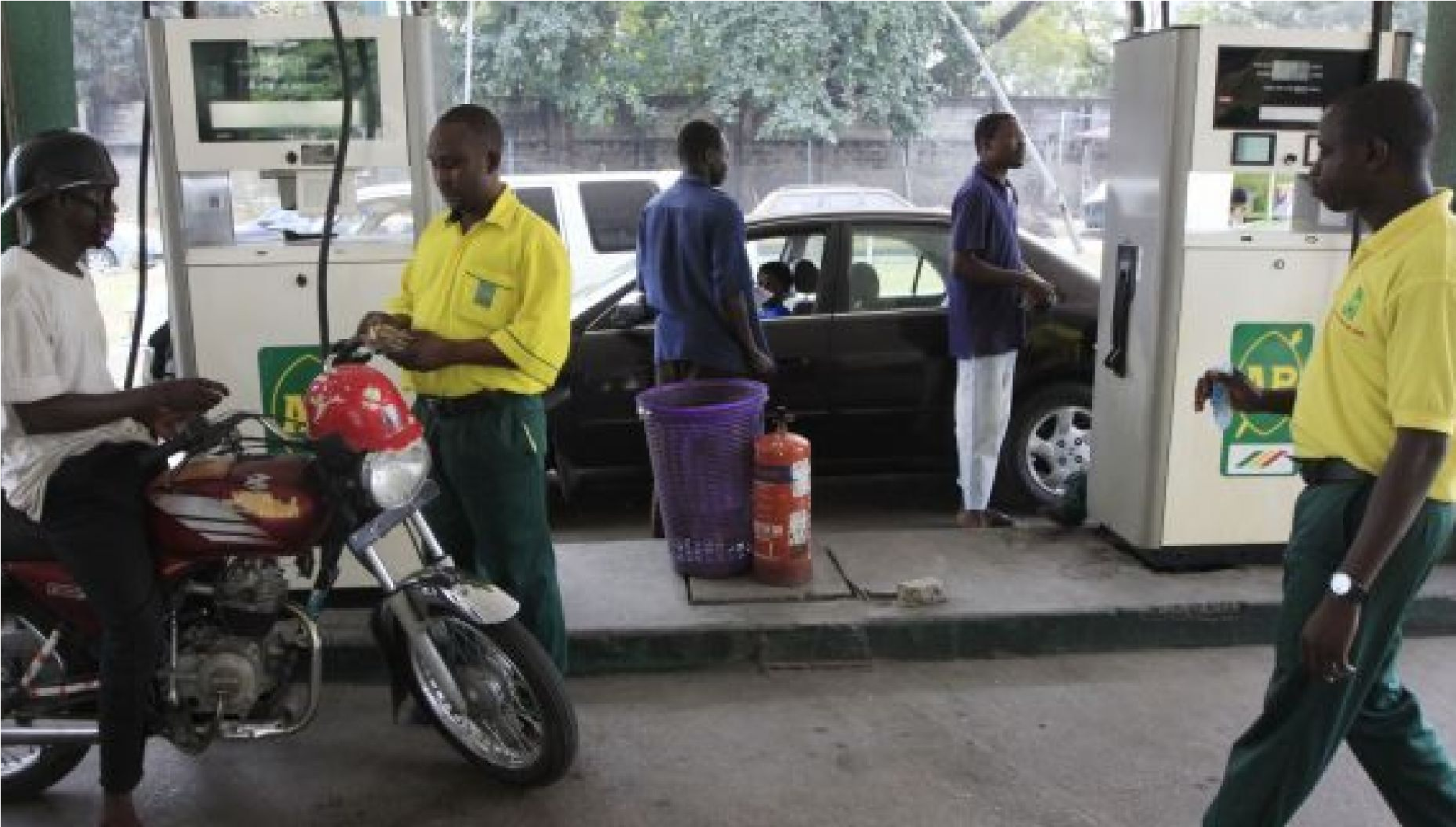
The cost of petrol is expected to further rise as much as N700 per liter in northern Nigeria, and around N610 in the south from July, The Punch reports, quoting the National Controller Operations, Independent Petroleum Marketers Association of Nigeria, Mike Osatuyi.

“What I am seeing is around N600 and above, depending on the exchange rate, the current crude price at the international market, and the landing cost. Those in Lagos will pay around N600, those outside Lagos around N600 plus, while those in the north would be paying anything from N700 and above,” he said.

The projected prices are based on the realities of the Nigerian forex market, which has seen the naira plummet to N770 against the dollar in the Investor and Exporter window. The last petrol stock of the Nigerian National Petroleum Company Limited is reportedly finished.

The forex market, which was floated earlier this month by the Central Bank of Nigeria (CBN), has impacted the cost of nearly all goods and services – especially petroleum products. Further hike in petrol prices means that the resulting economic hardship will be exacerbated.

Analysts have projected that the new forex and subsidy policies will stoke inflation (currently at 22.41%) up to 30% in the short term.

Before now, the hope of an adequate supply of affordable Premium Motor Spirit (PMS) hung largely on Dangote Refinery, whose products are expected to hit the market by July. Dangote Refinery, with the world’s largest production capacity of 650,000 barrels per day, was commissioned last month in Lekki, Lagos. But it is understood to be functioning at around 88% – slimming the hope of a quick cheaper PMS in the Nigerian market.

Experts said that the deregulation of the upstream and downstream sectors means that hence, market forces will determine the cost of petroleum products. This includes the federal government’s fresh move – imposing 7.5% VAT on diesel imports.

Nigerian Midstream and Downstream Petroleum Regulatory Authority (NMDPRA) said market competition will help drive the prices down in the long term. The agency said it has been issuing import licenses to companies interested in bringing in PMS, a move that will encourage competition.

The Executive Secretary, Depot and Petroleum Products Marketers Association of Nigeria, Olufemi Adewole, told The Punch on Tuesday that however, prices will be determined by market fundamentals.

“Prices of products will depend on market fundamentals, and as we speak, the Nigeria Customs Service is delaying some AGO (diesel) vessels because of the 7.5 percent VAT.

“And don’t forget, any cost incurred by marketers would be added to landing cost, and then to the pump price. The marketer would also have to add profit because they must make profit,” he said.

The odds stark against the FX market

There is hope that the CBN will soon stabilize the FX market through interventions. The apex bank said earlier this month that the FX market floatation is a managed one, which means that the exchange rates will not be fully determined by the market for now.

But having reached as high as N770.38 /$1 earlier in June, and hovering now around N756 – to N765/$1, it is not clear at what rate the CBN intervention will cause the market to converge.

Analysts believe the answer to stable FX rates is largely tied to adequate forex liquidity. But Nigeria has been struggling to find buyers for its crude oil, its major source of forex, in the past months.

The federal government’s recent faceoff with shipping companies over unpaid taxes from 2010 to 2019, has caused some vessel owners to shed loading oil from Nigeria – leading to a surplus of stranded oil from the country, according to a recent Bloomberg report. The report noted that the country is still looking for buyers for about half of its July loading.

Although the Federal Inland Revenue Service (FIRS) has granted shipping companies a six-month grace window to clear the retroactive taxes, the challenge remains. According to the report, about 20-22 cargoes worth of barrels, totaling about a million barrels, have remained unsold for July.

This, besides scuttling Nigeria’s chance to boost its foreign reserve from the dollar derived from the sales of oil, has bolstered shipping costs for Nigerian oil significantly. Nigeria’s daily shipping cost has risen to $53,463, above the year-to-date average, according to data from the Baltic Exchange.

The economic impact widens

The crippling effect of high FX rates on PMS prices is notable for the drastic reduction of vehicles on Nigerian roads. For instance, Lagos, which has approximately 2.5 million cars on its roads daily, has over the past weeks, seen the number drastically reduced.

Against this backdrop, there are growing concerns that if not urgently addressed; the situation will squeeze off what is left of Nigerians’ meager spending power.

The World Bank said in its June 2023 edition of the Nigeria Development Update (NDU), titled ‘Seizing the Opportunity,’ that more than four million Nigerians have fallen into poverty during the first six months of this year.

The report, which attributed the situation to the challenges posed by forex reforms, warns that an additional 7.1 million individuals could fall into multidimensional poverty if immediate steps are not taken to protect Nigerian households from the initial price shocks resulting from the petrol subsidy reform.

The World Bank said it has approved an $800 million loan for the Nigerian government to facilitate palliative measures, including cash transfers to poor Nigerians, to cushion the effects of the FX and subsidy reforms. But the $800 million is believed to be too meager to ameliorate the widespread impact of the reforms.

The Nigerian government is currently working with Civil Society Organizations to create a framework for a reviewed minimum wage that will boost the spending power of Nigerians. Economists believe that a sustainable minimum wage will help Nigerians to cope as the inflationary shocks of the policies take a toll in the short term.

Paysafe to Discontinue Processing Payments for Binance

0

Binance, one of the world’s largest cryptocurrency exchanges, is facing a major setback as Paysafe, a leading provider of online payment solutions, announced that it will stop processing payments for Binance customers in the UK and Europe. Paysafe, which owns popular payment platforms such as Skrill, Neteller and Rapid Transfer, said in a statement that it has decided to suspend its services for Binance “in light of the recent regulatory developments regarding Binance in a number of countries”. The statement added that Paysafe will continue to monitor the situation and “will update our customers accordingly”.

This is a significant blow for Binance, which has been under increasing scrutiny from regulators around the world over its compliance and consumer protection practices. In June, the UK’s Financial Conduct Authority (FCA) issued a consumer warning against Binance, saying that the exchange is not authorized to conduct any regulated activity in the country. The FCA also ordered Binance to remove all advertising and financial promotions by June 30.

Other countries, such as Japan, Canada, Thailand and Italy, have also issued similar warnings or notices against Binance, citing concerns over its lack of registration or authorization. Binance has said that it is committed to working with regulators and complying with local laws, but it has also faced challenges in finding a stable legal jurisdiction to operate from.

The loss of Paysafe as a payment partner could have a significant impact on Binance’s business, as many of its customers rely on its platforms to deposit and withdraw funds from their accounts. According to a report by CryptoCompare, Binance accounted for 65% of the total spot trading volume in the crypto market in June, with over $668 billion worth of transactions. Binance has not yet commented on Paysafe’s decision, but it has previously said that it is working on alternative payment options for its customers. However, it remains to be seen how Binance will cope with the mounting regulatory pressure and the potential loss of trust from its users.

In an interesting legislation, the United Kingdom has taken a major step towards embracing the digital economy by passing a bill that recognizes Bitcoin and other cryptocurrencies as regulated financial activities in the country. The bill, which was approved by the House of Commons on Tuesday, aims to provide legal clarity and consumer protection for the growing sector of crypto assets and services.

The bill defines crypto assets as “digital representations of value that are secured by cryptography and can be transferred, stored or traded electronically”. It also establishes a framework for the registration and supervision of crypto service providers, such as exchanges, wallets and custodians. The bill requires these providers to comply with anti-money laundering and counter-terrorism financing rules, as well as to implement safeguards to protect customers’ funds and data.

The bill also recognizes the potential of blockchain technology, which underpins many crypto assets, to improve efficiency and transparency in various sectors of the economy. It encourages innovation and collaboration between public and private entities to explore the benefits and challenges of this emerging technology.

The bill is seen as a positive development for the UK’s crypto industry, which has been calling for more regulatory certainty and support from the government. The bill aligns the UK with other jurisdictions that have adopted similar legislation, such as Japan, Singapore and Switzerland. It also positions the UK as a leader in the global crypto space, which is expected to grow exponentially in the coming years.

The bill will now move to the House of Lords for further scrutiny and debate, before becoming law. The bill is expected to come into force by early 2024, giving time for the regulators and the industry to prepare for the new regime. The bill is a milestone for the UK’s digital transformation and a testament to its commitment to foster innovation and competitiveness in the financial sector.


Social Media Accounts for KYC: Data Protection Commission Declares CBN’s Directive Illegal

0

The Nigeria Data Protection Commission (NDPC) has deemed the recent directive issued by the Central Bank of Nigeria (CBN) requiring banks to obtain customers’ social media handles as part of enhanced Customer Due Diligence (CDD) regulations to be unlawful.

The commission is currently in discussions with the central bank regarding this matter, as there are fundamental principles that must be upheld when collecting citizens’ data. Dr. Vincent Olatunji, the National Commissioner of NDPC, conveyed this information in a statement released by Mr. Itunu Dosekun, the commission’s Head of Media, on Thursday in Abuja.

Olatunji disclosed that before the enactment of the Nigerian Data Protection Act (NDPA) on June 12, the indiscriminate collection of citizens’ data by Data Controller Organizations was not treated with due seriousness.

The NDPA, signed into law by President Tinubu, includes crucial guidelines for the processing of personal data. These guidelines stipulate that data collection must be conducted in a fair, lawful, and transparent manner. Furthermore, data collection should be limited to the minimum necessary for the intended purpose and should not be retained for longer than necessary.

He explained that there are prerequisite steps that every Data Controller must follow before collecting data from data subjects. Failure to comply with these steps constitutes a violation of the law and can result in a data breach, which may incur penalties.

“There are provisions in the law to go against any data controller be it private or government office, NGOs, hotels, because we are pro-citizens.

“The whole idea of this law is to protect the rights, the interests of Nigerians who are data subjects.

“We are already engaging with the CBN to let them know that what they have done is against the law because there are basic principles you must meet when you want to collect citizens’ data.

“There is data minimization, meaning you don’t collect data beyond the purpose for which it was intended, purpose limitation, what purpose is it for,’’ he said.

According to Olatunji, the requirement for bank customers to provide their social media handles is unnecessary.

However, he acknowledged that if the collection of social media handles was based on public interest, such as monitoring certain transactions, proper awareness should be given to customers.

Olatunji also stated that they would investigate the reasons behind the implementation of the Customer Due Diligence (CDD) regulation and work towards resolving the issue in alignment with international best practices.

Last week, the CBN published a document, ‘Central Bank of Nigeria (Customer Due Diligence) Regulations, 2023’, mandating financial institutions to obtain social media information of customers as part of their Know Your Customer (KYC) exercise. This is in addition to the requirement to obtain email addresses, telephone numbers, and residential addresses.

The apex bank said the key objective of the new regulation is to enforce compliance with relevant provisions of the laws designed to checkmate money laundering and terrorism financing.

However, the move has drawn criticism from civil rights advocates and the general public, who believe it is another attempt by the government to censor social media users.

The Opportunity From Overturning Affirmative Action into US Top Universities

1

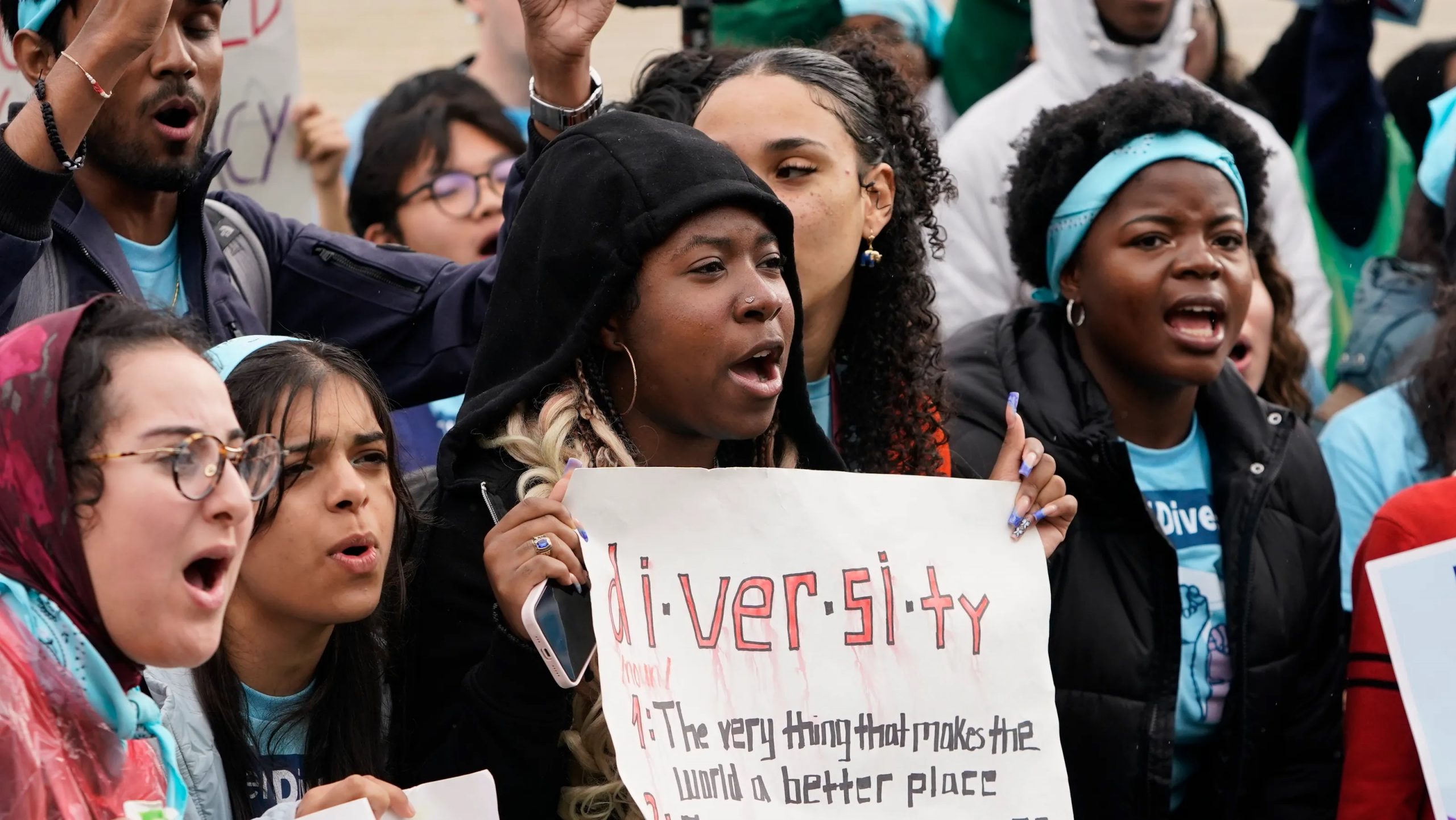
In the United States, most top universities use race as a factor as they decide who makes the admission cut. They call it affirmative action, and I hate it even as I vigorously support a variant So, the Supreme Court ruling today is a draw: “The Supreme Court has ruled against the use of race as a factor in higher education admissions. The 6-3 decision will force colleges to scrap affirmative action policies designed to increase minority representation on campus.”

First, why I hate it: it makes extremely accomplished African Americans to be perceived as being less competent before their White counterparts. As a student in Johns Hopkins University, in my first year, I was the ONLY black student in the electrical & computer engineering department PhD program, and one of two in the whole school of engineering PhD program. By default, many will think this student possibly made it because of affirmative action. And one student did say that, and I took time and provided my records.

I explained to the student that I did not know how I came here – affirmative action or not – but happy that someone is spending close to $100,000 per year (I was paid $36,000 yearly and my tuition was $55,000 yearly) on my education in a foreign land. But note this: in my master’s degree, I had 4.00/4.00 and in GRE Quantitative, I scored 800/800 (top 0.01% in the world). So, if someone after my stellar records did not admit me on merit, that person was not fair to me. The student apologized. And I graduated on time, wrote a book which won an award, filed and received a US patent and excelled. (That student spent 7 years and dropped out.)

Yes, if you have 100 students and 5 black kids need affirmative action to get in, it may be good to check on graduation day if they came last in the class. If they do not, it means the system was faulty at the admission phase since those who need help most times are not the bottom of the class on graduation day. If Obama had needed affirmative action to enter Harvard Law, the system was unbalanced for him in the admission phase, as he finished among the top of his class.

In other words, most affirmative action students do not graduate bottom of their classes, which indicates that the admission process is not effective for them to have needed help to get in. And by using the policy, it makes universities lazy, masking necessary improvements which could have deepened the admission process for minority students.

Then I am happy that affirmative action is gone: Affirmative action is unfair to many hard working middle class minority families.  This system allows universities to check “Black” and onload black students from wealthy families who do not need any help. In other words, Obama’s kids could qualify even though the kids have access most white kids do not have. But being black, some schools can admit them to have the right statistics. So, at the end, most beneficiaries at the undergraduate level are children of wealthy black kids who do not need that help, as they’re well positioned to compete at the highest level.

The Supreme Court has ruled against the use of race as a factor in higher education admissions. The 6-3 decision will force colleges to scrap affirmative action policies designed to increase minority representation on campus. Schools must now “decide where racial diversity ranks among priorities that can include academic performance, achievement in extracurricular activities … and preferences for alumni and donors,” The Wall Street Journal notes. While expected, the ruling is a reversal from the court’s last big decision on the subject, which in 2016 reaffirmed the use of racial preferences in public university admissions. (LinkedIn News)

So where do I stand? I want universities to use economic status, and not race, to make that admission decision. Yes, affirmative action on economic status. The probability that many black kids from families which need help will get into top US universities is closer to “1” if economic status is the core metric, over race. We may not like the Supreme Court ruling, but if you check the data of black kids in leading top universities, you will look at this ruling from a different angle.

This ruling is an opportunity for aspiring minority families!

Comment on Feed

Comment 1: I believe this affirmative action is close to our quota system policies which have not allowed qualified individual to access most government opportunities.

Seeing that different part of Nigeria has their cutoff mark in getting into FGC and universities speak volumn.
Whenever we improve our system to institute merit base opportunities for all, then our nation will be ready to compete among nations.

Comment 2: Prof., does this in any way discount the underrepresentation of black minorities in academics? School enrollment is already positively correlated to increasing household income (a key indicator of wealth). And data is consistent in showing that black families remain poorer with a widened income gap.

University policies already factor economic status in admission, especially given that first generation students (who have been consistently shown to come from poorer families) are given preferential treatment.

I’m overly concerned on the impact that this ruling will make to advance arguments in favour of reverse racism and how proponents will capitalise this ruling to undermine equity and social justice across other sectors, and not just university admissions.

My Response: If you do not have many black students, you will not have many black professors. It is a pipeline issue. The issue here is that everyone is a victim. Asian students which started the campaign already have more students per capita when benchmarked with their percentage in the full population in the US. Yet, while they excel in school, they have minimal impact in US politics. 

So, what happens is that the US is an interesting country, considering that the Supreme Court excluded military schools from this ruling (yes, they should use race even though Harvard cannot).

Having Obama, Kamala as President and VP will mask many things in America as the Asian kid will ask: this race has reached a level we have never reached, why do they need help? I think economic affirmative action, over race, is a better metric. Most schools will adopt that going forward.

Comment 3: Yes, prof Ndubuisi Ekekwe, it’s a more objective and “less” socially-sensitive criterion than race in today’s uber-conscious world. That said, it comes with its own challenges, too.

Interestingly, per your story, I had a similar experience at UNILAG regarding the controversial Nigerian quota system (on which I think I have read an article of yours calling for a change there as well). I am from Gombe State. So, naturally, anyone seeing a Gombe student in UNILAG would be forgiven to think that the student came in per quota (= low scores). My HOD in year 1 had such a bias when he blatantly refused to sign my admission papers for weeks, even with my good JAMB scores & WAEC. He said northen students struggled in accounting. He said anyone could get high scores in those exams, so, they meant nothing to him. Well, I topped not just my class, but the entire faculty, from the very first semester to the last. I was just 1 step short of leaving as best overall in the entire school. Prof Eddy Omolehinwa avoided me for 4yrs. He just couldnt swallow his ego. That’s part of the unintended consequences (like the rich black kids you mentioned) that such dysfunctional classification systems can engender…

My Response: .This is the story of Nigeria and extremely profound. Just like these things create opportunities, they also diminish as your case. Think of two kids in a primary school in Lagos; one from Zamfara and another from Imo. Both write exams to enter a federal government college. Imo has 150 but cannot get in while the Zamfara kid has 10 and makes the cut. Forever, the Imo kid cannot understand Nigeria.