DD
MM
YYYY

PAGES

DD
MM
YYYY

spot_img

PAGES

Home Blog Page 4054

ChatGPT Price Prediction for Solana (SOL) in 2023: Can SOL Match Uwerx’s (WERX) Rapid Rise as the New Crypto King?

0

Investors constantly seek growth and profitability opportunities, and two promising projects that have gained attention are Solana (SOL) and Uwerx.

While Uwerx has experienced a rapid rise and garnered significant interest, it’s crucial to analyze Solana (SOL)’s potential in 2023 and determine if it can match Uwerx’s success.

Read on to discover the possibilities and make informed investment decisions.

Solana (SOL): Resilient Growth and Promising Potential in the DeFi Landscape

Solana (SOL) is a blockchain platform that has gained significant attention and recognition within the decentralized finance (DeFi) space.

Solana (SOL) has emerged as a promising contender, backed by prominent venture capitalists and demonstrating robust growth in its total value locked (TVL) of $268 million.

Solana (SOL)’s ability to overcome past challenges and setbacks has positioned it as a resilient force in the crypto industry. Analysts and experts believe that Solana (SOL) has successfully navigated through its previous obstacles, and this positive sentiment suggests a promising future for the project.

Currently, Solana (SOL) is valued at $17.68, with a 24-hour trading volume of $415,720,178. Solana (SOL)’s current ranking on CoinMarketCap stands at #9, with a live market cap of $7,040,272,053.

While it’s always important to consider market volatility and conduct thorough research, the price prediction for Solana (SOL) shows a +500% increase for Solana (SOL) by 2050, reaching $71.21.

Uwerx: Empowering Freelancers and Clients with Seamless Workflows and Exciting Innovations

Uwerx improves the freelance experience by making freelancing seamless for clients and freelancers. Uwerx is excited to announce that a Test Airdrop will be conducted after the presale on July 31st. This gives early supporters a chance to experience the benefits of the Uwerx platform firsthand.

Uwerx has achieved remarkable progress with the completion of Presale Stages 1 to 4 in record time. This success reflects the strong demand and enthusiasm surrounding the project.

The Uwerx presale is currently in Stage 5, offering tokens at $0.041 each. Additionally, every purchase during this stage comes with a generous 15% bonus, rewarding early investors for trusting Uwerx’s vision.

Once the project is ready to be launched on centralized exchanges and taxes are reduced to zero, Uwerx will renounce the contracts. This move ensures transparency and emphasizes our commitment to a fair and accessible platform.

To ensure the long-term growth of the project, Uwerx will take the proactive step of locking token liquidity for an impressive 25-year period after the presale conclusion.

Uwerx prioritizes affordability for our users. With a transaction fee of just 1%, the platform significantly undercuts competitors like Upwork, which charge 10%, and Fiverr, which charge a whopping 20%.

Even better, the platform has introduced the Uwerx Vault. This groundbreaking feature allows users to store their WERX tokens and earn rewards based on various platform variables. This innovative concept, similar to staking, provides users with additional incentives for actively participating in our ecosystem.

Uwerx has already been listed on CoinSniper, a prominent cryptocurrency platform, further boosting its exposure and credibility. Moreover, the team is excited to announce that listing on Uniswap, a leading decentralized exchange, will occur by August 1st, providing even more accessibility to the token.

Uwerx has undergone thorough audits by reputable firms such as SolidProof and InterFi Network to ensure the highest level of security and reliability. These audits validate Uwerx’s commitment to maintaining a safe and trustworthy platform.

The Uwerx platform has experienced remarkable growth, with over 7,500 sign-ups and a strong following of over 1,600 Twitter followers and 1,600 Telegram members. This growing community signifies the widespread interest and confidence in the Uwerx vision.

In response to the rapid pace of the presale and the valuable feedback from Uwerx’s community, the Uwerx team has made necessary adjustments to token allocations. These changes align with its commitment to accommodating the needs and desires of our supporters.

Uwerx (WERX) Alpha Platform Unveiled: Paving the Way for the Future of Freelance Work

Uwerx has recently unveiled the first version of its Alpha platform, offering users a glimpse into the future of freelance work. The Alpha platform is just the beginning, as Uwerx continues to refine and improve the user experience based on valuable user feedback.

The transition from the Alpha platform to the Beta version is imminent. This milestone represents a significant step forward, bringing you closer to the fully functional and feature-rich Uwerx platform.

Uwerx is delighted to release an update on the Alpha platform in the form of a comprehensive PDF. This document spans ten pages, covering various aspects such as signing up, logging in, job creation, finding talent, and much more.

Uwerx values the feedback of its community members. Please take a moment to share your thoughts and suggestions with Uwerx at feedback@uwerx.network. Your input is instrumental in shaping the Uwerx platform to best serve your needs.

Uwerx (WERX): Transparency, Trust, and Token Distribution

To ensure transparency and trust, the Uwerx team has implemented a lockup period of 9 months for the team tokens. This measure demonstrates Uwerx’s long-term commitment to its community.

Following the conclusion of the presale, token holders can look forward to a 6-week vesting period, during which tokens will be distributed gradually. This structure ensures a fair distribution and encourages long-term engagement and participation.

Uwerx’s trajectory is set for success! Our prediction indicates a price of $1.21 by Q3-Q4 2023 and $2.33 by Q1-Q2 2024.

Uwerx is excited to embark on this journey with you, offering a dynamic and rewarding platform that revolutionizes the freelance industry.


Don’t hesitate—join us today and enjoy the 15% bonus:

 Presale: invest.uwerx.network

 Telegram: https://t.me/uwerx_network

Twitter: https://twitter.com/uwerx_network

 Website: https://www.uwerx.network/

It’s Beyond Floating Naira, Nigeria Must FLOAT Industries To Stabilize Naira

2

Nigeria’s floating of its currency, while progressive, will cause severe perturbations in the economy – and a stable state may not come as most experts have predicted: “The cost of petrol is expected to further rise as much as N700 per liter in northern Nigeria, and around N610 in the south from July, The Punch reports.” You will see state-wide comparative advantages emerge with energy cost making most northern areas less appealing for localization of “industries”. Read my take on why Uyo has a promise ahead.

In his O’ Level textbook on economics, AO Lawal explained demand and supply and the movement of price on the demand-supply curve. If I apply what he explained in that book, floating naira with no capacity to earn USD dollars will kill Naira, because there is an asymmetric imbalance on demand and supply of USD in the Willing Buyer, Willing Seller nexus. In other words, two people may each have $100 to sell while twenty people want to buy each $100. If you do not close that number to near parity, the equilibrium point will keep shifting and I do not see how Naira will stabilize because demand outweighs supply here.

I have read many theses on how Naira will stabilize to N680. Good luck. But if you visit Marina Street in Lagos, and climb one of those tall buildings (I have friends who give me access whenever in Lagos), look at the far habour, count the number of ships coming into and leaving Nigeria – and then examine their capacities. Most come loaded, most depart empty! What does it say? We spend more US Dollars than we can “create”.

I call on the Nigerian government to focus on policies which will create more US dollars by deepening our industrialization policy. But to think that we can float Naira and it can stabilize over time by pure financial engineering is an illusion. AO Lawal would have graded any suggestion “P8”. Factories, warehouses, etc for physical, digital and services will strengthen Naira, and nothing more, and Nigeria needs to get into that.

Good People, Nigeria must FLOAT industries (yes, companies) to get Naira to fight globally! And here floating companies mean starting enterprises across industrial sectors and growing them to the point they become public companies because they have become super successful.

Comment on Feed

My Response: You have a point there and I do agree to a level. The challenge now is that you can get a US bank while living in Nigeria and ask those US companies to pay your US bank account. So, those funds unlike in the past are not coming to Lagos. But it could be solved if the government deepens our tax policy so that those foreign firms are mandated to keep Nigeria’s “personal” income tax withholding for Nigeria.

More on LinkedIn

Comment 2:  My argument at the onset of ill-researched policy supports this position.

Just the way I think that a good and welfarist leadership should have funded Subsidy for another 6-12 months and within that time frame enter a robust crude for refined goods swap with Dangote as well as making at least one refinery very functional and probably privatize them in the medium or long term.

Also this emerging monetary policy exercise that devalues the Naira without corresponding programs that incentives huge capital importation as well as robust export programs that hinges on 

  1. Massive industrialisation
  2. An import substitution program 
  3. Declaring a state of emergency on the power sector 
  4. Targeting few commodities with heavy importation costs and giving incentives for their local production and possible exports too…. is dead on arrival.

Elementary economics tells us that devaluation only helps an export-oriented economy but will naturally cause a balance of payment crisis for an importing economy like Nigeria, not to mention the ravaging Hyper inflation that flows with it.

Nigeria is in danger now and the suffering may continue unabated when our leaders wield power and make deep reaching policy pronouncements without carefully looking at options and deep consideration of the welfare of the already impoverished Nigerians. We need something more intelligently fundamental!

Comment 3: This maybe a case for the law of unintended consequences.

Some comments here have implied naive or careless approach to policy making. That’s not what I see.

It is quite possible to argue that the current policies of the Nigerian government are intended to free up revenue trapped in various subsidy regimes enabling real infrastructural development, which in itself is a driver of economic growth.

While a viable route – in the long term. In the medium to short-term, it does not bear the marks of a nation-centred program reflective of where we are today as a country.

The immediate need of a man with an active heart attack is resuscitation, not an advert on a transplant register!

A rapid route to economic recovery is what we need. One can literally see that SME’s up and down the country are being strangled as the cost of living and doing business tightens like a hangman’s noose.

How does a nation grow economically without a flourishing, teeming base of small and medium scale businesses?

My Response: How does a nation grow economically without a flourishing, teeming base of small and medium scale businesses?” – will be tough. If we take 20% of the savings from subsidies and pump into SME development and lending, making sure they’re formalized, most SMEs will create products (light manufacturing) to substitute most imports. That will help balance of payment, and improve the Naira.

Comment 4: You said and I quote “you will see state-wide comparative advantages emerge with energy cost making most northern areas less appealing for localization of “industries”. My question has to do with the value of sub-national competitiveness. Considering that companies down South would have to compete with cheaper and better quality products produced outside the country in countries with better conditions for manufacturing especially in places like China where high energy price is not a barrier to productivity and manufacturing, do you think that industries down South would really have any real advantage over the ones up North? Beyond energy prices, there is high interest rates, high taxation, poor/non-existent infrastructure which also affects businesses generally.

My Response: Relatively, within Nigeria, if you do not have electricity which is the case in Nigeria, to set up a factory you have to use generators. If the cost of energy is 30% more in the North, you may consider building that company in the South. To make that call, you have to compare the cost of raw materials like raw tomatoes etc assuming agro-allied FMCGs, AND the cost of operating the plant in the North. I posit that running the plant with higher energy cost will win. The transportation cost inflation cannot be compared to drums of diesel required to keep a factory running. So, it will be cheaper to transport the agro stuff from the North to the South because energy cost will be a real factor. 

Comment 5: GDP= C + P + I , its a fundamental equation that connects to exchange and interest rates.
Nigeria has a lot of C = consumption, very little of P=Production and I= investments. In a global economy , there is an interplay among all these factors.
Question is rather simple for those who are of the school of thought that P & I are not important and this is it – Is there any example of a successful economy that is based on just C? Maybe Nigeria could learn from that country .

My Response: ‘Also, have a “stronger naira” does not seem like a useful goal or conclusion.’ It is actually when you are import-dependent. In other words, when you import most things, you are better with a stronger currency. But if you are export-dependent, then a weaker currency makes sense. So, it is indeed correct for Nigeria to pursue a stronger currency regime.

Bitcoin Cash Soars Over 100% Within Ten Days – Can It Compete with VC Spectra’s 900% Surge?

0

Bitcoin Cash (BCH) has recently witnessed a remarkable surge, soaring over 100% within ten days. As the cryptocurrency market experiences fluctuations and setbacks, the impressive performance of Bitcoin Cash raises questions about its potential to compete with the VC Spectra (SPCT) as its sights are even higher with an ambitious target of 900% growth.

>>BUY SPCT TOKENS NOW<<

Bitcoin Cash (BCH) Investors Enjoy A 100% Surge

While Cardano (ADA) and Polygon (MATIC) face challenges beyond their control due to the SEC crackdown, Bitcoin Cash (BCH) emerges as a strong contender, capturing the attention of investors seeking profitable opportunities.

During June, Bitcoin Cash (BCH) witnessed a substantial surge in price of over 100% in just one week. Beginning the month at around $100, the value of BCH has soared to approximately $230 in recent trading sessions.

The recent decision by the SEC to exclude Proof-of-Work cryptos like Bitcoin Cash (BCH) from investment contract classification has contributed to its surge. In addition, its rally has been fueled by a listing on the institutional-backed crypto exchange, EDX Markets, which has increased its visibility and attracted investor interest.

As VC Spectra (SPCT) gathers momentum and garners attention as a promising platform, Bitcoin Cash is poised to compete with the ever-evolving cryptocurrency industry. Bitcoin Cash’s (BCH) surge demonstrates its resilience and promises exciting possibilities for seasoned and new investors.

But let’s see: Can Bitcoin Cash (BCH) truly match the inherent value of VC Spectra (SPCT), especially in the long term?

VC Spectra (SPCT): 900% Forecasts Due To Its Innovative Approach

While Bitcoin Cash enjoys its rally, VC Spectra (SPCT) has been making waves in the decentralized finance world with its groundbreaking decentralized hedge fund model.

VC Spectra stands out as a distinctive venture fund, operating on a trustless model and striving to deliver optimal returns through sustainable investments in cutting-edge blockchain and technology ventures.

VC Spectra’s native token, SPCT, operates on the BRC-20 standard, providing users with versatile functionality within the Spectra ecosystem. With its user-friendly interface and visual tools, VC Spectra empowers users to actively support the most promising blockchain projects and tech startups, leveraging advanced algorithms to explore diverse token markets securely and seamlessly while prioritizing sustainability, setting it apart from competitors.

VC Spectra (SPCT) has set ambitious growth targets, aiming for a remarkable 10x increase by the end of its presale. The project has already raised an impressive $2.3 million through its private seed sale in just two weeks, indicating strong investor confidence. With an initial price of $0.008 and an ambitious target price of $0.08, VC Spectra aims to achieve a staggering 900% growth. This surge represents the project’s bold aspirations and potential for substantial returns.

As experts identify VC Spectra (SPCT) as a high-profit investment opportunity, the project’s innovative features and growth potential make it an enticing option for those seeking high returns on investment.

Both projects offer unique value propositions, and investors and enthusiasts will closely watch their performances. Investing in VC Spectra (SPCT) presents a unique opportunity to be part of an innovative decentralized hedge fund model with the potential for high returns and a range of exclusive benefits.

>>BUY SPECTRA TOKENS NOW<<

Learn more about the VC Spectra (SPCT) presale:

Presale: https://invest.vcspectra.io/login

Website: https://vcspectra.io/

Twitter: https://twitter.com/spectravcfund

Telegram: https://t.me/VCSpectra

Impact of FX and Subsidy Reforms Hits Home As Oil Marketers Project N700/Liter Fuel Price in July

0

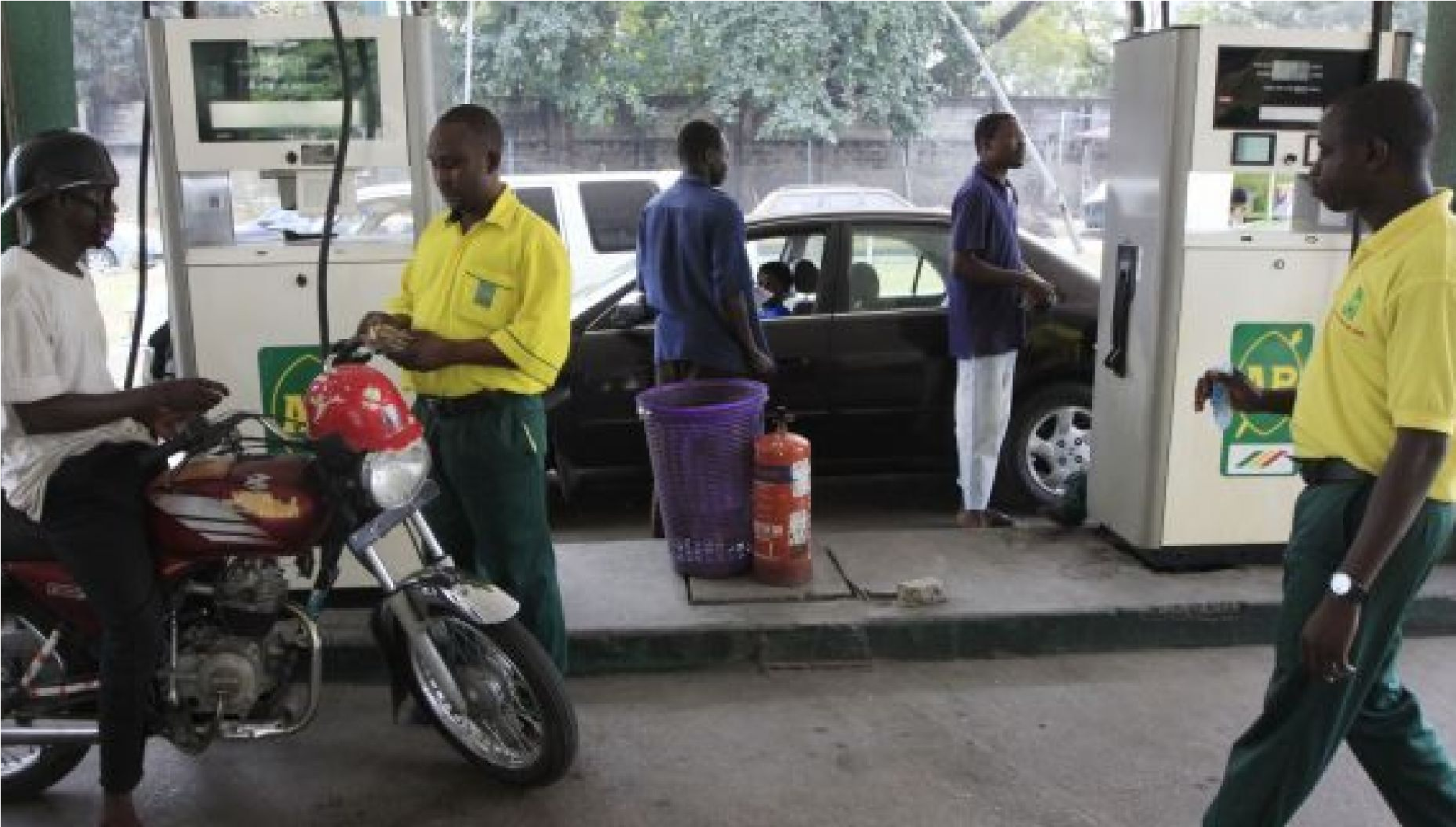
The cost of petrol is expected to further rise as much as N700 per liter in northern Nigeria, and around N610 in the south from July, The Punch reports, quoting the National Controller Operations, Independent Petroleum Marketers Association of Nigeria, Mike Osatuyi.

“What I am seeing is around N600 and above, depending on the exchange rate, the current crude price at the international market, and the landing cost. Those in Lagos will pay around N600, those outside Lagos around N600 plus, while those in the north would be paying anything from N700 and above,” he said.

The projected prices are based on the realities of the Nigerian forex market, which has seen the naira plummet to N770 against the dollar in the Investor and Exporter window. The last petrol stock of the Nigerian National Petroleum Company Limited is reportedly finished.

The forex market, which was floated earlier this month by the Central Bank of Nigeria (CBN), has impacted the cost of nearly all goods and services – especially petroleum products. Further hike in petrol prices means that the resulting economic hardship will be exacerbated.

Analysts have projected that the new forex and subsidy policies will stoke inflation (currently at 22.41%) up to 30% in the short term.

Before now, the hope of an adequate supply of affordable Premium Motor Spirit (PMS) hung largely on Dangote Refinery, whose products are expected to hit the market by July. Dangote Refinery, with the world’s largest production capacity of 650,000 barrels per day, was commissioned last month in Lekki, Lagos. But it is understood to be functioning at around 88% – slimming the hope of a quick cheaper PMS in the Nigerian market.

Experts said that the deregulation of the upstream and downstream sectors means that hence, market forces will determine the cost of petroleum products. This includes the federal government’s fresh move – imposing 7.5% VAT on diesel imports.

Nigerian Midstream and Downstream Petroleum Regulatory Authority (NMDPRA) said market competition will help drive the prices down in the long term. The agency said it has been issuing import licenses to companies interested in bringing in PMS, a move that will encourage competition.

The Executive Secretary, Depot and Petroleum Products Marketers Association of Nigeria, Olufemi Adewole, told The Punch on Tuesday that however, prices will be determined by market fundamentals.

“Prices of products will depend on market fundamentals, and as we speak, the Nigeria Customs Service is delaying some AGO (diesel) vessels because of the 7.5 percent VAT.

“And don’t forget, any cost incurred by marketers would be added to landing cost, and then to the pump price. The marketer would also have to add profit because they must make profit,” he said.

The odds stark against the FX market

There is hope that the CBN will soon stabilize the FX market through interventions. The apex bank said earlier this month that the FX market floatation is a managed one, which means that the exchange rates will not be fully determined by the market for now.

But having reached as high as N770.38 /$1 earlier in June, and hovering now around N756 – to N765/$1, it is not clear at what rate the CBN intervention will cause the market to converge.

Analysts believe the answer to stable FX rates is largely tied to adequate forex liquidity. But Nigeria has been struggling to find buyers for its crude oil, its major source of forex, in the past months.

The federal government’s recent faceoff with shipping companies over unpaid taxes from 2010 to 2019, has caused some vessel owners to shed loading oil from Nigeria – leading to a surplus of stranded oil from the country, according to a recent Bloomberg report. The report noted that the country is still looking for buyers for about half of its July loading.

Although the Federal Inland Revenue Service (FIRS) has granted shipping companies a six-month grace window to clear the retroactive taxes, the challenge remains. According to the report, about 20-22 cargoes worth of barrels, totaling about a million barrels, have remained unsold for July.

This, besides scuttling Nigeria’s chance to boost its foreign reserve from the dollar derived from the sales of oil, has bolstered shipping costs for Nigerian oil significantly. Nigeria’s daily shipping cost has risen to $53,463, above the year-to-date average, according to data from the Baltic Exchange.

The economic impact widens

The crippling effect of high FX rates on PMS prices is notable for the drastic reduction of vehicles on Nigerian roads. For instance, Lagos, which has approximately 2.5 million cars on its roads daily, has over the past weeks, seen the number drastically reduced.

Against this backdrop, there are growing concerns that if not urgently addressed; the situation will squeeze off what is left of Nigerians’ meager spending power.

The World Bank said in its June 2023 edition of the Nigeria Development Update (NDU), titled ‘Seizing the Opportunity,’ that more than four million Nigerians have fallen into poverty during the first six months of this year.

The report, which attributed the situation to the challenges posed by forex reforms, warns that an additional 7.1 million individuals could fall into multidimensional poverty if immediate steps are not taken to protect Nigerian households from the initial price shocks resulting from the petrol subsidy reform.

The World Bank said it has approved an $800 million loan for the Nigerian government to facilitate palliative measures, including cash transfers to poor Nigerians, to cushion the effects of the FX and subsidy reforms. But the $800 million is believed to be too meager to ameliorate the widespread impact of the reforms.

The Nigerian government is currently working with Civil Society Organizations to create a framework for a reviewed minimum wage that will boost the spending power of Nigerians. Economists believe that a sustainable minimum wage will help Nigerians to cope as the inflationary shocks of the policies take a toll in the short term.

Paysafe to Discontinue Processing Payments for Binance

0

Binance, one of the world’s largest cryptocurrency exchanges, is facing a major setback as Paysafe, a leading provider of online payment solutions, announced that it will stop processing payments for Binance customers in the UK and Europe. Paysafe, which owns popular payment platforms such as Skrill, Neteller and Rapid Transfer, said in a statement that it has decided to suspend its services for Binance “in light of the recent regulatory developments regarding Binance in a number of countries”. The statement added that Paysafe will continue to monitor the situation and “will update our customers accordingly”.

This is a significant blow for Binance, which has been under increasing scrutiny from regulators around the world over its compliance and consumer protection practices. In June, the UK’s Financial Conduct Authority (FCA) issued a consumer warning against Binance, saying that the exchange is not authorized to conduct any regulated activity in the country. The FCA also ordered Binance to remove all advertising and financial promotions by June 30.

Other countries, such as Japan, Canada, Thailand and Italy, have also issued similar warnings or notices against Binance, citing concerns over its lack of registration or authorization. Binance has said that it is committed to working with regulators and complying with local laws, but it has also faced challenges in finding a stable legal jurisdiction to operate from.

The loss of Paysafe as a payment partner could have a significant impact on Binance’s business, as many of its customers rely on its platforms to deposit and withdraw funds from their accounts. According to a report by CryptoCompare, Binance accounted for 65% of the total spot trading volume in the crypto market in June, with over $668 billion worth of transactions. Binance has not yet commented on Paysafe’s decision, but it has previously said that it is working on alternative payment options for its customers. However, it remains to be seen how Binance will cope with the mounting regulatory pressure and the potential loss of trust from its users.

In an interesting legislation, the United Kingdom has taken a major step towards embracing the digital economy by passing a bill that recognizes Bitcoin and other cryptocurrencies as regulated financial activities in the country. The bill, which was approved by the House of Commons on Tuesday, aims to provide legal clarity and consumer protection for the growing sector of crypto assets and services.

The bill defines crypto assets as “digital representations of value that are secured by cryptography and can be transferred, stored or traded electronically”. It also establishes a framework for the registration and supervision of crypto service providers, such as exchanges, wallets and custodians. The bill requires these providers to comply with anti-money laundering and counter-terrorism financing rules, as well as to implement safeguards to protect customers’ funds and data.

The bill also recognizes the potential of blockchain technology, which underpins many crypto assets, to improve efficiency and transparency in various sectors of the economy. It encourages innovation and collaboration between public and private entities to explore the benefits and challenges of this emerging technology.

The bill is seen as a positive development for the UK’s crypto industry, which has been calling for more regulatory certainty and support from the government. The bill aligns the UK with other jurisdictions that have adopted similar legislation, such as Japan, Singapore and Switzerland. It also positions the UK as a leader in the global crypto space, which is expected to grow exponentially in the coming years.

The bill will now move to the House of Lords for further scrutiny and debate, before becoming law. The bill is expected to come into force by early 2024, giving time for the regulators and the industry to prepare for the new regime. The bill is a milestone for the UK’s digital transformation and a testament to its commitment to foster innovation and competitiveness in the financial sector.