DD
MM
YYYY

PAGES

DD
MM
YYYY

spot_img

PAGES

Home Blog Page 4060

Bridging the Gap: Mental Health in the Western and Islamic Worlds

0

Three days ago, a friend and I engaged in a profound conversation about mental health and spirituality, delving into the impact of culture and religion on how individuals and their families perceive mental health conditions. Our discussion unearthed an age-old tension that continues to persist between spirituality and clinical psychology. In the 21st century, despite the easy accessibility of information, it is perplexing to note that some mental health researchers appear wedded to confirmation biases, asserting there is no connection between spirituality and mental health conditions. If we relegate this relationship to mere quantitative measurement, we risk undermining the very essence of our epistemological knowledge. What purpose do our teachings serve when we dismiss alternative ways of understanding, perhaps to cater to the preferences of project funders? This tension in scholarship is a critical issue that demands our attention.

In this piece, we will explore the discourse surrounding mental health conditions in both Western and Islamic contexts, aiming to move beyond the biopsychosocial perspective traditionally held by medical professionals. We will then delve into the tensions and common ground between Western-style mental health practices and the Islamic approach to mental health therapies. To illuminate our discussion, we will present case studies illustrating two contrasting epistemologies about mental health conditions: the conventional clinical psychology approach and the perspective of Islamic exorcists, who believe that Jinns, invisible beings that coexist with humans, can cause certain inexplicable mental health conditions. From this exploration, we aim to derive valuable epistemological lessons that can help us overcome our confirmation biases regarding mental health conditions.

Understanding Mental Health Beyond Biopsychosocial Models

In the Western world, the predominant approach to mental health typically follows the biopsychosocial model. This model considers mental health conditions as a result of biological, psychological, and social factors. It has been instrumental in advancing the field of psychiatry and psychology. However, it often falls short of comprehending the spiritual and cultural dimensions of mental health.

Islamic Approach to Mental Health

The Islamic world, on the other hand, offers a unique perspective on mental health. In Islamic cultures, spirituality and religion are deeply intertwined with everyday life. Mental health therapies in the Islamic world encompass not only psychological and social aspects but also a spiritual dimension. Many Islamic practitioners believe that Jinns, invisible spiritual beings, can influence an individual’s mental health. This perspective may appear unorthodox to Western thinkers, but it reflects an intricate system of belief that shapes mental health interventions in Islamic societies.

Two Epistemologies of Mental Health

Case Study 1: The Clinical Psychology Approach In the Western world, clinical psychologists have established a robust framework for understanding and treating mental health conditions. They rely on empirical research, standardized diagnostic criteria, and evidence-based therapies. The emphasis is on addressing the biological and psychological aspects of mental health, often sidelining spirituality. While this approach has yielded significant advancements, it can unintentionally marginalize individuals whose mental health struggles have spiritual dimensions.

Case Study 2: The Islamic Exorcism Approach Islamic exorcists, on the other hand, provide a strikingly different perspective. They believe that Jinns can afflict individuals and cause mental health conditions. As such, their approach integrates spiritual and psychological therapies, combining exorcism rituals with counselling. While this may seem unscientific to some, it offers insight into the spiritual and cultural intricacies of mental health in the Islamic world. Furthermore, it emphasizes the importance of considering diverse epistemologies in mental health care.

Epistemological Lessons

Our exploration of these two epistemologies yields valuable lessons for scholars and practitioners in the field of mental health. First, it underscores the importance of cultural sensitivity and inclusivity in mental health care. Recognizing the role of spirituality in individuals’ mental well-being is essential, and dismissing these beliefs can hinder effective treatment.

Second, it highlights the need for interdisciplinary collaboration between clinical psychologists, psychiatrists, and spiritual counsellors. By bridging the gap between conventional Western models and spiritual practices, we can offer holistic care that respects individual beliefs and values.

The interplay between spirituality, culture, and mental health is complex and multi-faceted. By examining the Western and Islamic perspectives, we can appreciate the value of diverse epistemologies in understanding mental health conditions. Ultimately, it is vital for us as scholars and practitioners to break free from our confirmation biases and embrace a more inclusive approach to mental health that respects individual beliefs and values. In doing so, we can provide more effective and compassionate care for those in need.


Umar Olansile Ajetunmobi, an independent, interdisciplinary researcher with special interests in political, (mental) health, development, and digital media communication, contributes to the development of this piece through his skills and knowledge garnered over the years. 

The Euro Scores Own-Goals As Yuan Overtakes It in Global Trade

0

The US Treasury department weaponised the US dollars and handed China a great win. Yes, with sanctions into and within US dollars, some auxiliary countries like Russia were rattled. The Euro joined the sanction party. But because it does not have the depth the US economy has, the Chinese Yuan has overtaken the Euro in global trade.

The state: “According to the latest data from the International Interbank Payment System (Swift), the Chinese currency has surpassed the euro to become the world’s second largest trade settlement currency. This milestone signifies the growing status of the renminbi in international financial markets and reflects the importance of the Chinese economy in global trade.

“Recently, the People’s Bank of China announced that the exchange rate of the Chinese yuan against the US dollar has reached 6.35, a new high in nearly a decade. This means that the international purchasing power and influence of the Chinese yuan is also increasing, even surpassing the euro to become the second largest international currency after the US dollar.”

In the Igbo Nation, the elders will say that when you hold a child on the ground, you are also holding yourself since when you leave the child, the child will rise up. So, the only way to keep him or her down is to keep holding him/her on the ground. Indeed, why score an own-goal when the world uses your currency, by telling them NOT to use it? You will hurt them, but you will also hurt yourself.

That was why I protested when Nigeria closed its land borders thinking it was punishing those countries without knowing that it was accelerating deindustrialization in Nigeria. During the border closure, Nigeria experienced one of the largest deindustrialization phases in the last 23 years. Why? Most producers in Nigeria focus on those countries, and when we closed the borders, they closed shops!

Yuan Surpasses Euro to Become Second Most Used Currency for International Settlements Globally

0

According to the latest data from the International Interbank Payment System (Swift), the Chinese currency has surpassed the euro to become the world’s second largest trade settlement currency. This milestone signifies the growing status of the renminbi in international financial markets and reflects the importance of the Chinese economy in global trade.

Recently, the People’s Bank of China announced that the exchange rate of the Chinese yuan against the US dollar has reached 6.35, a new high in nearly a decade. This means that the international purchasing power and influence of the Chinese yuan is also increasing, even surpassing the euro to become the second largest international currency after the US dollar.

Swift is the world’s largest cross-border payments network, processing trillions of dollars in transactions every day. According to Swift, in September 2023, the yuan accounted for 8.76% of its payments, while the euro accounted for 8.6%, and the US dollar remained far ahead at 38.35%. This is the first time since 2013 that the renminbi has surpassed the euro, and for the first time since 2015, the renminbi has returned to second place.

There are many reasons for the rise of the renminbi. First, China is the world’s largest exporter and has strong demand for its goods and services in the international market. Second, China’s excellent response to the pandemic has allowed its economy to grow positively in 2020, while other major economies have fallen into recession.

Third, the Chinese government has introduced a series of measures to promote the internationalization of the renminbi, including expanding the scope of cross-border RMB payments, promoting the pilot of the digital yuan, and strengthening currency swap agreements with other countries and regions.

The renminbi has become the world’s second largest trade settlement currency, which has a positive impact on China and the world. For China, this helps reduce exchange rate risks, improve corporate competitiveness, increase the influence of financial markets, and promote multilateral trade and investment cooperation. For the world, this helps to increase international shipments.

However, the euro is the third most used currency for international payments, according to the latest data from the Society for Worldwide Interbank Financial Telecommunication (SWIFT). The euro accounted for 38.4% of global payments in October 2023, up from 37.8% in September. The US dollar remained the dominant currency, with a share of 40.1%, while the British pound came in fourth with 6.9%.

The euro’s rise in popularity reflects its role as a reserve currency and a funding source for trade and investment. The eurozone is the world’s largest single market, with a gross domestic product (GDP) of about 12 trillion euros in 2022. The euro is also used by 19 member states of the European Union (EU) and several other countries and territories that have adopted it unilaterally or through formal agreements.

The euro has several advantages as an international currency, such as its stability, liquidity and low transaction costs. The euro also benefits from the EU’s strong institutional framework, which ensures sound economic governance and financial regulation. The EU has also taken steps to deepen its capital markets and banking union, which could further enhance the euro’s attractiveness.

However, the euro also faces some challenges and risks in the global arena. The eurozone still suffers from low growth and inflation, as well as high public debt and unemployment in some countries. The eurozone also needs to cope with the impact of the coronavirus pandemic, which has caused unprecedented economic and social disruption. Moreover, the eurozone has to deal with geopolitical uncertainties, such as Brexit, trade tensions and regional conflicts.

The euro’s future as an international currency will depend on how the eurozone addresses these challenges and leverages its strengths. The eurozone will need to pursue structural reforms, fiscal discipline and monetary stimulus to boost its economic performance and resilience. The eurozone will also need to enhance its strategic autonomy and global influence, while maintaining its openness and cooperation with other partners. By doing so, the eurozone can ensure that the euro remains a reliable and attractive currency for international payments.

China adheres to a prudent monetary policy and maintains reasonable and abundant liquidity, neither engaging in “flood irrigation” nor “sudden braking”, maintaining the continuity and consistency of monetary policy. At the same time, China has also actively promoted the internationalization of the RMB, expanded the scope and convenience of the cross-border use of the RMB, and increased the number of people.

Nigeria’s Tax Policy Reform Committee Presents 20 Key Recommendations

0

The Presidential Fiscal Policy and Tax Reforms Committee announced Tuesday it has submitted its report, containing key recommendations to address critical economic issues, to the President.

These recommendations cover a range of economic challenges, including exchange rate management, the impact of fuel subsidy removal, inflation control, and the facilitation of economic growth.

The Committee, headed by former PwC tax chief, Taiwo Oyedele, was set up by President Bola Ahmed Tinubu in July to review and advise on reforms to shape Nigeria’s fiscal policy and tax system.

The Committee was tasked with addressing fiscal governance, revenue transformation, and economic growth facilitation – with its work divided into three phases:

Quick Wins within 30 days: This phase focused on identifying and implementing immediate measures and actions that could yield quick results and improvements in the fiscal and economic landscape.

Critical Reforms within 6 months: In this phase, the committee worked on more significant and long-term reforms that were expected to bring about substantial changes in fiscal policies and economic growth.

Implementation within 1 year: The final phase involved the implementation of the recommended reforms and policies, ensuring that they were effectively executed to achieve the desired outcomes.

The committee announced its recommendations as follows:

  1. Measures to address duplication of functions in public service, ensure prudent public financial management, and optimize value from government assets and natural resources
  2. Policy signaling and collaboration by MDAs, economic management, and policy execution team
  3. Use of technology “Data4Tax” to expand the tax net
  4. Increase personal income tax exempt threshold and personal relief allowance
  5. Tax break for the private sector in respect of wage increases to low-income earners, transport subsidy and net increase in employment
  6. Permit the payment of taxes on foreign currency-denominated transactions in Naira for Nigerian businesses.
  7. Remove impediments to global employment opportunities for Nigerians based in Nigeria
  8. Suspension of VAT on diesel and tax waivers on CNG, CNG conversion, and renewable energy items
  9. Comprehensive review of tariffs on the 43 items unbanned from accessing forex in the official market and fiscal policy review of other items prohibited for imports
  10. Reforms of Withholding Tax Regulations to ensure simplicity and ease the pressure on the working capital of businesses
  11. Facilitate the use of mobile phones for conditional cash transfers and introduce a spending framework for subsidy removal and forex reform windfall, including a national portal to track spending by FG, states, and local governments
  12. Suspension of multiple taxes which place burdens on the poor and small businesses and compensate with windfalls revenue of certain agencies
  13. Expand the official foreign exchange market to incorporate BDCs, forex apps, and retail fx dealers, and outlaw transactions in the black market
  14. Digitalise Nigeria’s fx regime and discourage speculative demands and hoarding of fx in cash
  15. Imposition of excise tax on foreign exchange transactions outside the official market
  16. Implement forward contracts for the importation of PMS as a short-term measure pending improvement in key economic indices
  17. Discontinue with the FX verification portal and requirement for Certificate of Capital Importation and export proceeds restriction
  18. Address impediments to export promotion and bottlenecks regarding Exports Expansion Grants, and remove restrictions on repatriation and use of export proceeds by exporters
  19. Modify Tax ProMax to allow taxpayers to make part payments of outstanding tax liabilities
  20. Grant waiver of penalty and interests on the condition of full payment of outstanding tax liabilities on or before 31 December 2023.

Peter Obi Asks Judiciary to Save Nigerian Democracy Through Transparent Rulings

0

Peter Obi, the Labour Party’s presidential candidate in Nigeria’s last general election, has called on the judiciary to maintain the honor of titles that politicians hold through transparent rulings.

He was addressing the issues of identity crises and controversies that have arisen in Nigerian politics since the 2023 presidential elections.

In his note titled “The Rule of Law and The Credibility of Leadership,” Obi emphasized the importance of titles held by individuals in power and how they lose meaning if they lack integrity and authenticity. He stressed that when there is public doubt about the veracity of titles and claims, it is the role of the judiciary to uphold the honor of these titles through transparent rulings.

“The lofty titles that decorate people in power have little meaning if there is a hollowness and falsehood underneath them,” he said. “Such titles which adorn those in public office mean nothing if they are not original and are fake if those who bear them have no honour to support the weight of the titles they carry.”

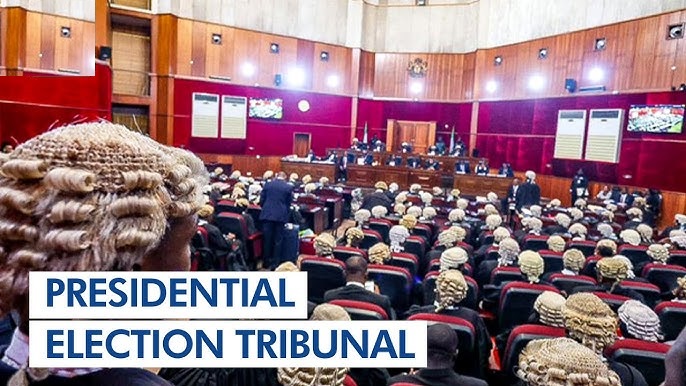
Obi’s statement is coming on the heels of appeals by him and the Peoples Democratic Party (PDP) presidential candidate Atiku Abubakar at the Supreme Court, challenging the ruling of the Presidential Election Petition Tribunal, which upheld the victory of President Bola Tinubu, who allegedly stole the election.

Atiku, who in August filed a suit that compelled Chicago State University to release the academic credentials of Tinubu, is asking the Supreme Court to admit the documents as evidence. The documents from CSU reveal that the certificate Tinubu submitted to the Independent National Electoral Commission (INEC) was not issued by the university. As a result, the president is facing allegations of certificate forgery.

The Supreme Court said on Monday that “there are two conflicting letters from the CSU – one authenticating the president’s certificate and another discrediting it,” asking “which do we rely on?” This question has been interpreted by many as a sign that the apex court is once again, about to subvert justice.

Based on this concern, Obi further said that the judiciary’s duty to protect society’s value system is crucial, as it helps maintain the rule of law, which is the lifeblood of democracy. He stated that the rule of law is the foundation for fundamental human rights and the principle that binds society together.

“In situations where there is public doubt as to the veracity and authenticity of these titles and the claims behind them, it is the judiciary’s role, when called upon, to uphold the honour of the titles through transparent rulings. Only through such judicial interventions can the public be protected from the tyranny of dubious and duplicitous characters and identity fraudsters,” Obi said.

“In such situations, the judiciary has a bounding duty to protect society’s value system. This is one of the obligations of an impartial judiciary in a democracy. The rule of law remains the lifeblood of democracy in all societies and by whatever definition across time.”

The former Anambra State governor noted that when the fairness of the judiciary is not assured, and the transparency of judiciary operatives is uncertain, the rule of law and democracy itself come under threat. He warned against a situation where the rich and powerful can trample on the rights of ordinary citizens with impunity, which could lead to the erosion of democracy.

“The expectation by the high and low alike that their rights will be protected and respected by fair judges in transparent courts is what keeps citizens’ loyalty and belief in democracy. People, irrespective of their station in life, approach the courts whenever they feel their rights are assailed in the expectation that fair courts will render justice to them according to law.

“However, when the fairness of the judiciary is not assured, and the transparency of judiciary operatives is uncertain, the rule of law will come under severe threat. Once ordinary people lose faith in the fairness of the judiciary, the rule of law is threatened,” he said.

Obi added that the erosion of democracy occurs when the influence of the powerful and wealthy supersedes the rule of law, jeopardizing society. Talking about the consequences, he said in such cases, justice becomes a commodity, corrupting the legal system. When democracy relies on flawed justice, it exposes society to threats like government impunity and the violation of the rights of ordinary citizens.

He concluded by citing US President Joe Biden’s emphasis on the critical role of an economy and government that adheres to the rule of law for the prosperity of a fledgling democracy.

“For any young democracy, the most difficult but important step is burying the legacy of tyranny and establishing an economy and a government and institutions that abide by the rule of law.”