DD
MM
YYYY

PAGES

DD
MM
YYYY

spot_img

PAGES

Home Blog Page 4068

President Tinubu Renames Fifteen Nigerian Airports After Past Leaders, Buhari, Awolowo and Dan Fodio Made the List of Honorees

0

President Bola Tinubu, has renamed fifteen Nigerian federal airports after some past and notable leaders of the country.

The renaming of the airports was announced in a memo released by the Federal Ministry of Aviation dated June 1, 2023, and signed by Mrs Joke Olatunji for the Director of Airport Operations on Monday.

The statement noted that the President renamed the airports “as part of the reforms of the Aviation sector.”

The immediate past President Muhammadu Buhari, late chief Obafemi Awolowo, late SL Akintola, and the late founder of the Sokoto Caliphate, Usman Dan Fodio are some of the past Nigerian heroes that have been honoured and immortalized through the renaming of the airports.

The airports and their new names are listed follows:

  1. Akure Airport – Olumuyiwa Bernard Aliu
  2. Benin Airport – Oba Akenzua II
  3. Dutse Airport – Muhammad Nuhu Sanusi
  4. Ebonyi Airport – Chuba Wilberforce Okadigbo
  5. Gombe Airport – Brigadier Zakari Maimalari
  6. Ibadan Airport – Samuel Ladoke Akintola
  7. Ilorin Airport – Gen. Tunde Idiagbon
  8. Kaduna Airport – Hassan Usman Katsina
  9. Maiduguri Airport – Gen. Mumammadu Buhari
  10. Makurdi Airport – Joseph Sarwuan Tarka
  11. Minna Airpor – Mallam Abubakar Imam
  12. Nassarawa Airport – Sheikh Usman Dan Fodio
  13. Osubi Airport – Alfred Diete Spiff
  14. Port Harcourt Airport – Obafemi Jeremiah Awolowo
  15. Yola Airport – Lamido Aliyu Mustapha

Is the Economist Intelligence Unit Suggesting a Sustainable Playbook for Making Cities Livable?

0

Food, safety, and companionship are innate human needs that are satisfied through hedonic experience. Happiness is based on the satisfaction of needs, which is influenced by both external living conditions and inner abilities. Poor living conditions can have a negative impact on happiness, especially when demands exceed human capabilities. Societies are systems for meeting human needs, but not all of them are equally effective. Happiness can be increased by improving the fit between social institutions and human needs.

This background sheds light on the reasons governments, private businesses, and members of the civic space always strive to make the environment fit for human needs, enhancing their capacities to strive for themselves towards attaining what interests them the most.

Several experts and scholars have worked and are still working on how to make cities and towns livable for humans and non-humans. Meanwhile, this piece takes a look at the place of the Economist Intelligence Unit’s yearly ranking of cities across the world with the intention of calling the attention of political and business leaders to critical aspects that need short-, medium-, and long-term initiatives in making cities livable.

The EIU considers stability, healthcare, culture and environment, education, and infrastructure indicators for the assessment of over 100 cities. To illustrate our proposition that this organisation is making significant contributions to how stakeholders should be thinking and acting on making cities livable for everyone, we leveraged the top 10 most livable cities between 2021 and 2023. In this regard, we considered Auckland, Adelaide, Amsterdam, Auckland, Brisbane, Calgary, Copenhagen, Frankfurt, Geneva, Melbourne, Osaka, Perth, Sydney, Tokyo, Toronto, Vancouver, Vienna, Wellington, and Zurich.

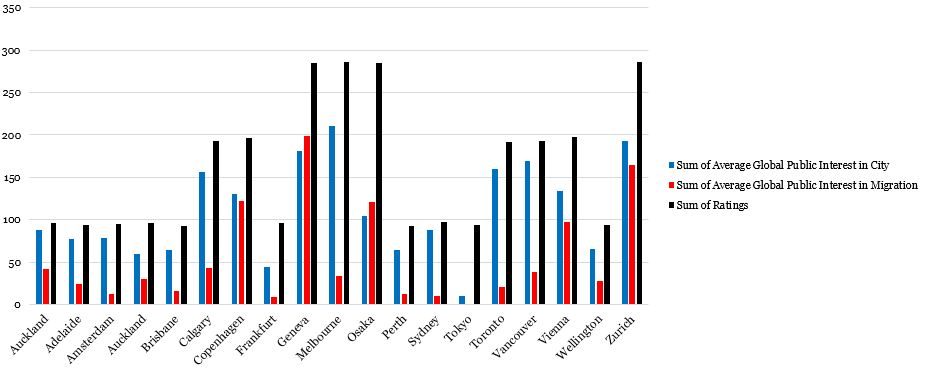
These cities are mostly in the global north, while a few are in the global south. From the data, we have gleaned that some of the cities have consistently been ranked between first and third, suggesting that government at the city and national levels did well during the years. To further substantiate our proposition, we examined public interest through information seeking about the cities using the Google Search Engine. Interestingly, our analysis suggests that the higher these cities EIU ratings, the more the public develops an interest in understanding them. This is highly detected for Geneva, Zurich, and Melbourne (see Exhibit 1).

Our analyst notes that the Economist Intelligence Unit’s (EIU) yearly rating of the most livable cities has become a prominent benchmark for individuals and families seeking to relocate. It is on this basis that we provide some strategies for stakeholders, especially the governments of cities that have constantly been ranked within the least livable city paradigm.

Exhibit 1: Ratings against global public interest in select most livable cities between 2021 and 2023
Source: Economist Intelligence Unit, 2021-2023, Google Trends, 2021-2023, Infoprations Analysis, 2023

Impact of the EIU’s Ratings on Urban Migration

Reputation and Perception

Cities ranked highly by the EIU gain a reputation for offering a high quality of life, attracting migrants seeking better opportunities.

Decision-making Tool

The EIU’s rating serves as a valuable tool for individuals and businesses when considering relocation options, influencing migration patterns.

Economic Growth

Cities with high livability ratings often experience increased economic activity, as businesses and investments are drawn to the favorable conditions.

Strategies for Cities to Attract and Accommodate Newcomers

Focus on Livability Factors

Prioritize investments and policies that address the EIU’s livability factors, such as improving infrastructure, healthcare services, and education systems.

Marketing and Promotion

Leverage the EIU’s ratings in city marketing efforts to highlight the city’s strengths and attract potential migrants.

Talent Attraction

Develop initiatives to attract skilled professionals, entrepreneurs, and innovators by offering incentives, networking opportunities, and supportive business environments.

Affordable Housing

Implement strategies to address housing affordability issues, such as promoting mixed-income developments, rent control measures, or subsidized housing programs. e. Cultural Exchange Programs: Foster social integration by promoting cultural exchange, community events, and initiatives that celebrate diversity.

Sustainable Development

Emphasize environmental sustainability by implementing eco-friendly infrastructure, promoting green spaces, and adopting renewable energy solutions. g. Enhanced Public Services: Invest in public transportation, healthcare facilities, education institutions, and other vital services to meet the needs of a growing population.

Participatory Governance

Engage residents in decision-making processes through participatory urban planning, ensuring their voices are heard and their needs are addressed.

IBM Acquires Cloud-Based Platform Apptio For $4.6B to Drive Significant Synergies Across Several Key Growth Areas

0

American multinational technology corporation, the International Business Machines Corporation (IBM), has acquired cloud-based software platform Apptio for $4.6 billion to drive significant synergies across several key growth areas.

As technology is changing the business space at a very fast pace, IBM’s acquisition of Apptio will accelerate the advancement of IBM’s IT automation capabilities and enable enterprise leaders to deliver enhanced business value across technology investments.

Speaking on the acquisition of Apptio, CEO, and Chairman of Apptio Arvind Krishna said,

“Technology is changing business at a rate and pace we’ve never seen before. To capitalize on these changes, it is essential to optimize investments that drive better business value, and Apptio does just that. Apptio’s offerings combined with IBM’s IT automation software and Watsonx AI platform, give clients the most comprehensive approach to optimize and manage all of their technology investments.”

Also commenting on the deal, Apptio Co-Founder and CEO Sunny Gupta said,

“Our customers are evolving to a complex digital-first, hybrid world where technology investments are distributed and decentralized but all innovation must be aligned with clear business outcomes. We are so excited to be joining IBM and combining our industry-leading offerings with IBM’s global presence and strong portfolio across AIOps, automation, and hybrid cloud offerings.”

IBM disclosed that it will finance the transaction with cash on hand and expects the deal to close in the latter half of 2023. The deal marks the century-old IT technology major reorients itself to focus on newer AI and cloud-based offerings.

The company’s Integration of Apptio’s software on its platform, will help businesses around the world manage and optimize enterprise IT spend and derive tangible financial value and operational improvement.

Apptio is bringing a sizable book of customers to IBM’s 1,500 enterprises, including more than half of the Fortune 100. In addition, Apptio will bring IBM $450 billion of anonymized IT spend data, unlocking new insights for clients and partners.

Apptio partners and integrates with leading companies such as Salesforce, Oracle, Microsoft Azure, ServiceNow Amazon Web Services, and several others.

Notably, IBM’s acquisition of Apptio is a continuation of its deep focus and investment in hybrid cloud and AI and is expected to drive significant synergies across several key growth areas, which includes automation, IBM consulting, and IBM’s broader AI Portfolio amongst others.

IBM is a publicly traded company and one of 30 companies in the Dow Jones Industrial Average. It is among the world’s largest employers, with over 297,900 employees worldwide in 2022.

Despite its relative decline within the technology sector, IBM remains the seventh-largest technology company by revenue, and 49th largest overall, according to the 2022 Fortune 500. It is also consistently ranked among the world’s most recognizable, valuable, and admired brands.

BlackRock’s Bitcoin ETF Bid could Unlock a $15 Trillion Crypto Boom

0

BlackRock, the world’s largest asset manager with over $9 trillion in assets under management, has filed two applications with the U.S. Securities and Exchange Commission (SEC) to launch exchange-traded funds (ETFs) that would invest in bitcoin futures contracts.

This move is significant for several reasons. First, it signals that BlackRock, which has been cautious about cryptocurrencies in the past, is now recognizing the potential of bitcoin as an alternative asset class that can offer diversification and hedging benefits to its clients. Second, it shows that BlackRock is confident that the SEC will approve bitcoin ETFs in the near future, despite the regulator’s repeated rejections of previous proposals. Third, it indicates that BlackRock is preparing to tap into the massive demand for bitcoin exposure among institutional and retail investors, which could unleash a wave of capital inflows into the crypto market.

According to a recent report by Ark Invest, a leading investment firm that focuses on disruptive innovation, bitcoin ETFs could unlock a $15 trillion crypto boom in the next decade. The report estimates that if 1% of the assets of companies, institutional investors, and central banks were allocated to bitcoin, its market capitalization would increase by $1.6 trillion. If 10% of those assets were allocated to bitcoin, its market cap would soar by $16 trillion.

The report also argues that bitcoin ETFs would lower the barriers to entry for investors who want to gain exposure to bitcoin without having to deal with the technical challenges of buying and storing it directly. Bitcoin ETFs would offer investors convenience, liquidity, transparency, and regulatory oversight, making them more attractive than existing options such as trusts, funds, or futures.

BlackRock’s bitcoin ETF bid could be a game-changer for the crypto industry, as it would pave the way for other asset managers and financial institutions to follow suit. It would also increase the legitimacy and adoption of bitcoin as a mainstream asset that can compete with traditional safe havens such as gold or bonds. If BlackRock succeeds in launching its bitcoin ETFs, it could trigger a domino effect that would unleash a $15 trillion crypto boom in the next decade.

In a major blow to the crypto industry, Switzerland has frozen US$26 million in crypto assets held by Terraform Labs and its founder Do Kwon. The Swiss Financial Market Supervisory Authority (FINMA) announced on Monday that it had initiated enforcement proceedings against the company and its CEO for allegedly violating anti-money laundering regulations.

According to FINMA, Terraform Labs and Do Kwon failed to comply with the due diligence obligations for customer identification, transaction monitoring and reporting of suspicious activity. FINMA also accused them of providing false or misleading information to the regulator during its investigation.

Terraform Labs is the developer of Terra, a blockchain platform that supports various stablecoins pegged to different fiat currencies. Terra also powers Chai, a popular payment app in South Korea that claims to have over 2.5 million users. Do Kwon, a Korean American entrepreneur, is the co-founder and CEO of both Terraform Labs and Chai.

The freezing of the crypto assets is a provisional measure that aims to secure evidence and prevent dissipation of funds. FINMA said it will decide on the final disposition of the assets after concluding its enforcement proceedings. The regulator did not specify which crypto assets were frozen or where they were held.

Terraform Labs and Do Kwon have not yet issued any official response to FINMA’s announcement. However, in a tweet posted on Tuesday, Do Kwon said that he was “confident that this misunderstanding will be cleared up quickly” and that he was “fully cooperating with the Swiss authorities”. He also thanked the Terra community for their support and trust.

Flutterwave Seals New Partnership Deal with Microsoft Azure to Power Payment Infrastructure Across Africa and Beyond

0

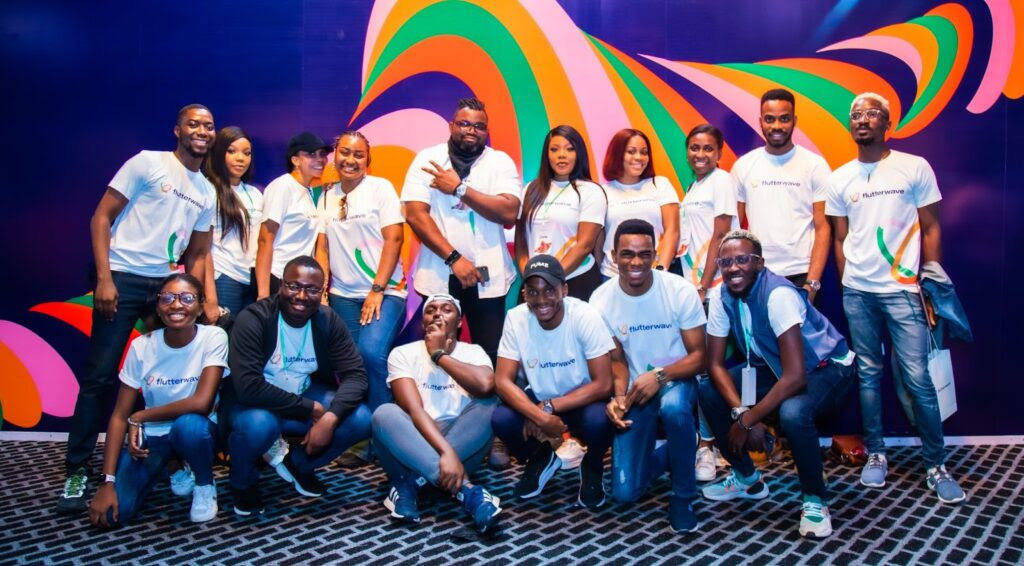
Fintech giant, Flutterwave announced new partnership deal with Microsoft Azure which is said is to empower the African fintech unicorn to expand its operation and have a wider reach worldwide.

The five-year partnership will provide the opportunity for Flutterwave, leveraging Microsoft Azure OpenAI, to develop its next-generation platform and bolster payment infrastructure across Africa and beyond which is consistent with Flutterwave’s commitment to give businesses and individuals access to global-trade services across all of Africa and drive digital transformation around the world.

The partnership will also embolden Flutterwave to facilitate the accelerated growth of transactions processed on its platform for global clients such as Uber, Netflix, and Microsoft, thereby solidifying Azure’s role in promoting a seamless, reliable, and secure payment experience.

Expressing his appreciation for Microsoft’s invaluable partnership, Olugbenga Agboola, founder and CEO of Flutterwave said ‘’Microsoft has been an invaluable partner, providing a platform that allows us to deliver high-quality services to our clients consistently.’’

Agboola also stressed the relevance of Microsoft Azure’s system for managing high-volume payment processing during peak periods.

‘’As we manage high-volume payment processing, particularly during peak periods, the robustness, reliability, and scalability of Microsoft Azure become critical. As such, deepening our collaboration with Microsoft is the most logical step forward for us,’’ Agboola said.

On his part, Gurbhej Dhillion, Flutterwave’s Chief Tech Officer lauded Microsoft Azure as a strong foundation for the company’s development. He also mentioned the potential of scaling with Azure OpenAI Service in the future, enabling Flutterwave to serve even more merchants worldwide.

‘’Our development on Microsoft Azure has set a strong foundation for Flutterwave. Their platform provides us with significant developer leverage which we harness in service of our clients,’’ Dhillion remarked.