DD
MM
YYYY

PAGES

DD
MM
YYYY

spot_img

PAGES

Home Blog Page 4082

All Eyes Turn To Big Eyes Coin CEO Ahmed Yalom In Upcoming AMA

0

Privacy in this modern era of digital finance is hard to come by, as many organisations need NDAs to facilitate private functionality. However hard you try, there will always come a point when the truth will come out. The newly revealed Big Eyes Coin (BIG) CEO Ahmed Yalom has embraced the doxxing realities and plans to meet his public.

The Israeli entrepreneur Ahmed Yalom has sparked enthusiasm and curiosity among investors and the crypto industry by opening the doors and setting the stage for an exciting new chapter in the project’s journey. By organising a Reddit Ask Me Anything (AMA), Ahmed Yalom has sent a clear message to potential investors looking for a connected and prosperous community.

The Big Eyes Coin presale had set the fundraising standard before launch and gifted the emerging powerhouse fuel for growth over the next six months. The roadmap consists of a 24-month plan that is bound to gather pace in the following weeks. Big Eyes Coin is already operating on major exchanges like LBank, OKX, Uniswap, and Poloniex and plans to integrate with an overall ten exchanges as the roadmap progress.

As the CEO of Big Eyes Coin, Ahmed Yalom, was revealed through an internet doxxing event, the potential ramifications sent shockwaves through the crypto community. The incident served as a stark reminder of the perils lurking behind the dark corners of the fintech realm. However, Big Eyes Coin responded to this unfortunate event with resilience, demonstrating their commitment to creating an innovative concept.

The history of doxxing events in the crypto space has shown that while they can initially be disruptive, they often become catalysts for project improvement. Big Eyes Coin demonstrates a commitment to transparency and accountability by unmasking the CEO and team members to the public. The revelation fosters a deeper connection between the project and its community, instilling trust and confidence in its vision and direction.

One of the main reasons for the immediate expansion of the Big Eyes Coin investment adoption is due to the consistent efforts of innovation. The launch of its new Big Eyes Coin Casino on August 29, 2023, symbolises the continued efforts of the development team, even in the face of adversity. The new crypto casino will consist of 4,000 casino games, including a number of play-to-earn options. The casino will exclusively accept Big Eyes Coin for all transactions on a 24-hour basis. A lot is going on with this project; head down to the upcoming Reddit AMA to learn more.


Big Eyes Coin (BIG)

Website: https://bigeyes.space/

Telegram: Telegram: Contact @BIGEYESOFFICIAL

Instagram: https://www.instagram.com/BigEyesCoin/

Twitter: https://twitter.com/BigEyesCoin

Debt Management Office Warns Nigerian Government that Taking Further Loan is Unsustainable

0

The Debt Management Office (DMO) has warned the Federal Government of Nigeria (FGN) not to take further loans, amid revenue shortfalls rocking the nation’s economy.

With a public debt profile of about N 47.73 trillion, Nigeria is facing a potential debt-induced economic crisis. The DMO said 73.5% of this year’s revenue will be used to service debt, creating an unsustainable high Debt Service-to-Revenue ratio.

The preceding government led by former President Muhammadu Buhari, increased Nigeria’s public debt from N12 billion in 2015 to nearly N50 trillion in 2023. That includes about N23 trillion in Ways and Means loans from the central bank.

Thus, the present administration led by Bola Tinubu inherited a debt-servicing burden amid heavy revenue shortfalls that emanated mainly from low oil prices and output.

The DMO analysis

In its analysis, the DMO revealed that the Total Public Debt-to-GDP ratio is projected to increase to 37.1% in 2023, mainly due to new borrowings, FGN Ways and Means at the CBN, and estimated Promissory Notes issuance. While the baseline scenario indicates that the debt stock remains sustainable, the borrowing space has been reduced compared to the self-imposed debt limit of 40%.

The projected FGN Debt Service-to-Revenue ratio of 73.5% for 2023 exceeds the recommended threshold of 50% due to low revenue. This highlights the urgent need to significantly increase government revenue. The DMO emphasized the importance of adhering to existing legislation on government borrowing, such as the Fiscal Responsibility Act 2007 and the Central Bank of Nigeria Act 2007, to moderate the growth rate of public debt.

Furthermore, the DMO called for a focus on revenue mobilization initiatives and reforms to increase the country’s tax revenue to GDP ratio. It also suggested encouraging private sector involvement in funding infrastructure projects through Public-Private Partnerships (PPP) and reducing borrowing by privatization or sale of government assets.

Results of 2022 MAC-DSA show that the Total Public Debt-to GDP ratio is projected to increase to 37.1 percent in 2023 relative to 23.4 percent as at September 2022, due to the inclusion of the N8.80 trillion (New Borrowings) for the year 2023, the FGN Ways and Means at the CBN of over N23 trillion and estimated Promissory Notes issuance of N2.87 trillion in the Debt stock under the Baseline Scenario.

The Country’s Debt stock remains sustainable under these criteria, but the borrowing space has been reduced when compared to Nigeria’s self-imposed debt limit of 40 percent set in the MTDS, 2020-2023. On the other hand, the FGN Debt Service-to-Revenue ratio at 73.5 percent in 2023 which exceeds the recommended threshold of 50 percent due to low revenue, means that there is a need to significantly increase Government revenue.

Under the Alternative Scenario, the Total Public Debt-to-GDP ratio at 45.4 percent in 2023 exceeds Nigeria’s self-imposed debt limit of 40 percent, while the FGN Debt Service-to-Revenue also exceeds the recommended threshold of 50 percent.

Recommendations

The DMO recommended that the FG focus on increasing revenue generation to achieve a sustainable Debt Service-to-Revenue ratio. It suggested raising the projected FGN revenue from N10.49 trillion to about N15.5 trillion. These recommendations were made after analyzing the nation’s debt profile in 2022.

The DMO made further six recommendations:

  1. Although the Baseline analysis projects the Total Public Debt-to-GDP ratio at 37.1 percent for 2023 indicating a borrowing space of 2.9 percent (equivalent of about N14.66 trillion) when compared to the self-imposed limit of 40 percent, it is recommended that this should not be used as a basis for a higher level of borrowing as was the case in the 2023 Budget.

This is because the outcome of the Shock Scenario, which is more realistic in the circumstances, exceeded the self-imposed limit.

  1. The projected FGN Debt Service-to-Revenue ratio at 73.5 percent for 2023 is high and a threat to debt sustainability. It means that the revenue profile cannot support higher levels of borrowing. Attaining a sustainable FGN Debt Service-to-Revenue ratio would require an increase of FGN Revenue from N10.49 trillion projected in the 2023 Budget to about N15.5 trillion.

  2. With respect to expansion in fiscal deficit, there is a need to strictly adhere to the provision of extant legislations on Government borrowing, especially the Fiscal Responsibility Act 2007 and Central Bank of Nigeria Act, 2007 as it relates to Ways and Means Advances, in order to moderate the growth rate of public debt.

  3. There is an urgent need to pay more attention to revenue generation by implementing far-reaching revenue mobilization initiatives and reforms including the Strategic Revenue Growth Initiatives and all its pillars with a view to raising the country’s tax revenue to GDP ratio from about 7 percent (one of the lowest in the world) to that of its peer.

  4. Government should encourage the private sector to fund infrastructure projects through the Public-Private Partnership schemes and take out capital projects in the Budget that are being funded from borrowing, thereby reducing the budget deficit and borrowing.

  5. Government can reduce borrowing through privatization and/or sale of Government assets.

World Music Day; This Is For Every Nigerian Musician

0

Yesterday, the 21st of June 2023 was world music day. 21st of June every year has been a date that is reserved exclusively to celebrate music and by extension celebrate the creators of music; the musicians. The primary purpose of celebrating world music day is to encourage aspiring musicians to share their crafts, gain more visibility and create a forum for artists to demonstrate their abilities.

The major problem encountered by aspiring musicians is visibility. Getting to “blow” and becoming famous so that a large number of people will listen to their music and appreciate their talents and from that generate revenues for themselves. Out of that desperation “to blow”, budding artistes have yoked themselves with some throat-cutting record label deals only to regret why they signed the deal later on. 

I recently got a brief from an artiste who was complaining hard that he signed out of desperation an eight-year record deal with a record label and he is expected to release 400 songs for the label for the period of the eight years. One of the clauses stated that if the artistes wish to leave the label without dropping 400 songs for the period of the 8 years term, the artiste is to pay the label a certain huge amount of money as compensation. 

The legal truth is, no matter how brutal a record label deal like this may seem, it is a contract and every party in a contract is expected to fulfill his or her own obligation in the contract or he will be held for breach of the contract unless the contract was made under fraud, facts were misrepresented or a party signed the contract under coercion or undue influence. 

When an artiste signs a record deal contract, it is presumed that the artiste thoroughly read, reviewed the contract, and understood its contents before he appended his signature and he signed it knowing fully what he is signing and it, therefore, becomes a binding contract which the artiste must fulfill his own obligation, anything other than that amounts to breach of contract.

Although, there are some exceptions to an artiste leaving a label without fulfilling his obligation and it won’t be held to be a breach of the record label contract; this includes when a record label deals or the contract expects you as an artiste to do what is literally impossible. 

Like if a record label expects you to record and release a new song every minute of the day, this is literally impossible and a court of equity will hold that there has not been a breach if the artist fails to fulfill this obligation. Also, If the record label that signed the artist fails to fulfill its own obligation or hold up to its own side of the bargain then an artist can exit the label and he won’t be held to have breached the contract. 

For instance, if the clause in the record label contract states that the record label will pay the artiste a certain amount as an advance fee for the contract but the label fails to do that, then they have failed to hold up their own end of the bargain and the artiste is entitled to exit. Also if the label fails to regularly invest in the music and promote the music of the artiste as the contract stated, then the artiste is entitled to exit the label anytime and he won’t be foreclosed for breach of contract. 

It is always advised that despite your desperation to blow, endeavour to consult a lawyer who will interpret the contents of the contract to you in layman’s terms, and renegotiate some clauses of the contract before you sign it. 

M-KOPA Makes List of TIME100 Most Influential Companies in The World For 2023

0

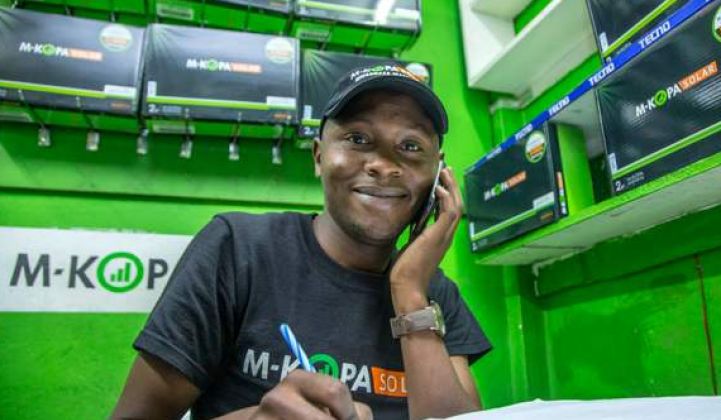
Kenyan-based Fintech startup that provides connected asset financing solutions for underbanked customers, M-KOPA, has been listed by TIME, in its 2023 list of the TIME100 most influential companies in the world.

The Fintech startup was listed among other top remarkable companies across the globe, after TIME solicited nominations across sectors, and pulled its global network of contributors and correspondents, as well as outside experts.

Then TIME editors evaluated each, on key factors, which include ambition, successful impact, and innovation.

Speaking on the recently published TIME100 companies list, TIME Chief Executive Officer Jessica Sibley said, “The annual TIME100 companies list demonstrates that businesses can be change agents. From artificial intelligence to fashion, this list spotlights the innovative companies and visionary leaders that are shaping the world”.

M-KOPA was listed in the TIME100 Pioneers category alongside other companies such as ZeroAvia, Ameelio, Graphika, and several others, which signifies the company’s recognition for its remarkable and significant impact on global energy access and financial inclusion.

M-KOPA’s recent feature in TIME100’s most influential companies, coming after the startup in May 2023, was ranked in the 50th position in the Financial Times (FT) ranking of Africa’s fastest-growing companies in 2023.

M-KOPA financial offerings are designed for the realities of the financially excluded, tested and improved through a decade of experience, and proven through the successful repayment of millions of customers.

The asset financial provider was founded in 2010 with the idea of combining the power of digital micropayments with GSM connectivity to make life-enhancing assets more accessible. Since then, it has built one of the world’s most advanced connected financing platforms, deploying $1 billion in products and credit to the financially excluded.

M-KOPA’s business revolves around using debt to finance customers’ purchase of products and services it sells, such as smartphones and solar power systems, as well as loans and health insurance across four markets: Kenya, Uganda, Ghana, and Nigeria.

With its flexible credit model, the business allows individuals to pay a small/deposit for the two products above and pay off through micro-installments, helping build their credit history over time. Default rates are a little above 10%.

Last year, the startup claimed to have provided over $600 million in cumulative credit for its underbanked customers via a network of over 10,000 agents.

In 2023, M-KOPA revealed it has reached a total of 3,000,000 customers, and in May last month, it snapped up $250M+ debt, and equity for its asset financing platform.

M-KOPA’s remarkable success in Kenya, saw the startup expand to other neighboring countries such as Tanzania and Uganda where it strategically partnered with local mobile network operators to reach a wider customer base.

Given its success in East and West Africa, where it has sold over a million solar home systems and helped avoid 2 million tonnes of carbon dioxide emissions, M-KOPA has set its sights on South Africa, where the company is ready to open a pilot operation in the next few weeks.

The startup is poised to continue to drive positive change in the energy and financial sectors, with a mission to upgrade lives by making high-quality solutions affordable to everyone.

Crypto Bull Market Back as Bitcoin Trades Above $30,000

0

The crypto bull market is back with a vengeance. After a prolonged period of consolidation and correction, the prices of major cryptocurrencies have surged to new highs, breaking through multiple resistance levels and attracting new investors. Bitcoin, the leading cryptocurrency by market capitalization, has been trading above $30,000 in the past day with Ethereum consolidating around $1800 per Ether and stablecoins maintaining its 1:1 peg against the US dollar.

After BTC dropping below this recent new ATH in April, bitcoin has continued to be facet against inflations, centralized control and manipulations. This current new height in prices has sparked renewed optimism among some investors and analysts that the crypto bull market is back on track. Major reasons for boost in market conditions not far from inflation ravaging countries and the increased adoption and participation of big US asset management companies like BlackRock, Citadel Securities amongst others.

The macroeconomic and geopolitical uncertainties that increase the demand for alternative assets and hedge against inflation and currency devaluation. For example, the past Covid-19 pandemic, the US-China trade war, and the rising tensions in the Middle East have fueled the appetite for crypto as a store of value and a medium of exchange.

These factors, along with the growing awareness and education of the general public about the benefits and potential of crypto, have created a positive feedback loop that reinforces the upward momentum of the market. However, this does not mean that the crypto market is immune to volatility and risks. There are still many challenges and obstacles that could derail or slow down the bull run, such as:

The regulatory and legal uncertainties that could hamper or restrict the adoption and innovation of crypto. For example, China has banned crypto mining and trading activities, while the US Securities and Exchange Commission (SEC) has delayed the approval of several Bitcoin exchange-traded funds (ETFs). The technical and operational issues that could compromise the functionality and security of crypto. For example, network congestion, hacking attacks, bugs, and human errors could result in loss of funds, downtime, or reduced performance.

The psychological and behavioral factors that could influence the market sentiment and price movements. For example, fear, greed, FOMO (fear of missing out), FUD (fear, uncertainty, and doubt), hype, rumors, and manipulation could cause irrational or emotional reactions among investors and traders. Therefore, it is important for crypto enthusiasts to be well-informed, cautious, and disciplined when participating in the market. While the long-term outlook for crypto is optimistic, there will be inevitable ups and downs along the way. The key is to have a clear vision, a solid strategy, and a diversified portfolio that can withstand the market fluctuations.

The crypto bull market is back, but it is not a one-way street. It is a dynamic and complex phenomenon that requires constant analysis and adaptation. As long as we stay vigilant and prepared, we can enjoy the ride and reap the rewards. But is this rally sustainable or is it just a temporary bounce before another downturn? We will examine some of the factors that could influence the future direction of bitcoin and other cryptocurrencies.

For example, MicroStrategy, a business intelligence company, announced that it had purchased an additional 13,005 bitcoins for about $489 million in cash, bringing its total holdings to 105,085 bitcoins. This shows that some companies are still bullish on bitcoin as a store of value and a hedge against inflation.

Another factor that could boost bitcoin is the increasing regulatory clarity and innovation in the crypto space. For instance, El Salvador became the first country to adopt bitcoin as legal tender, which could pave the way for more countries to follow suit. Moreover, several countries, such as China, Japan, and Sweden, are experimenting with their own digital currencies, which could increase the demand for crypto as a medium of exchange and a unit of account.

However, there are also some challenges and risks that could hinder the growth of bitcoin and other cryptocurrencies. One of them is the environmental impact of crypto mining, which consumes a lot of energy and generates carbon emissions. This has led to some backlash from environmentalists and regulators, who have imposed bans or restrictions on crypto mining in some regions. For example, China cracked down on crypto mining activities in several provinces, causing a drop in the global hash rate and network security of bitcoin.

Another challenge is the high volatility and unpredictability of crypto prices, which makes it difficult for investors and traders to assess the value and risk of their holdings. Crypto markets are often influenced by various factors, such as news events, social media sentiment, market manipulation, and technical analysis. These factors can cause sudden and sharp price movements, which can result in significant losses or gains for investors.

Therefore, it is hard to say with certainty whether the crypto bull market is back or not. Bitcoin and other cryptocurrencies are still in their early stages of development and adoption, and they face many opportunities and challenges along the way. The future of crypto will depend on how well it can overcome these challenges and leverage these opportunities to create value for its users and society.