DD
MM
YYYY

PAGES

DD
MM
YYYY

spot_img

PAGES

Home Blog Page 409

Wisconsin Lawmakers Introduce Assembly Bill 471 Aimed At Reducing Barriers For Crypto Activities

0

Wisconsin lawmakers introduced Assembly Bill 471 (AB 471), a bipartisan measure aimed at reducing regulatory barriers for cryptocurrency activities in the state.

The bill proposes explicit exemptions from the state’s money transmitter licensing requirements, administered by the Department of Financial Institutions (DFI), for a wide range of digital asset operations. This could position Wisconsin as a more attractive hub for blockchain innovation, similar to states like Wyoming and Texas, by lowering compliance costs for non-fiat crypto transactions.

If passed, the exemptions would apply immediately upon enactment, potentially encouraging rapid business relocations and investments in crypto infrastructure. The bill has been referred to the Assembly Committee on Financial Institutions for review and is currently about 25% through the legislative process, according to tracking data.

The legislation targets activities that do not involve converting digital assets to legal tender (e.g., USD) or bank deposits. Operating mining rigs or hardware to validate blockchain transactions. Removes licensing hurdles for energy-intensive operations, potentially boosting local data centers.

Participating in proof-of-stake networks to secure blockchains and earn rewards. Includes a securities exemption for third-party technical staking services, as long as rewards are solely network-generated.

Building or maintaining software for blockchain protocols. Fosters developer ecosystems without DFI oversight. Trading one cryptocurrency for another like BTC for ETH without fiat involvement.

Simplifies peer-to-peer and decentralized exchanges. Running full nodes to support blockchain networks. Protects decentralized infrastructure from state restrictions.

Accepting crypto as payment for goods/services or using self-hosted/hardware wallets for custody. Prohibits state agencies from banning or restricting these uses. Sending digital assets directly to another person or wallet. Enables seamless P2P transactions without licensing.

The bill explicitly states: “Neither a state agency nor a political subdivision may prohibit or restrict a person in accepting digital assets as a method of payment for legal goods and services or in taking custody of digital assets using a self-hosted wallet or hardware

Two Republican Senators and one Democrat (Rep. Tip McGuire), making it modestly bipartisan. This aligns with a pro-crypto shift under the Trump administration, amid federal uncertainty from the SEC and CFTC. Wisconsin currently has three other crypto bills under review, including ones on ATM regulations and data center tax exemptions.

Custodial services like MoonPay, which handle fiat conversions, would still require licenses and are not covered by these exemptions. Reduced barriers could attract Bitcoin mining firms, DeFi protocols, and wallet providers, spurring job growth in tech hubs like Madison.

Everyday activities like staking or paying with crypto become less risky, promoting adoption. Some worry it could invite illicit activity without federal safeguards, though proponents argue it clarifies rules in a patchwork regulatory environment.

Committee hearings could begin soon; passage isn’t guaranteed but reflects growing state-level momentum for crypto-friendly policies. This bill represents a significant step toward regulatory clarity, but it doesn’t override federal laws.

By exempting activities like crypto mining, staking, node operation, and non-fiat exchanges from licensing requirements, the bill lowers compliance costs. This could make Wisconsin an attractive destination for blockchain startups, DeFi platforms, and mining operations, especially compared to states with stricter regulations.

The immediate effect upon passage could draw crypto firms to Wisconsin, boosting local economies in tech hubs like Madison or Milwaukee. Data centers for mining or node operations may see increased investment.

Developers of blockchain software and decentralized protocols can operate without fear of licensing violations, fostering innovation in areas like smart contracts, NFTs, or layer-2 solutions.

Wisconsin could compete with crypto-friendly states like Wyoming, Texas, or Florida, positioning itself as a blockchain hub in the Midwest. Exemptions for accepting crypto payments and using self-hosted or hardware wallets protect everyday use cases.

This could encourage more merchants and individuals to adopt cryptocurrencies for transactions without legal uncertainty. Individuals engaging in staking or direct wallet-to-wallet transfers won’t face regulatory hurdles, making these activities more accessible and less legally ambiguous.

Without licensing requirements, there’s a risk of insufficient oversight for non-custodial services, potentially exposing users to scams or unreliable platforms, though the bill doesn’t affect custodial services requiring licenses.

Attracting crypto businesses could lead to job growth in tech, energy, and financial sectors, particularly in mining operations and blockchain development. Increased business activity could boost tax revenues, though the bill’s exemptions may limit direct licensing fees.

Related legislation on data center tax exemptions could further amplify economic impacts. Crypto mining, if expanded, could strain Wisconsin’s energy grid, raising concerns about sustainability and electricity costs, especially in rural areas.

The bill aligns with a pro-crypto trend under the current federal administration but may conflict with stricter SEC or CFTC regulations. It could set a precedent for other states to adopt similar exemptions, fragmenting the U.S. regulatory landscape.

Critics may argue that reduced oversight could attract money laundering or fraud, though the bill’s focus on non-fiat activities mitigates some risks. Federal laws like AML/KYC still apply to fiat-related crypto businesses.

Wisconsin could emerge as a Midwest leader in blockchain technology, attracting talent and capital. This aligns with national trends toward decentralized finance and Web3 development.

The bill’s immediate enactment could lead to rapid changes, but without federal clarity, businesses may still face legal risks. The 25% progress in the legislative process suggests uncertainty, as committee reviews and potential amendments could alter its scope.


Bit Digital Proposes $100M on Convertible Senior Notes as OpenSea Integrates Token Strategy

0

Bit Digital, Inc, a publicly traded digital asset platform specializing in Ethereum-native treasury and staking strategies, announced a proposed registered underwritten public offering of $100 million in aggregate principal amount of convertible senior notes due 2030.

The offering includes a 30-day option for underwriters to purchase up to an additional $15 million to cover over-allotments. The notes are senior unsecured obligations maturing on October 1, 2030, with holders able to convert them into cash, shares of common stock, or a combination prior to maturity.

Net proceeds will primarily fund Ethereum (ETH) purchases, with the remainder allocated to general corporate purposes, including potential investments, acquisitions, and other digital asset-related opportunities.

This move aligns with Bit Digital’s pivot to a “pure-play” Ethereum staking and treasury company, which began accumulating and staking ETH in 2022. In July 2025, the company raised $172 million via a public equity offering, sold ~280 BTC, and converted its treasury to acquire over 100,603 ETH, making it one of the largest public corporate ETH holders globally.

The offering is led by Barclays, Cantor Fitzgerald, and B. Riley Securities as joint book-running managers, conducted under an effective shelf registration on Form S-3. BTBT shares closed up 8.4% on September 29 but fell ~10% in after-hours trading amid the announcement.

CEO Sam Tabar has emphasized ETH as a “discount to the future,” citing its role in institutional finance and AI scalability. This reflects a broader trend of digital asset treasury (DAT) strategies, with firms like BitMine Immersion and SharpLink Gaming also building ETH positions.

OpenSea Integrates NFT Strategy Tokens; Punk Strategy Hits 18th CryptoPunk Acquisition

OpenSea, the leading NFT marketplace, launched support for all NFT Strategy tokens, enabling seamless trading and integration of these innovative ERC-20 tokens tied to ERC-721 NFT collections.

Developed by TokenWorks, NFT Strategy tokens deploy a “flywheel” mechanism: trading fees typically 10% accumulate in a smart contract until sufficient ETH is gathered to buy a floor-priced NFT from the linked collection. The NFT is then automatically relisted at a 1.2x markup 20% premium.

Sale proceeds are used to buy back and burn the corresponding strategy tokens, creating deflationary pressure and aligning token value with the underlying NFT floor price. The rollout includes a 20 ETH rewards pool for select tokens like PUNKSTR (CryptoPunks), PUDGYSTR (Pudgy Penguins), APESTR (Bored Ape Yacht Club), TOADSTR (Toadz), and BIRBSTR (Good Vibes Birds), incentivizing early liquidity and adoption.

PUNKSTR, the flagship token for CryptoPunks, has surged 392% since its September 15 launch, boasting an $87.2 million market cap, $1.5 million daily volume, and a price of ~$0.087 down 1.9% in the last 24 hours.

It has generated ~700 ETH in fees and burned ~2.8% of its supply through 12 full Punk buy-sell cycles. Coinciding with the launch, Punk Strategy via PUNKSTR acquired its 18th CryptoPunk, pushing the protocol’s treasury deeper into the iconic 10,000-piece collection (floor price ~59.71 ETH, or $176,649 average over the past year).

This automated protocol, exclusive to CryptoPunks acquired by Yuga Labs in 2022, transforms the collection into a “living burn engine” by linking token trades to NFT arbitrage, with dynamic taxes up to 90% post-sale, decaying over time to deter MEV exploits.

The integration blends DeFi yield with NFT trading, potentially revitalizing on-chain activity amid a $109.8 million weekly NFT sales jump CryptoPunks up 136%. TokenWorks plans to enable any ERC-721 collection owner to deploy custom strategy tokens, expanding the model.

On X, discussions buzz about OpenSea’s potential $2 million token buy-in, fueling speculation on broader adoption.

Polymarket Expands into NFL Prediction Markets As Pump.fun Lays Off 1/3 of Staff

0

Polymarket, the leading crypto-based prediction market platform, has significantly ramped up its NFL offerings ahead of and during the 2025 season, positioning itself as a direct challenger to traditional sportsbooks.

After receiving clearance from the U.S. Commodity Futures Trading Commission (CFTC) in early September 2025, Polymarket relaunched operations across all 50 U.S. states— including those without legal sports betting like Texas—arguing its contracts are financial instruments rather than gambling products.

The NFL season opener on September 4, 2025, drew over $600,000 in bets on Polymarket within hours, with early markets focusing on game outcomes, player props, and futures like Super Bowl LX (2026) winners. By Week 3, trading volume on NFL markets exceeded $55 million, rivaling established bookmakers.

A aggressive ad campaign on Meta platforms teased “Legal football trading is coming to ALL 50 states this fall,” including targeted ads in non-betting states. This has fueled a waitlist signup via phone numbers, signaling a full U.S. re-entry after a 2022 ban.

Users can now trade on weekly games like Week 5 matchups like 49ers vs. Rams with $45K volume, undefeated team futures via Eagles at 47¢ Yes to remain undefeated, and long-term bets like team Super Bowl odds like Arizona Cardinals at varying probabilities.

The NFL and NFLPA have raised concerns over unauthorized use of logos and marks in ads, demanding official data partnerships via Genius Sports, responsible gaming measures, and anti-match-fixing protocols.

Rivals like Kalshi already live with sports and potential acquisition targets like Novig are intensifying the space, with Polymarket eyeing deals to bolster its NFL edge. This expansion taps into the $107 billion U.S. sports betting industry, with Polymarket’s crypto model (using USDC) appealing to global users while navigating regulatory gray areas.

Pump.fun Lays Off 1/3 of Staff Amid Revenue Pressures

Pump.fun, the Solana-based memecoin launchpad that exploded in popularity in 2024, announced layoffs affecting approximately one-third of its workforce on September 30, 2025. The cuts come as the platform grapples with slowing growth and external controversies, despite generating over $800 million in revenue since launch through a 1% trading fee.

Reports indicate 10-15 roles were eliminated from a team of around 40, primarily in engineering and marketing. No official statement from founders Alon Cohen or Dylan Kerler has been issued, but sources close to the company cite “cost optimization” as the rationale.

Pump.fun’s daily revenue peaked at $5 million in late 2024 but dipped 33% to $3.6 million in November after halting live-streaming features due to a scandal involving a fake suicide stunt during a memecoin promo. Q3 2025 figures show stabilization around $1 million/day, but competition from rivals like BonkBot and regulatory scrutiny on memecoins have eroded margins.

The platform raised $1.3 billion in a July 2025 ICO $600M public, $700M private, making it one of crypto’s biggest success stories with over 1 million tokens launched. However, it’s faced criticism for enabling “rug pulls” and exploits, leading to user warnings on forums like Reddit.

Layoffs coincide with a crypto market cooldown post-election hype, with Pump.fun’s native $PUMP token under pressure despite a $2.3M buyback. Community reactions on X highlight concerns over innovation slowdowns, though some view it as a pivot toward sustainability.

These moves reflect broader crypto sector belt-tightening, with Pump.fun still dominant in memecoin creation but under pressure to diversify beyond viral hype.

BlockDAG’s BWT Alpine Formula 1® Partnership & Presale Success Cement Its Status Among the Year’s Leading Top Crypto Gainers

0

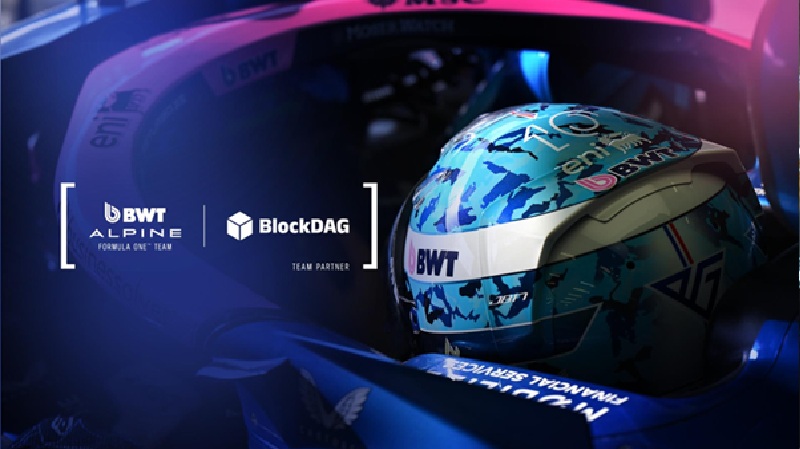
Every era of progress is defined by unlikely unions. Just as steam once met steel to power locomotives, today motorsport meets blockchain, connecting physical precision with digital acceleration. BWT Alpine F1® Team carries the legacy of engineering mastery, while BlockDAG represents the promise of decentralised design.

They race on parallel tracks, yet their paths converge at a crucial turning point, a locked presale price of $0.0013 for a few days. For buyers seeking the top crypto gainers, this moment symbolises not only financial opportunity but also the chance to participate in a shared journey where heritage and innovation meet.

BlockDAG’s Presale, The Fuel of Acceleration

In racing, the roar of engines signals intent, and in blockchain, the numbers tell the story. BlockDAG has already raised nearly $415 million in presale funding, with more than $40 million added in the last month. Over 26.5 billion coins have been sold, establishing clear momentum on a global scale. The coin currently sits in batch 30 at $0.0013. For early participants since batch 1, it has already delivered a massive ROI.

This presale is more than a statistic; it is the ignition of a long race. The locked price window acts like a starting light, signalling a final countdown before deployment. For those who understand the dynamics of acceleration, BlockDAG positions it not as a fleeting event but as an opening lap in a grander competition. As buyers weigh their choices among the top crypto gainers, the presale demonstrates both momentum and staying power, proving that BlockDAG has shifted from promise to proof.

BWT Alpine F1® Team Sponsorship – The Parallel Track of Recognition

While the presale fuels adoption, the BWT Alpine F1® sponsorship offers visibility that stretches beyond the circuits of crypto exchanges. This multi-year alliance ensures that BlockDAG’s name will speed across the tracks of Formula 1®, carried on BWT Alpine F1® Team cars, virtual racing platforms, and fan activations. Billions of viewers will see a digital brand integrated into one of the world’s most iconic sporting stages.

The metaphor is clear: BWT Alpine F1® Team races with wheels and engines, while BlockDAG races with miners and nodes. One track is asphalt, the other is digital, yet both demand speed, reliability, and performance.

Together, they reflect a fusion of heritage and innovation, with each lap amplifying visibility and trust. Buyers seeking the top crypto gainers should recognise that this is not a logo experiment but a cultural alliance. It bridges fans in stadiums with communities online, transforming crypto from an isolated technology into part of global culture.

Community and Infrastructure – The Race Beyond the Track

What ensures victory in any race is not just speed but the team behind the machine. BlockDAG’s community now spans over 325,000 members across 130 countries, growing by 1,000 holders daily. Beyond numbers, this reflects a diverse, multicultural network that serves as a pit crew for adoption and support.

At the same time, BlockDAG is not merely collecting funds; it is deploying infrastructure. Over 20k X10, X30, and X100 miners have been shipped, with production scaling to 2,000 per week. More than 3 million users mine daily on the X1 app, turning passive spectators into active participants.

For buyers, this dual foundation of community and infrastructure is essential. Markets can elevate and deflate, but ecosystems built on engagement endure. BlockDAG’s traction before launch shows a maturity that few presales can claim, placing it firmly on the list of top crypto gainers worth tracking. It demonstrates that the project is not idling in the garage but already circling the track, building speed with every lap.

BlockDAG & BWT Alpine F1® Team Unite Heritage & Innovation

The story of BlockDAG and BWT Alpine F1® Team is not about two separate worlds but one shared track where tradition and technology race side by side. BWT Alpine F1® Team offers engineering heritage, while BlockDAG delivers digital acceleration, and together they symbolise a partnership built on endurance rather than spectacle.

With a presale surpassing $415 million, 26.5 billion coins sold, and priced at $0.0013 in batch 30, buyers stand at the precise inflexion point where opportunity meets momentum. Backed by community scale, hardware deployment, and global sponsorship, BlockDAG is shaping itself into one of the top crypto gainers, not just for today, but for the seasons to come.

Presale: https://purchase.blockdag.network

Website: https://blockdag.network

Telegram: https://t.me/blockDAGnetworkOfficial

Discord: https://discord.gg/Q7BxghMVyu

Some AI Agents You’ll Build During Tekedia AI Technical Program [Register]

0

Co-Learner: I am happy to share some AI agents you will co-build with us during Tekedia AI Technical Lab: from Design to Deployment program.

Link 1: WinSupport – Customer Service agent https://winsupport.zenvus.com/

Link 2: WinJob – Job & Recruitment agent https://winjob.zenvus.com/

(Feel free to play with the agents. This is for the public. Our co-learners will have access to smarter versions when they run our program scripts)

We will begin on Saturday, Oct 4, and our Week 1 will focus on Setups, Primitives, Environments and Ecosystems (please check the instructions in program board). My goal this week will be for you to set up your ecosystem so that you can create AI agents therein. If you do not have a domain, we will get you one, at no additional cost via Tekedia Host which has been doing that for years.

We will co-create a total of 4 agents over the four weeks; will reveal the next two agents later. No coding experience is required. No understanding of calculus is necessary. You just need to come with interest to BUILD.

Our goal is to build dozens of AI agents (feel free to suggest an AI agent you will like us to create in comment below), and through our programs, we will get them to people and companies. To ensure cost is low, we’re using open-source foundational models.

If you have not registered, I encourage you to do so and join dozens and dozens. Tekedia Institute is expanding from business education, and we hope to make technical education amazing because we’re techies natively. Please, if you cannot afford to register, tell your boss and company to sponsor you. Register here https://school.tekedia.com/course/ailab/

Good People, share with us some ideas of AI agents you will like us to build which can be a generic model system, meaning it does not rely on company specific knowledge and proprietary data. Our focus is on AI agents SMEs can integrate and adopt without much complexity.