DD
MM
YYYY

PAGES

DD
MM
YYYY

spot_img

PAGES

Home Blog Page 4096

Vitalik Buterin hasn’t sold Ethereum for personal gain since 2018

0

Vitalik Buterin, the co-founder of Ethereum, has revealed that he has not sold any ether for personal gain since 2018. In a recent interview with Bloomberg, Buterin said that he has donated most of his ether holdings to various causes, such as pandemic relief, crypto research, and public goods. He also said that he does not intend to sell any more ether in the foreseeable future, as he believes in the long-term potential of the network.

Buterin’s statement comes amid a surge in the price of ether, which reached a new all-time high of over earlier this month. The second-largest cryptocurrency by market capitalization has outperformed bitcoin this year, gaining more than 400% compared to bitcoin’s 100%. Some analysts attribute this to the growing popularity of decentralized applications (dApps) and decentralized finance (DeFi) platforms that run on Ethereum, as well as the upcoming network upgrades that aim to improve scalability and efficiency.

Buterin, who holds about 333,000 ether worth around $1.3 billion at current prices, said that he is not motivated by wealth or fame, but by the social impact of his work. He said that he wants to use his influence and resources to support projects that can benefit humanity and the planet. He also said that he is not interested in becoming a billionaire or a celebrity, as he values his privacy and freedom.

Buterin’s altruism and vision have earned him respect and admiration from many in the crypto community, as well as from some prominent figures outside of it. For example, Elon Musk, the CEO of Tesla and SpaceX, recently praised Buterin for his work on Ethereum, calling him a “fearless leader”. Musk also said that he agrees with Buterin’s philosophy of not being attached to material possessions.

Buterin’s disclosure also contrasts with some other crypto founders and influencers who have been accused of selling their tokens or promoting dubious projects for personal gain. For instance, the creator of Litecoin, sold all of his Litecoin holdings in 2017, citing a conflict of interest. However, some critics claimed that he dumped his coins at the peak of the market and profited from the hype. Similarly, John McAfee, the antivirus software pioneer and crypto enthusiast, was indicted by the US authorities for allegedly promoting fraudulent ICOs and laundering millions of dollars.

Buterin’s integrity and dedication to Ethereum have made him one of the most influential and respected figures in the crypto space. His decision to not sell his ether for personal gain shows his confidence in the future of the network and his commitment to its development. As Ethereum continues to grow and innovate, Buterin’s role as its leader and visionary will remain crucial and inspiring.

However, Elixir Protocol, a decentralized exchange platform that leverages zero-knowledge proofs to enable fast and private transactions, has announced that it has raised $7.5 million in a Series A funding round led by Andreessen Horowitz. The round also saw participation from other prominent investors, such as Coinbase Ventures, Polychain Capital, and Electric Capital. The funding values Elixir Protocol at $100 million, making it one of the most valuable projects in the DeFi space.

Elixir Protocol aims to solve some of the key challenges facing current decentralized exchanges, such as high gas fees, low liquidity, and lack of privacy. By using zk-SNARKs, a form of zero-knowledge proofs, Elixir Protocol can process thousands of transactions per second without revealing any sensitive information about the users or the trades. This allows Elixir Protocol to offer a fast, secure, and scalable solution for DeFi users who value their privacy and sovereignty.

Elixir Protocol also features a novel liquidity mechanism that rewards liquidity providers with ELIX tokens, the native token of the platform. ELIX tokens can be used to govern the protocol, access premium features, and stake for additional rewards. Elixir Protocol plans to use the new funding to further develop its technology, expand its team, and grow its community.

“We are thrilled to have the support of such reputable investors who share our vision of building a more open and inclusive financial system,” said the founder and CEO of Elixir Protocol. “We believe that privacy is a fundamental human right and that DeFi users deserve a better way to exchange their assets without compromising their identity or security. Elixir Protocol is on a mission to make DeFi more accessible, efficient, and private for everyone.”

“Elixir Protocol is one of the most innovative and promising projects in the DeFi space,” said Chris Dixon, a partner at Andreessen Horowitz. “We are impressed by the team’s technical expertise and vision of creating a decentralized exchange platform that combines speed, scalability, and privacy. We are excited to partner with Elixir Protocol and help them achieve their goals.”


5G Expected to Benefit the Sub-Saharan African Economy by $11 Billion in 2030

0

Global organization unifying the mobile ecosystem to discover, develop, and deliver innovation, GSMA, in its recent report titled “The Mobile Economy Sub-Saharan Africa 2023”, revealed that 5G technology is expected to benefit the Sub-Saharan African economy by $11 billion in 2030.

With 297 operators in markets around the world launching mobile 5G services as of September 2023, the momentum for 5G continues to grow in Sub-Saharan Africa.

As of September 2023, 27 operators in 16 African markets have reportedly launched commercial mobile 5G services in the region, while several others have plans for a 5G launch.

GSMA report reveals that 5G will account for more than 6% of the overall economic impact of mobile connections in sub-Saharan Africa, as much of the technology benefit will materialize over the period to 2030, as some countries are in the early stages of deployment and 5G economic benefits will increase as the technology starts to achieve scale and widespread adoption.

In recent years, while the adoption of 4G technology has accelerated in Africa partly driven by the growing demand for faster speed among younger consumers, the 5G technology is also growing momentum with deployment in urban areas and industrial locations where there is a greater need for the technology.

5G adoption is expected to grow more quickly in the second half of this decade, rising to 17% by 2030. Sub-Saharan Africa will have 226 million 5G connections in 2030, equivalent to an adoption rate of 17%.

Nigeria and South Africa will account for almost half of these connections. However, the growth of 5G in the region will be slow but steady, as a larger share of the customer base will continue to migrate to 4G.

As a result of extensive 4G network buildout and growing 5G network deployments in Sub-Saharan Africa, capex will be on an upward trajectory over the next few years.

This will begin to trend downwards closer to 2030 as operators turn their focus to generating returns on investment. The focus over the next few years will be on extending coverage, along with network upgrades. At the same time, operators will be ramping up investments to support the growing momentum behind 5G.

Governments and enterprises in the African region are reportedly utilizing the technology to tackle the biggest challenges faced, and it has been poised to be a key player in this role.

5G is expected to benefit most sectors of the Sub-Saharan African economy, depending on their ability to incorporate 5G use cases in their business. Over the period to 2030, 32% of the benefits are expected to come from the manufacturing sector, driven by applications such as smart factories, smart cities, and smart grids, and 29% from the services sector.

Meanwhile, despite the growing momentum, the approach to 5G in the region will need to account for the current connectivity landscape and unique market features that could affect the rollout and adoption of the technology.

Hence, the region’s 5G network ecosystem players must find ways to deliver cost-effective and efficient 5G networks, balancing investment and value creation.

This comes at a time when 3G is the most dominant technology in Sub-Saharan Africa (accounting for 55% of total connections in 2022) while 4G is already dominant in other regions, implying network and customer readiness for the transition to 4G.

Nigeria Is Not Praying Enough! We Need Kinetic Prayer

0

My Response to this post: “last week Statisense broke the data on how globally Nigeria is in bad company of countries whose citizens say they pray daily vs the results they deliver.”

My Response

Nigeria does not even pray enough. For people who do not understand what prayer is, they seem to think that it is a  mere religious oddity. As a Scripture Union kid, prayer was an energizer, because it conditioned my mind before exams. I cannot start a car engine today without a short prayer; it wins a psychological state for me. Prayer is not just about religion, it is therapy which boosts ego and elevates energy levels.

At the peak of the industrial revolution, England was a nation of prayers. As John Wesley roared, England boomed. But when they stopped, America picked it up, and rose. By the time Billy Graham had his microphones, America was mobilized to pray.

China prays but they call it yoga (a prayer with no “God” or “god” in mind). But it does condition the mind, just as religious prayer takes out burdens.  “In 2016, 89% of survey respondents in the US said they spent 1 to 5 hours a day practicing yoga. “ That is prayer without Jesus, Allah, etc. In most companies, they have yoga rooms because that thing works.

Nigeria’s problem is not prayer. Our problem is that we do not pray within the laws of physics, hoping for miracles and ignoring “faith without work is dead”, just as work without faith brings pain. Now that I am looking for a ministerial position, Nigeria can ask me to lead Ministry of Kinetic Prayers and Economic Transformation. Lol.

Comments on Feed

Comment 1: I always feel the people who attack Nigerians for praying too much always conflate correlation with causality; Is a reduction in prayers by Nigerians going to automatically turn Nigerians around??.
If these poll was taken during the industrial revolution, Nigeria would probably have been in the company of countries like Great Britain or the United States.
Did Dubai seemingly become the hub it has become because it’s citizens stopped praying, or did Lee Kuan Yew build Singapore by having his people stop praying??
What seems to be true is that great nations in prosperity become less dependent on God and may pray less, I don’t think great nation building, however, is birthed by stopping prayers.
Thanks Prof for your insights on this.

Comment 2: Thanks for this all important topic. My take on this is very simple: prayer is not the problem, as a matter of fact we need more of it times like this for it’s many advantages data can not capture. The question we need ask is: are these prayers prayer indeed?

The principle of true prayer is separate, so is the principle of work. Following one without the other will show in the long run.

Most Nigerians are not lazy in my assessment but we are against many odds that other nations have gone through also before they stabilize and become great.

I believe Nigeria will be great again but we need to work smarter and pray more prayers that work.

Comment 3: The word “Prayer” is a subjective term. The effect of it depends on:

  1. Who is praying
  2. Who are you praying to?
  3. What are you praying for?
  4. How are you praying?
  5. Why are you praying?

Someone rightly pointed out here that “correlation does not mean causation”! It is a logical fallacy to equate prayers alone to national development or economic prosperity. The truth remains that the Western civilization was built on the backbone of Biblical prayers and principles.

Even the Bible and many other religions beliefs instruct that prayer, meditation or call it a quiet moment of instrospection; if it is carried out daily without the corresponding work will amount to failure.

Man is a co-creator in his world. Prayer brings the Divine into the process which makes the outcome possible. Nations like China, Japan, UK, etc may be considered as less-praying nations, the fact remains that they practice a different form of prayers backed by sound pragmatic principles that lead to economic development.

In China there is zero tolerance to corruption. In UK the law is applied strictly to bring order. How can a praying nation prosper when it condones corruption?

Never stop praying, and never stop working!

Young People, Win the Future; Challenges have clocks but strong minds have TIME

0

If you do not like your teacher, you will likely not do well in the class. If you do not like your school, you will likely struggle in your program. And if you do not like your nation, you will likely see only obstacles.

But remember that book – Acres of Diamonds – and setting out for a journey to find diamonds, without knowing that you have been living on top of one for ages. Young People, the greatest challenge is the Liberation of the mind. Simply, your mind can condition your awareness and observation to opportunities.

If your mind is closed, fixated with pessimism, the illumination to see opportunities and abundance will not come. I find it troubling when I see young people naturally in a state of bitterness. That has to change. And asking you to modulate does not mean I do not understand the challenges. 

Yes, life is not a cluster of clocks, and as you grow older, you will understand. Visit San Francisco, the home of Silicon Valley, wait for 7pm, you will see men and women scavenging food in trash cans, outside restaurants. Visit New York City at 5am, you will see homeless men and women waking up under trenches of skyscrapers. It is the same beautical America, with unbounded opportunities, but here, some are lost!

Challenges have clocks but strong minds have TIME. Renew your mind and open it for more positive things, and good things will find space in your mind. I say win the victory of your mind, and unlock exuberance to activate the energy for positive ACTION. 

Recover Your NAS Data and Files With Recoverit

0

Introduction

In today’s digital age, data is at the heart of almost every aspect of our lives, whether personal or professional. With the increasing amount of data generated daily, storage solutions have become necessary. Network-attached storage (NAS) is a popular option for individuals and businesses to store and share large amounts of data across networks.

However, like any storage solution, NAS is also susceptible to data loss or corruption, which can be disastrous for the user. This is where NAS data recovery software like Recoverit comes in, as it can help users retrieve lost or deleted data from their NAS devices. This article will explore the importance of recovering NAS data and how Recoverit can be a helpful solution.

What Is NAS and How Can It Be Lost?

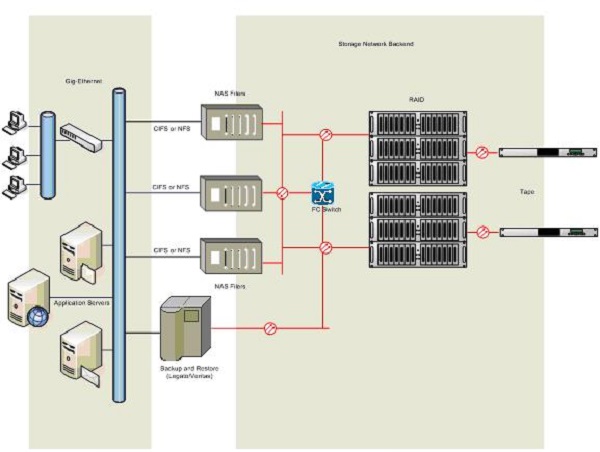
Network-attached storage (NAS) enables users to store, share, and access data over a network. It consists of a specialized device connected to a network and can be accessed by multiple users simultaneously. NAS devices have one or more hard drives and can be configured with various RAID (Redundant Array of Independent Disks) levels for data redundancy and protection.

NAS devices are popular among individuals and businesses, as they provide a centralized location for storing and sharing large amounts of data. They also offer various features such as remote access, media streaming, and backup capabilities, making them a versatile solution for managing data.

Data loss can occur for various reasons, ranging from hardware failure to human error. Some of the most common causes of data loss include:

  • Hardware failure is one of the most common causes of data loss, and it can happen due to many reasons, such as power surges, overheating, and physical damage to the storage device.
  • Human errors such as accidental deletion, formatting, or overwriting of data can lead to data loss. It can happen due to various reasons, such as user error, software bugs, or malware infections.
  • Malware and viruses can infect a computer or storage device, leading to data loss or corruption. Ransomware attacks, in which the attacker demands payment in exchange for releasing the data, are becoming increasingly common.
  • Natural disasters such as floods, fires, and earthquakes can damage or destroy physical storage devices, leading to permanent data loss.
  • Theft or physical damage to a storage device can result in data loss. It is necessary to have backups to protect against such events.

Typical Data Recovery Methods?

Losing important data from a NAS device can be a frustrating and stressful experience. However, there are several ways to recover lost NAS data. The choice of recovery method depends on the nature of the data loss and the type of NAS device being used. Here are some of the most common ways to recover lost NAS data:

Logical data recovery

Logical data recovery is recovering lost or deleted data from a storage device without physical damage. This type of recovery is usually used when the data loss is due to software or logical issues. Logical data recovery involves using specialized software to scan the storage device and recover lost data.

Physical data recovery

Physical data recovery is the process of recovering lost or inaccessible data from a storage device that has suffered physical damage. This type of recovery involves repairing or replacing the damaged components of the device to retrieve the data.

Instant data recovery

Instant data recovery is a type of recovery that allows users to retrieve lost data in real-time without any downtime. This type of recovery is usually used in businesses where time is of the essence, and any downtime can result in significant losses.

Continuous protection of data

Continuous data protection is a type of recovery that involves creating data backups in real-time or at regular intervals. This type of recovery is beneficial for businesses that need to ensure the continuity of their operations, even in the event of data loss.

Wondershare Recoverit – A Brilliant Tool To Recover Lost NAS Data

Recoverit is a data recovery software developed by Wondershare. It is designed to help users recover lost, deleted, or formatted data from various storage devices, including NAS servers, Linux systems, hard drives, USB drives, memory cards, and more. With its advanced algorithms, Recoverit can retrieve data lost for various reasons, such as accidental deletion, formatting, virus attacks, system crashes, etc.

Technical Specifications:

  • Operating System: Windows 10/8.1/8/7/Vista/XP, macOS 11.0 to 10.9
  • File System: FAT16, FAT32, exFAT, NTFS, HFS+, APFS
  • Processor: 1GHz (64-bit) or higher
  • RAM: 256 MB or more
  • Storage: 100 MB of free space

Key Features:

  • Recover over 1000 file formats, including photos, videos, documents, emails, and more
  • Support for various storage devices, including NAS, hard drives, USB drives, memory cards, and more
  • Advanced scanning algorithms for fast and accurate data recovery
  • Preview files before recovery to ensure the correct data is retrieved
  • Simple and user-friendly interface

Price:

  1 Month License 1 Year License Perpetual License
Essential $59.99 $69.99 $119.99
Standard $69.99 $79.99 $139.99
Premium $79.99 $99.99 $159.99


Note: The Essential Plan can only perform hard drive and location recovery. The Standard Plan can also recover the crashed computer based on the essential one. Besides the two functions, the Premium plan can recover NAS and Linux and restore photos and videos.

A Step-by-Step Instruction on How To Recover Data From NAS Server Using Recoverit

You may have never imagined that recovering data with a NAS server is not complicated, even without professional knowledge. Recoverit makes the process possible with the following steps.

Step 1: Download and install Recoverit on your computer.

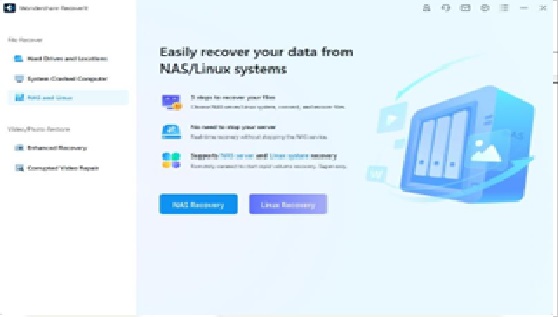
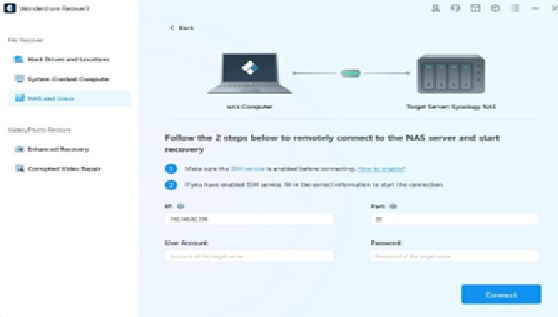
Step 2: Search for the NAS and Linux options in the left bar and click them. After that, click NAS Recovery.

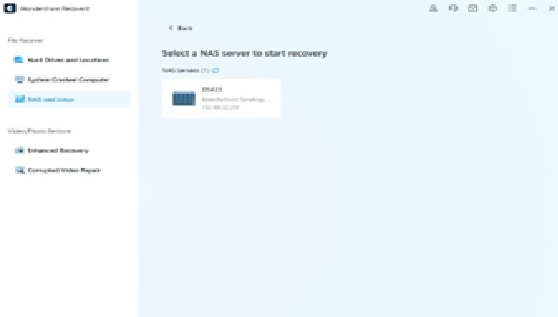
Step 3: Recoverit will search for the NAS storage device on which you lost the data. Once completed, you will see NAS detectable device under NAS Servers on your screen.

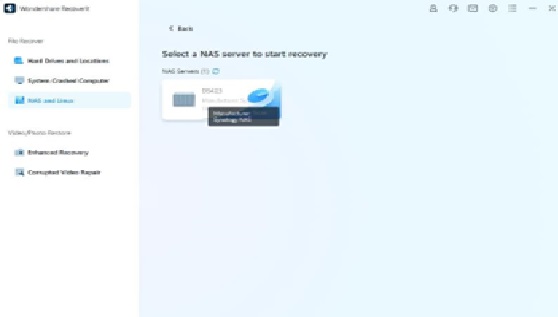
Step 4: Look for the device where you lost the data and click on it to move forward.

Step 5: Recoverit will develop a remote connection right after you press the Connect button. Scanning will then take place. Here, you need to fill the information to make the connection. Don’t worry, Recover is totally safe and all your data will be protected well.

Step 6: Once the scanning is completed, the software will allow you to preview the files you wish to return to your computer. Click Recover to start the restoration process. The software will ask you to select a path to save the restored data.

Conclusion

In conclusion, Network Attached Storage (NAS) devices are prone to data loss for various reasons, such as hardware failure, software corruption, accidental deletion, etc. Having a reliable data recovery solution to retrieve lost or deleted data is crucial.

Recoverit is an excellent option for recovering data from NAS devices, offering advanced features such as logical and physical data recovery, instant data recovery, and continuous data protection. With its user-friendly interface and affordable pricing, Recoverit is a highly recommended data recovery software for users who want to retrieve lost data from their NAS devices. Don’t let data loss be a setback, and give Recoverit a try today.