DD
MM
YYYY

PAGES

DD
MM
YYYY

spot_img

PAGES

Home Blog Page 4096

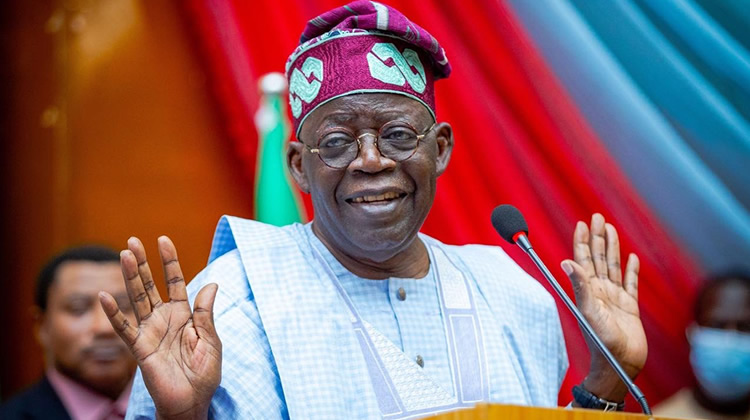
Supreme Court of Nigeria Upholds Tinubu’s Election Victory, Dismisses Atiku, Obi Appeal

0

Nigeria’s Supreme Court delivered a unanimous judgment on Thursday, upholding President Bola Ahmed Tinubu’s victory in the 2023 Presidential elections and dismissing the appeal filed by Alhaji Atiku Abubakar, representing the People’s Democratic Party (PDP), and Peter Obi, the Labour Party candidate. 

The Supreme Court ruled that the appeal lacked merit.

A seven-man panel of Justices led by Inyang Okoro upheld the judgment of the Presidential Election Petition Court, which had affirmed the election of President Tinubu. In the notice of appeal, Atiku had urged the apex court to set aside the September 6 judgment of the Presidential Election Petition Court, which had upheld the election of President Tinubu.

Justice Inyang Okoro, while reading the judgment, stated: “On the whole, having resolved all the issues against the appellant, it is my view that there is no merit in the appeal and it is hereby dismissed. The judgment of the court below delivered on September 6th, 2023, affirming the election of the second respondent as the duly elected President of the Federal Republic of Nigeria is hereby affirmed.”

The Supreme Court held that President Tinubu had secured the majority of lawful votes cast and that Atiku had failed to produce alternative results of the presidential election that demonstrated he had won the majority of lawful votes cast, which would invalidate the results declared by the Independent National Electoral Commission (INEC).

Additionally, the court ruled that the absence of the election results on the INEC Result Viewing Portal in real-time did not affect the outcome of the 2023 presidential election.

The Supreme Court also concurred with the Court of Appeal’s position that the Federal Capital Territory (FCT) was not different from other states, and the failure to obtain 25% of the vote in the FCT did not impact the overall results.

Furthermore, the Supreme Court dismissed Atiku’s request to use academic records obtained from Chicago State University as fresh evidence to establish forgery against President Tinubu. The court ruled that the issue of forgery was not covered by the seven issues Atiku had brought for determination and that the Constitution did not permit introducing such evidence.

“The jurisdiction of this court is donated by the constitution and the electoral act regarding election petition appeals. We cannot invoke section 22 of the Supreme Court act since the lower court has since lost its jurisdiction. Moreover, there is no paragraph in the petition to accommodate a case of forgery,” Justice Inyang Okoro stated.

Regarding the INEC results viewing portal (IReV), the Supreme Court acknowledged that its malfunctioning could affect voter trust, but it determined that the unavailability of IReV could not nullify the election results.

“The failure did not affect the outcome of the election. The issue is resolved against the appellants,” Justice Okoro said.

In response to questions about the significance of FCT’s performance, Justice Okoro asked, “Are you saying if someone scores 25% votes in 30 states but not in Abuja, he should not be president? Is that how you interpret the law? That is not the law. Supreme Court agrees with the Court of Appeal.”

This ruling by the Supreme Court effectively brings an end to the legal challenges against President Tinubu’s victory in the 2023 Presidential elections, confirming his position as the duly elected President of Nigeria.

However, reactions from Nigerians indicate that the majority were not expecting a different judgment from the Supreme Court, which they believe has been compromised.

A poll conducted by Peoples Gazette, a Nigerian online tabloid, on Wednesday, asked whether Nigerians expect the Supreme Court to base its decision on the 2023 presidential election petitions on merit and evidence or technicality. Over 60% of the respondents answered in favor of technicality. 

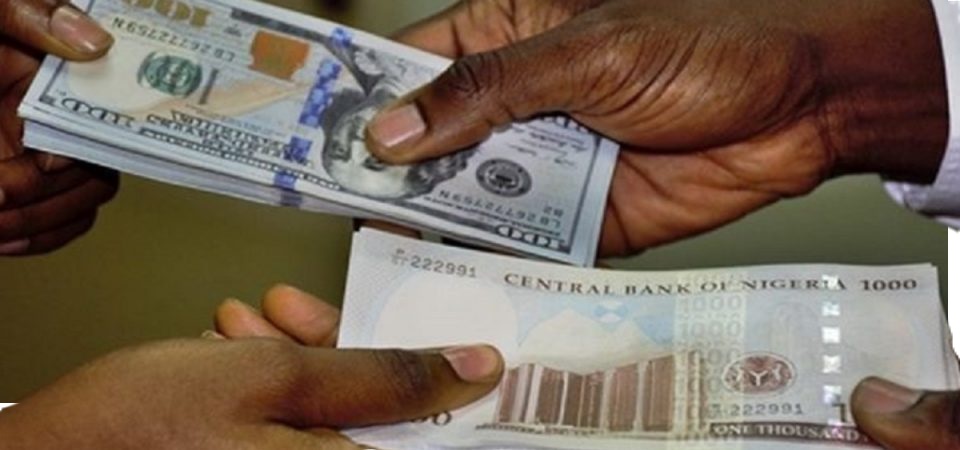
Looking at Naira Floating Policy And Why It Is Not Working

5

Good People, one of the things about my writing is that I write from a multifaceted angle, because my education was broad and deep. Like the lizard which jumped from the iroko tree, but none congratulated it, but which quickly commended itself for the feat, I do smile sometimes when my predictions come to pass. When Nigeria floated its currency, I wrote: “Nigeria’s floating of its currency, while progressive, will cause severe perturbations in the economy – and a stable state may not come as most experts have predicted.” As I write, after the floating reaction, Nigeria is still waiting for a stable state to come to pass, as the reaction is still happening, to the pains of manufacturers.

That call was against what JP Morgan, Goldman Sachs, Lagos bankers who hyped the impact in the stock market, etc, wrote. Floating the Naira is a very bad policy because we have no capacity to control the supply part of US dollars. We only need to remove the corruption in the forex administration, making sure official rates are used to enable production, not consumption. Yes, every economy subsidizes things and we can subsidize FX for manufacturers with the old regime, provided we remove the corruption in the process.

Let me quote a link from that my July 2023 post: “In his O’ Level textbook on economics, AO Lawal explained demand and supply and the movement of price on the demand-supply curve. If I apply what he explained in that book, floating naira with no capacity to earn USD dollars will kill Naira, because there is an asymmetric imbalance on demand and supply of USD in the Willing Buyer, Willing Seller nexus. In other words, two people may each have $100 to sell while twenty people want to buy each $100. If you do not close that number to near parity, the equilibrium point will keep shifting and I do not see how Naira will stabilize because demand outweighs supply here.”

Largely, the problem is not fuel subsidies, official/black market for Naira, etc, the issue is the corruption in their administrations. If we kill corruption, some of these policies are global standards in different ways. America may not have a black market, but check the last time it made profits in its postal service.That is subsidizing the supply chain.

My Response: Everything is a choice. Sometimes, not changing something is also a choice. We have opportunity cost to play here. You needed money to deal with the official black market regime. Today, you also need money to stop Naira crashing (Afreximbank, etc loans). Check well, you are still doing the same thing, after you have wiped values in pensions and savings with the FX movement. There is no way floating will work because DEMAND is more than Supply and someone has to compensate for that imbalance.

Unlock 10x Returns in 2024 with Hedera, Lido Dao, and Scorpion Casino Token

0

In the world of cryptocurrency, the hunt for the next big project is a relentless pursuit. The good news is, your search might just be over once you read this article. Here are three tokens that promise to not just catch your attention but redefine the crypto landscape for the foreseeable future.

  1. Scorpion Casino Token
  2. Hedera
  3. Lido DAO

1.  Scorpion Casino Token – Where Gaming Meets Crypto

Scorpion Casino Token is the fusion of blockchain technology and online gaming, taking crypto entertainment to the next level. It’s not just about investment; it’s about having a great time with online gambling and the added benefit of crypto tokenization. The platform is fully accessible and regulated by the Curacao EGaming Authority, ensuring credibility and accountability. But that’s not all; the Scorpion team is all about innovation and community incentives. They have a whopping 250k Giveaway reserved exclusively for SCORP presale holders. And if that’s not enough, presale holders can enjoy daily passive staking income added to their wallets, even during the presale period.

2.  Hedera (HBAR) – One Of The Stand Out Players

Hedera Hashgraph, or HBAR, is making waves in the booming DeFi crypto sector. It’s not just another token; it’s a versatile platform that facilitates transactions and application development, overseen by a consortium of industry giants. What sets HBAR apart is its distinctive approach to transaction finality. By prioritizing selected nodes in determining transaction history, it ensures rapid finality and minimizes the potential for changes. What’s even more impressive is that major players like LG, IBM, and Boeing are part of this system. Founded by Leemon Baird and Mance Harmon, Hedera is emerging as a significant player in the crypto investment arena.

3.  Lido Dao (LDO) – Changing the Game in Staking

Lido Dao (LDO) is rewriting the rules in the crypto world by addressing the staking challenges of Ethereum. Launched just before Ethereum’s “Merge,” Lido’s Liquid Staking innovation is a game-changer. It enables users to overcome the 32 Ether staking requirement, offering access to the locked value of staked tokens via stTokens. This approach provides users with flexibility to participate in the DeFi market and boost their returns. Lido doesn’t stop at Ethereum; it’s expanding to support other Proof of Stake blockchains like Polygon and Solana. Governed by the LDO token, Lido simplifies decentralized staking for a broader audience.

Limited Time Only Bonus Code!

Your Ticket To Crypto Success

Exploring Hedera (HBAR), Lido Dao (LDO), and Scorpion Casino Token (SCORP) reveals a vibrant tapestry of crypto innovation. Each token brings unique features and solutions, shaping the ever-evolving landscape of decentralized finance and blockchain technology. As the crypto journey unfolds, these tokens remain at the forefront of innovation, unlocking the future of the digital economy.


Find out more:

Presale: https://presale.scorpion.casino/

Twitter: https://twitter.com/ScorpionCasino

Telegram: https://t.me/scorpioncasino_official

Two Interesting Recommendations from Nigeria’s Presidential Tax Reform Report

0
The coat of arm of Nigeria

The Presidential Fiscal Policy and Tax Reforms Committee has submitted its report, chronicling ways Nigeria can use taxation and other means to fix its economic paralysis. Here are the two most interesting:

  • “Expand the official foreign exchange market to incorporate BDCs, forex apps, and retail fx dealers, and outlaw transactions in the black market”. Yes, government will OUTLAW black market. How do you do that? It may even be illegal to do so (I agree that I know nothing about law).

-“Imposition of excise tax on foreign exchange transactions outside the official market”. In other words, make black market more expensive by adding tax components to it. I am not sure how the government will do that as people exchange Naira and US dollars under the mango tree.

Good People, people willingly pay taxes when taxes are working in their lives. Let’s pursue that symbiotic relationship in Nigeria.

The Presidential Fiscal Policy and Tax Reforms Committee was established by the government. The committee’s purpose is to review and advise on reforms to Nigeria’s fiscal policy and tax system. The committee’s terms of reference include: Fiscal governance, Revenue transformation, Economic.

The objectives of the tax reforms include: 

  • Improving service delivery to the public
  • Boosting non-oil tax revenue
  • Consistently reviewing tax laws to curb tax evasion and avoidance
  • Improving tax administration
Nigeria is aiming to reduce the number of taxes levied by federal and state governments from more than 60 to fewer than 10. This is part of changes to make it easier to conduct business and to boost revenues.

Microsoft CEO Satya Nadella Says Giving Up On Windows Phone And Mobile Was A Mistake

0

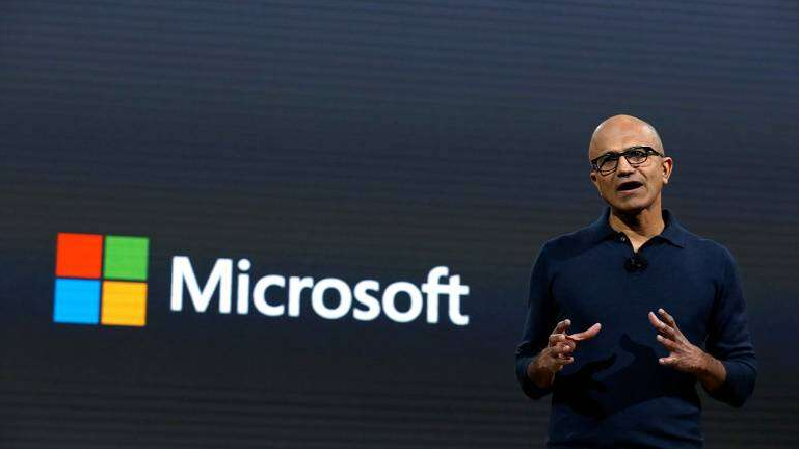
Microsoft CEO Satya Nadella has become the third chief executive of the technology giant to openly admit to the company’s significant missteps in the mobile industry.

Nadella, who succeeded former CEO Steve Ballmer in 2014, recently discussed Microsoft’s challenges in the mobile sector, particularly the handling of the acquisition of the Nokia phone business.

In an interview with Business Insider, Nadella admitted that Microsoft’s exit from the mobile phone business could have been managed more effectively.

When asked about a strategic mistake or regrettable decision during his tenure, Nadella responded: “The decision I think a lot of people talk about — and one of the most difficult decisions I made when I became CEO — was our exit from what I’ll call the mobile phone business as it was defined back then. In retrospect, I think there could have been ways we could have made it work by perhaps reinventing the category of computing between PCs, tablets, and phones.”

Microsoft’s foray into the mobile industry faced numerous challenges, including the ill-fated acquisition of Nokia’s phone business, which resulted in a $7.6 billion write-off a little over a year after Nadella took the helm.

Microsoft officially declared the end of Windows Phone a few years after the Nokia write-off. Despite subsequent attempts with products like the Android-powered Surface Duo and Surface Duo 2 handsets, the company has not outlined a clear mobile strategy. The lack of software updates and a successor for the Surface Duo have left questions about Microsoft’s future in the mobile space.

Satya Nadella is not the first Microsoft CEO to acknowledge the company’s mobile missteps. Bill Gates, Microsoft’s co-founder and former CEO, referred to losing to Android as his “greatest mistake ever.” Google acquired Android in 2005 for $50 million. Former Google CEO Eric Schmidt admitted in 2012 that their initial focus was competing with Microsoft’s early Windows Mobile efforts.

Former Microsoft CEO Steve Ballmer also recognized the company’s slow response to the Android and iPhone threat. Ballmer initially focused on Windows Mobile and famously dismissed the iPhone as the “most expensive phone in the world” that didn’t appeal to business customers due to its lack of a physical keyboard.

In 2013, Ballmer expressed regret about not prioritizing the development of mobile devices earlier, stating, “I regret there was a period in the early 2000s when we were so focused on what we had to do around Windows [Vista] that we weren’t able to redeploy talent to the new device called the phone. That is the thing I regret the most.”

In recent years, Microsoft has shifted its focus to developing apps for Android and iOS platforms, including Microsoft Office suites. The company has been continually updating its Phone Link app to connect Android and iPhone devices with Windows.

Moreover, Microsoft has established close partnerships, such as with Samsung, to preinstall mobile Office apps on Android handsets, showcasing the company’s evolving strategy in the mobile landscape.

It’s been a tough week for the “Magnificent Seven” — Apple, Meta, Amazon, Alphabet, Nvidia, Tesla and LinkedIn parent Microsoft — as lower-than-expected quarterly earnings took $200 billion from their market value. Amid conflict in the Middle East and higher interest rates at home, the AI-fueled optimism of earlier in the year has cooled, says Bloomberg, pushing the S&P 500 down 8.8% from its 2023 peak and raising the specter of a correction. Alphabet alone saw its “biggest single-session market value wipeout” on Wednesday, losing about $180 billion in value after reporting smaller-than-expected profit for its cloud division.