DD
MM
YYYY

PAGES

DD
MM
YYYY

spot_img

PAGES

Home Blog Page 41

NCAAF Playoff Odds: How Digital Platforms Shape Fan Behavior

0

In recent years, digital platforms have changed the way fans interact with college football. Fans no longer have to wait until game day to place bets or track odds. Everything is now accessible with a few taps on a smartphone or clicks on a website. These platforms provide real-time updates on playoff odds, team statistics, and injuries. This instant access keeps fans engaged and encourages more frequent participation.

Digital platforms also make it easier for casual fans to get involved before, following playoff odds required visiting multiple websites or relying on televised reports. Now, everything is consolidated in one place, making the experience simpler. Fans can compare lines across different sportsbooks and make more informed decisions. The convenience of these platforms has created a new level of interaction for college football enthusiasts.

Tracking Odds and Team Performance

Playoff odds are constantly updated based on team performance, which keeps fans invested throughout the season. Every win, loss, or upset can shift the probability of a team making the playoffs. Digital platforms highlight these changes instantly, allowing fans to react quickly. This transparency gives fans a sense of control over their own predictions. They can monitor how FanDuel CFB playoff odds move and adjust their bets accordingly.

Team statistics are another feature that attracts users to digital platforms. Metrics such as offensive efficiency, turnovers, and defensive rankings are easily accessible. Fans can analyze these numbers and compare them with playoff odds. This makes following college football more interactive and educational.

Social Interaction and Community Influence

Many digital platforms include social features that connect fans from across the country. Discussion boards, comment sections, and live chats allow fans to share predictions and debate odds. Seeing other people’s opinions can influence fan behavior. It encourages greater engagement and often leads to increased betting participation. The sense of community adds an extra layer to the fan experience.

Peer influence also shapes how fans approach playoff odds. Users are exposed to trending bets or popular teams, which can affect their own choices. Fans may be more likely to support a team if they see widespread excitement online. This creates a feedback loop where digital platforms amplify certain trends.

Accessibility and Convenience

One of the biggest factors driving fan behavior is accessibility. Digital platforms remove traditional barriers to entry, making it easier for fans to track playoff odds at any time. Fans can follow multiple teams and conferences without leaving home. Notifications and alerts keep users informed of sudden changes. This level of convenience encourages more consistent engagement throughout the season.

Accessibility also extends to educational resources. Many platforms offer guides, explanations, and tips to help you understand playoff odds. Fans can learn at their own pace and gradually build confidence in their predictions. This support helps new users feel comfortable joining the conversation. The result is a broader, more involved fan base. Platforms are turning casual followers into active participants.

Real-Time Updates and Decision-Making

The real-time nature of digital platforms significantly affects fan behavior. Fans can adjust their bets or predictions immediately after a big play. This constant flow of information keeps users glued to the platform. Traditional reporting methods no longer delay decisions. Fans appreciate the ability to act quickly and stay ahead of season changes.

Real-time updates also encourage strategic thinking. Fans can monitor playoff odds and plan their picks based on trends. This dynamic environment keeps the experience exciting. It creates a sense of immediacy and stakes that were harder to achieve in the past. Fans feel more involved when their decisions have immediate consequences.

Transparency and Trust

Digital platforms provide transparency that shapes fan expectations. Fans can see exactly how odds are calculated and updated. This clarity builds trust and encourages continued use. When users understand the reasoning behind odds, they feel more confident in their decisions. Platforms that maintain accurate and clear information are more likely to retain their audience.

Transparency also reduces confusion around complex playoff scenarios. Fans can track multiple variables at once, from conference standings to tie-breaking rules. This accessibility makes it easier to navigate to the playoffs. A trustworthy platform keeps fans engaged season after season.

The Impact on Fan Loyalty

Digital platforms influence not just behavior, but also fan loyalty. Fans who regularly interact with playoff odds develop deeper connections to their favorite teams. They become more invested in outcomes and more likely to follow the entire season. This engagement can translate into long-term support. Teams that consistently appear in playoff discussions may see increased fan attention.

Frequent interaction also encourages a more informed fan base. Fans learn to analyze trends, interpret statistics, and anticipate changes. This knowledge strengthens their connection to the sport. They are no longer passive spectators but active participants. Digital platforms have redefined how loyalty is built in college football.

Looking Ahead

As digital platforms continue to evolve, their influence on fan behavior will only grow. Fans now expect instant updates, interactive features, and easy access to playoff odds. The convenience and engagement they provide set a new standard for the sport. The relationship between fans and digital platforms is becoming central to the sport. Playoff odds are no longer just numbers on a page—they are part of a larger conversation and community. Fans can participate, react, and share like never before. The season is now an interactive experience for millions of users.

How to Stand Out in a Competitive Job Market Without Overcomplicating Things

0

In today’s fast-moving hiring landscape, competition is higher than ever. Candidates often feel pressure to present themselves as extraordinary or overly polished, but the truth is simpler: you don’t need to reinvent yourself to be noticed. You only need clarity, relevance, and consistency. Standing out isn’t about being flashy. It’s about being easy to understand, easy to remember, and easy to hire.

Below is a practical, straightforward guide to differentiating yourself without adding unnecessary complexity to your job search.

Why Simplicity Works Better Than Ever

Many job seekers assume they must do more—more skills, more courses, more achievements—to stay competitive. However, overloaded profiles, complicated narratives, and cluttered resumes often confuse hiring managers rather than impress them.

Employers want to understand who you are at a glance. They want to quickly see whether you fit the role, the team, and the organization. When your message is clear and your strengths are obvious, you naturally rise above the noise.

Start With a Clear Professional Identity

A strong job search begins with a solid, simple professional identity. This means defining:

  • What you do best

  • What problems you solve

  • Who benefits from your work

This is not a tagline or a slogan. It’s the foundation of your professional presentation. When you communicate your identity consistently across your resume, LinkedIn, cover letter, and interviews, you become recognizable. And recognizability builds trust.

How to Simplify Your Message

Ask yourself:

  • If someone described me professionally in one sentence, what would I want it to be?

  • Which strengths show up repeatedly in my past roles?

  • What feedback do I consistently receive?

Write down a short, clean statement that reflects what you bring to the table. This clarity helps employers instantly understand your value without digging for it.

Use a Resume That Reflects Clarity and Relevance

Even in a highly digital hiring world, resumes still play a central role. They remain the first filtering tool employers rely on, and a clean, simple resume is often more persuasive than a complicated one.

You don’t need fancy design or long paragraphs. You need structure, keywords, and relevance. This is where tools like LiveCareer’s pro CV builder can make the process easier by helping you organize your experience in a clear, readable format without adding unnecessary fluff.

Keep It Direct

A strong resume should:

  • Use concise bullet points

  • Highlight results rather than duties

  • Keep formatting clean and professional

  • Tailor content to each application with minimal adjustments

A well-crafted resume signals professionalism before an employer even starts reading.

Focus on Skills That Truly Matter

It’s tempting to list every skill you’ve ever touched. But the most competitive candidates focus on skills that are both relevant and valuable.

Employers aren’t looking for the longest list—they’re looking for alignment. You stand out by choosing the right skills, not the most skills.

Reduce to Essentials

Instead of creating an exhaustive list, identify:

  • 3–5 core strengths

  • 3–5 supporting or complementary skills

This combination paints a clear picture of what you can do without overwhelming readers.

For example, if you’re applying for a customer support role, highlighting empathy, communication, and problem-solving matters far more than listing unrelated software tools you seldom use.

Demonstrate Your Value Through Simple, Real Examples

Stories matter. They show how you think, communicate, and solve challenges. But these stories don’t need to be dramatic or overly detailed. Short, structured examples make a powerful impact.

Use the “Situation ? Action ? Result” Method

This three-step approach works in resumes, interviews, and networking:

  • Situation: What was happening?

  • Action: What did you do?

  • Result: What changed because of it?

A few lines are enough. Keep it simple and specific. Employers appreciate clarity far more than complexity.

Stay Consistent Across Your Digital Presence

Inconsistent information confuses employers. A clean, cohesive online presence strengthens your credibility.

Check the following:

  • Your LinkedIn headline should match your resume’s identity.

  • Your work dates, job titles, and responsibilities should be aligned.

  • Your professional tone should feel steady and intentional across platforms.

When everything feels connected, you appear confident and self-aware—qualities hiring managers value highly.

Show Personality Without Overdoing It

You don’t need to be overly personal or quirky to stand out. You only need to show that you’re human, approachable, and professional.

Ways to Add Subtle Personality

  • Use a friendly, natural tone in your LinkedIn “About” section.

  • Add a short personal interest at the bottom of your resume if appropriate.

  • Share thoughtful posts or comments relevant to your industry.

These small touches make you more memorable without overshadowing your experience.

Build Strong, Simple Networking Habits

Networking is not about aggressive selling or nonstop event-hopping. It’s about building genuine, steady relationships. A few well-maintained connections are far more valuable than dozens of superficial ones.

Keep It Manageable

Try these simple practices:

  • Message a previous colleague once a month to check in.

  • Join one online community in your field and participate occasionally.

  • Connect with people after events and send a short thank-you message.

Consistency matters more than volume. Over time, these small actions create opportunities naturally.

Stay Current Without Overloading Yourself

Learning is essential, but oversaturating yourself with certifications and courses won’t necessarily make you stand out. Employers care more about applied knowledge than theoretical accumulation.

Choose Learning With Intention

Instead of chasing every trending skill, pick areas that truly support your goals. This might mean:

  • One high-impact course instead of three basic ones

  • Practicing what you learn through small projects

  • Reading industry news weekly rather than daily

The key is to stay updated while staying grounded.

Embrace a Calm, Steady Job Search Strategy

Overcomplication usually leads to burnout. The job search becomes easier when you focus on fewer, higher-impact actions repeated consistently.

A simple, effective weekly structure might look like this:

  • 2 tailored applications

  • 1 networking activity

  • 1 small skills update

  • 1 resume or LinkedIn refinement

This routine keeps momentum strong without overwhelming you. Slow and steady progress often leads to faster results than intense but inconsistent effort.

Conclusion

Standing out in a competitive job market doesn’t require elaborate strategies or dramatic reinventions. It requires clarity, relevance, and consistent communication. When you simplify your message and present your strengths with intention, you naturally become more noticeable—and more hireable. Focus on what truly matters, keep your approach clean and human, and allow your genuine value to shine through.

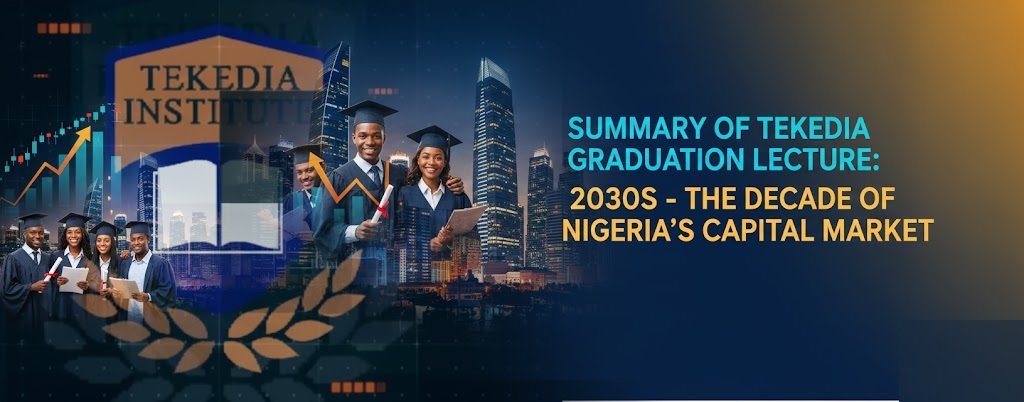
Summary of Tekedia Graduation Lecture: 2030s – The Decade of Nigeria’s Capital Market

0

“Capital markets are the factories of wealth. When nations build them well, prosperity follows the citizens” – Ndubuisi Ekekwe

The central thesis of the lecture is that every decade in Nigeria’s economic life has been defined by a dominant innovation arc, and the 2030s will belong to the capital market—driven by regulatory modernization, technology, and a new class of assets enabled by the Investment and Securities Act (ISA) 2025.

The lecture begins by tracing Nigeria’s transformation timelines. The 1990s delivered the new-generation banks, which used VSAT-powered connectivity to outcompete the legacy institutions by making banking “location-agnostic.” In the 2000s, GSM operators democratized voice telephony and created a mass market for mobile communications. By the 2010s, the telcos became internet utilities, enabling fintech, content distribution, on-demand banking, and mobile learning. Today, in the 2020s, the nation is witnessing a Cambrian explosion of digital applications in  payments, logistics, mobility, lending, and software services, driven by young innovators combining digital primitives to solve market frictions.

Upon these pillars, the next frontier of economic transformation will happen. Yes, the 2030s will be the Decade of Capital Market Expansion, unlocking Nigeria’s trapped wealth and enabling large-scale asset formation, fractionalization, liquidity creation, and investment democratization. The transformational trigger for this shift is the Investment and Securities Act of 2025, described as the most consequential legislation in Nigeria’s business landscape in the last 25 years. ISA 2025 provides the legal foundation for new asset classes, digital securities, derivatives, commodities trading modernization, private market infrastructure, and blockchain-based market utilities. With this enabling architecture, Nigeria can now build a multi-layered capital market ecosystem comparable to NASDAQ, NYSE, JSE, and LSE.

The lecture notes that South Africa’s stock market exceeds $1 trillion, while Nigeria’s remains under $70 billion, not because Nigeria lacks economic activity but because Nigeria has not historically created many investable asset classes. With ISA 2025, everything from mortgages, royalties, commodities, energy credits, insurance risk pools, municipal bonds, infrastructure notes, agricultural futures, and digital asset-backed securities can become part of the national portfolio.

Prof. Ndubuisi Ekekwe explains that wealth is a product of asset formation, not merely entrepreneurial energy. Without a robust capital market, capital cannot scale; without liquidity, innovation cannot compound. The 2030s will therefore witness the rise of new financial market infrastructures: blockchain clearing systems, digital depositories, all-hours trading, regulated private markets, stablecoin-backed settlements, and transparent derivatives platforms that will derisk sectors like agriculture, housing, and manufacturing.

He highlights how global exchanges operate diverse product lines like from ETFs, REITs, ABS, MBS, commodities futures, FX options, carbon credits, structured notes, ADRs/GDRs, municipal securities, and more. Nigeria currently offers only a fraction. The 2030s will change that.

The lecture concludes by urging Nigerian innovators, professionals, policymakers, and investors to prepare for a new era where finance becomes the fuel for national reconstruction. With the right institutions, Nigeria’s capital market can unlock hundreds of billions of dollars in domestic and diaspora capital, deepen industrial capacity, fund infrastructure, and accelerate national development. The graduates are encouraged to see themselves not only as business builders but also as participants in a historic redesign of Nigeria’s financial destiny as we prepare for a Decade of Capital Market Abundance.

The Importance of Regular Financial Checkups

0

You get a health check-up each year. You also change the oil in your car. But what about your money? Your finances need attention, too. This is where a financial check-up comes in. It is a simple way to ensure you are on track.

Financial checkups are not hard. You just need some time to look at your whole financial life. It is a wise habit that helps you save a lot in the long run. Here is a detailed explanation of why this routine is the key to your peace of mind.

What is a Financial Checkup?

Think of a financial plan as a full scan of your earnings and spending. You look at what you have and what you owe. You check your budget, debts, savings, and assets. The goal behind this is to see where you stand so you can plan your next move accordingly. Reviewing your finances is essential to ensure your money is working for you.

Why are Financial Checkups Important?

Your financial life moves fast. But a regular check keeps you in control and on the path to your goals. Here is why financial checkups are important.

1.       Set and Reevaluate Goals

Your goals shift over time. What you wanted last year might not matter now. A financial check-up helps you see if your aims still match your goals. Maybe you have repaid a car loan, and now you want to save for a new house.

However, when reviewing your finances, keep in mind that a major goal is retirement planning. You have to save for your later years. But if you are a Tempe resident and feeling overwhelmed in setting and reevaluating your goals based on your needs, worry not. Seek help from a professional who offers retirement planning in Tempe. Their experts will better guide you.

2.       Manage Debt and Budget

Debt can significantly affect your finances. But a financial check-up makes you face it. It lets you check if your card balances are going down and your budget is still perfect. After reviewing these statements, you may find you spend too much on fun and can then fix it fast.

3.       Prevent Overspending

You must keep in mind that your small buys add up. Those coffee bills, that shirt you purchased, and the book you bought, all can significantly affect your monthly budget.

However, a financial check-up shows you the real picture of where every dollar goes. You see your earnings and spending clearly. This ultimately makes you more careful, allowing you to cut the extra expenses.

How Often Should You Review Your Finances?

Once a year is an ideal timeline to review your finances. But a quick look each month is a smart approach. You can check your budget monthly to see if you spent too much.

The yearly financial checkup is to look at your goals, debt plan, and your investments. On the other hand, a monthly review ensures you are not overspending.

Conclusion

Your financial health has a significant impact on your overall life. And a regular financial check-up is the best way to protect it. This review gives you power. You cut out the extra spending and move to building the future you want. So you must mark a date on your calendar now and review your finances annually.  Your future self will thank you for this act of care.

Saylor’s Enigmatic Post Triggers Rapid Bitcoin Rally Amid Evolving MicroStrategy Policies

0

Bitcoin staged a sharp rally early Monday after a cryptic message from MicroStrategy’s CEO Michael Saylor ignited a wave of speculation across the market.

Saylor on his X profile posted, “Back to Orange Dots?” His post teases at a potential new Bitcoin purchase by Strategy, referencing “orange dots” as markers for their acquisition events on a StrategyTracker chart showing 659,000 BTC held at a $57.8 billion valuation.

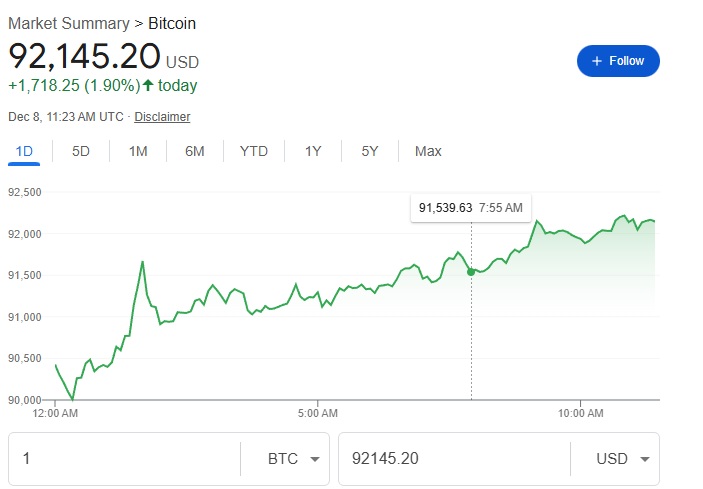
This single enigmatic post from Saylor sent Bitcoin soaring by more than $4,000 in under three hours, driving the asset from just below $88,000 to above $91,000. The reaction underscored how strongly the executive chairman’s remarks continue to sway market sentiment even as broader indicators remain locked in extreme fear.

Strategy’s “Orange and Green Dots” Tracking System

The strategy color-coded tracking system has become a key signal for crypto observers. The “orange dots” represent each Bitcoin purchase by MicroStrategy, displayed on the company’s tracker portfolio chart. Every dot marks another addition to its long-running accumulation strategy.

Alongside these markers, a green line tracks the company’s average purchase price, a benchmark for gauging portfolio performance. As of December 8, MicroStrategy held 650,000 BTC valued at roughly $57.80 billion, with an average cost of $74,436 per coin. This position reflected a 19.47% gain, amounting to about $9.42 billion in unrealized profits.

As at 6.27am New York, 12/8/2025

Recently, Saylor introduced “green dots,” prompting speculation about a strategy shift. The green dashed line showing the average cost has drawn increased attention, with some analysts suggesting that renewed or heavier buying could push it higher.

MicroStrategy’s holdings, acquired at an average $74,436 per BTC, underscore their leveraged accumulation approach, drawing both praise for bold HODLing and criticism for shareholder dilution risks. Last week, the company announced the establishment of a USD Reserve of $1.44 billion to support the payment of dividends on its preferred stock and interest on its outstanding indebtedness (“Dividends”).

The USD Reserve was funded using proceeds from the sale of shares of class A common stock under Strategy’s at-the-market offering program. Strategy’s current intention is to maintain a USD Reserve in an amount sufficient to fund at least twelve months of its Dividends, and intends to strengthen the USD Reserve over time, with the goal of ultimately covering 24 months or more of its Dividends.

The maintenance of this USD Reserve, as well as its amount, terms, and conditions, remains subject to Strategy’s sole and absolute discretion and Strategy may adjust the USD Reserve from time to time based on market conditions, liquidity needs, and other factors.

Commenting on it, CEO Saylor said, “Establishing a USD Reserve to complement our BTC Reserve marks the next step in our evolution, and we believe it will better position us to navigate short-term market volatility while delivering on our vision of being the world’s leading issuer of Digital Credit”.

Strategy is the world’s first and largest Bitcoin Treasury Company. The treasury strategy is designed to provide investors with varying degrees of economic exposure to Bitcoin by offering a range of securities, including equity and fixed-income instruments.

CEO Phong Le acknowledged that the company may consider selling Bitcoin if its stock falls below 1x modified Net Asset Value and external capital cannot be raised. With mNAV having dipped to 0.95 in November 2024, the scenario is no longer theoretical.

This marks a notable departure from the firm’s earlier “never sell” philosophy. Rising annual dividend obligations estimated between $750 million and $800 million—are forcing a reassessment of liquidity options. As a result, MicroStrategy’s role in the market is increasingly being compared to that of a leveraged Bitcoin ETF. Meanwhile, the company’s stock has dropped more than 60% from its peak, raising questions about how sustainable aggressive accumulation will be during high-volatility periods.

Outlook

Despite the sudden rally in the price of Bitcoin, overall market sentiment has remained cautious. The Fear and Greed Index continued to signal anxiety, even though trader positioning leaned bullish.

The contrast between fearful sentiment indicators and bullish trader positioning highlighted the market’s current psychological divide: fear persists, yet many traders are willing to bet on momentum, especially when triggered by influential Bitcoin holders.

Meanwhile, former BitMEX CEO Arthur Hayes, has noted that Bitcoin is poised for lift-off as key bullish catalysts kick in.