DD
MM
YYYY

PAGES

DD
MM
YYYY

spot_img

PAGES

Home Blog Page 411

With BWT Alpine F1® Team Sponsorship, BlockDAG Emerges as the Top Crypto for 2025, Leaving Arbitrum & Mantle Lag Behind

0

The contest for dominance is heating up as major networks push for attention in 2025. Arbitrum (ARB) price prediction points toward a potential move above $0.63, while Mantle (MNT) updates showcase its rise as the largest ZK rollup by total value locked. Even so, BlockDAG has managed to capture the spotlight.

With $415+ million raised in presale, a limited-time price of $0.0013 in Batch 30, and a confirmed $0.05 launch target, BlockDAG (BDAG) has paired financial momentum with cultural presence. Its multi-million-dollar BWT Alpine F1 team sponsorship, 3 million+ X1 app miners, and more than 20k X-Series miners put it firmly in the race for the title of top crypto for 2025.

Arbitrum Forecast Points to Key Breakout Zone

Arbitrum has shown steady strength, holding above support at $0.48 and trading near $0.52. Analysts are watching the $0.55 to $0.57 resistance as the next step, with a breakout opening the door to retest $0.63. This level marks the upper end of its current trading range.
The optimistic Arbitrum (ARB) price prediction is backed by a strong foundation. Its DeFi ecosystem has climbed past $4B in total value locked, underlining liquidity growth and active participation. Technical signals, including narrowing Bollinger Bands, suggest that volatility could soon expand, leading to a stronger rally.

Still, Arbitrum faces the challenge of sustaining performance beyond short bursts. It remains well-placed in Ethereum’s scaling market, but whether it can secure a spot as a top crypto for 2025 depends on long-term user growth and consistent demand.

Mantle Evolves Into the Largest ZK Rollup

Mantle has moved forward with a major upgrade, shifting fully into a ZK Rollup through OP Succinct. This change combines optimistic rollup efficiency with the added protection of zero-knowledge proofs, pushing Mantle to the top of the ZK Layer 2 rankings with more than $2B in total value locked.

The upgrade strengthens Mantle’s identity as the “liquidity chain.” With new features such as 1-hour finality and 12-hour withdrawals, the network is aiming at institutional adoption. Its dual security model also stands out, blending ZK proof-based finality with Threshold Signature Scheme staking for added safety.

The market reaction has been strong. Mantle’s token $MNT recently reached an all-time high of $1.75, giving it a fully diluted valuation of $10.5B. Among Layer 2 projects, it is the only one in 2025 to set a new record. Analysts note that Mantle’s path could make it a contender for top crypto for 2025, though it faces ongoing pressure from rivals like Arbitrum.

BlockDAG Blends BWT Alpine F1® Team Sponsorship With Miner Growth

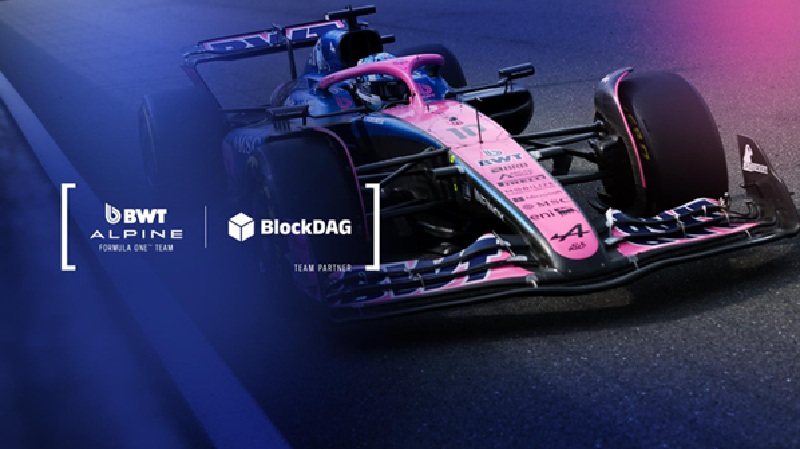
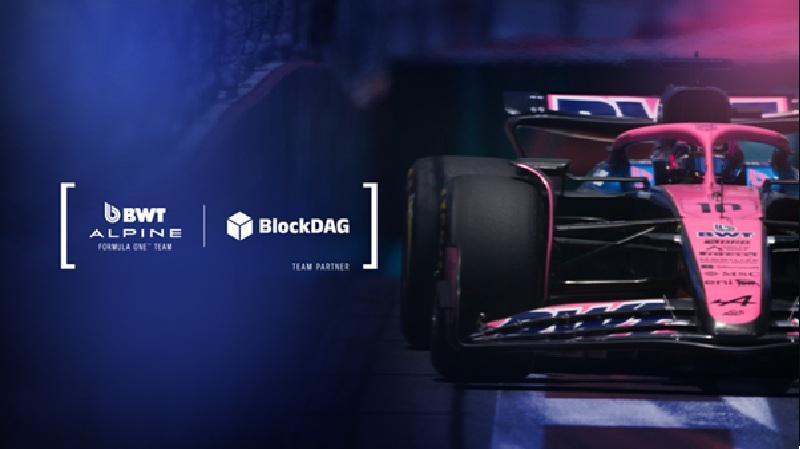
While Arbitrum and Mantle continue building Ethereum scaling layers, BlockDAG has chosen a different route by combining culture with technology. Its long-term BWT Alpine F1 team partnership with the Renault Group’s BWT Alpine team names it the exclusive Layer-1 Blockchain & DAG partner of Formula 1®.

The agreement, worth multi-millions and performance bonuses, secures branding on BWT Alpine F1 team race cars, virtual racing platforms, and fan experiences. Beyond visibility, the partnership stretches into BWT Alpine’s RISE+ app with co-branded content, merchandise, and behind-the-scenes features, making BlockDAG part of a global sport followed by billions.

The sponsorship boosts credibility, but the ecosystem tells its own story. More than 3 million users mine through the X1 app, while over 20k X-Series miners are being distributed worldwide. Together, they build a decentralised foundation that powers BlockDAG’s hybrid Proof-of-Work and Proof-of-Engagement structure.

From a numbers standpoint, BlockDAG has raised $415+ million in presale, with Batch 30 coins available at $0.0013 and a confirmed listing price of $0.05. These figures show a clear path for upside potential.

Upcoming exchange listings add liquidity at launch, while tools such as the BlockDAG Explorer give users live access to transaction data and mining activity. This mix of accountability and transparency places BlockDAG in a unique position. In discussions about the top crypto for 2025, the project blends cultural recognition, adoption scale, and a reputation for openness, giving it a distinct advantage.
Closing View

Arbitrum (ARB) price prediction models suggest a rally could follow if resistance at $0.63 is broken. Meanwhile, Mantle (MNT) updates confirm its move into the largest ZK Rollup, strengthening its claim as a serious player in Ethereum’s scaling landscape. Both show potential, but they lack the cultural reach and community base that BlockDAG has built.

With $415+ million raised, a Batch 30 entry at $0.0013, and a confirmed $0.05 launch target, BlockDAG is more than a presale milestone. Its BWT Alpine F1 team sponsorship ensures global reach, while its 3 million+ X1 app miners and 20k+ X-Series miners reinforce a strong and decentralised system. Transparency tools such as the BlockDAG Explorer highlight credibility at a time when trust is vital.

For those considering the top crypto for 2025, BlockDAG is positioning itself not only as a coin but as a cultural and technical force prepared for mainstream relevance.

Presale: https://purchase.blockdag.network

Website: https://blockdag.network

Telegram: https://t.me/blockDAGnetworkOfficial

Discord: https://discord.gg/Q7BxghMVyu
From BlockDAG’s BWT Alpine Formula 1® Team Partnership to Stellar’s Protocol & Monero’s Upgrade

0

BlockDAG has already raised nearly $415 million in its presale, sold over 26.5 billion coins, and is currently listed at a special price of $0.0013 for a limited time. Its newly signed multi-year partnership with the BWT Alpine Formula 1® Team gives BlockDAG (BDAG) unmatched visibility through high-profile fan zones, simulators, and digital/Web3 integrations, positioning it among the most popular crypto coins of 2025.

Stellar has implemented upgrades such as Protocol 23, the integration of PayPal USD (PYUSD), and engaged in discussions with asset management firms that strengthen its role in payments. Meanwhile, Monero continues to battle regulatory pressure while preparing for its Seraphis upgrade. For those evaluating what crypto to invest in, these three projects showcase very different strategies across visibility, payments, and privacy.

BlockDAG: Visibility Through BWT Alpine Formula 1® Team Partnership

BlockDAG’s partnership with the BWT Alpine Formula 1® Team is more than a marketing campaign. It positions the network in front of Formula 1®’s global audience, which counts hundreds of millions of fans. Activations include on-track interactive zones, racing simulators, developer hackathons, and community-driven digital integrations. These efforts highlight BlockDAG not only as a high-performance Layer-1 but also as a blockchain that users can directly experience.

For developers, this brings credibility, as building on BlockDAG offers both technical scalability and a brand narrative backed by one of the most prestigious sports in the world. For institutions, it signals a platform that can transcend crypto speculation by embedding itself into mainstream culture. By combining the presale success of nearly $415 million with tangible experiential growth, BlockDAG is set apart among the top crypto assets in 2025.

The BDAG coin has already surged 2,900% since its initial release, bringing substantial returns to early holders. BDAG coins are available at just $0.0013 for a limited time. Compared to its confirmed launch price of $0.05, that’s over 3,000% ROI for anyone who joins the presale now.

Stellar: Payments Utility Gains Speed

Stellar has long positioned itself as a leader in cross-border payments, and recent upgrades solidify that reputation. The activation of Protocol 23 in September 2025 enhanced transaction throughput and reduced fees through Soroban smart contract execution, thereby strengthening the network’s technical foundation. The integration of PayPal USD (PYUSD) opened the door for faster and cheaper stablecoin transactions, while ongoing talks with asset managers and payments firms add institutional relevance.

Source: Crypto Exchange

These moves give Stellar clear momentum as one of the most popular crypto for real-world utility, particularly in financial infrastructure. Its strength lies in payments and fintech integration rather than fan-driven cultural visibility. Compared with BlockDAG, Stellar’s audience is narrower but more deeply tied to institutional finance and the global payments system, making it one of the top crypto assets for those focused on financial use cases.

Monero: Privacy at the Center of Resistance

Monero remains a flagship privacy coin, valued by users who prioritize anonymity and secure transactions. However, regulatory frameworks across the EU and other regions continue to place pressure on privacy-focused assets. Proposals under the AML and MiCA regimes directly affect Monero, leading to exchange delistings and compliance challenges.

The community’s resilience is evident in the upcoming Seraphis upgrade, which aims to expand anonymity sets further and strengthen transaction obfuscation. Despite market setbacks, Monero retains a strong following among users who value privacy above all else. Yet its lack of mainstream exposure and absence of cultural partnerships means it competes primarily on privacy utility, not visibility. Investors who include it in their portfolio often do so for diversification into privacy assets, but it lacks the hybrid presence BlockDAG now carries.

Three Paths, One Big Question

BlockDAG, Stellar, and Monero each present unique opportunities for 2025. Stellar’s upgrades and integrations with global fintech leaders ensure its position as a reliable blockchain for payments. Monero continues to serve a dedicated community of privacy-focused users despite regulatory pressures. BlockDAG, however, combines infrastructure with global exposure through its BWT Alpine Formula 1® Team partnership and a record-breaking presale of nearly $415 million, offering both scalability and visibility.

For those weighing what crypto to invest in, BlockDAG stands out by uniting technical performance with cultural presence, making it one of the most popular crypto coins with long-term growth potential. Buyers seeking utility, adoption, and brand recognition may find BlockDAG’s hybrid strategy more compelling than Stellar’s financial narrowness or Monero’s niche focus on privacy.

Presale: https://purchase.blockdag.network

Website: https://blockdag.network

Telegram: https://t.me/blockDAGnetworkOfficial

Discord: https://discord.gg/Q7BxghMVyu
ETH Eyes $4.2K Squeeze, HYPE Surges on NFTs, As BlockDAG’s BWT Alpine Formula 1® Team Deal Sparks Buying Rush

0

Ethereum sits at a turning point. The latest Ethereum price analysis shows ETH holding near $4,054 after bouncing from $3,812. Analysts warn that shorts clustered above $4,200 could trigger a squeeze. A Hyperliquid (HYPE) price rally lifted the token to $47, with resistance set at $50 and support at $44. Despite stronger activity, its path depends on short-term momentum.

By contrast, BlockDAG is operating on a different level. With $415M+ raised, 26.5B coins sold, 20K miners active, and 3M X1 users already engaged, its Awakening Testnet proves readiness for scale. Coupled with global visibility through the BWT Alpine Formula 1® Team, BlockDAG is the project rewriting expectations. Its ecosystem already functions with live infrastructure, showing measurable adoption long before listing, which few early-stage networks can claim.

Hyperliquid Targets $50 as NFT Launch Sparks Demand

Hyperliquid (HYPE) trades near $47 after climbing 5% in 24 hours, rebounding from lows of $43. The price now faces resistance at $50, while $44 serves as key support. Despite sitting 20% below its September peak of $59.30, HYPE has gained 7% over the past month. Daily trading volume has risen to $522 million, with futures volume up nearly 14% to $1.8 billion.

The launch of Hypurr NFTs on HyperEVM has driven new attention. The 4,600-piece collection quickly surged in value, with floor prices around $68,000 and one sale exceeding $467,000. Market response shows cultural demand mixing with technical momentum. If HYPE clears $50, charts point to a retest of $59, but losing $44 could bring downside risk.

ETH Eyes Short Squeeze Above $4,200

A move above $4,200 could spark a powerful reversal for Ethereum. According to Coinglass data, over $11 billion in short positions sit just above that level, vulnerable to forced buy-ins if the price breaches the zone. A wave of such forced covers could trigger a cascade, pushing ETH higher. Most short sellers are betting on the downside, so a rapid reversal would disrupt expectations.

ETH now trades near $4,054, after bouncing from lows around $3,812. Resistance is strong at $4,200. If that holds, the rally may stall. But a sustained push past that mark might force shorts to cover, injecting fresh demand. Risk remains high if ETH fails to sustain above key zones.

BlockDAG’s $415M Presale & F1® Deal Puts $1 in Sight!

BlockDAG is proving that execution matters. With the Awakening Testnet live, miners distributed to a global base of 130+ countries, and over 3M people already using the X1 app, the network has moved beyond theory. Its growth is based on measurable results. The project has already raised $415M+, showing real demand and confirming that its trajectory is built on substance.

The ecosystem now counts 26.5B coins sold, 20K miners powering the system, and a community of 312K holders. These numbers point to a system engineered for scale, not just speculation. Backed by its global partnership with BWT Alpine Formula 1® Team, BlockDAG has gained visibility far beyond traditional crypto circles. That alignment of engineering precision and international reach makes it stand out.

The presale price remains at $0.0013 in Batch 30, but only for a few days. With a confirmed $0.05 listing ahead, the upside from this entry point is hard to ignore. The combination of live infrastructure, a growing global base, and a clear roadmap toward expansion is fueling urgency. BlockDAG is not just building a network; it is building one of the strongest cases for a $1 future.

Why BlockDAG Is the Clear Winner!

ETH may see a breakout if shorts unwind above $4,200, but heavy ETF outflows still cloud its momentum. Similarly, HYPE has rallied, but its push toward $50 remains capped by resistance and could reverse if selling pressure resurfaces. ETH and HYPE remain reliant on market conditions rather than clear execution.

But BlockDAG’s story is different. With its Awakening Testnet live, 26.5B coins sold, 20K miners active, and 3M X1 users already engaged, the project is proving its scale now. At $0.0013 in Batch 30, only days remain before higher pricing closes the entry gap. Supported by 312K holders and visibility with the BWT Alpine Formula 1® Team, BlockDAG has a credible path toward $1. BlockDAG delivers the clearest case for growth.

Presale: https://purchase.blockdag.network

Website: https://blockdag.network

Telegram: https://t.me/blockDAGnetworkOfficial

Discord: https://discord.gg/Q7BxghMVyu
OpenAI Launches Sora 2, Social Platform Where Users Can Create, Share AI-Generated Clips Of Themselves, Friends

0

OpenAI on Tuesday unveiled Sora 2, its latest audio and video generator, alongside a new social platform called Sora, where users can create and share AI-generated clips of themselves and their friends in a TikTok-style feed.

The launch not only marks a major consumer push for the Microsoft-backed startup but also introduces fresh questions about how investors and financial markets will respond to OpenAI’s expansion into the crowded short-form video space.

The new model builds on last year’s Sora, but with striking improvements in realism. OpenAI said Sora 2 better adheres to the laws of physics, correcting one of the most glaring flaws of earlier systems. In a blog post, the company contrasted prior video models’ tendency to “morph objects and deform reality” with Sora 2’s more grounded approach.

“For example, if a basketball player misses a shot, the ball may spontaneously teleport to the hoop. In Sora 2, if a basketball player misses a shot, it will rebound off the backboard,” it said.

OpenAI has already shared clips of beach volleyball, skateboard tricks, gymnastics routines, and diving-board cannonballs to showcase the model’s improved consistency. While the invite-only system has yet to be tested independently, the public examples underscore its technical leap.

A central feature of the Sora app is “cameos”, which allows users to insert themselves into generated clips. To participate, individuals must upload a one-time video and audio recording to confirm their identity and capture their likeness. Cameos can then be shared with friends, allowing multiple people to appear together in AI-generated scenarios. OpenAI said, “We think a social app built around this ‘cameos’ feature is the best way to experience the magic of Sora 2.”

The iOS app is live in the U.S. and Canada, with international expansion planned. Though the platform is invite-only at launch, ChatGPT Pro subscribers will gain direct access to the Sora 2 Pro model without needing an invite. Generated clips will be hosted in a TikTok-like feed, signaling a direct clash with short-form video incumbents.

That competition is already heating up. Just last week, Meta announced “Vibes”, a new short-form video feed inside its Meta AI app, underscoring how quickly tech giants are converging on the AI-driven video market. OpenAI’s move suggests it wants to establish itself not just as an AI model supplier but as a consumer media platform in its own right.

The Sora feed will be algorithmically curated using a blend of user activity, IP-based location, past engagement, and even ChatGPT conversation history, though the latter can be disabled. The app also includes parental controls managed through ChatGPT, such as overrides for infinite scroll, limits on personalization, and settings for direct messages to minors. Still, their effectiveness may depend on parents’ technical skills.

At launch, the Sora app will be free, with monetization limited to charges for extra video generations during peak demand. That mirrors the early growth strategy of TikTok — a play to quickly seed adoption before introducing revenue layers.

Yet the launch comes with significant risks. OpenAI has already faced scrutiny for ChatGPT’s safety guardrails, and embedding user likenesses into a social platform raises deeper concerns. Users can revoke access to their likeness, but abuse remains possible. Even trusted contacts could generate deceptive or harmful clips. Regulators and watchdogs note that non-consensual AI-generated videos are a persistent online problem, with few laws explicitly governing platform responsibility.

For financial markets, OpenAI’s bold step into social networking cuts both ways. Some investors may see the move as a high-risk distraction from its core model licensing business, one that drags the company into a regulatory minefield already consuming TikTok and Meta. Others may view it as a natural extension — a chance to diversify revenue beyond enterprise AI services and capitalize on booming consumer demand for short-form media.

Analysts note that enterprise buyers of OpenAI’s models could also take a wait-and-see approach, wary of how the company balances consumer ambitions with its commitments to business partners. Meanwhile, rivals like Meta, Alphabet, and TikTok owner ByteDance are likely to monitor whether Sora gains traction — not just as a novelty, but as a sustained competitor in the global attention economy.

Ultimately, the Sora 2 launch puts OpenAI on a new competitive frontier. But it raises the question of whether OpenAI’s transformation into a consumer-facing platform enhances long-term value or exposes the company — and by extension, Microsoft’s stake — to the volatility and scrutiny that have defined the social media business for more than a decade.

CoreWeave Seals $14 Billion AI Infrastructure Deal with Meta

0

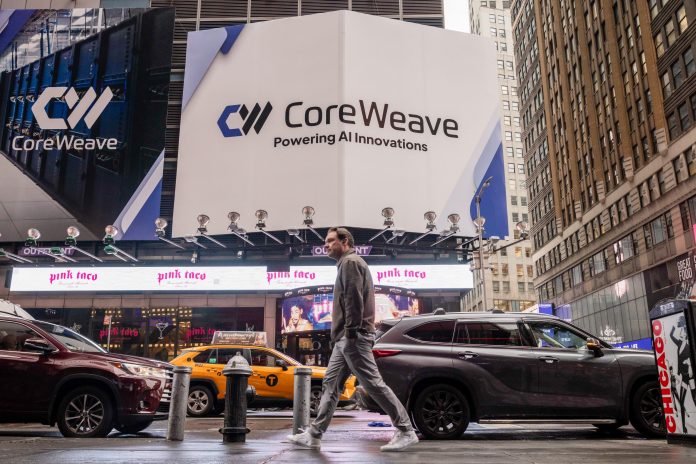
CoreWeave has signed a $14 billion agreement with Meta to supply computing power, the latest in a string of multi-billion-dollar infrastructure deals underscoring how artificial intelligence spending is shifting from software to the hardware backbone that supports it.

The contract, announced Tuesday, commits Meta to pay about $14.2 billion through December 14, 2031, with an option to extend into 2032 for additional capacity, CoreWeave said in a filing. Shares of the cloud computing company jumped 15% following the disclosure, pushing its valuation—which stood at $60 billion as of the last close—further into the ranks of high-growth AI service providers.

Under the agreement, Meta will secure access to Nvidia’s latest GB300 systems housed in CoreWeave’s data centers, according to CEO Michael Intrator in a Bloomberg News interview.

For Meta, the deal represents more than just raw computing power. It ties directly into its consumer-facing ambitions, including its recently launched Ray-Ban smart glasses, while complementing its vast spending on U.S. data centers and top AI engineering hires, where salaries now rival those of professional athletes.

For CoreWeave, Meta adds another pillar customer beyond Microsoft, its largest client. Just last week, the server provider inked its third multi-billion-dollar expansion deal with OpenAI, strengthening its position as the preferred partner for companies racing to scale AI.

Some analysts believe that the wave of long-term contracts marks a new phase in the AI boom. “Nvidia’s chips are in CoreWeave’s data centers, which will then be used by companies like Meta. These kinds of deals spark bubble concerns because of how insular the industry appears, and the massive dollar amounts involved,” said Emarketer’s Jacob Bourne.

He cautioned that valuations have been inflated by “circular” financing, where AI firms both consume and invest in each other’s services.

At the same time, the expansion of AI demand beyond the so-called Magnificent Seven—Apple, Microsoft, Nvidia, Amazon, Alphabet, Meta, and Tesla—suggests the risk of a sudden bubble burst may be tempered. Bourne noted that startups, cloud providers, and enterprises outside Big Tech are beginning to sign similar agreements, ensuring broader market participation.

The Meta-CoreWeave deal is also emblematic of a global trade divide in AI infrastructure. In the U.S., private-sector partnerships dominate, with hyperscalers like Meta, Microsoft, and OpenAI locking in long-term cloud deals to secure scarce Nvidia chips. In contrast, China has leaned heavily on state-backed investment through firms such as Huawei, Baidu, and Alibaba, which are scaling their own data centers to meet domestic AI demand while racing to reduce reliance on U.S.-controlled chipmakers.

This shift—away from flashy AI applications toward the invisible but capital-intensive infrastructure—has reshaped investment priorities. CoreWeave’s 8x manufacturing capacity increase in the past 18 months, with plans to expand another 4x in the next six to eight months, illustrates just how rapidly the market is evolving. After Taiwan Semiconductor Manufacturing (TSMC) produces its chip wafers, CoreWeave packages them in the U.S., an added signal of the strategic value of onshore production.

Meta’s deal, alongside CoreWeave’s tie-ups with Microsoft and OpenAI, confirms that AI’s next frontier lies in securing compute power before shortages bite harder. It’s a defensive move to maintain leadership in the global AI race for U.S. firms, underlining how access to chips and infrastructure has become the new battleground in trade and technology competition.