DD
MM
YYYY

PAGES

DD
MM
YYYY

spot_img

PAGES

Home Blog Page 4114

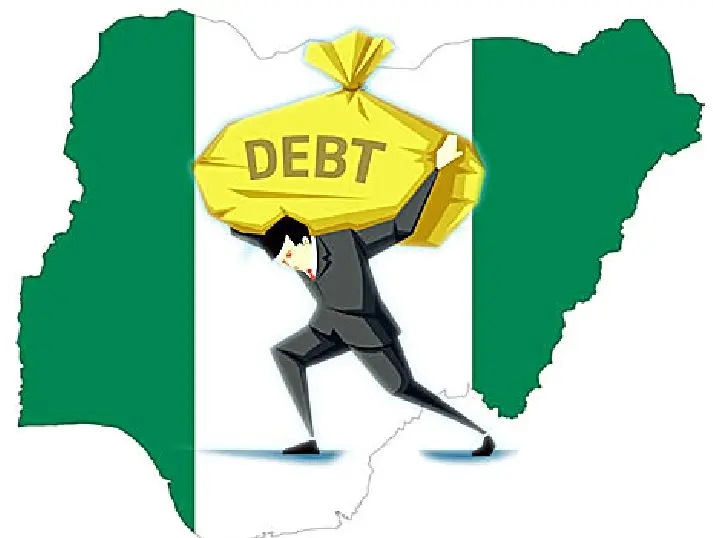
Nigeria’s Public Debt Climbs to N49.85trn Amid Declining Revenue

1

Nigeria’s total public debt as of March 31st, 2023, has risen to N49.85 trillion ($108.30 billion) from N46.25 trillion recorded on December 21st, 2022, according to a statement issued by the Debt Management Office (DMO) on Friday evening.

In its statement, the DMO also noted that the recently securitized Ways and Means loans, amounting to N22.719 trillion, would be included as part of the federal government’s domestic debt starting from June 2023.

“As at March 31, 2023, the Total Public Debt Stock comprising the external and domestic debts of the Federal Government of Nigeria (FGN), the thirty-six (36) States, and the Federal Capital Territory (FCT) was N49.85 Trillion (USD 108.30 Billion).

“Comparatively, the Total Public Debt Stock for the preceding period, December 31, 2022, stood at N46.25 Trillion (USD 103.31 Billion). During the period, there were increases in the debt stock of the FGN, States, and the FCT.

“The Public Debt Stock for March 2023 does not include the FGN’s N22.719 Trillion Ways and Means Advances of the Central Bank of Nigeria whose securitization was approved by the National Assembly in May 2023. The amount will be included in the FGN’s Domestic Debt Stock from June 2023,” the DMO said.

Judging by the current exchange rates orchestrated by the recent monetary policy introduced by President Bola Tinubu, the debt figure is expected to rise significantly above the N49.85 trillion declared by the DMO to nearly N80 trillion.

Earlier this month, the Central Bank of Nigeria (CBN) announced the floating of Nigeria’s forex market, in a move to unify multiple exchange rates. The decision has seen the naira depreciate as much as N815 per dollar in the Investor & Exporter window.

This development has prompted calls for the review of the nation’s public debt profile.

On Thursday, the DMO warned the federal government against taking further loans. The office said 73.5% of this year’s revenue will be used to service debt, creating an unsustainable high Debt Service-to-Revenue ratio.

Nigeria’s public debt profile saw a staggering increase to roughly N50 trillion in 2023, from N12 billion in 2015, during the administration of former President Muhammadu Buhari. This also includes the Ways and Means borrowings, which happened in breach of the CBN Act.
The present administration is facing the harsh reality of a depleted treasury – resulting from oil revenue shortfalls.

Against this backdrop, DMO said concerning expansion in fiscal deficit, there is a need to strictly adhere to the provision of extant legislations on Government borrowing, especially the Fiscal Responsibility Act 2007 and Central Bank of Nigeria Act, 2007 as it relates to Ways and Means Advances, in order to moderate the growth rate of public debt.

The office also said there is an urgent need to pay more attention to revenue generation by implementing far-reaching revenue mobilization initiatives and reforms including the Strategic Revenue Growth Initiatives and all its pillars with a view to raising the country’s tax revenue to GDP ratio from about 7 percent (one of the lowest in the world) to that of its peer.

Nigeria’s Central Bank Orders Financial Institutions to Include Social Media Accounts in KYC

0
social media apps

The Central Bank of Nigeria (CBN) has mandated financial institutions to include social media in their Know Your Customer (KYC) applications. This new directive means that the social media handles of bank customers etc. should be obtained for identification.

The directive is contained in the apex bank document: the ‘Central Bank of Nigeria (Customer Due Diligence) Regulations, 2023’, published on its website on Friday.

According to the document, financial institutions are required to obtain email addresses, telephone numbers, and residential addresses, among other things, from customers.

The new KYC exercise under the CBN’s customer due diligence regulations is designed to further strengthen the identification process in the banking system.

The financial sector said the new regulation was designed to provide additional customer due diligence measures for financial institutions under its regulatory purview.

The key objective of the new regulation is to enforce compliance with relevant provisions of the laws designed to checkmate money laundering and terrorism financing.

The document published by the CBN said the aim of the new regulation is “To provide additional customer due diligence measures for financial institutions under the regulatory purview of the Central Bank of Nigeria to further their compliance with relevant provisions of the Money Laundering (Prevention and Prohibition) Act (MLPPA), 2022, Terrorism (Prevention and Prohibition) Act (TPPA), 2022, Central Bank of Nigeria (Anti-Money Laundering, Combating the Financing of Terrorism and Countering Proliferation Financing of Weapons of Mass Destruction in Financial Institutions) Regulations, 2022 (CBN AML, CFT, and CPF Regulations) and international best practices.

“And enable the CBN to enforce compliance with customer due diligence measures in line with the CBN AML, CFT, and CPF Regulations.”
This is the first time a Nigerian regulator is mandating the use of social media accounts as means of identification.”

The CBN said under its customer identification column, financial institutions must identify their customers (whether permanent or occasional, and whether natural or legal persons or legal arrangements) and obtain the following information:

“For Individuals — legal name and any other names used (such as maiden name), permanent address (full physical address), residential address (where the customer can be located), telephone number, e-mail address, and social media handle; date and place of birth, Bank Verification number; Tax Identification number; nationality; occupation; public position held; and name of employer.”

In addition, the apex bank said that an individual must have “an official personal identification number or other unique identifier contained in an unexpired document issued by a government agency that bears the name, photograph, and signature of the customer, such as a passport, national identification card, residence permit, social security records, or drivers’ license.”

The regulator said financial institutions are required to include “Type of account and nature of the banking relationship, and signature, and politically exposed person status.”

The regulatory body further emphasized that financial institutions are prohibited from creating or maintaining anonymous accounts, numbered accounts, or accounts under fictitious names.

These regulations are applicable to all financial institutions under the supervision of the Central Bank of Nigeria, as specified in the document.

SEC Approves First Leveraged Bitcoin Futures ETF

0

In a historic move, the US Securities and Exchange Commission (SEC) has approved the first leveraged Bitcoin Futures ETF, which will start trading on Tuesday, June 23, 2023. The ETF, sponsored by Volatility Shares, will offer investors exposure to bitcoin price movements through futures contracts traded on the Chicago Mercantile Exchange (CME). This is a significant milestone for the crypto industry, as it opens the door for more institutional and retail investors to gain exposure to bitcoin without having to buy and store the underlying asset.

A futures-based ETF is different from a spot-based ETF in several ways. A spot-based ETF would directly hold bitcoin and reflect its current market price. A futures-based ETF, on the other hand, would hold contracts that promise to deliver bitcoin at a specified date and price in the future. These contracts are subject to fluctuations in supply and demand, as well as premiums and discounts, which may cause them to deviate from the spot price of bitcoin.

The leveraged bitcoin futures ETF is expected to attract both bullish and bearish investors who want to bet on or against bitcoin’s price movements. The ETF will also provide an alternative way for investors to access crypto exposure without having to buy or store actual bitcoins. However, the ETF will not necessarily reflect the exact price of bitcoin, as it will depend on the supply and demand of futures contracts, as well as the premiums or discounts that they trade at relative to the spot market.

The leveraged bitcoin futures ETF will also have a higher risk profile than a regular bitcoin futures ETF, as leverage can magnify both gains and losses. Investors should be aware of the potential for margin calls, liquidations, and volatility spikes that could affect the performance of the ETF. Additionally, the ETF will incur higher fees and expenses than a regular bitcoin futures ETF, as it will have to pay interest and other costs associated with borrowing funds.

The SEC has been reluctant to approve a spot-based bitcoin ETF, citing concerns about market manipulation, fraud, custody, and investor protection. However, it has been more receptive to a futures-based bitcoin ETF, as it falls under the regulatory oversight of both the SEC and the Commodity Futures Trading Commission (CFTC), which regulates the CME. The SEC also believes that a futures-based bitcoin ETF would be less susceptible to manipulation and more transparent than a spot-based one.

The leveraged bitcoin futures ETF will allow investors to amplify their returns by using borrowed funds to buy more futures contracts than they could with their own capital. The ETF will have a target leverage ratio of 2x, meaning that it will aim to deliver twice the daily return of bitcoin futures. For example, if bitcoin futures rise by 10% in a day, the ETF would aim to rise by 20%. Conversely, if bitcoin futures fall by 10%, the ETF would aim to fall by 20%.

The first futures-based bitcoin ETF to launch was the ProShares Bitcoin Strategy ETF (BITO), which started trading on October 19, 2021. It was followed by the Valkyrie Bitcoin Strategy ETF (BTF), which debuted on October 22, 2021. Both ETFs have seen strong demand from investors, with BITO reaching over $1 billion in assets under management in its first week of trading.

The approval of a futures-based bitcoin ETF is a positive development for the crypto space, as it shows that the SEC is willing to accommodate innovation and provide more options for investors. However, it is not a substitute for a spot-based bitcoin ETF, which would offer more direct and efficient exposure to bitcoin. Many crypto enthusiasts are still hoping that the SEC will eventually approve a spot-based bitcoin ETF, as it would be a game-changer for the adoption and mainstream acceptance of bitcoin.

Tinubu Explains Why He Suspended Central Bank of Nigeria Governor Godwin Emefiele

0

Weeks after the suspension of Godwin Emefiele, the former governor of the Central Bank of Nigeria, President Bola Tinubu has explained why he made the decision at a critical phase of Nigeria’s economy.

The President said, while holding an interactive session with Nigerians in France and neighboring countries, that he decided to suspend the CBN Governor because he messed up the nation’s financial system.

Emefiele was suspended on June 9, 2023, to give room for investigations into allegations leveled against him as the head of Nigeria’s apex bank.

“Then the financial system was rotten. Few people made bags of money and then you yourself, you stopped sending money home to our poor parents. Several windows. But that is gone now. It’s gone.

“The man is in the hands of the authorities. Something is being done about that. They will sort themselves out,” the president said.

Before his suspension, the Department of State Services (DSS) had made attempts to arrest Emefiele, alleging that he was involved in terrorism financing and other financial crimes. Perceived to have been protected by Buhari’s government, Emefiele was subsequently arrested following the presidential inauguration of Tinubu.

The DSS has listed in an affidavit of facts presented in court while seeking an order to detain the embattled ex-governor, allegations bordering on economic crimes and undermining national security.

The secret service said Emefiele was arrested “upon reasonable suspicion of committing acts which constitute a criminal breach of trust, incitement to violence, criminal misappropriation of public funds, economic sabotage, economic crimes of national security dimension and undermining the security of the Federal Republic of Nigeria.”

On these grounds, the DSS and the Office of Attorney General of the Federation (OAGF) on Tuesday asked the Federal Capital Territory High Court not to grant Emefiele bail, describing him as a “flight risk.”

However, despite Tinubu’s explanation, the belief that he is being vindictive over the naira redesign policy, which he decried during the presidential campaign as a ploy to scuttle his presidential ambition, has continued to be upheld by many.

Emefiele introduced the naira redesign policy late last year, before electoral campaigns. The president believed the policy, which resulted in a nationwide cash scarcity, was part of a ploy by elements in Buhari’s government who did not want him to succeed.

Emefiele’s involvement in politics was also fingered as part of the reasons the present administration is prosecuting him. The former CBN head had obtained a presidential nomination form under the ruling All Progressive Congress (APC) while still in office.

In March, Senator Shehu Sani, who represented Kaduna Central Senatorial District in the 8th Assembly, predicted that Emefiele’s life would be made miserable by the incoming administration of ‘president-elect’, Tinubu. The former lawmaker said “When Baba [Buhari] is gone, Emefiele will be like Zebra in the hands of Tigers.”

However, in its affidavit, the OAGF debunked the belief that Emefiele is being scapegoated. It said the former central bank head is neither being held for terrorist-related crimes nor being victimized for his involvement in politics and the botched naira redesign policy.

“Issues of terrorism financing and fraudulent activities are not part of the grounds for the arrest and detention of the applicant,” the OAGF stated.

The Political Economy of Deep-Sea Exploration and Titan OceanGate Submersible

0

Among all the creatures God created, humans have always had more opportunity to explore Earth because of the high reasoning level they possess. From land to water, God provides different resources for humans to live life the best way they can. However, what they wanted to enjoy positively sometimes becomes sour because of direct or indirect contravention of natural order to enjoy what interests them. Like the creation of different industries and businesses on land, humans, in their quest to explore water for more resources that would make them live a better life and experience life underwater, have over the years formed industries and created businesses that address different segments of the deep sea, which many sources describe as parts of the ocean between 200 and 500 meters.

The ocean, which invariably means blue economy, includes industries such as renewable marine energy, tourism, fisheries, and maritime trade. This economy has been exploited over the years for fish, minerals, and other uses. Our checks reveal that the exploitation of the ocean started becoming easier in the late 1950s, when technology started to advance enough to have machines that could dive deeper than 1000 feet (300 m) below sea level. This period was 38 years after the Royal Mail Ship (RMS) Titanic tragically sank. Information has it that thousands of people who believed in exploring the ocean paid different amounts for them to be passengers of the ship.

As noted previously, the advancement of technology has made people who have interest in exploring places and also possess the financial power see the reason for diving deep into the ocean. For instance, a submarine dive is an unforgettable experience that provides peace, silence, and insight into uncharted territory. It enables yacht owners and guests to explore deep underwater, where they may encounter whales, sharks, ancient shipwrecks, unusual rock formations, and rare creatures. This uncharted territory offers a one-of-a-kind and unforgettable experience.

People and businesses are not only diving into the depths of the ocean for fun. Another significant factor is the idea of improving life on Earth through resources in the ocean. Several reports and experts have stated that people, countries, and organisations that explore the bottom of the ocean are most likely to be the leaders in the global blue economy in the next two decades. This is premised on the fact that many of the land resources are nearing their depletion stage. Hence, there is a need to see and explore what water has to offer for human survival on Earth. Seafloor massive sulphides, cobalt-rich crusts, and polymetallic nodules are often mentioned as critical resources on the seabed that can provide copper, manganese, zinc, cobalt, platinum, and a host of other valuable metals for human usage on Earth.

While this background indicates that humans can explore both land and water for their survival on Earth, it is, however, imperative to examine the politics and economics of survival in light of the recent sinking of the Titan OceanGate submersible. Our examination of different views across the world about the incident underscores the need for transparent funding models for deep-sea exploration. We must ensure that scientific research and environmental preservation are prioritised over profit-driven motives.

The sinking of the Titanic Explorer is a reminder of the risks involved, but we should not shy away from innovation. Balancing economic interests and responsible practices is key. It has also highlighted the importance of international collaboration and regulatory frameworks for deep-sea exploration. A harmonised approach is needed to ensure equitable access, sustainable practices, and the protection of underwater cultural heritage.

The political economy of deep-sea exploration demands ethical considerations. The Titanic Explorer incident raises questions about the value we place on preserving historical sites and the responsibility of researchers and companies. We must prioritise ethical conduct and societal benefits.

Deep-sea exploration is a complex endeavour that requires substantial funding. The sinking of the Titanic Explorer is a reminder of the financial risks involved. Public-private partnerships and government support are essential to driving research, technological advancements, and safety measures.

As discussions continue, it is evident that the sinking of the Titanic Explorer has brought the political and economic aspects of deep-sea exploration to the forefront. Stakeholders, policymakers, and industry experts will need to navigate these complex issues to ensure that deep-sea exploration remains a force for scientific advancement, economic growth, and environmental stewardship.