DD
MM
YYYY

PAGES

DD
MM
YYYY

spot_img

PAGES

Home Blog Page 4115

Bitcoin Cash (BCH) Prediction: Uwerx(WERX) And Bitcoin Cash(BCH) Give Some Advances Over The Bear Market

0

The crypto market is indeed filled with thousands of crypto tokens to invest in, but only a select few of these projects have real utilities or values for the long term. What solutions these projects offer and how useful they will be in the long or short term are two key considerations when investing in cryptocurrencies. Uwerx is a new crypto project on presale that perfectly fits into this picture, as it promises to offer more functionality.

This explains why the token is in the limelight and is doing incredible numbers despite market conditions. Similarly, Bitcoin Cash is another crypto token looking promising. Let’s discuss these two as worthy investments to have in your portfolio.

Bitcoin Cash(BCH) Launches Its New Upgrade.

The creators of Bitcoin Cash claim that is is a hard fork of the Bitcoin network, a project that continues to prove its worth in scalability. The hard fork was created following several attempts to optimize Bitcoin for scalability and currently functions as an easy alternative for swift, low-cost, everyday transactions. The network can achieve this through its larger block size limit of 8MB, almost 8 times larger than Bitcoin.

Bitcoin Cash’s native token, BCH, has managed to evade the snowball effect of the bear market over alternative coins. And has been more in the green over the last few weeks. Some of these gains can be attributed to the network’s recent cashToken upgrade, which the network considered necessary for expanding financial access. The BCH token is $115.78 today and has seen heightened market activity over the past few days. Now might be the best time to look into BCH for possible profit potentials. Similarly, Uwerx is making massive waves, and its current presale is an even-greater opportunity to make money.

Uwerx(WERX) Is Disrupting The Gig Economy.

The new Uwerx project is harnessing the potential of blockchain technology to improve operations in the gig economy. With 48% of recent freelancers indicating that they consider this career path a long-term choice, the freelancing community has a promising future. The number of people joining the industry is also expected to peak even more as new freelancers enter the spaces daily.

Uwerx is a new project looking to offer more to both new and existing freelancers, offering them a chance at more success in their field. The Uwerx team has been working to provide the best services to freelancers, ranging from transparency and a myriad of productivity tools to juicy incentives, lesser service fees, and more. Liquidity on Uwerx is locked for 25 years from this moment. Therefore, security and longevity are guaranteed.

Uwerx presents an unprecedented chance to ride the wave of extraordinary growth prospects set for 2023 and beyond. It’s worth noting that the tantalizing glimpse of the Alpha Version has already been shared, and the anticipation for the Beta version is rapidly building.

The imminent shift in the WERX pricing is of particular interest. Friday, 2nd June at 15:00 UTC, the price per WERX is set to rise from $0.0315 to $0.041. Along with this, the current incentive of a 20% bonus on orders is also set to be reduced to 15%.

By embracing this venture now and acquiring WERX at the existing rate of $0.0315, you can also reap the benefits of a generous 20% purchase bonus. This is not just an investment, but an opportunity to be part of something innovative and groundbreaking.

Ensure you don’t let this promising proposition pass you by. Check out the links provided below to gain more insights and become a part of the Uwerx journey today.


Find out more about Uwerx here:


Website: https://www.uwerx.network

Presale: http://invest.uwerx.network

Telegram: https://t.me/uwerx_network

Twitter: https://twitter.com/uwerx_network
What is USDT and Tradecurve

0

In 2009, the world changed with the emergence of blockchain technology. Thousands of different tokens and coins have been introduced to the market since then. Stablecoins, in particular, have gained widespread attention, with Tether leading the pack. Tradecurve offers an exchange that allows users to trade multiple markets on a single platform and is set to become a favorite for experienced traders and investors.

>>BUY TCRV TOKENS NOW<<

Tether – what you need to know

Tether operates on multiple blockchains, including Ethereum, Tron, and Omni, with most of its circulation issued as an ERC-20 token. Tether has risen to become the most popular stablecoin through its stability and ability to maintain a 1:1 peg to USD. This makes it an optimal choice for traders who want to keep their funds in a stable asset.

Tether Holdings Limited is the company behind USDT and has provided a coin backed by an equivalent amount of USD without the volatility of the crypto market, since 2014. Notably, USDT was impacted by the collapse of TerraUSD but was able to quickly return to over $0.99.

Tether has a market capitalization of over 82 billion USD at the time of writing. Its history has been quite controversial due to concerns about the transparency of reserves and backing, but Tether managed to establish itself as the essential stablecoin by providing stability, liquidity, accessibility, and versatility despite these concerns.

Tether was heavily criticized for its lack of transparency due to the company’s lack of regular audits and centralization.

But so far, Tether has served the market successfully as a stablecoin with the ability to maintain a stable 1:1 peg to the U.S. dollar, and despite surrounding controversy, Tether remains the most popular stablecoin.

A new hybrid exchange with real-world usage

Addressing the needs of the market, Tradecurve offers a next-generation decentralized exchange based on Ethereum and plans to integrate cross-chain compatibility. Introducing a hybrid trading platform that accesses multiple financial markets, users may trade equities, commodities, forex, and cryptocurrencies on a single account. Deposits are in cryptocurrencies and are used as collateral.

Tradecurve aims to fundamentally change online trading with no KYC requirements for registration. By combining traditional financial markets with DeFi, Tradecurve gives users control of their assets and keys on-chain while being completely anonymous. Offering high leverage trading starting at 500:1 presents an opportunity for traders to maximize their profits.

The comprehensive metaverse trading academy addresses everyone with the need for crypto self-development and offers support from a community of skilled traders. TCRV is the native token that powers the ecosystem and holders can take advantage of staking, discounts on trading fees, AI trading bots, and sophisticated trading strategies.

Tradecurve offers significant operational flexibility by merging global asset classes and enabling users to trade on a platform providing deep liquidity, fast execution, and low spreads.


Industry experts forecast a 5000% gain for TCRV by the end of the presale and after listing on major CEXes, a possible 100x for the token.

For more information about TCRV presale tokens:

Website: https://tradecurve.io/

Buy presale: https://app.tradecurve.io/sign-up

Twitter: https://twitter.com/Tradecurveapp

Telegram: https://t.me/tradecurve_official

At Tekedia Institute, We Identify Four Characteristics of Great Companies [video]

0

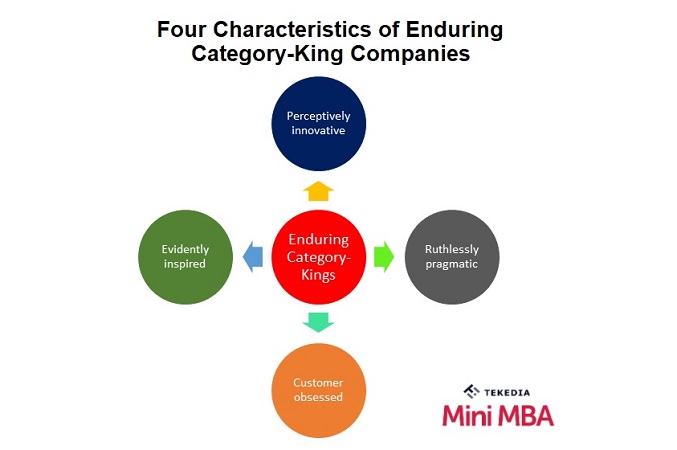
At Tekedia Institute, we identify four characteristics of great companies. These firms dominate their categories (i.e. sub-sectors in markets). For example, Dangote Cement is a category-king in Nigeria’s cement sector. Indomie Noodles is a category-king in the noodles sector. To become an enduring category-king, you must possess these four characteristics. 

Perceptively innovative: you are always innovating. You never rest, always pushing for better products, services and experiences. You outperform competitors with new solutions for unmet needs. 

Evidently inspired: you inspire your users. You are modern, trustworthy and inspirational, you have a larger purpose, helping people live out their own values and beliefs. 

Ruthlessly pragmatic: your customers depend on you and you have their backs, making life easier by delivering consistent experiences. You make good on your promises. 

Customer obsessed: customers cannot imagine living without you. You know what matters to customers, finding new ways to meet their most important needs. 

I explain more in a video here 


Web3 and DEFI are two Distinct Innovations

0

Web3 is a term that refers to the decentralized and distributed internet that uses blockchain technology and other peer-to-peer protocols to create a more open, transparent, and fair online environment. Web3 includes various applications and platforms that run on decentralized networks, such as decentralized finance (DeFi), decentralized applications (DApps), non-fungible tokens (NFTs), and decentralized autonomous organizations (DAOs).

DeFi is a subset of Web3 that focuses on providing financial services without intermediaries or central authorities. DeFi leverages smart contracts, which are self-executing agreements that run on blockchains, to enable users to lend, borrow, trade, invest, and access other financial products in a permissionless and trustless way. DeFi aims to create a more inclusive, efficient, and innovative financial system that is open to anyone with an internet connection and a crypto wallet.

One way to understand the difference between Web3 and DeFi is to compare them to the layers of a cake. Web3 is the base layer that supports the entire cake. It consists of the infrastructure and protocols that enable decentralized communication, computation, and coordination. DeFi is one of the layers on top of Web3 that adds specific functionality and value. It consists of the applications and platforms that offer decentralized financial solutions. There can be other layers on top of Web3 that are not related to finance, such as social media, gaming, identity, and governance.

Another way to understand the difference between Web3 and DeFi is to compare them to the domains of innovation. Web3 is a broader term that encompasses the entire domain of decentralized technologies, such as blockchains, DApps, NFTs, and DAOs. DeFi is a narrower term that encompasses only the domain of decentralized finance, which is built on top of an existing smart contract platform, such as Ethereum. Essentially, DeFi and the decentralized internet (Web3) are two separate but related areas of technological innovation.

Web3 and DeFi are both important and exciting developments in the crypto space that have the potential to transform the web and the world. By understanding their differences and similarities, we can better appreciate their contributions and challenges. DeFi is one of the main use cases of Web3, as it enables a more inclusive, efficient, and secure financial system that is accessible to anyone with an internet connection. Web3 also benefits DeFi by providing a more robust, scalable, and interoperable infrastructure that supports innovation and collaboration in the DeFi space.

Some of the inherent challenges on both innovations is that it requires a high level of technical knowledge and financial literacy from users, who need to understand how the underlying protocols work, how to manage their private keys and wallets, how to assess risks and rewards, and how to deal with volatility and complexity. Moreover, defi and web3 also need to educate regulators, policymakers, media, and the general public about the benefits and challenges of these new technologies, in order to foster trust, awareness, and adoption.

Defi and web3 operate in a largely unregulated space that poses legal and compliance risks for both users and developers. For example, defi platforms may be subject to anti-money laundering (AML) and know-your-customer (KYC) regulations, while web3 platforms may face issues related to data privacy, intellectual property, and content moderation.

Defi and web3 applications are vulnerable to various types of attacks, such as smart contract bugs, oracle manipulation, flash loan exploits, and front-running. These attacks can result in huge losses for users and damage the reputation of the ecosystem. Therefore, defi and web3 developers need to adopt rigorous testing, auditing, and monitoring practices to ensure the security and reliability of their code and systems.

Beyond Shadow of Doubts?

0

When we talk about beyond reasonable doubt in criminal litigation, some people even lawyers do mistake it to mean that before a criminal suspect or an accused can be held guilty and convicted for the offense he or she is standing trial for, the prosecution must prove that the accused committed the crime beyond every atom or shadow of doubt. Well, this is the popular belief but this is not what the maxim “beyond reasonable doubt” portends in criminal jurisprudence.

Beyond reasonable doubt, as most of us have come to understand it means the prosecution must convince the jury that there is no other reasonable explanation that can come from the evidence presented at trial other than that the accused committed the offense; once the evidence and facts are “reasonable” then there will be a conviction even if there are still some atoms of probabilities.

In the old case of Miller v Minister of Pensions (1947) 2 ALL ER 372, Lord Denning, on the nature of proof beyond reasonable doubt, stated thus; “It need not reach certainty, but it must carry a high degree of probability”. This means that there must be 100% certainty or 100% proof that the accused committed the offense before there will be a conviction.

This implies that beyond reasonable doubt in criminal litigation still applies the civil litigation principle of balance of preponderance or balance of probability but the difference is that in criminal litigation, the probability that the accused person committed that crime must be exponentially high and above the probability that he did not commit the offense.

Proof beyond reasonable doubt does not mean proof beyond every shadow of doubt. There might still be doubt about whether or not the accused person committed the crime but the prosecution must be able to convince a reasonable person to believe by applying facts to reasons that the accused did actually commit the crime.

Lawyers are fond of using the rhythmic phrase “it must be visible to the blind and audible to the deaf” to explain what beyond reasonable doubt means, but that’s just some rhythmic nonsense. It does not have to be visible to the blind or audible to the deaf before a suspect will be held guilty of committing the crime. The word “reasonable” itself means that a common person on the street with common sense after seeing the facts must believe or be convinced that truly the suspect committed the offense.

Well, if you are a student of law or a lawyer, I’m sorry to poke a hole in your long-standing knowledge of the legal concept of reasonable doubt but one thing you should take out is that even if there is still some doubt whether or not the accused committed the crime, if that doubt is placed on a scale and the probability that he committed the crime outweighs the probability that he did not commit the crime then he will be convicted.