DD
MM
YYYY

PAGES

DD
MM
YYYY

spot_img

PAGES

Home Blog Page 4117

Here’s Why Top Brands Like Chick-Fil-A and Pfizer Explore Cryptocurrency’s like HedgeUp (HDUP) and Bitcoin (BTC)

0

In a new wave of adoption, high-profile brands such as Chick-Fil-A and Pfizer have been exploring opportunities in cryptocurrencies, particularly Bitcoin (BTC) and the emerging star, HedgeUp (HDUP). This surprising shift marks a significant step towards mainstream acceptance of cryptocurrencies. But why are these brands suddenly interested?

Bitcoin (BTC) – The Gateway Cryptocurrency

The appeal of Bitcoin (BTC) to corporations is not entirely surprising. As the oldest and most recognized cryptocurrency, Bitcoin (BTC) has become a symbol of digital assets’ potential. It is viewed as a store of value – digital gold – and presents an alternative to traditional fiat currencies, particularly in economies undergoing inflation.

For brands like Chick-Fil-A and Pfizer, the adoption of Bitcoin (BTC) signals their willingness to embrace technology and change. It may also serve as a strategic move to appeal to a younger, tech-savvy demographic increasingly invested in cryptocurrencies. Moreover, the vast popularity and market capitalization of Bitcoin (BTC) make it a safe bet for these corporations. 

HedgeUp (HDUP) – The Rising Star

The interest in HedgeUp (HDUP), however, may raise some eyebrows. As a newer entry to the crypto market, HedgeUp (HDUP) offers something fundamentally different. It is a platform that combines AI-driven trading, alternative asset investments, and an NFT marketplace.

For Chick-Fil-A and Pfizer, HedgeUp’s (HDUP) model could offer an attractive diversification opportunity. Its alternative asset marketplace allows the investment in a variety of non-traditional assets, from real estate to vintage wines, adding a level of diversity to their investment portfolio.

Moreover, the NFT marketplace provides a unique avenue for brand promotion and customer engagement. Creating branded NFTs could represent a new frontier in digital marketing, with potential for increased customer loyalty and brand visibility. 

A Strategic Business Move

At its core, the exploration of cryptocurrencies by Chick-Fil-A and Pfizer reflects an understanding of the digital revolution underway. Cryptocurrencies and blockchain technology promise to disrupt traditional business models and operations, offering enhanced efficiency, transparency, and security.

Adopting cryptocurrencies could pave the way for innovative business models and revenue streams. It could also streamline transactions, reduce costs, and enhance customer experience by providing a secure, fast, and decentralized method of payment.

Conclusion 

The exploration of cryptocurrencies by top brands like Chick-Fil-A and Pfizer is an exciting development, underscoring the growing recognition of digital assets’ potential in business. While Bitcoin’s appeal lies in its established status and recognition, HedgeUp (HDUP) offers a fresh perspective with its multifaceted platform.

By aligning with these digital assets, these brands are positioning themselves at the forefront of the evolving financial landscape. They are signaling not just their acceptance, but their readiness to pioneer the incorporation of cryptocurrencies into mainstream business practices.

It’s an exciting time for the crypto world, and the involvement of brands like Chick-Fil-A and Pfizer could potentially pave the way for more mainstream companies to enter the crypto space. As this trend continues, the interplay between business and cryptocurrencies is likely to become an increasingly prominent feature of the global economy.


For more information about HedgeUp (HDUP) presale use the links down below:

  • Website: https://hedgeup.io/
  • Presale: https://app.hedgeup.io/sign-up
  • Telegram: https://t.me/HedgeUpChat
  • Twitter: https://twitter.com/HedgeUpOfficial
Business Model is Supreme – Improve Your Business Model with Ndubuisi Ekekwe

1

Business model encapsulates the logic of a firm and the way it combines and uses factors of production to create value for stakeholders. To a large extent, a business model is the outcome of a business strategy framework. All great companies operate amazing business models. Interestingly, in this age of digital, we have noted that more than 80% of the largest online companies adopt one special business model: the aggregation integration construct.

In the scheme of things, you can have many models at the end of a strategy session. The business model you commit your business to has a catalytic impact on your success. In other words,  the business model is supreme. Yes, the company has been bleeding revenue, but they changed the CEO. Magically, using the same staff on the products, the revenue started going north. What happened? A new business model has been deployed.

But how do you drive that strategic framework to enable you pinpoint the best business model in your company? I will explain from June 5 here 

Comment on Feed

Comment 1: Without an agile and flexible business model you have no business. You may wish to ask Nokia and Motorola.

Comment 1R: Those are not business cases.
Those are myths.
Nokia and Motorola have flexible and agile business models.
However, business is always changing and no matter how flexiable you are your business can lose out.
Nokia and Motorola are still in business.
However, the industry will always change.
A simple look at history of business just 20 years proves this.
Looking for the stories that make the rounds are not business cases.
Those are just stories and they usually contain inaccuracies and faulty logic.

My Response: Both are actually right but as in social media, the fun is in the fight. In 1967, IBM was the most capitalized business in America. It was a great business (yes business model of selling hardware). But that business model was distorted when Microsoft demonstrated that money is in software. The key message is that business models must evolve as markets evolve. But arguing that it is a “myth” is not fair.

Microsoft under Steve Balmer ran a business model that was built around Windows. Satya came and changed that, focusing on whenever customers are. He opened Microsoft products to Apple, Android, etc at large via cloud. With the same products, he delivered 4x on market cap in 4 years!

Adobe was built on CDs. One man came and stopped and invented a cloud-based subscription- Adobe lives. IBM was losing revenue for more than a dozen quarters. They changed a CEO who changed the model of the old CEO, and focused on cloud/etc, the next quarter, revenue started growing.

These things are not myths. We can agree on one thing: the Motorola model was great. The Kodak model was great. But later, they were not. So, you need to keep updating because models are supreme.

Comment 2: I keep wondering the role of political and economic environments on a business, not as if, I do not know. But sometimes, the way you put these models, they seem like ceteris paribus, when we know in reality, things are not constant. What strategies and business models are to be used when markets are not being properly regulated, monopolies or near monopolies exist, government policies swing like pendulums and there are so many inefficiencies in the system, due to corruption?

Comment 2R: Those factors you highlighted are part of what are baked into a business model, not capturing them will prove lack of awareness.

My Response: Indeed, you use those components during strategy session to decide on the right business model to execute

Patricia Halts Withdrawals as Paxful Resumes Operations

0

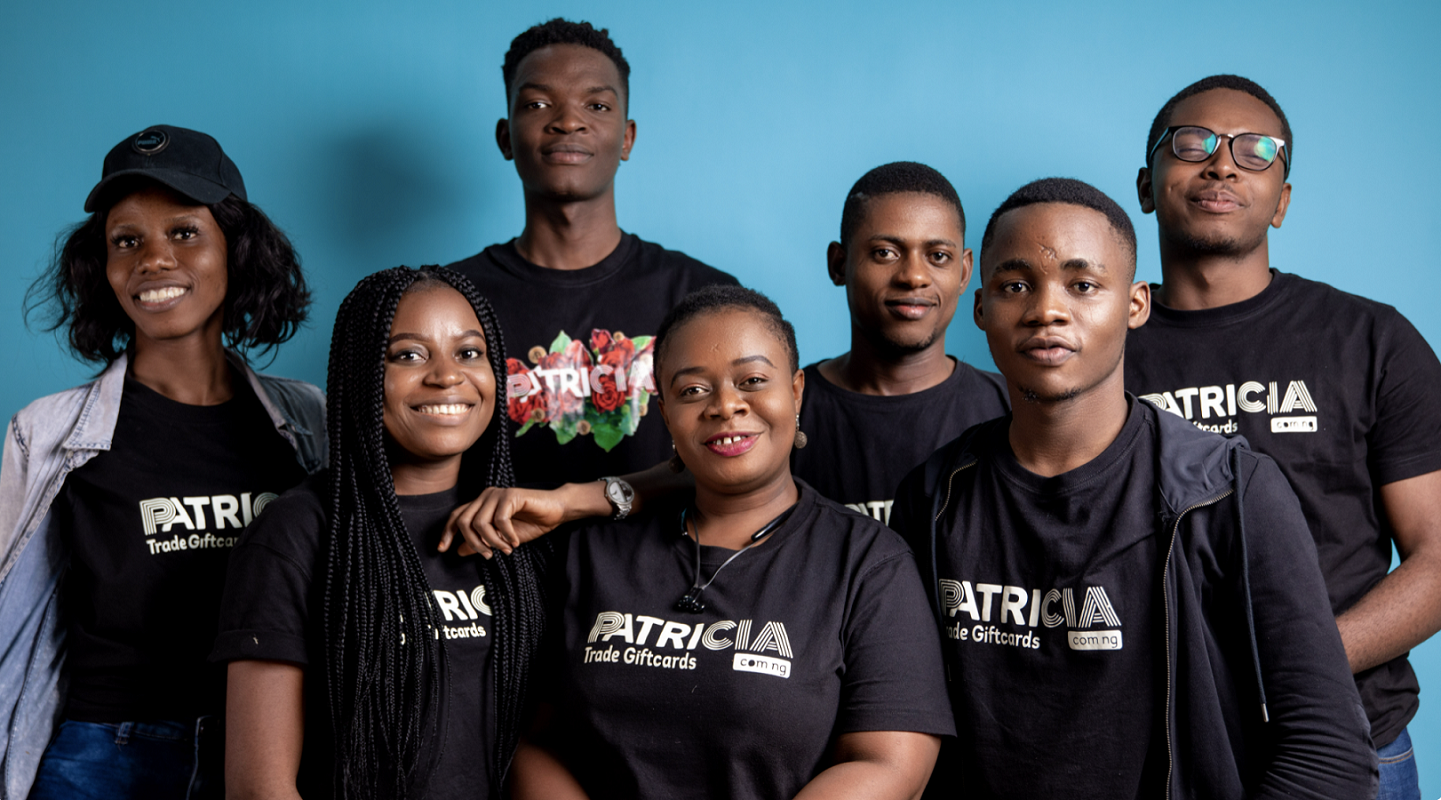
Patricia, a Nigerian gift card and cryptocurrency exchange platform, has temporarily suspended withdrawals from its users due to a security breach. The breach affected its Bitcoin and naira holdings, but not other cryptocurrencies or customer funds. The company has identified one of the perpetrators with the help of law enforcement and is working to recover the stolen assets.

Patricia is a company that offers various services related to gift cards, bitcoins, perfect money, and other digital assets. You can buy and sell gift cards, trade and store bitcoins, get physical and virtual cards for instant cash out, and accept crypto payments for your business. Patricia also has a learning portal where you can find useful information about how to use their products and services. Patricia is a secure, fast, and easy-to-use platform that aims to change the world with innovative solutions.

Patricia has also hired a security firm to conduct an audit and improve its security measures. The company has apologized for the inconvenience and assured its users that withdrawals will resume once Patricia Personal, the affected division, is cleared for operations.

Relatively- Paxful, a global peer-to-peer cryptocurrency exchange that operates in Nigeria, has resumed its services after a month-long suspension. Paxful, a global peer-to-peer (P2P) crypto marketplace, has resumed its operations in Nigeria after a month-long suspension due to regulatory and internal challenges. The platform announced on its website that it had relaunched its service with enhanced security and user experience.

Paxful had suspended its operations in April 2023 following a dispute between its co-founders, Ray Youssef and Artur Schaback, over allegations of fraud, money laundering, and sanctions evasion. The platform also faced regulatory hurdles in the US, its main market, which prompted Youssef to advise customers to move their assets to self-custody wallets or other service providers. Paxful said its wallet had remained fully operational during the suspension and assured customers that their funds were safe.

The platform also said it was working on providing alternative options for non-US users, such as Noones, a new P2P platform focused on the Global South, and Bitnob, a Bitcoin payments company for Africans. Paxful is one of the leading P2P crypto exchanges in Nigeria, where it has over 1.5 million users.

The platform enables users to buy and sell Bitcoin and other cryptocurrencies using various payment methods, such as bank transfers, mobile money, gift cards, and cash. Paxful said it was committed to serving the Nigerian market and supporting the growth of the crypto ecosystem in the country.

The company also announced the appointment of a new global CEO- Mr Roshan and regional manager, Mr. John Doe, who will oversee the Nigerian market and expand the local footprint. Paxful said it is committed to providing safe and secure services to its Nigerian customers, who are among the most active users of cryptocurrency in Africa.

Coinbase Brian Armstrong wants U.S. Crypto Regulation Clarified

0

Coinbase CEO Brian Armstrong has recently expressed his concerns about the lack of clarity and consistency in the U.S. crypto regulation. He believes that the current approach of the Securities and Exchange Commission (SEC) is detrimental to the innovation and growth of the crypto industry in the U.S., and may benefit China, which is developing its own digital currency and promoting its blockchain technology.

Armstrong has called on Congress to intervene and provide a clear and fair framework for crypto regulation that would protect investors, foster competition, and support American leadership in this regard.

Coinbase is one of the largest and most popular cryptocurrency exchanges in the world, with over 70 million users and a market capitalization of over $50 billion. However, the company has faced several challenges and uncertainties from regulators in its home country, especially from the Securities and Exchange Commission (SEC).

The SEC is the federal agency responsible for enforcing securities laws and regulating the securities industry in the U.S. However, the SEC has not issued clear and comprehensive rules for crypto assets, leaving many questions unanswered about which tokens are considered securities and which are not.

This lack of clarity has led to what Armstrong calls “regulation by enforcement”, where the SEC initiates enforcement actions against crypto companies without providing clear guidance or notice beforehand. For example, in September 2021, the SEC threatened to sue Coinbase if it launched a lending product that would allow users to earn interest on their crypto holdings. The SEC claimed that the product would involve securities but did not explain why or how.

Armstrong has criticized this approach as unfair and harmful to innovation and consumer choice. He has urged Congress to intervene and provide a legislative framework for crypto regulation that would protect investors, promote competition, and foster innovation. He has also called for a more collaborative and constructive dialogue between regulators and industry stakeholders.

Armstrong argues that the U.S. is falling behind other countries that have adopted more favorable and proactive policies for crypto. He cites the example of China, which has launched its own digital currency and is positioning itself as a leader in the global digital economy. He warns that if the U.S. does not act soon, it will lose its edge and influence in the financial world.

Armstrong also points out that crypto is not just a speculative asset class, but a transformative technology that can modernize finance and empower millions of people around the world. He says that crypto, like the internet before it, has the potential to create new opportunities and benefits for society. He urges policymakers to see the big picture and support the development of this industry in America.

Armstrong has also appealed to Congress to intervene and provide a legislative framework for the crypto industry that would foster innovation and protect consumers. He believes that the U.S. is falling behind other jurisdictions that have adopted more sensible and supportive crypto policies, such as the European Union and the United Kingdom .

He warns that if the U.S. does not create a conducive environment for crypto businesses, they will be forced to relocate to offshore havens where the rules are more favorable. He says that this would be detrimental to the U.S. economy and national security, as well as to the global development of crypto space.

BAT has arrived.

0

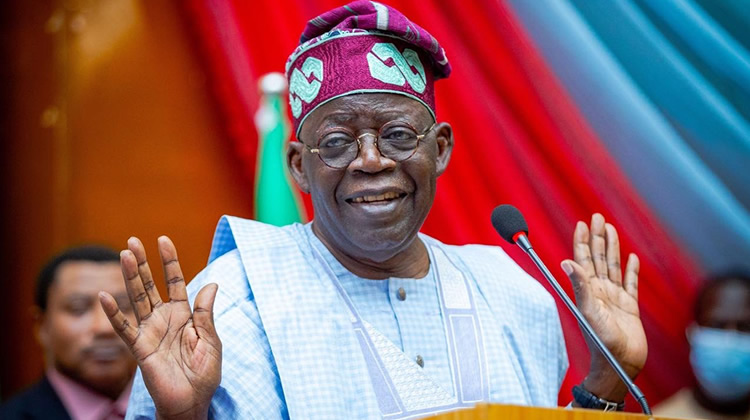
BAT has arrived.

We extend our warmest felicitations to President Bola Ahmed Tinubu.

Based on his inaugural speech, we strongly recommend reviewing the President’s campaign manifesto if you have not done so already. It contains numerous valuable insights (for your investment and business decisions) that reflect the envisioned policies of the new administration.

In this update, we have combined some of his statements from today with his manifesto, revealing a strong sense of conviction by the President.

On Subsidy:

Today, he said: “Fuel subsidy is gone.”

“Subsidy can no longer justify its ever-increasing costs in the wake of drying resources. We shall instead re-channel the funds into better investment in public infrastructure, education, health care and jobs that will materially improve the lives of millions.”

Manifesto: “We shall phase out the fuel subsidy yet maintain the underlying social contract between government and the people. We do this by dedicating the money that would have been used on the subsidy to fund targeted infrastructural, agricultural and social welfare programs…”

On Agriculture:

Today, President Bola Ahmed said: “Rural incomes shall be secured by commodity exchange boards guaranteeing minimal prices for certain crops and animal products. A nationwide programme for storage and other facilities to reduce spoilage and waste will be undertaken…”

Manifesto: “We shall introduce commodity boards to establish minimum prices for strategic crops such as cashew, cocoa, sesame, soya, cassava, yam, rubber, okra, palm kernels, groundnut and okra.”


Other highlights from the manifesto:

Technology: Within his first two years, the President intends to utilize this sector as a primary source of employment for the youth demographic.

Manufacturing: He is open to harnessing regional benefits to optimize the overall prosperity of the nation. In the North West and North East regions, there will be a concentration on textiles in the establishment of new industrial hubs.

The South East and South-South regions will prioritize labor-intensive manufacturing by establishing a new hub and dry port for investment. In the Southwest region, the abundant fine quality sand resources will be utilized to produce the finest quality glass products.

We have condensed the extensive 80-page manifesto for your convenience. Kindly find the complete summary available for download below.