DD
MM
YYYY

PAGES

DD
MM
YYYY

spot_img

PAGES

Home Blog Page 4129

Fraudulent or True? Many Questions Surround the Launch of Nigerian Air

0

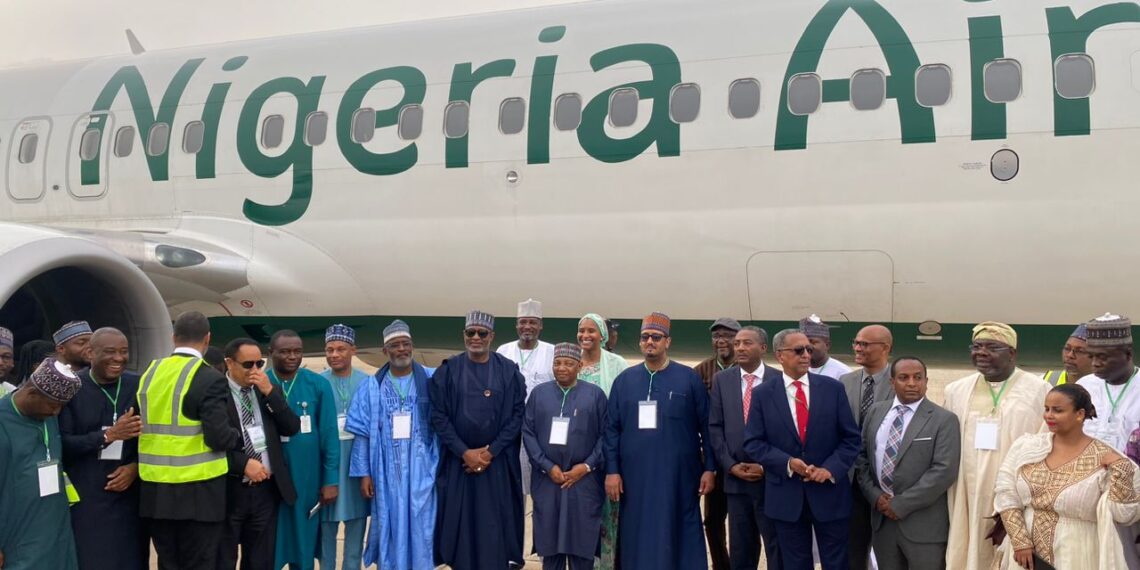
Nigeria’s Minister for Aviation Hadi Sirika on Friday, unveiled the much-anticipated Nigerian Air, barely two days before leaving office.

The Boeing 737-800 ET-AL was unveiled at the Nnamdi Azikiwe International Airport, Abuja, where it landed.

Sirika said the airline project, which is being executed in partnership with the Ethiopian Airlines, Nigerian entrepreneurs and the federal government, will fill the gap of national carrier in the Nigerian aviation industry.

“The airline that is equal to the size of the market, the dynamics of the market of Nigeria, to its geography and the fortunes of the country. Indeed, we do need the kind of infrastructure that we’re having today in the name of Nigeria Air Limited,” he said.

“This Nigeria Air Limited, of course, obviously, it’s an entity known to Nigerian laws. There is a partnership between entrepreneurs in Nigeria and the entrepreneurs in Ethiopian Airline Consortium. Consortium is a company belonging to many partners, and it’s very long journey.

“We started in 2016 and it ended up today. There is a history behind all of these. There were challenges down to one for that matter. We didn’t allow them to make us lose focus. We stayed with the eyes on the ball and today we’re here.”

The minister explained that although the project is beginning with one plane, it will eventually increase to 35 aircraft mark in the next five years.

“You don’t come in one day to dump 35 aeroplane. You can’t come in one day and start going to London. So, it’s a gradual process. The aeroplane will be coming one after another. And until in the next five years, according to the business case, we achieve the 35 aircraft mark, from there it continues,” he said.

The chief commercial officer, Ethiopian Airline, Lemma Yadecha Gudeta, who was also at the unveiling said the Nigerian Air will become a one billion dollar investment in five years.

“As far as the initial business plan that we are working on in collaboration with stakeholders in the consortium, Nigerian air will be a 1 billion US dollar company in five years time,” he said.

Fraudulent or true?

Following the unveiling of the Nigerian Air, questions about what is really playing out have been flying around. Aviation experts have argued against the feasibility of launching the national carrier a few days before the inauguration of a new government, considering the enormous work yet to be done.

“It is practically impossible for Nigeria Air to start commercial passenger operation in two days’ time given the rigorous process involved,” aviation expert and analyst, Captain Ado Sanusi, said in an interview with ChannelsTV.

Nigerian investigative journalist in a Twitter thread alleged that Sirika is being fraudulent with the launch of the Nigerian Air by presenting a rented plane to Nigerians.

He said: “I obtained the video below of the purported “Nig=20 eria Air” 737-800 from a source at Addis Ababa Bole International Airport in the Ethiopian capital. As you can see when you freeze the frame, the aircraft is clearly registered to @flyethiopian with the registration number ET-APL.

“If you put that registration number into @planespotters, you can clearly see that it is an 11 year-old Boeing 737-800 belonging to @flyethiopian. It has also briefly appeared in the colours of @MalawianAirline (@flyethiopian owns 49% of @MalawianAirline).”

“When you check @flightradar24, you can see that this aircraft is still in active @flyethiopian service, but after disappearing to Tel-Aviv for 5 days (undergoing repainting), has now resurfaced in Abuja to be fraudulently “commissioned” later today by @hadisirika,” Hundeyin added.

In June last year, Sirika disclosed that majority shares of 49 percent of the Nigeria Air project will be owned by Ethiopian Airlines, 46 percent by Nigerians while the Federal Government will own just five percent of the shares.

The minister also said that the Nigerian Air, when operational, would generate over 70,000 jobs.

However, the unveiling of just one plane not backed by operational infrastructure, has created doubts and questions about the national carrier.

“A whole national carrier is birthed without a management structure, line personnel, sales outlets, airline counters waiting to be utilized, operations backbone, maintenance structure and endless aspects that show you a semblance of something authentic,” Akin Olaoye tweeted.

The Nigeria’s Failed 47 Microfinance Banks And The Great Displacement from Fintechs

2

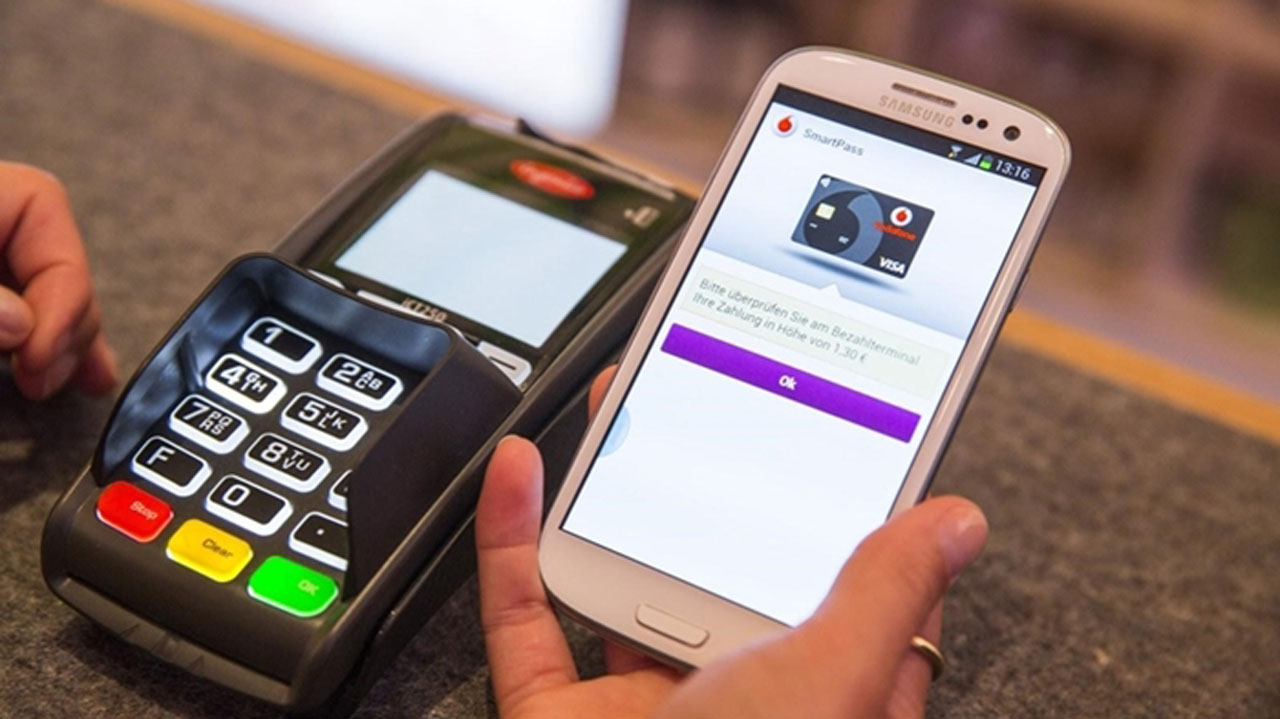
I have predicted that more than 70% of existing (physical-only) microfinance banks will fade by 2025 and by 2029, Nigeria will have less than half of its current commercial banks.  The fact is there: startups are disintermediating and displacing microfinance banks, rendering many useless at scale: “The Central Bank of Nigeria (CBN) has withdrawn the license of … [many] microfinance banks.”

The $12 billion per month transaction Moniepoint does and the $billions Flutterwave pipes are part of that zero-sum game. As those funds move out of the microfinance bank domains, the non-digital natives become irrelevant. This is happening at scale and these small banks are unable to re-adjust.

After microfinance banks, the commercial banks will be next unless they change their operating protocols. The lending apps killed many physical microfinance banks (many fintechs operate with microfinance bank license, digitally). As the credit system evolves and matures, many banks will see troubles when consumer & SME lending recalibrates and these apps go ahead the opportunities.

Sure, the big corporate lending will remain with commercial banks, but you do not run a bank with one customer segment. And that means, not many will survive and compete therein.

Comment on Feed

Comment 1: Calm down Sir!

The list represents very old and former cooperatives and community banks that most of us grew up to know, and many have been defunct for decades. I wont categorise it as you have, but rather a sanitisation of the CBN data/list of operational and non-operational MFB licenses. There are regulations around operating a finance business in Nigeria, and the MFB license remains relevant where financial inclusiveness is concerned.

The brick & mortar banks will remain competitive and continue to be a strong part of our Economy for many years to come. Albeit, they will have to be stronger and evolve with the realities of our world today.

The rise of Fintech will surely bring efficiency and drive certain level of inclusiveness and break border boundaries creating a 21st century revolutionary change in the finance landscape, but that will not obliterate the place of commercial banks at corporate and individual level. Yes, they will have to evolve with the times, but they remain a strong pillar of any economy globally.

Besides, many of the Fintechs have had to leverage MicroFinance Banking licenses in recent times to be able to operate in Nigeria. The Kudas of this world comes to mind.

There is a place for regulations!

My Response: As I noted, the fintechs also need an MFB license. From the piece, I was distinguishing between a physical-only MFB and a digital MFB. That said, if there are no fintechs and the digital-native fintechs with MFB license, most of these 47 microfinance banks will still be here. 

Comment 1R: Ndubuisi Ekekwe Ndubuisi Ekekwe “… most of these 47 microfinance banks will still be here”

That assumption is flawed, most of those 47 MFBs died a long time either before or shortly after the first baking reform in 2004. Many of these MFBs were cooperative banks across villages and communities.

I think there is an over assumption of digital penetration and adoption in Nigeria. First of, dont let the numbers decieve you, viable digital Nigeria is probably not up to 40% of Nigeria’s population. While there is a role for technology to drive the much needed inclusion, POVERTY and EDUCATION remains a major bane to technology adoption amongst Nigerians.

Nigeria is beyond Lagos – there are many studies to support why the Nigerian population is not qualitative.

That said, you are correct, but I’d rather put it that to drive inclusion and success, an Hybrid model (Physical + Digital) is required and this is where the Fintechs that have adjusted to this model have succeeded. We need healthy MFBs both physical and fintech driven models to boost the grassroot economy, the unbanked, the under-served, and small businesses.

I wont celebrate the disappearance of MFBs rather I’d say MFBs should be strong and purposeful.

My Response: “That assumption is flawed, most of those 47 MFBs died a long time either before or shortly after the first baking reform in 2004.” – that is not true. CBN does this regularly and this is not the first mass revocation but never at this scale (used to be 4-6  yearly or every now and then).  They do not keep data but you can check here https://ndic.gov.ng/failure-resolution/closed-microfinance-banks/.  When Moniepoint started posting $14  BILLION per month, these MFBs lost oxygen at scale.  It is nearly impossible for these 47 to have escaped pruning since 2004 (if they’re dead as you noted) as CBN does this all the time (sure, never at this scale we are seeing)

Comment 1RR: Ndubuisi Ekekwe “lost oxygen at scale” I love your use of language.

However, Its wrong to compare Moniepoint with the MFBs, they are not in thesame sub-sector of the finance sector nor do they offer like for like services. Moniepoint as far as I know are a payment solution infrastructure and are poised to be bigger than most MFBs.

Now talking about the Moniepoint numbers, I am not a fan of throwing numbers around, and I’m not surprised these kind of numbers are moving foreign investors. As cheap money dries up globally, some sensible investors have began learning and relearning not to rely on this made-up numbers. We have seen how many of these “unicorns” fail woefully once they IPO.

Moniepoint’s $14Bn TPV monthly number in my opinion is full of double/tripple counted transaction flow. The Federal Govt of Nigeria is the biggest spender in Nigeria, and its annual spending budget was $41.8Bn in 2022, I’m intrigued how a retail payment infrastructure business is processing 35% of that number per month, when the Soverign’s GDP is about $40Bn per month.

I may be wrong, but tech businesses are quick to throw around numbers, largely for the benefit of investors. The potential exists, but thats not the reality today!!!

Nigeria’s Central Bank Revokes the Licenses of 47 Microfinance Banks, Others

Comment 2: So if the core objective of micro finance banks is/was to provide accessible financial services to underserved individuals and small businesses, and Fintechs are disintermediating the micro finance realm (with Digital payment processing, digital wallets, etc) then why are the majority of payments in Nigeria still made with physical cash money? And where are the under serviced rural consumers getting their cash if not from their neighbourhood micro finance firm, that no longer exists?

My ResponseFirst, the fintechs use microfinance licenses but they operate in different ways. The physical-only microfinance will fade while these fintechs with core digital nativity will win. These fintechs have new business models which include offering POS free unlike banks/microfinance which will ask you to pay for them. Because of that,  vendors prefer them. Then why do they give things which used to be paid for free? Lean operations. 

Think of app-lending. Some can release money in 5 minutes. In the physical mfb, you need to visit the office, apply, and then wait for days. With that over time, the physical-only MFB will not have customers to serve.

Comment 3: With Moniepoint numbers it seems like it could be processing about 25% of the GDP, if it maintains the charge all year round, you now wonder what is left for the rest to play with…

Well, it’s not for some of us to cry or fight for what banks should go or remain, once you cannot make a case for your relevance, you simply need to exit.

Comment 4: Thanks Prof. This was long coming though, but the pace seems to be moving faster to align with predictions few years ago, especially with the launch of BVN in 2014 Surprisingly some commercial banks are still not reading the playbook. Strangely the Data which these start ups and fintechs are using to disrupt and take the market share long resided with the Banks.
CBN however have played a major role ny creating a level playing ground for all to compete.

My Response: Yes indeed, the pace is moving really fast.  The core customer and SME lending playbook in banking will likely move to these fintechs/apps and that will be significant.

Comment 5: Your postulation has stuck with me:

“The future of banking is not banks that use technology but technology companies that offer banking services”

I wonder why we are not seeing any acquisitions going on. Perhaps it’s the pride that retail banking isn’t a significant part of their earnings. What has been will always be. It’s a Goliath mindset.

David will be a shocking surprise.

The commercial banks offering NIN will scale financial inclusions much more than they anticipate.

And if telcos deeping internet access in rural Nigeria, the foundation for the entrance of fintechs into new markets would have been laid.

And like Goliath, the commercial banks will discover then, that speed is more important than size.

My Response: In the microfinance space, the old microfinance bank licenses have been bought by many fintechs. Sure, it is way too early for the big stage, the commercial banks.

Nigeria’s Central Bank Revokes the Licenses of 47 Microfinance Banks, Others

Why Most Clones Do Not Work In Digital Business

1

In this piece, I explain why startups win, despite the efforts of older companies who challenge them in new areas they are pioneering. The older companies can come with money, experience and technology, but most times, they are solving problems, with the wrong incentives. Consequently, they adjust the problems to accommodate their incentives and in the process, solve an entirely different problem, resulting in loss.

This week, Google is folding Stories, a temporary video format which it cloned from Snapchat. For Snapchat, it was something pivotal to its core product, but when Google cloned it, it was for something totally different in the big world of YouTube. So, Stories failed and Google will shut it down.

You read it from me: African and specifically Nigerian startups, you can win over big brands, if you build resilience with a solid moat. Generally, your incentives are different and those are inherent advantages for you to win. 

A bank may like to  build a web-based global payment but remember that it will not like to cannibalize the hefty fees for international transfers its Treasury department depends on. For you, web payment is the business. For the bank, protect the Treasury margin. Magically, the incentives are different resulting in uncorrelated customer experiences – and over time, the startup wins!

YouTube is pulling the plug on Stories on June 26. The temporary video format — a Snapchat clone that auto-deleted after seven days — was first introduced in 2017 under the name Reels and offered to creators with more than 10,000 followers. The format failed to catch on and lost even more traction following the rise of TikTok. YouTube says it is now focusing its efforts on its bread and butter long-form content as well as Community posts, live video and its TikTok challenger, Shorts.

My Response: “don’t engage in deep dive needed to fend off their legacy competitors” – if you check, these startups are doing well. The most valued financial institution in Nigeria is Flutterwave. Moniepoint processes more than $12 billion monthly, more than any bank. In logistics, no legacy one comes close. Across most domains, especially when digital and tech could be competitive advantages, these startups are “winning”.

Shiba Inu Coin, Dogecoin, and Hollywood X PEPE Presale: A Comprehensive Cryptanalysis

0

In today’s world of rapidly evolving digital currencies, a new breed of cryptocurrency has stolen the spotlight – meme-based cryptocurrencies. Among them, Shiba Inu Coin, Dogecoin, and the upcoming Hollywood X PEPE presale have been gaining significant attention. This article will compare these three unique coins, exploring their merits and demerits, with a special focus on the exceptional growth potential offered by the Hollywood X PEPE presale.

Hollywood X PEPE Presale – The Rising Star

Here is where Hollywood X PEPE presale comes into play. This presale signifies the entry of a novel cryptocurrency, one that combines the world of meme-based tokens with real-world applications. The Hollywood X PEPE presale offers an excellent investment opportunity, primarily due to its connection to the entertainment industry.

Unlike Shiba Inu Coin and Dogecoin, which were primarily community-driven with no real-world applications initially, Hollywood X PEPE is set to serve as the primary currency for Hollywood-based NFT (Non-Fungible Tokens) marketplaces. NFTs have shown remarkable growth potential in recent times, with celebrities and artists turning to this digital asset to monetize their work. By establishing a direct link to this thriving market, Hollywood X PEPE presale offers investors a unique opportunity to get involved early in a cryptocurrency with clear practical utility and potential for significant growth.

Furthermore, the Hollywood X PEPE presale provides increased transparency with a detailed roadmap and a planned deflationary mechanism to manage token supply. This clear direction and foresight are something that Shiba Inu Coin and Dogecoin lacked during their inception, giving Hollywood X PEPE an edge.

https://www.youtube.com/watch?v=8U0oLZmPHLM

Shiba Inu Coin – A New Kid on the Block

Shiba Inu Coin, often referred to as a Dogecoin killer, has been a hot topic in the cryptocurrency community. Named after the Japanese dog breed, Shiba Inu, it quickly gained notoriety after it was listed on prominent exchanges like Binance and Coinbase. Shiba Inu Coin stands out for its community-driven approach and its usage of Ethereum’s network, leading to relatively fast transaction times. However, it’s worth noting that this coin’s price remains subject to high volatility, a common trait among cryptocurrencies, particularly those with lesser market caps.

Dogecoin – The Original Meme Coin

Dogecoin was initially created as a joke, playing off the popular “Doge” meme featuring a Shiba Inu dog. Despite its humorous origins, Dogecoin has matured into a substantial player in the crypto space, with a dedicated community and several high-profile endorsements. It’s known for its relatively low transaction fees and speed compared to Bitcoin, making it a viable option for microtransactions. Despite its steady rise, critics argue that Dogecoin lacks a clear utility or purpose compared to other more established cryptocurrencies.

While Shiba Inu Coin and Dogecoin have their merits and have made substantial gains in the past, the Hollywood X PEPE presale stands out due to its clear, real-world utility and potential for significant growth. By connecting directly with the booming NFT market, Hollywood X PEPE presents a unique investment opportunity that can potentially yield substantial returns. Nevertheless, like any investment, it’s essential to conduct thorough research and understand the risks involved when investing in any form of cryptocurrency. Always remember, invest wisely!

Keywords: Shiba Inu Coin, Dogecoin, Hollywood X PEPE presale, cryptocurrency, investment, NFT market, meme-based tokens, digital currencies, crypto space.


Official Hollywood X PEPE Links | Linktree | Hollywood X PEPE Token | $HXPE Pre-sale is Live

Understanding Bitcoin Ordinals: Limited Use Case and the Rise of Hollywood X PEPE

0

In the ever-expanding and exciting world of cryptocurrencies, understanding the value proposition and use case of each coin is crucial. Today, we take a look at Bitcoin Ordinals, a relatively new concept in the crypto space, and delve into their limitations. In contrast, we also explore the potential of the Hollywood X PEPE presale, a new meme coin that has been garnering significant attention in the crypto community.

https://www.youtube.com/watch?v=8U0oLZmPHLM

Bitcoin Ordinals: A Questionable Proposition?

Bitcoin Ordinals, as a concept, are essentially tokens derived from the Bitcoin blockchain. They have been created in such a way that their value is theoretically based on Bitcoin’s market performance. However, the viability of Bitcoin Ordinals as a sound investment has been increasingly questioned, primarily due to their limited use case and the concerns over how they seemingly primarily benefit their creators.

Unlike Bitcoin, which has been globally recognized as a store of value, Bitcoin Ordinals struggle to present a clear use case or value proposition. They do not seem to offer any significant advantages over Bitcoin itself or provide any novel functionalities that make them stand out within the crowded crypto marketplace.

Additionally, there are growing concerns that these tokens mainly serve to enrich their creators without contributing meaningfully to the broader crypto community. Some critics argue that the creators of Bitcoin Ordinals can manipulate these tokens’ value at the expense of unsuspecting investors.

Hollywood X PEPE: A Bright Spot on the Horizon

In stark contrast to the skepticism surrounding Bitcoin Ordinals, the Hollywood X PEPE presale has been making headlines for its significant upside potential. This meme coin, which pays homage to the iconic Pepe the Frog meme, has been creating a buzz in both the crypto and entertainment industries.

Unlike many other meme coins, Hollywood X PEPE goes beyond the typical community-driven initiative. It offers real utility and value to its holders, stemming from its integration into various Hollywood productions, which has the potential to enhance its value and demand.

The presale period presents a unique opportunity for investors to get in on the ground floor of this promising project. By acquiring the coin before it’s listed on exchanges, early adopters could stand to gain from its potential future success.

Bitcoin Ordinals

Pros:

  • Derived from Bitcoin: Bitcoin Ordinals are derived from the Bitcoin blockchain, which gives them a theoretical basis in Bitcoin’s value.
  • Opportunity for Speculation: For those interested in high-risk, high-reward speculation, Bitcoin Ordinals might present an opportunity.

Cons:

  • Limited Use Case: Bitcoin Ordinals do not present a clear use case, and they do not offer any significant advantages over Bitcoin itself.
  • Creator-Centric: There are concerns that these tokens primarily serve to enrich their creators rather than the broader crypto community.
  • Potential for Manipulation: Critics argue that the creators of Bitcoin Ordinals could potentially manipulate these tokens’ value at the expense of unsuspecting investors.

Conclusion

In the rapidly evolving crypto space, it’s more important than ever to understand the intricacies and value propositions of different coins. While Bitcoin Ordinals may not offer much in terms of utility or community engagement, projects like Hollywood X PEPE represent a new wave of meme coins that provide tangible value and community engagement.

As always, potential investors should conduct thorough research before participating in any crypto ventures, taking into consideration each project’s potential risks and rewards.


Official Hollywood X PEPE Links | Linktree  | Hollywood X PEPE Token | $HXPE Pre-sale is Live