DD
MM
YYYY

PAGES

DD
MM
YYYY

spot_img

PAGES

Home Blog Page 4142

Africa’s Financial Position in a Multipolar World: Insights from the Global Finance Summit

0

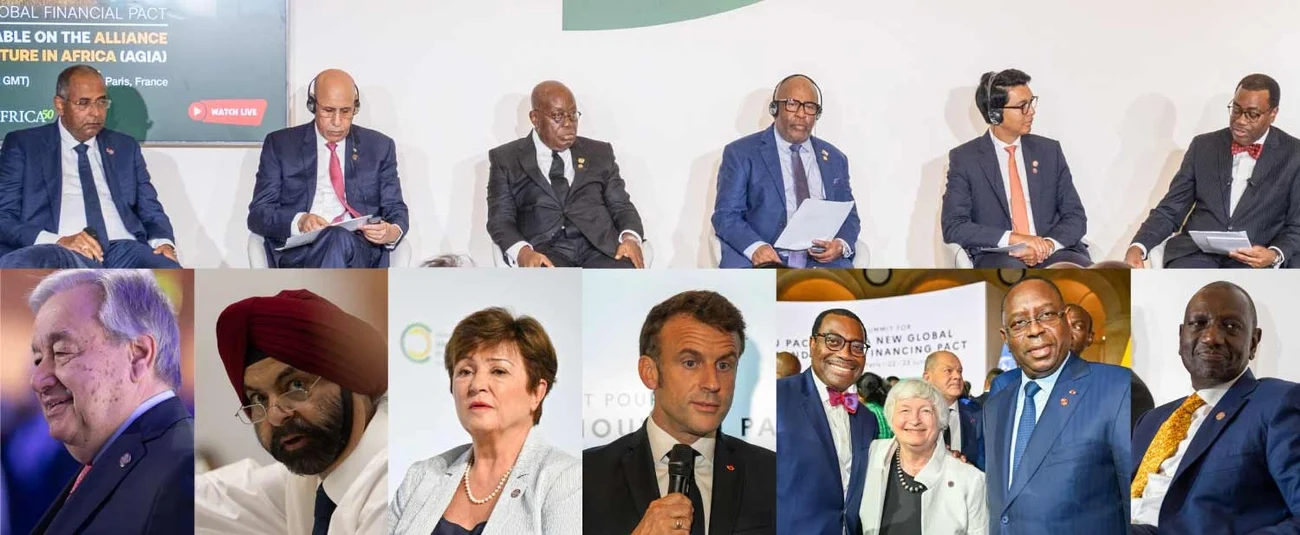
As the world has less than 7 years to attain the goals and targets of the 2030 Agenda, the convergence of the global political leaders in Paris between June 22 and 23, 2023, has further indicated that the world needs genuine discussion towards sustainable financing of projects, programmes, and initiatives associated with the goals and targets. From the global north to the global south, presidents, diplomats, and industry experts spent the two days discussing issues around restoring fiscal space, promoting private sector development, encouraging green infrastructure investment, and mobilising innovative financing for vulnerable countries.

Our analyst notes that amidst discussions on debt relief, climate change, and the need for a fairer financial system, African leaders made their voices heard, asserting Africa’s position in a multipolar world. Their views shed light on Africa’s aspirations, challenges, and the need for equal representation in global financial decision-making.

Africa’s Determination

Not Begging, but seeking equality. This is one of the resounding sentiments echoed by African leaders, suggesting that the continent’s leaders are now waking up to their responsibility of calling the global north’s attention to the fact that Africa is not begging for assistance but rather seeking equal treatment and recognition in the emerging multipolar world. President Cyril Ramaphosa of South Africa boldly emphasized this, stating, “We are not beggars; we want to be treated as equals.” This sentiment resonated across the continent, reflecting a desire for Africa to move away from a narrative that portrays it solely as a recipient of aid and to actively participate in shaping its own financial future.

A New Financial Model for Africa

Another key theme highlighted by African leaders at the summit was the urgent need for a new financial model that empowers Africa and reduces the concentration of power in the hands of a few. President William Ruto of Kenya articulated this sentiment, stating, “Africa does not want anything for free. But we need a new financial model where power is not in the hands of the few.” This calls for a more inclusive and equitable global financial system that recognizes Africa’s potential and provides opportunities for its sustainable economic growth.

Representation and Participation

One of the concerns raised during the summit was the limited participation and representation of countries from the global South, including Africa, in discussions concerning the global financial architecture. Attention was drawn to this issue, highlighting the importance of addressing historical imbalances and ensuring that the voices of African nations are heard. Africa’s diverse challenges and unique perspectives require inclusive decision-making platforms that take into account its specific needs and aspirations.

African Solutions for African Challenges

African leaders who attended the summit emphasised the importance of developing African solutions to African challenges. They rejected the notion of a one-size-fits-all approach and called for tailored strategies that address the continent’s economic, social, and environmental complexities. By championing homegrown initiatives, African leaders aim to foster sustainable development, drive economic growth, and ensure that policies and practices align with Africa’s diverse realities.

Collaboration and Partnerships

Strengthening Africa’s position while asserting their independent stance, African leaders also recognised the importance of collaboration and partnerships with the global community. President Bola Tinubu of Nigeria engaged in discussions with world leaders, demonstrating Africa’s willingness to work together towards shared goals. By forging strategic alliances and leveraging partnerships, Africa can access the resources, expertise, and knowledge necessary to overcome its challenges and achieve its developmental objectives.

Our analyst reiterates that the summit provided a platform for African leaders to voice their perspectives and aspirations. Their views underscore Africa’s determination to be treated as an equal partner in the global financial arena, to champion its own solutions, and to overcome historical imbalances. Africa’s financial position in a multipolar world hinges on the realization of a fairer financial system, increased representation, and the development of tailored strategies that address the continent’s unique challenges. By fostering collaboration and partnerships, Africa can strengthen its position and shape its own financial future in a rapidly changing world.

Interest Rates and Inflation in Nigeria [video]

0

The Central Bank of Nigeria must pay attention to how it uses interest rates to fight inflation in Nigeria. Why? Unlike the United States, interest rate is a largely weak tool to fight inflation in Nigeria considering that our consumer credit is still at infancy.

Also, the apex bank needs to deal with the demon of Ways & Means lending because it makes no sense to mop/starve cash from companies, via interest rate hike, only to give the same cash to the government.

Source: Tekedia Mini-MBA live session today (full 90-min video in the class board)

Crypto Management App Pillow Reveals Plan to Shut Down Operations, Citing Regulatory Uncertainty

0

Crypto management platform Pillow, has revealed plans to shut down operations, on July 31st, 2023, citing regulatory uncertainty and its impact on associated financial infrastructure.

In a post on messaging app Telegram, the crypto company informed customers to withdraw all their funds from the Pillow app. It will permit bank withdrawals until July 7, while crypto withdrawal via the platform will be available till July 31.

The company also revealed that it will be working tirelessly throughout this period to help users withdraw their funds safely. This implies that users will continue to have access to Pillow support via the app till July 31st, 2023.

Announcing its plan to shut down operations, Pillow wrote via a blog post,

“Dear users, we regret to inform you that the Pillow team has made the decision to no longer provide our current services through the Pillow app due to regulatory uncertainty, and will be closing operations on July 31st, 2023.

“Please be assured that all your deposits and any interest accrued on the Pillow app to date are completely safe and available for immediate withdrawal. We request you to redeem your investments and withdraw your funds immediately through the modes of withdrawal available to you”.

What Pillow Shutdown Means For Users

  • Users’ funds continue to remain safe, accessible in full, and open to crypto withdrawal till July 31st, 2023.
  • Bank withdrawals will be live till 7th July 2023 (if bank withdrawals are available for your account). Withdrawals to bank accounts may take up to 5 business days to be processed.
  • Useds funds will stop earning interest immediately, and also the rewards section will no longer be accessible.
  • Users will receive a consolidated statement for all their transactions on the Pillow app on or before August 7th, 2023.

Since Pillow disclosed plans to shut down its services, users have reportedly moved in droves to withdraw their funds from the app, as some are faced with withdrawal issues.

Founded in 2021 by Arindam Roy, Rajath KM, and Kartik Mishra, Pillow allowed customers to invest in Bitcoin, stablecoins, and altcoins and promised returns of up to 18%, a figure that dropped to 14% as the crypto market began to cool.

In 2022, the company claimed to have a user base of nearly 75,000 spread across India and Nigeria. Notably, Pillow’s recent announcement to discontinue its services is coming a year after it expanded its services to Nigeria.

The Singapore-based crypto startup decision has come as a surprise to users, as the startup was seen recently advertising job vacancies on its website.

However, this highlights the pressure faced by crypto startups in navigating regulatory environments, across the world. The collapse of industry mainstays like Terra and FTX sent cryptocurrencies into a free fall, dropping crypto’s total market cap by as much as 70%.

Nigeria’s Public Debt Climbs to N49.85trn Amid Declining Revenue

1

Nigeria’s total public debt as of March 31st, 2023, has risen to N49.85 trillion ($108.30 billion) from N46.25 trillion recorded on December 21st, 2022, according to a statement issued by the Debt Management Office (DMO) on Friday evening.

In its statement, the DMO also noted that the recently securitized Ways and Means loans, amounting to N22.719 trillion, would be included as part of the federal government’s domestic debt starting from June 2023.

“As at March 31, 2023, the Total Public Debt Stock comprising the external and domestic debts of the Federal Government of Nigeria (FGN), the thirty-six (36) States, and the Federal Capital Territory (FCT) was N49.85 Trillion (USD 108.30 Billion).

“Comparatively, the Total Public Debt Stock for the preceding period, December 31, 2022, stood at N46.25 Trillion (USD 103.31 Billion). During the period, there were increases in the debt stock of the FGN, States, and the FCT.

“The Public Debt Stock for March 2023 does not include the FGN’s N22.719 Trillion Ways and Means Advances of the Central Bank of Nigeria whose securitization was approved by the National Assembly in May 2023. The amount will be included in the FGN’s Domestic Debt Stock from June 2023,” the DMO said.

Judging by the current exchange rates orchestrated by the recent monetary policy introduced by President Bola Tinubu, the debt figure is expected to rise significantly above the N49.85 trillion declared by the DMO to nearly N80 trillion.

Earlier this month, the Central Bank of Nigeria (CBN) announced the floating of Nigeria’s forex market, in a move to unify multiple exchange rates. The decision has seen the naira depreciate as much as N815 per dollar in the Investor & Exporter window.

This development has prompted calls for the review of the nation’s public debt profile.

On Thursday, the DMO warned the federal government against taking further loans. The office said 73.5% of this year’s revenue will be used to service debt, creating an unsustainable high Debt Service-to-Revenue ratio.

Nigeria’s public debt profile saw a staggering increase to roughly N50 trillion in 2023, from N12 billion in 2015, during the administration of former President Muhammadu Buhari. This also includes the Ways and Means borrowings, which happened in breach of the CBN Act.
The present administration is facing the harsh reality of a depleted treasury – resulting from oil revenue shortfalls.

Against this backdrop, DMO said concerning expansion in fiscal deficit, there is a need to strictly adhere to the provision of extant legislations on Government borrowing, especially the Fiscal Responsibility Act 2007 and Central Bank of Nigeria Act, 2007 as it relates to Ways and Means Advances, in order to moderate the growth rate of public debt.

The office also said there is an urgent need to pay more attention to revenue generation by implementing far-reaching revenue mobilization initiatives and reforms including the Strategic Revenue Growth Initiatives and all its pillars with a view to raising the country’s tax revenue to GDP ratio from about 7 percent (one of the lowest in the world) to that of its peer.

Nigeria’s Central Bank Orders Financial Institutions to Include Social Media Accounts in KYC

0
social media apps

The Central Bank of Nigeria (CBN) has mandated financial institutions to include social media in their Know Your Customer (KYC) applications. This new directive means that the social media handles of bank customers etc. should be obtained for identification.

The directive is contained in the apex bank document: the ‘Central Bank of Nigeria (Customer Due Diligence) Regulations, 2023’, published on its website on Friday.

According to the document, financial institutions are required to obtain email addresses, telephone numbers, and residential addresses, among other things, from customers.

The new KYC exercise under the CBN’s customer due diligence regulations is designed to further strengthen the identification process in the banking system.

The financial sector said the new regulation was designed to provide additional customer due diligence measures for financial institutions under its regulatory purview.

The key objective of the new regulation is to enforce compliance with relevant provisions of the laws designed to checkmate money laundering and terrorism financing.

The document published by the CBN said the aim of the new regulation is “To provide additional customer due diligence measures for financial institutions under the regulatory purview of the Central Bank of Nigeria to further their compliance with relevant provisions of the Money Laundering (Prevention and Prohibition) Act (MLPPA), 2022, Terrorism (Prevention and Prohibition) Act (TPPA), 2022, Central Bank of Nigeria (Anti-Money Laundering, Combating the Financing of Terrorism and Countering Proliferation Financing of Weapons of Mass Destruction in Financial Institutions) Regulations, 2022 (CBN AML, CFT, and CPF Regulations) and international best practices.

“And enable the CBN to enforce compliance with customer due diligence measures in line with the CBN AML, CFT, and CPF Regulations.”
This is the first time a Nigerian regulator is mandating the use of social media accounts as means of identification.”

The CBN said under its customer identification column, financial institutions must identify their customers (whether permanent or occasional, and whether natural or legal persons or legal arrangements) and obtain the following information:

“For Individuals — legal name and any other names used (such as maiden name), permanent address (full physical address), residential address (where the customer can be located), telephone number, e-mail address, and social media handle; date and place of birth, Bank Verification number; Tax Identification number; nationality; occupation; public position held; and name of employer.”

In addition, the apex bank said that an individual must have “an official personal identification number or other unique identifier contained in an unexpired document issued by a government agency that bears the name, photograph, and signature of the customer, such as a passport, national identification card, residence permit, social security records, or drivers’ license.”

The regulator said financial institutions are required to include “Type of account and nature of the banking relationship, and signature, and politically exposed person status.”

The regulatory body further emphasized that financial institutions are prohibited from creating or maintaining anonymous accounts, numbered accounts, or accounts under fictitious names.

These regulations are applicable to all financial institutions under the supervision of the Central Bank of Nigeria, as specified in the document.